![]() |
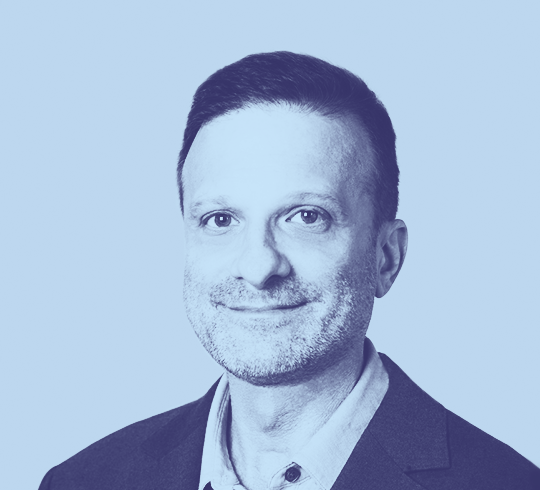
Peter
Rowe
Professor Department of Urban Planning and Design |
Profile
Peter G. Rowe is the Raymond Garbe Professor of Architecture and Urban Design and University Distinguished Service Professor at the Graduate School of Design, Harvard University, where he has taught since 1985. Between 1992 and 2004 he served as Dean of the Faculty of Design, following appointments as Chairman of the Department of Urban Planning and Design (1988-1992) and Director of the Urban Design Programs (1985-1990). Prior to joining the Harvard faculty, Rowe was Director of the School of Architecture at Rice University (1981-1985) and Vice President of Rice Center, an off-campus research institution in Houston, Texas (1979-1981). In addition to his academic duties at Harvard, Rowe recently served as Education Programme Director of the Aga Khan Trust for Culture, a consulting position he held from 2004 to 2007. Active in related activities, Rowe currently serves as Vice Chairman of the International Advisory Council of the People’s Municipal Government of Wuhan, China (2005 to present) and is a member of the governing board of the UNESCO World Heritage Institute for Training and Research in the Asia and Pacific Region (2008 to present). Until recently he also served as a board member of the Centre Canadien d'Architecture (1995-2004) and the board of the Cities Programme of the London School of Economics (2001-2007). In addition, he is an Honorary Professor at Tongji University, China (2003 to present); an honorand of the Accademia dei Benigni, Italy (2002); and an Honorary Professor at the Xi’an University of Architecture and Technology (1999 to present). Rowe graduated from Melbourne University, Australia, with a B.Arch (1969) and from Rice University with a MArch in Urban Design (1971). He also holds an AM (Hon) from Harvard University (1986). The general focus of Rowe’s work is on the evolving cultural conditions of modernity, especially as they apply in various regions and to various aspects of the built environment. His recent book Building Barcelona: A Second Renaixença, for instance, focuses on the urban regeneration of Barcelona during the past twenty-five years and Civic Realism probes the question of how best to create viable public space in today’s contemporary, heterogeneous and democratic societies. Similarly, two books: East-Asian Modern: Shaping the Contemporary City, and L'Asia e il Moderno explicitly address the manner in which standard western cultural concepts of modernity are being extended and even transformed in rapidly urbanizing areas within Asia; and Projecting Beirut examines similar questions in the Middle East. Three of Rowe's most recent books: Architectural Encounters with Essence and Form in Modern China, Modern Urban Housing in China: 1840-2000, and Shanghai: Architecture and Urbanism for Modern China, deal explicitly with modernizing China, and in Modernity and Housing, as its title suggests, Rowe responds to the question of how best to understand and architecturally tackle today's complex housing environments. In Making a Middle Landscape he deals with American Suburban development. Indeed, the two broad recurring orientations in both Rowe's teaching and research are urbanism and housing, usually from a historical perspective, but again with a specific emphasis on the twentieth- and twenty-first centuries. Rowe offers courses in urban design and planning, including a current lecture course Urbanization in the East Asian Region; a current seminar Modern Architecture and Urbanism in China and over the years, option studios including: A Lo Que Vinimos: Revitalization of Central San Jose, Costa Rica; Tokyo's 'New Order' from a Local Perspective: Redevelopment of the Chuo-ku Waterfront; Redevelopment and Restructuring Relationships Between Public Open Spaces and Stations in Tokyo; A Cross Section through the City: Redevelopment of the Han Jiang Riverfront in Wuhan, China; Backward and Forward in Time: Urban Rehabilitation in the Xicheng District of Beijing; Tokyo: Inner City Revitalization; Shan Shui City: Urban Development in Wenzhou, China; Environments of Opportunity: Redevelopment on the Waterfront of Las Palmas de Gran Canaria, Spain; Attraversare la Città: Redevelopment around the Via Appia Nuova in Rome; Isopolis: Addressing the Scales of Urban Life in Athens; Open City, Rebuilding Downtown Beirut's Waterfront; and Yi-Ti-Liang-Yi Zhi Jian, Redevelopment in Suzhou, China. Recent sponsored research seminars include: Pudong New Area, Shanghai, China; and Territorialization in the Region of Romagna, Italy. |