Better Suburbs
Better Suburbs
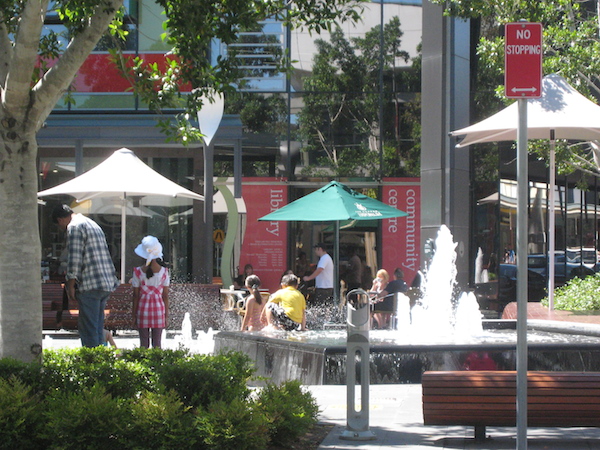
Beyond the core of every large urban area is a band of development called suburbs. For some decades I have been examining how to make suburban development better. My first book on suburbs, Constructing Suburbs (1999, Routledge/Gordon and Breach), looked at competing approaches evident in planning for suburban development in Australia in the 1990s. Its focus was on how issues of sustainability and urban growth were articulated and how tradeoffs were made about social and ecological goals. My next book, Reforming Suburbia (2005, University of California), used multiple methods to reassess three of the largest and most successful of the U.S new towns (“planned communities”) of the 1960s and 1970s planned as intentional alternatives to problems urban sprawl–social, aesthetic, economic, and environmental. These developments used many of the techniques currently evident in smart growth and new urbanist developments. A series of articles with Katherine Crewe extended this work to look at international examples of comprehensively planned neighborhoods, towns, and villages, designed to deal with the social, ecological, technological, and aesthetic challenges of urban growth. Current work focuses on the challenges of suburbanization globally as suburbs are a key frontier in the quest for longer term sustainability at the global level with important implications for human and ecological health.
1999-present
Related Links
http://annforsyth.net/research/
http://research.gsd.harvard.edu/new-towns/
Selected Publications
2016 P. Rowe, A. Forsyth, and Har Ye Kan. China’s Urban Communities
: Concepts, Contexts, and Well-being. Berlin: Birkhäuser.
2016 A. Forsyth, C. Brennan, N. Escobedo, and M. Scott. Revitalizing Places: Improving Housing and Neighborhoods from Block to Metropolis/Revitalizando Ciudades: Mejorando Viviendas y Barrios desde la Cuadra a la Metrópolis. Cambridge, MA: Harvard Graduate School of Design. In English
and Spanish
.
2014 A. Forsyth. Global Suburbia
and the Transition Century. Urban Design International, 19. 4: 259-273.
2014 A. Forsyth. Alternative Forms of the High Technology District
: Corridors, Clumps, Cores, Campuses, Subdivisions, and Sites. Environment and Planning C 32, 5: 809-823.
2013 A. Forsyth. Suburbs in Global Context:
the Challenges of Continued Growth and Retrofitting. Planning Theory and Practice 14, 3: 403-406.
2012 A. Forsyth. Defining Suburbs
. Journal of Planning Literature 27, 3: 270-281.
2011 K. Crewe and A. Forsyth. Compactness and Connection in Environmental Design: Insights from Ecoburbs and Ecocities for Design with Nature. Environment and Planning B 38, 2: 267-288.
2010 A. Forsyth and K. Crewe. Suburban Technopoles as Places: The International Campus-Garden-Suburb Style. Urban Design International 15, 3: 165-182.
2009 A. Forsyth and K. Crewe. New Visions for Suburbia: Reassessing Aesthetics and Place-making in Modernism, Imageability, and New Urbanism. Journal of Urban Design 14, 4: 415-438. [Abstract]
2005 A. Forsyth. Reforming Suburbia: The Planned Communities of Irvine, Columbia, and The Woodlands. Berkeley: University of California Press
Collaborators
Katherine Crewe, Arizona State University
Modern Urban Housing in China
Modern Urban Housing in China
A collaborative joint research project is being conducted by the Housing Research Institute at Tsinghua University in Beijing and the Graduate School of Design at Harvard University aimed at documenting the major stages of housing development in modern China from 1911 to the present. At present it is divided into three parts. The first considers modern housing development in the early stage of development of industrialization in China, from the fall of the Qing Dynasty in 1911 until the end of the civil war in 1949. The second considers the rise and fall of the welfare housing system in China, during the period of Mao Zedong, from 1949 until 1978. The third considers recent reforms and housing developments since China’s historic opening to the west under Deng Xiaoping, followed by the present regime of Jiang Zemin, covering the period from 1978 to date. Key examples of housing from these periods are drawn from field research and documentation, as well as from archival records.
The research, scheduled to be completed in 1999, will culminate in a bilingual monograph. The principal investigators for the project are professors L Junhua and Zhang Jie at Tsinghua and Professor Peter Rowe at Harvard.