GSD Students Win Second Place at APA Student Planning & Design Competition
Students from the 5280 Planning Collective at the Harvard University Graduate School of Design (GSD) won second place at the 2025 American Planning Association Student Planning & Design Competition . The team consisted of Oliver Oglesby (MLA/MUP ’26), Matthew Thibodeau (MUP ’26), Cameron Hull (MUP ’26), Christopher Cahill (MUP ’25), and Lindsay Crockett (MUP ’25).

The competition focuses on a significant development site or an area in the National Planning Conference host city, asking students to consider all the steps planners and designers need to take when developing plans and recommendations. Finalists present their proposals to a jury at a public session of the National Planning Conference.
The 2025 competition site was the Colfax & Federal Clover Leaf, a 46-acre parcel in Denver, CO, this year’s host city. The team’s project, “The Colfax Core,” reimagined the competition site as a new urban center that connects surrounding communities with walkable amenities, diverse housing, cultural spaces, and family necessities.
How Stacey Berman Builds Worlds On Stage and Screen
Stacey Berman had been working as a costume designer for films when Covid struck. While the industry hit an enforced pause, her partner suggested that she read the Harvard Design School Guide to Shopping (2002), edited by Rem Koolhaas. Intrigued by the multidisciplinary research, she decided to apply to the Harvard Graduate School of Design (GSD) as a Master in Design Studies (MDes) student in the Narratives domain, graduating in 2023.

As a costume designer, Berman considers herself in the business of worldbuilding, a term popularized in the science fiction/fantasy writing community. Berman defines it as “setting up rules for fictional universes that reflect variable realities.” She wanted to translate the concept of worldbuilding from the more abstract realm of writing into the built environment. During her time at the GSD, she valued having the chance to work with colleagues in other disciplines, particularly architecture. Often, they approached situations from different angles. “I instinctively think first about the person in the environment,” she said, “whereas many of my peers think about the environment first, followed by the person.”
Berman’s costumes can be seen in the film A Different Man , currently in theaters. It stars Sebastian Stan as a man with a disfiguring facial condition who, after undergoing experimental surgery to drastically change his appearance, becomes involved in a play based on his life. Shooting for the film took place in the summer between the two academic years Berman spent at the GSD.
The project is her third collaboration with director Aaron Schimberg; Berman notes that they share the same person-first approach to their work. “In one draft of A Different Man, Aaron wrote 60-something named characters,” Berman explained. “There are always a few lead characters in a script, but there’s rarely a chorus of nuanced people ambling down the street beside them.”
Many of Schimberg’s projects, which include Go Down Death (2010) and Chained for Life (2017), involve nested frameworks: “movies within movies, time periods collapsing between eras, a theatrical production about events that previously unfolded on film—all of which require design that can accommodate the slipperiness between these worlds.” Berman noted how the close reading of critical theory in the Narratives domain informed her approach to the nuances of Schimberg’s work. In particular, she cited her experience working with Erika Naginski, Robert P. Hubbard Professor of Architectural History at the GSD, and former Open Project instructor Elisa Silva, who helped her develop her thinking on “how we position ourselves when we frame questions, research and work.”

Along with the makeup that drastically altered Stan’s face, costumes were another vehicle Schimberg emphasized to explore how appearance relates to performance. Post-treatment, Stan’s character Edward reinvents himself as Guy, who aspires to be an actor. Berman explains, “[W]hen Edward is dressing as Edward, the clothing he wears feels like clothing and not costume – i.e., it’s not notably performative. But when he starts dressing as Guy, we want to see the slippage between these characters and understand that he’s using clothing as a costume, to project to the world and himself that he’s an actor.” Thus, Edward-as-Guy—in the tradition of so many people looking to copy a celebrity look or a social media microtrend—has a style made up of imitation and tropes. “First, we dressed him as an archetypal Juilliard alum, in an all-black outfit with brand new Converse shoes. Then, he moves through dressing like James Dean, in white tees with rolled sleeves, and at times a rusty orange ’40s-style coat that hints at classic Hollywood. He also wears a vintage brown leather jacket that we called ‘Al Pacino,’ but the internet thinks is a reference to Tyler Durden in Fight Club.”
Berman’s body of work encompasses a wide variety of genres. In addition to her collaborations with Schimberg, her recent films include Brittany Runs a Marathon, winner of the Audience Drama Award at Sundance in 2019, and The Miseducation of Cameron Post, starring Chloë Grace Moretz, which won the Grand Jury Prize the previous year. She has designed costumes worn in music videos for Fall Out Boy and Jenny Lewis.

Berman also works closely with with experimental theater groups and performance artists. She has enjoyed a long-term collaboration with Gerard & Kelly, former GSD design critics in architecture. Their project E for Eileen will screen on FranceTV starting in 2025, and a new work, Saints at a Disco, is currently in the pre-production stages.
Amid this packed schedule, Berman creates work on her own, including a project called Psychic Mending , which she initiated last January at SomoS Arts in Berlin. She is also developing a project about fitting rooms that stems directly from work that she started at the GSD and for which she won the MDes Research & Development Award, given annually to one student in each of the MDes program’s four domains.

Berman notes that the many aspects that make up her career aren’t that different from each other, or even from the way we operate in real life. Even getting dressed ourselves is a small act of worldbuilding. “In our daily lives when we try on a piece of clothing, we ask ourselves, am I this person? And when we are making a film or performance and we are in a fitting, it’s this same question: is this the character?” Berman frequently works on costume designs, especially for performance artists, where a character is closely linked to the person in the role. “The murkiness between am I this person and is this the character opens up myriad questions of identity, self-perception and representation,” she said. “It doesn’t matter how far apart they may seem, there’s some facet of self that carries to the character. You can’t erase it.”
Resourceful Urbanism: Dan Stubbergaard’s Adaptive Reuse of Cities
Even before the last flight had taken off from Berlin’s Tempelhof Airport, in 2008, the future of the historic airport’s 355-hectare site was the subject of intense dispute. Competing plans to transform the area into new residential neighborhoods and commercial areas, integrating the vast airfield into the surrounding urban fabric, stalled amid protests against development. Instead, the airport reopened as Tempelhofer Feld, the city’s largest public park. The proximity to the city center that had made the airport a commuter hub also contributed to the park’s popularity, even with intact runways crossing the open greenspace. Yet amid demands for more affordable housing and increasing concerns about sustainable growth amid the climate crisis, the future of the vast Tempelhof site and its surroundings remains unclear.

In the Spring 2024 option studio City as Resource, GSD Professor in Practice of Urban Design Dan Stubbergaard challenged students to develop plans for new housing in an area surrounding the Teltow Canal, which runs just south of Tempelhofer Feld. The concept of adaptive reuse is at the core of Stubbergaard’s studio, as well as his own practice. Rather than seeking proposals to tear down existing structures or build new ones, Stubbergaard asked students to explore how “retrofitting existing situations can contribute to the creation of neighborhoods with improved living conditions, sense of community, and social balance.” Beyond conserving resources, wise applications of adaptive reuse can support growth that reflects established communities, especially in a city like Berlin that has an existing tradition of repurposing buildings.
In an April 9 talk at the Graduate School of Design , also titled “City as Resource,” Stubbergaard described himself as “a very strong believer in the city and also the city as a design phenomenon, which can solve and deal with many of these challenges we have faced, but also are facing in the future.” He pointed to targets set by the European Union to eliminate net carbon emissions by 2050 while also restricting the use of new land for development. These parameters make adaptive reuse a necessity since existing structures constitute embodied carbon—an investment in emissions made by previous generations. Adaptive reuse is especially effective when combined with planning approaches geared toward density, which allows for more efficient transportation and energy use. Stubbergaard described his mission to define “how we live closer, live smarter, and also create better social solutions in a much more dense environment than we have used to before.”

Stubbergaard presented an overview of work being done by Cobe, his Copenhagen-based firm. Since its founding in 2006, Cobe has built more than 36 projects in its home city alone. Some of the firm’s most iconic projects are in Nordhavn, a former industrial waterfront that Cobe won the competition to masterplan in 2008. This multi-decade project is adaptive reuse at an urban scale, with a network of docks to create a new neighborhood of dense housing connected by transit and bike lanes. The 160 architects, landscape architects, and urban designers who now make up Cobe live out the group’s principles by working together in an office in a repurposed warehouse in Nordhavn.

The firm’s work focuses on seven thematic areas: resilient urban development, infrastructure for a changing climate, adaptive reuse, longevity and adaptability, new ways of building, social capital, and urban nature. “I think we need to see our profession as creators of solutions for the future,” Stubbergaard said. Among the most stunning efforts at adaptive reuse is The Silo, a former grain silo that Cobe transformed into a residential complex with public facilities on the ground floor and roof. The project reused 2700 cubic meters of concrete. Cobe’s plan for the Frederiksberg School of Culture and Music repurposed parking space into a series of courtyards on the grounds of the Radio House, the former headquarters of the Danish Broadcasting Corporation. The Roskilde Folk High School, another arts-focused high school, sits on the site of a former concrete factory whose existing structures have been transformed into space for art workshops, dance halls, and music studios.

In Stubbergaard’s studio, students began the semester by dividing up into teams of two, each focusing on one of six themes: vacancy and obsolescence, urban expansion, underutilization, density, land use, and zoning. During the studio’s trip to Berlin in February, they were able to visit the site and choose a section of the site to focus on. In addition to the site visits, the studio spent time at several architecture firms to observe their approaches to sustainable practice. They climbed 22 floors of an old industrial building to reach the offices of b+, a firm specializing in adaptive reuse. They had a guided tour of Lokdepot, a residential area featuring recycled brick facades. At the offices of Bauhaus Erde, they made their own bricks out of compacted soils.

Despite having studied maps of the site and the city in the first part of the semester, Christopher Oh and Somin Lee (MAUD ’24) found that their experiences walking around Berlin brought home why Stubbergaard had chosen this city in particular. “In Berlin [adaptive reuse] is part of the culture,” said Oh, “but it didn’t come from a climate perspective.” Rather, it was a financial necessity after the war. Their eventual project proposed reuse of over 60 percent of the existing buildings on their section of the site, which connected the airport to the canal via a long strip, to provide housing; meanwhile, they added green spaces to promote community agriculture and pedestrian connectivity.

Gyu-Lee Hwang and Hui Li (both MAUD ’25) proposed relocating a mixed-use development currently being developed on the site of the Tempelhof airport to the former industrial area along the Teltow Canal. They explained, “Berlin is well known for applying mixed-use developments, but still they have this kind of zoning – residential and industrial [are] separated. Our site is located to the south of the Tempelhof airport along the Teltow canal. It’s very historic and is open to the public now. But they have this plan of using that green space to develop the housing because they have this population growth [projected to increase by nearly 200,000 inhabitants by 2040] and housing shortage problems.” They were inspired by the time they spent on their trip observing Berlin’s Höfe, linked courtyards that can be used as parks, playgrounds, retail businesses, or other community spaces for the residential housing that surround them. Hwang and Li proposed to turn the existing airport parking area into a series of Höfe.

As Stubbergaard noted in his talk, the construction industry accounts for 40 percent of the world’s greenhouse gas emissions, 60 percent of resource consumption, and 40 percent of waste generation. Stubbergaard believes that adaptive reuse is an ideal tool to help mitigate these problems. Indeed, more than 50 percent of Cobe’s current projects involve adaptive reuse on some level. The growing impact of adaptive reuse on the design fields has made students eager to learn about the topic as well. Christopher Oh says that “[Adaptive reuse] is definitely going to be a huge part of the profession in the future. I feel that there’s a huge push not just amongst us as students, wanting to engage more with it, but also people working in governments.”

The lessons that Stubbergaard and Cobe learned in their ongoing project of rebuilding the Nordhavn district are ones that he has tried to help the students apply to their Tempelhof sites. Like the reimagined Nordhavn, the studio projects prioritize pedestrian access and intersperse green space among residential areas, cultural and community space, and businesses.
From Drought to Flood: Solutions for Extreme Climate Events in Monterrey, Mexico
In 2022 and 2023, Monterrey, Mexico’s second largest city, experienced a critical shortage of water and, like Cape Town in 2018, was close to a Day Zero of water provision. The emergency made international headlines , as the state government rationed water for many of the city’s five million residents. While struggling at times to supply water to residents, Monterrey is also well-known for its severe floods that have peaked in intensity during deadly hurricanes, such as Gilbert in 1988 and Alex in 2010. In recent years the fluctuation between these extreme events has been intensified by a changing climate.
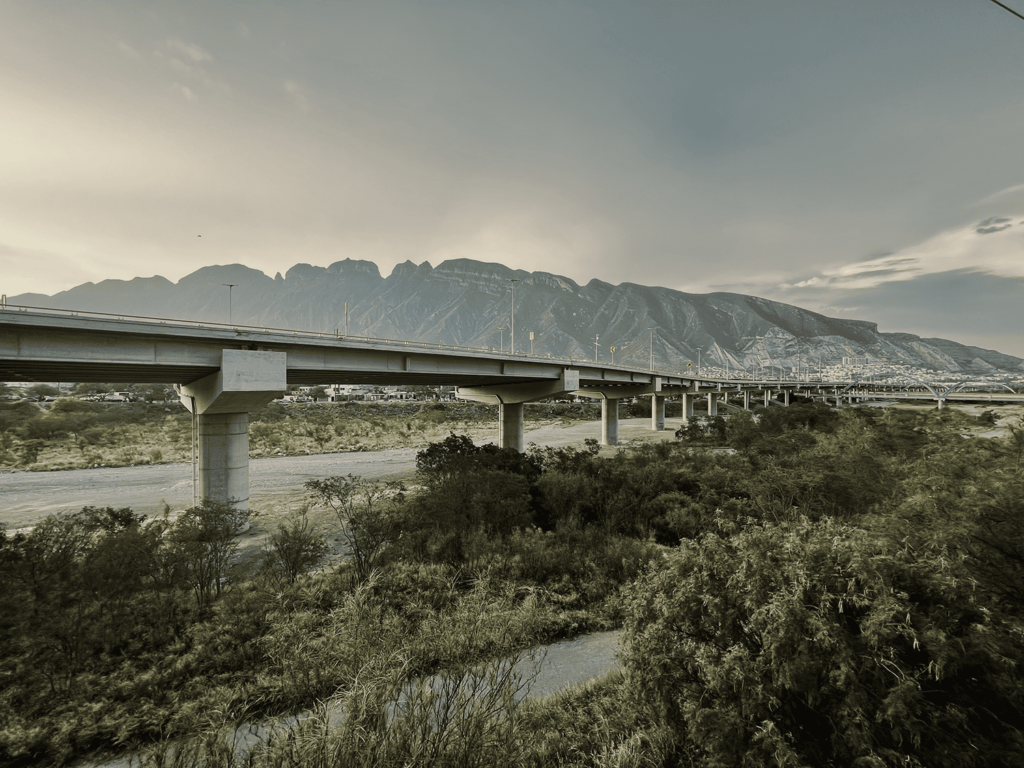
Like many other cities, Monterrey is not prepared for a warming planet with increased volumes of water in its atmosphere and extended droughts. The impervious urban ground that covers much of the city is designed to drain water as quickly as possible. Agriculture, industry, and citizens overexploit water unsustainably. As a result, during much of the year the Santa Catarina riverbed remains dry. Yet at times of heavy rain, it is prone to overflowing, with potential catastrophic results.
In the fall 2023 studio “AQUA INCOGNITA: Designing for extreme climate resilience in Monterrey, MX,” GSD Design Critic Lorena Bello Gómez worked with students to devise design strategies along the Santa Catarina watershed to increase water security and to reduce flood risk. Bello was invited to Monterrey after her work on the first iteration of AQUA INCOGNITA, in 2021 and 2022, which focused on the Apan Plains, a region that shares a basin with Mexico City and also struggles with its water supply.
For Bello, every studio is an opportunity to expose students to real-world climatic problems and inspire efforts to restore a lost balance with the water cycle. “Traveling with students for field research and engagement is a fundamental part of the pedagogy,” she explained. “The territorial scale of a project dealing with water risk in an urban region through the lens of an urban river, requires the ability to constantly telescope from macro to micro scales.” According to Bello, digital tools like Google Earth and Geographic Information Systems (GIS) cannot recreate the experience of “inhabiting and crossing the river with your own feet to understand its ecology and scale, and that of its surrounding infrastructures.”

Bello’s focus on the Santa Catarina River watershed developed through a yearlong engagement with the regional conservation institution Terra Habitus , which sponsored the studio. In addition to giving students firsthand experience, Bello’s studio was also an opportunity to help those fighting to change the status quo on the ground. “Deciphering where to insert the needle in this impervious skin is the first incognita to solve,” Bello said. “We know that there is the potential to recover this river as an ecological corridor and climate resilience infrastructure for the city, but we also need to know that there are local academics, organizations, and citizens that could benefit from our work to push the political will.”
Bello’s fieldwork in advance of the studio included meetings with a variety of stakeholders. She gathered input from representatives of community groups and planning agencies as well as political leaders such as Monterrey’s mayor, Donaldo Colosio, and the mayor of neighboring San Pedro Garza García, Miguel Treviño. She also met with Juan Ignacio Barragán, the director of the local water operator Servicios de Agua y Drenaje de Monterrey. Other important preparation included a Spring 2023 research seminar, “Resilience Under New Water Regimes: the case of Monterrey Day-Zero”, supported by PhD candidate Samuel Tabory (PhD ’25).
Daniella Slowik (MLA II ’24) chose to take the studio because she is already focused on climate- and water-related projects and sees herself working on these topics after she graduates. “Different parts of the world are going to continue to experience massive extremes,” she said, “and we have to learn how to work within those constraints in our design field.”

Students toured the riverbed with two local conservation groups as soon as they landed in Monterrey. They examined the soil and plant life in a dry section of riverbed running along one of Monterrey’s major highways before visiting Los Pinos, an informal settlement along the river. Locals shared memories of playing soccer, riding motorbikes, or attending parties on the riverbed, but they also expressed their new understanding of the river as a unique healthy ecology in otherwise desertifying Monterrey. The value of being on the ground, as Bello said, was in “sensing citizens’ empathy towards its river when they walk with us, learning about agricultural practices in the mountains, or understanding from local experts on policy and cultural challenges to overcome.” She continued, “This physical and personal exchange propels students’ imaginations, while their questions make locals aware of hidden aspects that they were overseeing.”
The group later drove to La Huasteca, the first canyon in the Parque Cumbres National Park in the nearby mountains that is the source of the Santa Catarina. The area has also become a site of unregulated settlements despite its protected status. “Traversing the lengthy river,” Bello explained, allowed students to “understand the duality between its urban condition downstream—today a flood-control channel—and its powerful upstream condition along the monumental Huasteca and Cumbres National Park, or by its flood control dam Rompepicos.”
The studio also spent several days participating in the Urban Hydrological Adaptation symposium and workshop sponsored by the Tecnológico de Monterrey with GSD former graduate Ruben Segovia (MArch II ’17). Organized by Bello and Segovia, the gathering of architects, landscape architects, and other academics built on conversations she had at the Tec de Monterrey on her previous fieldwork visits. Over the course of several days, students presented case studies of other cities with rivers that they had prepared earlier in the semester.

Several afternoons were devoted to site visits to locations ranging from parks such as the upscale Paseo San Lucia, an artificial canal offering boat rides, to Centrito, a neighborhood in the process of being rebuilt, where the group navigated several blocks of construction sites in 95-degree heat. A highlight that was both fun and educational was a hike in Chipinque National Park, which offered breathtaking views of the Sierra Madre Oriental and the ability to view the city within the context of the mountain landscape.
Inspired by the knowledge gleaned from the site visits and motivated by meetings with representatives from the municipalities of Monterrey and nearby San Pedro to address urgent needs, students’ final projects displayed a variety of alternative futures for the Santa Catarina River. While working individually, they also tackled collectively the myriad of challenges to overcome at the Rompepicos flood control dam, at the Cumbres National Park, and along the Santa Catarina River from the Cumbres to the urban park Fundidora. The final projects displayed a wide variety of solutions. Some students chose to center their work on the mountainous area around La Huasteca; others took as their focus the highways or parks closer to the urban center. (See an overview of the projects below).
As climate change becomes an unavoidable concern in the design disciplines, the GSD’s Department of Landscape Architecture has pledged its “abiding commitment to climate mitigation and adaptation through its curriculum, faculty research, and design culture.” Indeed, many students cited the urgency of climate change as a primary reason that they chose this particular studio. Bello’s career has also focused on climate. In addition to her previous research in Mexico, she has used her background in landscape, architecture, and urbanism in her work with environmentally vulnerable communities in India, Colombia, and Armenia. Weather permitting, she says with a smile, she plans to expand the Monterrey studio next fall.
For the final review, students presented their work in a sequence arranged geographically along the river transect, presenting the different challenges and opportunities to overcome by design such as:
Reciprocity at Cumbres National Park
- Jianing Zhou (MLA II ’24)’s project proposes an alternative network of almost invisible “incognito dams” as a counterpoint to mega-projects meant to control flood risk
- Emily Menard (MLA II ’24) explores reciprocal relationships between those who visit and inhabit the park, towards a more mutualistic and regenerative land use for water conservation
The ephemerality of flooding
- Lucas Dobbin (MLA I AP ’24) created “room for the river” at a key bend and point of risk inflection for extreme water flows entering the city from Parque Cumbres
- Pie Chueathue (MLA II ’24) uses the time in between floods to introduce a temporary/light-footprint tree nursery to promote urban tree canopy and work
Vertical and horizontal capillarity
- To reduce flood risk in the larger watershed, Boya Zhou (MLA I AP ’24) proposed starting to recover the network of streams while reconnecting them to the urban fabric
Circularity
- Responding to the near-shoring boom in Monterrey, Sanjana Shiroor (MAUD ’24) explored principles of circularity for brownfields along the river’s corridor to counter low-density sprawl
Bridging and descending to bring the edge of the city to the river
- Ashley Ng (MLA I ’24) designed a promenade
- Sophie Chien (MLA I AP/MUP ’24) proposed an inhabited bridge
- Using bridges as a river entrance to descend to a newly terraformed riverbed, allowing for habitat and inhabitation between storms, was the design vision of Annabel Grunebaum (MLA I ’24), Miguel Lantigua Inoa (MArch II/MLA I AP ’24) and Bernadette McCrann (MLA I AP ’24)
Climate justice
- Daniella Slowik (MLA II ’24)’s project emerged from a deep engagement with the history of Independencia, a marginalized community near the river, and asked what it would mean to convert the river into a community asset rather than just a source of vulnerability and risk
Meet Caroline Dignes
Caroline Dignes (MDE ’23)’s path to the GSD included the theatre, circus arts, and rock climbing – all of which, she says, have some surprising things in common with the GSD and with the Master in Design Engineering, a two-year collaborative degree program between the GSD and the Harvard John A. Paulson School of Engineering and Applied Sciences that combines aspects of both design and engineering.
Meet Junainah Ahmed
Junainah Ahmed (MArch I ’23) talks about the GSD classes that had a lasting impact on her thinking, including Core II with Michelle Chang and “Reflective Nostalgia: Alternative Futures for Shanghai’s Shikumen Heritage,” an option studio taught by Lyndon Neri and Rossana Hu. The MArch I program leads to an accredited professional degree intended for individuals who have completed a bachelor’s degree with a major other than one of the design professions or with a pre-professional undergraduate major in one of the design professions.
After the Turkey-Syria Earthquakes, Rethinking Design on Shaky Ground
While the recovery is still unfolding and the damage is tallied, all signs suggest that the recent earthquakes in Turkey and Syria will go down as one of the most severe natural disasters in the early 21st century. Turkey’s death toll has already passed 50,000—rare for a country that is a member of the Organization for Economic Cooperation and Development (OECD), especially since its seismic risk was well known beforehand. In addition to technical and regulatory failures in the building industry that the earthquakes have made viscerally evident, a broad range of political and business practices are implicated. As an architect and scholar whose work focuses on earthquakes and the broader design problem of risk, resilience, and reconstruction, I can attest that amid such mass tragedies, it is difficult but essential to find a balance between the overwhelming empathy that the individual circumstances of each disaster evoke and a rational outlook on the broader cadence and patterns of crisis and rebuilding. Borrowing a Tolstoyan sentiment, earthquakes are much the same everywhere, but each disaster is tragic in its own way.
Writing from my office in Cambridge, Massachusetts—a famously non-seismic context where the age-old building practice of putting a brick on top of another brick has worked without issue for almost 400 years—I am well aware of the cultural difference and geographic distance, and that water afar quenches no fire. Nevertheless, I offer a few thoughts for those like me, who are distant but concerned, to contemplate and perhaps draw lessons from. Some will be directly related to earthquakes and the reconstruction that follows, while others might be relevant to adjacent fields and the broader question of how to think and build on shaky ground.
An often cited aphorism about earthquakes is that people are not injured by the ground shaking, but by buildings collapsing. This straightforward observation is a stronger indictment than it may initially seem, once one understands that the technical problem of building in earthquake regions is relatively well resolved in the contemporary world, akin to polio or famine. Today, with advice from a typical engineer and working well within the technical capacity of most construction teams, it is possible to build directly on top of a fault line and be relatively confident that the inhabitants would survive an earthquake, even if the building itself sustains some damage.
It is misguided, therefore, to think about earthquakes as a purely technical problem. A survey of building cultures across seismic regions reveals that architects and designers have come up with different design options and strategies at various scales of environmental design—from furniture to buildings and urban plans—that combine technical and structural know-how with several kinds of social and cultural understandings. Just as societies once viewed earthquakes as supernatural phenomena requiring divine intervention, and then as natural phenomena requiring scientific study and adaptation, today we understand that the disasters caused by earthquakes are in part, if not primarily, social disasters requiring design solutions. An earthquake simply reveals latent vulnerabilities that are exacerbated by the geological phenomenon.
In Turkey and Syria as elsewhere, the poor and vulnerable are subject to an outsize share of suffering because they were allocated, implicitly or explicitly, a larger share of the risk of disaster. We see similar dynamics play out in more familiar locales in the United States, with the correlation between housing prices and seismic risk in California’s Bay Area determining to a great extent the outcome of the next big earthquake, whenever it may strike. The social nature of earthquake disasters, however, also means they are a catalyst for change. In many building cultures, earthquakes and natural disasters are seen as a test of a government’s effectiveness and mandate. The first emperor of China, Yu, was seated in 2070 BCE as a result of his effectiveness in curbing disastrous flooding, while the European Age of Enlightenment was in part sparked by the Catholic Church’s inability to explain the large toll among pious congregations when the Lisbon Earthquake struck during mass on the morning of All Saints’ Day in 1755. Earthquakes are a reality test, revealing previously invisible fault lines in the ground and in society, and therefore are a potential agent for change.
A curious but immensely generative aspect of my work with earthquake architecture is that there are distinct and diverse—even opposing—approaches to the persistent problem of building in seismic regions, many of which may be useful in similar situations. Timber experts point out the unique advantages of its flexibility, while concrete specialists advocate for its irreplaceable solidity. Urbanists foreground the need to pool and manage risk efficiently, while disurbanists stoically adhere to the foolproof approach of dispersing risk by spreading it out. These different approaches prove to be effective in their own context, even if they appear contradictory.
In earthquake architecture and reconstruction, breakthroughs in the last decade have been driven by what until recently has been this under-recognized diversity of approaches and its inclusion in design education and practice. For example, earthquakes in Japan and New Zealand in the last two decades have resulted in a degree of devastation that contrasts with the relative progress that Indonesia and western China have made in terms of earthquake preparedness, challenging assumptions about how technical expertise flows from “advanced” to “developing” regions. Emerging now is a broadened understanding of strategies for dealing with risk and building resilience, which frequently results in retroactive validation of vernacular approaches, and a recognition of the value of having a wide repertoire of technical solutions and diverse ways of thinking about the problem.
As our understanding of seismic architecture expands beyond any imperative for a single correct approach, a more useful way to think about the diversity of options and strategies for seismic architecture is to conceive of them in terms of design schemas, or frameworks, through which a designer approaches a particular issue or question. What should be shared among designers working in response to earthquakes and natural disasters is not the same technical solution, to be applied uniformly across different regions of the world. Instead, what should be communicated is a sense of the design schema. Indeed, the ability to see and understand the utility of different kinds of design innovation will be key to navigating new scales of risk and uncertainty associated with climate change and the Anthropocene era, and especially future disasters that will strike as a consequence. Instead of focusing on design thinking as a single innovative way of thinking, the examination of building in seismic regions demonstrates how different design schemas can coexist and be complementary, together offering a meta-diversity of approaches consisting of not only different solutions, but also different ways of thinking about the problem.
A Moratorium on New Construction?
“Yet what we need is a voluntary cessation, a conscious and fully consensual interruption. Without which there will be no tomorrow.”1
The concept of sustainable construction does not hold meaning any longer. Real sustainability is an impossible endeavor and a delusion in the present modus operandi of global construction. From land consumption to material use, building is a destructive process: urbanization devours hectares of unbuilt land every year, and the construction industry relies intensively on resource extraction.2 Through mining, manufacturing, and building, the energy used in construction impacts the planet at a tectonic scale. Water bodies, ecosystems, topography, geology, climate, food systems, labor conditions, humans, and nonhumans everywhere are destroyed or damaged to propel voracious global supply chains.
The end of the world has been ongoing for many. From the tons of toxic bauxite residue stored in unstable pools in Hungary to the devastated social landscapes surrounding the coltan mines of Chile, this damage is a prerequisite of designed spaces, affecting all non-constructed surfaces—from forest to farmland.3 Despite loud calls to reexamine our faulty growth model, the expansionist global enterprise of land and resource exhaustion fueled by both construction and real estate development goes on relentlessly.4
Stop Building?
The call for a moratorium on new construction emerges from these global urgencies and from the palpable lack of action on the side of the building industry and planning disciplines beyond flaccid corporate strategies (green labeling, carbon compensation, material reinvention, and LEED, for example). Devised to cover up ongoing devastation, construction’s greenwashing of its toll on the environment is deployed in full force. Little is done to curb the damage done through commodified and speculative real estate development and construction schemes. Moreover, global material use is expected to rebound with post-pandemic economic policies and to double by 2060; a third of this rise is attributable to construction materials.
And this is but a fraction of what ultimately makes up the built environment. The transformation of raw resources into exploitable architectural elements (aggregates to concrete; sand and silica to glass; petroleum to insulation foam) not only necessitates the combustion of fossil fuel at every turn, but also relies on a host of facilitating technologies. Automated mining systems and computer-aided drawing software, for example, steer an increase in the extraction of critical minerals including aluminum, cobalt, copper, graphite, lithium, manganese, nickel, platinum, tin, titanium, tungsten, and zinc, among others.
The front lines of extraction are moving in all directions, and rapid devastation is ongoing. Paradoxically described as unavoidably necessary in order to transition to less carbon-intensive lifestyles in selected parts of the planet, this commodity shift toward rare materials suggests that sustainable oil rigs and e-Caterpillars will be undertaking the greener enterprise of destruction we design.
Against the propagandizing of ecological concerns both for eco-fascist agendas and as a business driver of technofixes, a moratorium on new construction calls for a drastic change to building protocols while seeking to articulate a radical thinking framework to work out alternatives.
House Everyone
Because housing is a human right and the mandate of the design disciplines, our fields stand at the difficult threshold between housing provision and devastation: How does one navigate the need for housing as well as the destructive practice of its construction? According to the US Department of Housing and Urban Development (HUD) census of 2021, the median size of new single-family homes was 2,273 square feet, compared to 1,500 square feet in the 1960s, despite the shrinking of the median household size, down from 3.29 in the 1960s to 2.52 persons today.5 This trend sees more land, more materials, more appliances, and more infrastructures directed toward larger homes built to host fewer people, with debt at the core of its financing. In a talk at the GSD in February 2022, HUD secretary Marcia L. Fudge said that the days when one can have a plot to build a house were numbered—despite her lecture being titled “Building the World We Want to See.”6
If we jettison the maxim that the solution to the housing crisis is to build, myriad other possibilities come into view: decent minimum living wages, just protocols to housing access, rent control, zoning reforms, purchase of private property to provide public housing, fostering of collective ownership and forms of cohabitation, and alternative value generation schemes. These solutions allow us to move beyond the struggles and dichotomies that plague the debate: renting vs. ownership, YIMBYs vs. NIMBYs, nature vs. humans, and housing crisis mitigation vs. zero net emission, among others.
If new construction were to stop completely, even for a short while, the current built stock—buildings, infrastructure, materials—would have to be reassessed, and the productive and reproductive labor that goes into it necessarily would be revalued. Varying widely from well-paid skilled workers to exploited manual laborers, the labor force involved in construction remains mainly unautomated—and overlooked. We could anticipate the emergence of new societal and ecological values and a reevaluation of the labor involved in caring for buildings, from surveying the existing stock to engaging in reparative works to acts of daily upkeep.7
The effort ahead is immense; a different way of designing the world emerges, one that demands a careful assessment of present and vacant inventory, strong policies on occupancy and against demolition, anti-vacancy measures, densification plans, maintenance protocols, end-of-life etiquette for materials, and overall upgrading tactics. These will all need to be imagined, formulated, planned, and implemented—according to the needs of the context.
Who Is to Say Build or not Build?
At the same time, a moratorium’s global validity must be interrogated. The geography of harmful extraction and the political economy of construction are mirrored in today’s neocolonial modes of extraction capitalism, with gendered and racialized populations most affected. Assuming that the bauxite extracted in Guinea ends up on the facades of pencil towers in New York, shouldn’t a moratorium be limited to new construction where a consolidated stock already exists? Indeed, the integrity of the sustainability narrative is belied by the extent to which environmental laws have been successfully weaponized and how unpersuasive frugality arguments continue to be.
As Peter Marcuse argues, “the promotion of ‘sustainability’ may simply encourage the sustaining of the unjust status quo and how the attempt to suggest that everyone has common interests in ‘sustainable urban development’ masks very real conflicts of interest.”8 Achille Mbembe spells it out: “In Africa especially, but in many places in the Global South, energy-intensive extraction, agricultural expansion, predatory sales of land, and destruction of forests will continue unabated.”9 Thus, with overbuilding and resource consumption on one side and lack of housing and material extraction on the other, a new construction moratorium could be restricted to extractive built nations and adopted by countries incrementally along GDP lines.
Upon closer inspection, the need for nuance emerges. In Cairo, there are 12 million vacant units, high vacancy rates grounded in locally specific conditions such as questionable rent control laws, proactive suburban development state programs, and a lack of trust in banking institutions.10 In Costa Rica, the bulk of new construction consists of coastal residential units aimed at tourists or expatriates, fueling socio-environmental issues of displacement and degradation.11 In South Africa, the demolition of scarce public housing to make way for market-rate units shows the limitation of the construction-as-solution storyline.12
Nevertheless, building more is heralded everywhere as the sole answer, a debatable leitmotif served up from the Bay Area to Mumbai that conceals the reality of the commodification of housing fueled by debt financing. Housing needs are not the question when home insecurity is such an acute problem for many, and when it is true that crucial infrastructures are lacking in some regions.13 Thus, construction is not to be condemned outright when there are such vast disparities in what different countries can provide. But while contextual complexities require a deeper investigation into where and what is constructed and what should not be built, a moratorium on new construction challenges the incapacity of the sector to envision alternative large-scale housing provision schemes beyond building new.
Beyond GDPs and other faulty measurements, beyond moral confines and neo-Malthusian indictments, how are we to grapple with sustainability as a contested concept, legacies of degrowth theory, green capitalism, and problematic CO2 reduction policies becoming the stuff of riots?14 How many of the thousands of new housing units built every year everywhere are accessible to those who need them most? How can we optimize and maximize our existing stock before extracting new materials? How do the design disciplines face their complicit role in environmental degradation, social injustice, and climate crisis, and challenge the current system of global construction?
Imagining Possibilities
The following vignettes play out in various locations to answer some of these interrogations. Drawing from A Moratorium on New Construction, an option studio that took place at the GSD in spring 2022, these ideas point to what must stop and what needs to change, from India to the United States. In contemplating redistributive modes of ownership and communing and questioning the standard claim of building right, predatory real estate practices, high-tech-heavy solutions, and the assumption that architects must build anew rather than practice methods of repair and prolonging, a vision for a material future relying on our current built stock emerges.
In Mumbai, a city where affordable housing is in high demand, the ongoing demise of chawls—collective units built in the 1930s for mill workers, and now home to active but modest communities—epitomizes the rapid destruction of affordable housing at the hands of the state and the private sector. High-rises for wealthier owners replace the chawls, and the tenants are displaced. Devashree Shah (MArch ’22) argues for a moratorium on the demolition of chawls and all subsequent new construction. But because aging chawls’ structures require upkeep, Shah proposes a post-moratorium design strategy that envisions physical and social repair as a unified design task.
From maintenance protocols (cleaning, clearing trash, painting, and re-plastering), to reparative works (replacing broken shingles, sistering, straightening structures), to strategic interventions (co-living arrangements, shared amenities), to additions aimed at increasing social capital (community kitchens, daycare centers), to strengthening neighborhood networks (pooling capital, sharing facilities), the design of an entire repair strategy at every scale advocates for a value shift, one that privileges care labor above newness. Primarily undertaken by gendered and ostracized populations, upkeep work is considered belittling to many. Shah’s project challenges this perception through a socio-spatial tandem design by illuminating the crucial relevance of repair work both for buildings and communities—in a context where new construction is halted.
On the shores of the Yucatán Peninsula, Tulum is the latest Instagrammable ecotourism destination, with its pristine beaches overlooking the Caribbean Sea, which already is dotted with so-called eco-resorts and sustainable Airbnbs. Tourism growth is highly contested by local communities who oppose the construction of a high-speed Mayan Train aimed at ushering in more visitors. Indigenous voices have pointed to the harm caused to the area’s fragile ecosystem by constant growth within their economies. Turning these calls into a radical design brief, Gerardo Corona Guerrero (MAUD ’23) designs the gradual recess of tourism activity in Tulum.
The project disputes the success story of ecotourism and imposes as a first step a moratorium on tourism-oriented infrastructure. Considering that the “reconstruction of nature” is an equivocal concept bordering on eco-fascism, the project embarks instead on an incremental approach, phasing measures across a time span of 70 years, from reparative ecologies to deconstruction and material reuse. It articulates a decolonial understanding of degrowth toward a negotiated human stewardship of the land.
Going against the grain, Aziz Alshayeb (MAUD ’23) proposes a critique of the current trend of demolishing highways. He exposes a national agenda of hardcore gentrification and CO2-heavy development operating under the auspices of post-oil mobility and community betterment. In this context, the project proposes a moratorium on the demolition of Highway I-45 in Houston and puts forward a counternarrative to highway demolition that is based on Sara Ahmed’s concept of “complaint as resistance.”15
Taking community grievance as mandate, the project seeks to listen to all—from anyone who has registered a complaint, and from children to bees—to articulate an alternative program to the kind of solutionism that currently plagues design. With tools including legal frameworks and ecological measures, the project pushes against the evils of urbanization, including environmental degradation and gentrification and their manifold consequences. What emerges is a future of peaceful cohabitation between nonhumans, humans, and our obsolete infrastructures.
Starting from the perspective that the single-family home is an unsustainable, energy-intensive housing type that is itself fundamentally grounded in colonization, Bailey Morgan Brown (MArch ’22, MDes ’22), a citizen of the Cherokee Nation, proposes a moratorium on suburban sprawl for Edmond, Oklahoma, a site she describes as being paradigmatic of settler-colonialism. She argues that the single-family house exemplifies the combined burden of legal, economic, environmental, social, and environmental pressures, in the form of mortgage financing, lawn care, air conditioning, car infrastructure, normativity, materialism, and low occupancy rates, among others.
Going further, Brown develops a protocol for establishing a sovereign suburban space, articulating a plan for how “land back” would actually play out. Her plan unfolds into a multilayered strategy that includes a land transfer of “unassigned lands” to a Tribal Cooperative Council; a mandate against the displacement of existing residents; the termination of property lines and of zoning and the creation of new land use definitions; and the development of ambiguous, contested, fluid, and temporal spaces for energy production, medicinal vegetation, nonhumans, crop production, and new models for taxation.
These few examples speak of the incredible potential of what design can do if new construction is not an option—the potential to confront the built environment’s past, present, and future and to engage with existing building stock to question the current economic model of development and to move forward toward a better industry. Pausing construction problematizes the narrative of progress and techno-positivism that propel capitalist societies as well as the mandates for their design. Buttressed by an imperative for boundless economic growth proffered by postcolonial powers, those mandates sell “a better life for all humanity—a mentality that continues to structure global asymmetries,” as articulated by Anna Tsing.16
Nubian architect and decolonial scholar Menna Agha frames the call to “stop building to start constructing” as a prerequisite to setting off the reconstruction and rehabilitation of the built environments of the racialized, gendered populations bearing the brunt of ecological and social devastation.17 A pause would also allow the design professions to pivot toward resource stewardship, to remodel what we do and deploy design’s organizational capacity to (begin to) think about new forms of emancipated practice, to engage in remedial work, and to establish the care of the living as our sole priority.18 Somewhere between a thought-experiment and a call for action, a moratorium on new construction is a leap of faith to envision a less extractive future, made of what we have. It’s about building less, building with what exists, and caring for it.
Charlotte Malterre-Barthes is an architect, urban designer, and Assistant Professor of Architectural and Urban Design at the Swiss Federal Institute of Technology Lausanne (EPFL). Most recently, she was Assistant Professor of Urban Design at the Harvard Graduate School of Design, where she taught studios and seminars and, in 2021, launched the initiative A Global Moratorium on New Construction, which interrogates current protocols of development and urges deep reform of the planning disciplines to address earth’s climate and social emergencies.
1 Achille Mbembe and Carolyn Shread, “The Universal Right to Breathe,” Critical Inquiry 47, no. S2 (Winter 2021): S58-S62, https://doi.org/10.1086/711437.
2 See David Harvey, Explanation in Geography (Jaipur, India: Rawat Publications, 2015).
3 See Martin Arboleda, Planetary Mine: Territories of Extraction under Late Capitalism (Brooklyn: Verso Books, 2020).
4 “A Global Moratorium on New Construction” was an initiative started in April 2021 and undertaken with B+, in the form of four roundtables that generated a wealth of ideas instrumental to articulate this work. I would like to thank for their generous inputs: Cynthia Deng & Elif Erez, Noboru Kawagishi, Omar Nagati & Beth Stryker, Sarah Nichols, and Ilze Wolff (1st roundtable, April 2021); Menna Agha, Sarah Barth, Leon Beck, Silvia Gioberti, and Kerstin Müller (2nd roundtable, June 2021); Connor Cook, Rhiarna Dhaliwal, Elisa Giuliano, Luke Jones, Artem Nikitin, Davide Tagliabue, and Sofia Pia Belenky, (Residents of V—A—C Zattere with Space Caviar (3rd roundtable, July 2021); Manuel Ehlers, Saskia Hebert, Tobias Hönig & Andrijana Ivanda, Sabine Oberhuber, Deane Simpson, and Ramona Pop (4th roundtable, August 2021); as well as Arno Brandlhuber, Olaf Grawert, Angelika Hinterbrandner, Roberta Jurčić, Gregor Zorzi, and Rahul Mehrotra for supporting this experiment.
5 Unites States Census Bureau, “Highlights of Annual 2020 Characteristics of New Housing,” Census.org (2020), https://www.census.gov/construction/chars/highlights.html .
6 Marcia L. Fudge, “Building the World We Want to See: What Do We Want Our Legacy to Be?,” in John T. Dunlop Lecture (Harvard University Graduate School of Design: 2022).
7 Thanks to Sarah Nichols for articulating this idea in the frame of the first roundtable, “Stop Building?” in April 2021 at the Harvard GSD.
8 Peter Marcuse, “Sustainability Is Not Enough,” Environment and Urbanization 10, no. 2 (October 1998).
9 Mbembe and Shread, “The Universal Right to Breathe.”
10 Yahia Shawkat and Mennatullah Hendawy, “Myths and Facts of Urban Planning in Egypt,” The Built Environment Observatory (2016). Omar Nagati and Beth Stryker in Stop Building? A Global Moratorium on New Construction, eds. Charlotte Malterre-Barthes and B+ (Cambridge, MA: Harvard Graduate School of Design, 2021).
11 See Andreas Neef, Tourism, Land Grabs and Displacement: The Darker Side of the Feel-Good Industry (London: Routledge, 2021).
12 Ilze Wolff in Stop Building? A Global Moratorium on New Construction, eds. Charlotte Malterre-Barthes and B+ (Cambridge, MA: Harvard Graduate School of Design, 2021).
13 See Matthew Desmond, Evicted: Poverty and Profit in the American City (New York: Crown/Archetype, 2016).
14 Marcuse, “Sustainability Is Not Enough.”
15 See Sara Ahmed, Complaint! (Durham, NC: Duke University Press, 2021).
16 Anna Lowenhaupt Tsing, Friction: An Ethnography of Global Connection (Princeton, NJ: Princeton University Press, 2015), 23.
17 Menna Agha in Pivoting Practices. A Global Moratorium on New Construction, eds. Charlotte Malterre-Barthes and Roberta Jurčić (Zurich: Swiss Institute of Technology, 2021).
18 Elif Erez and Cynthia Deng, “Care Agency: A 10-Year Choreography of Architectural Repair” (Harvard Graduate School of Design, 2021).
Summer Reading 2022

Looking for something design-related to read this August? In this list of recent publications by GSD faculty, alumni, and students, you can find everything from a deep dive into cross-laminated timber to a murder mystery set during a design competition.
John Ronan (MArch ’91) recently published Out of the Ordinary (Actar Publishers, 2022), showcasing the firm of John Ronan Architects and its spatial-material approach to architecture.
Stanislas Chaillou (MArch ’19)’s Artificial Intelligence and Architecture: From Research to Practice (Birkhäuser, 2022) explores the history, application, and theory of AI’s relationship to architecture.
Bert De Jonghe (MDes ’21, DDes ’24) examines the intense transformation of Greenland through the lens of urbanization in Inventing Greenland: Designing an Arctic Nation (Actar, 2022). The book is based on De Jonghe’s MDes thesis, which was advised by Professor of Landscape Architecture Charles Waldheim.
Verify in Field (University of Chicago Press, 2022) is the second book from the firm Höweler + Yoon, founded by Eric Höweler (associate professor in architecture) and J. Meejin Yoon. It features recent designs by Höweler + Yoon, including the Memorial to Enslaved Laborers at the University of Virginia; a floating outdoor classroom in Philadelphia; the MIT Museum; and a pedestrian bridge in Shanghai’s Expo Park.
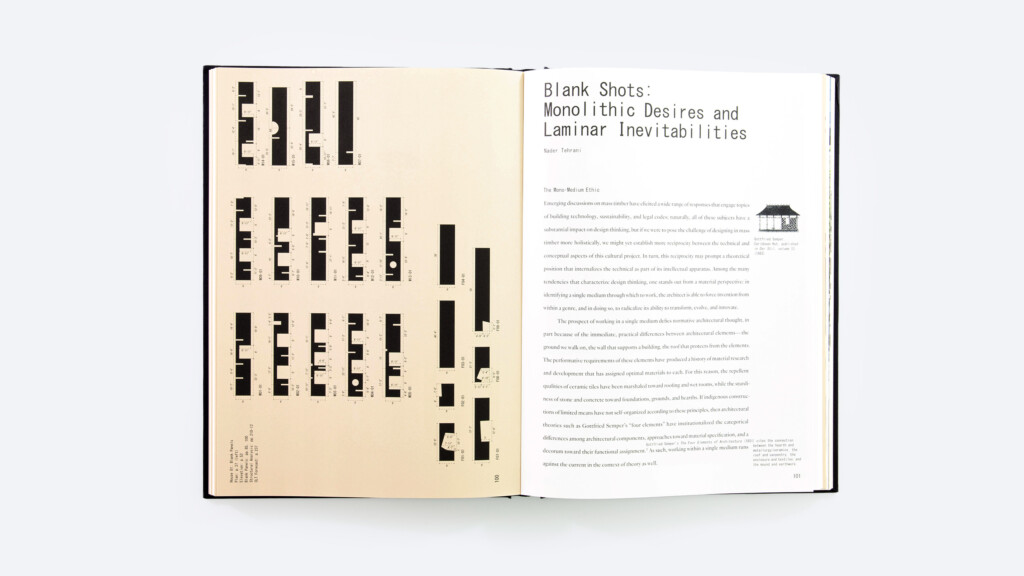
Blank: Speculations on CLT (Applied Research + Design Publishing, 2021), by faculty members Hanif Kara and Jennifer Bonner, explores the history and future of cross-laminated timber as a building material.
The Kinetic City & Other Essays (ArchiTangle, 2021) presents selected writings from Rahul Mehrotra, chair of the Department of Urban Planning and Design and John T. Dunlop Professor in Housing and Urbanization. Mehrotra writes about the concept of the “Kinetic City” (as opposed to the “Static City” conceptualized on many city maps) and argues that the city should be seen as “patterns of occupation and associative values attributed to space.”
Looking for fiction? Check out Death by Design at Alcatraz (Goff Books, 2022) by Anthony Poon (MArch ’92). Described by LA Weekly as “The Fountainhead meets Squid Game,” it’s a mystery about architects being murdered during a competition to design a new museum at Alcatraz.
Photographer Mike Belleme and landscape-urbanist Chris Reed, professor in practice of landscape architecture at the GSD, collaborated on Mise-en-Scène: The Lives & Afterlives of Urban Landscapes (ORO Editions, 2021). It includes case studies of seven cities: Los Angeles, Galveston, St. Louis, Green Bay, Ann Arbor, Detroit, and Boston. Reed describes Mise-en-Scène as “a collection of artifacts and documents that are not necessarily intended to create logical narratives, more intended as a curated collection of stuff that might reverberate . . . to offer multiple readings, multiple musings, multiple futures on city-life.”
What makes an environment “responsive”? Responsive Environments: An Interdisciplinary Manifesto on Design, Technology and the Human Experience (Actar, 2021), from the GSD’s Responsive Environments and Artifacts Lab (REAL) and co-authored by Associate Professor in Practice of Architectural Technology Allen Sayegh, Stefano Andreani (MDes ’13), and Matteo Kalchschmidt, uses case studies to examine our “technologically-mediated relationship with space.”
Formulations: Architecture, Mathematics, Culture (MIT Press, 2022) by Andrew Witt, associate professor in practice, draws from Witt’s GSD seminar “Narratives of Design Science” and examines the relationship between mathematical calculation systems and architecture in the mid-20th century.