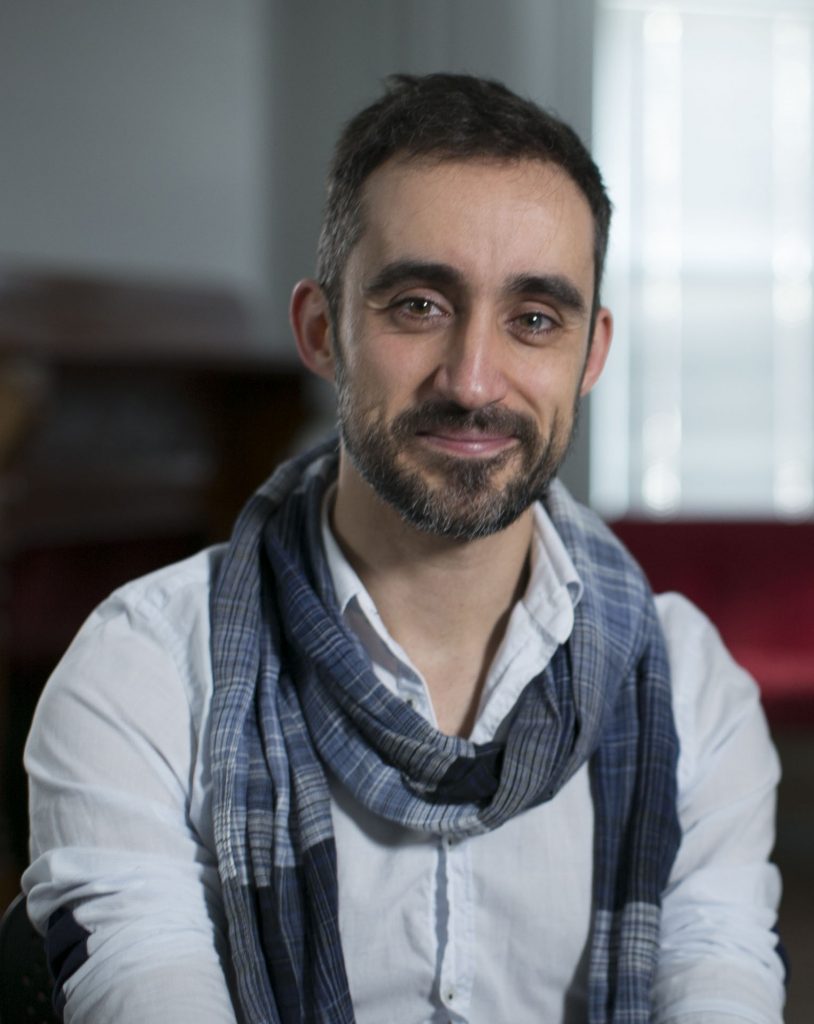
Kingston University London’s Town House, Engineered by Hanif Kara’s AKT II and Designed by Grafton Architects, Wins 2021 Stirling Prize

Kingston University London’s Town House, Engineered by Hanif Kara’s AKT II and Designed by Grafton Architects, Wins 2021 Stirling Prize

Date
Nov. 29, 2021
Author
Barbara Miglietti
Hanif Kara’s 2021 Stirling Prize winning project
2021 Stirling Prize winner, Kingston University London’s Town House. Designed by Grafton Architects. Engineered by AKT II. Photo by Ed Reeve.

The Royal Institute of British Architects (RIBA) has awarded Kingston University London’s Town House the 2021 Stirling Prize . Currently in its 25th year, the Stirling Prize is RIBA’s most prestigious award. It is given annually to a new building in the United Kingdom considered to have made a significant contribution to the discourse of architecture in the past year.

Structural engineering for the Town House was provided by AKT II , the global firm co-founded in 1996 by Professor in Practice of Architectural Technology Hanif Kara. The building was designed by Dublin-based architecture firm Grafton Architects . Founders Yvonne Farrell and Shelley McNamara held the GSD Kenzo Tange Chair in 2010. Last year, Grafton Architects won the Pritzker Architecture Prize and the RIBA Gold Medal.

Interior courtyard space of the building.
Town House has a public forum, a library, a dance studio and theatre.

Town House is described as a welcoming and transparent public place. It celebrates and encourages human encounters with large public terraces, wide staircases, and open-plan study areas that look across dance studios and performance spaces. Speaking for the Stirling Prize jury, Lord Norman Foster describes the building as “a theatre for life—a warehouse of ideas. It seamlessly brings together student and town communities, creating a progressive new model for higher education, well deserving of international acclaim and attention. In this highly original work of architecture, quiet reading, loud performance, research, and learning can delightfully coexist. That is no mean feat.”

The project marks the fourth time since 2000 that AKT II has been honored with the Stirling Prize. Previous wins include the Peckham Library and Media Centre in 2000, the University of Cambridge Sainsbury Laboratory in 2012, and the Bloomberg Headquarters in 2018. As design director at AKT II, Kara follows a “design-led” approach in his practice. His interest in formal innovation, materiality, sustainability, and complex analytical methods have allowed him to work on multiple groundbreaking projects and address many of the challenges facing our built environment.

In 2018, Kara spoke with Travis Dagenais about the research, engineering, and collaboration behind the Stirling Prize-winning Bloomberg headquarters in London.

Gareth Doherty Selected as CELA Regional Director

Gareth Doherty Selected as CELA Regional Director

Date
Nov. 10, 2021
Author
Barbara Miglietti

Gareth Doherty, director of the Master in Landscape Architecture Program and associate professor of landscape architecture, has been voted onto the board of the Council of Educators in Landscape Architecture (CELA) . He will assume the role of the CELA director of Region 7, which includes Connecticut, Maine, Massachusetts, New Hampshire, Rhode Island, andVermont, and the provinces of New Brunswick, Newfoundland, Nova Scotia, Prince Edward Island, and Quebec.

“I first participated in a CELA conference, ‘Languages of Landscape Architecture,’ in June 2004 at Lincoln University in New Zealand. I greatly benefited from the comments received on my paper, not to mention the knowledge gained from the lectures and panels and the casual conversations over dinner, or on a bus. To this day, I remain friends with several of the participants from that conference way back in 2004. To me, this shows how effective CELA can be in providing a platform for sharing knowledge, ideas, and friendships,” recalls Doherty . “I’m thrilled to be part of CELA and to play a role in encouraging the sharing of new knowledge. As academics, we need to exchange ideas to thrive. And our institutions need CELA to thrive too.”

Doherty received his Doctor of Design degree from the GSD and his Master of Landscape Architecture and Certificate in Urban Design from the University of Pennsylvania. His teaching, research, and publications consider “people-centered issues alongside environmental and aesthetic concerns” through the framework of human ecology. His research also “advances methodological discussions on ethnography and participatory methods by asking how a socio-cultural perspective can inspire design innovations.”

Faculty- and Alumni-led Firms Named AN Interior Top 50 Architects 2021

Faculty- and Alumni-led Firms Named AN Interior Top 50 Architects 2021

Interior of the theatre before the show
Detroit Public Theatre, Theatre Pre-Show (Dash Marshall)

AN Interior Magazine and the Architect’s Newspaper recently announced their “Top 50 Architects 2021,” and a number of GSD faculty- and alumni-led firms are among this year’s picks. Currently in its fourth iteration, the annual Top 50 list is chosen by editors to highlight design firms working in North America at the forefront of interior design and architecture.

According to AN Interior Magazine, “The list is intentionally diverse by firm size, reputation (many are quite young, while others have been leading the pack for decades), demographics, geographic location in North America (including Mexico and Canada), and type of work—everything from large public and institutional projects to single-family homes and installations.”

Faculty-led firms on the list include Dash Marshall , a multidisciplinary design studio co-founded by Design Critic in Architecture Ritchie Yao (MArch ’07), Bryan Boyer (MArch ’08), and Amy Yang. The practice, which is featured for the second year in a row, operates at the intersection of architecture, interiors, and civic strategy, believing that “architecture and interiors, buildings and cities can be better. Not only should they be more inspired and joyous, but they should help us live, work, and play more effectively.”

OMA New York , founded by Professor in Practice of Architecture and Urban Design Rem Koolhaas, was also recognized. Among the firm’s current projects is the 11th Street Bridge Park design, which is led by OMA partner Jason Long (MArch ’04) with associate Yusef Ali Dennis.

Other GSD-affiliated studios to make the list include:

Faculty-led CO-G Wins WS Development’s Inaugural Design Competition for Public Art

Faculty-led CO-G Wins WS Development’s Inaugural Design Competition for Public Art

A pavilion sits in the centre of a plaza in Seaport, Boston. The pavilion is cobalt-blue and gray, with layers of puffy polished vinyl cells packed with recycled denim, hung from a timber frame in layers.
“Loose Fit” by CO-G principal designer Elle Gerdeman. Photography courtesy of CO-G.
Date
Nov. 1, 2021
Author
Tosin Odugbemi

CO-G , the design studio led by Design Critic in Architecture Elle Gerdeman, is a winner of WS Development ’s new biennial juried competition, Design Seaport . Emerging practices were invited to submit designs for public art that “engages, inspires, and unites” the fast-growing Boston neighborhood.

The puffy, cobalt-blue installation—incorporating recycled denim and foam—plays on Gerdeman’s early career in fashion. An interest in materiality, tectonic assemblies, maintenance, construction, and weathering finds its way into all of her work.

Read more about the project on the Interior Design website.

Three Student Proposals Addressing the National Housing Crisis Place at the 2021 Hack-A-House Competition

Three Student Proposals Addressing the National Housing Crisis Place at the 2021 Hack-A-House Competition

Aerial photograph of an urban scene with the text: site example. 182-185 Dougley Street. 4-story mixed residential and retail.
A slide from Legacy Living's presentation. The project is the 2021 winner of the competition's Policy Regulatory Reform category.

Proposals developed by three groups of Harvard Graduate School of DesignGSD students were recently recognized at the 2021 Hack-A-House competition . Hosted by Ivory Innovations and co-sponsored by the Joint Center for Housing Studies at Harvard University, the annual 24-hour charette-style competition seeks solutions to the national housing crisis. Once given a prompt, teams of one to five students have 24 hours to submit an innovative proposal for a problem directly affecting housing affordability in one of three categories: Finance, Regulatory & Reform, or Construction & Design. The solutions seek to create economic opportunities for vulnerable populations in the participants’ communities and beyond.

A slide from a powerpoint presentation showing the flowcart from warehouse, office, retail, and residential to a mix-used building.
A diagram of the proposed mixed-used multigenerational housing development from the Legacy Living team’s slide deck.

“Legacy Living: A Pathway to Affordable Multi-Generational Homeownership” by Miguel Lantigua-Inoa (MArch II ’23), Margaux Wheelock-Shew (MArch II ’23), Adam Yarnell (MDes EE ’22), and Arami Matevosyan (MDes REBE ’22) was the winner in the Policy & Regulatory Reform category. The team addressed the lack of affordable elderly housing, the projected shortage of home health aides, and the increasing percentage of adults over the age of 65 in the United States. In response, the project proposes the development of mixed-use, multigenerational housing that includes healthcare services alongside traditional retail outlets.

Watch the team’s video presentation .


A diagram of modular construction from the Union Squared team's slide deck.
A diagram of modular construction from the Union Squared team’s slide deck.

“Union Squared: A Housing Typology for ALL Households” by Cassie Gomes (MArch I ’22) and Angela Blume (MArch I ’22) was a runner-up in the Construction & Design category. The proposed project seeks to make homeownership affordable to 30 percent of area medium income (AMI) households by providing a “diverse assortment of housing types for varying household arrangements” through a “catalogue of parts that can be used to expand a house over time.” The team identified modular construction as an affordable and efficient method that can expand incrementally based on household needs.

Watch the team’s video presentation .


A diagram from the Assumable Mortgage Financing teams slide deck describing the proposed pilot project in Lowell.

“Assumable Mortgage Financing: Affordable Equity-Building in Gateway Cities” by Zoe Iacovino (MUP/MPP ’23), Claire Tham (MUP ’23), Chadwick Reed (MUP ’22), and Allison McIntyre (Tufts University) was a runner-up in the Policy & Regulatory Reform category. The project seeks to combat gentrification in cities on the peripheries of major metro areas, like Lowell, MA, that are facing population growth in the wake of mass adoption of work-from-home policies due to COVID. Team Undecided proposes that ARPA (American Rescue Plan Act) funds are used to originate assumable mortgages on homes in neighborhoods subject to gentrification to allow an affordable path to homeownership for lower income residents in Lowell and beyond.

 Watch the team’s video presentation . 

This is the second year in a row that GSD students have placed in the annual Hack-A-House Competition. In 2020, Iacovino, Reed, Ryan Johnson (MUP ’22), and Gianina Yumul (MUP ’22) won the competition’s grand prize in the Policy & Regulatory Reform category for their project, “Parking Lot Potential: Converting excess parking to affordable manufactured housing in a post-COVID world.”

Faculty-led KARAMUK KUO Wins Competition for New Research and Laboratory Building in Basel

Faculty-led KARAMUK KUO Wins Competition for New Research and Laboratory Building in Basel

Interior space of the building with main stair in the center
The 32,000-square-meter (350,000-square-foot) building is the anchor in a masterplan by Herzog de Meuron that transforms the industrial Rosental Mitte area into an open and vibrant science campus. Image courtesy of KARAMUK KUO.
Date
Oct. 27, 2021
Author
Barbara Miglietti

KARAMUK KUO , the Zurich-based architecture office led by Ünal Karamuk and GSD Assistant Professor in Practice Jeannette Kuo, has won the competition to construct a new laboratory and research building in the center of Basel, Switzerland. The competition was conducted anonymously, with 48 international firms participating in the first round and 13 firms selected for the competition. Utilizing innovative hybrid timber and a concrete structure, the project incorporates flexibility, durability, and sustainability. According to a press release by the Building Department of Basel, “The jury, chaired by city architect Beat Aeberhard, unanimously voted for KARAMUK KUO.”

Interior view from ground floor with vegetation
Image courtesy of KARAMUK KUO.
Exterior of building viewed from the street
Image courtesy of KARAMUK KUO.

The 32,000-square-meter (350,000-square-foot) building is the anchor in a masterplan by Herzog & de Meuron that transforms the industrial Rosental Mitte area into an open and vibrant science campus. With leasable lab spaces, a science lounge, and teaching and conference spaces, the building will be a hub for scientific exchange, bolstering the city’s biochemical and pharmaceutical industries. The University of Basel’s chemistry department is expected to be the primary tenant and will occupy half of the new laboratory space for the next decade.

Read a press release about the project from the City of Basel.


Student-Developed Environmental-Impact Assessment Tool Released for Grasshopper

Student-Developed Environmental-Impact Assessment Tool Released for Grasshopper

Screenshot of the plugin showing a rendering and systems analysis.
Cardinal LCA allows users to input their own Environmental Product Declaration (EPD) data and develop their own library. The tool's outputs are shared through Excel.
Date
Oct. 25, 2021
Author
GSD News

Cardinal LCA , an early-stage environmental-impact assessment tool developed by Jessica Chen (MDes EE ’22) and Kritika Kharbanda (MDes EE ’23), was recently released as a Grasshopper plug-in. Designed for non-experts, the tool allows architects to analyze the environmental costs of material decisions in the early stages of the design process.

The framework for the tool was formed in “Advanced Topics on Embodied Carbon in Buildings,” a fall 2020 seminar led by Jonathan Grinham, lecturer in architecture and senior research associate. The course provided “an open arena to address the environmental and human impacts of material management in the built environment through tangible, design-led learning.”

Rending of the plugin showing GWP by layer, a rendering, and a system analysis.
Outputs from the Cardinal LCA plug-in. “Using Cardinal LCA in early stages allows for quick estimation, with more carbon capture benefits,” note Chen and Kharbanda.

Over the summer, Chen and Kharbanda created an external team to develop their GSD research into a Grasshopper plug-in. “Currently, the product stages (A1-A3) are accounted for in the GWP [Global Warming Potential] calculation, and the study boundary includes early design stage elements in a Rhino model—the structure, envelope, and interior assemblies,” explain Chen and Kharbanda. “The tool analyzes the embodied impacts (GWP in kgCO2e) using the EC3 (US) and ICE 2019 (UK) databases.”

Users have the option to input their own Environmental Product Declaration (EPD) data and develop their own library, and the tool’s outputs are shared through Excel. The files include values, 2D graphs, and 3D mapping highlighting elements with the lowest and highest GWP contributions.

Cardinal LCA Demo (Source)
00:00
00:00

“Using Cardinal LCA in early stages allows for quick estimation, with more carbon capture benefits,” note Chen and Kharbanda. “It is easily integrated into the architectural workflow and architects save time by performing real-time visualizations. Further, architects can exercise the flexibility of controlling precision by using average or specific values.”

In September, the Cardinal LCA team received the 6th Annual MDes R&D Award to present their work at the American Center for Life Cycle Assessment (ACLCA) 2021 Conference .

Cardinal LCA can be downloaded from Food4Rhino .

Sara Zewde Collaborates with Adjaye Associates on Affordable Housing Redevelopment in Brooklyn

Sara Zewde Collaborates with Adjaye Associates on Affordable Housing Redevelopment in Brooklyn

Rendering of people enjoying the outside area around the complex.
Image courtesy of Adjaye Associates.

Underutilized land in Brooklyn is slated to become home to hundreds of units of affordable housing surrounded by abundant public green space, and the Harvard Graduate School of Design’s Sara Zewde will helm the design.

Zewde and her Harlem-based Studio Zewde will collaborate with Sir David Adjaye and Adjaye Associates to reshape 7.2 acres of the Kingsboro Psychiatric Center campus in East Flatbush, Brooklyn. The redevelopment of such a sizable swath of land is part of New York State’s $1.4-billion Vital Brooklyn initiative. Launched in 2017, the initiative seeks to address inequities in some of Central Brooklyn’s most underserved neighborhoods, offering development plans scaffolded by eight integrated goals: open space and recreation, healthy food, education, economic empowerment, community-based violence prevention, community-based health care, affordable housing, and resiliency.

Zewde and Adjaye’s proposal for Kingsboro—chosen via a design competition—calls for 900 units of affordable and supportive housing as well as senior housing, with a set of apartments reserved for homeownership programs. The proposal also includes two new, state-of-the-art homeless shelters. Responding to Central Brooklyn’s status as one of New York’s most extreme food deserts, Zewde and Adjaye have grounded their proposal with a grocery store, which is expected to serve as a core commercial center. A 7,000-square-foot community hub will include a workforce training center, performance space, fitness facilities, classrooms, an urban farm and greenhouse, and other dedicated community spaces. There will be free WiFi access throughout.

Rendering of the complex.
Image courtesy of Adjaye Associates.

“The redevelopment of a portion of Kingsboro Psychiatric Center will bring more affordable housing to a community that desperately needs it, and the opportunities for healthier and greener living,” says Eric Adams, Brooklyn borough president and Democratic nominee in the 2021 New York City mayoral election. “As someone who has long promoted the need to overhaul our local food system, I am particularly glad to see that this project will include urban farming opportunities to connect people to healthy foods and activities.”

With Zewde and Adjaye spearheading design, the project more broadly will be led by a development team composed of Almat Urban, Breaking Ground, Brooklyn Community Services, the Center for Urban Community Services, Douglaston Development, Jobe Development, and the Velez Organization. Next steps for designers and developers will include community engagement work with local stakeholders and community boards in the coming months. The project is expected to be completed in about four years.

Julie Bargmann (MLA’ 87) wins inaugural Cornelia Hahn Oberlander International Landscape Architecture Prize

Julie Bargmann (MLA’ 87) wins inaugural Cornelia Hahn Oberlander International Landscape Architecture Prize

Date
Oct. 14, 2021
Contributor
Travis Dagenais

The Oberlander Prize, an initiative of The Cultural Landscape Foundation, includes a $100,000 award and two years of public engagement activities focused on the laureate and landscape architecture

The Cultural Landscape Foundation (TCLF) has named Julie Bargmann (MLA ’87) the winner of the inaugural Cornelia Hahn Oberlander International Landscape Architecture Prize (Oberlander Prize), a biennial honor that includes a $100,000 award and two years of public engagement activities focused on the laureate’s work and landscape architecture more broadly. The Prize is named for the late landscape architect Cornelia Hahn Oberlander (BLA ’47) and, according to TCLF, is bestowed on a recipient who is “exceptionally talented, creative, courageous, and visionary” and has “a significant body of built work that exemplifies the art of landscape architecture.”
photograph of landscape architect standing in forest

Julie Bargmann (MLA ’87), 2021 Oberlander Prize laureate. Photo ©Barrett Doherty courtesy The Cultural Landscape Foundation

The international, seven-person Oberlander Prize Jury selected Bargmann from among over 200 nominations from across the world. In naming Bargmann the inaugural winner of the Oberlander Prize, Jury Chair Dorothée Imbert noted Bargmann’s “leadership in the world of ideas, her impact on the public landscape, her model of an activist practice, and her commitment to advancing landscape architecture both through teaching and design.” As Bargmann has said of herself: “The two ends of my barbell are designer-artist and political animal.” “The goal in establishing the Oberlander Prize was to increase the visibility, understanding, appreciation and conversation about landscape architecture,” said Charles A. Birnbaum, TCLF’s President and CEO. “The selection of Julie Bargmann as the inaugural laureate, a provocateur and innovator, is an excellent way to engage the public and usher in this next phase of the Oberlander Prize.” The announcement of the laureate will be followed by the inaugural Oberlander Prize Forum, Courageous by Design, on Friday, October 15, 2021, at Highline Stages in New York City, and focuses on the landscape architects who are the leaders in addressing the climate crisis in New York City. A native of Westwood, New Jersey, Bargmann is a Professor of Landscape Architecture at the University of Virginia in Charlottesville, VA, and the founder of D.I.R.T. (Dump It Right There) studio. She attended Carnegie Mellon University, where she received a Bachelor of Fine Arts in Sculpture, and Harvard Graduate School of Design (Harvard GSD), where she earned a Master in Landscape Architecture in 1987. While studying at Harvard GSD, Bargmann and classmate Stephen Stimson (MLA ‘87) worked for landscape architect Michael Van Valkenburgh, Harvard GSD’s Charles Eliot Emeritus Professor in Practice of Landscape Architecture. Bargmann would go on to work for Van Valkenburgh over two stints until 1992, the year she began teaching at the University of Minnesota and founded D.I.R.T. studio. In March 2021, Bargmann presented Harvard GSD’s annual Daniel Urban Kiley Lecture, with a talk entitled “Modesty.” Bargmann first tested her design and teaching approaches through her work at mining and manufacturing sites. While at the University of Minnesota, she created “Project D.I.R.T.” and spent months examining mines in Minnesota, South Dakota, Wyoming, Utah, Arizona, Virginia, Kentucky, Indiana, and Illinois. “I studied and sometimes literally crawled through mining and manufacturing sites, many of them defunct,” Bargmann said. “I wanted to see how they were being treated, and in most cases, I disagreed with what I witnessed. Restrictive reclamation policies, uninspired remediation practices, and shallow readings of former working sites—I became openly critical of all these things but was also inspired by them. They instilled in me the desire to offer design alternatives and led me to create experimental studios.” Bargmann also collaborated with the U.S. Environmental Protection Agency (EPA) on design studios focused on twelve Superfund sites, including Avtex Fibers in Front Royal, VA, Roebling Steel (site of the design and manufacturing of parts for the Brooklyn Bridge) in Roebling, NJ, that needed help with planning and design. Every site provided a lesson in looking at how to apply emerging technologies, rather than defaulting to conventional practices. Toxic sites become isolated by necessity but don’t go away, so D.I.R.T. sought to find ways to reconnect them to adjacent neighborhoods. Bargmann has consistently operated with the theory that industrial and social histories combine to create the connective tissue that reforms and revitalizes communities. Bargmann has taught at the University of Virginia since 1995 and cited the “incredible support and trust from my colleagues at UVA to really do anything I want.” She added: “Teaching allowed me to really experiment. I don’t know how I would have done it just through practice.” Formation of the Oberlander Prize began in 2014, amid TCLF’s efforts to prevent the demolition of the Frick Collection’s Russell Page-designed viewing garden on East 70th Street in New York City.  The Prize is supported by a lead million-dollar gift by TCLF Board Member Joan Shafran and her husband Rob Haimes, as well as generosity of additional donors, including members of the 100 Women Campaign. The Prize has also benefited from strategic advice from Jill Magnuson and other senior leadership at the Nasher Sculpture Center, and from Martha Thorne, former Executive Director of the Pritzker Prize, among others. “We are very fortunate, grateful and humbled by all who participated in this journey and for so many supporters,” TCLF”s Birnbaum noted, adding, “ and, most importantly, we have as our North Star Cornelia, the grande dame of landscape architecture.”

Coming Soon: Harvard Design Magazine #49: Publics questions how public spaces operate in a fragmented social and political environment

Coming Soon: Harvard Design Magazine #49: Publics questions how public spaces operate in a fragmented social and political environment

Photograph of six young children peering through a chainlink fence into a park.
Gordon Parks, Outside Looking In, Mobile, Alabama, 1956. Courtesy of and © The Gordon Parks Foundation.
Date
Oct. 13, 2021
Contributor
Travis Dagenais
Harvard Design Magazine relaunched with March 2021’s Harvard Design Magazine 48: America, an issue that interrogated the essence and the history of the United States. This November, the magazine returns with another timely inquiry, one that has both rigor and curiosity at its center. Harvard Design Magazine 49: Publics questions how public spaces—the physical, the cultural, and the theoretical—operate in a fragmented social and political environment, both in the US and abroad. Guest editors Anita Berrizbeitia and Diane E. Davis convene leading public intellectuals, scholars, and practitioners in architecture, urban planning, landscape design, law, and the social sciences and humanities to investigate design theories and outcomes percolating at the heart of national and global cultural discourse. They ponder the fate of “the public” in a world where xenophobic thinking and challenges to communal responsibility are, as the editors observe, becoming ever more dominant, and in which individualism poses a corrosive challenge to collectivity and unity. This issue integrates theoretical and thematic debates, including over who holds the power to define what is “public,” what roles class, ethnicity, and other identity matrices play in the concept of “the public,” and how the core idea of “a public” may survive—or atrophy—given looming environmental crises and deepening political and economic divisions. Publics enriches this dialogue with spatial and material looks at how the public is constructed and shaped through design projects and cultural production. Berrizbeitia and Davis contribute unique, complementary lenses to this well-timed inquiry. Chair of the Harvard Graduate School of Design’s Department of Landscape Architecture, Berrizbeitia has led studios investigating innovative approaches to the conceptualization of public space, especially on sites where urbanism, globalization, and local cultural conditions intersect. Trained as a sociologist, Davis chaired the GSD’s Department of Urban Planning and Design, with research interests covering the relations between urbanization and national development, comparative urban governance, socio-spatial practice in conflict cities, urban violence, and new territorial manifestations of sovereignty. Each has published a wide array of books, journal articles, and other editorial work. Collaborating with Editorial Director Julie Cirelli and Publications Manager Meghan Ryan Sandberg, Berrizbeitia and Davis invited design observers and critics from within the GSD and beyond. The magazine’s introductory essays include contributions from Walter Hood, Sara Zewde, and architectural collaborative Assemble. The heart of Publics applies the immersive editorial structure and spatial rhythm established by its predecessor. In “Sites,” Toni L. Griffin muses on “South Side Land Narratives: The Lost Histories and Hidden Joys of Black Chicago.” “Spaces” offers observations from Frida Escobedo, Ali Madanipour, and others, analyzing what constitutes public space. “Scales” investigates ways in which the concept and shapes of “the public” interact with shared cultural concerns, including environmental justice, public health, and Indigenous land rights. And “Subjects” interrogates the very definition of “public”—especially the people for whom designers shape and create space. Publics concludes with a call-and-response segment, in which contributors including Christopher Hawthorne, Lizabeth Cohen, and others respond to a provocative prompt: “What is the most important public space worth preserving now?” Answers range from city sidewalks to Boston’s Franklin Park, to the Mississippi River Gathering Grounds, to your own backyard. The editorial structure Cirelli introduced with America provides an avenue through which design observers and others can constructively and collaboratively explore complicated issues and themes. Cirelli continues to refine the magazine’s voice, design, and feel, and she explains that the guest-editor model presents an opportunity to infuse fresh and diverse direction and voice in each issue. “By exploring what constitutes a public, Anita and Diane have struck at one of the fundamental questions of our moment: What are our rights, as human bodies on this earth? What belongs to us? What should belong to us, but doesn’t?” says Cirelli. “The scholars and practitioners we’ve invited to explore notions of the public have demonstrated how health, education, housing, access to food and clean water, and the right to advocate for oneself and one’s community all have a common thread. And as we pull that thread, the mechanisms of power and privilege are revealed. ” Harvard Design Magazine is an architecture and design magazine that probes at the reaches of design and its reciprocal influence on contemporary culture and life. Published twice a year and helmed by Editorial Director Julie Cirelli at Harvard’s Graduate School of Design, Harvard Design Magazine invites guest editors to consider design through an interdisciplinary lens, resulting in unique perspectives by an international group of architects, designers, students, academics, and artists. For current and back issues, as well as subscription information and stockists, visit the Harvard Design Magazine website.