The Lessons of Grenfell
In the early hours of June 14, 2017, a fire engulfed Grenfell Tower, a high-rise residential building in West London. Most Londoners remember where we were that day as events unfolded. The catastrophe led to the deaths of 72 people and caused severe trauma for the survivors, the community, and the nation. The Grenfell tragedy exposed a series of systemic failures in building regulations, safety protocols, and emergency response strategies in the United Kingdom. The fire prompted an extensive investigation, known as the Grenfell Tower Inquiry , that recently released a series of findings that detail the causes of the incident, assign accountability, and assess broader implications.
Many of the factors that led to the disaster have been known to the public for years. At the time of the fire, shiny aluminum cladding had been newly installed over the building’s plain brick facade, in part to improve insulation and in part to provide wealthy neighbors with a more aesthetically pleasing view. The cladding proved to be incendiary, spreading flames originating from an electrical fire with devastating speed, preventing escape, and denying access to emergency responders. The “stay put” policy in the UK, by which high-rise residents are advised to await evacuation in their homes, compounded the issue. But it has become clear that there is far more to the tragedy than the cladding or the evacuation procedures.
The Inquiry underscores that the Grenfell fire did not occur in a vacuum: it was the result of years of policy failures, austerity measures, and disregard for tenant safety and tenant protest. The report is thorough, and its findings will continue to make a deep mark on history. It should be a wake-up call to the entire architecture profession, the construction industry, government regulators, and those responsible for educating the next generations of professionals in these fields.
Indeed, professionals with the courage to confront the implications of this report should recognize it as a source of shame and grief. As a structural engineer who has campaigned to improve the architect’s role in design and who works with architects on a daily basis, I am not surprised by the Grenfell Inquiry’s findings, but that hardly diminishes the moral anguish those findings provoke. The Inquiry lays bare the fragmentation of the discipline and the diminished agency of architects. In response, the profession needs to shake off its powerlessness and take control.
The Inquiry underscores that the Grenfell fire did not occur in a vacuum: it was the result of years of policy failures, austerity measures, and disregard for tenant safety and tenant protest.
Yet, this process is far from complete, if we can even say it has begun in earnest. The Grenfell Inquiry took seven years to deliver the final report, and the initial reaction of the UK government raises new questions for all individuals and institutions to consider. Change is happening far too slowly at many levels, including in the education of designers upstream and the retrofitting of many other towers for safety downstream. How many design courses introduce such cases early in the curriculum? What is the level of competency of professionals in general? Who will fund the repair of similar unsafe building? When?
Professor Luke Bisby of the University of Edinburgh, in a section of his report titled “The Path to Grenfell,” pointed to many years of “missed opportunities” that could have reduced the risks when giving his damning opinion of the deep roots of one cause. “Performance based’ systems introduced in the 1980s as part of a deregulation package delivered by [Margaret] Thatcher,” Bisby notes, made the regulatory system more permissive without a mechanism to ensure those dispensing fire safety advice had the requisite competences adding, “I mean the system was created specifically to enable people to circumvent the rules.” To try to understand Grenfell we must not deny that safety often comes second or third to financial targets and other criteria in the housing of the most vulnerable.
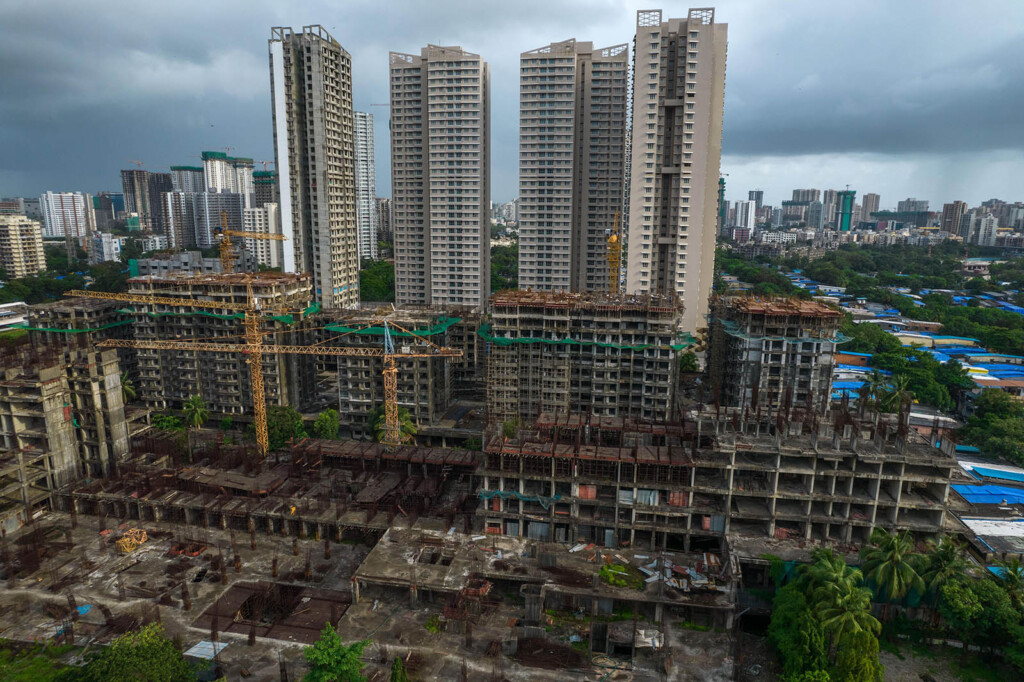
Grenfell Tower comprised primarily council housing for lower-income residents, including many recent immigrants. As a global symbol, it embodies safety issues that stem from housing inequality. In underserved neighborhoods of Los Angeles, New York, Mumbai, or São Paulo, marginalized communities are left to live in deteriorating, unsafe homes. Deregulation and budget cuts are a universal pattern that have left billions vulnerable to a host of risks in addition to fire.
In parallel to the Inquiry, the government appointed chemical engineer Dame Judith Hackitt to examine the fire regulatory system. The Hackitt Review focuses on high-rise safety, examining why the Grenfell catastrophe happened and whether similar buildings are at risk. Dame Hackitt found a “broken system” with weak, easily “gamed” regulations that allowed violators to pay very low penalties. The Hackitt Review also highlighted the need for a more robust and transparent system for building safety. As Dame Hackitt writes, “there is a need for a radical rethink of the whole system and how it works. This is most definitely not just a question of the specification of cladding systems, but of an industry that has not reflected and learned for itself, nor looked to other sectors.”
To be sure, some major reforms have been implemented, including a ban on combustible cladding on buildings over 18 meters in height. The Building Safety Act of 2022 introduced further measures, including the establishment of a new Building Safety Regulator responsible for overseeing the safety of high-rise buildings and ensuring that developers and contractors comply with stricter fire safety standards. This led to widespread changes in regulations—approximately 175 changes—as well as the introduction of an assigned “duty holder,” an entity responsible for a project from concept to construction and even post occupancy, with a mandate to oversee fire safety at each step. Architects have been encouraged to take a leadership position, including as duty holders, in advocating higher safety standards and practices, thereby fostering a culture of accountability within the industry.
This goes beyond fire: we struggle as an industry to adequately address hazard and risk across all fronts.
This apportioning of blame and accountability to the architect’s studio has sent a shudder through the profession, where widespread understanding of fire safety principles is undoubtedly lacking. Next time, the tragedy could be the collapse of a mass timber building, designed to conform to fire safety protocols never intended for an exposed timber structure but applied anyway.
The areas of greatest risk appear to sit at the intersection of different design disciplines, where no one person is fully able to coordinate the whole. The level of technical knowledge required to establish a holistic fire safety strategy would appear to preclude the architect as lead. Even the fire engineer will often not fully consider the detailing of the building fabric and structure. So, then, who can oversee a holistic process? This remains an open question, but it seems clear we should seek knowledge beyond the narrow definition of our individual design professions. We all need to be part of the discussion. We need to make space for this in our training.
We live in a complex world, which becomes ever more complex daily. Can we be expected to maintain expertise across all fronts? No, but we should be expected to seek to identify the limits of our knowledge and address these deficiencies where possible rather than pass the buck. It has been said that the most difficult thing is to know what we do not know. A humbler approach to the potential for ignorance would be prudent.
This goes beyond fire: we struggle as an industry to adequately address hazard and risk across all fronts, especially in relation to the risk management of the automotive or aviation industries. We might say this is a more general human failure, not one owned by architects or designers. We tend to prioritize what is in recent memory; we struggle to scan the horizon for the hazards just out of sight and are even less inclined to dedicate resource to prevention when the hazard seems distant. We soon forget what has come before, unless forced to confront it. How quick we have been to defund pandemic response planning?
The more subtle the hazard the less likely we are to respond. A fire is immediate and obvious in its consequence. The need to act once confronted with such an event is strong, though it still takes time. The tragedy at Grenfell happened in 2017; significant changes to the building safety regime in the UK began to take effect in 2023. The climate emergency by contrast can seem slow, almost invisible. The effects are more subtle and integrated with other forces, difficult to see clearly, distant. A single death is a tragedy, 72 deaths is a catastrophe at a scale we can still comprehend. The millions of deaths that are likely to be the result of gradual climate change—these run the risk of being a mere statistic.
What to do as designers? The Grenfell Inquiry provides some direction, but the quandary goes deeper. Yes, we need to recognize the value of design and ensure time and money is dedicated to it across all projects. But then we must also ensure our design efforts are prioritized appropriately. We need to embrace again the realities of building safely. We need to design for positive societal benefit and a minimum of negative external effects. We need to design for longevity and to avoid unnecessary waste. We need to shun the allure of the hero image alone, taken the day after completion, devoid of people and life. We need to do this from the earliest stages of education.
The technicalities of design are not something to shoehorn in afterwards. Designers like to solve problems; if they cannot see a problem (or they don’t like the one in front of them) they are inclined to invent one. Solutions to these fabrications are for nothing, though, if the world is not fit for people. The real problems that we must urgently solve have been staring us in the face for a while now. We all need to give them the attention they deserve.
Can a National Housing Policy Solve the Affordability Crisis in Cities?
In the United States, where over 80 percent of the population lives in cities, a national housing plan is a housing plan for cities. Housing shortages are pervasive across the country—Zillow has estimated a 4.5-million-unit shortage nationwide. And while they are especially acute in coastal metropolitan areas, like Portland or Boston, even markets in the middle of the country, like Austin and Denver, have deep housing deficits . Renters, who are often more vulnerable to the winds of housing market fluctuations, tend to make up more than 50 percent of residents in cities . Right now nearly half of all renters pay more than 30 percent of their income on housing and the number of unsheltered individuals has ticked up since the pandemic by nearly 16 percent. The housing crisis is so severe that it cannot be properly addressed without the heft of federal financing. Solving the problem requires a scale of resources that cities just don’t have on their own.
For cities, demand for housing is typically not the problem—people flock towards cities for jobs, amenities, and services. Rather, the root of the affordability crisis is the lack of housing supply. Housing takes time and great resources to produce at the scale needed to relieve pressure on prices. That is why mayors all over the country are keeping a close eye on the national housing platforms proposed by the presidential candidates. They’re making calculations and plans for how their locality can leverage this reinvigorated commitment from the federal government. For example, Vice President Kamala Harris’s proposal to expand the Low-Income Housing Tax credit and to open up other tax incentives to spur the development of housing, especially in distressed markets, should serve urban localities and their surrounding metro areas very well. Former President Donald Trump’s proposals are less forthcoming with details, but also mention tax incentives for first-time homebuyers. However, his strategy would only help affordability in cities if more supply is simultaneously built in the same location to absorb the people who want to transition from renting to ownership.
The fanfare of a national housing policy, however, should be tempered by the fact that most contemporary housing policy in the US is actually formulated and implemented by states and local municipalities. Zoning is perhaps the most important determinant of where, how much, and what kind of housing gets planned and produced. And zoning is squarely under local jurisdiction (where municipalities operate within the context of rules set by the states). The federal government has very few levers over local land use and zoning. It has been documented time and time again that restrictive land use regulations are one of the most notorious drivers of sluggish housing production and increasing housing costs . This is particularly true when looking at the under-supply of denser rental, multi-family housing (the type of housing most likely to constitute the more affordable stock for lower- and moderate-income households).
So how do the proposed national housing plans take into account this particular supply crisis in the context of US cities? For the most part, proposals from both candidates are a-spatial—there is no clear recognition of where, geographically, more housing is needed to address the affordability crisis. Both Harris and Trump talk about using federally owned lands to build new housing, but much of that land is far from high-cost cities.
Both Harris and Trump recognize the procedural and regulatory barriers to increasing housing supply at the local level. Harris has proposed a $40 billion “innovation fund” to support local strategies for building and financing housing production. Much of the (evidence-based) logic behind these ideas is that any supply, even market-rate units, will help to relieve excessive housing costs across the board. Trump’s policy details have been thin in this area as well, and his remarks have often focused on environmental regulations rather than density-related zoning codes. The biggest concern for any proposal, however, is that housing and land use regulations are so heterogeneous and particular to specific localities. It is hard to imagine how federal rules can be both nationally applicable and targeted enough to disrupt the city-specific regimes that have constrained housing production for decades.
A national housing platform is long overdue, and let’s hope it remains at the top of the national agenda after the election campaigns transition into governance and policymaking. However, it’s crucial that local municipalities keep their eyes on the prize: if any federal initiatives are to move the needle at the local level, there still needs to be a serious reckoning among city officials and planners around where and how much housing gets built. Local governments often come up against “unfunded mandates”—policies or regulations imposed without the financial resources to implement them effectively. We may be in the opposite situation: a renewed federal commitment to funding and incentivizing housing affordability, but in the context of stubborn local roadblocks that prevent it from being fully realized. Local municipalities will need to keep doing the hard work of making sure resources flow from the perch of the federal government to the foundations of new and abundant housing.
Rachel Meltzer, PhD, is the Plimpton Associate Professor of Planning and Urban Economics at the Harvard Graduate School of Design.
Housing Takes Center Stage in the Presidential Election
Every presidential election cycle, those who work on housing issues (“housers”) watch the policy debate hoping that the nation’s housing challenges get some attention from those in the race. For decades those hopes have been dashed as housing has barely received a mention. But this year housing has not only made an appearance on the political stage, it has taken a leading role. In this election, housing affordability has emerged as a critical issue not just for the country’s poorest households or those on the expensive coasts but for those solidly in the middle class and in the heartland. Renters across a broad spectrum are struggling to find apartments that don’t require an excessive share of their monthly income, while would-be homebuyers are increasingly priced out, if they can even find an available home in today’s historically tight market.
So what are the candidates proposing to address these issues? Vice President Kamala Harris has formulated a fairly detailed housing plan that both seeks to stimulate greater production of affordable homes and help households afford to buy one. On the supply side, she has proposed expanding the Low-Income Housing Tax Credit program (LIHTC), which has been the principal source of new affordable rentals since 1986. Harris has also proposed tax incentives for homebuilders to produce more entry-level homes, as well as a tax credit to support the construction and rehabilitation of homes for sale in distressed communities where these investments don’t pencil out. The plan also includes financial incentives for state and local governments to streamline restrictive regulations that currently limit housing production and support innovative means of developing homes.
The campaign asserts that these initiatives would enable the construction of three million new homes over four years. That goal is certainly ambitious; it would represent a roughly 50 percent increase in housing production over the current rate. But while the target may be difficult to achieve, the emphasis on efforts to expand the housing supply—particularly of affordable rentals and entry-level homes—represents a sea change in the federal approach to housing assistance that has largely focused on demand-side help in recent decades.
In fact, the Harris plan includes a substantial new program that would provide $25,000 in downpayment assistance to four million first-time homebuyers over the next four years. This proposal has raised concerns that it would spur inflation in a tight housing market. However, this concern would be mitigated if the supply-side initiatives are quickly implemented and successful. And given the stark racial differences in wealth in the US, failing to address this critical demand-side constraint would unfairly leave millions on the sidelines. Given the massive cost of supporting so many homebuyers, a smaller scale and more targeted program would be more likely to get passed by congress, less likely to be inflationary, and give more time for supply-side efforts to bear fruit.
Finally, the Harris plan calls for efforts to rein in investors in single-family rentals who may compete with first-time buyers. Her proposal would limit tax breaks available to investors and would curtail coordinated efforts by large property owners to share data to set rents. It is difficult to gauge how effective these approaches would be. Single-family rentals play an important role in expanding choice for renters and the national share of single-family homes for rent is not particularly elevated relative to historic standards, although the shares are high in selected markets in the South and West. Cracking down on firms that aggregate rental data to help owners set rents is also unlikely to turn back the clock on what is now a far more sophisticated industry with respect to mining data to assess market conditions.
The Trump campaign has also consistently highlighted housing affordability, although it has not released any detailed policy proposals, so the specifics of their approach are not known. The Republican platform simply calls for the limited use of federal land for housing construction, tax incentives for first-time homebuyers, and efforts to cut unnecessary regulations that raise housing costs. Former President Donald Trump’s principal talking point on the campaign trail has been that immigrants are a chief cause of housing inflation and that efforts to curb immigration and deport millions of immigrants will bring housing costs under control. Notwithstanding the substantial personal suffering and economic toll that massive deportation would entail, the argument that immigrants are behind the recent housing cost rise has been rebutted by numerous economists who note that there is only a small correlation between house prices, rents, and levels of immigration. Immigrants are also an important source of labor to help expand the supply of homes.
Having made it to the political stage, the question is whether housing will see greater action by the federal government once the dust settles on the election. Given the specifics of the Harris plan in my view there would be more hope of progress in a Harris administration. But most of her agenda will require congressional action and bipartisan legislation, which has been rare in these hyper-partisan times. Still, many of these proposals have strong support from both parties, building as they often do on existing proposed legislation. And the groundswell of public opinion that has brought housing to center stage is not going away, as home prices and rents continue to stay near record levels. Housers will be eager to see how this drama unfolds, keeping hope alive that there will be meaningful action to address our country’s significant need for decent, affordable homes.
Chris Herbert is the managing director of the Joint Center for Housing Studies of Harvard University.
The Forest for the Trees (and the Birds, and the People, and the Planet)
As we continue to face the twin crises of rapidly accelerating climate change and biodiversity loss, city leaders and city residents are especially feeling the heat. The increasingly desperate need to radically cool cities is becoming widespread news , and the appointment of chief heat officers in cities as widespread as Athens , Miami, and Freeport, Sierra Leone , is a testament to the urgency of the issue. Many factors contribute to both the climatic challenges and the loss of biodiversity in cities (including, simply, the construction of buildings and streets), but one solution stands out: trees.

Trees are known for their inherent ability to provide shade, and therefore to cool the environment. In many cities generally, and especially in urban neighborhoods with predominantly Black, Brown, multi-ethnic, and socially vulnerable communities, the pervasive lack of a healthy tree canopy contributes to soaring temperatures and negative public health outcomes. This is just another way in which lower income, racially and ethnically diverse communities (often referred to as “environmental justice communities”) are impacted more significantly by the multiple effects of climate change.
The absence of trees also contributes to an increasing loss of ecosystem biodiversity and wildlife habitat, which in turn has detrimental effects on the environment as a whole (both in cities and beyond). And, with few or no trees in urban spaces, we reduce the opportunity to sequester carbon, to clean the air and the soil, to mitigate stormwater flooding, and to sustain healthy habitats for birds and other creatures–all critical functions of trees in healthy ecosystems–thereby exacerbating both the effects of climate change and the impacts of social and racial inequities.
Boston and Cambridge, along with many cities around the world, have recently developed their own urban forestry master plans to reverse these negative effects. They are creating new urban forestry divisions and leadership that will oversee implementation–including both care of existing trees and cultivation of an expanded tree canopy specifically adapted to tough urban environments. In many other places, like Los Angeles, city governments are partnering with educational institutions, non-profit organizations, and professionals to develop metrics-based, neighborhood-specific plans for the most impacted communities, from both environmental and social standpoints. In Dallas–Fort Worth, the non-profit group Texas Tree Foundation has been raising philanthropic dollars to fund and oversee the installation of tree plantings, advise on urban forestry plans in various cities in the region, and set up new training opportunities in the green labor force for those coming out of prison and looking to gain new skills and move on with their lives. Additionally, new “microforestry” efforts (also known as Miyawaki Forests) that dramatically increase species biodiversity in very small urban footprints are finally making their way from around the world into American cities and even into news coverage by the New York Times .

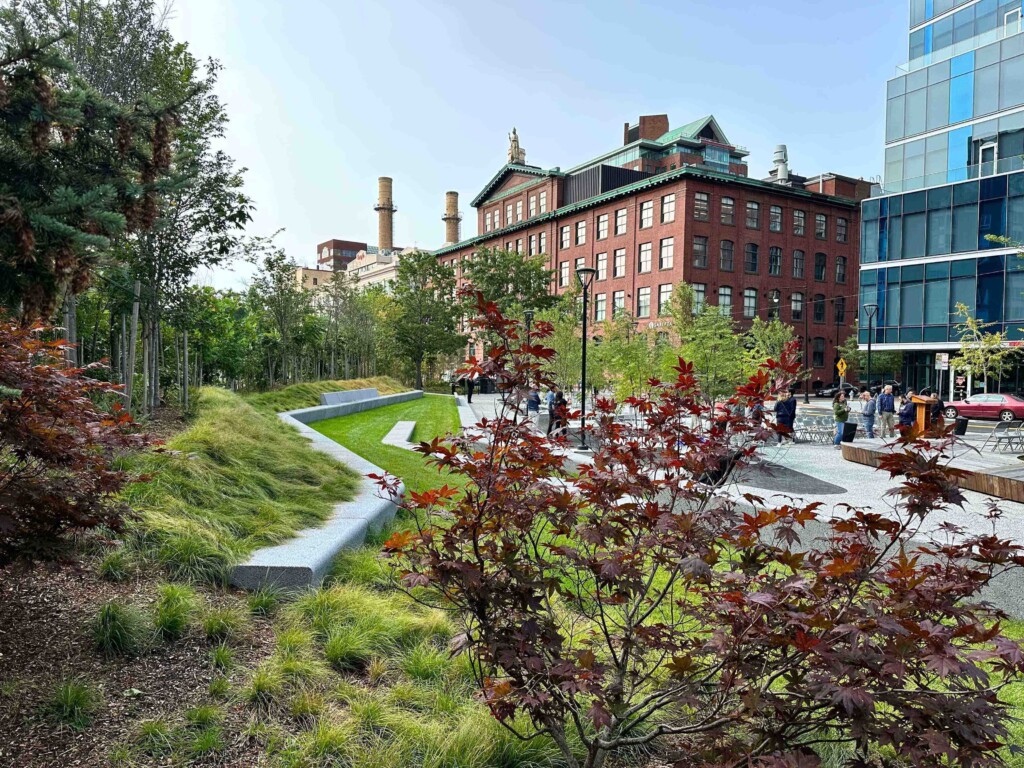
Most recently, as of the last week in September, Cambridge has its first urban forestry demonstration project at Triangle Park, in the Kendall Square neighborhood. The project is one of three small urban parks–two on “leftover” or underutilized parcels of land–that is meant to dramatically increase the amount and type of open space available to residents and workers in this part of the City. (My firm, Stoss Landscape Urbanism, was commissioned in 2016 to design both Triangle Park and the nearby Binney Street Park, which will open in 2024 as a park for dogs and people, while another Cambridge firm, MVVA, was commissioned to design the third park, Toomey Park, as a community gathering space and play area). Triangle Park in particular, was designated to embody the principles of the City’s urban forestry plan–in part as a test, in part as a demonstration–of this new commitment to trees, biodiversity, and innovative maintenance techniques tailored to this new mission.
“The design of this project was guided by the City’s Urban Forest Master Plan and includes significant tree plantings and canopy growth in the Kendall Square area,” said Public Works Commissioner Kathy Watkins. “It also allowed us to try some new approaches for how we think about open spaces and planting trees in the City. As the trees and plantings grow in over time, this unique park will provide an incredible shaded space in the heart of Kendall Square for residents and visitors to enjoy.”

The site itself is small (three-quarters of an acre) but complex. At various times in his history, it was a tidal mud flat at the mouth of the Charles River, a fueling station, a parking lot for trucks, a dumping ground for urban debris, and an empty traffic island. It continues to be surrounded on all three sides by vehicular traffic–to the east and north by busy and noisy four-lane arterials, and to the west by a smaller connector street with an active retail/restaurant frontage. All this presented a series of challenges for transforming a compacted site with urban fill and contaminated waste to a healthy and thriving ecosystem that could support the growth of trees, shrubs, and groundcovers, and become the new center of the nearby community. These are challenges that were ultimately overcome by an extensive and collaborative team comprised of landscape architects, ecologists, arborists, maintenance specialists, environmental engineers, and others that are a combination of both city staff and hired consultants.
The design responds to these conditions and seeks to create a new space for trees and people to intermingle in a dense urban neighborhood. A berm along the eastern edge of the park marks the eastern edge of the site and screens the traffic and noise from Edwin Land Boulevard, allowing for elevational differences that enhance both social and environmental opportunities. On the back and top, it is planted with a variety of native upland trees and plant species (shagbark hickory, black oak, hackberry) in dense thickets that are designed to grow rapidly and to allow for natural competition and succession–an innovation in urban parks like this, one that requires an intense level of ongoing care and maintenance for which the City has committed resources and expertise. The inner side of the berm is inscribed with terraced lawns and linear seating walls, creating a welcoming and active social edge at the heart of the space–perfect for socializing, sunning, or reading. On the north, a lawn slope and stage are backed by woodland varieties and border forest floor (including American hornbeam, American smoketree, arborvitae, Eastern hayscented fern); these, too, screen out some of the noise and visuals of the nearby traffic but also create distance from the street to allow for more casual sunning, play, and performance activities. The very south end of the site–where the triangle comes to a very sharp and dramatic point, the earth is excavated to collect the site’s stormwater (a kind of green infrastructure stormwater “sponge”) and is overplanted as a lowland forest of Dawn Redwoods and a variety of birch species with an understory of ferns and witch-hazel. This feature even twenty years ago would have been non-existent, as conventional engineering techniques would have relied on pipes and infrastructure to flush the water away; here, instead, we deliberately retain the water on site into order to create ecological diversity and an environmentally healthy space. Finally, the central plaza–designed with a dramatic but abstracted parquet floor motif and rendered in white and black gravel–is populated with a combination of multi-stem River Birch and Kentucky Coffeetrees, which will provide a unique and richly shaded and flexible setting for people on scattered cafe table and chairs.

In all, the park includes almost 400 new tree plantings and introduces 15 new tree species to the collection of eight trees and four species already on site. This is quite remarkable on a site that measures just over three-quarters of an acre with a variety of spaces reserved for people and activities!
In a burgeoning neighborhood with very low levels of open space and urban canopy, this small city forest is impactful–and the social and environmental benefits will continue to grow and intensify over time, just as the trees themselves grow and take on wonderful shapes and characters. Equally important as these direct effects, the project is intended to serve as a test case and model for how the City of Cambridge implements its Urban Forestry Plan –and how cities across the country and around the world can benefit from what we learn moving forward. More tests and demonstrations like this are needed–so that we can collectively see how these projects mitigate and reverse the effects of climate change and biodiversity loss we are seeing now–and how cities can re-tool their own staffs and maintenance practices in order to better cultivate and care for these leading-edge, research-in-practice projects.
How Designers Can Help Keep Our Air Breathable
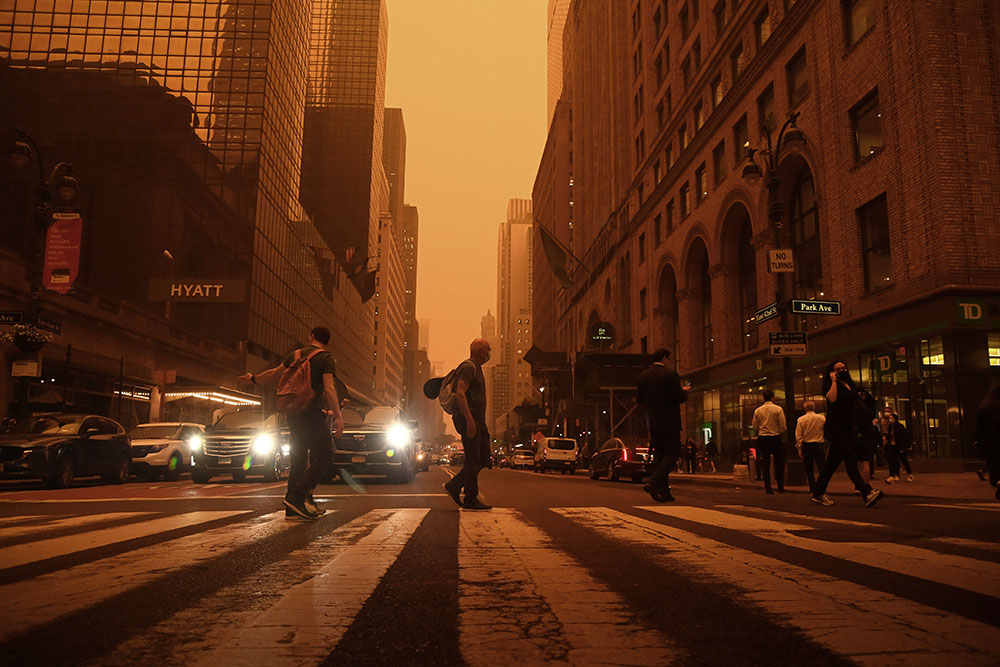
Smoke from wildfires raging in Canada blanketed the Northeastern United States this month, turning the skies an eerie orange. Responding to record-setting levels of pollution, officials around the region declared health emergencies. Advice to close windows and run air filters helped mitigate the acute effects of the short-term crisis, but the event also drew attention to how climate change is intensifying chronic air pollution around the world.
Ensuring the safety and quality of air is now an urgent issue for designers. Holly Samuelson, Associate Professor in Architecture at the Harvard Graduate School of Design (GSD), is changing how the design fields think about the complexities of air quality. Protecting inhabitants from outside pollutants is only one part of the challenge. Buildings also need to have proper ventilation and provide efficient heating and cooling systems that could lower the emissions driving climate change in the first place. Samuelson shared her insights with William Smith, editorial director at the GSD.
William Smith: With this wildfire smoke offering a possible glimpse into a future of more frequent disasters stemming from climate change, what are some possible solutions the design fields could offer?
Holly Samuelson: With good design, buildings can be more airtight when desired to keep out smoke and other pollutants. As a bonus, reducing unwanted air leakage also increases thermal comfort during the winter and tends to be one of the most effective energy-saving measures in buildings. Improved airtightness requires good window selection and architectural detailing, especially at corners and joints between materials. There’s room for advancement here. It also requires a well-constructed building, so architects often specify air leakage limitations to be verified with on-site testing.
Of course, a more airtight building then requires better protection against indoor sources of pollution (If you give a mouse a cookie . . .) So, during periods of acceptable outdoor air quality, which is most of the time in many places, this means bringing in outdoor air to flush indoor pollutants, carbon dioxide, and airborne pathogens, a topic that needs little introduction since the onset of COVID. Design solutions are definitely needed here. How can we achieve the health benefits of more fresh air without all the carbon penalties of heating, cooling, and dehumidifying this air, moving it around, and constructing these systems in the first place? Cue the genius designers!
So what strategies have been used in buildings?
In Harvard’s Center for Green Building and City’s HouseZero , a naturally ventilated lab building, windows open automatically in response to measured air quality conditions. In buildings like the Chesapeake Bay Foundation Philip Merrill Environmental Center or the Artist for Humanity Epicenter, simple lights alert occupants when it’s a good time to open windows. Architects then design for good buoyancy or cross ventilation when they want to move abundant fresh air naturally.

Design teams also use energy recovery ventilation to allow heat and humidity exchange between incoming and outgoing air and to promote ventilation at times when window opening may be unpopular, like in winter. This energy recovery can be via heat exchangers, enthalpy wheels, or with small, ductless, through-the-wall units. Some design researchers are also working on passive versions of these systems, and others are advancing ultra-efficient radiant systems that focus on heating or cooling people rather than air in the first place.
Filtration is also an important topic that gains increased attention during wildfires. For buildings without mechanical ventilation, occupants can use standalone air filtration. Since pressure moves air through filters, and the higher the filtration efficiency, like MERV (minimum efficiency reporting value) 13 or HEPA (high efficiency particulate air) filters, the more air pressure that’s needed, and that takes fan power. Therefore, in mechanically ventilated buildings, designers can choose efficient equipment and remove other pressure losses in the system to avoid adding even more fan loads, for example by allowing for straight air paths with minimal surface area for friction. (Think boba tea straw, rather than curly straw for a thick milkshake.) This strategy takes space planning early in the design.
What other considerations should architects account for when creating efficient, ventilated buildings that also protect against pollution?
If we expect building occupants to close windows in unhealthy outdoor air conditions and to open windows in unhealthy indoor air conditions (a frequent problem in unventilated buildings), then issues of thermal comfort and safety matter, especially in residential buildings. This is especially important for occupants who are physiologically more sensitive to indoor overheating and poor air quality, such as young children and older adults. Architectural strategies like good sun shading, including trees, envelope insulation, and thermal storage, can reduce energy use while significantly extending the length of time that a building can remain comfortable in extreme weather conditions and power outages, an increasing concern with climate change.
After the Turkey-Syria Earthquakes, Rethinking Design on Shaky Ground
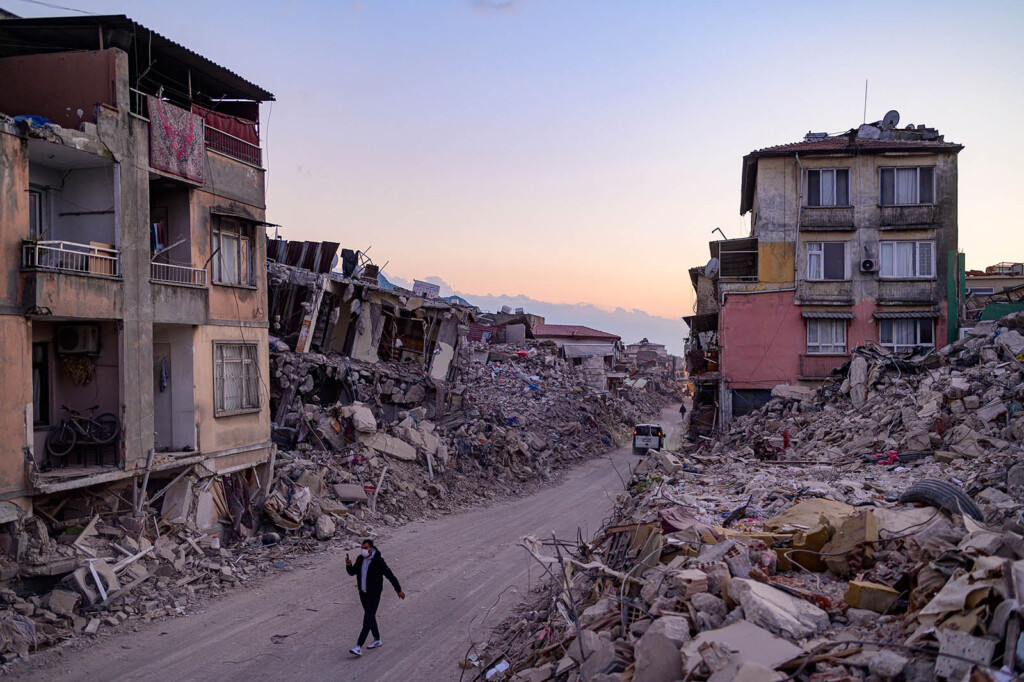
While the recovery is still unfolding and the damage is tallied, all signs suggest that the recent earthquakes in Turkey and Syria will go down as one of the most severe natural disasters in the early 21st century. Turkey’s death toll has already passed 50,000—rare for a country that is a member of the Organization for Economic Cooperation and Development (OECD), especially since its seismic risk was well known beforehand. In addition to technical and regulatory failures in the building industry that the earthquakes have made viscerally evident, a broad range of political and business practices are implicated. As an architect and scholar whose work focuses on earthquakes and the broader design problem of risk, resilience, and reconstruction, I can attest that amid such mass tragedies, it is difficult but essential to find a balance between the overwhelming empathy that the individual circumstances of each disaster evoke and a rational outlook on the broader cadence and patterns of crisis and rebuilding. Borrowing a Tolstoyan sentiment, earthquakes are much the same everywhere, but each disaster is tragic in its own way.
Writing from my office in Cambridge, Massachusetts—a famously non-seismic context where the age-old building practice of putting a brick on top of another brick has worked without issue for almost 400 years—I am well aware of the cultural difference and geographic distance, and that water afar quenches no fire. Nevertheless, I offer a few thoughts for those like me, who are distant but concerned, to contemplate and perhaps draw lessons from. Some will be directly related to earthquakes and the reconstruction that follows, while others might be relevant to adjacent fields and the broader question of how to think and build on shaky ground.
An often cited aphorism about earthquakes is that people are not injured by the ground shaking, but by buildings collapsing. This straightforward observation is a stronger indictment than it may initially seem, once one understands that the technical problem of building in earthquake regions is relatively well resolved in the contemporary world, akin to polio or famine. Today, with advice from a typical engineer and working well within the technical capacity of most construction teams, it is possible to build directly on top of a fault line and be relatively confident that the inhabitants would survive an earthquake, even if the building itself sustains some damage.
It is misguided, therefore, to think about earthquakes as a purely technical problem. A survey of building cultures across seismic regions reveals that architects and designers have come up with different design options and strategies at various scales of environmental design—from furniture to buildings and urban plans—that combine technical and structural know-how with several kinds of social and cultural understandings. Just as societies once viewed earthquakes as supernatural phenomena requiring divine intervention, and then as natural phenomena requiring scientific study and adaptation, today we understand that the disasters caused by earthquakes are in part, if not primarily, social disasters requiring design solutions. An earthquake simply reveals latent vulnerabilities that are exacerbated by the geological phenomenon.
In Turkey and Syria as elsewhere, the poor and vulnerable are subject to an outsize share of suffering because they were allocated, implicitly or explicitly, a larger share of the risk of disaster. We see similar dynamics play out in more familiar locales in the United States, with the correlation between housing prices and seismic risk in California’s Bay Area determining to a great extent the outcome of the next big earthquake, whenever it may strike. The social nature of earthquake disasters, however, also means they are a catalyst for change. In many building cultures, earthquakes and natural disasters are seen as a test of a government’s effectiveness and mandate. The first emperor of China, Yu, was seated in 2070 BCE as a result of his effectiveness in curbing disastrous flooding, while the European Age of Enlightenment was in part sparked by the Catholic Church’s inability to explain the large toll among pious congregations when the Lisbon Earthquake struck during mass on the morning of All Saints’ Day in 1755. Earthquakes are a reality test, revealing previously invisible fault lines in the ground and in society, and therefore are a potential agent for change.
A curious but immensely generative aspect of my work with earthquake architecture is that there are distinct and diverse—even opposing—approaches to the persistent problem of building in seismic regions, many of which may be useful in similar situations. Timber experts point out the unique advantages of its flexibility, while concrete specialists advocate for its irreplaceable solidity. Urbanists foreground the need to pool and manage risk efficiently, while disurbanists stoically adhere to the foolproof approach of dispersing risk by spreading it out. These different approaches prove to be effective in their own context, even if they appear contradictory.
In earthquake architecture and reconstruction, breakthroughs in the last decade have been driven by what until recently has been this under-recognized diversity of approaches and its inclusion in design education and practice. For example, earthquakes in Japan and New Zealand in the last two decades have resulted in a degree of devastation that contrasts with the relative progress that Indonesia and western China have made in terms of earthquake preparedness, challenging assumptions about how technical expertise flows from “advanced” to “developing” regions. Emerging now is a broadened understanding of strategies for dealing with risk and building resilience, which frequently results in retroactive validation of vernacular approaches, and a recognition of the value of having a wide repertoire of technical solutions and diverse ways of thinking about the problem.
As our understanding of seismic architecture expands beyond any imperative for a single correct approach, a more useful way to think about the diversity of options and strategies for seismic architecture is to conceive of them in terms of design schemas, or frameworks, through which a designer approaches a particular issue or question. What should be shared among designers working in response to earthquakes and natural disasters is not the same technical solution, to be applied uniformly across different regions of the world. Instead, what should be communicated is a sense of the design schema. Indeed, the ability to see and understand the utility of different kinds of design innovation will be key to navigating new scales of risk and uncertainty associated with climate change and the Anthropocene era, and especially future disasters that will strike as a consequence. Instead of focusing on design thinking as a single innovative way of thinking, the examination of building in seismic regions demonstrates how different design schemas can coexist and be complementary, together offering a meta-diversity of approaches consisting of not only different solutions, but also different ways of thinking about the problem.
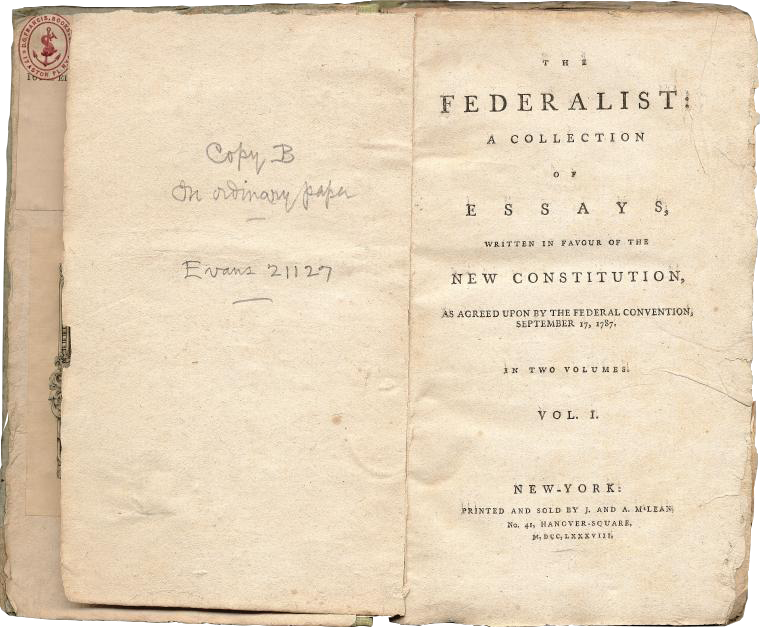
OFFICE on the United States flag and American Architecture (Model)
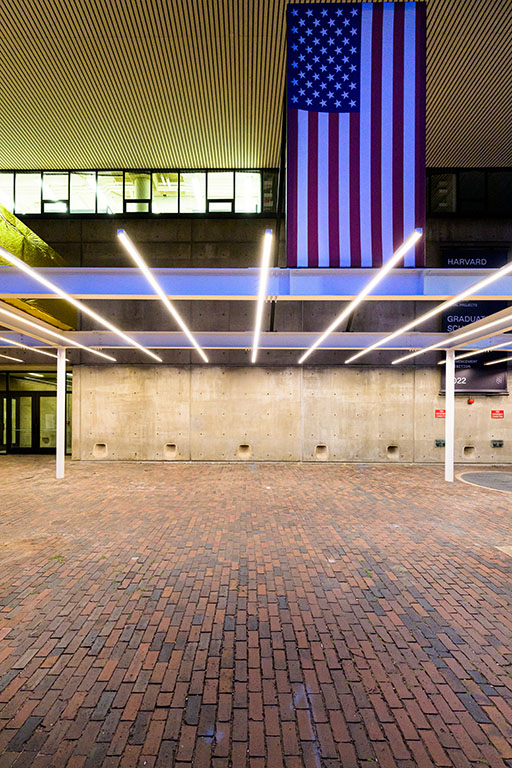
As midterm elections approach in November across the United States and citizens exercise the right to vote, OFFICE Kersten Geers David Van Severen offer the following statement on the image of the flag that is included in American Architecture (Model), on view on the front patio of Gund Hall until April 2023.
Atop the pavilion stand three objects: a model of a technical box, a model of a solar panel, and a model of a flag. Together they stand as symbols of architecture. The simple structure of the pavilion foregrounds these technological and emblematic features as pure signifiers, emphasizing architecture’s representational dimension. But whereas the solar panel is a literal symbol of the urgent necessity to address climate change, the image of the United States flag provokes diverse interpretations and demands explanation.
The flag is a poignant symbol saturated with manifold meanings, any one of which may be true for those encountering it—not only within the United States, but also around the world, where nearly anyone who is confronted by the flag has been affected by some form of American hegemony. The flag epitomizes a fundamental contradiction central to the United States’ origin story—the way in which democratic values are and have been simultaneously extended and ruthlessly denied. Over the course of its political history, the flag has been claimed by both the right and left. It has stood as a symbol of liberation and colonization, war making and peace keeping. It has been taken up by abolitionist and pro-slavery causes, and has been championed by immigrants and nativists alike. Most recently, the flag has been embraced by demagogic populist and white nationalist movements, prompting liberals and progressives to distance themselves from it. Overall, it is important to acknowledge that through time the flag has served as the ultimate symbol of shifting, if not conflicting national values.
In the United States, the national flag is given a prominence rarely seen in other countries. It adorns government buildings and single-family homes. It hangs in airports and schools, and above the statue of John Harvard in Harvard Yard. As a commonplace object, it has been appropriated by consumerist culture and transformed into a pop symbol. It has also served as a means of exposing longstanding histories of violence, racism, and sexism, in works ranging anywhere from The Simpsons to works by visual artists including Jasper Johns, Cady Noland, Tseng Kwong Chi, David Hammons, Barbara Kruger, Gordon Parks, and Ed Ruscha.
The flag atop the pavilion is not intended as a real flag. It is an image of a flag printed on vinyl, as a billboard. Detached from its political context and aestheticized as an artwork or architectural ornament, we hope it sustains reinterpretation as a readymade, one that recalls the flag while creating critical distance and space for discussion and reflection in its abstraction. The pavilion was envisaged as a public space available for everyone’s use, as a place for debate and encounter, politics and culture, education and humanism, and most importantly one of embrace of the diversity of the Harvard community. We should not be naïve, however, and ignore the multitude of visceral and critical responses the image of the flag provokes. On the contrary, we hope to acknowledge and provide an opening for scrutiny of the flag’s symbolism, grounded in the perspectives and experiences of those who encounter it.
Two Years Later: What has COVID-19 Permanently Changed for Design?

COVID-19 is undeniably the defining experience of a generation. Globally, few people have escaped its effects—either the direct effects of disease or the indirect ones of economic disruptions, public health requirements, and workplace changes. COVID has redefined possible futures in the minds of many.
How has this period changed urban life and the work of urban planners and designers? The short version is that this has been a moment of openness to new ideas. And it has sped up some preexisting trends—such as using video communication at work and deliveries at home. However, some more difficult challenges—like providing affordable healthy housing or comprehensive healthy placemaking—remain out of reach.
The view from the early pandemic
In March 2020, nine days after Harvard announced it would close its doors and go online due to COVID, I wrote an op-ed for this site trying to untangle what was happening and what it meant for urban planning and design. I reported that vaccines were estimated to be six to 18 months away, and indeed the Pfizer-BioNTech vaccine received emergency authorization nine months later. Facing an interim period where inaction would lead to many deaths and overwhelmed hospitals, countries were embarking on a mixture of strategies that would manage and even largely suppress the virus. Terms that had been largely confined to public health circles, such as social and physical distancing, were to become very familiar.
Estimates at the time, notably from Imperial College in London, were that without these measures two million in the US would die of COVID-19 by October 2020. Ultimately, the death toll in the US in 2020 was 350,000 people. However, new variants that were more contagious or more deadly sprang up before vaccines were available or widely used. Vaccinations were politicized, meaning fewer people were vaccinated than had been projected. Governments juggled the need to protect health while maintaining economic activity, and even though those conflicts were overblown, they lessened the power of public health arguments. At the two-year anniversary of the Harvard announcement, US deaths are now approaching one million.
Other countries have suffered from these same issues with different flavors and to different extents. China had COVID cases starting in late 2019 , with the first Wuhan lockdown in January 2020. Along with some island countries, China has employed a suppression strategy—keeping its borders more firmly closed. In Africa, vaccines have been slow to arrive.
The COVID experience will shape the ways planners and designers think about a healthy environment.

In March 2020, when I wrote my op-ed, it was already apparent that there would be economic ramifications, travel disruptions, supply chain issues, and stress. Some of these negatives came from the pandemic itself, but others were likely fallout from the response. At that time, commentators were already forecasting the end of urban life, something I suggested was premature. However, it was apparent that places with existing crowding (many people per room) and with sanitation problems might suffer more, and that “a long period of suppression may well change patterns of urban life.” People were already working from home—which could be a supportive environment, or a stressful one—and would be a key factor in people’s lives. The potential for evictions to rise was also apparent. It was clear that the pandemic, while affecting everyone, was not going to have the same effects everywhere.
Reflections two years later
In terms of urban issues and the work of planning and design, several preexisting trends sped up. And while there will be a return to a number of the old ways, at least a few of the changes will be sticky. In some dimensions physical space became less important (e.g., business travel being replaced by online meetings) and in others it became more salient (e.g., intensive use of local outdoor areas). For many trends, it is still too soon to be certain how they will evolve—and they will almost certainly differ by place. However, some trends seem likely to stick around. Here I look at three key issues: the complex interplay between virtual and physical space, the importance of the outdoors, and challenges with collaboration for the common good.
The internet has allowed people to use physical space differently
Telework boomed and while it will not stay that way, it does allow a proportion of the workforce to relocate away from expensive urban areas. This could cause a lot of sprawl if not managed well, but it may also revitalize regional areas and smaller cities, providing more affordable housing opportunities for those who might otherwise have to live in major metropolitan areas. While only some jobs can be done online, those people who move also bring with them demand for goods and services, allowing other jobs to decentralize. Offices are already fairly decentralized in the US, in spite of the visible downtown towers, and it is not yet clear how offices will be distributed in the longer term.

Some long-distance travel for work may be at least partially replaced by online meetings, virtual tours, and other means. Business travel is unlikely to go away totally, though climate change considerations are also pushing toward limiting air travel. But organizations are likely to be more selective about when they really need to meet in person.
Similarly, while there is a return to face-to-face participation in public processes, virtual and hybrid options are here to stay, in part because they enhance access for new groups. Parents of young children, people with disabilities, those working nontraditional hours, and many more have benefited from being able to attend meetings in new ways. Urban planners have become more imaginative in terms of online surveys, virtual open houses, and the like, helping enlarge the group of voices engaging in planning discussions.
Online shopping also expanded and for some businesses this may make keeping a brick-and-mortar store more difficult. This will affect local shopping areas, where empty storefronts will be the result of the virtual competition. On the other hand, it brings new markets to other kinds of businesses, such as expanded options for pickup and delivery direct from farms.
It is unclear what will happen to transit, at least in part because the transportation sector was already undergoing many changes before the pandemic: the shared economy, autonomous vehicles, and fleet electrification, for example. Worries about contagion took people off transit and not all have come back. The move to decentralize and also work from home has changed the patterns of transportation demand. This is an area with a great deal of uncertainty.
Access to open outdoor spaces has been recognized as important for all
Access to outdoor spaces has always been important, and it became essential in the pandemic. Early on, there was a lot of confusion about density and crowding. Density can mean many things , but it is different than crowding or having many people in one space. While initially it was unclear how COVID spread, after a few months we learned that it could spread through the air, particularly in crowded indoor places where ventilation was difficult and people were close together. Thus, access to open spaces became more critical.

Open streets that use the right-of-way as temporary or permanent public spaces have been one of the most visible ways cities tried to increase public open spaces. Towns and cities around the world closed streets to allow recreation and play, and let restaurants expand onto sidewalks. Some of these operated part of the day or week, others were permanent. People also used parks in new ways for public socializing and events. Many of these programs have outlasted the peak of the pandemic, making the space of the street more public.
However, while urban planners and designers like to valorize public spaces, having private outdoor space is also key . On balconies and patios and in small fenced yards, people can dry laundry, have moments of respite from indoors, socialize with visiting family and friends, and play safely. These are activities that public open spaces do not support as well. Those least likely to have such private outdoor space are renters or low-income owners in multiunit dwellings. Nursing home residents deserve easily accessible open space and many do not have it. Indeed, private open space may still be seen as a luxury. It should not be seen that way.
The local food system, typically relying on local farms, became even more vital. Agricultural land is an important form of open space. While there are many good reasons to bring food from beyond local areas, supply chain disruptions demonstrated the value of having a lot of redundancy in the food system, including having nearby suppliers. The pandemic enabled new means of connecting farms to buyers and at least some of these processes are likely to stay around.
Comprehensive and collaborative approaches have proven to be politically fraught
Early in the pandemic, Hong Kong stood out as a high-density city where the population cooperated to face COVID, even at a time of great political uncertainty. Prepared by SARS in the early 2000s, Hong Kong residents donned masks early and kept COVID at bay for a very long period. Elsewhere, governments managed to pass large bills to keep their economies afloat. Essential workers were redefined to include a wide range of occupations and that may well change how they are valued in the longer term. In the US, public health measures were far-reaching; they included banning evictions and reshaping workplaces, for example. For many people, COVID has highlighted how important our connections are to each other.
Elsewhere, however, social cooperation has broken down—demonstrating how hard it is for people to work together to create healthier places, even at a time of extreme need. When the question of what matters in life was being posed in stark terms, at least some people turned away from the collective endeavor. Protests and conflicts around vaccines and other public health mandates have demonstrated social schisms. Governments have not yet rallied to pass affordable housing legislation in spite of proposals. But a sense of interconnection and mutual responsibility is what is needed to further well-being through more comprehensive approaches to creating healthy places. Without cooperation, much less will be accomplished.
Facing the future
COVID has helped many people imagine a far wider range of futures than they might have before. And in that vein, we can’t prepare for the next pandemic by thinking only of the last one: future pandemic diseases may be airborne like COVID, but also may be waterborne, or spread via human contact or animal vectors. Still, the COVID experience will shape the ways planners and designers think about a healthy environment. Not surprisingly, the places that did well in this pandemic, particularly in the early period, were often those that had faced similar diseases—such as SARS and MERS—in prior decades. Noncommunicable diseases like heart disease and cancer also remain big killers, so the issue of health is not only about infectious disease pandemics.
While COVID created a window for experimenting with strategies that had not been widely used, many of these focused on one or two issues, rather than on a more comprehensive approach to creating healthy places. Such approaches combine physical places, government policies, collaborative processes, and an ethical perspective. They address multiple sectors such as housing, transportation, green infrastructure, and economic development. They consider the needs of different kinds of people, focusing on those most vulnerable. And they address larger processes, including environmental degradation and climate change.
To go beyond emergency responses, truly comprehensive approaches to healthy placemaking require cooperation among people. While this cooperation may be the most challenging dimension to attain, the disruption and experimentation of the past two years shows that change is possible.
“A crash course in loving”: Oana Stănescu remembers Virgil Abloh

“I have been refusing to put words down, afraid they might make real something none of us is anywhere close to accepting: Virgil Abloh, the architect, fashion designer, possible prophet, exquisite DJ, eternal collaborator, and brilliant friend, husband, father, and son, has died after privately battling a rare, aggressive form of cancer for over two years.
We had known each other for years, and worked together on too many projects to count when I invited him in 2017 to give a talk to our small student cohort of the Core 3 design studio at the GSD. Before we knew it, we got calls from the administration, asking: “Is Virgil Abloh giving a lecture? High school students have been calling to ask if they can attend.” Well, they didn’t just attend, they showed up, hours early, lining the walls of the GSD for what was, for many, their first lecture. And with that, all sorts of people whose lives would otherwise unlikely intersect, filled the lecture hall to the brim. No other single voice was able to connect with youth in the past troublesome decade the way Virgil did, and he did so naturally, because he was youth incarnate. The rest is living history. The talk became the GSD’s most watched lecture, followed by Incidents, the instantly sold-out transcript of the lecture, which was ultimately translated into Japanese.
Last summer—that 2020 summer—he wanted to see what we could do to bring architecture schools closer to the streets. We had been trying for years, in various ways, to cross what felt like a disconnect between the profession and education, between skill and purpose. Within two months, we created a seminar at the GSD in collaboration with the Stanford Legal Design Lab, where law and architecture students were working together, addressing the real-time changes the justice system was undergoing due to the pandemic. Virgil noted, “That invisible hand of design is why this course exists, because it’s often easy to say, ‘Hey, that’s not our responsibility,’ but ultimately, our human responsibility is to make it so that everyone can understand the basic premise of design, which is the basic premise of helping people.” It takes an incredible amount of work and luck for all the stars needed for this project to align, but Virgil liked aiming for the stars. And time and time again, he was able to reach for new heights, with his vision, his humbleness, and a generosity of resources.
The first grieving email I received last Sunday was from a former student: “I can’t explain how powerful it was to witness a Black designer speak so directly to us young people.” Virgil meant so many things to so many people: I keep thinking of him as a glue that held people together, the conduit to so many great leaps, the spark to so much trouble. If you drew a map of his reach, it would cover the world. This pertains to fashion, to music, to design, to philanthropy, but really, it’s about a spirit that transcended any definition. That was the very point.
Few people achieve in a lifetime what Virgil Abloh did in too short of a time: he broke the odds, not just once, for fun, but as a rule. It’s not that he didn’t face obstacles. On the contrary, he chose to ignore them as such, use them as a springboard, revealing their hypocrisy and limitations, carving a path not just for himself, but for generations to come. It’s hard not to smile between the tears, because he always shared his lust for life freely and his infectious, raspy laughter.
It was also 2017 when I told him about my own cancer diagnosis and he texted back in a heartbeat “Love you, cancer can’t stop us.” We didn’t know the cards we were dealt. A couple of weeks ago, as we were talking through the impossible challenge of such an illness, he said something very powerful: “What a crash course in loving this task deals us.” It struck me how universal, how true, how well it encapsulates life at its hardest. And this is the task we have been dealt now, too, a crash course in loving.
In doing so we will continue to live in a world shaped by him and while the world is certainly lesser without Virgil, we were lucky to have had him in the first place.”
“How can a building just collapse?” Hanif Kara shares lessons in building safety
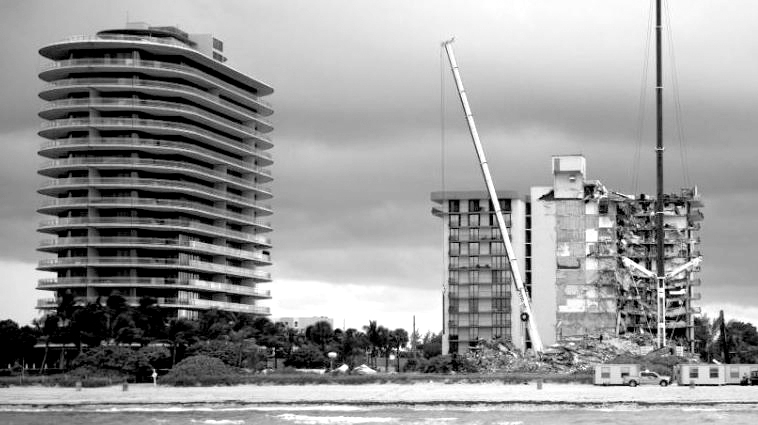
On Thursday, the partial collapse of a residential building in Surfside, Florida, left 11 dead and 150 still unaccounted for. While we await answers about what caused this tragedy, we are left asking the question: What could cause a building to simply fall down?
Hanif Kara is a practicing structural engineer and professor in practice of architectural technology.