Urban Natures:
Climate Change Adaptation,
Design Agency, and Politics

Rachel Dorothy Tanur Memorial Lecture

Urban Natures:
Climate Change Adaptation,
Design Agency, and Politics

Event Location

Piper Auditorium

Date & Time
Free and open to the public
00:00
00:00

About This Event

Following welcome back remarks and an introduction by Dean Sarah Whiting, the Druker Design Gallery will host an evening of interdisciplinary conversation to mark the start of the fall semester and the opening of Urban Natures: A Technological and Political History 1600–2030. The exhibition measures how far we have come since the first public gardens were created, and it challenges us to envision the future of our cities in new ways. Following remarks by Dean Sarah Whiting and curator Antoine Picon, Erika Naginski will moderate a panel discussion between Gary R. Hilderbrand, Ali Malkawi, and Mohsen Mostafavi, about three themes in the exhibition: climate change adaptation, the agency of designers, and the role of urban natures in promoting new collective values. 

This event is generously supported by The Harvard Center for Green Buildings and Cities and the Villa Albertine, the French Institute of Culture & Education. A reception will follow, made possible by the generous support of Ron Druker.

About the Speakers

Headshot of Antoine Picon

Antoine Picon, an engineer, architect, and historian, is the G. Ware Travelstead Professor of the History of Architecture and Technology at Harvard Graduate School of Design. He works on the history of the relations between the built environment and technologies, with a special emphasis on the imaginary and utopian dimensions. He has published extensively on this subject. He is amongst others the author of Les Saint-Simoniens (2002), Digital Culture in Architecture (2010), Ornament: The Politics of Architecture and Subjectivity (2013), Smart Cities: A Spatialised Intelligence (2015), The Materiality of Architecture (2021), and Natures Urbaines: Une Histoire Technique et Sociale, 1600-2030 (2024).

Headshot of Gary Hilderbrand with his arms crossed.

Gary Hilderbrand, FASLA, FAAR, is the Peter Louis Hornbeck Professor in Practice and Chair of the Department of Landscape Architecture, Harvard Graduate School of Design. He is also principal and founder of Reed Hilderbrand Landscape Architects. Hilderbrand is a fellow and resident of the American Academy in Rome. He received the Design Medal from ASLA in 2017. His widely acclaimed publications include The Miller Garden: Icon of Modernism (Spacemaker Press, 1999) and Visible | Invisible: Landscape Works of Reed Hilderbrand (Metropolis Books, 2013).

Headshot of Ali Malkawi seated on marble steps with his hands clasped.

Ali Malkawi is Professor of Architectural Technology, Director of the Doctor of Design Studies Program, and Founding Director of the Harvard Center for Green Buildings and Cities at the Harvard Graduate School of Design. His research is focused in the areas of computational simulation, building performance evaluation, and design decision support. Previously, he taught at the Georgia Institute of Technology, University of Michigan, and University of Pennsylvania, where he was a Professor of Architecture and Chairman of the Graduate Group in Architecture. Malkawi is lead author or co-author of more than 130 scientific papers and co-editor of three books. In 2017, he was honored with the Jordan Star of Science by His Majesty King Abdullah II bin Al-Hussein of Jordan.

Headshot of Mohsen Mostafavi standing in the Harvard GSD student trays.

Mohsen Mostafavi is the Alexander and Victoria Wiley Professor of Design and Harvard University Distinguished Service Professor. He served as Dean of the Faculty of Design from 2008-2019.  Mostafavi has chaired and participated in the juries of the Mies van der Rohe Prize for Architecture, the Holcim Foundation Awards for Sustainable Construction, and the Royal Institute of British Architects Gold Medal. He also served on the Steering Committee of the Aga Khan awards for architecture. His books include On Weathering: The Life of Buildings in Time (1993); Approximations (2002); Surface Architecture (2002); Structure As Space (2006); Ecological Urbanism (2010); Nicholas Hawksmoor: The London Churches (2015); Architecture and Plurality (2016); Portman’s America & Other Speculations (2017); Ethics of the Urban: The City and the Spaces of the Political (2017); Sharing Tokyo: Artifice and the Social World (2023); Revitalizing Japan: Architecture, Urbanization, and Degrowth (2024); and The Color Black: Antinomies of a Color in Architecture and Art (2024).

Erika Naginski

Erika Naginski is Professor of Architectural History at the Harvard Graduate School of Design, where she serves as Director of the OHD program in Architecture, Landscape Architecture, and Urban Planning. Her publications, which focus on European architecture (1600-1800), include books and co-edited volumes such as Polemical Objects (2004), Sculpture and Enlightenment (2009), and The Return of Nature (2014). She has received fellowships from the Harvard Society of Fellows, the Radcliffe Institute for Advanced Study, the Deutsches Forum für Kunstgeschichte, the Sterling and Francine Clark Art Institute, and the John Simon Guggenheim Memorial Foundation.

Theodore Spyropoulos, “Quantum”

Rachel Dorothy Tanur Memorial Lecture

Theodore Spyropoulos, “Quantum”

A dark room featuring 3 booths filled with marbles of light
Event Location

Piper Auditorium

Date & Time
Free and open to the public
00:00
00:00

Event Description

In a world made increasingly complex by technological advancements and a rapidly changing environment, architect and educator Theodore Spyropoulos asks us to consider global challenges from a new perspective. This reframe moves us from static representational models to collaborative, ever-evolving models and interactions that allow us to see our world anew. Architecture gives us the opportunity to consider how the built environment changes our relationships with one another —humans and non-humans, objects, and the world. As we grapple with ongoing uncertainty and change, Theodore Spyropolous explores the intersections of quantum physics, artificial intelligence, and second-order cybernetics in pursuing a theory of relationality.

Speaker

Black and white headshot of Theodore Spyropoulos

Theodore Spyropoulos is an architect and educator. He is the Director of the Architectural Association’s world-renowned Design Research Lab (AADRL) in London and a resident artist at Somerset House. He previously chaired the AA Graduate School, and was a Professor of Architecture at the Staedelschule in Frankfurt and a visiting Research Fellow at MIT’s Center for Advanced Visual Studies. He co-founded the experimental art, architecture, and design practice Minimaforms with Stephen Spyropoulos. The work of Minimaforms has been acquired by international art and architecture collections, including the FRAC Centre, the Signum Foundation, and the M+ Archigram Archive. His work has been exhibited at MOMA (NYC), the Barbican Centre, the Onassis Cultural Centre, Somerset House, the Detroit Institute of Arts, the Leonardo da Vinci Museum of Science and Technology, and the ICA. He previously worked for the offices of Peter Eisenman and Zaha Hadid. In 2013, the Association for Computer-Aided Design in Architecture awarded him the ACADIA Award of Excellence for his educational work directing the AADRL. He has been published internationally and is the author of Adaptive Ecologies: Correlated Systems of Living (2013), Enabling (2010), and the forthcoming publications Quantum (2024) and Elemental: Phenomena as Technology (2025).


Angela D. Brooks, “No Place Like Home”

Rachel Dorothy Tanur Memorial Lecture

Angela D. Brooks, “No Place Like Home”

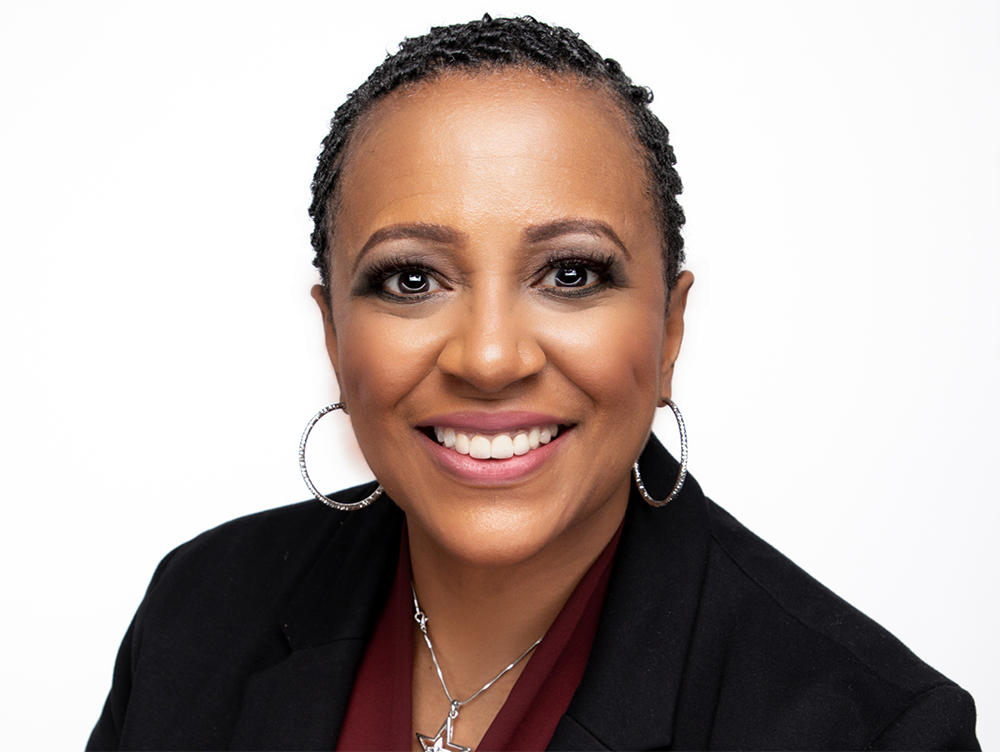
Portrait of Angela Brooks, who wears a black suit jacket, a maroon shirt, and hoop earrings.
Event Location

Piper Auditorium

Date & Time
Free and open to the public
00:00
00:00

A recording of this event is available with audio description.

Event Description

In her lecture “No Place Like Home,” Angela D. Brooks will discuss insights from her career advocating housing justice and helping communities meet the needs of residents.

Speaker

Portrait of Angela Brooks, who wears a black suit jacket, a maroon shirt, and hoop earrings.

Angela D. Brooks is the Director of the Illinois office of the Corporation for Supportive Housing and the President of the American Planning Association . She currently serves on the Chicago Board of Zoning Appeals, the Illinois Affordable Housing Advisory Commission, and is co-chair of the national Housing Supply Accelerator, helping communities meet the housing needs of residents. Brooks is a native of Seattle and a graduate of Jackson State University, where she received her Bachelor of Arts in Urban Studies, and the University of New Orleans, where she received a Master of Urban and Regional Planning. She is a life member of Alpha Kappa Alpha Sorority, Inc., Jackson State University Alumni Association, and The Links, Incorporated.

Wanda Dalla Costa, “Walking Backwards into the Future: Indigenous Design Thinking”

Rachel Dorothy Tanur Memorial Lecture

Wanda Dalla Costa, “Walking Backwards into the Future: Indigenous Design Thinking”

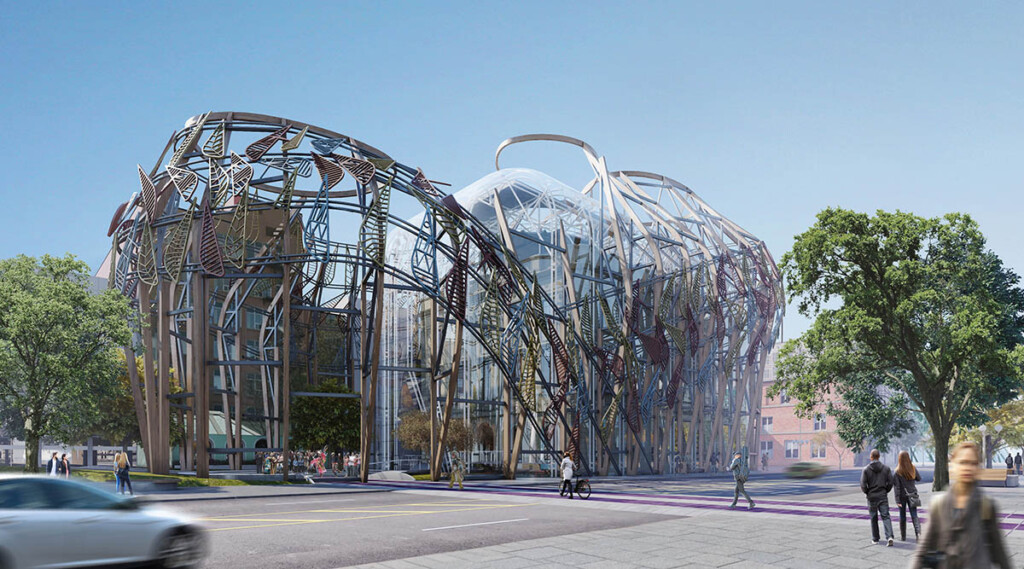
Rendering of a large building with a intricate facade.
Indigenous Peoples Space, Ottawa, ON. Owner: Tawaw Architecture Collective Inc.
Event Location

Piper Auditorium

Date & Time
Free and open to the public
Rachel Dorothy Tanur Memorial Lecture: Wanda Dalla Costa, “Walking Backwards into the Future: Indigenous Design Thinking”
00:00
00:00

A recording of this event is available with audio description .

Event Description

In the indigenous worldview, in both historic and contemporary times, there is an understanding of eternal connectivity between humans and the natural environment. In this system, often referred to as ethical relationality, time and space move fluidly forwards and backwards between generations, offering reflection and reimagining. Ancestral ideologies are practiced across many biomes around the world, and are beginning to seep into design practice. With the world undergoing unprecedented environmental changes, these notions, which prioritize collective resilience, may provide a path forward. Join Dalla Costa in conversation, to discuss Indigenous design.

Speaker

Headshot of Wanda Dalla Costa, who wears a red-orange shirt and necklace.
Photo by Deanna Dent/ASU Now

Wanda Dalla Costa, AIA, OAA, AAA, LEED A.P. is a member of the Saddle Lake Cree Nation. Dalla Costa was honored in 2022, as an Honorary Fellow of the Royal Architecture Institute of Canada. In 2019 she was recognized as a YBCA 100 recipient by the Yerba Buena Center for the Arts, a list which celebrates people, organizations, and movements shifting culture through ideas, their art, and their activism. At Arizona State University, she is the director and founder of the Indigenous Design Collaborative , a community-driven design and construction program, which brings together tribal community members, industry, and a multidisciplinary team of ASU students and faculty to co-design and co-develop solutions for tribal communities. Her teaching and research are focused on Indigenous ways of knowing and being, co-design methodologies, sustainable design, and the resiliency of vernacular architectures.   

In terms of her practice, Dalla Costa was the first, First Nation woman to become an architect in Canada. Her firm, Tawaw Architectural Collective  is based in Phoenix, Arizona. Recent projects include the Indigenous embassy in Ottawa, an Indigenous urban early learning center in Saskatoon and Indigenizing an urban arts district in Calgary, Alberta. Dalla Costa was also invited to the 2018 Venice Biennale, world festival in architecture, as part of Unceded , where she joined 18 Indigenous architects from across Turtle Island, to share an Indigenous vision of the future. Dalla Costa holds a Master of Design Research in City Design from SCI-Arc in Los Angeles, and a Master of Architecture from the University of Calgary.  

Sam Olbekson, “Culture, Community, and Environmental Justice in Contemporary Indigenous Design”

Rachel Dorothy Tanur Memorial Lecture

Sam Olbekson, “Culture, Community, and Environmental Justice in Contemporary Indigenous Design”

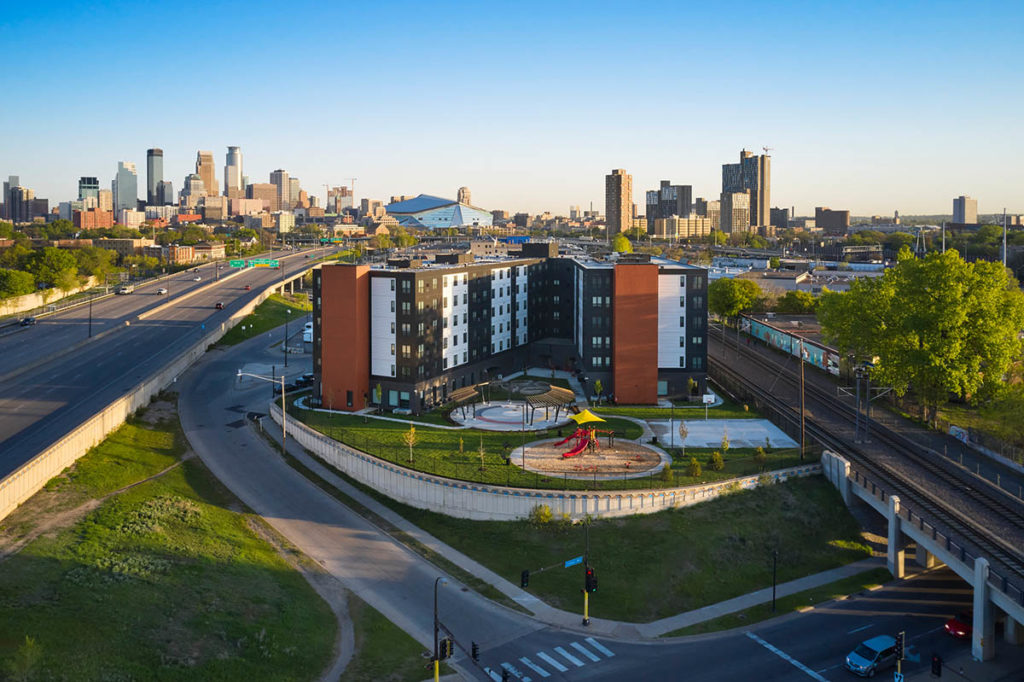
Aerial view of a housing complex near two large roads. A city with skyscrapers can be seen in the distance.
Credit Line: “Corey Gaffer © Gaffer Photography”
Event Location

Piper Auditorium

Date & Time
Open to the Harvard University community only
Event Information
All are invited to watch and participate online in this program by tuning into this page at the noted start time. No pre-registration is required.  Online audience members will be able to submit questions throughout the event using Vimeo’s Q&A function. If you would like to submit questions for the speaker in advance of the event, please click here.

Harvard ID holders are also welcome to attend programs in person, except where an event is listed as online only.

Live captioning will be provided during this event livestream. Learn more about accessibility services at public programs.
 
Rachel Dorothy Tanur Memorial Lecture: Sam Olbekson, “Culture, Community, and Environmental Justice in Contemporary Indigenou…
00:00
00:00

This event recording is also available to watch with audio description .

Event Description

Creating a strong sense of place is critical to cultural identity in Native American communities. New tribal building and planning projects provide significant opportunities for tribal communities to reinforce cultural revival efforts while advancing economic, educational, and healthcare initiatives. This session will encourage an open and interactive discussion of the central issues in tribal design and efforts to lead a fundamental shift toward culturally appropriate design solutions and self-determination. From rural reservation single-family houses to inner-city multifamily mixed-use urban developments, Native American communities face unique challenges and opportunities. Legal and political constraints, complicated funding mechanisms, and a lack of infrastructure all contribute to a critical shortage of adequate housing and economic opportunity in most Native American communities. Many design solutions for tribal communities, unfortunately, fall back on one-size-fits-all models of development and design cliches that do not respond to the distinct social structures of Native families or reflect the diverse range of cultural and artistic expression unique to each tribe. This discussion will highlight diverse Native American projects that have challenged the status quo of typical tribal design and planning projects with innovative and culturally respectful design solutions.

Speaker

Headshot of Sam Olbekson, who sits in front of a brick wall and wears a gray collared shirt.

As an Indigenous architect with over 25 years of design, comprehensive planning, and cultural visioning experience, Sam Olbekson, MAUD ’05, serves tribal communities and Indigenous organizations by bringing a Native perspective to the design and planning process. 

With a sincere commitment to improving the lives of tribal community members, Sam brings a wealth of experience and cultural knowledge as a talented designer on a wide range of mixed-use, urban design, residential, institutional, hospitality, landscape, educational, and community-oriented projects. He is committed to helping advance the cultural preservation, economic growth, health, and well-being of Native communities through sound planning and practical design strategies that are beautiful, innovative, sustainable, functional, and culturally specific. 

Published nationally as a thought leader in contemporary Native American design theory, Sam is known as a progressive and skilled design thinker on culturally significant projects and produces unique and inventive design solutions that respond to cultural tradition in innovative and contemporary ways without relying on stereotypical imagery. Sam is also passionate about serving his community. He holds leadership positions with a number of American Indian organizations and has received numerous recognitions for both design and community service.

Follow Sam Olbekson on Twitter .

Andrea Roberts, “The Community Core: Making and Keeping Place Heritage in Texas’s Freedom Colonies”

Rachel Dorothy Tanur Memorial Lecture

Andrea Roberts, “The Community Core: Making and Keeping Place Heritage in Texas’s Freedom Colonies”

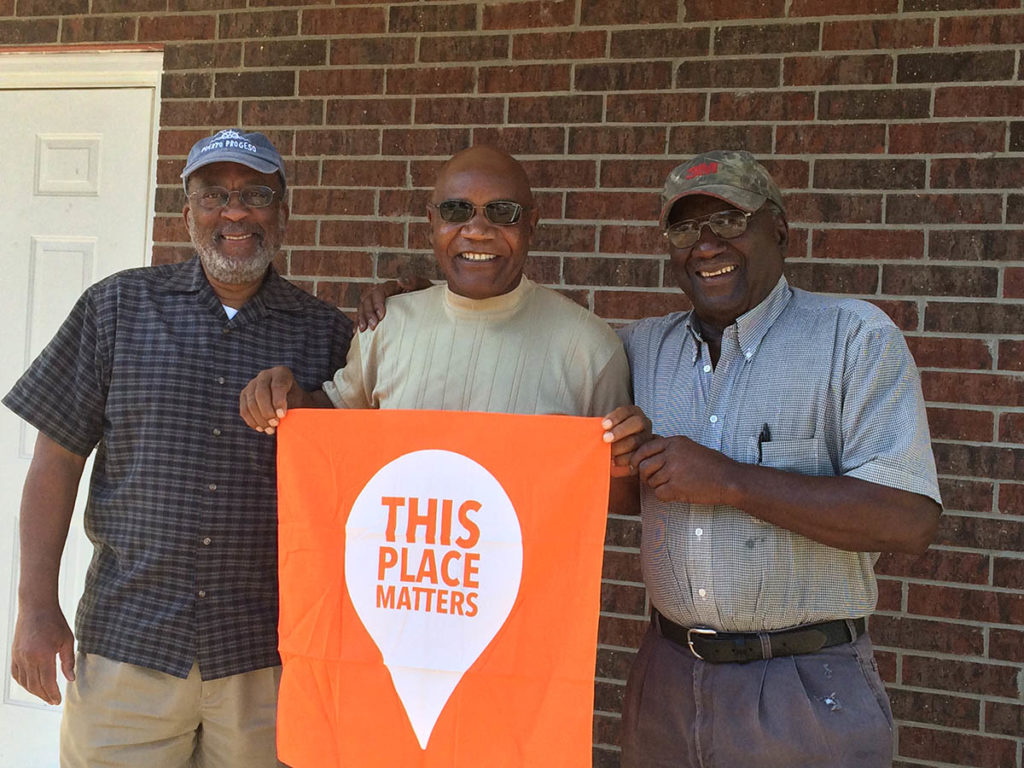
Image of three men standing in front of a brick wall holding a sign that says "This Place Matters."
Event Location

Virtual Event Space

Date & Time
Free and open to the public
Rachel Dorothy Tanur Memorial Lecture: Andrea Roberts, “The Community Core: Making and Keeping Place Heritage in Texas’s Free…
00:00
00:00
Registration Information
The GSD’s Fall 2021 Public Programs are all virtual and require registration.
Click here to register for Rachel Dorothy Tanur Memorial Lecture: Andrea Roberts, “The Community Core: Making and Keeping Place Heritage in Texas’s Freedom Colonies”.

The event will also be live streamed to the Harvard GSD YouTube page. Only viewers who are attending the lecture via Zoom will be able to submit questions for the Q+A. If you would like to submit questions for the speaker in advance of the event, please click here.


Live captioning will be provided during this event. 

Event Description

In Texas’ freedom colonies — African American settlements founded 1866-1930 — descendants of community founders engage in heritage conservation by keeping folklife, sacred rituals, and other cultural expressions that sustain communities’ Black sense of place. However, rural, vernacular African American placekeeping strategies are rarely framed in planning and architectural history as transgressive or expressions of Black liberation. Presenting an excerpt from her forthcoming book, Never Sell the Land, Dr. Roberts shares case studies in which descendants of Deep East Texas freedom colony founders leverage heritage conservation to revitalize community cores. In contrast with urban cores defined by density and transit, the author conceptualizes freedom colony cores as embodied, rhizomatic, and dynamic. Placekeeping descendants, who live simultaneously in urban and rural Black settlements, act as interstices between freedom colony full and part-time residents, contest local land-use decisions, and rehabilitate properties. Heritage conservation activities sustain the diaspora of descendants’ commitment to and financial support of homestead rehabilitation, land retention, and adaptive reuse of a segregation-era school. The author will share ways freedom colony descendants co-opt, subvert, and reinvent community cores to resist placelessness and create “free Black space.”

Following Dr. Roberts’ presentation, she will be joined by current Loeb Fellow, Monica Rhodes for a discussion.

Speakers

Photo of Dr. Andrea Roberts, who wears a salmon-colored suit with a white shirt and has long brown hair. She sits in a black chair in front of a black background.

Dr. Andrea Roberts is Director of The Texas Freedom Colonies Project™ and an Assistant Professor of Urban Planning, and co-founder of the African American Digital Humanities Working Group at Texas A&M University (TAMU).  She is also a fellow with TAMU’s Hazard Reduction and Recovery Center , Center for Heritage Conservation , Institute for Sustainable Communities , and the Africana Studies Program. Dr. Roberts holds a Ph.D. in community and regional planning from The University of Texas at Austin (2016), where her specialization areas were African diaspora studies and historic preservation. She also holds an M.A. in government administration from the University of Pennsylvania (2006) and a B.A. in political science from Vassar College (1996).  Her 12 years of nonprofit management, community development, and government administration experience inform her efforts to move disappearing African American communities — facing sprawl, gentrification, and resource extraction — from the margin to the center of public discourse, pedagogy, and research.

Her research frames planning & historic preservation practices as avenues to social justice. Her scholarship and digital humanities platforms tell the story of freedom colonies, African American settlements founded after Juneteenth in Texas between 1865-1930. The Journal of Planning History, Buildings and Landscapes, the Journal of the American Planning Association, the Journal of Community Archaeology and HeritagePlanning Theory & Practice, and Environmental Justice have published her peer-reviewed scholarship on Black planning history, cultural landscape theory, Black feminist preservation, and participatory preservation. Her commentary has also appeared in Newsweek, The Conversation, and the National Trust for Historic Preservation’s Leadership Forum.

She is also a 6th generation Texan, whose ancestors were formerly enslaved and founded freedom colonies. In 2014, she founded The Texas Freedom Colonies Project. The Project’s student researchers, volunteers, and the freedom colony diaspora contribute to The TXFCP Atlas a publicly accessible map and database containing descendants’ memories, images, and reports on contemporary life in nearly 400 settlements. The Texas Department of Transportation and the Council of Texas Archeologists use the platform to identify Black historic resources at risk.  

Dr. Roberts is also the Consultant/Owner of Freedom Colonies Project, LLC, which provides research design support and DEIA workshops for preservation organizations. She is a Texas State Board of Review member and a National Monument Audit Advisory Board member. She has received awards for her engaged scholarship from The Vernacular Architecture Forum and the Urban Affairs Association.  Dr. Roberts is a 2020-21 Whiting Public Engagement Fellow and was a 2020 Visiting Scholar at Yale’s Gilder Lehrman Center for the Study of Slavery, Resistance, Abolition. Currently, she’s writing a book about Black historic preservation practice for The University of Texas Press.   

Follow Dr. Andrea Roberts on Twitter and and follow the Texas Freedom Colonies Project on Facebook .


A Black woman wearing a pink shirt, darker pink jacket, and glasses, with long twisting braids, looks into the camera. Out of focus behind her is a train platform.

Monica Rhodes is the former director of Resource Management at the National Park Foundation. In this role, Rhodes oversaw facility and construction grant-making to the National Park Service and helped lead efforts to develop strategies for African American and Latinx engagement.

Prior to her role at NPF, Rhodes was the founding director of the National Trust’s HOPE (Hands-On Preservation Experience) Crew, which was created to expand the preservation movement to a younger, more diverse audience. In the five years of leading HOPE Crew, Rhodes guided over 165 preservation construction projects, trained 750 young people and veterans, and engaged 3700 volunteers in large-scale community events. Under her leadership, the program garnered more than 1 billion media impressions and supported $18 million of preservation work, primarily in national parks. Before joining the Trust, Rhodes worked as a consultant to preservation non-profits.

Rhodes’ work has been featured in national outlets like PBS NewsHour, Huffington Post, Washington Post, and U.S. News & World Report. She also appeared in a feature spread on women in the preservation movement in Essence Magazine’s Spring 2018 issue. Separate from her work with NPF, Rhodes served on the Commission for Historical and Architectural Preservation and the Market Center Community Development Corporation board in Baltimore City. She also served as an advisor for the DC LGBTQ Historic Context Study and a project reviewer for the Facilities and Buildings grant program for the DC Commission on the Arts and Humanities.

Rhodes earned her undergraduate degree in History at the University of Tulsa and a Master’s degree in African American Studies at Temple University. She also attended the University of Pennsylvania where she received a Master’s degree in Historic Preservation.

Emmanuel Pratt, “[Re]Constructing Real Estate: The Question of Value”

Rachel Dorothy Tanur Memorial Lecture

Emmanuel Pratt, “[Re]Constructing Real Estate: The Question of Value”

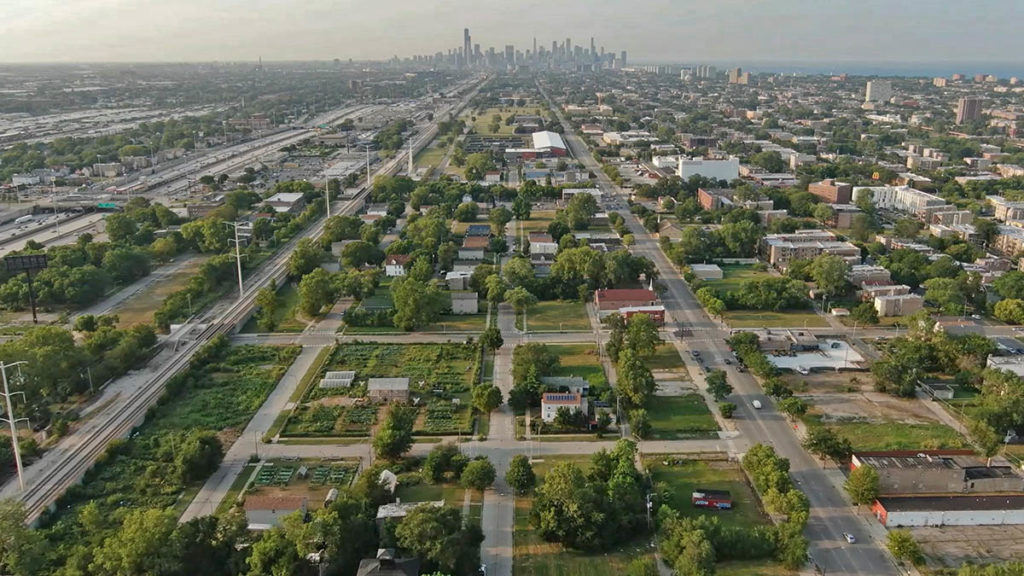
Aerial view of Chicago's South Side.
Event Location

Virtual Event Space

Date & Time
Open to the public, but requires registration
Rachel Dorothy Tanur Memorial Lecture: Emmanuel Pratt, “ReConstructing Real Estate: The Question of Value”
00:00
00:00

The GSD is pleased to present a series of talks and webinars broadcast to our audiences via Zoom.

*This lecture will be ONLINE ONLY. For security reasons, virtual attendees must register. Scroll down to find complete instructions for how to register.

Event Description

Sweet Water Foundation (SWF) is a community-rooted, nonprofit organization that practices Regenerative Neighborhood Development to create safe and inspiring spaces and curates healthy, intergenerational communities transforming the ecology of so-called ”blighted” neighborhoods. Utilizing a unique blend of urban design, urban agriculture, carpentry, art, and STE(A+)M focused education, the primary objective of SWF’s work is the continued healing of the neighborhood, its land and its people, and re-rooting of the community through a unique intersection across education, agriculture, arts, culture, and housing.

Since 2014, SWF has created a series of urban acupuncture inspired installations that actively re-story and re-construct a neighborhood located at the nexus of Englewood and Washington Park, two African American communities directly impacted by redlining and long standing histories of municipal disinvestment. SWF’s headquarters site has become a dynamic, living campus now known as “The Commonwealth.” The Commonwealth spans four contiguous city blocks and includes more than three acres of urban farmland, open community gardens, a carpentry workshop, two formerly foreclosed homes transformed into live-work-learn spaces, and a timber frame barn that serves as a pavilion for a wide variety of community gatherings for public programming.

For this event with the GSD, Emmanuel will contextualize the historical degeneration vs regeneration of The Commonwealth to present date, lead viewers on a virtual site visit, and share some upcoming developments emerging across a network of value-based partners.

Screenshot of Emmanuel Pratt giving a presentation on Zoom. Pratt is visible in a small window on the top right. The presentation shows a list of the values of his organization, Sweet Water Foundation.
Screenshot of Emmanuel Pratt giving a presentation on Zoom. Pratt is visible in a small window on the bottom left. The presentation shows a person wearing a hat and waving, and above them is the text "There GROWS the neighborhood."
Screenshot of Emmanuel Pratt giving a presentation on Zoom. Pratt is visible in a small window on the top right. The presentation shows a map of racial demographics in different areas in Chicago,

Speaker

Headshot of Emmanuel Pratt, who wears a black jacket and black beanie.

Emmanuel Pratt, LF ‘17, received a BArch (1999) from Cornell University and an MSAUD (Master of Science in Architecture and Urban Design, 2003) from Columbia University. From 2011 to 2019, Pratt served as the director of aquaponics at Chicago State University, and he was the Charles Moore Visiting Professor at the Taubman College of Architecture and Urban Planning at the University of Michigan until 2019. In 2016, he was named a Loeb Fellow at the Harvard University Graduate School of Design. Currently, Pratt is co-founder and executive director of the Sweet Water Foundation in Chicago and visiting lecturer in the Environmental and Urban Studies Program at the University of Chicago.

Follow the Sweet Water Foundation on Twitter.

How to Join

Register to attend the lecture here . Once you have registered, you will be provided with a link to join the lecture via Zoom. This link will also be emailed to you.

The event will also be live streamed to the GSD’s YouTube page . Only viewers who are attending the lecture via Zoom will be able to submit questions for the Q+A. If you would like to submit questions for the speaker in advance of the event, please click here .

Live captioning will be provided during this event. After the event has ended, a transcript will be available upon request.