Acts of Scaling

Cambridge Talks

Acts of Scaling

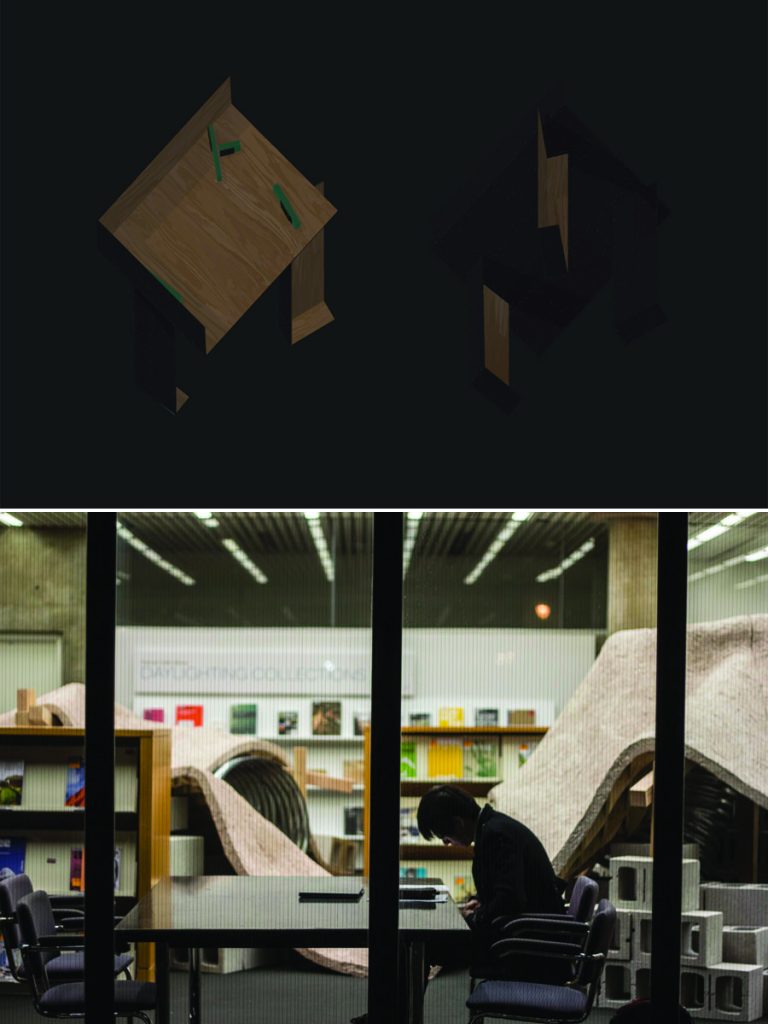
Poster for Acts of Scaling 2025
Dates
GSD, 485 Broadway 485 Broadway Lecture Hall
Gund 112 Stubbins
Free and open to the public

Please RSVP to receive reminders about the event.

Cambridge Talks is an annual conference organized by students of the PhD Program in Architecture, Landscape Architecture, and Urban Planning at the Harvard University Graduate School of Design, and is generously supported by the GSD’s Advanced Studies programs. Cambridge Talks 2025: Acts of Scaling is organized by PhD students Matthew Kennedy and Adil Mansure, and advised by Antoine Picon, G. Ware Travelstead Professor of the History of Architecture and Technology, and Director of Doctoral Programs. Conference graphic identity designed by Willis Kingery.

Event Description

In 1977, nine years after its initial release, Ray and Charles Eames issued an amended version of their experimental film Powers of Ten, incorporating two additional scales, and thereby effecting “a hundredfold increase—to each end of the journey into the universe, and to the return trip to the microstructure of the carbon atom in the human body.” Drawing on up-to-the-moment scientific developments at scales both extra-large and extra-small, seizing upon the power of then-novel media and representational techniques to appeal to very different audiences, and venturing well beyond the ostensible borders of the design disciplines, the Eames’ visual and narrative encapsulation of a complex and interconnected universe displays precisely how scale, or more precisely how scaling, can shape imaginaries and practices across the arts, humanities, and sciences, as well as in popular culture. As technical innovations augment the scope of our powers both to perceive and to intervene, we are confronted with a relentless ordering and reordering of knowledge. This epistemological dilemma compels us to articulate new theoretical frameworks, to relentlessly renegotiate disciplinary boundaries, and to analyze, address, and problem-solve between—and often simultaneously at—an ever-proliferating range of scales.

For architects, landscape architects, and urban planners, no less than for historians and scientists in their many specializations, scale has historically served as a key element in the organization of disciplinary concerns, facilitating intellectual fixation upon, and rigorous examination of, a particular and coherent set of objects or circumstances, even when underpinned by a tacit understanding that things and phenomena of all scales are ultimately intertwined and mutually constituted. Recent decades, however, have been marked by a seeming destabilization of once reliable thresholds between these scales of consideration, owing, among other considerations, to the ethical, epistemological, even ontological exigencies of anthropogenic climate change. From Geoffrey West’s laws of scaling, applicable as much to microscopic organisms as to the complex dynamics of cities and territories, to the temporal and geological strata of the earth interrogated by archaeologists and geologists; from the hyper-local scales prioritized by microhistorians, to the sprawling and multifaceted networks of movement (of people, materials, and ideas) at the heart of the mobilities paradigm proposed by sociologists John Urry and Mimi Sheller; and from the humanistic global scale so central to political science, economics, and urban theory for the past half-century, to the more ecologically and philosophically synthetic planetary scale of history posited by Dipesh Chakrabarty—myriad theoretical and material confrontations, both explicit or implicit, emerge out of the hermeneutical work of scaling.

Indeed, the questions that arise out of generating knowledge—and rendering it commensurable—between scales, are both sprawling and complex. What events or phenomena in the history of design—and of environmental and spatial practices, broadly conceived—or of art, science, technology, etc., can be made more legible or more discursively generative by thinking about scalar translations and shifts? What biases, frameworks, or cosmologies may be brought to light? What behaviors, linear or nonlinear, come to the fore, and at what point do these behaviors begin to take on the semblance of patterns or even laws of scaling? How have scalar operations been deployed throughout history to seize and exercise social, economic, and political agency and power? How has the constant shifting of scalar frontiers, both extra-small or extra-large, impacted research across disciplines, and what potential may these exchanges hold for new forms of practice, new modes of investigation, new and hybrid bodies of knowledge? What instruments and techniques are employed to manage these scalar shifts and leaps, and how do they work? What media and modes of intermediation can be discussed? How has the framing of new scalar imaginaries, whether great or small, inflected the protocols of research and practice throughout history, whether in the design disciplines, or in the sciences and humanities that shape and attend to them?


Program

Friday, April 4th, 2025
3:00 p.m. — 6:30 p.m.
Sackler Building, 485 Broadway, Cambridge
Room 004 (Auditorium)

Welcome
3:00 — 3:45 p.m.

Dean’s Welcome
Sarah Whiting, Dean and Josep Lluís Sert Professor of Architecture

Program Welcome
Antoine Picon, Director of Doctoral Programs, G. Ware Travelstead Professor of the History of Architecture and Technology

Opening Remarks: “Acts of Scaling”
Adil Mansure + Matthew Kennedy


Panel 1: Bodies + Fields
3:45 — 6:30 p.m.

Angeliki Giannisi, PhD Candidate, Technical University of Vienna
“Microliths They Are, Big Stones”

Taylor Dover, Head of Digital Body, Studio Olafur Eliasson
“Noticing the Body”

Sarah Hutcheson, PhD Candidate, Architecture, Landscape, and Urban Planning, Harvard GSD / GSAS
“In Absentia: Scales of the King’s Body”

Clemens Finkelstein, Postdoctoral Research Associate, Panel on Planetary Thinking, Justus Liebig University Giessen
“Planetary Abstraction, c. 1898: Trans-scalar Frontiers”

Distinguished Presenter

Daniel Lord Smail, Frank B. Baird Jr. Professor of History, Harvard University
“Scale in History”

Panel Discussion

Moderator: Erika Naginski, Robert P. Hubbard Professor of Architectural HistoryDaniel Lord Smail


Saturday, April 5th, 2025
9:00 a.m. — 6:30 p.m.
Gund Hall, 48 Quincy Street, Cambridge
Stubbins, Room 112

Introduction
9:00 a.m.

Opening Remarks: “Acts of Scaling”
Adil Mansure + Matthew Kennedy


Panel 2: Networks + Mobilities
9:15 a.m.

Lizzie Yarina, Assistant Professor, Northeastern University School of Architecture
“‘Full Water Control’: Mekong Delta Plans, 1969-1993”

Emily Holloway, Postdoctoral Fellow, Lindy Institute for Urban Innovation, Drexel University
“Jumping Scale in the Black Atlantic: Critical visuality in the archives of slavery”

Sofia Leoni, PhD, Department of Regional and Urban Studies and Planning, Politecnico di Torino
“Globalisations from the Countryside. Scaling Logistics in Rural China”

Romain David, PhD Candidate, Architecture, Landscape, and Urban Planning, Harvard GSD / GSAS
“Microhistory of Globalization: Affleurement de l’histoire and minor evidences”

Distinguished Presenter

Mimi Sheller, Dean of The Global School, Worcester Polytechnic Institute
“Cosmic Quantum: Topological and Temporal Imaginaries in Acts of Scaling Aluminum”

Panel Discussion

Moderator: Diane Davis, Charles Dyer Norton Professor of Regional Planning and Urbanism

Panel 3: Knowledge + Practices
1:00 p.m.

Chase Galis, PhD Candidate, Institute for the History and Theory of Architecture (gta), ETH Zurich
“No Sound, No Screaming, No Blood: Electrical Infrastructure and the New Scale of Disaster Medicine”

Hugo Betting, PhD Candidate, Architecture, Landscape, and Urban Planning, Harvard GSD / GSAS
“Small Lichens, Big Words”

Caner Arıkboğa, PhD Candidate, Architecture Department, Middle East Technical University
“Debris-scale: An Epistemological Tool for Rethinking Architectural Ecologies”

Distinguished Presenter

Peter Christensen, Arthur Satz Professor of the Humanities, Ani and Mark Gabrellian Director of the Humanities Center, Senior Associate Dean, School of Arts and Sciences, University of Rochester
“Micro-Patents, Macro-Patents: The Scale of IP in Architecture”

Panel Discussion

Moderator: Ana María León Crespo, Associate Professor of Architecture

Panel 4: Media + Landscapes
3:45 p.m.

Anny Li, PhD Student, Architecture, Landscape, and Urban Planning, Harvard GSD/GSAS)
“The 1960 Engineer Special Study of the Surface of the Moon: Photogeology between Earth and Selene”

Ana Luiza Nicolae, PhD Student, History of Science, Harvard University
“Down and Across: Water through the Imperial Valley and the Valle de Mexicali”

Shuyi Yin, PhD Candidate, Historic Preservation, Columbia GSAPP
“Scaling Heritage: Albrecht Meydenbauer’s Photogrammetry and Monument Documentation”

Chiara Di Leone-Rokmaniko, PhD Student, History of Science, UCLA
Maksym Rokmaniko, SCI-Arc
“Trypillian Settlements: An Archeology of the Critical Zone”

Distinguished Presenter

Kaja Tally-Schumacher, Assistant Professor of Landscape Architecture, Harvard GSD
“Pollen, Pigments, and Paleosols: Views into the Ancient Mediterranean World through Microscopic Portals”

Panel discussion
Moderator: Edward Eigen, Senior Lecturer in the History of Landscape and Architecture, Harvard GSD

Conclusion

Closing Remarks
Adil Mansure + Matthew Kennedy

Sacred Groves & Secret Parks: Orisha Landscapes in Brazil and West Africa

Sacred Groves & Secret Parks: Orisha Landscapes in Brazil and West Africa

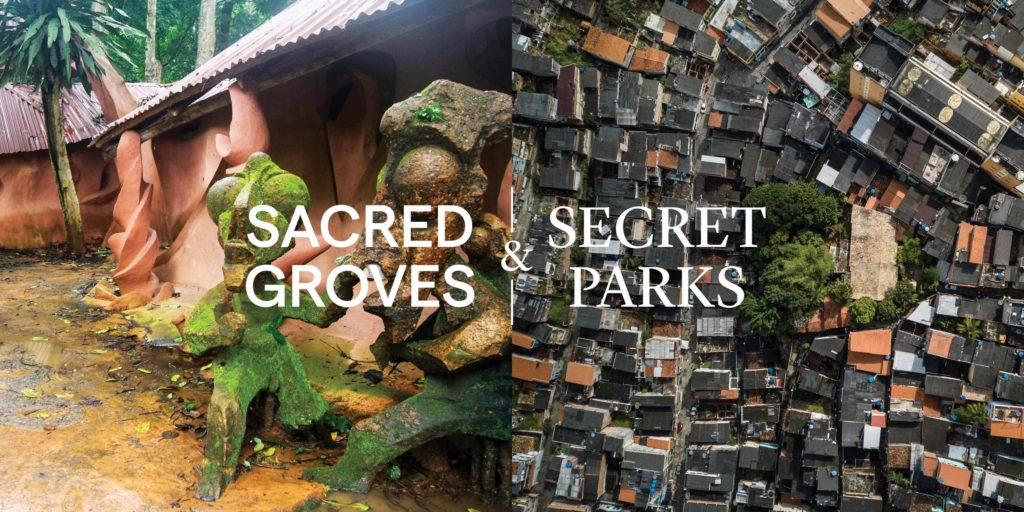
Osun Sacred Grove, Osogbo, Nigeria (left) and view of Salvador da Bahia, Brazil (right)
Photos: Adolphus Opara, Osun Sacred Grove, Osogbo, Nigeria (left) and Leonardo Finotti, Terreiro Vodun Zo, Salvador da Bahia, Brazil (right)
Dates
Gund 112 Stubbins
Gund 112 Stubbins
Free and open to the public
The Sacred Groves & Secret Parks colloquium and exhibition will bring together insights on the materiality and spatiality of Afro-religious diasporic practices, decentering Western canons of knowledge and leading to new design possibilities for Brazilian and West African cities. Landscapes of orisha devotion are often manifested as sacred groves, where devotees cultivate orishas—deities, or energies of nature, in Yoruba tradition that enable all forms of life—using combinations of botanical manipulation, animal sacrifice, music, and dance. In the process, Afro-diasporic memories, knowledge, and environmental understandings are made manifest and empowered. A crucial feature of such spaces is that they often occupy a luscious green expanse, adjacent to urban settings and in some cases occupy areas larger than football fields. Once associated with every town in Yorubaland, the groves of West Africa are largely depleted. In contrast, orisha groves in Brazilian cities are plentiful but are often protected by the necessity for secrecy that stems from practicing African traditions within a wider national racist context. As significant urban green spaces, these landscapes inevitably have an impact on urban ecologies and create important social, cultural, environmental, and political relationships with their surrounding communities. While scholarly interest on the African-diaspora and the so-called “Black Atlantic” have grown, relatively little attention has turned to the flows and interwoven perspectives about spatiality, environmental preservation, and landscape architecture. The colloquium will bring together experts from different fields to contribute to research projects intended to elucidate some of these relationships, providing arguments both for the necessary anti-racist struggles and the recognition of environmental preservation movements led by black diasporic communities. Speakers will share knowledge regarding the materiality, conservation, design, and spatial forms manifest in landscapes of orisha devotion in Brazil and Nigeria. The colloquium will chart new territory in the spatial and material studies of groves, particularly those sacred groves—known in Nigeria as shrines and in Brazil as terreiros—moving from an understanding of what we do know to what we can know. This colloquium and exhibition hosted by the Department of Landscape Architecture in collaboration with the:   Schedule 9­–9:20am Introductions by Anita Berrizbeitia, Alejandro de la Fuente, and Gareth Doherty 9­:20–9:50am Jacob Olupona,“Introduction to African Religious Traditions”   10am–12 noon Panel 1, Materialities: The energies of nature (orishas) and their spatial relationships, including the mineral, botanical, and animal conditions required for rituals. Moderated by Bruno Carvalho and Danielle Choi —lunch— Thursday, 2–4pm Panel 2, Cases in Conservation: Sacred groves, shrines and landscapes of orisha devotion in West Africa and Brazil that have been conserved. The panel will address the future needs of sacred groves in light of pressures for development. Moderated by Susan Nigra Snyder and George E. Thomas   Thursday, 5–7pm Exhibition opening: A parallel exhibition of photographs by Alophus Opara of the Osun Sacred Grove in Nigeria and by Leonardo Finotti of terreiros in Salvador da Bahia will help articulate the spatial conditions of sacred groves and secret parks. The Neil L. and Angelica Zander Rudenstine Gallery, Hutchins Center for African and African American Research, 104 Mount Auburn St, 3R. On view Mondays to Fridays, 10am­–4pm, through December 16.   Friday, October 4 9–11am Panel 3, Designing Sacred Groves: Design processes for new sacred groves and for the redevelopment of others and a discussion of their plans and aspirations. Moderated by Gareth Doherty and Gary Hilderbrand — 12–1:30pm, Síntesis: Una vision de la herencia musical afro-cubana, recital of Afro-Cuban music, presented by Institute Cervantes, Leverett Library, 28 DeWolfe St.—   Friday, 2–4pm Panel 4, Urban Ecologies: What environmental role do sacred groves play and promise for their adjacent cities? What are the political forces mobilized through the public celebration of rituals? What are the political ecologies relating to environment, gender, race, and sexuality? Moderated by John Beardsley and Forster O. Ndubisi   Friday, 4–4:20pm Wrapping up session * Presentation will be in Portuguese. This colloquium will be live-streamed. Simultaneous translation will be available.   SPEAKERS Olatunji Adejumo (Lagos, Nigeria) is a landscape architect, natural resources planner, and Associate Professor in the Department of Architecture, University of Lagos. Dr. Adejumo’s research theorizes indigenous planning and its influence on rethinking the public realm as a place where culture and nature work together. Erwan Dianteill (Paris, France) is Professor of Cultural and Social Anthropology at the Sorbonne (Paris Descartes University). Since 2007, he has been conducting fieldwork in Porto-Novo, Benin, on the transformation of the Fa/Ifa divination in a modern African city.  Gareth Doherty (Cambridge, MA) is Associate Professor of Landscape Architecture and Director of the Master in Landscape Architecture Program at the Harvard Graduate School of Design. Doherty’s research and teaching focus on the intersections between landscape architecture and anthropology in postcolonial and Islamic societies. Tao DuFour (Ithaca, NY) is Assistant Professor at the Department of Architecture, Cornell University. His research focuses on phenomenological accounts of the experience of spatiality and the ‘natural’ world, and explores the relationship between ethnography as a descriptive method and phenomenological description. Princess Adedoyin Talabi Faniyi (Osogbo, Nigeria) is an Orisha high priestess and the daughter of Chief Susanne Wenger. Princess Adedoyin is a key volunteer of The Adunni Olorisha Trust working to protect the Sacred Groves of Osogbo, a UNESCO World Heritage Site. Marcelo Ferraz (São Paulo, Brazil) is a co-founder of Brasil Arquitetura and professor at the Escola da Cidade in São Paulo. The firm has developed projects for museums, residential buildings, social housing, and community and cultural centers. Ferraz has received many awards for his work. Paula Gomes (Oyo, Nigeria) was appointed Honorary Cultural Ambassador by the Alaafin of Oyo in 2012. A Portuguese citizen, Paula studied linguistics and history at the University of Augsburg in Germany and has researched Yoruba culture and spirituality since 1992. Samuel Lira Gordenstein (Los Angeles, CA) is a Senior Historical Archaeologist at Applied Earthworks, Inc. His current research in Bahia focuses on the urban experience of the Afro-Brazilian population during the nineteenth and early twentieth centuries. Dominique Juhé-Beaulaton (Paris, France) is an historian and research director at the French National Centre of Scientific Research (CNRS). Dr Juhé-Beaulaton has worked for a long time on the history of landscapes and the management of ‘natural areas,’ particularly sacred forests in West Africa. Moisés Lino e Silva (Salvador, Brazil) is Assistant Professor of Anthropological Theory at the Federal University of Bahia (UFBA). He works within the field of political anthropology, specializing in the ethnographic study of freedom and authority as related to poverty, sexuality, and religion. Adriano Mascarenhas (Salvador, Brazil) is a founding partner in SOTERO Arquitetos, a Brazilian international design firm headquartered in Salvador da Bahia that specializes in architecture, urban planning, and interiors. Jacob Olupona (Cambridge, MA) is Professor of African Religious Traditions, and Professor of African and African American Studies at Harvard University. Professor Olupona, who joined the Harvard Faculty of Divinity and Faculty of Arts and Sciences in 2006, is a noted scholar of indigenous African religions. Maria Alice Pereira da Silva (Salvador, Brazil) researches current Afro-Brazilian issues, with particular interest within the fields of human rights, social inclusion and public policies. Maria Alice is an attorney, holds an MA and is a PhD candidate in the Faculty of Architecture and Urbanism at the Federal University of Bahia. Vilma Patricia Santana Silva (Salvador, Brazil) is a graduate student in architecture and urbanism at the Federal University of Bahia. Guided by Afro-Brazilian deities, she has designed and built several terreiro community projects as a volunteer architect. Vilson Caetano de Sousa Jr. (Salvador, Brazil) is Babalorisha at Terreiro Ilê Obà L’Okê in Salvador and a professor at the Federal University of Bahia. Vilson has a research focus on Afro-Brazilian populations and has worked on the anthropology of food for over 30 years. Fábio Velame (Salvador, Brazil) is professor in the Faculty of Architecture at the Federal University of Bahia. His research includes sacred groves and ethnic-African architecture as well as Afro-Brazilian slave housing and quilombos.   MODERATORS and HOSTS John Beardsley (Washington DC) was an adjunct professor at the GSD from 1998–2013 and recently stepped down from his position as Director of Garden and Landscape Studies at Dumbarton Oaks Research Library and Collection. Beardsley is editor of Cultural Landscape Heritage in Sub-Saharan Africa (2016). Anita Berrizbeitia (Cambridge, MA) is Professor of Landscape Architecture and Chair of the Department of Landscape Architecture at Harvard GSD. Berrizbeitia’s research focuses on design theories of modern and contemporary landscape architecture, the productive aspects of landscapes, and Latin American cities and landscapes. Bruno Carvalho (Cambridge, MA) is Professor of Romance Languages and Literatures, Affiliated Professor in African and African American Studies and an Affiliated Professor in Urban Planning and Design at Harvard GSD. Carvalho’s research and teaching interests include literature, culture, and the built environment, with a focus on Brazil. Danielle Choi (Cambridge, MA) is Assistant Professor of Landscape Architecture at the Harvard Graduate School of Design. Choi’s research concerns infrastructure, technology, and the synthetic role of landscape architecture in American urbanization. Alejandro de la Fuente (Cambridge, MA) is the Robert Woods Bliss Professor of Latin American History and Economics and Professor of African and African American Studies and of History and Director of the Afro-Latin American Research Institute at Harvard University. Gary R. Hilderbrand (Cambridge, MA) is a founding principal of Reed Hilderbrand, and the Peter Louis Hornbeck Professor in Practice of Landscape Architecture at Harvard GSD where he has taught since 1990. Hilderbrand has an abiding commitment to promoting a heightened focus on urban forestry practices. Forster O. Ndubisi (College Station, TX) is a professor and head of the Department of Landscape Architecture and Urban Planning at Texas A & M University. Dr. Ndubisi specializes in ecological design and planning, community design, growth management, and interdisciplinary design education. Susan Nigra Snyder (Philadelphia, PA) is a Lecturer in Architecture at Harvard GSD and Area Head of the Critical Conservation MDes area group. Snyder is a registered architect practicing with George E. Thomas, Ph.D., a cultural and architectural historian in CivicVisions. George E. Thomas (Philadelphia, PA) is a Lecturer in Architecture at Harvard GSD and Area Head of the Critical Conservation MDes area group. Thomas is a cultural and architectural historian practicing with Susan Nigra Snyder, a registered architect in CivicVisions.   RECITAL Síntesis (Havana, Cuba) is one of the emblematic ensembles of contemporary Cuban music known for the richness, variety and conceptual structure of their sonic style. They pioneered the fusion of Afro-Cuban ritual music with contemporary jazz and rock music. Since the late 1970s, they have developed a unique style and are among the most recognized and popular musical groups of the island. Albums by Síntesis, ANCENTROS I, II and III, are part of the Cuban rock-fusion classics.   EXHIBITION Leonardo Finotti (São Paulo, Brazil) is an artist/photographer of international reputation who visually explores cities and architecture. Finotti’s work has been shown in many solo and group exhibitions and it is part of collections at MoMA, CMoA, Kunstmuseum Chur, and the Bauhaus, among others. Finotti founded obra comunicação, a collaborative communication office that produces articles, exhibitions, and catalogs. Adolphus Opara (Lagos, Nigeria). Opara’s work is induced by encounters with people and their daily effort to exist amidst obstacles that define and situate their individual locality. Opara uses visual storytelling to better understand as well as to show his connection to the issues that confronts him daily. Opara’s work has been widely exhibited at many international venues including the Tate Modern in London. Michelle Jean de Castro (São Paulo, Brazil) is an architect and curator and has designed exhibitions, especially photo-installations, internationally. Michelle is founder of lama-sp, an artist run space in downtown São Paulo that produces exhibitions and publications that focus on photography, architecture and cityscape.

State(s) of Housing Colloquium

State(s) of Housing Colloquium

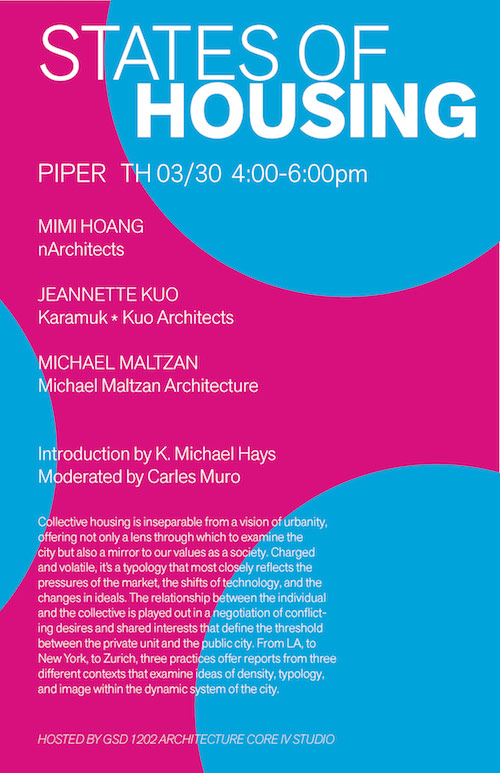
States of Housing Poster
Event Location

Gund Hall, Piper Auditorium

Date & Time
Free and open to the public

Collective housing is inseparable from a vision of urbanity, offering not only a lens through which to examine the city but also a mirror to our values as a society. Charged and volatile, it’s a typology that most closely reflects the pressures of the market, the shifts of technology, and the changes in ideals. The relationship of the individual to the collective is played out in a negotiation of conflicting desires and shared interests that define the threshold between the private unit and the public city. From LA, to New York, to Zurich, three practices offer reports from three different contexts that examine ideas of density, typology, and image within the dynamic system of the city.

Introduction by K. Michael Hays, Eliot Noyes Professor of Architectural Theory, Associate Dean for Academic Affairs, and Interim Chair of the Department of Architecture

Presentations by:
Mimi Hoang (MArch ’98), nArchitects, Adjunct Assistant Professor Columbia GSAPP
Jeannette Kuo (MArch ’04), Karamuk * Kuo Architects, Assistant Professor in Practice Harvard GSD
Michael Maltzan (MArch ’88), Michael Maltzan Architecture

Discussion moderated by Carles Muro, Associate Professor of Architecture Harvard GSD