Dave Hickey
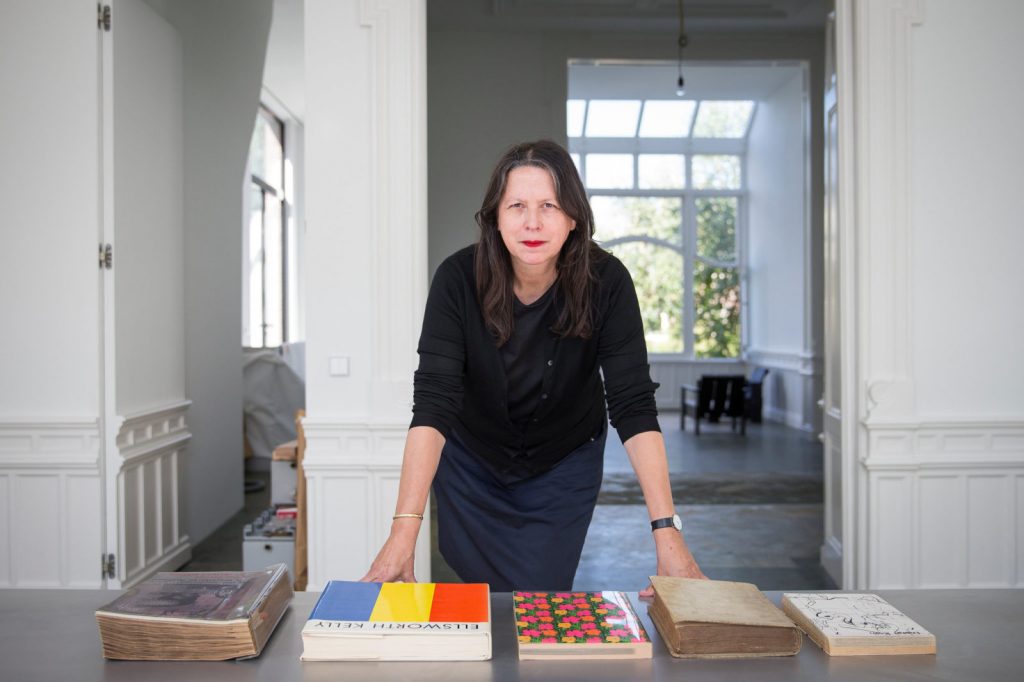
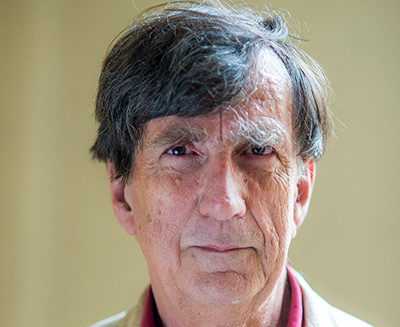
Art critic Dave Hickey will deliver a Rouse Visiting Artist Lecture on September 12, 2019.Samuel Bravo, “PROJECTLESS: on the emergence of a dwell”
This journey focuses on a portion of the human environment that has been shaped in the absence of project.
We will revisit the track record of a journey that consisted of excursions, visits and short residencies.
The construction of the communal house of the matsés people poses the question of dwelling and being and the emergence of the human environment in relation with language.
The symbiotic and contradictory relation observed in several informal areas, from the flooded slum of Belén Bajo in Iquitos, to Korail in Dhaka, Bangladesh, with a larger formal urban setup raises questions about the nature of informality, while revealing the belonging to larger cultural and territorial systems. Bravo traced back this relation from Lima to Andamarca in the Andes where the ancient agricultural terraces and irrigation system are still sustained by the traditional andean cooperative organization. Bravo followed this territorial engagement up to the floating communities of the Mekong delta and the tidal flooded city of Afuá in the mouth of the Amazon river.
Informality, otherwise understood as the people’s shared ability of creating the city, is harnessed by ‘community architects’ as a tool for creating and improving the built environment. Bravo observed these working methods and toolsets in both the Cerros of Lima and the city of Jhennaidah in Bangladesh.
Based on these experiences, Bravo will propose an interpretation on how the emergence of a dwell comes to life out of nature and in front of us. Through different cases we will observe the persistence of this primeval emanation of the human environment as a contemporary everyday experience.
Samuel Bravo graduated of the Pontifical Catholic University of Chile (BArch 2009). He leads his own practice, and has realized a variety of projects in South America. His past work includes organizing community-based rebuilding in earthquake-damaged Tarapacá, Chile; designing and building a lodge/shamanic center and school for the Shipibo people in the Peruvian amazon; and several private residential commissions.
Trough these works Bravo has approached several contexts of south america, from Patagonia to the amazon, exploring the relation of different cultures in the creation of their built environments.
In 2017 Bravo the Wheelwright prize. His proposal Projectless explores the relation of the architectural practice with non project driven traditional and informal environments. This journey involved the study of a dozen cases in seven different countries.
Bravo’s work has been exhibited in the XVII and XVIII Chile Architecture Biennial in Santiago (2010 and 2012), earning a Jury Selection in the latter; and in the Chilean Pavilion at the 12th International Architecture Exhibition at the Venice Biennale (2010). His projects have been published in ARQ, Casabella, Engineering + Research (Colombia), Journal CA, and other publications. Bravo was also one of four finalists in the 2016 Wheelwright Prize cycle.
“Reflecting on Shinohara”: Kazuyo Sejima and Seng Kuan in Conversation
In conversation with Seng Kuan, Kazuyo Sejima of SANAA reflects on Shinohara Kazuo’s influence on her and her generation, especially on the formative years of her practice and situated in the Tokyo architecture community in the 1980’s. This is a rare opportunity to hear Sejima speak about this period of her career. A reception to celebrate the opening of the exhibition “Shinohara Kazuo ModernNext” will take place in the Druker Design Gallery immediately following the conversation.
Born in Ibaraki Japan, Kazuyo Sejima received a degree in architecture from the Japan Women’s University in 1981. In 1987 she opened her own studio in Tokyo and then in 1995, together with Ryue Nishizawa, she founded SANAA. In 2010 Kazuyo Sejima was appointed director of the 12th International Architecture Exhibition of Venice Biennale. Her honors include the Japan Architecture Award, Venice Biennale Golden Lion Award, Pritzker Architecture Prize, Officier de l’Ordre des Arts et des Letters, and Medal with Purple Ribbon. She is currently a professor at the Polytechnic University of Milan,Yokohama Graduate School of Architecture (Y-GSA), and teaching at Japan Women’s University as a visiting professor.
This program is supported by the Gropius Lecture Fund.
Commencement 2019
Commencement for the academic year 2018-2019 will be held on Thursday, May 30, 2019. Commencement Day activities include ceremonies in Harvard Yard and at the GSD, and the Harvard Commencement Address.Schedule Overview
- 6:45 am: Harvard Yard gates open to ticketed guests. Guests are requested to be seated by 8:15 am. Plan time to stand on line and to have your bags searched; view the Yard bag policy here (scroll down). Also note that strollers will be allowed into the Old Yard, but not into Tercentenary Theatre proper.
- 7:00 am: Continental breakfast available at GSD for graduates and guests; Gund Hall (no tickets required)
- 7:30 am: Graduates line up outside Gund and (at about 7:45 am) process to Harvard Yard
- 8:50 am: Academic Procession into Tercentenary Theatre
- 9:45 am: Commencement Morning Ceremony begins (tickets required)
- 11:30 am: Commencement Morning Ceremony ends
- Approximately 12 noon: GSD Diploma Ceremony (follows Harvard Yard ceremony; tickets required until standing room opens); Gund Hall back yard tent
- Approximately 1:30 pm: GSD lunch for graduates and guests (immediately follows GSD Diploma Ceremony; tickets required); Gund Hall
- 2:30 pm: Harvard Alumni Association meeting and Commencement Address by Angela Merkel in Harvard Yard (tickets required; bag and stroller policies same as for morning)
Antwaun Sargent
Antwaun Sargent will make the case for the power of black art and design at the Harvard Graduate School of Design. Antwaun Sargent is writer and critic living and working in New York City. His writing has appeared in the New York Times, The New Yorker, The Nation, W, Vice amongst others. He has recently contributed essays and interviews to museum and gallery publications for artists Ed Clark, Mickalene Thomas, Arthur Jafa and Yinka Shonibare. Sargent has lectured and been in conversation with artists at Studio Museum in Harlem, Brooklyn Museum, Museum of Contemporary Art, Denver, Art Gallery of Toronto and various other institutions. He curated the 2018 Aperture Summer open and is currently working on exhibitions at Jenkin Johnson Projects, Lehman College and Aperture. His first book “The New Black Vanguard: Photography between Art and Fashion” is out this fall from Aperture. This event is organised by the African American Students Union (AASU) and AfricaGSD; and is generously supported by the Hutchins Centre and The Dean’s Office at the Harvard Graduate School of Design. Click here for the event poster.“Beyond Reconstruction: Environmental, social, and infrastructural challenges for long-term recovery after major earthquakes in Mexico and Chile”
- Welcome Reception
- Thinking Beyond Reconstruction
- The Isthmus of Tehuantepec: Three Research Approaches to Post-Disaster Opportunities
- Recupera Chile: A Survey of Disaster Response and Recovery Efforts in Southern Chile
- Q&A / Final Thoughts
- Evening Reception (food and wine served)
- Panel: The Role of Universities in Disaster Recovery
- Panel: Bottom Up Community Involvement
- Resilient Homes Challenge
- Lessons Learned (lunch provided)
Class Day 2019: Awards Ceremony and Address
The Harvard Graduate School of Design’s 2019 Class Day Awards Ceremony and Address will take place from 3:30 p.m. to 5:00 p.m. on Wednesday, May 29, in the Gund Hall Backyard.
The GSD has named Teju Cole as its 2019 Class Day speaker. Teju Cole is a novelist, essayist, photographer, and curator. His books include Open City, Blind Spot and, most recently, Human Archipelago. He has been honored with the PEN/Hemingway Award, the Internationaler Literaturpreis, the Windham Campbell Prize, and a Guggenheim Fellowship, among many other prizes. His photography has been the subject of numerous solo exhibitions, and he was the photography critic of the New York Times Magazine from 2015 until 2019. He is the Gore Vidal Professor of the Practice of Creative Writing at Harvard.
Schedule Overview
Class Day – Wednesday, May 29
- 10:00 am – 2:00 pm: Class photos and ceremony rehearsal for graduates, by department/program:
10:00 am: Architecture
10:45 am: Landscape Architecture
11:30 pm: Urban Planning and Design
12:15 pm: MDes
12:45 pm: MDE, DDes - 3:30 pm: GSD Awards Ceremony and Class Day Address by Teju Cole; Gund Hall back yard tent (no tickets required; seating opens at 3:00)
- 5:00 pm: Reception for graduates and their guests; Gund Hall (no tickets required)
Please visit the GSD’s Commencement page for more information about Class Day and Commencement week activities. You may also wish to view the university-wide Commencement site.
Marc and Matthias Armengaud, “Of monsters and territorial reconfiguration. Stories by Marc Armengaud and Matthias Armengaud / AWP”
AWP is now an office for territorial reconfiguration, with lush projects in magazines (and even in real places). But at first there was a punk band, translating off-grid experiences into click’n’cut jazz with a twist of slowed down Rumba. The Suits dubbed us the Subterranean Paris Orchestra and wanted to sell T-shirts. But they lost us when we dived deeper into the dark, the invisible, the wastescapes, and parallel networks. Imagine, we were the kind that still believed you can read, and sometimes even… write books. Once in the 2000’s we made surface, and the New Suits asked us to tell everyone about the dark sides we had walked, while everyone had become a glooobal glamorouzzz and glitttteric arrrchissstar. Off’ we went for deep again, underneath deck urbanism slabs and through abandoned parking lots turned into rice fields by leaking sewers, with Mozart playing too loud from the closeby mall sound system, overlapping with insane smells of deteriorating organics only a few meters underneath high-end corporate towers. We met weird travelers there, owning college degrees and holes in their hopes. We tried to discuss ways to Re-Public Space for the sake of contradiction, but then the Post Suits dropped in with a contract that said “save late modernity if we can’t”. But what could we do? Instant design strategies? Upside down wooden observatories? 2D/3D micro-stages for playful demonstrations? Collaborative night time invasions? Temporary fake public programs? Crap cleaning water factories? Growing buildings?! Insects’ Museums? And what else?! Stories about monsters and territorial reconfiguration?!!
Forget it.
Or join.
Final Revue: Celebrating Mohsen’s 11 Years as Dean
On April 2, the GSD community celebrated Mohsen Mostafavi’s 11 years as Dean in true GSD form: a final ‘revue’. President Emerita Drew Faust opened a unique evening of presentations and performances, sketches and stories, music and movement by GSD students, faculty, and friends from near and far.
Final Revue: Celebrating Mohsen’s 11 Years as Dean
Piano Prelude
Yi-Yi Liang 梁以伊 (MDes 2019)
Mozart, Sonate in C, K545, the first movement
Chopin, Nocturne Op.9 No.1
Chopin, Fantaisie Impromptu, Op.66
Chopin, Scherzo, No.2, Op.31
Liszt, Hungarian Rhapsody No.11
Welcome and Introduction
K. Michael Hays, Eliot Noyes Professor of Architectural Theory
Master of Ceremonies
The GSD Beyond Gund Hall
President Emerita Drew Gilpin Faust
Homi K. Bhabha, Anne F. Rothenberg Professor of the Humanities
President Kathleen McCartney, Smith College
Platform
Carrie Bly (MDes 2019), Isabella Caterina Frontado (MLA I/MDes 2020), Natasha Hicks (MUP/MDes 2019)
Road to the GSD I
Jihyun Ro (A.B. 2015, MArch I 2020)
Road to the GSD II
Santiago Mota (MDE 2018, MDes 2020)
African American Student Union & the Black in Design Conference
Natasha Hicks (MUP/MDes 2019), Dana McKinney (MArch I/MUP 2017), Jaline Mcpherson (MLA I 2021), Daisha Martin (MUP 2020)
“All the Names”
Vijay Iyer, Franklin D. and Florence Rosenblatt Professor of the Arts, piano
Yosvany Terry, Director of Jazz Ensembles and Senior Lecturer, saxophone and chekeré
Womxn in Design
Cynthia Deng (MArch I/MUP 2020), Sarah Diamond (MLA I 2019), Lindsey Krug (MArch I 2019), Julia Roberts (MArch I 2019), Marisa Villareal (MLA I 2018), Adelle York (MDes 2019)
African American Design Nexus
Gabriel Ramos (MUP 2019)
Exhibitions, Publications, Public Programs, and Historic Houses
Ken Stewart, Assistant Dean and Director of Communications and Public Programs
Youngjin Song (MDes 2017)
“On Modern Living”
Introduction of “Mechalogica”
Ani Liu (MArch I 2014)
Lins Derry (MDes 2019)
“Mechalogica”
Road to the GSD III
Boya Guo (MDes 2017, DDes 2020)
A Toast to Mohsen
Mena Wasti Ahmed (MArch I/MLA I AP 2021) and Taylor Halamka (MArch I 2019)
Remarks from Mohsen Mostafavi
Celebratory Reception
Featuring DJ Humbi (MArch I 2019)
International Womxn’s Week Keynote Address: Demita Frazier, “Aesthetic Apartheid: Gender, Race, and Socio-economic Class, and the Impact on Perception, Engagement and Experience”
Tonight’s lecture will be a personal exploration of the impact that the city landscape of Chicago had on one precocious and observant African American midcentury woman’s aesthetic evolution. This talk, designed to raise questions without an expectation of finding answers, aims to provide the GSD community with the opportunity to reflect on who architecture is designed for, toward what purpose, and the resulting impacts on communities and how they interact with the built environment. Demita Frazier, J.D. is an unrepentant life long Black feminist, social justice activist, thought leader, writer, and teacher. She is a founding member of the Combahee River Collective who has remained a committed activist in Boston for over 44 years, was a radical even as a child. While a high school student in Chicago, she helped organize a student walk out in protest of the Vietnam War. She has worked in coalition with many organizations on the issues of reproductive rights, domestic violence, the care and protection of endangered children, urban sustainability issues affecting food access in poor and working-class communities, and a host of other important issues affecting communities of color. She has been an organizer and architect behind the scenes of many movement initiatives including the Chicago Black Panther Party’s Breakfast Program, Jane Collective, and more. After receiving her JD from Northeastern University, Frazier contributed to local and national campaigns for gender and racial justice. For more on Demita’s extraordinary activist journey, please see Keeanga–Yamahtta Taylor’s How We Get Free: Black Feminism and the Combahee River Collective. She has been a consistent advocate for the unequivocal freedom of Black women so that we can get on with the urgent business of freeing the world. Her current life goals include avid participation in the ongoing project of dismantling the myth of white supremacy, ending misogynoir, hetero-patriarchal hegemony, and undermining late stage capitalism, with the hope of joining with others in creating a democratic socialist society. A practicing unallied Buddhist, she is committed to loving kindness as she walks through life. Passionate cook & gardener, she would feed the world if she could. Womxn in Design’s third annual International Womxn’s Week convenes a weeklong series of events that gathers members of the Harvard GSD community and beyond to celebrate and cultivate new ways of thinking about gender and power. In March 2019, International Womxn’s Week will focus on LABOR. In the words of Womxn in Design,We seek to push the notion of labor beyond the discourse of “equality in the workplace” and to examine and elevate marginal or under-recognized forms of work, particularly as they are entangled within gender, race, and power. We ask: How do we value work? Whose work is recognized and whose is rendered invisible? The design disciplines have historically fallen short on answering these questions and promoting ethical labor practices more broadly. In the wake of the “SAM list” and the #metoo movement, and in response to a resurgence of labor organizing led primarily by traditionally “feminine” sectors, it is due time to reframe what labor means within a design context. Weaving together wisdom and experiences from labor organizers, current practitioners, academic leaders, and students, this year’s International Womxn’s Week at the GSD reflects on the legacies of labor movements, the issues around labor in design, and the ways in which we can push for an expanded and more equitable field.This event is co-organized by Womxn in Design and the African American Student Union at the GSD.