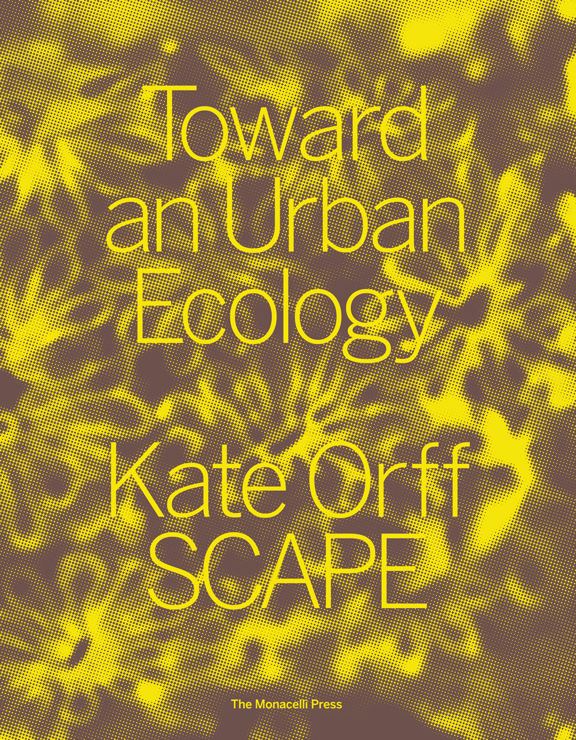
Kate Orff, “Toward an Urban Ecology”
Kate Orff, “Toward an Urban Ecology”
Tomás de Paor, “previous, next”
Tomás de Paor, “previous, next”

“‘I see earth. It is so beautiful.’
“Dawn asks,
‘What does the water surface look like?’
‘Darkish, with faintly gleaming spots.’
‘Do you get the feeling that our planet is round?’”
A selective reading of cosmonaut Yuri Gagarin’s exchanges with ground control during the 108-minute space flight of Vostok I, launched on April 12, 1961, the first human orbit of earth in history. Seven short essays discuss the making of buildings, the making of machines, and that of time pieces under the titles “earth,” “hut,” “yard,” ‘paper,” “scissors,” and “rock.”
Tomás de Paor is founder and principal of a practice based in Dublin, Ireland. Concerned with perception and construction, his work has been extensively published and exhibited. An elected Fellow of the Royal Institute of Architects of Ireland, de Paor was voted Young Architect of the Year by Building Design/Corus in 2003, and was nominated for the Mies van der Rohe Prize in 2005 and 2007 and the BSI Swiss Architecture Award in 2014. In 2015 he was elected a member of Aosdána, and in 2016 was elected International Fellow of the Royal Institute of British Architects.
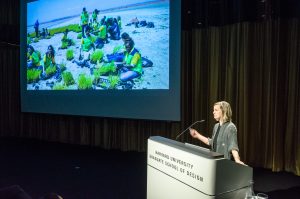
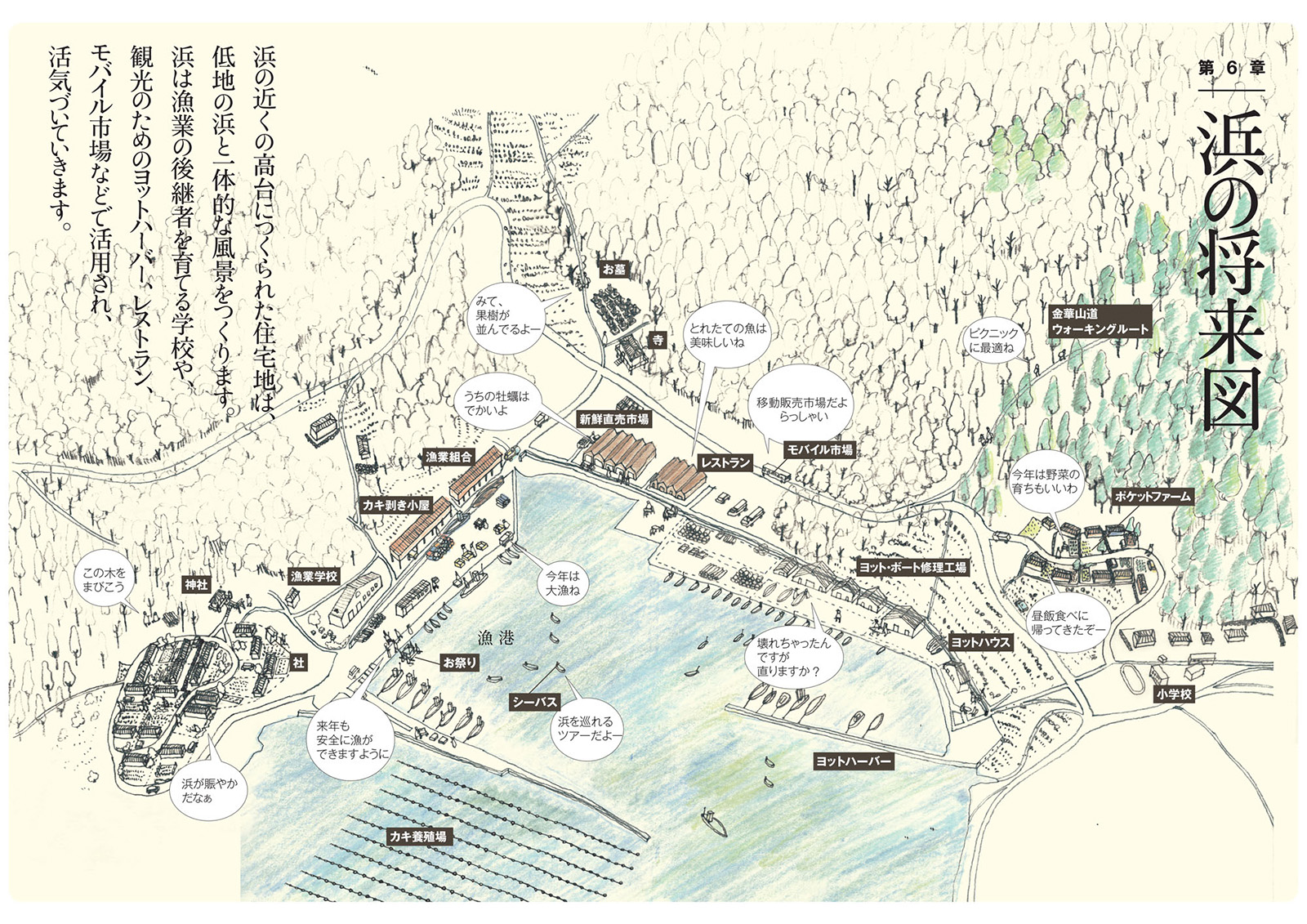
Exhibition Opening for “Architectural Ethnography by Atelier Bow Wow”
Exhibition Opening for “Architectural Ethnography by Atelier Bow Wow”
Harvard Design Magazine #43: Shelf Life
Harvard Design Magazine #43: Shelf Life
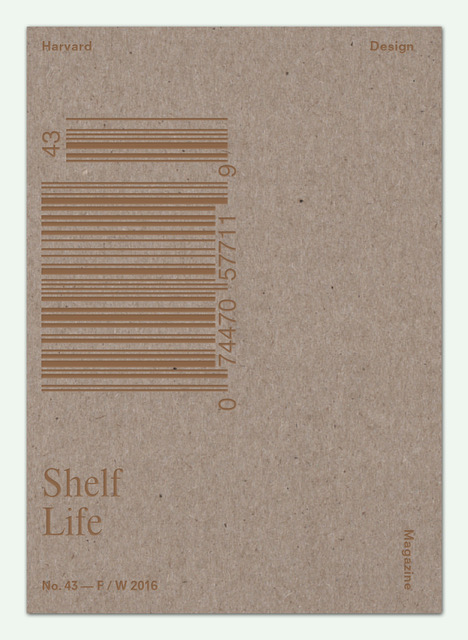
The more stuff we accumulate, the more space we need to store it all. Vast portions of the landscape are occupied and governed by spaces for storage, their maintenance, and the goods that move through them or remain buried within them indefinitely. The latest issue of Harvard Design Magazine investigates and unpacks the contents, containers, and systems of storage that organize our world. Contributors to “Shelf Life” will discuss contemporary forms of storage (digital, financial, corporeal), and how they are linked to our landscape, our economy, our culture, and our emotions. Quick-fire presentations will be moderated by Jennifer Sigler, editor in chief of publications & Harvard Design Magazine.
With Shannon Mattern, Antonio Furgiuele, Susan Nigra Snyder, Mark Mulligan, Rania Ghosn, and Andrew Holder.
Harvard Design Magazine is a twice-yearly publication based at Harvard Graduate School of Design. Subscriptions, single issues, and back issues can be purchased through Bruil & van de Staaij. Copies and back issues will be available for purchase at the event at a discounted rate.
Harvard Design Magazine #43 Launch Program
Bijoy Jain, “Lore”
Bijoy Jain, “Lore”
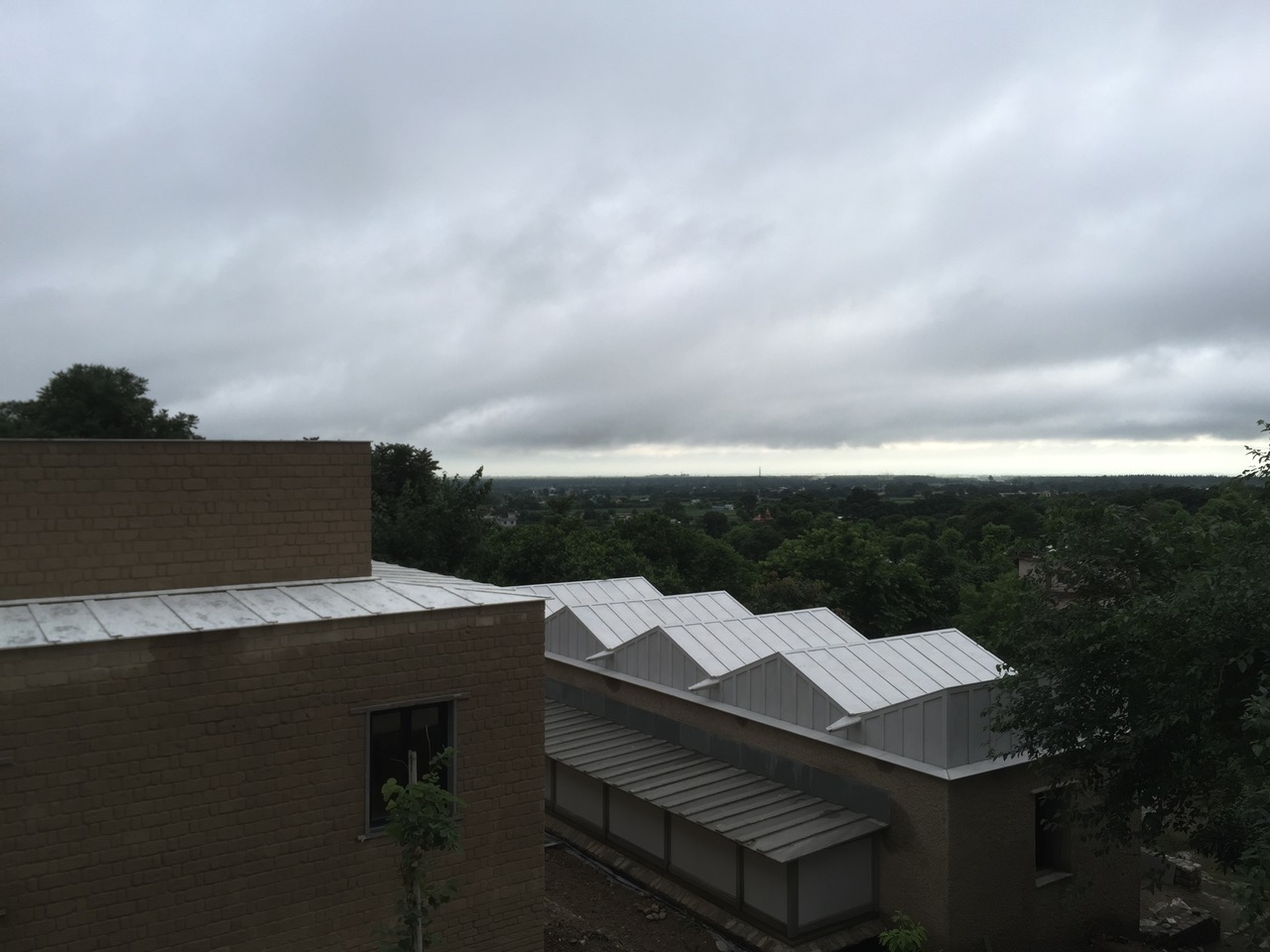
Studio Mumbai, founded by Bijoy Jain, works with a human infrastructure of skilled artisans, technicians, and draftsmen who design and build the work directly. This group shares an environment created through an iterative process, where ideas are explored via large-scale mock-ups, models, material studies, sketches, and drawings. Projects are developed by careful consideration of place and practice, drawing from traditional skills, local building techniques and materials, and an ingenuity arising from limited resources. Bijoy Jain was born in Mumbai, India, and received his MArch from Washington University in St Louis in 1990. He worked in Los Angeles and London from 1989 to 1995 and returned to India in 1995 to found his practice. The work of Studio Mumbai has been presented at the 12th International Architecture Exhibition (2010) organized by the Venice Biennale and the Victoria & Albert Museum, and has received several awards, including the Global Award in Sustainable Architecture (2009) finalist for the 11th cycle of the Aga Khan Award for Architecture (2010), winner of the seventh Spirit of Nature Wood Architecture Award, Finland (2012), winner of the third BSI Swiss Architecture Award (2012), and, most recently, the Grande Medaille d’Or from the Academie d’Architecture, Paris (2014). The University of Hasselt, Belgium, bestowed an honorary doctorate on Bijoy Jain in 2014. He has taught in Copenhagen (2012), at Yale University (2013), and in Mendrisio, Switzerland (2014 and 2015).
Sponsored by the Aga Khan Program for Islamic Architecture.
Go Hasegawa, “Amplitude in the Experience of Space”
Go Hasegawa, “Amplitude in the Experience of Space”
Rescheduled from February 9.
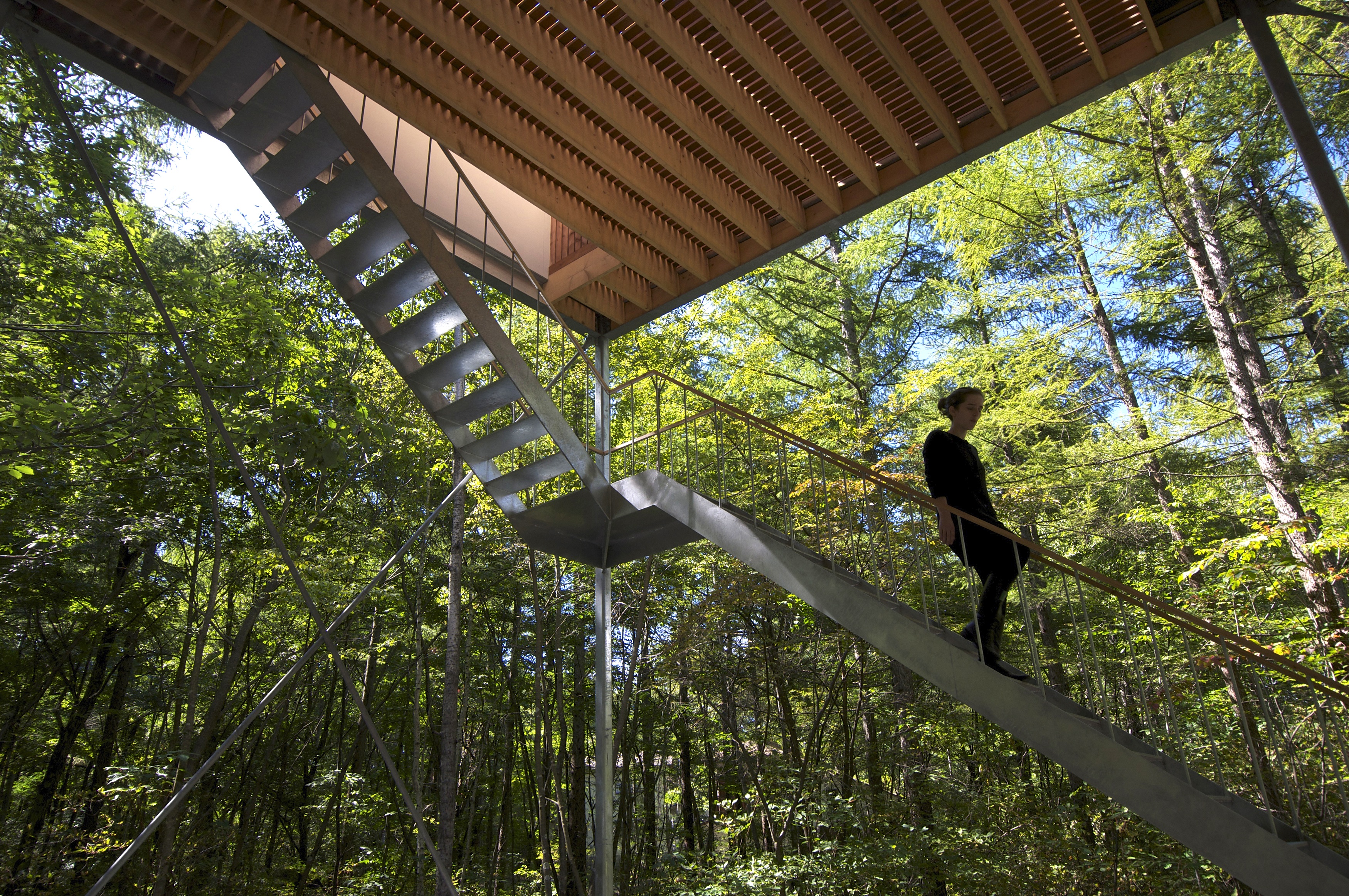
“Architectural spaces can take away or awaken abilities and sensations that we humans possess innately. Through the practice I’ve always been conscious of that—how can we expand our abilities and sensations with architectural spaces? In this lecture I will talk about it especially from the point of view of spatial dimension, gravity, and time, with my various projects.” Go Hasegawa earned a Master of Engineering degree from the Tokyo Institute of Technology in 2002 and worked at Taira Nishizawa Architects before establishing Go Hasegawa & Associates in 2005. He has taught at Tokyo Institute of Technology, the Academy of Architecture of Mendrisio, Oslo School of Architecture and Design, and UCLA and is currently a design critic in architecture at the GSD. In 2015, he received his PhD in Engineering from the Tokyo Institute of Technology. Hasegawa is the recipient of numerous awards, including the 2008 Shinkenchiku Prize and selection as one of the ten 2014 AR Design Vanguard architects. His new monograph is newly published by A+U as of January 2017.
Jeff Koons
Jeff Koons
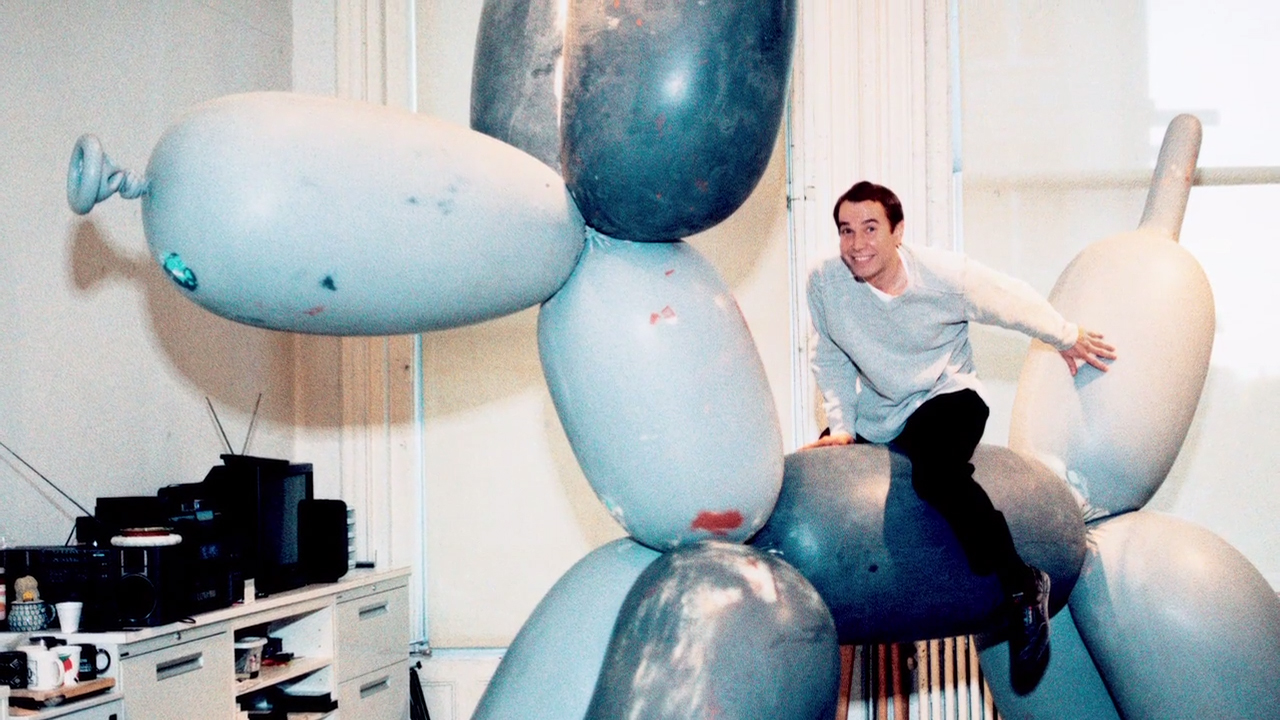
Internationally recognized artist Jeff Koons is widely known for his iconic sculptures Rabbit (1986) and Balloon Dog (1994–2000), as well as his monumental floral works Puppy (1992) and Split-Rocker (2000). His artwork, often depicting everyday objects, explores themes of self-acceptance and achieving transcendence through the senses. Since his first solo exhibition in 1980, Koons’s works have been shown in major galleries and art institutions throughout the world. Jeff Koons: A Retrospective (2014–15) was organized by the Whitney Museum of American Art and traveled to the Centre Pompidou Paris and the Guggenheim Bilbao. His most recent exhibition was at Almine Rech Gallery’s new London space (October 4, 2016—January 21, 2017). Koons lives and works in New York City.
John Collins, “Paper Airplane Guy”
John Collins, “Paper Airplane Guy”

John Collins had been a professional in television since 1979, working as a creative director, executive producer, live television director, camera operator, news graphics supervisor, voice-over artist, and in other capacities, when he designed a paper airplane in 2012 that broke the world record for distance flown. The record still stands, and Collins, whose original designs have since been published in three books (with tear-out planes to fold and fly), translated into German, Russian, and Chinese, is now the world’s foremost paper airplane expert. His designs are recognized around the world; one was featured in the film Paper Planes (2015), which dramatized an Australian boy’s quest to break the world record. In 2016, Collins turned paper airplanes into a full-time career, launching the National Paper Airplane Contest and providing STEM (science, technology, engineering, and math) education programs to aviation and space museums, science museums, libraries, and schools across the U.S.
Muji chairman Masaaki Kanai and product designer Naoto Fukasawa
Muji chairman Masaaki Kanai and product designer Naoto Fukasawa

Calvin Tsao and Zack McKown, “A Moving Target”
Calvin Tsao and Zack McKown, “A Moving Target”
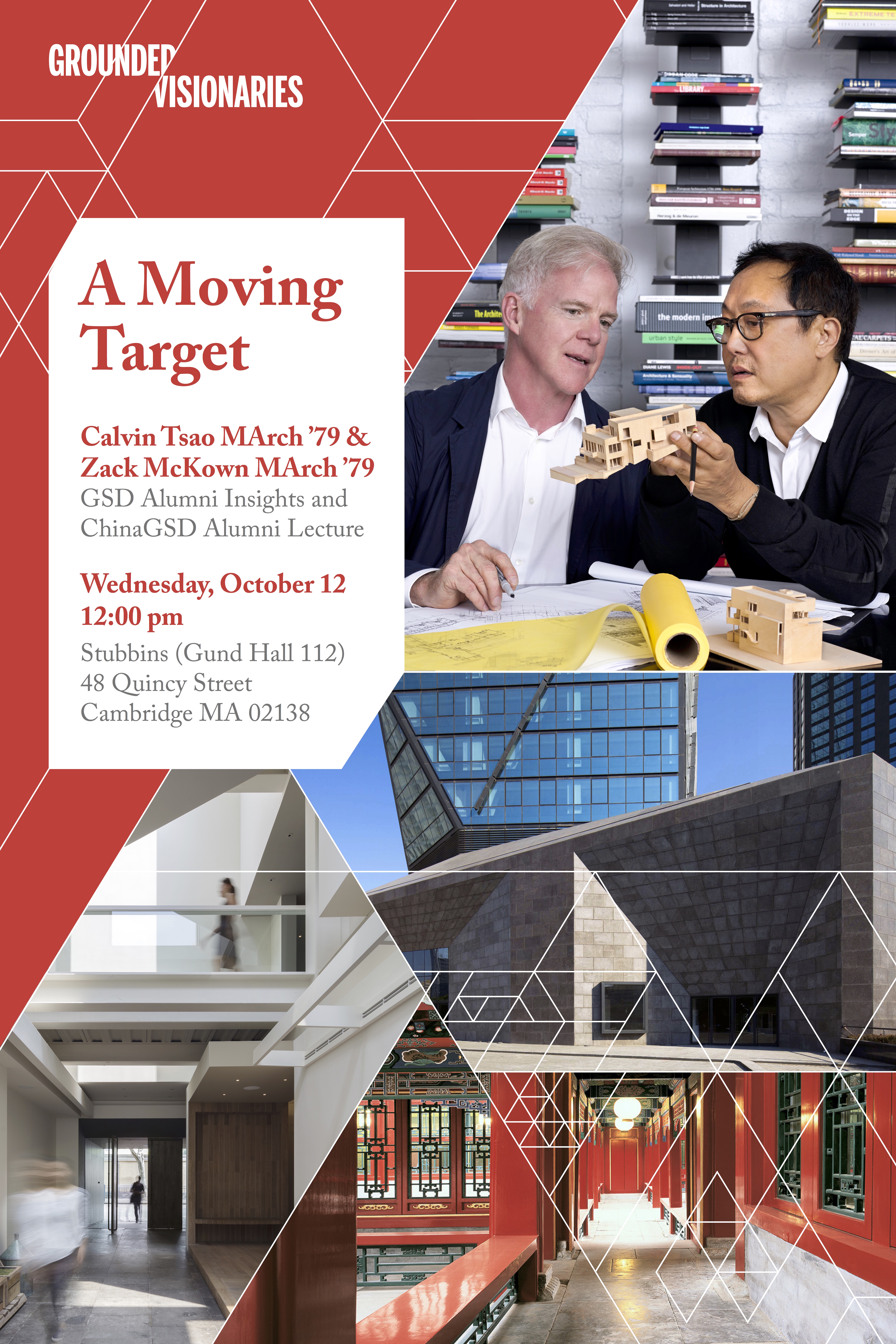
ChinaGSD will cohost with GSD Development and Alumni Relations Office an lecture by Calvin Tsao (MArch ’79) and Zack McKown (MArch ’79), followed by discussion with Prof. Jorge Silvetti (Nelson Robinson Jr. Professor of Architecture at Harvard GSD), Guo Boya (MDes ’17) and Emerald Wu (MArch ’18).
Both graduates of the GSD, Calvin Tsao and Zack McKown are the principals of the New York based design firm Tsao & McKown. Calvin and Zack will share with us their over 30 years of professional experience after graduating from the GSD, and practice insights of working in historically/politically sensitive context in China, including the rebuilding of Jingfu Palace Museum in the heart of the Forbidden City, Beijing.
Calvin Tsao and Zack McKown are recognized and leading voices in contemporary architecture whose work draws from a lively engagement with a variety of art forms. Their public and professional services include the Board of the American Academy in Rome, the Architectural Leagues of New York, Design Excellence of the AIA New York chapter, Design Trust for Public Space, Scenic Hudson and the Visiting Committee to Harvard GSD. In 2012, Calvin Tsao received a Museum of Chinese in America (MOCA) Legacy Award, and in 2009 the cooper Hewitt Smithsonian National Design Award for Interior Design, along with Zack McKown. They have taught at the Harvard GSD, the Cooper Union, Syracuse University, and at Parsons The New School for Design.