Creating New Urban Agendas in Latin America: Lessons from Paraguay

Creating New Urban Agendas in Latin America: Lessons from Paraguay

Event Location

Gund Hall, 109

Date & Time
Free and open to the public

A conversation with Soledad Núñez, Minister Executive Secretariat for Housing and Habitat of Paraguay

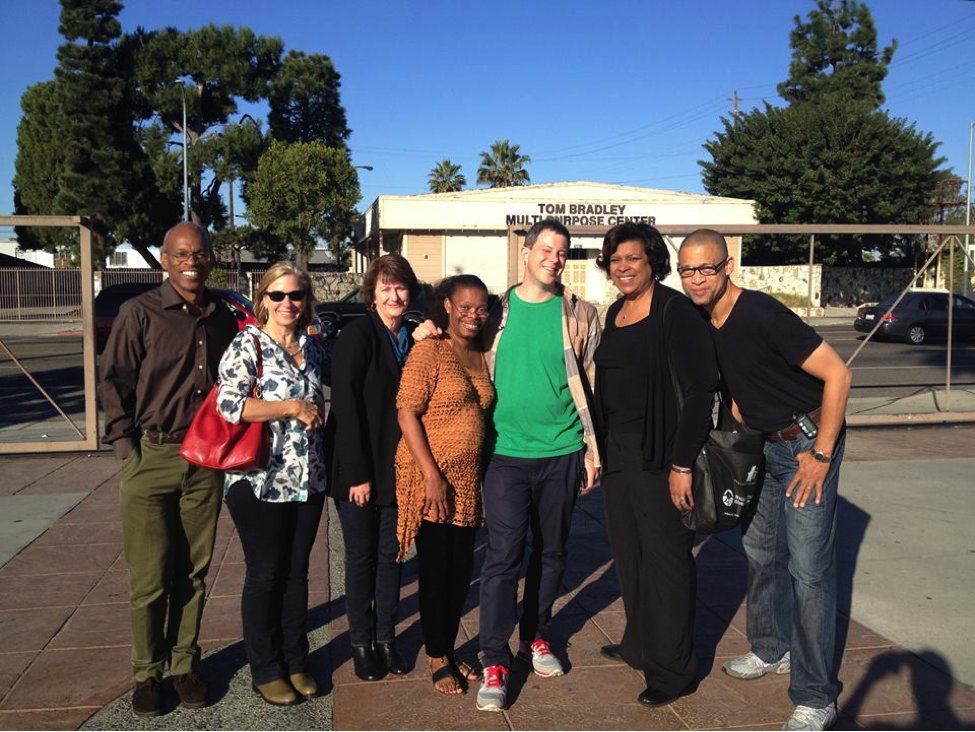
A social entrepreneur whose work has focused on addressing urban poverty, Soledad Núñez was named Paraguay’s Minister of Housing and Habitat in October 2014 by President Horacio Cartes. The youngest person ever appointed a Cabinet-level minister in Paraguay, Minister Núñez has overseen a dramatic increase in the production of social housing for low-income households, which have risen from an annual average of 1,600 to more than 10,000 housing units a year. She also is working to transform the ministry from a housing-focused institution into a technical institution responsible for coordinating the implementation of the country’s New Urban Agenda. As part of that effort, she is leading the National Committee of Habitat, which includes more than 50 public and private institutions. Minister Núñez was also elected President of the Regional Assembly of Minister and High Level Authorities of Housing and Urban Development for Latin America and the Caribbean.

Before being appointed to her current post, Minister Núñez coordinated the implementation of a National Poverty Eradication Plan from the Technical Planning Secretariat for Social and Economic Development in the President’s office. She has also served as National Director of TECHO Paraguay, a non-governmental organization that provides emergency housing solutions and promotes the active involvement of young people in the policy making process. An active member of the local hub for Global Shapers, an initiative of the World Economic Forum, Minister Núñez began her professional career in the private sector implementing social infrastructure projects in rural areas. She has a degree in Civil Engineering from the National University of Asunción, a Master’s degree in Project Management from the Polytechnic University of Madrid, and is an alumni of the Global Competitiveness Leadership Program at Georgetown University.

Coffee and snacks will be provided.

Co-sponsored by the Joint Center for Housing Studies and the Harvard Urban Planning Organization

More information at http://jchs.harvard.edu/events/calendar

Peter Latz, “Pioneering New Territory”

Frederick Law Olmsted Lecture

Peter Latz, “Pioneering New Territory”

Event Location

Gund Hall, Piper Auditorium

Date & Time
Free and open to the public
Peter Latz studied landscape architecture at the Technical University of Munich, and landscape architecture and planning at RWTH Aachen. Since founding his firm as a studio for landscape architecture and planning in 1968 with his wife Anneliese, he has been concerned primarily with ecological urban renewal. Latz + Partner has focused on post-industrial sites since the mid-1980s and first earned a worldwide reputation with the much-lauded Landscape Park Duisburg Nord in 2002. Abandoned in 1985 after decades of intense industrial activity, the 180-hectare Thyssen ironworks site was repurposed by Latz + Partner into a people’s park and became a vivid part of the city. In his lecture, Latz will discuss that project as well as the Ariel Sharon Park in Tel Aviv, which since 2004 has been in the process of transformation from roadside landfill to terraced paradise under Latz + Partner’s guidance. The Landscape Park Duisburg Nord and Ariel Sharon Park received the Green Good Design Award in 2009 and 2010, respectively. For his life’s work, Peter Latz has been recognized by the Green Good Design People Award in 2010; the TOPOS Landscape Award in 2013; the Friedrich-Ludwig-von-Sckell Ring of Honor, awarded by the Bavarian Academy of Fine Arts, in 2014; and the IFLA Sir Geoffrey Jellicoe Award in 2016. In February 2015, Peter and Anneliese Latz became honorary fellows of the Royal Institute of British Architects (RIBA). Since 2011, the office has been run by their son, architect and landscape architect Tilman Latz.

Geoff Dyer

Rouse Visiting Artist Lecture

Geoff Dyer

Photo by Matt Stuart
Event Location

Gund Hall, Piper Auditorium

Date & Time
Free and open to the public

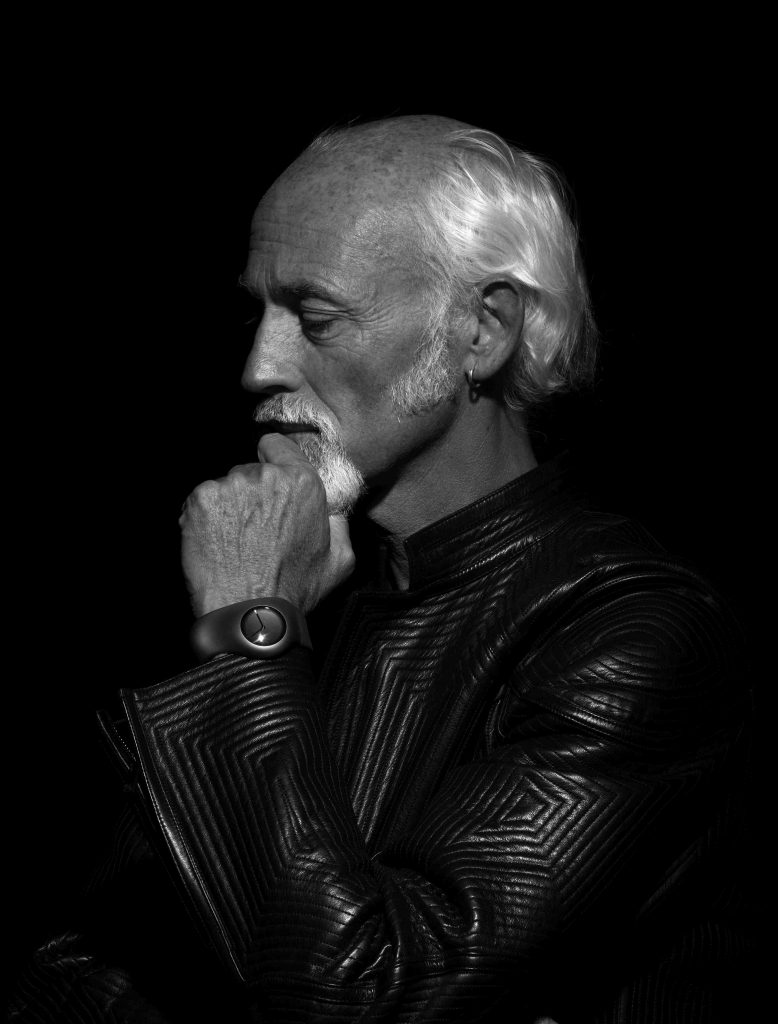
English author Geoff Dyer takes liberties with the boundaries of conventional literary genres such as novel and travel narrative, fiction and nonfiction. Subtle, and frequently observational in its narration, his prose moves between the personal and general and often inspires his readers to take stock of their own tendencies. Dyer won the 2009 Bollinger Everyman Wodehouse Prize for Best Comic Novel for Jeff in Venice, Death in Varanasi; not long after, he was named GQ Writer of the Year. His books encompass a broad range of subjects: The Ways of Telling (1988) is a study of art critic John Berger that is an early clue to Dyer’s concerns with issues of perception; But Beautiful (1991) is a study of jazz; The Missing of the Somme (1994) dwells on memory and World War I; Out of Sheer Rage (1997) considers D. H. Lawrence; Yoga for People Who Can’t Be Bothered to Do It (2003) describes a trip to the East; The Ongoing Moment (2005) is about photography; his collection of essays and reviews titled Otherwise Known as the Human Condition (2011) won a National Book Critics Circle Award for Criticism; and then there is Another Great Day At Sea: Life Aboard the USS George H.W. Bush (2015). White Sands, a collection of travel essays and meditations on some fundamental questions of existence, was published in 2016 .

Dyer is a Fellow of the Royal Society of Literature, an Honorary Fellow of Corpus Christi College, Oxford, and was elected to the American Academy of Arts and Sciences in 2015. He currently lives in Los Angeles, where he is writer in residence at USC.

Kersten Geers, James Graham, Ashley Schafer, Jennifer Sigler, Thomas Weaver, Andrea Zanderigo: “The Periodical Literature”

Kersten Geers, James Graham, Ashley Schafer, Jennifer Sigler, Thomas Weaver, Andrea Zanderigo: “The Periodical Literature”

Event Location

Gund Hall, Piper Auditorium

Date & Time
Free and open to the public

With reportage and historical description, speculation and documentation, the architectural literature is not easy to define as a genre: one journal might document the latest research, while another suggests a poetic literature. Yet, since the advent of modernism, from movement to movement—and even among very different examples—the journal has been a mainstay of avant-garde practice and an index of its temperaments. If that is still the case today, what can one discern about the present moment through its journals? This event will consist of a discussion among the following editors, after brief presentations by each of them: Kersten Geers, design critic in architecture (San Rocco); James Graham (Avery Review)Ashley Schafer (Praxis); Jennifer Sigler, editor-in-chief of GSD publications (Harvard Design Magazine); Thomas Weaver (AA Files); and Andrea Zanderigo (San Rocco).

Tatiana Bilbao: “The House and the City”

Tatiana Bilbao: “The House and the City”

Sustainable Housing, Ciudad Acuña, Tatiana Bilbao, 2015. Photograph: Iwan Baan
Event Location

Gund Hall, Piper Auditorium

Date & Time
Free and open to the public

Tatiana Bilbao, through the work of her multicultural and multidisciplinary office based in Mexico City, attempts to understand the place that surrounds her and to translate its rigid codes into architecture. As a reaction to global capitalism, the studio aspires to regenerate spaces in order to humanize them and to open up niches for cultural and economic development. The firm’s recent projects include a botanical garden, a master plan and open chapel for a pilgrimage route, a biotechnological center for a technology institution, a house that can be built for $8,000, and a funeral home. Their work has been published in A+U, Domus, and the New York Times, among other periodicals.

Bilbao has been a visiting professor at Yale School of Architecture and Rice School of Architecture. She was named as an Emerging Voice by the Architecture League of New York in 2009 and received the Kunstpreis Berlin in 2012 and the Global Award for Sustainable Architecture Prize in 2014. Her work is in the collections of the Centre Georges Pompidou in Paris, the Carnegie Museum of Art, and the Art Institute of Chicago.

“Anachronometrics”

Symposium on Architecture

“Anachronometrics”

Event Location

Gund Hall, Piper Auditorium

Date & Time
Free and open to the public

“Anachronometrics” is a neologism denoting an act of temporal displacement in which one seizes on the future or past as a point of comparison, to emphasize differences. This series of talks and conversations will examine the relationships that contemporary architects and commentators on architecture have established between history and practice. Presentations by GSD faculty and guests will focus on selected objects of historical significance, exploring the modes of interpretation or repetition, states of anxiety, and other attitudes evoked by the objects. Students and recent graduates will respond to these talks and open a general discussion.

This event, whose program is curated by public programs manager Shantel Blakely and research associate Collin Gardner, coincides with the concurrent exhibition Happening Now: Historiography in the Making, which features a selection of items from the archive, on display in Loeb Library. “Anachronometrics” is the final episode of the Symposium on Architecture “All that is Solid . . . ,” organized by Iñaki Ábalos, professor in residence of architecture, which has explored issues that architects face in the process of designing buildings. Previous panel discussions in the series, with speakers selected by department faculty, were “Design Techniques” (2013–14), “Organization or Design” (2015), and “Interior Matters” (2016).

Schedule (timing is approximate)

12:00 p.m.: Introductions

Collin Gardner, “Other Times”
Michael Hays, “Anachronometrics”

12:20 p.m. Panel 1 (15 mins. each)

Andrew Holder, on William Gilpin’s Remarks on Forest Scenery
Andrea Zanderigo, on San Rocco and San Rocco
Ed Eigen, on the Harvard GSD shield

Responses: Caio Barboza, Anthony Morey, Sara Arfaian, Eli Keller

Audience questions

1:30 p.m.: Interlude

Peter Carl on Robin Evans
Responses and Comments by Cameron Wu

2:10 p.m. Panel 2  (15 mins. each)

Emanuel Christ, on Kunstmuseum Basel
Krzysztof Wodiczko, on Kunstmuseum Basel
Sonja Dümpelmann, “On Ghosts and Graphophones”

Responses: Alexander Porter, Sofia Blanco Santos, Matthew Allen

Audience questions

Concluding remarks and discussion

Charles Jencks, “The Architecture of the Multiverse”

Charles Jencks, “The Architecture of the Multiverse”

Event Location

Gund Hall, Piper Auditorium

Date & Time
Free and open to the public

Charles Jencks AB ’61 BArch ’65 is a cultural theorist, landscape designer, and architecture historian. Among his many influential books are Meaning in Architecture (1969), The Language of Post-Modern Architecture (1977), Adhocism: The Case for Improvisation (with Nathan Silver, 1972), The Daydream Houses of Los Angeles (1978), Bizarre Architecture (1979), and The Architecture of the Jumping Universe (1997). He is also co-founder of the Maggie’s Cancer Care Centres, named for his late wife Maggie Keswick, and has written about this project in The Architecture of Hope (2015). Jencks has taught and lectured widely and served on numerous juries and selection committees; his work has been recognized with numerous awards and honorary degrees. As a landscape designer, Jencks has completed several projects in Scotland, including the Garden of Cosmic Speculation (2007) and Jupiter Artland (2010). In his lecture, he will speak about his ongoing project the Crawick Multiverse, about which he writes:

The cosmos is almost the measure of all things and provides a referent and subject, a focus otherwise hard to find in present day society. With a few architects the patterns of nature and the architecture of the universe have partly reemerged as a shared meaning and iconography. At the same time the Multiverse has emerged on the agenda among scientists. Is this now a subject of thought and ultimate meaning? I have explored it in the architecture of the multiverse, an unfinished project. Where it leads, the imagination follows.

Patrik Schumacher, Elia Zenghelis, Xin Zhang, “Zaha Hadid: A Celebration”

Patrik Schumacher, Elia Zenghelis, Xin Zhang, “Zaha Hadid: A Celebration”

Photo by Hufton Crow
Event Location

Gund Hall, Piper Auditorium

Date & Time
Free and open to the public

This event will focus on the extraordinary contributions of Zaha Hadid as an architect. Elia Zenghelis, one of Hadid’s early teachers, will share his reflections on Zaha both as a student and as an internationally recognized architect. Patrik Schumacher, Hadid’s professional partner, will discuss their collaboration and the shifts over the years in the direction of the practice’s design approach. Zenghelis and Schumacher will then engage in a conversation together with Xin Zhang, Hadid’s close friend and client, whose company SOHO China commissioned several of her significant projects.

Elia Zenghelis, “The Image as Story Line and Emblem”

GSD Talks

Elia Zenghelis, “The Image as Story Line and Emblem”

Event Location

Gund Hall, 109

Date & Time
Free and open to the public

Showing examples of his work, Elia Zenghelis will argue that images can do more than be mere illustrations. They are endowed with the makings of a much more eloquent instrumentality: they can be the embodiment and the visual discourse of a project, with all the aims, values, and content represented in a single composition. Images can be projects in their own right.

Christo, “The Floating Piers, Lake Iseo, Italy, 2014-16, and Two Works In Progress”

Rouse Visiting Artist Lecture

Christo, “The Floating Piers, Lake Iseo, Italy, 2014-16, and Two Works In Progress”

Event Location

Gund Hall, Piper Auditorium

Date & Time
Free and open to the public

Christo and Jeanne-Claude met in Paris in 1958, not long after their education at the National Academy of Art in Bulgaria and the University of Tunis, respectively. Their first project was Stacked Oil Barrels and Dockside Packages (1961) in Cologne Harbor, but perhaps their most renowned project was Wrapped Reichstag (1995) in Berlin, which swathed the iconic capital building in fabric for fourteen days. Christo and Jeanne-Claude’s overt, site-specific landscape interventions have evolved from Christo’s early works. Smaller sculptural pieces that are key to his portfolio, such as wrapped cans, bottles, crates, suggestive forms, and indoor installations reveal an interest in concealment, but also in the dimensional qualities of shapes in an environment and in the process itself. It is no surprise that in a caption to a chronological list of projects on their website, the artists refer to “software” and “hardware” periods: preparation and imagination on the one hand, physical execution on the other. The Floating Piers, Christo and Jeanne-Claude’s most recent finished work, was conceived in 1970 yet came to fruition only in the summer of 2016. The 16-meter-wide shimmering walkways of this project, constructed on Lake Iseo, Italy, were open and free for the public to traverse. Christo will discuss this work in his lecture, along with two upcoming projects: Over the River, for the Arkansas River in Colorado, and The Mastaba, for the United Arab Emirates. Both were planned with his wife and partner Jeanne-Claude. Notwithstanding her death in 2009, Christo continues to fundamentally credit Jeanne-Claude in his projects.

Cosponsored by the Harvard University Committee on the Arts.