Meet the 2026 Loeb Fellows
Description
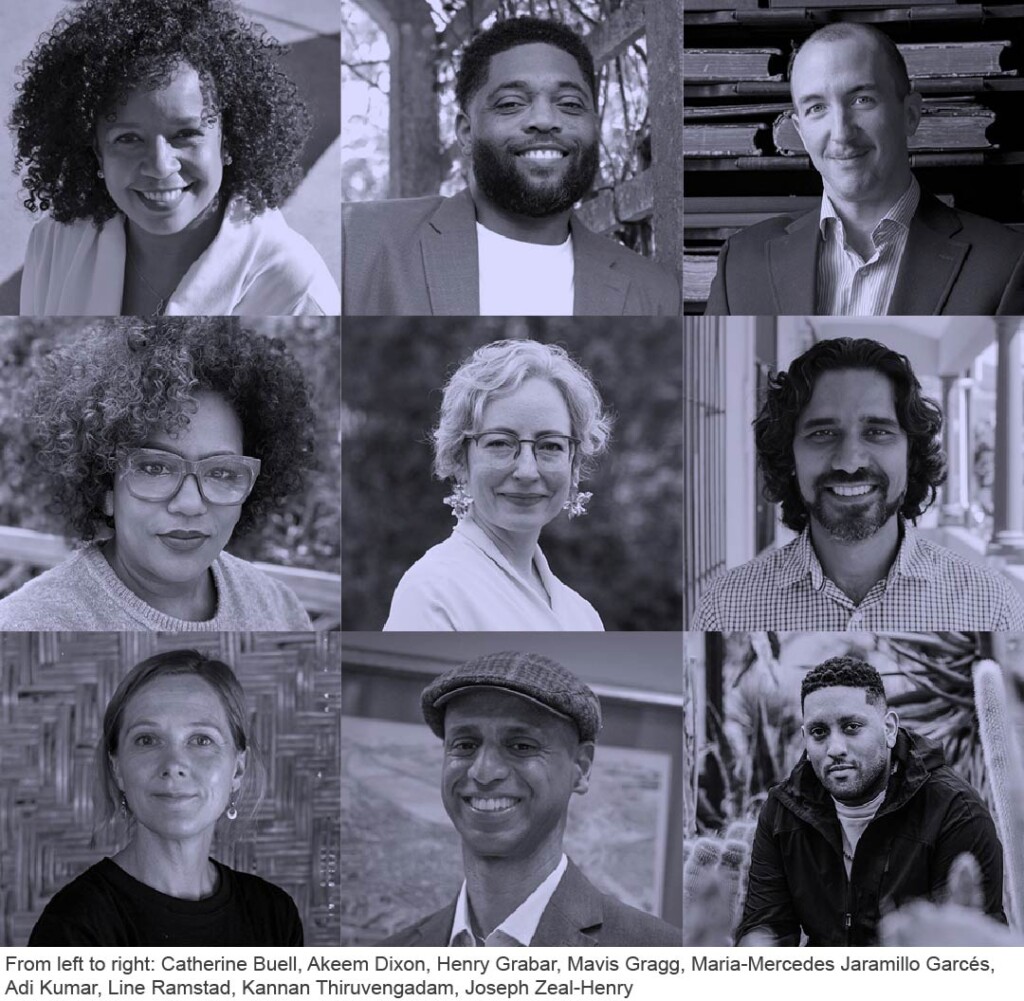
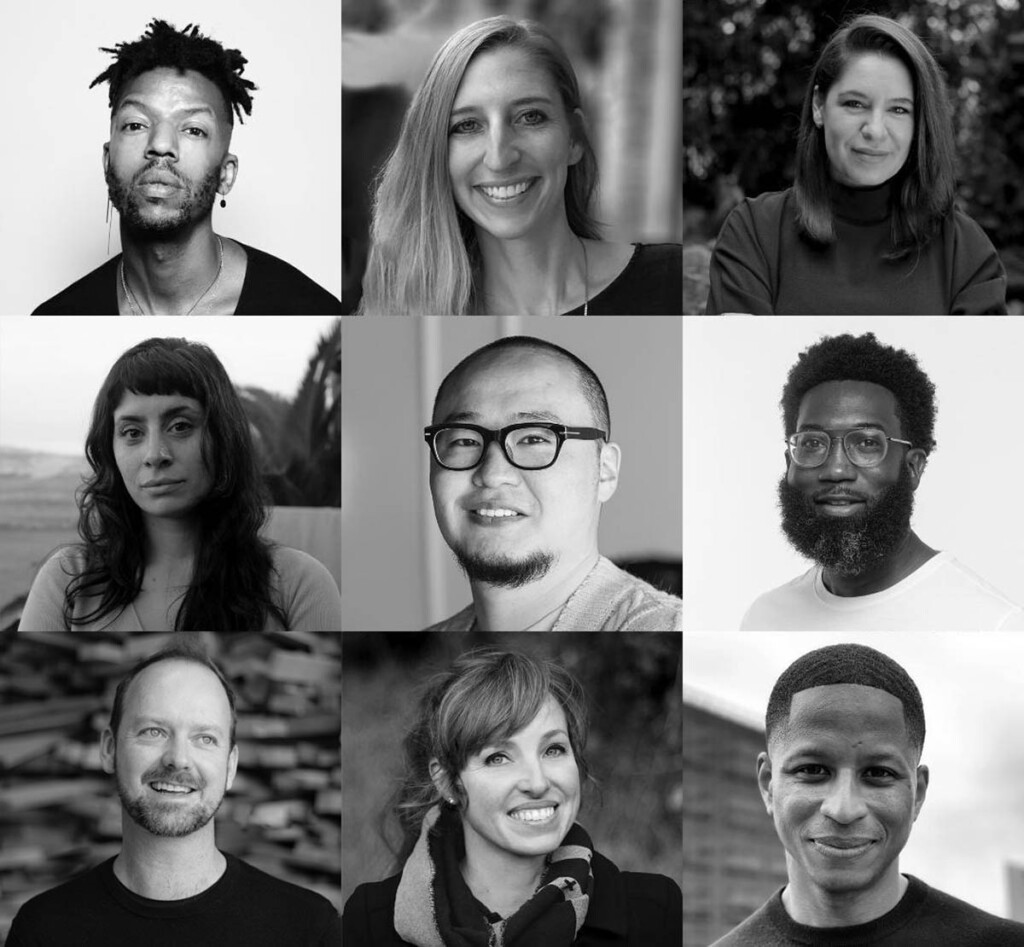
Meet the Loeb Fellowship Class of 2026
, who will present their work and engage in moderated discussions. The 2026 Loeb Fellows are ten innovators who are revitalizing urban and rural places, democratizing policymaking, advancing arts and culture to improve health and the environment, and strengthening civic engagement.
This event is open to the public and can be attended in person and watched online via livestream.
Following the event, there will be a reception at the GSD.
Urban Natures:
Climate Change Adaptation,
Design Agency, and Politics
About This Event
Following welcome back remarks and an introduction by Dean Sarah Whiting, the Druker Design Gallery will host an evening of interdisciplinary conversation to mark the start of the fall semester and the opening of Urban Natures: A Technological and Political History 1600–2030. The exhibition measures how far we have come since the first public gardens were created, and it challenges us to envision the future of our cities in new ways. Following remarks by Dean Sarah Whiting and curator Antoine Picon, Erika Naginski will moderate a panel discussion between Gary R. Hilderbrand, Ali Malkawi, and Mohsen Mostafavi, about three themes in the exhibition: climate change adaptation, the agency of designers, and the role of urban natures in promoting new collective values.
This event is generously supported by The Harvard Center for Green Buildings and Cities and the Villa Albertine, the French Institute of Culture & Education. A reception will follow, made possible by the generous support of Ron Druker.
About the Speakers

Antoine Picon, an engineer, architect, and historian, is the G. Ware Travelstead Professor of the History of Architecture and Technology at Harvard Graduate School of Design. He works on the history of the relations between the built environment and technologies, with a special emphasis on the imaginary and utopian dimensions. He has published extensively on this subject. He is amongst others the author of Les Saint-Simoniens (2002), Digital Culture in Architecture (2010), Ornament: The Politics of Architecture and Subjectivity (2013), Smart Cities: A Spatialised Intelligence (2015), The Materiality of Architecture (2021), and Natures Urbaines: Une Histoire Technique et Sociale, 1600-2030 (2024).

Gary Hilderbrand, FASLA, FAAR, is the Peter Louis Hornbeck Professor in Practice and Chair of the Department of Landscape Architecture, Harvard Graduate School of Design. He is also principal and founder of Reed Hilderbrand Landscape Architects. Hilderbrand is a fellow and resident of the American Academy in Rome. He received the Design Medal from ASLA in 2017. His widely acclaimed publications include The Miller Garden: Icon of Modernism (Spacemaker Press, 1999) and Visible | Invisible: Landscape Works of Reed Hilderbrand (Metropolis Books, 2013).

Ali Malkawi is Professor of Architectural Technology, Director of the Doctor of Design Studies Program, and Founding Director of the Harvard Center for Green Buildings and Cities at the Harvard Graduate School of Design. His research is focused in the areas of computational simulation, building performance evaluation, and design decision support. Previously, he taught at the Georgia Institute of Technology, University of Michigan, and University of Pennsylvania, where he was a Professor of Architecture and Chairman of the Graduate Group in Architecture. Malkawi is lead author or co-author of more than 130 scientific papers and co-editor of three books. In 2017, he was honored with the Jordan Star of Science by His Majesty King Abdullah II bin Al-Hussein of Jordan.

Mohsen Mostafavi is the Alexander and Victoria Wiley Professor of Design and Harvard University Distinguished Service Professor. He served as Dean of the Faculty of Design from 2008-2019. Mostafavi has chaired and participated in the juries of the Mies van der Rohe Prize for Architecture, the Holcim Foundation Awards for Sustainable Construction, and the Royal Institute of British Architects Gold Medal. He also served on the Steering Committee of the Aga Khan awards for architecture. His books include On Weathering: The Life of Buildings in Time (1993); Approximations (2002); Surface Architecture (2002); Structure As Space (2006); Ecological Urbanism (2010); Nicholas Hawksmoor: The London Churches (2015); Architecture and Plurality (2016); Portman’s America & Other Speculations (2017); Ethics of the Urban: The City and the Spaces of the Political (2017); Sharing Tokyo: Artifice and the Social World (2023); Revitalizing Japan: Architecture, Urbanization, and Degrowth (2024); and The Color Black: Antinomies of a Color in Architecture and Art (2024).

Erika Naginski is Professor of Architectural History at the Harvard Graduate School of Design, where she serves as Director of the OHD program in Architecture, Landscape Architecture, and Urban Planning. Her publications, which focus on European architecture (1600-1800), include books and co-edited volumes such as Polemical Objects (2004), Sculpture and Enlightenment (2009), and The Return of Nature (2014). She has received fellowships from the Harvard Society of Fellows, the Radcliffe Institute for Advanced Study, the Deutsches Forum für Kunstgeschichte, the Sterling and Francine Clark Art Institute, and the John Simon Guggenheim Memorial Foundation.
LA NUIT DES IDÉES: A Grand Parisian Night
Event Description
Six months after the success of the Olympic Games, this panel proposes a debate on the joint futures of the Parisian city center and its suburbs. As the city of Paris has just adopted new urban planning rules aimed at adapting the city to climate change (Bioclimatic Land Use Plan), many challenges remain for a metropolis still characterized by fragmentation between the historic city center and its banlieues. Infrastructural and socio-economic challenges will be discussed, from transportation systems to the equitable distribution of housing and health facilities, and the flux of Parisians making their way through these networks. We’ll also debate the democratic issues of a governance model ruled by so many levels and stakeholders, from the city of Paris to neighboring suburban municipalities, a metropolitan political entity, the region and the State. This roundtable will offer a reflection on the specific, and universal, challenges of shaping a metro region like the Grand Paris—and what roles architects, planners, designers and intellectuals/artists can play to shape this fabric, everchanging and bound not to remain frozen in time.
Program
Introduction
6:30 – 7:00p.m.
Sarah Whiting, Dean and Josep Lluís Sert Professor of Architecture
Pierre-Emmanuel Becherand, Loeb Fellow ’25
Keynotes
Adaptating Paris to the Climate Change
Lamia El Aaraje, Deputy mayor of Paris, In Charge of urban planning, architecture and Greater Paris (10’)
L’asymétrie des Baratins
Nicola Delon, Architect (10’), Encore Heureux
L’art du Grand Paris
Victoire Bourgois, Artist
Roundtable
7:00 – 8:30p.m.
Beyond Paris – A Conversation About the Future of Paris
Speakers
Lamia El Aaraje
Deputy Mayor of Paris, In Charge of Urban Planning, Architecture and Greater Paris

Nicola Delon
Architect, Encore Heureux

Pauline Marchetti
Architect, Ferrier-Marchetti Studio

Victoire Bourgois
Artist
![]()
Antoine Picon
G. Ware Travelstead Professor of the History of Architecture and Technology, Harvard Graduate School of Design

Magda Maaoui
Assistant Professor of Urban Planning, Harvard Graduate School of Design

Pierre-Emmanuel Becherand
Loeb Fellow ’25, Harvard Graduate School of Design
Harvard Design Magazine No. 52 | The Design School at Arizona State University
The Design School at Arizona State University hosted a special evening of conversation with Dean Cheng and Harvard Design Magazine . This event dove into the latest issue of Harvard Design Magazine, no. 52, which focuses on the theme “Instruments of Service.” This issue explores a simple but essential question: What do architects produce today?
This expert panel engaged in thought-provoking conversations around the intersection of design practice, social responsibility, and innovation, and offered diverse perspectives on how design can respond to contemporary challenges. Attendees engaged with leading voices in the field and gained insight into the instruments of service driving meaningful change in architecture today.
Limited copies of Harvard Design Magazine, no. 52, were available for purchase at the event.
Moderator
Renée Cheng
Senior Vice Provost, Dean and Professor, Herberger Institute for Design and the Arts
Panelists
Elizabeth Christoforetti
Assistant Professor of Practice in Architecture at Harvard Graduate School of Design & Guest Editor of Harvard Design Magazine, no. 52
Jacob Reidel
Assistant Professor of Practice in Architecture at Harvard Graduate School of Design & Guest Editor of Harvard Design Magazine, no. 52
Phillip Bernstein
Deputy Dean and Professor, Adjunct at the Yale School of Architecture
Questions? Contact [email protected].
Meet the 2025 Loeb Fellows
Event Description
Meet the Loeb Fellowship Class of 2025, who will present their work and engage in moderated discussions. The 2025 Loeb Fellows are ten innovators who are transforming public spaces and urban infrastructure, rectifying health and environmental injustices, addressing housing needs, and preserving cultural, natural, and architectural heritage.
This event is open to the public and can be attended in person and watched online via livestream.
Following the event, there will be an in-person reception at the GSD’s Gund Hall.
Wheelwright Prize Jury with Germane Barnes
Event Description
In 2021, Germane Barnes was named the winner of the Wheelwright Prize, a grant to support investigative approaches to contemporary architecture with an emphasis on globally-minded research. Barnes was among four remarkable finalists selected from more than 150 applicants hailing from 45 countries. With his winning project, Anatomical Transformations in Classical Architecture, Barnes proposed to examine Roman and Italian architecture through the lens of non-white constructors, studying how spaces have been transformed through the material contributions of the African Diaspora while creating new architectural possibilities that emerge within investigations of Blackness. As with past Wheelwright winners, the prize funded two years of Barnes’s research and travel.
Following the opening of his first solo museum exhibition, Columnar Disorder , on view at the Art Institute of Chicago from September 21, 2024 – January 27, 2025, Barnes will reflect on his research exploring the intersection of race, identity, and the built environment in conversation with the jury of the 2021 Wheelwright Prize.
The 2021 Wheelwright Prize jury includes: David Brown, Professor at the University of Illinois Chicago; David Hartt, Associate Professor in Fine Arts at the University of Pennsylvania; Mark Lee, Chair of the Department of Architecture at Harvard GSD; Megan Panzano, Assistant Professor of Architecture and Program Director of Undergraduate Architecture Studies at Harvard GSD; Sumayya Vally, founder and principal of Counterspace Studio; and Sarah M. Whiting, Dean and Josep Lluís Sert Professor of Architecture at Harvard GSD.
Participants

Germane Barnes is the Principal of Studio Barnes and Associate Professor and Director of the Master of Architecture Graduate Program at the University of Miami School of Architecture. Barnes’ practice investigates the connection between architecture and identity, examining architecture’s social and political agency through historical research and design speculation.
His work has recently been exhibited in the Museum of Modern Art’s groundbreaking 2021 exhibition, Reconstructions: Architecture and Blackness in America, and the 2021 Chicago Architecture Biennial. He is a winner of the Architectural League Prize and is a Rome Prize Fellow at the American Academy in Rome. He was selected for the inaugural cohort of The Dorchester Industries Experimental Design Lab, created by Theaster Gates and sponsored by Prada. His work has also been published in and acquired for the permanent collections of international institutions, most notably San Francisco MoMA, LACMA, The Art Institute of Chicago, The New York Times, and The National Museum of African American History and Culture. His project, Griot, was widely published, as an installation in the Biennale Architettura 2023, Laboratory of the Future.

David Brown is an Architecture Professor at the University of Illinois Chicago. Brown works on The Available City, the potential of Chicago’s 10,000+ city-owned vacant lots as a community-driven collective space system, urban design, and future we can have today. Iterations of the speculative design have been exhibited in the 2012 Venice Architecture Biennale and the 2015 Chicago Architecture Biennial. Brown was the Artistic Director of the 2021 Chicago Architecture Biennial, which had The Available City as its focus and theme. His essays and drawings presenting the transformative impact The Available City can have on Chicago’s South and West Sides are found in CENTER 18: Music in Architecture—Architecture in Music, The Oxford Handbook of Critical Improvisation Studies, Volume 2, and Flat Out 4. Those essays continue his study of architecture and design in relation to structures in jazz that facilitate improvisation, which he initiated in the book Noise Orders (University of Minnesota Press, 2006). Recently, Brown established The Available City as a non-profit organization. He is currently planning its inaugural effort in 2025.

David Hartt (b. 1967, Montréal) lives and works in Philadelphia, where he is an Associate Professor in the Department of Fine Arts at the University of Pennsylvania. His work explores how historic ideas and ideals persist or transform over time.
Recent solo exhibitions include The Histories at the Hammer Museum, Los Angeles, A Colored Garden at The Glass House, Connecticut and the group exhibition, Reconstructions: Architecture and Blackness in America at The Museum of Modern Art, New York. His work is in several public collections including The Art Institute of Chicago, The Cincinnati Art Museum, Henry Art Gallery, The Jewish Museum, The J. Paul Getty Museum, Museum of Contemporary Art, Chicago, The Museum of Contemporary Photography, Chicago, The Museum of Modern Art, The National Gallery of Canada, Nasher Museum of Art, RISD Museum, The Stedelijk Museum, The Studio Museum in Harlem, and the Whitney Museum of American Art. Hartt is a Pew Fellow, a Graham Foundation Fellow and a United States Artists Cruz Fellow. He is the recipient of a Foundation for Contemporary Art Grant, and awards from Artadia and the Louis Comfort Tiffany Foundation. He is represented by Corbett vs. Dempsey, David Nolan Gallery, and Galerie Thomas Schulte.

Mark Lee is Professor in Practice at the Harvard GSD. He is also a principal and founding partner of the Los Angeles-based architecture firm Johnston Marklee. Since its establishment in 1998, Johnston Marklee has been recognized nationally and internationally with over 30 major awards. Mark has taught at the Harvard Graduate School of Design, Princeton University, the University of California, Los Angeles, the Technical University of Berlin, and ETH Zurich. He has held the Cullinan Chair at Rice University and the Frank Gehry International Chair at the University of Toronto.
Projects by Johnston Marklee are diverse in scale and type, spanning seven countries throughout North and South America, Europe, and Asia. Recent projects include the Menil Drawing Institute, the Museum of Contemporary Art Chicago renovation, and the new UCLA Graduate Art Studios campus in Culver City, California. The firm’s work is in the permanent collections of the Museum of Modern Art in New York, the Art Institute of Chicago, the Menil Collection, the San Francisco Museum of Modern Art, the Carnegie Museum of Art, and the Architecture Museum of TU Munich. Together with his partner Sharon Johnston, Mark Lee was the Artistic Director for the 2017 Chicago Architecture Biennial.

Megan Panzano is Lecturer in Architecture and Program Director of the Harvard Undergraduate Architecture Studies track along with the Harvard Graduate School of Design’s (GSD) public summer design programs. Over twelve years on faculty at Harvard GSD, Panzano has coordinated and taught award-winning introductory and advanced design studios and courses on representation and design education to students at both graduate and undergraduate levels. The design research and built work of her independent practice, studioPM , addresses architectures across scales that interplay images, objects, and space to prompt more progressive and diverse ways of seeing, knowing, and interacting with the world. She is the recipient of a variety of honors for her design and pedagogical work, including an ACSA Faculty Design honor, a Best Parks award for her design of a perceptual playground for unscripted play, a solo exhibition of her project Architectural Artifacts at Boston’s pinkcomma gallery, a Harvard Initiative for Learning and Teaching “Spark” grant, three GSD Dean’s Junior Faculty Grants for original design research projects, and four sequential Harvard Excellence in Teaching awards. She has been published in The Journal of Architectural Education, Mark Magazine, Wallpaper*, Bauwelt, Architect, PLAT, Domus, The Boston Globe, The Harvard Gazette, and Harvard Design Magazine, and has exhibited internationally.

Sumayya Vally is the founder and principal of Counterspace, a design, research, and pedagogical entity. Vally’s work articulates the identities and landscapes of African and Islamic contexts, both rooted and diasporic. Recognized as a World Economic Forum Young Global Leader and listed in the TIME100 Next, she has been named as a force poised to redefine architectural practice and canon.
Her pioneering spirit has earned her accolades such as Dezeen Awards’ Emerging Architect of the Year and one of Financial Times Readers’ Women of the Year in 2023. Vally was the youngest architect ever commissioned to design the Serpentine Pavilion in London, which opened to critical acclaim. Her role as the artistic director of the inaugural Islamic Arts Biennale in Jeddah marked a pivotal moment in reimagining the definition of Islamic art. Her innovative approach, rooted in decolonial principles and grounded in the lived experiences of the Islamic world, has earned widespread acclaim and praise for its bold reinterpretation of traditional paradigms. Vally’s contributions to education and knowledge dissemination have been recognized with several honors, including an Honorary Professorship from UCL and a gold medal from the Royal Architectural Institute of Canada.
Joel Sanders, “From Stud to Stalled!: Inclusive Design through a Queer Lens”
Event Description
In his talk, Joel Sanders will trace the evolution of his thinking about gender, human identity and space over the past twenty-five years from the publication of STUD: Architectures of Masculinity (1996), which examined the role that architecture plays in the construction of masculinity through a gay male lens, to recent projects like Stalled! Public Restrooms, created by JSA/MIXdesign, an inclusive design studio dedicated to considering the intersecting needs of a broad segment of the population that the discipline of architecture has traditionally overlooked: people of different ages, genders, races and abilities that fall out of the cultural mainstream.
Speaker

Joel Sanders is an architect and founder of JSA/MIXdesign, an architectural studio design think tank dedicated to making restrooms, art museums, and university campuses welcoming to people of different ages, genders, abilities, cultural identities, and religions. His projects include Stalled!, an AIA award-winning project that responds to national controversies surrounding transgender access to public restrooms. Sanders founded MIXdesign in 2018 as a branch of his New York-based studio JSA. Sanders is Director of Post-Professional Studies and Professor at Yale School of Architecture. Editor of STUD: Architectures of Masculinity and Groundwork: Between Landscape and Architecture, Sanders’s writings and practice have explored the complex relationship between culture and social space, looking at the impact that evolving cultural forces (such as gender identity and the body, technology and new media, and the nature/culture dualism) have on the designed environment. JSA projects have been featured in international exhibitions and the permanent collections of MoMA, SF MoMA, the Art Institute of Chicago, and the Carnegie Museum of Art. The firm has received numerous awards, including six New York Chapter AIA Design Awards, three New York State AIA Design Awards, three Interior Design Best of Year Awards, and two ALA / IIDA Library Interior Design Awards.
GSD Virtual Town Hall: Engaged Citizenry
Design has the power to bring people together. Architects, landscape architects, and planners have an obligation to engage the public in their communities. Where does design and advocacy align and how do we ensure that more designers have a seat at the table? This GSD Virtual Town Hall: Engaged Citizenry discussion explored design as a democratic process.
The Harvard Graduate School of Design hosts visionary leaders who share a commitment to improving our world through civic dialogue while reaching a diverse range of stakeholders and participants.
GSD Dean Sarah M. Whiting, Josep Lluís Sert Professor of Architecture, led a conversation with panelists Hazel Ruth Edwards (MAUD ’89), Radcliffe Institute Fellow ’24 and Professor of Architecture at Howard University’s College of Engineering and Architecture, and Belinda Tato, Associate Professor in Practice of Landscape Architecture at the GSD, exploring the value of public participation in shaping the infrastructure where we live, work, and connect. How can the design community effectively engage our communities to improve social interaction and our relationship with the environment while prioritizing sustainability, growth, and resiliency?
GSD Virtual Town Halls present an opportunity to join Dean Whiting and thought leaders in design to discuss various perspectives on critical topics in our built and natural environments. We invite your participation in the Q&A portion of the event.
“Participation is not an end, it is a means: a powerful tool that establishes new connections and boosts both creativity and the production of new ideas.” (“Making Participation Relevant to Design,” Spring 2024 GSD seminar description by Belinda Tato.)
This event was sponsored by the Office of Development and Alumni Relations.
Questions? Contact [email protected].

Belinda Tato, Associate Professor in Practice of Landscape Architecture
Belinda Tato is an architect, landscape architect, and urban designer. In 2000, she co-founded the Madrid-based firm Ecosistema Urbano, which she also directs. Ecosistema Urbano specializes in urban consultancy, architecture, public space quality assessment, and urban transformation processes.
Their work has developed around the design of public space with a focus on the improvement of bioclimatic conditions in contexts and climates as diverse as Norway, Florida, and Bahrain.
In parallel, Ecosistema Urbano has been developing participatory tools and techniques to involve citizens in the creative and transformational processes of urban environments.
During the last decade, Ecosistema has successfully experimented with social software, communication platforms, and the possibilities offered by new technologies to achieve the creation of more democratic urban environments.
Since 2000, Ecosistema Urbano has received prizes and awards on more than 45 occasions, and their work has been covered by media from more than 40 countries.
Belinda Tato has led workshops, lectured, and taught at the world’s most prestigious institutions. She is currently an Associate Professor in Practice of Landscape Architecture at Harvard University’s Graduate School of Design, where she has been teaching since 2010.

Hazel Ruth Edwards (MAUD ’89), Radcliffe Institute Fellow ’24 and Professor of Architecture at Howard University’s College of Engineering and Architecture
Hazel Ruth Edwards, a professor of architecture at Howard University’s College of Engineering and Architecture, works to improve livability for all citizens and increase diverse voices in the design and planning fields. Edwards coauthored The Long Walk: The Placemaking Legacy of Howard University (Moorland-Spingarn Research Center, 1996), a history of the campus’s physical development that became the framework for its 1998 campus plan while generating funded research and published work on place-making at other American historically Black colleges and universities (HBCUs). Her essay “On Hilltop High: The Enduring and Nurturing Landscapes of Howard University” appears in Landscape and the Academy (Harvard University Press, 2019), edited by John Beardsley and Daniel Bluestone.
At Radcliffe, Edwards is exploring the connections between the historic distinction of land as “ours” (Black) and “theirs” (white) articulated by sociocultural and spatial-justice practices that have impacted Howard since its founding. Was it a common practice at the time for other HBCUs to have the campus serve as an oasis from the injustices Black people faced?
Edwards holds a PhD in regional planning from the University of Illinois Urbana-Champaign, a master of architecture in urban design from Harvard University, and a bachelor of architecture from Howard University. Edwards is currently a member of the GSD Alumni Council. She is certified with the American Institute of Certified Planners and was elected to their College of Fellows. In 2021, Edwards was appointed to the US Commission of Fine Arts by President Joseph Biden. She received Architectural Record’s 2022 Women in Architecture Design Leadership Award in the Educator category.
Idea City: How to Make Boston More Livable, Equitable, and Resilient
Alumni were invited to join a discussion between David Gamble (MAUD ’97), Anne-Marie Lubenau (LF ’12), and Matthew Kiefer (LF ’96), all contributors to the recently published Idea City: How to Make Boston More Livable, Equitable, and Resilient.
The book addresses a range of the challenges that Boston contends with in the twenty-first century and considers ways to improve the city for everyone. Many of the issues tackled, including resiliency, mobility, affordable housing, public health, social equity, and economic equality, are of ever-increasing relevance for cities around the world. The conversation, taking Boston as a case study, will provide food for thought for dedicated urbanists, whether involved in public policy and the design and planning of our cities, or simply involved and concerned urban citizens.
The conversation was followed by a Q&A and a reception with light refreshments. Books were available for sale and signing at the event.
Organized by the Harvard Alumni Architectural and Urban Society (HAAUS). Sponsored by Beyer Blinder Belle Architects and Planners.
Questions? Contact [email protected].
Meet the 2024 Loeb Fellows
Meet the Loeb Fellowship Class of 2024, who will present their work and engage in moderated discussions. The 2024 Loeb Fellows are nine innovators who work across climate justice, cultural infrastructure, post-disaster support, land ownership reform, and other fields that engage with the built environment and social outcomes.
This event is open to the public and can be attended in person and watched online via livestream.
Following the event, there will be an in-person reception at the GSD.