Diane Davis, Joan Busquets, et al: “Knowledge Transfer in the Design Professions: Learning from Barcelona”

Open House Lecture

Diane Davis, Joan Busquets, et al: “Knowledge Transfer in the Design Professions: Learning from Barcelona”

Event Location

Gund Hall, Piper Auditorium

Date & Time
Free and open to the public

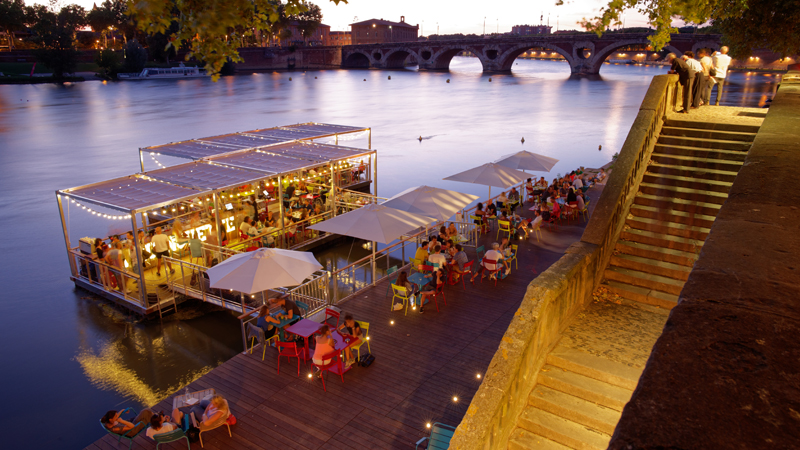
The larger question guiding this panel concerns the transferability of models, ideas, or practices in the urban design professions. Can practices deemed successful in one city be effectively transferred to another? Likewise, can compelling ideas developed in one of the design disciplines (urban design, planning, architecture, landscape architecture) transform practices in the other? Barcelona is world-renowned for both its architecture and its regulatory successes in preserving and expanding public and green spaces, advancing the goals of urban compactness, generating a vibrant urban and cultural economy, and building infrastructure with metropolitan aims in mind. This panel, offering an opportunity for reflection and dialogue among GSD faculty, will take a closer look at the case of Barcelona. Panelists from each of the departments will speak about the city, its influences in their fields, and the larger pedagogy of knowledge transfer in the design professions. Moderated by Diane Davis, Charles Dyer Norton Professor of Regional Planning and Urbanism and chair of the Department of Urban Planning and Design; with Joan Busquets, Martin Bucksbaum Professor in Practice of Urban Planning and Design; Carles Muro, associate professor of architecture; and Chris Reed, AB ’91, associate professor in practice of landscape architecture.

David Netto: “Designing Interiors (The Part They Forgot to Tell You About)”

Rouse Visiting Artist Lecture

David Netto: “Designing Interiors (The Part They Forgot to Tell You About)”

Event Location

Gund Hall, 112 Stubbins

Date & Time
Free and open to the public

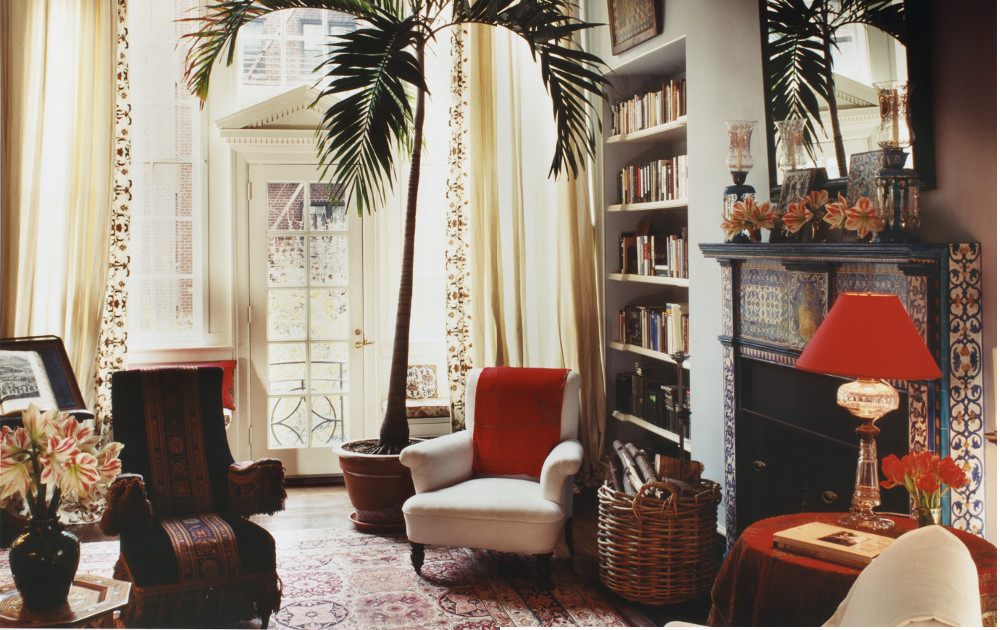
Architecture, landscape, urbanism . . . we are at the Harvard Graduate School of Design, which takes an enlightened and comprehensive view of “designed” environments and how they interrelate. But—David Netto GSD ’97 asks—how many of you have ever been taught how to make a furniture plan? How to light a room? The secrets of proportion and texture, and the breaking of rules in animating an interior? These are questions Netto has never found a satisfactory answer to in school—any school; one only learns about them from experience in the workplace. The practical truth is that how a project is perceived is key to how it is received—and essential to whether or not it gets published, written about, and given a fair trial after its transition from an abstract hypothetical to real life.

Netto has worked as an interior designer for decades and has written about architecture and design history for just as long. He professes to have learned as much from writing about the work of others as from formal education in design. His latest book is about the French designer François Catroux, who since 1968 has innovated and excelled in a career of nearly fifty years with no formal design education whatsoever (he credits Philip Johnson as a formative influence and is presently working with Diller Scofidio & Renfro on an apartment in New York). In the course of his talk, Netto will address the importance of interiors in the success of architecture and his observations on how this gets accomplished, based on what he has learned in his  work as a design journalist.

Tatiana Bilbao: “The House and the City”

Tatiana Bilbao: “The House and the City”

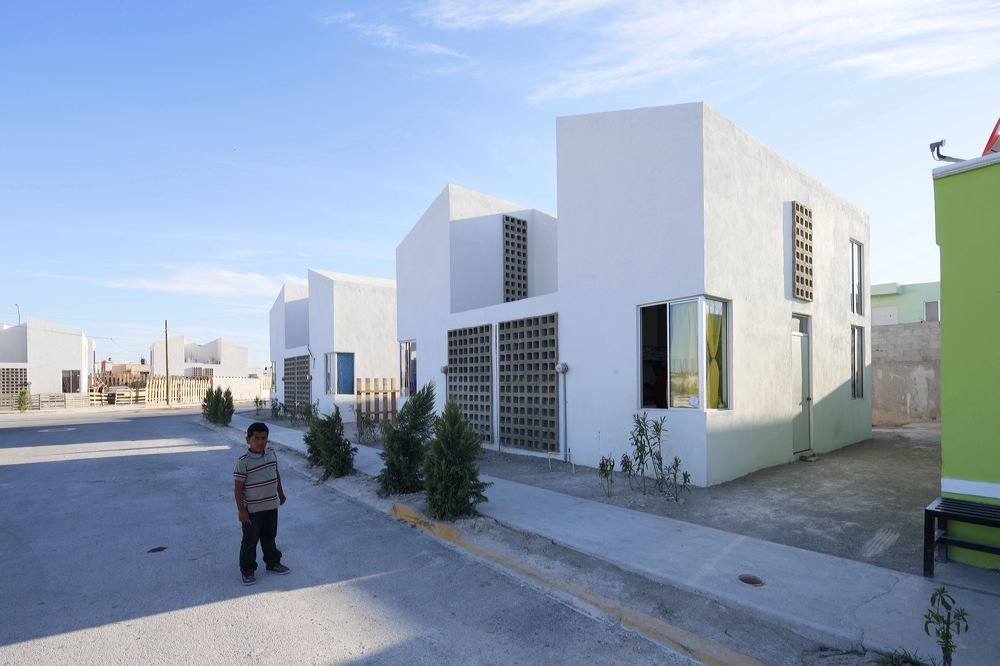
Sustainable Housing, Ciudad Acuña, Tatiana Bilbao, 2015. Photograph: Iwan Baan
Event Location

Gund Hall, Piper Auditorium

Date & Time
Free and open to the public

Tatiana Bilbao, through the work of her multicultural and multidisciplinary office based in Mexico City, attempts to understand the place that surrounds her and to translate its rigid codes into architecture. As a reaction to global capitalism, the studio aspires to regenerate spaces in order to humanize them and to open up niches for cultural and economic development. The firm’s recent projects include a botanical garden, a master plan and open chapel for a pilgrimage route, a biotechnological center for a technology institution, a house that can be built for $8,000, and a funeral home. Their work has been published in A+U, Domus, and the New York Times, among other periodicals.

Bilbao has been a visiting professor at Yale School of Architecture and Rice School of Architecture. She was named as an Emerging Voice by the Architecture League of New York in 2009 and received the Kunstpreis Berlin in 2012 and the Global Award for Sustainable Architecture Prize in 2014. Her work is in the collections of the Centre Georges Pompidou in Paris, the Carnegie Museum of Art, and the Art Institute of Chicago.

“Anachronometrics”

Symposium on Architecture

“Anachronometrics”

Event Location

Gund Hall, Piper Auditorium

Date & Time
Free and open to the public

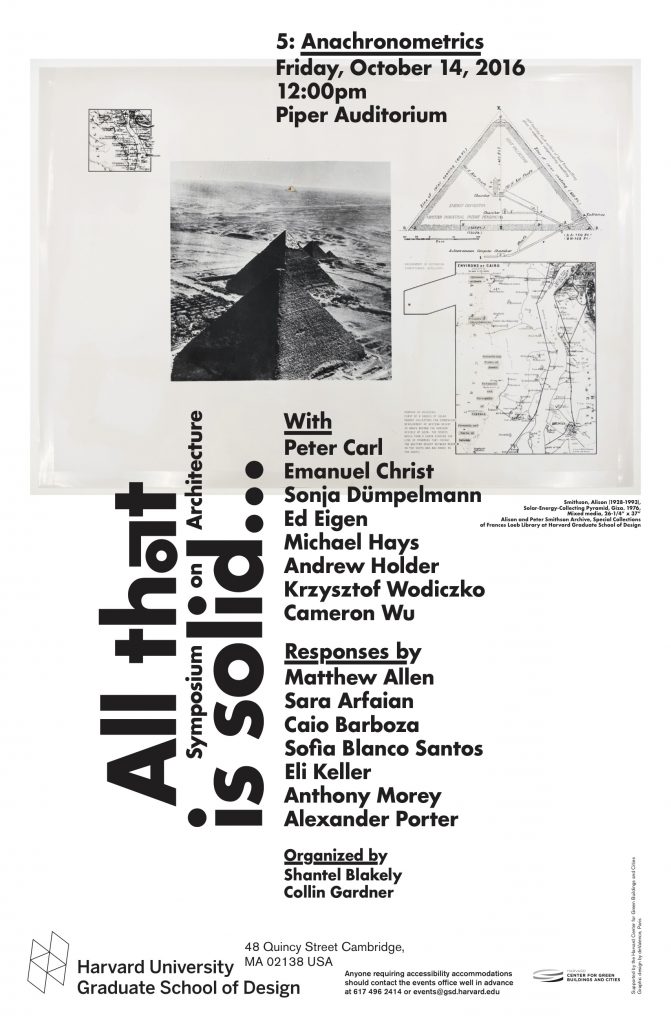
“Anachronometrics” is a neologism denoting an act of temporal displacement in which one seizes on the future or past as a point of comparison, to emphasize differences. This series of talks and conversations will examine the relationships that contemporary architects and commentators on architecture have established between history and practice. Presentations by GSD faculty and guests will focus on selected objects of historical significance, exploring the modes of interpretation or repetition, states of anxiety, and other attitudes evoked by the objects. Students and recent graduates will respond to these talks and open a general discussion.

This event, whose program is curated by public programs manager Shantel Blakely and research associate Collin Gardner, coincides with the concurrent exhibition Happening Now: Historiography in the Making, which features a selection of items from the archive, on display in Loeb Library. “Anachronometrics” is the final episode of the Symposium on Architecture “All that is Solid . . . ,” organized by Iñaki Ábalos, professor in residence of architecture, which has explored issues that architects face in the process of designing buildings. Previous panel discussions in the series, with speakers selected by department faculty, were “Design Techniques” (2013–14), “Organization or Design” (2015), and “Interior Matters” (2016).

Schedule (timing is approximate)

12:00 p.m.: Introductions

Collin Gardner, “Other Times”
Michael Hays, “Anachronometrics”

12:20 p.m. Panel 1 (15 mins. each)

Andrew Holder, on William Gilpin’s Remarks on Forest Scenery
Andrea Zanderigo, on San Rocco and San Rocco
Ed Eigen, on the Harvard GSD shield

Responses: Caio Barboza, Anthony Morey, Sara Arfaian, Eli Keller

Audience questions

1:30 p.m.: Interlude

Peter Carl on Robin Evans
Responses and Comments by Cameron Wu

2:10 p.m. Panel 2  (15 mins. each)

Emanuel Christ, on Kunstmuseum Basel
Krzysztof Wodiczko, on Kunstmuseum Basel
Sonja Dümpelmann, “On Ghosts and Graphophones”

Responses: Alexander Porter, Sofia Blanco Santos, Matthew Allen

Audience questions

Concluding remarks and discussion

Charles Jencks, “The Architecture of the Multiverse”

Charles Jencks, “The Architecture of the Multiverse”

Event Location

Gund Hall, Piper Auditorium

Date & Time
Free and open to the public

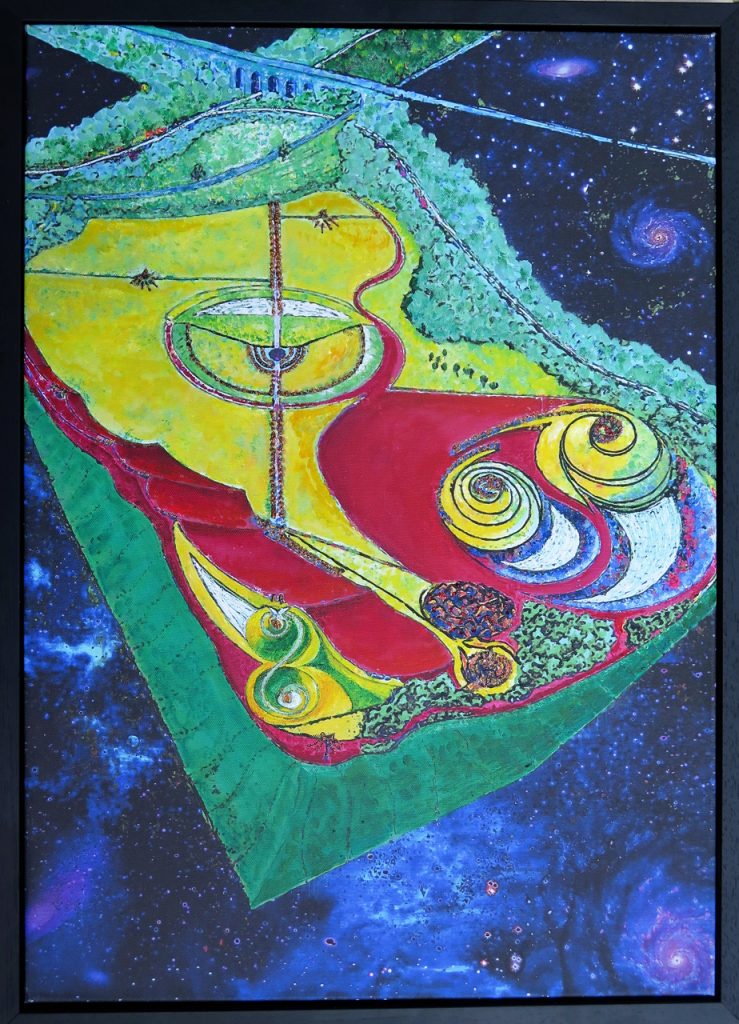
Charles Jencks AB ’61 BArch ’65 is a cultural theorist, landscape designer, and architecture historian. Among his many influential books are Meaning in Architecture (1969), The Language of Post-Modern Architecture (1977), Adhocism: The Case for Improvisation (with Nathan Silver, 1972), The Daydream Houses of Los Angeles (1978), Bizarre Architecture (1979), and The Architecture of the Jumping Universe (1997). He is also co-founder of the Maggie’s Cancer Care Centres, named for his late wife Maggie Keswick, and has written about this project in The Architecture of Hope (2015). Jencks has taught and lectured widely and served on numerous juries and selection committees; his work has been recognized with numerous awards and honorary degrees. As a landscape designer, Jencks has completed several projects in Scotland, including the Garden of Cosmic Speculation (2007) and Jupiter Artland (2010). In his lecture, he will speak about his ongoing project the Crawick Multiverse, about which he writes:

The cosmos is almost the measure of all things and provides a referent and subject, a focus otherwise hard to find in present day society. With a few architects the patterns of nature and the architecture of the universe have partly reemerged as a shared meaning and iconography. At the same time the Multiverse has emerged on the agenda among scientists. Is this now a subject of thought and ultimate meaning? I have explored it in the architecture of the multiverse, an unfinished project. Where it leads, the imagination follows.

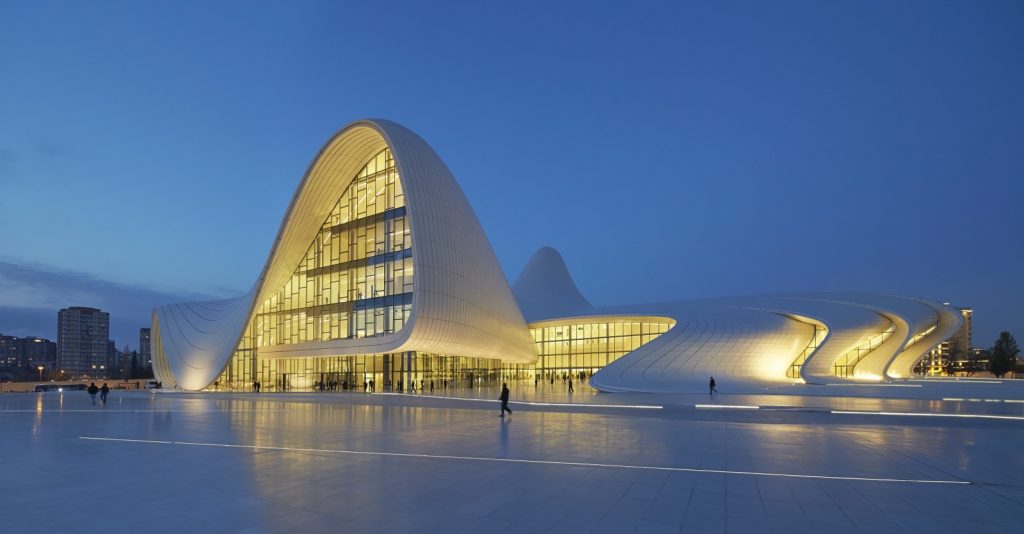
Patrik Schumacher, Elia Zenghelis, Xin Zhang, “Zaha Hadid: A Celebration”

Patrik Schumacher, Elia Zenghelis, Xin Zhang, “Zaha Hadid: A Celebration”

Photo by Hufton Crow
Event Location

Gund Hall, Piper Auditorium

Date & Time
Free and open to the public

This event will focus on the extraordinary contributions of Zaha Hadid as an architect. Elia Zenghelis, one of Hadid’s early teachers, will share his reflections on Zaha both as a student and as an internationally recognized architect. Patrik Schumacher, Hadid’s professional partner, will discuss their collaboration and the shifts over the years in the direction of the practice’s design approach. Zenghelis and Schumacher will then engage in a conversation together with Xin Zhang, Hadid’s close friend and client, whose company SOHO China commissioned several of her significant projects.
Elia Zenghelis, “The Image as Story Line and Emblem”

GSD Talks

Elia Zenghelis, “The Image as Story Line and Emblem”

Event Location

Gund Hall, 109

Date & Time
Free and open to the public

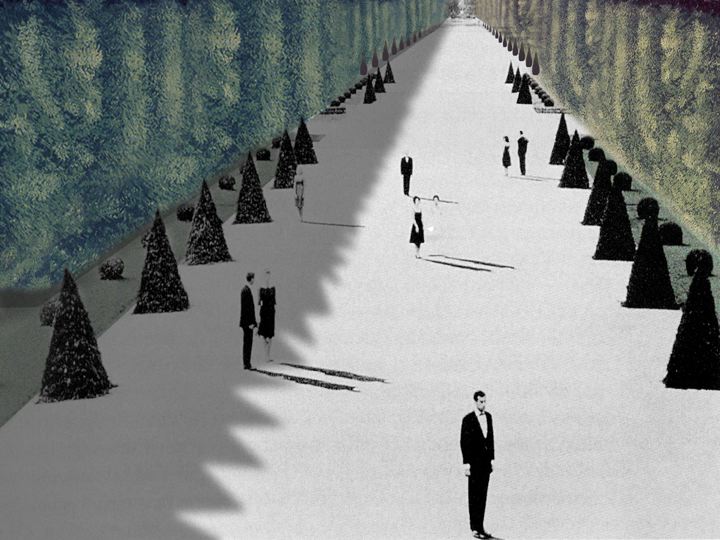
Showing examples of his work, Elia Zenghelis will argue that images can do more than be mere illustrations. They are endowed with the makings of a much more eloquent instrumentality: they can be the embodiment and the visual discourse of a project, with all the aims, values, and content represented in a single composition. Images can be projects in their own right.

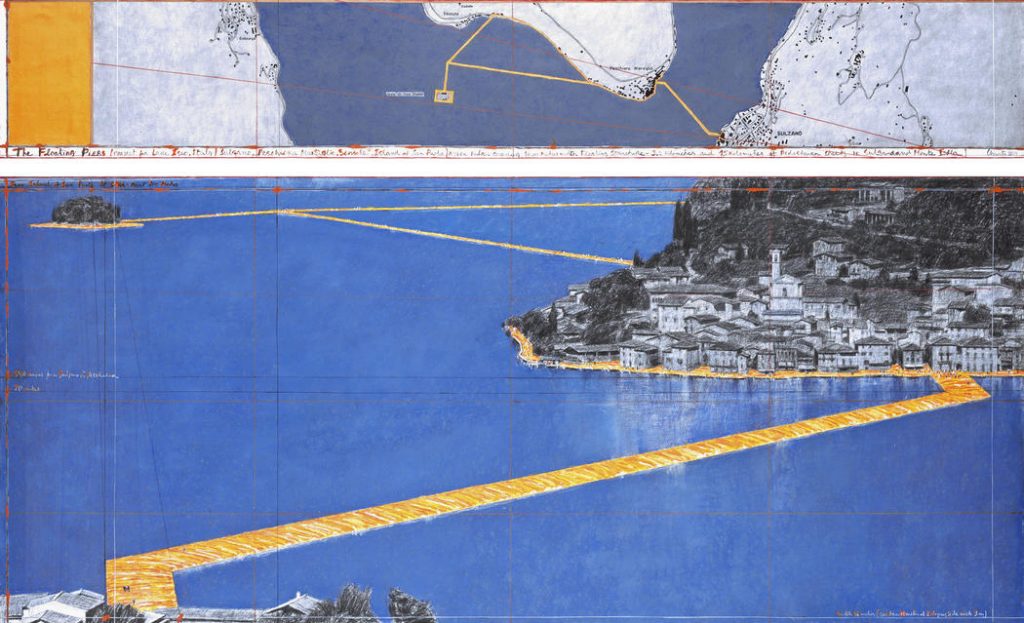
Christo, “The Floating Piers, Lake Iseo, Italy, 2014-16, and Two Works In Progress”

Rouse Visiting Artist Lecture

Christo, “The Floating Piers, Lake Iseo, Italy, 2014-16, and Two Works In Progress”

Event Location

Gund Hall, Piper Auditorium

Date & Time
Free and open to the public

Christo and Jeanne-Claude met in Paris in 1958, not long after their education at the National Academy of Art in Bulgaria and the University of Tunis, respectively. Their first project was Stacked Oil Barrels and Dockside Packages (1961) in Cologne Harbor, but perhaps their most renowned project was Wrapped Reichstag (1995) in Berlin, which swathed the iconic capital building in fabric for fourteen days. Christo and Jeanne-Claude’s overt, site-specific landscape interventions have evolved from Christo’s early works. Smaller sculptural pieces that are key to his portfolio, such as wrapped cans, bottles, crates, suggestive forms, and indoor installations reveal an interest in concealment, but also in the dimensional qualities of shapes in an environment and in the process itself. It is no surprise that in a caption to a chronological list of projects on their website, the artists refer to “software” and “hardware” periods: preparation and imagination on the one hand, physical execution on the other. The Floating Piers, Christo and Jeanne-Claude’s most recent finished work, was conceived in 1970 yet came to fruition only in the summer of 2016. The 16-meter-wide shimmering walkways of this project, constructed on Lake Iseo, Italy, were open and free for the public to traverse. Christo will discuss this work in his lecture, along with two upcoming projects: Over the River, for the Arkansas River in Colorado, and The Mastaba, for the United Arab Emirates. Both were planned with his wife and partner Jeanne-Claude. Notwithstanding her death in 2009, Christo continues to fundamentally credit Jeanne-Claude in his projects.

Cosponsored by the Harvard University Committee on the Arts.

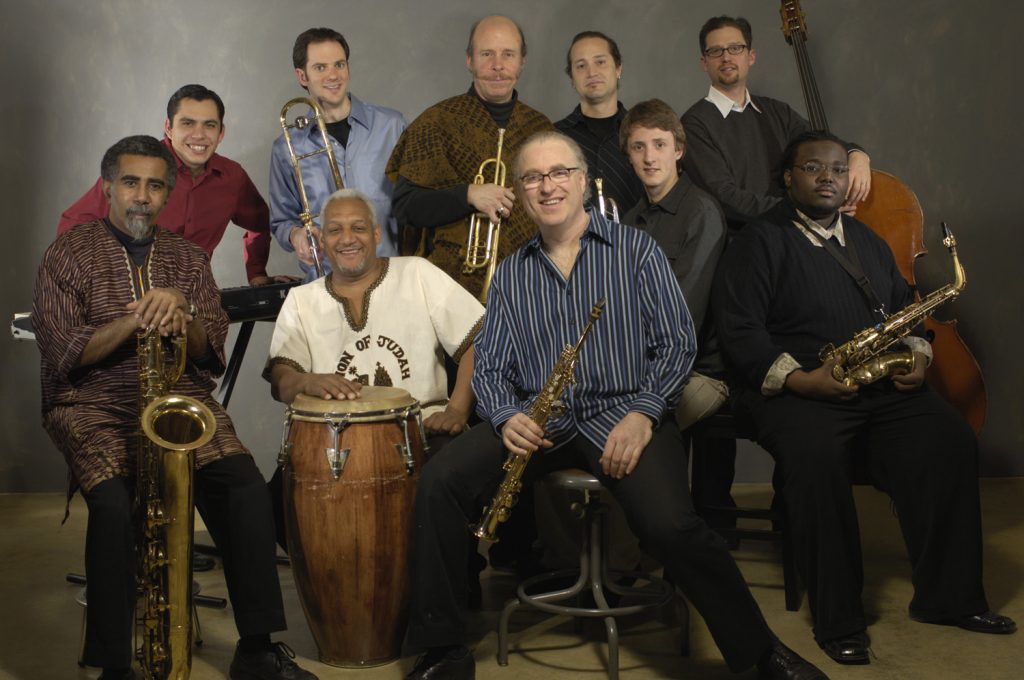
On Ethiopian Jazz: Teshome Mitiku with the Either/Orchestra

Rouse Visiting Artist Lecture

On Ethiopian Jazz: Teshome Mitiku with the Either/Orchestra

Either/Orchestra
Event Location

Gund Hall, Piper Auditorium

Date & Time
Free and open to the public
Teshome Mitiku

Teshome Mitiku

The Either/Orchestra, a ten-piece group that was founded in 1987 and has recorded ten albums, is regarded as one of Massachusetts’s major contributions to the international music scene. The E/O has recently become deeply involved in Ethiopian music; the group collaborated with Teshome Mitiku for the first time in 2010, in a performance that headlined the Chicago Jazz Festival.

Mitiku, an Ethiopian musician born in 1949, was part of Ethiopia’s first and most popular modern music combo, the Soul Ekos, in the 1960s. Forced to leave his country in 1970 after leading a protest song at a concert at Addis Ababa University, he moved to Sweden and later to the United States, where he now performs regularly in the Washington, D.C. area and elsewhere. This event will bring the ensemble and solo performer to the GSD for a discussion of Ethiopian jazz and a demonstration, featuring vocalist Teshome Mitiku and musicians from the Either/Orchestra: saxophonist/founder Russ Gershon, bassist Rick McLaughlin, and pianist Gilson Schachnik.

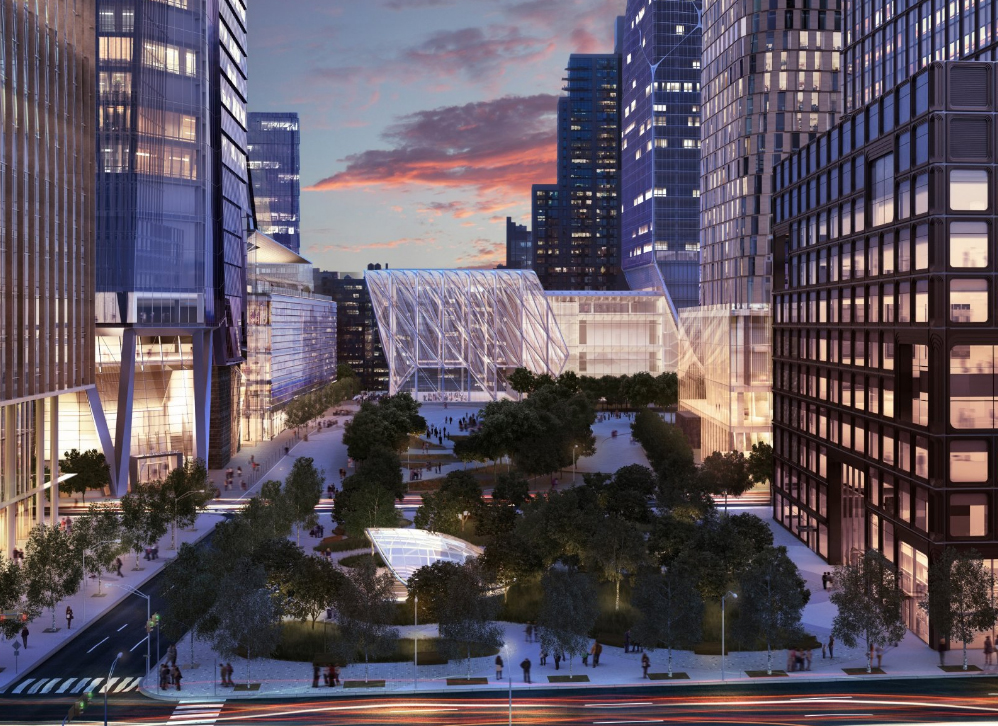
Stephen Ross, “Hudson Yards”

Stephen Ross, “Hudson Yards”

Event Location

Gund Hall, Piper Auditorium

Date & Time
Free and open to the public

Stephen Ross, chairman of Related Companies, will speak about the Hudson Yards development project. Ross holds a BS from University of Michigan’s School of Business Administration, a JD from Wayne State School of Law, and a LLM in taxation law from NYU. He founded Related Companies in 1972 and led the company through several major projects. Among its holdings are Hunter’s Point South, One Central Park, and the Residences at the Mandarin Oriental at the Time Warner Center. Ross is also a part owner of Equinox fitness centers, a major shareholder in SoulCycle, and managing general partner and chairman of the board of the Miami Dolphins. As a director of the Jackie Robinson Foundation, Ross recently worked with a team of NYU law faculty to propose youth athletic programs to address the problem of intolerant behavior in sports. Among numerous other professional affiliations and philanthropic and service roles, Ross is chairman emeritus and director at the Real Estate Board of New York; a director of Lincoln Center for the Performing Arts; a trustee of the New York-Presbyterian Hospital; a director of the Guggenheim Museum; and a trustee of the National Building Museum.