The High Line: A Debate
Recognizing the High Line with a prize in urban design that is housed in the Department of Urban Planning and Design, in which social equity issues loom large, comes with a responsibility to acknowledge both the project’s successes and the occasional criticisms that have been leveled against it. In conjunction with the 2017 Veronica Rudge Green Prize in Urban Design, a panel discussion with some of those most closely involved with realizing the High Line will allow a deeper understanding of its value as an urban design prototype being disseminated and adopted worldwide.
The panel will feature John Alschuler, Stephen Gray, Joshua David (Co-Founder, Friends of the High Line), Robert Hammond (Co-Founder, Friends of the High Line) and Belinda Tato and be moderated by Diane Davis.
This panel follows an opening celebration on Wednesday, November 14 including remarks in the GSD’s Piper Auditorium followed by a reception in the Druker Design Gallery.
Moderator:
Diane E. Davis is the Charles Dyer Norton Professor of Regional Development and Urbanism and Chair of the Department of Urban Planning and Design at Harvard’s Graduate School of Design. Before to moving to the GSD in 2011, Davis served as the head of the International Development Group in the Department of Urban Studies and Planning at MIT, where she also had a term as Associate Dean of the School of Architecture and Planning. Trained as a sociologist, Davis’s research interests include the relations between urbanization and national development, comparative urban governance, socio-spatial practice in conflict cities, urban violence, and new territorial manifestations of sovereignty. Her books include Transforming Urban Transport (with Alan Altshuler) (Oxford University Press, 2018), Cities and Sovereignty: Identity Conflicts in the Urban Realm(Indiana University Press, 2011), Discipline and Development: Middle Classes and Prosperity in East Asia and Latin America(Cambridge University Press, 2004; named the ASA’s 2005 Best Book in Political Sociology), Irregular Armed Forces and their Role in Politics and State Formation (Cambridge University Press, 2003), Urban Leviathan: Mexico City in the Twentieth Century (Temple University Press 1994; Spanish translation 1999).
A prior recipient of research fellowships from the John D. and Catherine T. MacArthur Foundation, the Heinz Foundation, the Ford Foundation, the Social Science Research Council, the United States Institute for Peace, the Andrew W. Mellon Foundation, and the Carnegie Corporation of New York, Davis recently authored a study of Urban Resilience in Situations of Chronic Violence, prepared for USAID, which examines the coping and adapting strategies adopted by citizens and authorities to push back against violence in seven cities around the world. She has just completed two separate initiatives, for which she was Principal Investigator: a three year project funded by the Volvo Research and Educational Foundations (VREF) focused on the role of political leadership in transforming urban transport and a three year project funded by Mexico’s national workers’ housing agency (INFONAVIT) oriented toward developing more sustainable social housing policies for Mexican cities. Founder and curator of the Mexican Cities Initiative at Harvard’s GSD, Davis is Chair of the David Rockefeller Center’s Faculty Committee on Mexico, member of the Weatherhead Center for International Affairs (WCFIA) Executive Committee, and a contributing editor for the US Library of Congress, Handbook of Latin American Studies(Sociology: Mexico). She has served on the editorial boards of the Journal of Planning Education and Research, City and Community, and the Journal of Latin American Studies.
Panelists
John Alschuler is the Chairman of HR&A Advisors, a national real estate and economic development consultancy. For two generations, he has worked with cities, civic organizations, and developers to solve complex urban development challenges and create financing strategies for distinctive places like the High Line, the Boston Waterfront, DC’s City Center, Brooklyn Bridge Park, and Daniel Island. His ability to build effective partnerships between the public and private sectors has aided the reinvention of American cities into urban centers that offer jobs and sustain a high quality of life for diverse communities. John and HR&A played a key role in the preservation and transformation of the High Line and in 2009 he was elected Board Chair of Friends of the High Line. John served as Chair Emeritus from 2014 to 2017 and now continues to serve on its Board. John also serves on the boards of the Center for an Urban Future, SL Green Realty Corporation as its Lead Independent Director, Macerich, and Xenia Hotels & Resorts. John holds a Bachelor of Arts from Wesleyan University and a Doctorate from the University of Massachusetts.
Stephen Gray is an Assistant Professor of Urban Design at Harvard Graduate School of Design. His interests center on understanding political and cultural contexts of urban design; socio-ecological urban design approaches to resilience; and the intersectionality of humanitarian aid and urban design. Current projects include the Harvard Mellon Urban Initiative where his team blends archival and design research methods to foreground systemic racism in the physical and geospatial development of Boston; process design for the co-creation of child-focused spaces with Syrian refugees; and research with the World Bank examining the interconnectedness of social, natural, and spatial systems as they relate to informality, vulnerability, and resilience.
Stephen has experience working in complex urban environments with municipal agencies, colleges and universities, private developers, non-profits, and the public. He is co-chairman of Boston’s 100 Resilient Cities Resilience Collaborative providing thought leadership for “Resilient Boston: An Equitable and Connected City” as Boston works to adopt a resilience lens for all planning, policies, and practice. Prior to joining the GSD, Stephen collaborated with and led cross-disciplinary teams at Sasaki on projects ranging broadly from strategic reinvestment in downtown Wichita, to parks planning for the City of Bridgeport, advanced online engagement for the GoBoston 2030 mobility master plan, urban design visions for downtown Raleigh and uptown Cincinnati, and resilience planning for South Shore Long Island in post-Sandy New York.
Stephen has been a lecturer at MIT School of Architecture + Planning and Northeastern University School of Architecture, Associate Director on the Board of the Boston Society of Architects (BSA), and he has been tapped to serve on several Urban Land Institute (ULI) advisory panels. He holds a B. Arch. Degree from the University of Cincinnati and a Master of Architecture in Urban Design (MAUD) Degree with distinction from Harvard University where he received the Thesis Prize for Urban Design and the Award for Outstanding Leadership in Urban Design. In 2015, Stephen was recognized by the American Institute of Architects (AIA) for his contributions to urban design thinking in the U.S. context with the National AIA Honor Award, the highest honor given to individual associate AIA members.
Robert Hammond is the Co-Founder and Executive Director of Friends of the High Line, a nonprofit conservancy that he co-founded with Joshua David in 1999. Friends of the High Line raises 98% of the High Line’s $14-million-dollar annual operating budget to maintain, operate, and program the park. To date, Friends of the High Line has raised over $300 million in public and private funding.
With more than 7.6 million visitors annually, the High Line is one of New York City’s top destinations. It offers more than 400 free public programs each year and has presented works by more than 120 artists.
Before the High Line, Hammond supported the launch of online businesses in the public health and travel commerce industries, and worked as a consultant for an array of organizations, including the Times Square Alliance, and Alliance for the Arts.
He was awarded the Vincent Scully Prize (2013), the Rome Prize by the American Academy in Rome (2010), the Rockefeller Foundation’s Jane Jacobs Medal, along with David (2010), and an honorary doctorate from The New School (2012). Hammond is also a self-taught artist and served as an ex-officio member of the Metropolitan Museum of Art’s Board of Trustees, and a graduate of Princeton University.
Additionally, Hammond is a co-producer of the film Citizen Jane: Battle for the City, which premiered at the 2016 Toronto International Film Festival and was the opening-night selection for DOC NYC. Released via IFC in April 2017, the film chronicles a clash between mid-20th-century urban planning methods, and chronicles how they relate to today’s urban renaissance.
Joshua David co-founded Friends of the High Line with Robert Hammond in 1999 to save the High Line, a historic elevated railway on Manhattan’s West Side, then under threat of demolition. Under his leadership, Friends of the High Line successfully advocated for the preservation and reuse of the High Line as a public park, transformed and opened the High Line structure to the public in three phases, became a fully licensed partner of the City of New York, and raised more than $350 million in private and public funds for the park’s construction, endowment, and annual maintenance and operations.
Since opening in 2009, the High Line has become a leading model for community-driven adaptive reuse, and Joshua’s work on behalf of the park has been recognized by civic and professional groups worldwide. In 2010, he and Robert Hammond received the Rockefeller Foundation’s Jane Jacobs Medal for New Ideas and Activism. In 2013, Joshua and Robert received the Vincent Scully Prize.
After leading Friends of the High Line for 16 years, most recently as President, Joshua stepped down from his staff role at the organization in 2015. He began a new role as President of World Monuments Fund in November 2015, leading WMF’s efforts to protect against the loss of the world’s architectural heritage, including the built environment, the artistic elements that enhance it, and the cultural traditions that it sustains.
A longtime Chelsea resident, Joshua is a member of the Advisory Council of Transportation Alternatives, which works to reclaim New York City’s streets from cars and to promote bicycling, walking, and public transit. He is a founding board member of + Pool, which is working to build the world’s first water-filtering floating swimming pool. He also continues to serve Friends of the High Line as a board member. Before co-founding Friends of the High Line, Joshua worked as a freelance magazine writer and editor for Gourmet, Fortune, Travel + Leisure, Wallpaper*, and others.
Belinda Tato and Jose Luis Vallejo are founding members of ecosistema urbano, a Madrid based group of architects and urban designers operating within the fields of urbanism, architecture, engineering and sociology. Vallejo and Tato define their approach as urban social design, by which they understand the design of environments, spaces and dynamics in order to improve the self-organization of citizens, social interaction within communities and their relationship with the environment. Ecosistema urbano has used this philosophy to design and implement projects in Norway, Denmark, Spain, Italy, France and China.
Ecosistema urbano’s principal members were educated in several different European universities and come from many diverse urban environments (Madrid, London, Brussels, Rome, Paris). They have taught as visiting professors and have given workshops and lectures at the most prestigious institutions worldwide (Harvard, Yale, UCLA, Cornell, Iberoamericana, RIBA, Copenhagen, Munich, Paris, Milan, Shanghai, to list a few). They did this while implementing urban action and intervention in cities in Europe, the Americas and Asia.
Since 2000, their work has been nationally and internationally awarded on more than 30 occasions. In 2005 ecosistema urbano received the European Acknowledgement Award from the Holcim Foundation for Sustainable Construction. In 2006, they were awarded the Architectural Association and the Environments, Ecology and Sustainability Research Cluster award. In 2007 they were nominated for the European Union Prize for Contemporary Architecture / Mies van der Rohe Award for emerging European architects. They were also selected out of more than 400 teams from around the world to receive an AR Award for Emerging Architecture in London, 2007. In 2008 ecosistema urbano won the Arquia/Próxima prize, awarded by the Caja de Arquitectos Foundation to the best project drawn up by young architects from 2006-2007. In 2009, they were nominated from more than 500 teams to be a worldwide finalist and recipient of the Holcim Award for Sustainable Construction, Silver Award.
Christopher Hawthorne
Christopher Hawthorne is the Chief Design Officer for the city of Los Angeles, a position appointed by Mayor Eric Garcetti. Prior to joining City Hall, Hawthorne was architecture critic for the Los Angeles Times from 2004 to early 2018. He is Professor of the Practice at Occidental College, where since 2015 he has directed the Third Los Angeles Project, a series of public conversations about architecture, urban planning, mobility, and demographic change in Southern California. He has also taught at U.C. Berkeley’s Graduate School of Journalism, Columbia University, and the Southern California Institute of Architecture. A frequent collaborator with KCET-TV, the PBS affiliate in Los Angeles, Hawthorne wrote and directed the hour-long documentary “That Far Corner: Frank Lloyd Wright in Los Angeles,” which had its broadcast debut earlier this year, and received an L.A.-area Emmy Award as Executive Producer for the 2016 KCET program “Third L.A. with Architecture Critic Christopher Hawthorne.” He has been a Mid-Career Fellow at Columbia University’s National Arts Journalism Program and a Resident in Criticism at the American Academy in Rome. Hawthorne grew up in Berkeley and holds a bachelor’s from Yale College, where he studied political science and architectural history.
The Veronica Rudge Green Prize In Urban Design: The High Line
Please join us for two days of events in conjunction with the 2017 Veronica Rudge Green Prize in Urban Design, awarded to the High Line.
The events begin Wednesday, November 14 at 6:30 PM with remarks in the GSD’s Piper Auditorium from Diane Davis (Chair of the Department of Urban Planning and Design, GSD), Stephen Gray (Assistant Professor of Urban Design, GSD), Elizabeth Diller and Ric Scofidio (Diller Scofidio + Renfro), James Corner and Lisa Tziona Switkin (Field Operations), and Robert Hammond and Joshua David (Friends of the High Line).
These remarks will be followed by a reception in the Druker Design Gallery to celebrate the opening of the exhibition.
The following afternoon, the GSD will host a panel discussion entitled The High Line: A Debate exploring the enduring impact of The High Line.
2017 Veronica Rudge Green Prize in Urban Design
The 13th Veronica Rudge Green Prize in Urban Design has been awarded to The High Line in New York, designed collaboratively by James Corner Field Operations, Diller Scofidio + Renfro, and Piet Oudolf. The prize committee has elected to allot the monetary prize of $50,000 associated with the award to Friends of the High Line, in recognition of the organization’s originating efforts and continued stewardship behind the project.
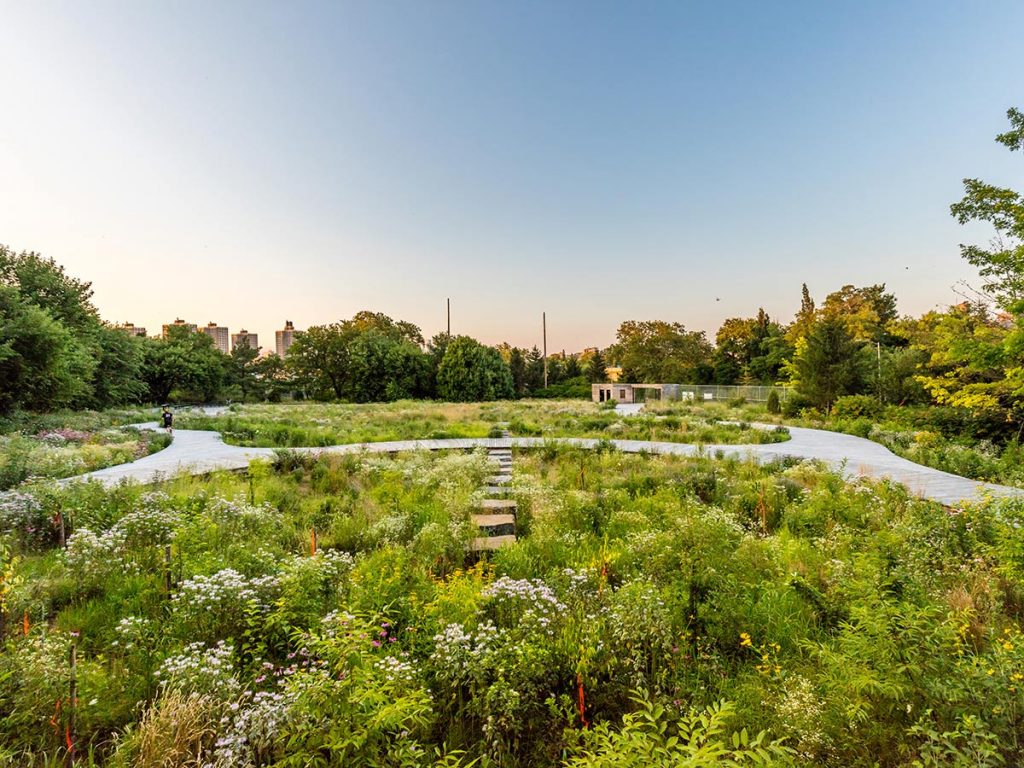
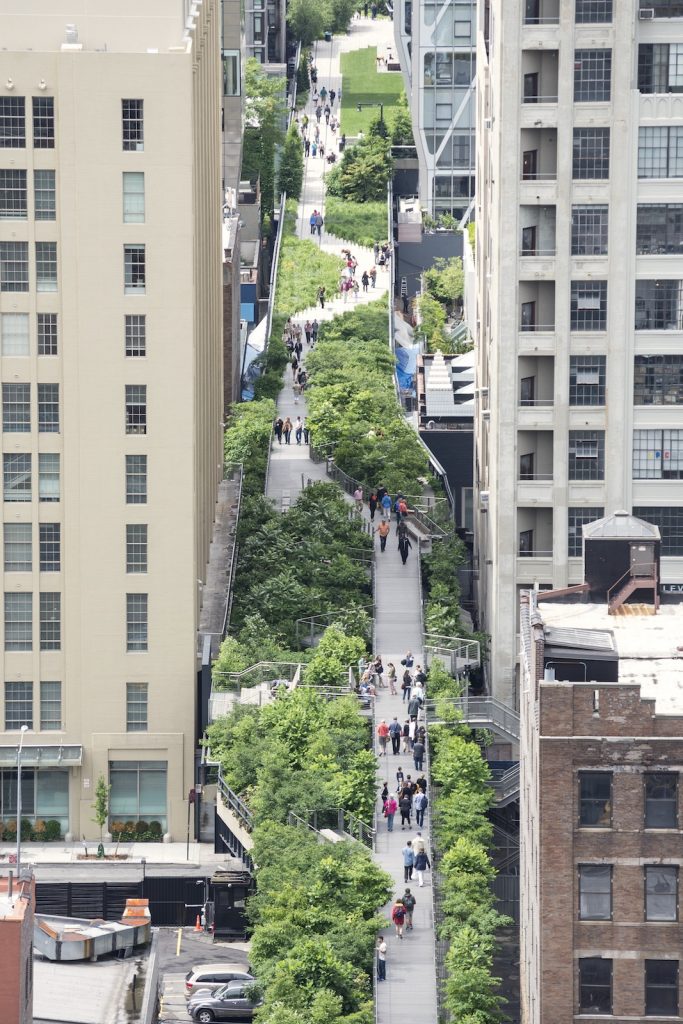
The High Line, a linear public park built on elevated freight rail on Manhattan’s West Side, has been hailed as a model of urban regeneration and of collaboration across fields and perspectives. In summarizing the deliberation process, the Green Prize jury noted that a great urban-design project is one where multiple actors spanning public and private domains are involved in and committed to lasting urban change.
Read the full Press Release.
How to See Architecture: Bruno Zevi (MArch ’42)
One hundred years after his birth, the prolific work of Roman architect Bruno Zevi continues to engage current problems in theory and criticism, and deserves to be revisited. From the publication of Towards an Organic Architecture, in 1945, to his monograph on Erik Gunnar Asplund published the very year of his death in 2000, many of his books have had an electrifying effect on architects and historians. Active as educator and as political activist, he was an engaged, charismatic contributor to the public discussion through his weekly chronicle in L’Espresso. Beyond Italy, Zevi has had a determining presence in Latin America and other parts of the world.
Held at a school where his passage between 1940 and 1942 was far from uneventful, this symposium addresses issues relative to Zevi’s life, to his writings and to his brave fights for his ideas. His position in Italian politics and in the historical interpretation of architecture will be questioned, as well as the theoretical, narrative and rhetorical strategies at work in his engaged texts.
The first session, entitled “Democracy, Dialogue, Narrative: The Dialectics of Disegno and Storia“, will be moderated by K. Michael Hays with contributions from Pippo Ciorra and Daria Ricchi.
The second session, entitled “Zevi’s World, from Cambridge to the Rio de la Plata, and Back to Rome”, will be moderated by Anthony Vidler with contributions from Alicia Imperiale, Jorge Francisco Liernur, and Tamar Zinguer.
A conclusive lecture from Jean-Louis Cohen will measure Zevi’s role within the double perspective of architectural practice and historical reflection.
Schedule:
1:00 PM Opening Remarks
1:10 PM Panel 1: “Democracy, Dialogue, Narrative: The Dialectics of Disegno and Storia”
2:30 PM Coffee Break
3:00 PM Panel 2: “Zevi’s world, from Cambridge to the Rio de la Plata, and back to Rome”
4:30 PM Coffee Break
5:00 PM Keynote lecture
Participant Bios
Pippo Ciorra: architect, critic and professor, member of the editorial board of “Casabella” from 1996 to 2010, he collaborates with journals, reviews and national. In 2011 he has published an overview of the conditions of architecture in Italy, Senza architettura, le ragioni per una crisi (Laterza). Author of a number of books and, as the monographic studies on Ludovico Quaroni (Electa, 1989), Peter Eisenman (Electa, 1993), and then on museums, urbanism, photography and contemporary Italian architecture. He teaches design and theory at SAAD (University of Camerino) and is the director of the international PhD program “Villard d’Honnecourt” (IUAV). He’s a member of CICA (International Committee of Architectural Critics), advisor for the award “Gold Medal of the Italian architecture”. He’s been chairing or participating to juries for national and international design competitions. In 2016 was part of the jury for the XV Architecture Biennale in Venice. He has curated and designed exhibitions in Italy and abroad. Since 2009, he is Senior Curator of MAXXI Architettura in Rome. Among his major exhibitions, Re-cycle, Energy, Food, The Japanese House. Piccole Utopie, is a traveling show on ten Italian architects. In 2018 he curated, with J-L. Cohen, the exhibition on Bruno Zevi. Storia e controstoria dell’architettura. He curates the Italian branch of YAP, the MoMA PS1 international program for young architects.
Jean-Louis Cohen: Trained as an architect and an historian, Jean-Louis Cohen holds since 1994 the Sheldon H. Solow Chair for the History of Architecture at New York University’s Institute of Fine Arts. In 2014 he has been given the first chair for architecture at the Collège de France. His research has focused on the French, German and Soviet architectural avant-gardes, on colonial situations and on Paris planning history. He has published more than thirty books, including: France, Modern Architectures in History (2015), Le Corbusier: an Atlas of Modern Landscapes (2013), The Future of Architecture. Since 1889 (2012), Architecture in Uniform (2011), Mies van der Rohe (2007), Casablanca (2002), and Le Corbusier and the Mystique of the USSR (1992). Among the numerous exhibitions he has curated feature the centennial show “L’aventure Le Corbusier” (1987), at the Centre Georges Pompidou; “Scenes of the World to Come,” and “Architecture in Uniform at the Canadian Center for Architecture (1995 and 2011); “Interférences / Interferenzen – Architecture, Allemagne, France”, at the Musées de Strasbourg (2013); “Le Corbusier: an Atlas of Modern Landscapes,” at the Museum of Modern Art (2007). In 2018, he has curated wih Pippo Ciorra the exhibition Zevi’s Architects at Rome’s MAXXI. He received in 2014 the special mention of the jury for his French pavilion at the Venice Biennale.
K. Michael Hays is Eliot Noyes Professor of Architectural Theory at the Harvard University Graduate School of Design and Associate Dean for Academic Affairs. Hays joined the Faculty of Design in 1988, teaching courses in architectural history and theory. Hays has played a central role in the development of the field of architectural theory and his work is internationally known. His research and scholarship have focused on the areas of European modernism and critical theory as well as on theoretical issues in contemporary architectural practice. He has published on the work of modern architects, as well as on contemporary figures. Hays was the founder of the scholarly journal Assemblage, which was a leading forum of discussion of architectural theory in North America and Europe. From 1995 to 2005 he was Chair of the PhD Committee and Director of the GSD’s Advanced Independent Study Programs. In 2000 he was appointed the first Adjunct Curator of Architecture at the Whitney Museum of American Art, a position he held until 2009.
Alicia Imperiale’s scholarly work examines the interplay between technology and art, architecture, representation, and fabrication in postwar Italian art and architecture. She is the author of New Flatness: Surface Tension in Digital Architecture (Birkhauser, 2000); “Seminal Space: Getting under the Digital Skin,” in RE:SKIN (MIT, 2006); “Organic Italy? The Troubling Case of Rinaldo Semino,” in Perspecta 43 (2010); “Post 1965 Italy: The ‘Metaprogetto sì e no” in Industries of Architecture (Routledge, 2015), “Organic architecture as an Open Work,” in Zevi’s Architects: History and Counter-History from Postwar to the End of the 20th Century (Quodlibet, 2018), “An Ineluctable Geometric Character: Luigi Moretti and a prehistory of parametric architecture” (Log 44, 2018) and “Paolo Soleri’s Teilhard de Chardin Cloister,” in Modern Architecture and Religious Communities: Building the Kingdom (Routledge, 2018). Her book manuscript Organic Architecture as an Open Work: The aesthetics of experimentation in art, technology & architecture in postwar Italy is based upon her dissertation at Princeton University. In 2016-17 she was a Cornell University Society for the Humanities Fellow, where she conducted research for a new book Machine Consequences: Origins of Output. Her work has been supported by a Graham Foundation for Advanced Studies in the Fine Arts Research Grant.
Jorge Francisco Liernur is an architect graduated at the University of Buenos Aires. He held out postgraduate studies with Manfredo Tafuri and Tilmann Buddensieg. He is currently Professor Emeritus at the School of Architecture and Urban Studies at the Torcuato Di Tella University in Buenos Aires, where he was its founding Dean, and he is Associated Professor at the School of Architecture of Santiago de Chile’s Catholic University. He was (1986-2016) Researcher from the Argentine National Council for Research on Science and Technology, and Guest Curator of the Museum of Modern Art in New York. He has been visiting scholar at several Universities in America, Asia and Europe: Harvard (USA), Navarra (Spain); Roma La Sapienza, Politecnico di Milano, (Italy); Universität Trier (Germany); Xi An University of Technology (China) among others. He published books (“Architecture in XXth Century Argentina”, “The Southern Network. On the works of Le Corbusier and his disciples in Argentina”; “Writings on XXth Century Architecture in Latin America”, “Architecture in Latin America. 1965-1985”, “The shadow of the Avant-Garde. Hannes Meyer in Mexico”, etc.), and numerous essays in America, Asia and Europe (“Assemblage”, “ANY”, “Zodiac”, “Casabella”, “AA files”, “Arquitectura Viva”, “Der Architekt”, “A+U”, “World Architecture”, etc..)
Daria Ricchi has a Ph.D. in history and theory from Princeton University. She in an architectural historian and writer. She is a regular contributor to architectural magazines and academic journals. Her dissertation focused on architecture historiography and its literary genres between 1930s and 1950s considering figures like the architect and historian Bruno Zevi, the art critic Giulio Carlo Argan, and the writer Italo Calvino. More broadly, her research interests include: writerly modes in the historiography of architecture, modern and contemporary art and architecture, popular culture. While at Yale as a postdoctoral fellow she started her current project. She is studying the early architectural writing by the American novelist Edith Wharton (1862-1937), and how writing and questions of taste targeted both a specialized audience and a broader public.
Anthony Vidler received his professional degree in architecture from Cambridge University in England, and his doctorate in History and Theory from the University of Technology, Delft, the Netherlands. Dean Vidler was a member of the Princeton University School of Architecture faculty from 1965–93, serving as the William R. Kenan Jr. Chair of Architecture, the Chair of the Ph.D. Committee, and Director of the Program in European Cultural Studies. In 1993 he took up a position as professor and Chair of the Department of Art History at UCLA, with a joint appointment in the School of Architecture from 1997. Vidler was appointed Acting Dean of the Irwin S. Chanin School of Architecture of The Cooper Union in 2001, and Dean of the School in 2002, a position he held until 2013. A historian and critic of modern and contemporary architecture, specializing in French architecture from the Enlightenment to the present, he has consistently taught courses in design and history and theory and continues to teach a wide variety of courses at The Cooper Union. Vidler has received awards from the Guggenheim Foundation, the National Endowment for the Humanities; he was a Getty Scholar, at the Getty Center for the History of Art and the Humanities in 1992–93 and a Senior Mellon Fellow at the Canadian Centre of Architecture, Montreal, in 2005. His publications include The Writing of the Walls: Architectural Theory in the Late Enlightenment (Princeton Architectural Press, 1987), Histories of the Immediate Present: The Invention of Architectural Modernism (MIT Press, 2008), and The Scenes of the Street and other Essays (Monacelli Press, 2011).
Tamar Zinguer is an educator and historian of architecture who has practiced for ten years before turning to research and teaching. Her book and manuscripts all position architecture within larger cultural fields and discourses. Architecture in Play: Intimations of Modernism in Architectural Toys, (UVA Press, 2015) explores how breakdown and collapse, constructing and taking apart have positioned toys as tools that advanced the constant reevaluation of spatial design. A manuscript in progress, “The Degree Zero of Architecture,” looks at different critics who used the expression “degree zero” in relation to architecture. Minimalism in design, industrial buildings, early urban forms and vernacular structures are all explored and different modalities of nothingness investigated in a discipline whose formal manifestations have become more and more complicated. Also forthcoming is Model Deserts: An Architectural History of the Sandbox (MIT Press, 2019), which follows the ubiquitous space of the sandbox from its pedagogical beginnings in 19th Century Berlin to its death in 1970, USA, and its subsequent rebirth as a significant trope in art. Zinguer was trained at The Cooper Union (B. Arch), Technion, Israel (M.Sc.) and Princeton University (Ph.D.) and has been Associate Professor of Architecture at The Cooper Union since 2006.
Due to unforeseen circumstances, Roberto Dulio is no longer able to participate in the conference.
Hans Ulrich Obrist
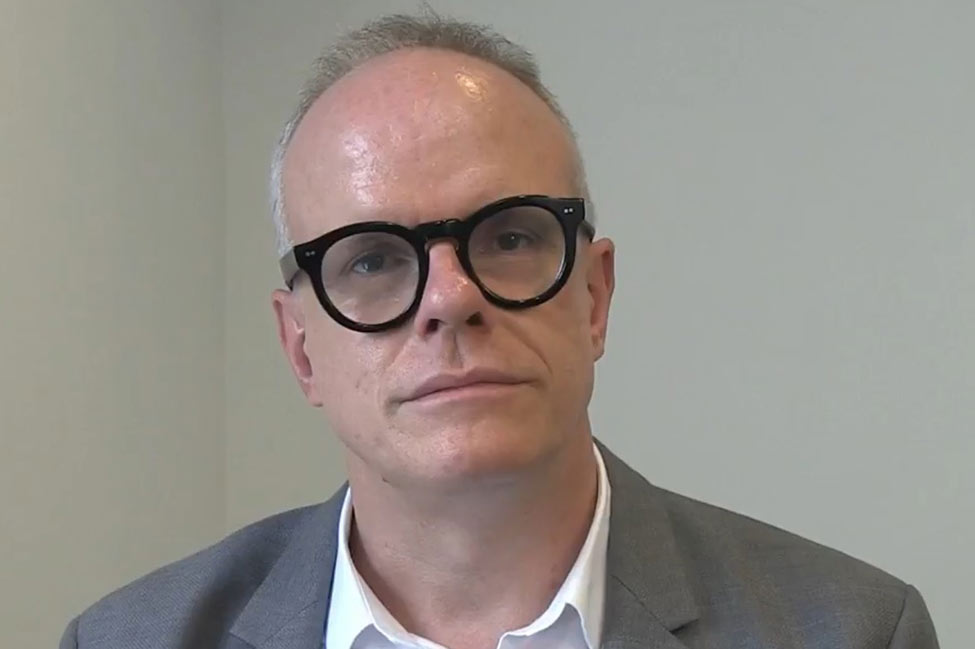
Please join us for an evening lecture by Hans Ulrich Obrist, Artistic Director at the Serpentine Galleries in London.
Hans Ulrich Obrist (b. 1968, Zurich, Switzerland) is Artistic Director of the Serpentine Galleries, London. Prior to this, he was the Curator of the Musée d’Art Moderne de la Ville de Paris. Since his first show “World Soup” (The Kitchen Show) in 1991 he has curated more than 300 shows.
So far in 2018, Obrist has co-curated at the Serpentine Galleries solo shows for Rose Wylie, Wade Guyton, Ian Cheng, Sondra Perry, Tom Abts and Christo. In 2014 he curated the Swiss Pavilion at the 14th International Architecture Biennale in Venice, where he presented Lucius Burckhardt and Cedric Price—A stroll through a fun palace; the building was designed by architects Herzog & de Meuron, and the program was developed with artists Liam Gillick, Philippe Parreno, Tino Sehgal and Dominique Gonzalez-Foerster. Obrist’s Art of Handwriting project is taking place on Instagram and is a protest against the disappearance of handwriting in the digital age.
In 2013, Obrist co-founded with Simon Castets the 89plus, a long-term, international, multi-platform research project, conceived as a mapping of the digitally native generation born in or after 1989. In 2011 Obrist received the CCS Bard Award for Curatorial Excellence, in 2009 he was made Honorary Fellow of the Royal Institute of British Architects (RIBA), and in 2015 he received the International Folkwang Prize for his commitment to the arts. Obrist has lectured internationally at academic and art institutions, and is contributing editor to several magazines and journals.
Obrist’s recent publications include Mondialité, Somewhere Totally Else, Conversations in Colombia, Ways of Curating, The Age of Earthquakes with Douglas Coupland and Shumon Basar, and Lives of The Artists, Lives of The Architects.
Please note that Obrists’ evening lecture takes the place of the interview marathon previously announced.
Shirin Neshat
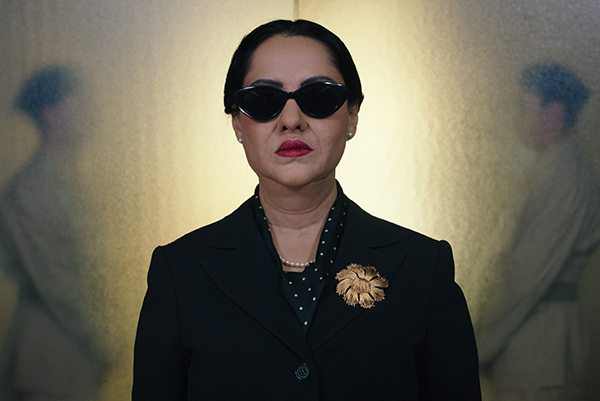
Shirin Neshat‘s lecture will offer an overview of the development of her art and her ongoing multi-media practice involving still-photography, video installations, performance, and feature length films. She will primarily focus on her most recent projects, including her direction of an opera “Aida,” which was presented at the Salzburg Music Festival in 2017, in collaboration with world renowned Riccardo Muti and Soprano singer, Anna Netrebko; as well as speaking, and showing clips of her latest movie “Looking for Oum Kulthum” (2017,) based on the life and music of Egyptian singer. Neshat will also share glimpses into her new and upcoming projects, including her next film titled “Dreamland,” to be shot in 2019.
Shirin Neshat is an Iranian-born artist and filmmaker living in New York. Neshat’s early photographic works include the Women of Allah series (1993–1997), which explored the question of gender in relation to Islamic fundamentalism and militancy. Her subsequent video works departed from overtly political content or critique in favor of more poetic imagery and complex human narratives. Neshat continues to explore and experiment with the mediums of photography, video and film. Her most recent bodies of work include the photographic series The Book of Kings (2012), The Home of My Eyes (2015) and the trilogy Dreamers comprised of three video installations: Illusions and Mirrors (2013), Roja (2016), and Sarah (2016).
Neshat has held numerous solo exhibitions at galleries and museums worldwide, including the Museo Correr in Venice, Italy, to coincide with the 2017 Venice Biennale; the Hirshhorn Museum and Sculpture Garden, Washington D.C.; Mathaf: Arab Museum of Modern and Contemporary Art, Doha; National Museum of Modern and Contemporary Art, Seoul; Detroit Institute of the Arts, Detroit, Michigan; Stedelijk Museum, Amsterdam; the Serpentine Gallery, London; Hamburger Bahnhof, Berlin; the Walker Art Center, Minneapolis; and the Musée d’Art Contemporain de Montréal, among others.
Neshat has participated in major international group exhibitions, including the 48th Venice Biennale of Art (1999), the Whitney Biennial (2000), Documenta XI (2002) and LACMA (2015). Neshat was the recipient of the Golden Lion Award – the First International Prize at the 48th Venice Biennial (1999), the Hiroshima Freedom Prize (2005), The Crystal Award (2014), and the Praemium Imperiale (2017). Her work is included in the collections of museums and public institutions around the world.
In 2009, Neshat directed her first feature-length film, Women Without Men, which received the Silver Lion Award for Best Director at the 66th Venice International Film Festival. She has recently completed her second feature-length film, based on the life and art of the legendary Egyptian singer Oum Kulthum. Neshat is represented by Gladstone Gallery, New York and Brussels.