Class Day 2019: Awards Ceremony and Address

Class Day Lecture

Class Day 2019: Awards Ceremony and Address

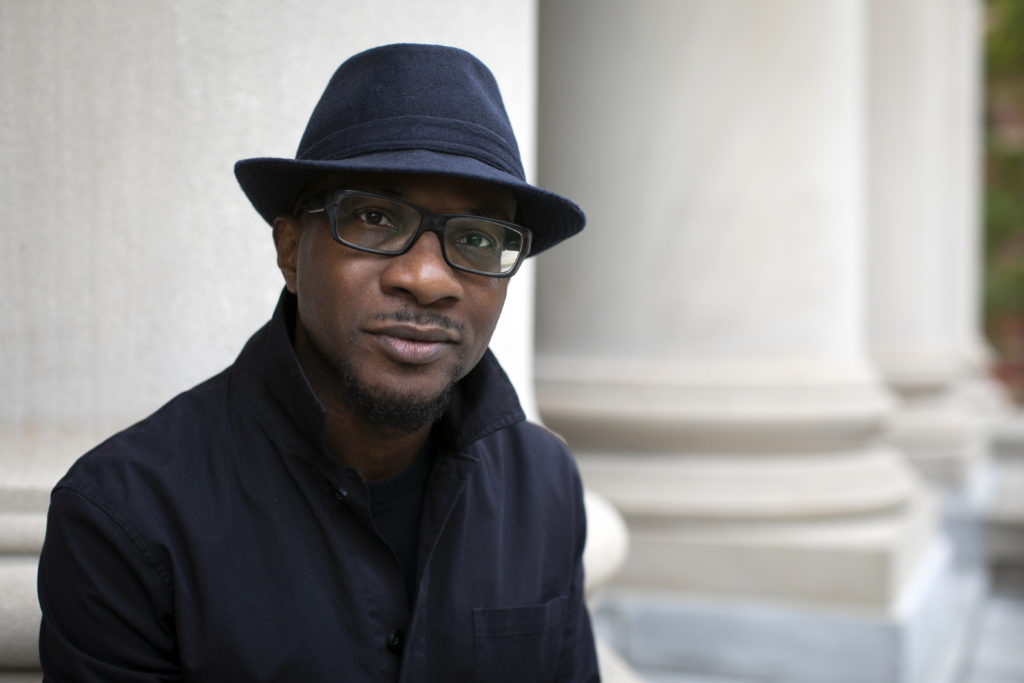
Teju Cole is the photography critic of the New York Times Magazine and the Gore Vidal Professor of the Practice of Creative Writing at Harvard. He is pictured outside Widener Library at Harvard University. Stephanie Mitchell/Harvard Staff Photographer
Photo by Stephanie Mitchell/Harvard Staff Photographer
Event Location

Event Space Gund Backyard

Date & Time
Free and open to the public

The Harvard Graduate School of Design’s 2019 Class Day Awards Ceremony and Address will take place from 3:30 p.m. to 5:00 p.m. on Wednesday, May 29, in the Gund Hall Backyard.

The GSD has named Teju Cole as its 2019 Class Day speaker. Teju Cole is a novelist, essayist, photographer, and curator. His books include Open City, Blind Spot and, most recently, Human Archipelago. He has been honored with the PEN/Hemingway Award, the Internationaler Literaturpreis, the Windham Campbell Prize, and a Guggenheim Fellowship, among many other prizes. His photography has been the subject of numerous solo exhibitions, and he was the photography critic of the New York Times Magazine from 2015 until 2019. He is the Gore Vidal Professor of the Practice of Creative Writing at Harvard.

Schedule Overview

Class Day – Wednesday, May 29

Please visit the GSD’s Commencement page for more information about Class Day and Commencement week activities. You may also wish to view the university-wide Commencement site.

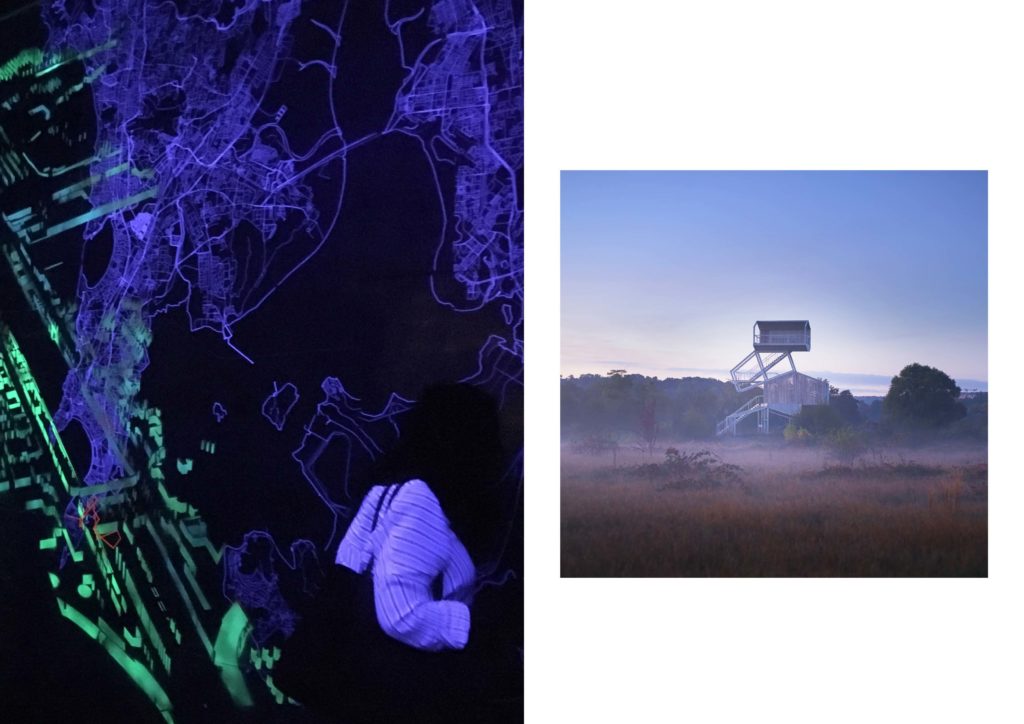
Marc and Matthias Armengaud, “Of monsters and territorial reconfiguration. Stories by Marc Armengaud and Matthias Armengaud / AWP”

Open House Lecture

Marc and Matthias Armengaud, “Of monsters and territorial reconfiguration. Stories by Marc Armengaud and Matthias Armengaud / AWP”

Event Location

Piper Auditorium

Date & Time
Free and open to the public

AWP is now an office for territorial reconfiguration, with lush projects in magazines (and even in real places). But at first there was a punk band, translating off-grid experiences into click’n’cut jazz with a twist of slowed down Rumba. The Suits dubbed us the Subterranean Paris Orchestra and wanted to sell T-shirts. But they lost us when we dived deeper into the dark, the invisible, the wastescapes, and parallel networks. Imagine, we were the kind that still believed you can read, and sometimes even… write books. Once in the 2000’s we made surface, and the New Suits asked us to tell everyone about the dark sides we had walked, while everyone had become a glooobal glamorouzzz and glitttteric arrrchissstar. Off’ we went for deep again, underneath deck urbanism slabs and through abandoned parking lots turned into rice fields by leaking sewers, with Mozart playing too loud from the closeby mall sound system, overlapping with insane smells of deteriorating organics only a few meters underneath high-end corporate towers. We met weird travelers there, owning college degrees and holes in their hopes. We tried to discuss ways to Re-Public Space for the sake of contradiction, but then the Post Suits dropped in with a contract that said “save late modernity if we can’t”. But what could we do? Instant design strategies? Upside down wooden observatories? 2D/3D micro-stages for playful demonstrations? Collaborative night time invasions? Temporary fake public programs? Crap cleaning water factories? Growing buildings?! Insects’ Museums? And what else?! Stories about monsters and territorial reconfiguration?!!

Forget it.
Or join.

Loreta Castro Reguera

Loreta Castro Reguera

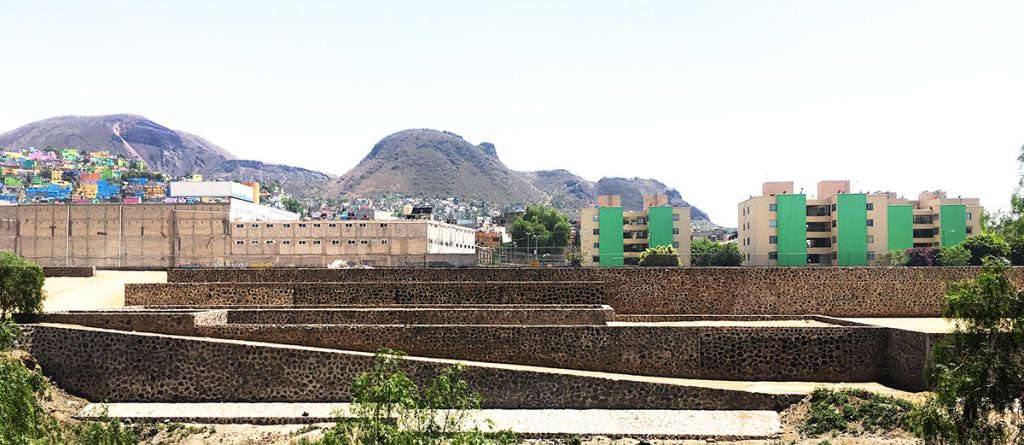
La Quebradora
Event Location

Piper Auditorium

Date & Time
Free and open to the public

Born in Mexico City in 1979, Loreta Castro Reguera MAUD ’10 studied Architecture at the School of Architecture of UNAM, has a Master in Architecture form Mendrisio Academy of Architecture, and a Master in Urban Design with Distinction from the Harvard GSD. She has been awarded with several scholarships and prizes for both her trayectory and her independent work such as the FONCA Young Creators Program in Mexico, a Fulbright scholarship, and the CEMEX Marcelo Zambrano scholarship. As a result of focusing her research on water and design, she received the 2010 Druker Traveling Fellowship Award, and later the Global Gold Prize and Latinamerica Gold Prize of the 5th emission of the Lafarge Holcim Awards for La Quebradora, where she was design director and general coordinator. In 2010 she founded Taller Capital with José Pablo Ambrosi. Their work focuses on designing the city through densification and infrastructural public spaces, understanding different strategies for managing water. They have received several national recognitions and prizes such as the installation of the 2015 Eco Pavillion and a silver medal at the 2017 Bienialle. Loreta teaches a thesis design seminar at UNAM. She has been invited as guest professor and speaker to several institutions in America and Europe and has written essays and articles for several magazines and books. Since 2018 she is part of the National Creators System of Mexico.

Rip Rapson with Maurice Cox and Toni Griffin, “Designing Detroit”: A Decade of Change and Transformation”

Rip Rapson with Maurice Cox and Toni Griffin, “Designing Detroit”: A Decade of Change and Transformation”

Rip Rapson, Maurice Cox, and Toni Griffin
Event Location

Piper Auditorium

Date & Time
Free and open to the public

Join Rip Rapson, president of the Kresge Foundation, and urban planners and designers Maurice Cox and Toni L. Griffin in a discussion about the complex design, economic and political innovations required to create transformational change for the city that helped create the American Dream.


Participants

Rip Rapson is president and CEO of The Kresge Foundation, a $3.6 billion private, national foundation dedicated to building and strengthening pathways to opportunity for people with low incomes living in America’s cities, including Kresge’s hometown of Detroit. Since 2006, he has expanded the foundation’s grantmaking and investing tools to improve the economic, social, cultural and environmental conditions of city life across the nation.

He previously served as president of the McKnight Foundation in Minneapolis, where he led early childhood development efforts, created a regional public-private-philanthropic economic development organization, and enhanced environmental protections along the Mississippi River. He earlier served as the deputy mayor of Minneapolis, with responsibility for designing a $400 million neighborhood revitalization program, revamping the municipal budgeting process and elevating the city’s commitment to children and families.


Maurice Cox LF ’05: Mayor Mike Duggan selected Cox from among several national finalists to reorganize and lead the City’s Planning Department in 2015.  Cox, an urban designer, architectural educator and former mayor of the City of Charlottesville, VA, left a tenured position with Tulane University in New Orleans to accept the Detroit position.

An outspoken advocate of neighborhood development, Cox told a Detroit audience at the Museum of Contemporary Art in February that he feels a responsibility “to ensure the Detroiters who stuck it out in the hard times now share in the city’s growing prosperity.”

Cox has taught at Syracuse University, the University of Virginia and Harvard University’s Graduate School of Design. His experience merging architecture, politics and design education led to his being named one of “20 Masters of Design” in 2004 by Fast Company Business Magazine. He served as Design Director of the National Endowment for the Arts from 2007-2010 where he led the NEA’s Your Town Rural Institute, the Governor’s Institute on Community Design, the Mayors’ Institute on City Design, and oversaw direct design grants to the design community across the U.S. In 2013, Cox was named one of the Most Admired Design Educators in America in the annual ranking of Design Intelligence.


Toni L. Griffin LF ’98 is the founder of Urban Planning and Design for the American City, based in New York. Through the practice, Toni served as Project Director the long range planning initiative of the Detroit Work Project, and in 2013 completed and released Detroit Future City, a comprehensive citywide framework plan for urban transformation. Most recent clients include working with the cities of Memphis, Milwaukee and Pittsburgh.

Ms. Griffin was recently a Professor of Architecture and the founding Director of the J. Max Bond Center on Design for the Just City at the Spitzer School of Architecture at the City College of New York. Founded in 2011, the Bond Center is dedicated to the advancement of design practice, education, research and advocacy in ways that build and sustain resilient and just communities, cities and regions. Currently the Center is focused on several design research initiatives including the Legacy City Design Initiative, that explores innovative design solutions for cities that have lost greater than 20% population lost since their peak; “Just City Design Indicators Project” that seeks to define the core values of a just city and offer a performance measure tool to assist cities and communities with evaluating how design facilitates urban justice in the built environment; and “Inclusion in Architecture” that examines the participation of people of color in architecture and related design fields.

Prior to returning to private practice, Toni was the Director of Community Development for the City of Newark, New Jersey, where she was responsible for creating a centralized division of planning and urban design, launching the city’s complete overhaul of its comprehensive master plan and zoning ordinance. Between 2000-2006, Ms. Griffin served as Vice President and Director of Design for the Anacostia Waterfront Corporation in Washington, DC, leading the planning for the Washington Nationals Ballpark District, and held the position of Deputy Director for Revitalization Planning and Neighborhood Planning in the D.C. Office of Planning, responsible for the Anacostia Waterfront Initiative, the downtown City Center redevelopment, and numbers neighborhood revitalization plans.

Between 1998-2000, Ms. Griffin served as Vice President for Planning & Tourism Development for the Upper Manhattan Empowerment Zone Development Corporation in New York City. She began her career as an architect with Skidmore, Owings & Merrill LLP in Chicago, where she became an Associate Partner involved in architecture and urban design projects in London and Chicago.

Ms. Griffin received a Bachelors of Architecture from the University of Notre Dame and a Loeb Fellowship from the Harvard University Graduate School of Design, where she also taught as an Adjunct Associate Professor between 2006-2011. In 2014, Toni was the Visiting Associate Professor and Theodore B. and Doris Shoong Lee Chair in Real Estate Law and Urban Planning, in the Department of City and Regional Planning at UC Berkeley, and serves on the board of the New York Regional Plan Association.

“On Mountains” Panel Discussion and Exhibition Opening Reception

“On Mountains” Panel Discussion and Exhibition Opening Reception

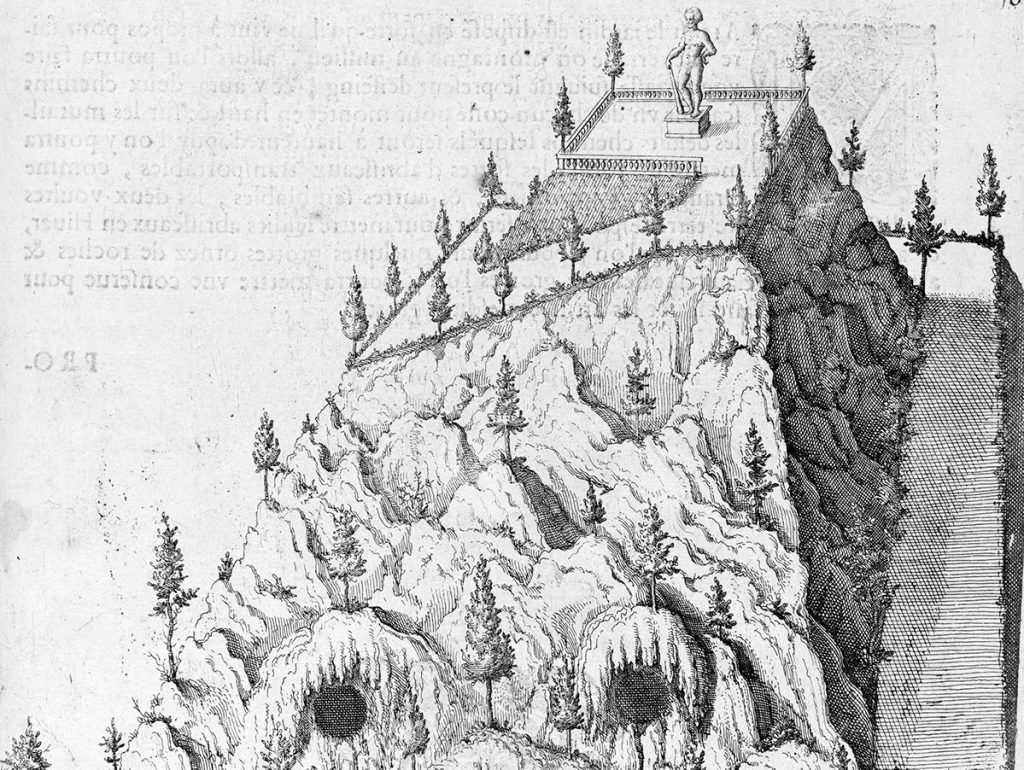
Black and White illustration of a mountain with a door at the bottom and a sloped ramp up the side leading to a flat park at the top.
Salomon de Caus, Les raisons des forces mouvantes, Paris 1624
Event Location

Event Space Loeb Library Lobby

Date & Time
Free and open to the public

Michael Jakob is lead curator of the GSD’s Spring 2019 main exhibition Mountains and the Rise of Landscape. He joins the exhibition co-curators and others  in a conversation about mountains and their complex, fascinating history. The exhibition, How to Model a Mountain, curated by Ed Eigen, and installed in the Frances Loeb Library, will be the backdrop for the discussion.


The noon panel discussion takes place in the Frances Loeb Library (ground floor). In the evening, at 6:30 PM, a reception and opening for the exhibitions will take place in the Druker Design Gallery. Both events are free and open to the public.


Participants

Anita Berrizbeitia MLA ’87 is Professor of Landscape Architecture and Chair of the Department of Landscape Architecture. Her research focuses on design theories of modern and contemporary landscape architecture, the productive aspects of landscapes, and Latin American cities and landscapes. She was awarded the 2005/2006 Prince Charitable Trusts Rome Prize Fellowship in Landscape Architecture. A native of Caracas, Venezuela, she studied architecture at the Universidad Simon Bolivar before receiving a BA from Wellesley College and an MLA from the GSD.

Berrizbeitia has taught design theory and studio, most recently at the University of Pennsylvania School of Design, where she was Associate Chair of the Department of Landscape Architecture. Her studios investigate innovative approaches to the conceptualization of public space, especially on sites where urbanism, globalization, and local cultural conditions intersect. She also leads seminars that focus on significant transformations in landscape discourse over the last three decades. From 1987 to 1993, she practiced with Child Associates, Inc., in Boston, where she collaborated on many award-winning projects.

She is co-author, with Linda Pollak, of Inside/Outside: Between Architecture and Landscape (Rockport, 1999), which won an ASLA Merit Award; author of Roberto Burle Marx in Caracas: Parque del Este, 1956-1961 (University of Pennsylvania Press, 2004), awarded the J.B. Jackson Book Prize in 2007 from the Foundation for Landscape Studies; and editor of Michael Van Valkenburgh Associates: Reconstructing Urban Landscapes (Yale University Press, 2009), which received an ASLA Honor Award. Her essays have been published in Daniel Urban Kiley: The Early Gardens (Princeton Architectural Press), Recovering Landscape (Princeton Architectural Press), Roberto Burle Marx: Landscapes Reflected (Princeton Architectural Press), CASE: Downsview Park Toronto (Prestel), Large Parks (Princeton Architectural Press), Retorno al Paisaje (Evren), and Hargreaves Associates: Landscape Alchemy (ORO Publishers), as well as in magazines such as A+U.


Edward A. Eigen is an Associate Professor of Architecture and Landscape Architecture at the Harvard University Graduate School of Design. A historian of the long nineteenth century, in the European and Anglo-American contexts, his research and teaching focus on relationships in and between humanistic and scholarly traditions and the natural sciences and allied practices of knowledge production. With a background in art history, a professional training in design, and a doctorate in the history and theory of architecture from MIT, he is at home with and seeks to productively defamiliarize images, texts, and topographies of intricate description. A proponent of the Montaignian essay tradition, his writings, while ultimately grounded in the uncertain terrain of “landscape,” have ranged from questions of botanical and zoological systematics, the creation and loss of great and not so great museums and libraries, the history of the weather, and acts of plagiarism in the founding documents of architecture theory. All of these studies engage in questions of historical narrative and the species of evidence upon which it depends and/or invents along the way.

Eigen was an assistant professor at the Princeton University School of Architecture, where he was an Old Dominion Faculty Fellow, and the recipient of a university-wide graduate mentoring award, and the David A. Gardner ’69 Magic Grant for his research on architectural machines.  His article on the prestidigitator Robert-Houdin’s invention of the doorbell will appear as “Controlling: Comfort in the Modern Home,” in Architecture and Technics: A Theoretical Field Guide to Practice. At the GSD, Eigen co-organized the colloquium “Claiming Landscape as Architecture,” which appeared as a special issue of Studies in the History of Gardens & Designed Landscapes, of which he is an Associate Editor. His recent book, On Accident: Episodes in Architecture and Landscape (MIT Press), seeks to reclaim and provide forms of interpretability for unfamiliar incidents and artifacts that fall outside the canon. His current monograph project, Beyond the Rose Garden, examines real and emblematic landscapes and architectures associated with the administrations of Presidents Kennedy, Johnson, Nixon, and Ford, including the “grassy knoll,” the Highway Beautification Act, Watergate, and the Bicentennial Time Capsule.


Michael Jakob teaches History and Theory of Landscape at hepia, Geneva, and aesthetics of design at HEAD, Geneva. He is a visiting professor at Politecnico di Milano and the Accademia di Architettura in Mendrisio. He is, at the same time, Professor of Comparative Literature (Chair) at Grenoble University. Jakob’s teaching and research focus on landscape theory, aesthetics, the history of vertigo, contemporary theories of perception and the poetics of architecture. He is the founder and head of COMPAR(A)ISON, an International Journal of Comparative Literature and the chief editor of “di monte in monte”, a series of books on mountain culture (Edizioni Tarara’, Verbania). He produced several documentary films for TV and has a longstanding experience as a radio journalist. Michael Jakob published recently: 100 Paysages, Infolio, Gollion 2011; asp Architecture du paysage, Infolio, Gollion 2012; Mirei Shigemori e il nuovo linguaggio del giardino giapponese, Tarara’, Verbania 2012; the swiss touch in landscape architecture, Tarara’, Verbania 2013/ Ifengspace, Tianjing 2015; La poétique du banc, Macula, Paris 2014/ Sulla Panchina, Einaudi, Turin 2014/ The Bench in the Garden, Oro Editions, Bay Area 2017; Cette ville qui nous regarde, b2 éditions, Paris 2015/ Dall’alto della città, Lettera 22, Siracusa 2017; Des jardins & des livres, MetisPresses, Geneva 2018


Martino Pedrozzi (Zurich 1971) is currently a design studio visiting professor at the Mendrisio Academy of Architecture, where he founded and has led since 2003, the Summer School program WISH; Workshop on International Social Housing (www.wish.usi.ch). He is a board member of the newly completed “Teatro dell’architettura”, an on-campus building devoted to major exhibitions, inaugurated in 2018 with “Louis Kahn and Venice”. His recent essay “Il Lido di Ascona di Livio Vacchini: una teoria del giunto”, was published by Casagrande, Bellinzona, in 2017.

In 1996, after graduating from the Ecole Polytechnique Fédérale de Lausanne (EPFL) he worked in the studio of Oscar Niemeyer in Rio de Janeiro. Returning to Switzerland he established his own architectural practice (www.pedrozzi.com) in Mendrisio. His work ranges from complex urban projects at the invitation of both private and public companies such as Bâloise Group or the Swiss Federal Railways, to self-initiated interventions that engage with the rural heritage of the Swiss Alpine Region.

Martinos’s affinity for mountains, in part stems from two years in early childhood spent living in a remote Peruvian village, where he experienced the intense landscapes of the Andes. His activities are internationally recognized through publications, public lectures and awards.


Pablo Pérez-Ramos MLA ’87, DDes ’18 is Assistant Professor of Landscape Architecture at the Harvard Graduate School of Design. His research and teaching focus on the relationship between design and ecology. Departing from the prevalence of ecologically-driven design in today’s landscape architecture, his work retraces the genealogy of systems and process-based ideas in the theory of ecology, and investigates their mediation with design methods that privilege the legibility and the specificity of form.

A licensed architect from the Escuela Técnica Superior de Arquitectura de Madrid ETSAM, Pérez-Ramos also holds a Master of Advanced Studies from the same school, and a Master in Landscape Architecture from the Harvard Graduate School of Design. His work has been funded through grants and fellowships from the Fundación La Caixa, the Fundación Caja Madrid, the Harvard GSD, the Penny White Fund, and the Harvard RCC.

Pérez-Ramos has been visiting assistant professor and the Urban Landscape Program coordinator in the Northeastern University School of Architecture. He has been a member of the editorial board of the New Geographies journal from 2013 to 2018, and co-editor-in-chief of New Geographies 08: Island (Harvard GSD, 2016). His writing has also been published in A Line in the Andes (Harvard GSD, 2012), MONU (2014), Urban Landscape: Critical Concepts in Built Environment (Routledge, 2015) and Architecture is All Over (Columbia University Press, 2017).

His research and design work have been recognized in international competitions of architecture and urbanism. He is a landscape consultant and has recently served as landscape planning coordinator for the 2025 Masterplan for the Metropolitan District of Quito.


We regret that Jeffrey Schnapp will no longer be able to participate in the conversation.

Norman Kelley, “Things not as they are”

Margaret McCurry Lectureship in the Design Arts

Norman Kelley, “Things not as they are”

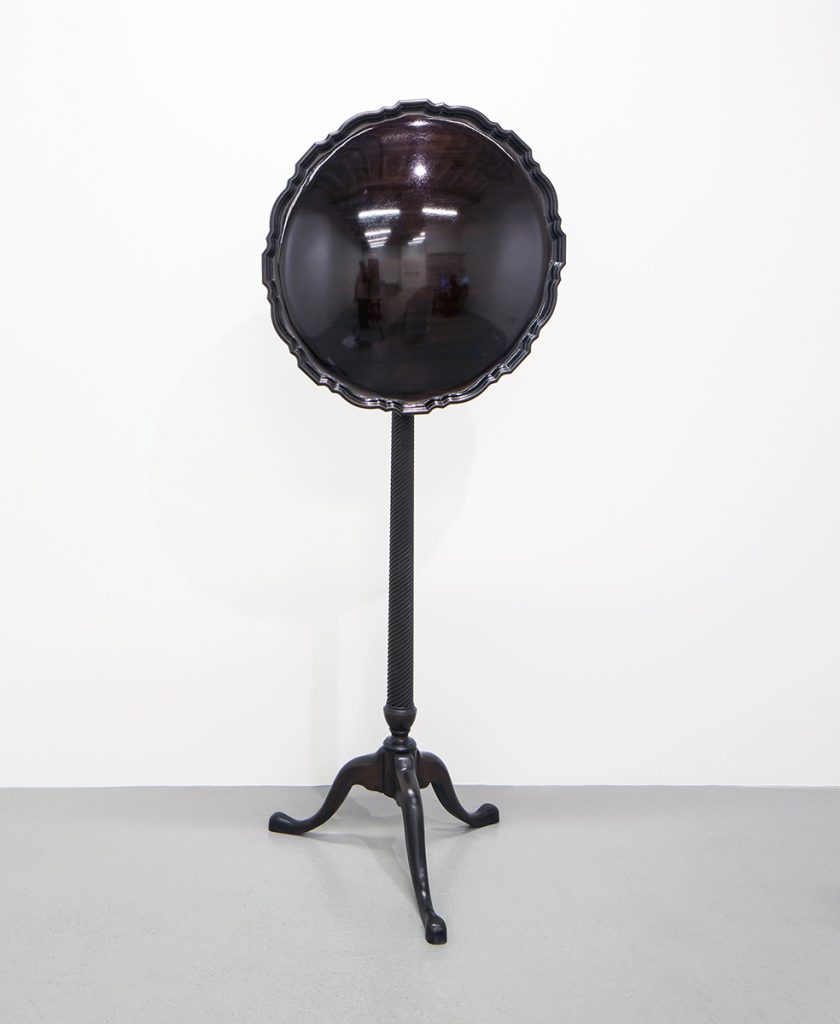
'Young Americans', 2018. Fixed tilt-top mirror table (mahogany).
'Young Americans', 2018. Fixed tilt-top mirror table (mahogany). Photo courtesy of Friedman Benda Gallery.
Event Location

Gund 112 Stubbins

Date & Time
Free and open to the public

A close examination of architecture and design’s relationship to translations in two- and three-dimensions.

Norman Kelley is an architecture and design collaborative based in Chicago and New Orleans. Founded in 2012 by Carrie Norman and Thomas Kelley, their work draws on the limits between two- and three-dimensions. Results vary in scale and medium: site-specific drawings, furniture, and architectural interiors. Thomas Kelley is an Assistant Professor at the University of Illinois at Chicago and a fellow of the American Academy in Rome. Carrie Norman is a registered architect (Louisiana, Illinois, and New York) and an Assistant Professor at Tulane University. The collaborative has contributed work to the 14th Venice Architecture Biennial (2014), the Chicago Architecture Biennial (2015, 2017) and is a recipient of the Architectural League of New York Young Architects Prize (2014) and a United States Artists Fellowship (2018). Their design work is represented by Volume and Friedman Benda galleries. Both partners received a Bachelor of Science in architecture from the University of Virginia and a Master’s in architecture from Princeton University. Past and current collaborations include Brendan Fernandes, Whitney Museum of American Art, Graham Foundation for Advanced Studies in the Fine Arts, Sylvia Lavin, Reversible Destiny Foundation, Arthur Ross Architecture Gallery, Juan Garcia Mosqueda, LAMPO, Aesop, and Notre.

Kimberly Dowdell, “Diverse City: How Equitable Design and Development Will Shape Urban Futures”

John T. Dunlop Lecture

Kimberly Dowdell, “Diverse City: How Equitable Design and Development Will Shape Urban Futures”

Kimberly Dowdell headshot
Dates
Piper Auditorium
Event Space Druker Design Gallery
Free and open to the public

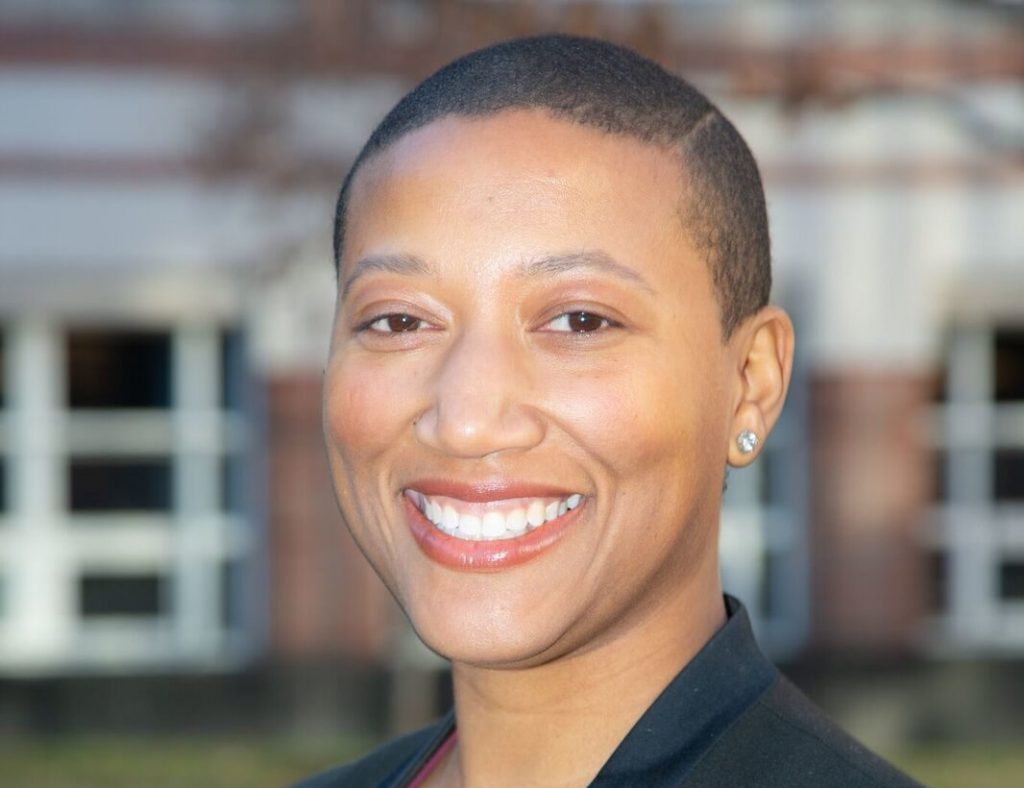
How can real estate development and sustainable design be used to foster equitable and inclusive redevelopment in cities? That’s the challenge that has animated the career of Kimberly Dowdell MPA ’15, an architect, developer, and educator who is focused on leading projects that help contribute to the revitalization of cities like Detroit, and also preparing the next generation of urban change agents.

Dowdell, who will give the 19th Annual John T. Dunlop Lecture, presented by the Harvard Joint Center for Housing Studies, is a partner at Century Partners, an innovative real estate development firm in Detroit focused on equitable neighborhood revitalization, and a lecturer at the University of Michigan’s Taubman College of Architecture and Urban Planning. She is also the new president of the National Organization of Minority Architects (NOMA). In that position, she has outlined an ambitious agenda focused on helping to ensure that African-American architects—who make up less than two percent of the profession in a country that is 13 percent African-American—play a larger role in efforts to revitalize America’s cities.


In her lecture, Dowdell, who has designed or managed over $100 million in assets in her work as an architect, real estate project manager, government staffer and developer, will draw on her varied experiences to discuss steps needed to create neighborhoods in which all people feel safe and empowered to build a brighter urban future for generations to come.

For more information, please visit the Joint Center for Housing Studies’ webpage.

Rosi Braidotti, “Posthuman Knowledge”

Rosi Braidotti, “Posthuman Knowledge”

Event Location

Piper Auditorium

Date & Time
Free and open to the public

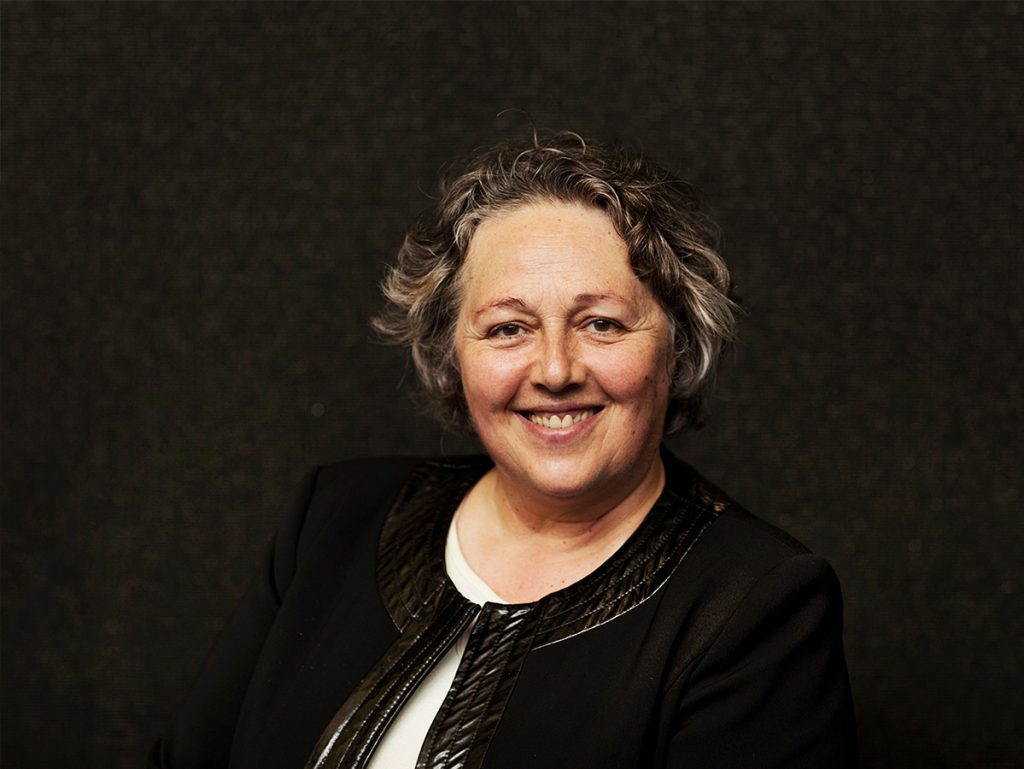
This lecture is built on the assumption that we are currently situated in a posthuman convergence between the Fourth industrial Age and the Sixth Extinction, between and advanced knowledge economy, which perpetuates patterns of discrimination and exclusion, and the threat of climate change devastation for both human and non-human entities. This convergence calls for a posthuman critical intervention in the form of intersecting critiques of western humanism on the one hand and of anthropocentrism on the other. The lecture discusses the impact of this convergence upon three major areas: the constitution of our subjectivity; the general production of knowledge and the practice of the academic Humanities. It addresses directly the following questions: what are the implications of the fact that knowledge production is no longer the prerogative of academic or formal scientific institutions like the university ? What are we to make of the sudden growth of new trans-discipinary hubs that call themselves: the Environmental and Digital Humanities, the Medical, Neural and Bio-Humanities, and also the Public, Civic and Global Humanities and so on ?

The lecture offers both a genealogy of these Critical Posthumanities and a theoretical framework by which to assess them.

More information about Braidotti’s forthcoming book, Posthuman Knowledge can be found on the publisher’s website.

See the GSD’s homepage for recently published a profile on Rosi.

Rosi Braidotti (B.A. Hons. Australian National University, 1978; PhD, Université de Paris, Panthéon-Sorbonne, 1981; Honorary Degrees Helsinki, 2007 and Linkoping, 2013; Fellow of the Australian Academy of the Humanities (FAHA), 2009; Member of the Academia Europaea (MAE), 2014; Knighthood in the order of the Netherlands Lion, 2005) is Distinguished University Professor at Utrecht University, founding Director of the Centre for the Humanities at Utrecht University (2007-2016), founding professor of Gender Studies in the Humanities at Utrecht University (1988-2005) and the first scientific director of the Netherlands Research School of Women’s Studies. Since 2009 she has been an elected board member of CHCI (Consortium of Humanities Centres and Institutes). Her publications include: Patterns of Dissonance, 1991; Metamorphoses, 2002; Transpositions, 2006; La philosophie, lá où on ne l’attend pas, 2009; Nomadic Subjects, 1994 and 2011a; Nomadic Theory,  2011b; The Posthuman, 2013. She recently co-edited Conflicting Humanities (2016) with Paul Gilroy and The Posthuman Glossary (2018) with Maria Hlavajova, which are part of the bookseries “Theory” she edits for Bloomsbury Academic.


This lecture is co-organized by the Master in Design Studies Program and Womxn in Design.

First Projects: An Unplugged Conversation

First Projects: An Unplugged Conversation

First projects poster: post-it notes with participant names
Event Location

Piper Auditorium

Date & Time
Free and open to the public

Event Video Summary

Join First Projects, a candid roundtable conversation with leading designers hosted by the Practice Platform.  Unplugged and off-the-record, designers will share an inside glimpse into the origins of practice, revealing stories behind first projects and the seminal efforts that launch remarkable careers.

This unique Beer & Dogs event, co-sponsored by the GSD Alumni Council and the Practice Platform, will not be broadcast or recorded.


Participants 

Preston Scott Cohen: The architecture of Preston Scott Cohenfounder and principal of Preston Scott Cohen, Inc. of Cambridge, MA, encompasses diverse scales and types of buildings including houses, educational facilities, cultural institutions and urban designs for private owners, institutions, government agencies and corporations. Recent projects include: Datong City Library [2008-2013], The Tel Aviv Museum of Art Amir Building, Tel Aviv, Israel [2003-2011], Taiyuan Museum of Art, Taiyuan, China [2007–2013], Nanjing Performing Arts Center, Nanjing, China [2007-2009], The Goldman Sachs Canopy, with Pei Cobb Freed Associates, New York, NY [2005-2008], Robbins Elementary School, Trenton, New Jersey [2005-2011], Goodman House, Pine Plains, New York [2002-2004]. Awards include the Progressive Architecture Award for Taiyuan Museum of Art [2010]; First Prize, Taiyuan Museum International Competition [2007]; First Prize Competition Robbins Elementary School, Trenton, NJ [2005]; Academy Award in Architecture, American Academy of Arts and Letters [2004]; Progressive Architecture Award, Architecture Tel Aviv Museum of Art [2004]; First Prize, Herta and Paul Amir International Competition for the New Building, Tel Aviv Museum of Art [2003]; Progressive Architecture Awards: Torus House [2000], Terminal House [1998].

Cohen is Gerald M. McCue Professor of Architecture at the Harvard University Graduate School of Design. He is the author of Contested Symmetries (Princeton Architectural Press, 2001) and numerous theoretical and historical essays on architecture.  His work has been widely published and exhibited and is in numerous collections including The Museum of Modern Art, New York, The Cooper-Hewitt National Design Museum, San Francisco Museum of Modern Art, Museum of Contemporary Art, Los Angeles and the Fogg Museum of Art, Harvard.  He lectures regularly in prestigious venues around the world.

Cohen’s work has been the subject of numerous theoretical assessments by renowned critics and historians including Nicolai Ouroussoff, Sylvia Lavin, Antoine Picon, Michael Hays, Nikolaus Kuhnert, Terry Riley, Robert Somol, Hashim Sarkis and Rafael Moneo. Cohen has held faculty positions at Princeton University, Rhode Island School of Design, and Ohio State University. He was the Frank Gehry International Chair at the University of Toronto in 2004 and the Perloff Professor at the University of California, Los Angeles in 2002.


James Dallman is principal of LA DALLMAN, internationally recognized for the integration of architecture, engineering and landscape.  The practice, located in Boston and Milwaukee, is engaged in the transformation of site through spatial and material investigations of diverse scale and type.  Co-founded with Grace La, LA DALLMAN is the first American practice to receive the Rice Design Alliance Prize, an international award recognizing exceptionally gifted architects in the early phase of their career.  The firm has been awarded numerous professional honors, including the Architectural League of New York’s Emerging Voices, the Bruner Award for Urban Excellence Silver Medal, multiple Design Awards from the American Institute of Architects Wisconsin, and prizes in international design competitions.

James Dallman’s commitment to artistic and technical integration has been recognized with honors from the American Society of Civil Engineers WisconsinAssociation of Collegiate Schools of Architecture, and the Structural Engineers Association of Illinois.  Completed projects include the Marsupial Bridge, the Miller Brewing Meeting Center, permanent science exhibits for Discovery World, the UWM Hillel Student Center, Kilbourn Tower, and residential projects. Dallman has held visiting faculty appointments at the Harvard Graduate School of Design, Rhode Island School of Design, University of Wisconsin-Milwaukee, Syracuse University, and Arizona State University.

LA DALLMAN’s work is featured in publications by a+t, Architectural Record, Azure, Praxis, Princeton Architectural Press, Routledge, and Topos, and they have lectured and exhibited widely, including at the Danish Architecture Center, the Carnegie Museum of Art Heinz Architectural Center, the Museum of Fine Arts Houston, and the New Museum in New York City.

James Dallman is a member of the AIA and is licensed in the Commonwealth of Massachusetts and the State of Wisconsin.  He received his M. Arch from Harvard University Graduate School of Design, and his B.S. in Architecture from the University of Wisconsin – Milwaukee, including study at the Ecole Speciale D’Architecture in Paris.


Jeanne Gang, FAIA, is the founding principal of Studio Gang, an international architecture and urban design practice based in Chicago, New York and San Francisco. Drawing insight from ecological systems, Jeanne is recognized for a research-based design process that foregrounds the relationships between individuals, communities, and environments. Her analytical and creative approach has produced projects across scales and typologies, from cultural and public buildings to urban parks and high-rise towers. These include Writers Theatre, a professional theater for a company north of Chicago; the Arcus Center for Social Justice Leadership at Kalamazoo College in Kalamazoo, Michigan; and the 82-story Aqua Tower in downtown Chicago. Intertwined with their built work, Jeanne and the Studio also develop research and related projects such as publications and exhibitions that push design’s ability to create public awareness and give rise to change—a practice they call “actionable idealism.”

Jeanne and Studio Gang are currently designing major projects throughout the Americas and Europe. These include the expansion of the American Museum of Natural History in New York City; the new United States Embassy in Brasília, Brazil; a unified campus for the California College of the Arts in San Francisco; Civic Commons, a multi-city project reimagining public spaces across the United States; and mixed-use towers in Toronto, Chicago, Amsterdam, and Los Angeles.

The recipient of the 2017 Louis I. Kahn Memorial Award, Jeanne is an elected member of the American Academy of Arts and Sciences and was named the 2016 Architect of the Year by the Architectural Review. She is the author of three books on architecture and the work of Studio Gang has been honored and exhibited widely, including at the Venice Architecture Biennale, Chicago Architecture Biennial, and New York’s Museum of Modern Art.

An alumna of the Harvard Graduate School of Design (M.Arch with Distinction), Jeanne also studied urban design at ETH Zürich as a Rotary Ambassadorial Scholar. She has taught architecture at the GSD since 2011 through studios exploring the multi-faceted potential of materiality, and served as the John Portman Design Critic in Architecture in 2017.


Gary Hilderbrand: A committed practitioner, teacher, critic, and writer, Gary is the Peter Louis Hornbeck Professor in Practice at the Harvard Graduate School of Design, where he has taught since 1990. His honors include Harvard University’s Charles Eliot Traveling Fellowship, the Rome Prize in Landscape Architecture, the Architectural League’s Emerging Voices Award with Douglas Reed, the 2013 ASLA Firm of the Year award, Dumbarton Oaks’ 2016 Mellon Practicing Senior Fellow in Urban Landscape Studies, and the 2017 ASLA Design Medal.

Through three acclaimed books and two dozen essays, Hilderbrand has helped to position landscape architecture’s role in reconciling intellectual and cultural traditions with contemporary forces of urbanization and change. His essays have been featured in Landscape Architecture, Topos, Harvard Design Magazine, Architecture Boston, Clark Art Journal, Arnoldia, New England Journal of Garden History, and Land Forum.

In addition to his co-authorship of the firm’s 2012 monograph, Visible Invisible, he produced Making a Landscape of Continuity: The Practice of Innocenti & Webel (1997), which was recognized by ASLA and AIGA (50 Best Books); and The Miller Garden: Icon of Modernism (1999). He has served on the editorial boards of Spacemaker Press, Harvard Design Magazine, and Landscape Architecture Magazine. As a competition juror, he’s participated in Harvard’s Green Prize for Urban Design (2006, 2013); I Premi Europeu de Paisatge Rosa Barba Barcelona (2000, 2002, 2003, 2018); and “Suburbia Transformed” for the James Rose Center (2010). He chaired the ASLA National Awards Jury in 2005 and the ASLA Annual Student Awards Jury in 2006.

Hilderbrand has developed an abiding commitment to promoting a heightened focus on urban forestry practices through the firm’s work in cities, and through design studios and sponsored research projects at Harvard. In addition, his constructed drawings and personal photo-collage works have been exhibited at the Isabella Stewart Gardner Museum, Sotheby’s, Harvard University, and the Boston University Art Gallery.


Eric Howeler is Associate Professor of Architecture. He teaches in the core studio sequence and offers courses in other areas, including building assemblies.

Höweler was born in Cali, Colombia and received his degrees, Bachelor of Architecture and Masters of Architecture, from Cornell University. He is a principal of Höweler + Yoon Architecture LLP. HYA is a multidisciplinary practice working between architecture, art and media. Their multi-disciplinary projects include architecture, interactive environments, interiors, installations, furniture, concept clothing and artist books.  They embrace all scales as an opportunity to engage design research to investigate the relationships between form/performance, interactivity/media, and inhabitation/event. HYA’s work is the subject of a monograph entitled: Expanded Practice, Howeler + Yoon Architecture / MY Studio, published by Princeton Architectural Press in 2009. Awarded the Architecture League’s Emerging Voices award for 2007 and Architectural Record’s Design Vanguard for 2007, their interactive architecture / landscape projects were featured in the 2006 National Design Triennial at the Cooper Hewitt in New York and the Institute of Contemporary Art in Boston.  Their work has been included in exhibitions at the Los Angeles Museum of Contemporary Art, the Museum of Modern Art in New York, and the Museum of Contemporary Art in Chicago.  Their work has been published and reviewed in Architect, Architectural Record, Domus, Interior Design magazine, Architectural Lighting and I.D. Magazine, The New York Times, The Boston Globe, The Financial Times and published in the following books: Light Color Sound, Sensory Effects in Contemporary Architecture (Norton, 2010), Utopia Forever(Gestalten 2010), Small Scale, Creative Solutions for Better City Living (PAP 2010), 1000X Architecture of the Americas (Verlagshaus Braun 2008), Provisional Practices- Emerging Modes of Architectural Practice USA (PAP 2008), and Young Architects Americas (DAAB 2007).

Current projects include the new headquarters for the Boston Society of Architects at Atlantic Wharf, scheduled for completion in November 2011, Skycourts, a 20,000 sf corporate retreat in Chengdu China, Rongsheng Complex, a 2.8 million sf mixed-use structure in Nantong China, and a series of public space immersive environments commissioned by Bharti Airtel in Delhi, India. Recent projects include: Building 2345, a 4,500 sf mixed use building in Washington DC, Low Rez Hi Fi, an interactive public art installation in Washington DC, Light Drift, an interactive light installation for the Schuylkill River in Philadelphia, and Windscreen, a project for the MIT 150thFestival of Art Science and Technology. His firm’s website: http://hyarchitecture.com/

Prior to forming HYA, Höweler was a Senior Designer at Diller + Scofidio where he worked on the Institute of Contemporary Art and the Juilliard School projects, and an Associate Principal at Kohn Pedersen Fox Associates, where he was the senior designer on the 118 story ICC Tower in Hong Kong. He is LEED AP, and a registered architect in state of New York, Massachusetts, Virginia, New Jersey, Rhode Island and the District of Columbia. He has taught at Massachusetts Institute of Technology, and Harvard Design School.

He is author of Skyscraper: Vertical Now, published by Rizzoli/Universe Publishers in 2003, and Public Works, Unsolicited Small Projects for the Big Dig (with J. Meejin Yoon and Meredith Miller), published by MAP Book Publishers in 2009, and 1001 Skyscrapers (with J. Meejin Yoon), published by Princeton Architectural Press in 2000. Höweler has published essays and articles in Perspecta, Archis, Thresholds, The Architect’s Newspaper, Architectural Lighting, and Praxis.


Grace La is Professor of Architecture, Chair of the Practice Platform, and former Director of the GSD’s Master of Architecture Programs.  She is also Principal of LA DALLMAN Architects, internationally recognized for the integration of architecture, engineering and landscape.

Cofounded with James Dallman, LA DALLMAN is engaged in catalytic projects of diverse scale and type. Noted for works that expand the architect’s agency in the civic recalibration of infrastructure, public space and challenging sites, LA DALLMAN was named as an Emerging Voice by the Architectural League of New York in 2010 and received the Rudy Bruner Award for Urban Excellence Silver Medal in 2007. In 2011, LA DALLMAN was the first practice in the United States to receive the Rice Design Alliance Prize, an international award recognizing exceptionally gifted architects in the early phase of their career. LA DALLMAN has also been awarded numerous professional honors, including architecture and engineering awards, as well as prizes in international design competitions.


Mack Scogin  is a principal in the firm of Mack Scogin Merrill Elam Architects, in Atlanta, Georgia. He is the Kajima Professor in Practice of Architecture at the Harvard University Graduate School of Design, where he was the chairman of the Department of Architecture from 1990 to 1995. He offers instruction in the core studio sequence and in advanced studio options. Recent studios have included: Everybody loves FrankField Trip“My Way”—A Trip to Gee’s BendSymmetrical Performance“Empathy”13141516171819Beige Neon, and Doing and Dancing.

With Merrill Elam, he received the 1995 Academy Award in Architecture from the American Academy of Arts and Letters, a 1996 Chrysler Award for Innovation in Design, the 2006 Boston Society of Architects Harleston Parker Medal and a 2008 Honorary Fellowship in the Royal Institute of British Architects (RIBA). Projects by Mack Scogin Merrill Elam Architects have received over fifty design awards including six national American Institute of Architects Awards of Excellence. Their work has been widely featured in popular and academic publications on architecture including the 1992 Rizzoli publication, Scogin Elam and Bray: Critical Architecture / Architectural Criticism, the 1999 University of Michigan publication Mack & Merrill and the 2005 Princeton Architectural Press publication Mack Scogin Merrill Elam: Knowlton Hall. Their work has been exhibited at many museums and galleries including: Museum of Modern Art; Walker Art Center; Wexner Center for the Arts; Museum of Contemporary Art in Barcelona, Spain; Deutches Architektur Museum in Frankfurt, Germany; and the Global Architecture Gallery in Tokyo, Japan.

Recent projects include the new United States Federal Courthouse in Austin, Texas; New Student Housing at Syracuse University; the Yale University Health Services Center; the Gates Center for Computer Science at Carnegie Mellon University; the Lulu Chow Wang Campus Center and Davis Garage for Wellesley College; the Knowlton School of Architecture for The Ohio State University; the Jean Gray Hargrove Music Library for the University of California at Berkeley; the Herman Miller Cherokee Operations Facility in Canton, Georgia; the Zhongkai Sheshan Villas in Shanghai, China and a variety of projects for Tishman Speyer Properties in New York City; Washington DC; Atlanta, Georgia and Hyderabad, India.


Georgeen Theodore  is an architect, urban designer, and Professor at New Jersey Institute of Technology’s College of Architecture and Design, where she is the Director of the Master of Infrastructure Planning program. She received a Bachelor of Architecture from Rice University and a Master of Architecture in Urban Design from Harvard University’s Graduate School of Design, where she graduated with distinction. Theodore is founding partner and principal of Interboro, a New York City-based architecture and planning research office. Since its founding in 2002, Interboro has worked with a variety of public, private, and not-for-profit clients, and has accumulated many awards for its innovative projects, including the Rice Design Alliance Spotlight Award (2013), the Museum of Modern Art PS1’s Young Architects Program (2011), the Architectural League’s Emerging Voices Award (2011) and Young Architects Award (2005), and the AIA New York Chapter’s New Practices Award (2006). In addition to New Jersey Institute of Technology, Theodore has taught at the Bauhaus Kolleg in Dessau, Lawrence Technical University, University of Pennsylvania, and Ohio State University, where she was awarded the 2011-12 Herbert Baumer Visiting Studio Professorship. In 2013, Theodore was invited to lead the University of Michigan’s Networks Studio Expertise Workshop.

Theodore has been recognized as having a significant voice in the field: in 2008, she and her partners were invited to co-curate the American contribution to the 2009 Rotterdam Architecture Biennale. Also in 2008, she was honored to have been selected as a juror of the 53rd Annual Progressive Architecture Awards, one of the most prestigious and oldest awards for architecture and urban design in the United States. In 2010, her practice won the Museum of Modern Art’s P.S.1 Young Architect’s Program with the project “Holding Pattern.” In 2013, Interboro was one of ten teams selected in an international competition to participate in the United States Department of Housing and Urban Development’s Rebuild by Design Competition. In 2014, Interboro was chosen as one of the competition winners, with HUD allocating $125 million to implement the team’s proposal.

Theodore’s working methodology, tested both in research and practice, stresses the relationship between strategic planning and local development. Theodore has experience in sustainable urbanization, regional planning, transportation planning, masterplanning, urban design, participatory planning and design, and equitable development.

Dilip Da Cunha, “The Invention of Rivers”

Daniel Urban Kiley Lecture

Dilip Da Cunha, “The Invention of Rivers”

Invention of Rivers book cover
Event Location

Piper Auditorium

Date & Time
Free and open to the public

Separating land and water is not just an act of division; it is also an act of creation. It creates land and water from ubiquitous wetness, defining them on either side of a line. It is one of the first acts of design, setting out a ground of habitation with a line that has largely been naturalized in features such as the coastline, the riverbank, and the water’s edge. These features are subjected to artistic representations, scientific inquiry, infrastructural engineering, and landscape design with little awareness of the act that brought them into being. Today, however, with the increasing frequency of flood and, not unrelatedly, sea-level rise attributed to climate change, the line of separation has come into sharp focus with proposals for walls, levees, natural defenses, and land retirement schemes. These responses raise questions on where the line is drawn, but they also raise questions on the separation that this line facilitates. Is this separation found in nature or does nature follow from its assertion? Are there other beginnings to design and consequently, other possible natures and grounds of habitation?

Dilip da Cunha is an architect and planner based in Philadelphia and Bangalore. He is co-director of the Risk and Resilience program at the Graduate School of Design, Harvard University, and Adjunct Professor at the GSAPP, Columbia University. He is author with Anuradha Mathur of Mississippi Floods: Designing a Shifting Landscape (2001); Deccan Traverses: The Making of Bangalore’s Terrain (2006); Soak: Mumbai in an Estuary (2009); and Design in the Terrain of Water (2014). His new book, The Invention of Rivers: Alexander’s Eye and Ganga’s Descent, was just published by the University of Pennsylvania Press. In 2017, da Cunha along with Anuradha Mathur received a Pew Fellowship Grant in recognition of their collaborative work. They are currently working on a multimedia exhibition titled The Ocean of Rain. http://www.mathurdacunha.com

Da Cunha’s The Invention of Rivers: Alexander’s Eye and Ganga’s Descent is available for purchase through University of Pennsylvania Press (http://www.upenn.edu/pennpress/book/15913.html).