Virtual Commencement 2020
Important information for Commencement 2020
In March, Harvard University announced
that celebrations honoring the graduating Class of 2020 this May would not be held in person. While the University remains committed to holding an in-person celebration for our 2020 graduates in the future, Harvard will come together virtually to honor the graduation of the Class of 2020 and to confer their hard-earned degrees this Thursday, May 28, 2020, with activities beginning at 10:30 AM EST. Harvard will live stream this virtual ceremony
, and after, each School (including the GSD) will host their own online ceremony.
The GSD’s Award Ceremony, Class Day Address, and Diploma Ceremony will begin at 12:30 PM EST, and will be broadcast live on the school’s YouTube channel
. For students and families who experience difficulty accessing YouTube, please visit this concurrent livestream
. No registration will be required to view the program. Social Hours for graduates and guests will happen separately over Zoom and Remo.
Schedule
11:00 AM: Harvard University program
for all graduates, including official conferral of degrees
Tune in early at 10:30 for a pre-show countdown
12:30 PM: GSD Awards Ceremony
Tune in early at 12:15 for a pre-show performance by the Boston Brass Ensemble
1:10 PM (approx.): Class Day Address by artist Jenny Odell
1:45 PM (approx.): GSD Diploma Ceremony
Followed by TIN CAN, a short film by artist Mikel Patrick Avery and featuring the New Orleans-based Trendsetter Brass Band
3:30 PM: Department and program toasts to graduates
3:30 pm: Architecture, Landscape Architecture, Urban Planning and Design, Design Engineering
4:00 pm: Design Studies, Doctoral graduates
Doctoral graduates are also invited to join the event for their primary affiliated department.
Graduates received emails with log-in information to share with their guests.
*All times are Eastern Daylight (EDT) time zone.
In addition to ceremonies and social events, the Commencement Exhibition is another important part of our graduation celebrations, showcasing work by our graduating students. This year, the exhibition is online, and officially opened the morning of Commencement Day, May 28.
Questions?
If you have a question about Commencement 2020, please contact [email protected].
You may also wish to view the university-wide Commencement site.
What’s Next?
Alumni engagement
After Commencement, graduates become part of the worldwide Harvard community of alumni. Alumni are encouraged to register to maintain their connections with classmates and professional contacts. To learn more, see the GSD Alumni Resources
page, and the Harvard Alumni Association
website.
Alumni can also continue to access some aspects of Harvard’s libraries. The Frances Loeb Library has a page with information on library use for GSD alumni
.
Your Harvard email account will have a grace period before it is deactivated, but be aware that some Harvard services will be unavailable or limited after your official date of graduation and separation from the university. Ensure you have materials you may need from Canvas or my.Harvard in advance of graduating.
Future Years
If you are planning ahead for a future Harvard Commencement, these are the dates for the next several years. All Thursday dates are for Commencement Day itself, including the GSD’s Diploma Ceremony. All Wednesday dates are for the GSD’s Class Day activities.
2021: Wednesday, May 26 & Thursday, May 27
2022: Wednesday, May 25 & Thursday, May 26
2023: Wednesday, May 24 & Thursday, May 25
2024: Wednesday, May 22 & Thursday, May 23
2025: Wednesday, May 28 & Thursday, May 29
2026: Wednesday, May 27 & Thursday, May 28
Note that in 2020, 2025 and 2026, Commencement occurs during the same week as the Memorial Day holiday.
Virtual Public Lecture: John May, “Rules for the Electronic Zoo”
The GSD is pleased to present a series of talks and webinars broadcast to our audiences via Zoom.
*This lecture will be ONLINE ONLY. For security reasons, virtual attendees must register. Scroll down to find complete instructions for how to register.
Event Description
This is meant as a brief pause, amidst the gathering weight of pressing institutional deadlines and professional decisions, to reflect on the historical and theoretical conditions around our deepened dependence on real-time electronic images, and to connect those reflections to practical realities in the present.
A passing glance at the technical history of computational images reveals that we have not suddenly found ourselves living on our screens. Long before Covid-19, it was possible to declare: we already see with electronic images; we already think and act and live by way of them. The ongoing pandemic exaggerates and magnifies this fact, but also reveals it as a preexisting condition—in the design fields, and in culture more broadly—with extensive psychosocial, political and environmental consequences.
We know now that life will not suddenly “return to normal.” But life must be lived, and decisions made, individually and collectively. If our ideas are inseparable from the media through which we express ourselves, the task of articulating our near-future must be undertaken as more than a set of managerial protocols, so that we might press into deeper intellectual regions, into questions of knowledge, life and mediation.
Speaker
John May is founding partner in MILLIØNS , a Los Angeles-based design practice, and author of Signal. Image. Architecture. (Columbia, 2019). He is Assistant Professor of Architecture and Co-Director of the Master in Design Studies program at the Harvard Graduate School of Design.
How to Join
1. Have a Zoom account. Members of the Harvard community who have not yet set up their Zoom account can follow the instructions here . Guests without a Zoom account can set one up for free at zoom.us .
2. Register to attend the lecture here. Once you have registered, you will be provided with a link to join the lecture via Zoom. This link will also be emailed to you. Please make sure the email you use to register is the same email connected to your Zoom account.
The event will also be live streamed to the GSD’s YouTube page . Only viewers who are attending the lecture via Zoom will be able to submit questions for the Q+A.
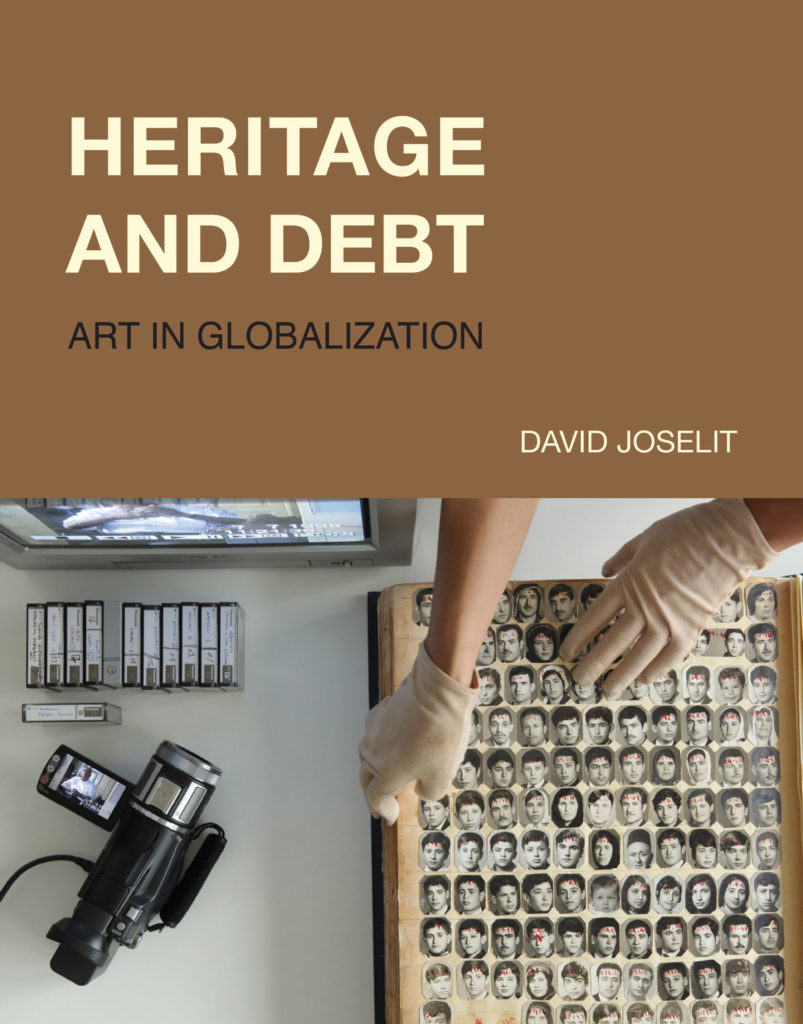
Virtual Public Lecture: David Joselit, “Heritage and Debt: Art in Globalization”
The GSD is pleased to present a series of talks and webinars broadcast to our audiences via Zoom.
*This lecture will be ONLINE ONLY. For security reasons, virtual attendees must register. Scroll down to find complete instructions for how to register.
Event Description
Globalization has generated a new model of regional museums of modern and contemporary art whose purpose, Joselit argues, is to develop an alternative to the authority of the so-called Encyclopedic Museums of former imperial capitals in the West, such as London, Paris, and Vienna—a type that can no longer be reproduced. In this lecture, drawn from his recently published book of the same title, he considers the National Gallery Singapore (Studio Milou), The Zeitz Museum of Contemporary Art Africa (Heatherwick Studio), M+ Hong Kong (Herzog & de Meuron), and the Louvre Abu Dhabi (Jean Nouvel) as exemplars of a new model in which the universality associated with European encyclopedic museums are replaced by claims of regional representation whose expansive territorial ambitions are grounded by archaeological situatedness in a local site or culture, often literally through the repurposing and reanimation of existing buildings.
Speaker
David Joselit began his career as a curator at The ICA in Boston from 1983-1989. After receiving his PhD from Harvard in 1995, he has taught at the University of California, Irvine, and Yale University where he was Department Chair from 2006-09, and most recently at the CUNY Graduate Center. Joselit is author of Infinite Regress: Marcel Duchamp 1910-1941 (MIT, 1998), American Art Since 1945 (Thames and Hudson, 2003), Feedback: Television Against Democracy (MIT, 2007), and After Art (Princeton University Press, 2012). He co-organized the exhibition, “Painting 2.0: Expression in the Information Age,” which opened at the Brandhorst Museum in Munich in 2015. Joselit is an editor of the journal OCTOBER and writes regularly on contemporary art and culture. His most recent book is Heritage and Debt: Art in Globalization (forthcoming as an October Book from MIT Press in Spring 2020).
How to Join
1. Have a Zoom account. Members of the Harvard community who have not yet set up their Zoom account can follow the instructions here . Guests without a Zoom account can set one up for free at zoom.us .
2. Register to attend the lecture here. Once you have registered, you will be provided with a link to join the lecture via Zoom. This link will also be emailed to you. Please make sure the email you use to register is the same email connected to your Zoom account.
The event will also be live streamed to the GSD’s YouTube page . Only viewers who are attending the lecture via Zoom will be able to submit questions for the Q+A.
Virtual Screening and Conversation: Heinz Emigholz and Anselm Franke
*This event, including the screening, will be ONLINE ONLY. For security reasons, virtual attendees must register. Scroll down to find complete instructions for how to register.
Event Description
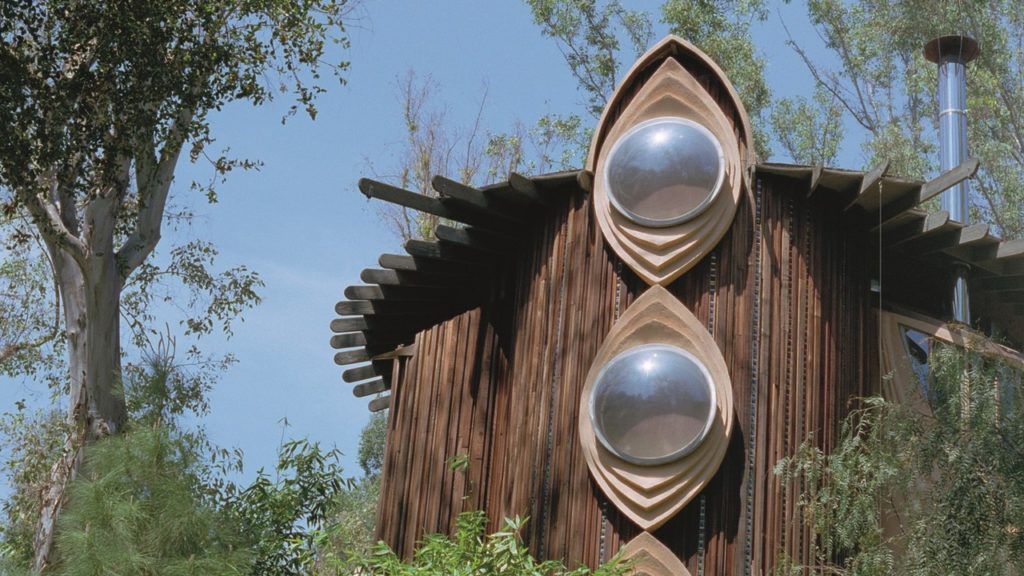
The GSD is pleased to present a live, online screening of Heinz Emigholz’s Goff in the Desert, a sweeping, cinematic meditation on 62 buildings designed by the American architect Bruce Goff. Apprenticed at age 12 but never formally educated as an architect, Goff’s work followed its own trajectory, apart from most 20th-century architecture. Goff in the Desert is one installment of a series of films Emigholz has made under the title Architecture as Autobiography. The screening will be preceded by a conversation between Emigholz and curator Anselm Franke.
Speakers
Heinz Emigholz was born in Achim, near Bremen, Germany in 1948. He has worked as a filmmaker, artist, writer, cinematographer and producer in Germany and the USA since 1973. In 1974, he began an encyclopedic series of drawings, “Die Basis des Make-Up”, which was the subject of a major exhibition in the Hamburger Bahnhof gallery in Berlin in 2007/08. In 1984, he embarked on the “Photography and Beyond” film series. From 1993 to 2013, he was professor of experimental filmmaking at the Berlin University of the Arts where he also co-founded the Institute for Time-Based Media and the art and media course. He has been a member of the Academy of Arts in Berlin since 2013.
Anselm Franke is an author and exhibition maker. He has been Head of Visual Arts and Film at Haus der Kulturen der Welt, Berlin (HKW) since 2013. There, he initiated and curated the exhibitions Neolithic Childhood. Art in a False Present, c. 1930 (2018, with Tom Holert), Parapolitics: Cultural Freedom and the Cold War(2017/18, with Nida Ghouse, Paz Guevara, Antonia Majaca), 2 or 3 Tigers (2017, with Hyunjin Kim), Nervous Systems (2016, with Tactical Technology Collective, Stephanie Hankey, Marek Tuszynski), Ape Culture (2015, with Hila Peleg), Forensis (2014, with Forensic Architecture), The Whole Earth (with Diedrich Diederichsen) and After Year Zero (with Annett Busch, both 2013). He previously worked as a curator at KW Berlin and as director of the Extra City Kunsthal in Antwerp. In 2005 he and Stefanie Schulte Strathaus founded the Forum Expanded for the Berlin International Film Festival of which he has been co-curator since. He was the chief curator of the Taipei Biennial in 2012 and of the Shanghai Biennale in 2014, and curator of Manifesta 7 in 2008. His exhibition project Animism was shown from 2009 until 2014 in collaboration with various partners in Antwerp, Berne, Vienna, Berlin, New York, Shenzhen, Seoul and Beirut. Franke received his doctorate from Goldsmiths College, London.
How to Join
- Have a Zoom account. Members of the Harvard community who have not yet set up their Zoom account can follow the instructions here . Guests without a Zoom account can set one up for free at zoom.us .
- Register to attend the lecture here . Once you have registered, you will be provided with a link to join the lecture via Zoom. This link will also be emailed to you. Please make sure the email you use to register is the same email connected to your Zoom account.
Virtual Public Lecture: David Moreno Mateos, “How ecosystems recover from ancient human impacts”
The GSD is pleased to present a series of talks and webinars broadcast to our audiences via Zoom.
*This lecture will be ONLINE ONLY. For security reasons, virtual attendees must register. Scroll down to find complete instructions for how to register.
Event Description
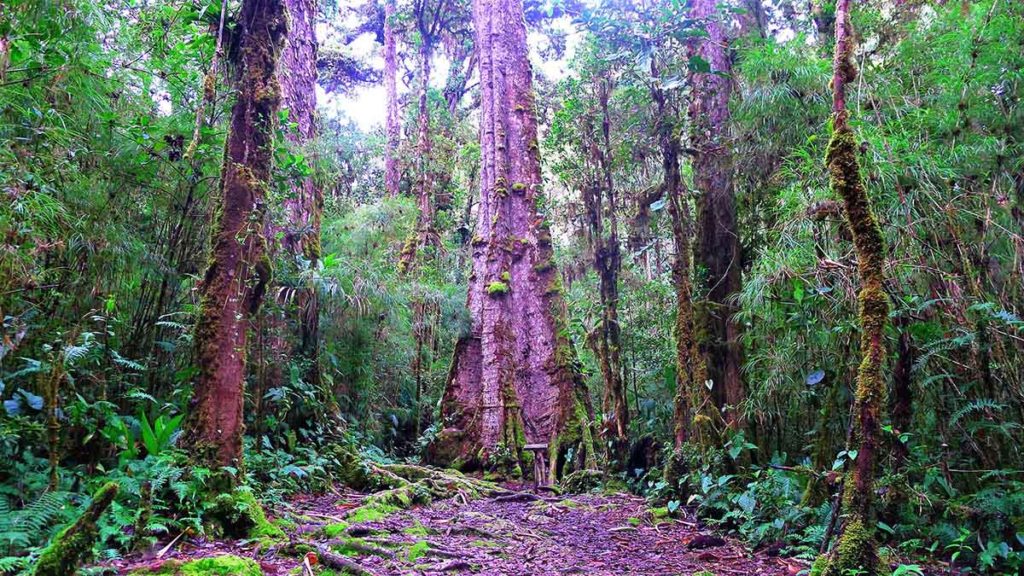
Major efforts are being implemented worldwide to restore ecosystems. However, the outcomes of restoration are uncertain. This uncertainty may be rooted in our lack of understanding on the reassembly of ecosystem complexity. Understanding how organisms rebuild their interactions and how functions derived form those interactions emerge is key to both evaluate and design future restoration. This is particularly relevant at the timescale at which ecosystem recovery operates, which may range from centuries to millennia. In this presentation, we will explore current patterns of ecosystem recovery of simple and complex attributes, why restored and undisturbed ecosystems are different, and particularly, why recovery is a long term process. Finally, we will hypothesize potential actions we can use to accelerate the recovery process that will bring more resilient and resistant ecosystems back.
Speaker
David Moreno Mateos got his PhD from the Spanish National Research Council (CSIC) and the University of Alcala, both in Madrid with honors (equivalent to summa cum laude) in 2008. After this, he spent three years at the University of California at Berkeley, two at Stanford University and one at the Centre National de la Recherché Scientific (CNRS) in Montpellier, France. During the last five years, he was at the Basque Centre for Climate Change (BC3) near Bilbao, Spain, as an Ikerbasque and Ramon y Cajal research fellow. David have authored >40 papers in scientific journals and books, including papers in Nature Communications, Nature, PLOS Biology, or Nature Ecology and Evolution. He is Associate Editor in Journal of Applied Ecology (British Ecological Society) and Ecological Restoration (Society for Ecological Restoration).
How to Join
1. Have a Zoom account. Members of the Harvard community who have not yet set up their Zoom account can follow the instructions here . Guests without a Zoom account can set one up for free at zoom.us .
2. Register to attend the lecture here . Once you have registered, you will be provided with a link to join the lecture via Zoom. This link will also be emailed to you. Please make sure the email you use to register is the same email connected to your Zoom account.
The event will also be live streamed to the GSD’s YouTube page . Only viewers who are attending the lecture via Zoom will be able to submit questions for the Q+A.
Virtual Public Lecture: Daniel D’Oca, “Who What Where”
The GSD is pleased to present a series of talks and webinars broadcast to our audiences via Zoom.
*This lecture will be ONLINE ONLY. For security reasons, virtual attendees must register. Scroll down to find complete instructions for how to register.
Event Description
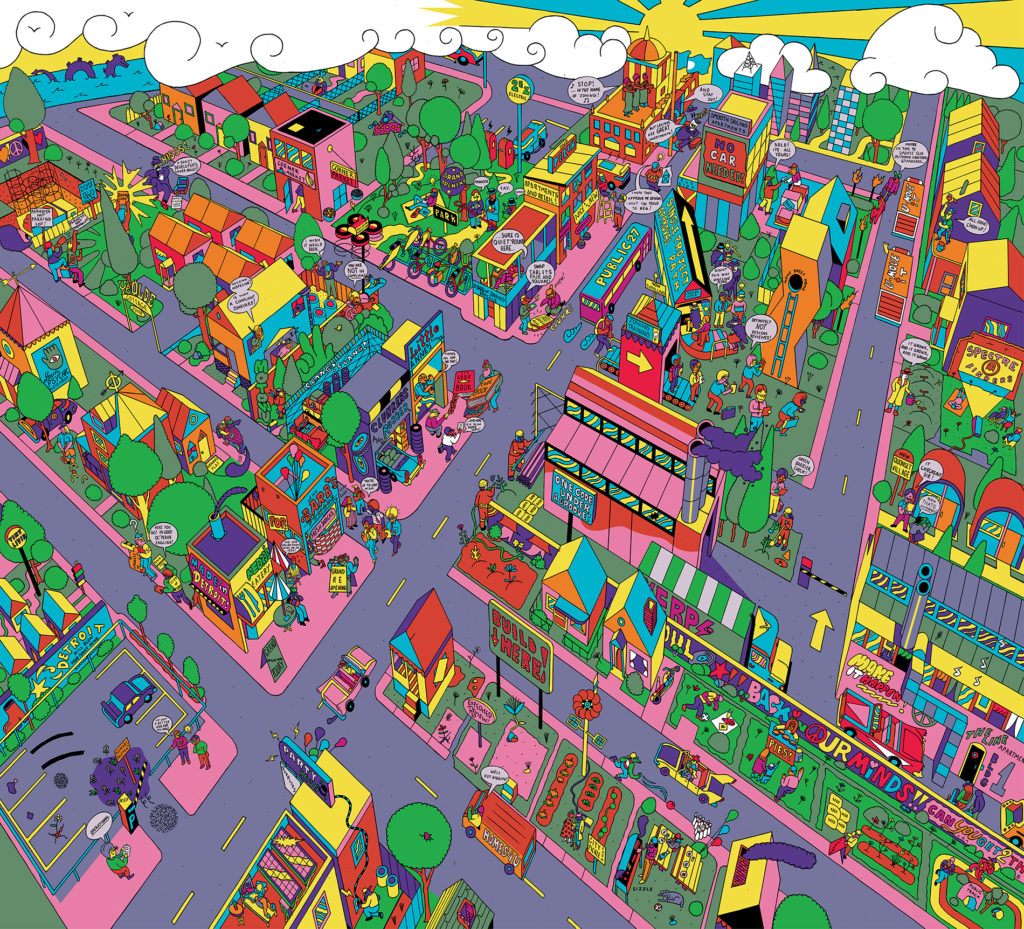
Designers and planners do community engagement for all kinds of reasons. For some, it’s a scope requirement that results in empty evening meetings and obligatory “dotmocracy” activities. At worst, it’s an act of coercion: an opportunity to sell a predetermined, independently-generated idea to an unwilling public whose support is needed for approval. Increasingly, community engagement events are PR platforms—photo ops staged to showcase a designer’s willingness to work with “the community.” Rarely is community engagement what it should be, namely, an open-ended, inclusive, and meaningful (and fun!) dialogue that generates something unique and site-specific. In this talk, Dan will talk about some of Interboro’s recent and not-so-recent adventures in community co-design, in which they have deployed engagement, close observation, and learning tools to create regional, citywide, and neighborhood plans, parks and open spaces, public art installations, and other co-authored urban environments.
Speaker
Daniel D’Oca is an urban planner. He is Principal and co-founder of the New York City-based architecture, planning, and research firm Interboro Partners, and Design Critic in Urban Planning and Design at the Harvard Graduate School of Design. At Harvard, Daniel has taught interdisciplinary US-based studios about age-friendly design and planning, suburban poverty and segregation, and other contemporary problems faced by the built environment in the United States. Prior to teaching at the GSD Daniel was Assistant Professor at the Maryland Institute College of Art, where he produced an award-winning public exhibition about racial segregation in Baltimore. With Interboro, Daniel has won many awards for Interboro’s innovative projects, including the MoMA PS1 Young Architects Program, the Architectural League’s Emerging Voices and Young Architects Awards, and the New Practices Award from the AIA New York Chapter. Most recently, Interboro was one of ten firms selected by the U.S. department of Housing and Urban Development to work on its pioneering “Rebuild by Design” initiative. Interboro’s book The Arsenal of Exclusion & Inclusion is an encyclopedia about accessibility and the built environment that will be published by Actar in 2015.
How to Join
1. Have a Zoom account. Members of the Harvard community who have not yet set up their Zoom account can follow the instructions here . Guests without a Zoom account can set one up for free at zoom.us .
2. Register to attend the lecture here . Once you have registered, you will be provided with a link to join the lecture via Zoom. This link will also be emailed to you.
The event will also be live streamed to the GSD’s YouTube page . Only viewers who are attending the lecture via Zoom will be able to submit questions for the Q+A.
Virtual Public Lecture: Oana Stănescu, “Breather”
The GSD is pleased to present a series of talks and webinars broadcast to our audiences via Zoom.
*This lecture will be ONLINE ONLY. For security reasons, virtual attendees must register. Scroll down to find complete instructions for how to register.
Event Description
The design process seen through the lens of a range of projects in progress.
Speaker
Oana Stănescu runs her eponymous design studio from New York.
Her projects include the collaborative +POOL, a floating, water filtering swimming pool, as well as a wide range of collaborations with Nike, Virgil Abloh, The Office of PlayLab, 2×4, Arup, New Museum, the Storefront for Art and Architecture, Need Supply, Fool’s Gold, and many more.
Oana’s work has been celebrated in publications such as the New York Times, Forbes, Madame Figaro, Architect Magazine, New York Magazine, Mark, Time magazine or Cultured, to name a few. Prior to establishing her own studio she was a co founder of the NY based practice Family.
Oana has previously taught at MIT in Cambridge, GSAPP Columbia University, Cooper Union and the Architectural Association in London, in addition to lecturing in places like Princeton University, Sciarc, The University of Memphis, University of South Florida, University of Arizona, Women in Design Denver, Neocon and AIA Chicago or Design Miami in collaboration with the UN.
Her current projects are in New York, Romania, South East Asia and Canada.
How to Join
1. Have a Zoom account. Members of the Harvard community who have not yet set up their Zoom account can follow the instructions here . Guests without a Zoom account can set one up for free at zoom.us .
2. Register to attend the lecture here . Once you have registered, you will be provided with a link to join the lecture via Zoom. This link will also be emailed to you. Please make sure the email you use to register is the same email connected to your Zoom account.
The event will also be live streamed to the GSD’s YouTube page . Only viewers who are attending the lecture via Zoom will be able to submit questions for the Q+A.
Virtual Public Lecture: French 2D (Anda and Jenny French), “Together Again”
The GSD is pleased to present a series of talks and webinars broadcast to our audiences via Zoom.
*This lecture will be ONLINE ONLY. For security reasons, virtual attendees must register. Scroll down to find complete instructions for how to register.
Event Description
In a time of physical separation, how can we reflect on a design practice whose focus is collectivity? With an eye to the not too distant future, French 2D will discuss ways that interventions within our environment can bring us together, again.
French 2D will present their recent experiments in architecture, participatory design, and objects. From cohousing and compact living, to tableware and dinner parties, they will share new models to encourage thinking and seeing collectively.
Speakers
French 2D is Boston-based architecture studio founded by Jenny French (MArch Harvard GSD, BA Dartmouth College) and Anda French (MArch Princeton, BA Barnard College). Their intimate knowledge of Boston, where the sisters were born and raised, allows the close practice to be both deeply engaged and work critically with local issues of housing, public space, history and identity. French 2D works on housing and mixed-use projects with a focus on strange housing types that combine familiar ideas of home with radical organizations and typologies, found in their cohousing and micro-housing project s. The practice also works on civic installations and exhibitions that call upon the domestic to bring people together for familiar rituals in unfamiliar spaces, found in serial dinner-parties, fuzzy bartering environment s, and out-scaled dresses.
Jenny and Anda’s interest in hybrid models that exist between practice and academia has been the catalyst for their practice-based research and advocacy. Jenny is an Assistant Professor in Practice at the Harvard GSD and Anda serves on the Board of Directors for the Boston Society of Architects, where the pair organized the recent Now Practice Now series, exploring emerging modes of practice.
French 2D received a 2020 P/A Award from Architect Magazine, and was named as an Architectural Record Magazine Design Vanguard winner in 2019 . The firm has been featured in Domus, Metropolis, The Architect’s Newspaper, and as Architect Magazine’s Next Progressives . French 2D was a 2013 MoMA PS1 Young Architects Program finalist and exhibited at the US Pavilion of the 13th Venice Architecture Biennale.
How to Join
1. Have a Zoom account. Members of the Harvard community who have not yet set up their Zoom account can follow the instructions here . Guests without a Zoom account can set one up for free at zoom.us .
2. Register to attend the lecture here . Once you have registered, you will be provided with a link to join the lecture via Zoom. This link will also be emailed to you. Please make sure the email you use to register is the same email connected to your Zoom account.
The event will also be live streamed to the GSD’s YouTube page . Only viewers who are attending the lecture via Zoom will be able to submit questions for the Q+A.
Ann Forsyth, “What is a Healthy Place? Cities, Neighborhoods, and Homes”
Please join us for the Spring 2020 Open House Lecture delivered by Ann Forsyth, Ruth and Frank Stanton Professor of Urban Planning and Co-Director of the Master in Urban Planning Program at the Harvard Graduate School of Design.
*This lecture will be ONLINE ONLY. Virtual attendees must have a Zoom account. Members of the Harvard community who have not yet set up their Zoom account can follow the instructions here . Guests without a Zoom account can set one up for free at zoom.us .
The event will also be live streamed to the GSD’s Facebook page. Only viewers who are “attending” the lecture via Zoom will be able to submit questions for the Q+A.
Click this link to access the Zoom lecture: https://harvard.zoom.us/j/562356739
Open House Lecture
The current pandemic has literally brought home the question of how to make places healthy. With closed borders, shuttered businesses, and social distancing, urban life seems at risk. This talk addresses two key issues: How healthy are higher density cities and regions? What are some models for creating healthier places in the future? For some decades, low density or sprawl has been targeted by many as unhealthy and now the pendulum is swinging in the other direction. Forsyth argue that many kinds of environments can be healthy. Planning and design that attends to places and the people using those places can be an important part of the solution.
About the Speaker
Trained in planning and architecture, Ann Forsyth works mainly on the social aspects of physical planning and urban development. The big issue behind her research and practice is how to make more sustainable and healthy cities. Forsyth’s current research focuses on developing healthier places in a suburbanizing world, with overlapping emphases on aging and planned communities.
She has contributed to three main areas of research and practice. First is documenting and assessing innovative and high-density planning and design in suburban/metropolitan areas. This includes research examining new towns as a whole and specific challenging issues: achieving walkability, planning higher density and affordable housing, supporting social diversity, and balancing social and ecological values. Second is work evaluating and proposing how the physical environment can improve health. She has explored physical activity and food environments, processes of densification, and the needs of different age groups, as well as translating research on health and environments into tools for practice. Forsyth has been active in developing and evaluating new instruments and measures using GIS, fieldwork, surveys, impact assessments, public participation processes, and evidence-based practice guidelines. Finally, she has been active examining how to connect research and practice. This includes understanding the different forms of research and investigation, and how research can inform the process and substance of planning.
Her education includes a B.Sc. in architecture from the University of Sydney, M.A. in urban planning from UCLA, and Ph.D. in city and regional planning from Cornell.
At Harvard, Forsyth is affiliated with the Joint Center for Housing Studies , Harvard Center for Population and Development Studies , Harvard University Center for the Environment , Weatherhead Center for International Affairs , the Harvard-China Project and the Harvard Global Health Institute .
She is a co-leader of the Healthy Places Design Lab and the New Towns Initiative .
Virtual Public Lecture: Laleh Khalili, “Tankers, Tycoons, and the Making of Modern Regimes of Law, Labour, and Finance”
The GSD is pleased to present a series of talks and webinars broadcast to our audiences via Zoom.
*This lecture will be ONLINE ONLY. For security reasons, virtual attendees must register. Scroll down to find complete instructions for how to register.
Event Description
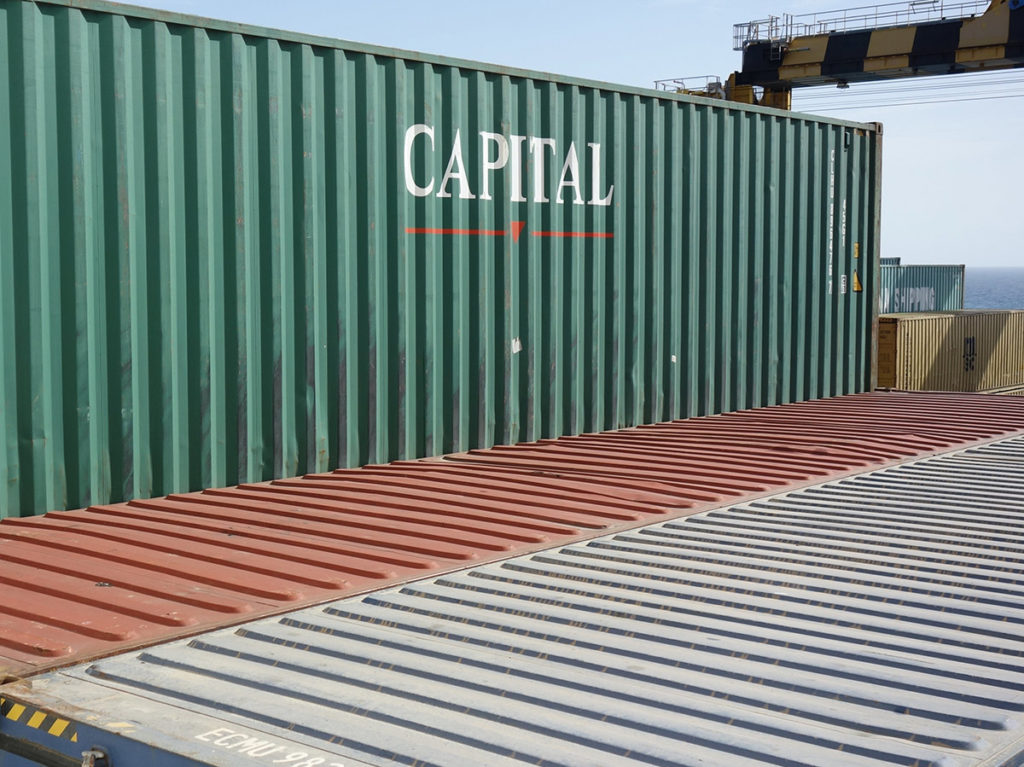
Excellent recent research on the politics of containerisation and the logic of logistics (Levinson; Cowen; Sekula) has shown how these new modalities of trade have transformed not only the form and extent of circulation of goods but also the processes of production. The argument about logistical forms of capital accumulation trace its begging to the 1950s when containers were invented, and especially to the period after the 1960s, when their usage was normalised during the Vietnam war. However, many of the practices we now associate with containerisation – foremost among them the automation of processes of maritime circulation, and the transformation of urban landscapes around the ports – go back at least two decades before the 1950s, to the legal, engineering, and financial innovations around petroleum tankers. By focusing on the tanker terminals of the Arabian Peninsula since the 1930s and the subsequent burgeoning of tanker-ships plying the trade between the Peninsula and the rest of the world, I will illuminate the radical changes in political economy, labour, law and production the specificities of tanker trade has wrought. This includes early instances of automated workplaces; terminals far enough from port-city centres to isolate them from public scrutiny; and disciplining of workers aboard tanker-ships. Further, the shift in ownership structures and financing of tanker trades over the last one-hundred years either foreshadows or dramatically illuminates the transformations in financial capital itself. Finally, much of lex petrolea, the legal and arbitral corpus that sets the parameter of extraction and circulation of oil, itself provides the ground on which late capitalist legal property regimes are founded.
Speaker
Laleh Khalili is a Professor of International Politics at Queen Mary University of London, and the author of Heroes and Martyrs of Palestine (Cambridge 2007) and Time in the Shadows: Confinement in Counterinsurgencies(Stanford 2013). Her Sinews of War and Trade, on the politics of maritime infrastructures, is published by Verso.
How to Join
1. Have a Zoom account. Members of the Harvard community who have not yet set up their Zoom account can follow the instructions here . Guests without a Zoom account can set one up for free at zoom.us .
2. Register to attend the lecture here . Once you have registered, you will be provided with a link to join the lecture via Zoom. This link will also be emailed to you. Please make sure the email you use to register is the same email connected to your Zoom account.
The event will also be live streamed to the GSD’s YouTube page . Only viewers who are attending the lecture via Zoom will be able to submit questions for the Q+A.