Andres Sevtsuk

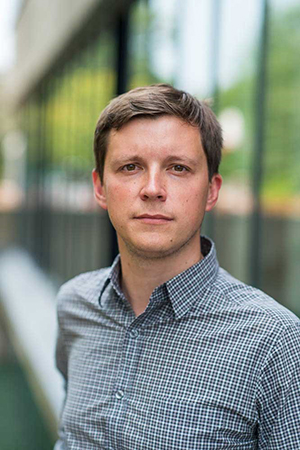
Andres Sevtsuk is an Associate Professor of Urban Planning at the Harvard Graduate School of Design, with deep technical expertise in spatial analytics and urban technology. His research interests include urban design and spatial analysis, urban mobility, real estate economics, transit and pedestrian oriented development and spatial adaptability. Andres holds a PhD from the Department of Urban Studies and Planning at MIT, where he also worked with William J. Mitchell as a researcher in the Smart Cities group at the MIT Media Laboratory. He has collaborated with a number of city governments, international organizations, planning practices and developers on urban designs, plans and policies in both developed and rapidly developing urban environments, most recently including those in Indonesia and Singapore. He is the author of the Urban Network Analysis toolbox, which is used by researchers and practitioners around the world to study coordinated land use and transportation development along networks. He has led various international research projects; exhibited his research at TEDx, the World Cities Summit and the Venice Biennale; and received the President’s Design Award in Singapore, International Buckminster Fuller Prize and Ron Brown/Fulbright Fellowship. He was previously an Assistant Professor of Architecture and Planning at the Singapore University of technology and Design (SUTD), and a lecturer at MIT.

Mack Scogin

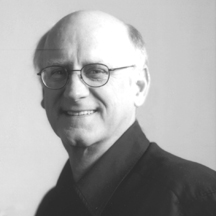
Mack Scogin, Kajima Professor in Practice of Architecture, Emeritus at the Harvard University Graduate School of Design, is a principal in the firm of Mack Scogin Merrill Elam Architects, in Atlanta, Georgia. At GSD, he was the chairman of the Department of Architecture from 1990 to 1995. He offered instruction in the core studio sequence and in advanced studio options. Recent studios have included: Everybody loves Frank, Field Trip, “My Way”—A Trip to Gee’s Bend, Symmetrical Performance, “Empathy”, 13141516171819, Beige Neon, and Doing and Dancing.

With Merrill Elam, he received the 1995 Academy Award in Architecture from the American Academy of Arts and Letters, a 1996 Chrysler Award for Innovation in Design, the 2006 Boston Society of Architects Harleston Parker Medal and a 2008 Honorary Fellowship in the Royal Institute of British Architects (RIBA). Projects by Mack Scogin Merrill Elam Architects have received over fifty design awards including six national American Institute of Architects Awards of Excellence. Their work has been widely featured in popular and academic publications on architecture including the 1992 Rizzoli publication, Scogin Elam and Bray: Critical Architecture / Architectural Criticism, the 1999 University of Michigan publication Mack & Merrill and the 2005 Princeton Architectural Press publication Mack Scogin Merrill Elam: Knowlton Hall. Their work has been exhibited at many museums and galleries including: Museum of Modern Art; Walker Art Center; Wexner Center for the Arts; Museum of Contemporary Art in Barcelona, Spain; Deutches Architektur Museum in Frankfurt, Germany; and the Global Architecture Gallery in Tokyo, Japan.

Notable projects include the new United States Federal Courthouse in Austin, Texas; New Student Housing at Syracuse University; the Yale University Health Services Center; the Gates Center for Computer Science at Carnegie Mellon University; the Lulu Chow Wang Campus Center and Davis Garage for Wellesley College; the Knowlton School of Architecture for The Ohio State University; the Jean Gray Hargrove Music Library for the University of California at Berkeley; the Herman Miller Cherokee Operations Facility in Canton, Georgia; the Zhongkai Sheshan Villas in Shanghai, China and a variety of projects for Tishman Speyer Properties in New York City; Washington DC; Atlanta, Georgia and Hyderabad, India.

Robert Pietrusko

Robert Gerard Pietrusko is an Associate Professor in the department of Landscape Architecture, where his teaching and research focus on geographic representation, simulation, narrative cartography, and the history of spatial data sets.

His design work is part of the permanent collection of the Fondation Cartier pour l’art contemporain in Paris and has been exhibited in over ten countries at venues such the Museum of Modern Art (MoMA), ZKM Center for Art & Media, and the Venice Architecture Biennale, among others.

Prior to joining the junior faculty of the GSD, Pietrusko worked as a designer with Diller Scofidio + Renfro in New York, and held research positions at Parsons Institute for Information Mapping at the New School and at Columbia University’s Spatial Information Design Lab.

Pietrusko holds a Bachelor of Music in Music Synthesis (with honors) from the Berklee College of Music; a Master of Science in Electrical Engineering from Villanova University; and a Master of Architecture (with distinction) from the Graduate School of Design at Harvard University.


Nicholas Nelson

Nick has over 18 years of experience as a fluvial geomorphologist and river restoration practitioner. Nick is the northeast regional director for Inter-Fluve, a river and wetland restoration firm working on projects throughout the country and internationally. His work with Inter-Fluve has focused on dam removal and channel restoration/rehabilitation planning and design, urban river restoration and renewal, the restoration of retired cranberry bogs to native stream and wetland ecosystems, geomorphic and habitat assessments, construction observation, and GIS analyses. At the GSD since 2016, Nick attempts to connect hydrologic and ecologic concepts with the typical landscape architecture background through actual designed and constructed examples and field excursions. Nick was an instructor at the CAUP International Design Summer School held at the College of Architecture and Urban Planning, Tongji University, in 2017. Nick taught Applications of GIS in River Restoration at the University of Minnesota biennially between 2007 and 2014 and Environmental Planning at Northeastern University annually since 2014.  He taught fluvial geomorphology to MA conservation commissioners at the annual conferences since 2012 and is currently on a task force to aid in developing geomorphic and stability assessment protocols for MA rivers.

Dana McKinney White

Dana McKinney White is a licensed architect and urban designer, who is an outspoken advocate for social justice and equity through design. She contextualizes people and their broader communities throughout her work. Her academic and professional work integrates wellness, policy, and economics into innovative design solutions to benefit even the most vulnerable populations including system-impacted communities, persons experiencing homelessness, and aging populations.

Dana co-founded enFOLD Collective in 2021 with Megan Echols, a fellow GSD alumna. enFOLD, an interdisciplinary architecture, planning, and design practice positions community voices at the center of its projects. The collective is committed to producing work rooted in site specificity, community needs, and the histories of the people who made that place. Dana also established Studio KINN where she consults on considerations of social justice, equity, abolition, and narratives of place.

Dana graduated from Princeton University summa cum laude with a A.B. in Architecture and Certificates in Urban Studies and Spanish and completed her Master in Architecture and Master Urban Planning, both with Distinction at the Harvard Graduate School of Design. During Dana’s time at the GSD, she co-established the inaugural Black in Design Conference, Map the Gap, and the African American Design Nexus. She subsequently worked at Gehry Partners where she focused on the LA River Master Plan, Southeast Los Angeles Cultural Center, the Rio Hondo Confluence Area Project, and other river-related projects. During her time at Gehry Partners, Dana assisted in Frank Gehry’s Yale School of Architecture studio, “The Future of Prison” and served as an advocate and researcher in Impact Justice’s review of the Finish and Norwegian criminal justice system.

Prior to joining the faculty of the Harvard University Graduate School of Design, Dana served as a development manager at Adre, a purpose-driven real estate development company located in Portland, Oregon that strives to uplift the region’s Black, Indigenous, and people of color (BIPOC) through spatial equity. During her time at Adre, she helped to secure more than $8.2 million in grants to develop affordable office space at the Building United Futures Complex and the Williams & Russell project. Dana also served as a lecturer at the University of Maryland School of Architecture in their undergraduate architecture degree program.

In 2018, Dana was awarded the Norman Foster Foundation Traveling Fellowship for the “On Cities” Workshop located in Madrid, Spain, where she participated in an international design charette and symposium to develop novel urban design strategies to better integrate emerging technologies. Dana previously served on the USC Architecture Guild Board, the 2021 Monterey Design Conference Planning Committee, and Materials & Applications Programming Board.

Pierre Bélanger

Pierre Bélanger is Associate Professor of Landscape Architecture at Harvard University’s Graduate School of Design. In the Department of Landscape Architecture, Bélanger teaches and coordinates graduate courses at the intersection of ecology, infrastructure, media and urbanism in the interrelated fields of design, communications, planning and engineering. With a multimedia approach and cross-scalar approach to design in both research and practice, his core interests lie at the convergence of the study of territory, ecology, and power.

In response to the inertia of urban planning and the overexertion of civil engineering in public works today, Bélanger’s contribution to the field of “landscape infrastructure” has been shared and developed in collaboration with governments, professionals and academics worldwide. Vis-à-vis the complexities, magnitudes and indeterminacies of urban change, Bélanger’s core commitment lies in the agency of landscape architecture and the field of landscape to redefine the morphology of urban infrastructure and future of urban land in design, research, pedagogy and practice.

In addition to the recent publication of the 35th edition of the Pamphlet Architecture Series, GOING LIVE: From Models to Systems (Princeton Architectural Press, 2015), Bélanger has published two core books on infrastructure and urbanism including, LANDSCAPE AS INFRASTRUCTURE: A Base Primer (Taylor & Francis, 2016) and ECOLOGIES OF POWER: Countermapping the Military Geographies & Logistical Landscapes of the U.S. Department of Defense (MIT Press, 2016) co-authored with Alexander Arroyo. Dr. Bélanger’s work has been recognized by professional associations and scholars worldwide with publications in Journal of Landscape Architecture, Ecological Urbanism, New Geographies, Landscape Journal, Topos, The Landscape Urbanism Reader, Geoinformatics, Journal of Tunneling and Underground Space Technology, Trash, Food, and Canadian Architect. Bélanger’s recent editorial work includes Harvard Design Magazine Issue No.39 “Wet Matter” (Fall/Winter 2014) in collaboration with Jennifer Sigler, and recent publications include “Altitudes of Urbanization” (2016), “Out of Time” (2016), “Is Landscape Infrastructure” (2015), “The Alvsjø Flatbed” (2015), “Between the Tides of Apartheid” (2014), “Ecology 5.0” (2014), “Landscape Infrastructure: Urbanism Beyond Engineering” (2012),  “The Agronomic Landscape” (2011), “Regionalization” (2010), “Redefining Infrastructure” (2010), “Power Perestroika” (2010), “Landscape as Infrastructure” (2009), “Landscapes of Disassembly” (2007), “Synthetic Surfaces” (2007), “Foodshed: The Cosmopolitan Infrastructure of the Ontario Food Terminal” (2007) and “Airspace: The Economy and Ecology of Landfilling in Michigan” (2006).

Bélanger has received several international prizes in design and planning competitions and he is only the Landscape Architect to have received the Professional Prix de Rome in Architecture and Curator’s Award for the Venice Architecture Biennale awarded by the Canada Council for the Arts, as well as the first landscape architect to author the Pamphlet Architecture Series since its founding in 1978.

Appointed National Curator of the Canadian Pavilion by the Canada Council for the Arts for the 2016 Venice Architecture Biennale, he is the first landscape architect ever to be selected for the venue of the Biennale since its creation in 1980. Titled, EXTRACTION, the project profiles Canada’s position as the preeminent extraction nation on the planet and its rise as global resource empire over the past 800 years since the creation of the Magna Carta in the Year 1215. Looking at fundamental issues of land, territory and power, the project examines the scales, sources, and systems of extraction that underlie the mineral media of contemporary urban life. The project has been profiled internationally in The Walrus, Border Crossings, The New York Observer, ArchDaily, and CBC Radio and will result in a book to be published by MIT Press, EXTRACTION EMPIRE, in Spring 2018.

As former Project Manager for Brinkman & Associates of Earth Partners LLC—the world’s largest reforestation and bioengineering contractor, Bélanger completed doctoral studies on infrastructural environments at the Life Sciences University of Wageningen (WUR, The Netherlands) with PhD cum laude, the first graduate from the School of Landscape Architecture & Environmental Planning to ever receive this distinction in Wageningen’s history since 1918. Prior to this, Bélanger completed graduate studies for the Master in Landscape Architecture at Harvard University’s Graduate School of Design where he received the Janet Darling Webel and Norman T. Newton Prizes in design. Originally trained at the University of Toronto under the tutelage of Dr. Detlef Mertins, George Baird and Robert Wright, Dr. Bélanger is professionally registered as a Landscape Architect in Canada and the United States, and as Urban Planner in the Netherlands.

Combining knowledge from different fields and media, Bélanger collaborates with government agencies, resource industries, civil authorities, professional organizations, universities, corporations and a team of interdisciplinary practitioners in the design and development of territorial strategies. Through the inception of OPSYS / Landscape Infrastructure Lab in 2006 (a federally incorporated, non-profit, design-research organization in Canada and the United States), Bélanger initiates and coordinates a portfolio of projects funded by public/private partnerships that include The World Bank Group, the Government of Haiti Civil Protection Service, the U.S. Department of Defense, Transport Canada, New York State, Charles River Conservancy, Foreign Affairs & International Trade Canada, the Social Sciences & Humanities Research Council, the Toronto Region Conservation Authority, Jardin International de Métis, the Greater Toronto Airports Authority, Waste Management Inc., the City of Toronto, and the U.S. Army Corps of Engineers.