Daniel Tish

Daniel Tish is a designer and researcher whose work lies at the intersection of digital fabrication, material science, sustainability, and computation, investigating new design opportunities through the lens of bespoke materiality. Daniel’s research develops a new generation of carbon-negative biocomposites derived from microorganisms and methods for their robotic fabrication. He configures circular economies and technological solutions to address the high carbon footprint of architecture and the built environment. The research establishes multi-disciplinary collaborations with domain experts in material science and biology and operates between design and science to deliver this critical new material technology. Meanwhile, the work also challenges the ubiquity of industrialized materials in digital fabrication spaces. It creates fabrication methods to cater to the unpredictable nature of many biomaterials, dovetailing with the current research focus on cyber-physical systems in the computational design and fabrication community.

Daniel is a Lecturer in Architecture at the GSD and a Postdoctoral Fellow jointly appointed between the Materials Processes and Systems (MaP+S) group in the GSD and the Lewis Lab in the School of Engineering and Applied Sciences. The Salata Institute, the Center for Green Buildings and Cities, and the Joint Center for Housing Studies have generously supported his research at Harvard. His work can be found in the publications of recent ACADIA, Fabricate, Rob|Arch, and IASS conferences, as well as in the book Towards a Robotic Architecture and the journals Construction Robotics and TAD. Daniel was a 2021 Fellow at the Design Akademie Saaleck (dieDAS), and his work has been exhibited at Design Miami/ Basel and other international venues.

Daniel was previously a Lecturer at the University of Michigan Taubman College of Architecture and Urban Planning, where he taught digital fabrication. Additionally, he led an intensive summer masterclass at the University of Technology Sydney. Daniel was recently a Research Associate at Autodesk, where he developed computer-vision technologies for construction robotics. Daniel holds a Doctor of Design from the GSD, a Master of Architecture with Distinction from the University of Michigan, and a Bachelor of Science in Architecture from Washington University in St. Louis with a self-guided special major in Sustainable Design.

Andrew Witt

Andrew Witt is an Associate Professor in Practice in Architecture at the Harvard Graduate School of Design, teaching and researching on the relationship of geometry and machines to perception, design, construction, and culture. Trained as both an architect and mathematician, he has a particular interest in a technically synthetic and logically rigorous approach to form.

Witt is also co-founder, with Tobias Nolte, of Certain Measures , a Boston/Berlin-based design and technology studio that combines imagination and evidence for systemic and scalable approaches to spatial problems. Their clients include large manufacturers, material fabricators, government agencies, infrastructure companies, investment funds, medical startups, and cultural institutions. The work of Certain Measures is in the permanent collection of the Centre Pompidou, and has been exhibited at the Pompidou (twice), the Barbican Centre, Futurium, and Haus der Kulturen der Welt, among others. Witt’s personal work has been featured at the Storefront for Art and Architecture. In 2017 Certain Measures were finalists for the Zumtobel Award in both the Young Professionals and Applied Innovation Categories.

Witt has a longstanding research interest in the disciplinary exchanges between design and science, particularly through the media and visualizations of mathematics. He is the author of Formulations: Architecture, Mathematics, Culture (MIT Press, 2021), an expansive examination of the visual, methodological, and epistemic connections between design, mathematics, and the broader sciences. He is also author of Light Harmonies: The Rhythmic Photographs of Heinrich Heidersberger (Hatje Cantz, 2014), the first English treatment of German proto-computational photographic hacker Heinrich Heidersberger’s light-drawing machines. For the Canadian Centre for Architecture he has authored Studies in the Design Laboratory , a trilogy of case studies that examine how and why architects who developed laboratories in the 1960s and 1970s and what these laboratories reveal about the cultural research practices of design.

He is a fellow of the Canadian Centre for Architecture and Macdowell, a Graham Foundation and Harvard Data Science Initiative grantee, a World Frontiers Forum Pioneer (2018) and Young Pioneer (2017), and a 2015 nominee for the Chernikov Prize. Witt has lectured widely, including at the Venice Biennale, Library of Congress, Yale, Princeton, MIT, The Bartlett, The Berlage, Stanford, UCLA, Berkeley, ETH, and EPFL, and his research has been published in venues such as AD, Log, Project, Detail, Harvard Design Magazine, e-Flux, Surface, Space, Linear Algebra and its Applications, and Linear and Multilinear Algebra, and Issues in Science and Technology. He has been awarded a number of patents, including for geometric rationalizations of complex geometry and large-scale collaborative software systems .

Witt was previously Director of Research at Gehry Technologies and a director at GT’s Paris, France office, where he solved complex geometric challenges for clients including Gehry Partners, Ateliers Jean Nouvel, UN Studio, and Coop Himmelb(l)au, and projects such as Fondation Louis Vuitton and Louvre Abu Dhabi. He also developed prototypes for new software design tools such as GTeam (now Trimble Connect, acquired by Trimble in 2014).

Witt received a Master in Architecture (with distinction, AIA medal, John E. Thayer Scholarship) and a Master in Design Studies (History and Theory, with distinction) from Harvard GSD. He has an Erdős number of 3.

Martin Bechthold

Martin Bechthold is the Kumagai Professor of Architectural Technology in the GSD’s Department of Architecture and currently serves as the GSD’s Academic Dean as well as the head of the Advanced Studies Programs. Bechthold was the founding Co-Director of the Master in Design Engineering Program and is Affiliate Faculty at the Paulson School of Engineering and Applied Sciences (SEAS) at Harvard. He teaches courses in design and research methods, material systems, and building structures. Recent courses include ‘Towards a New Science of Design?’, ‘Nano, Micro, Macro: BioFabrication’, ‘Faux: Design, Performance and Perception of Fake Materials’ as well as ‘Structural Design II’.
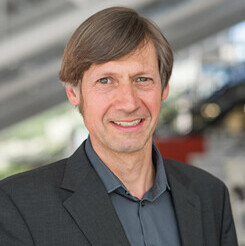
Bechthold received a Diplom-Ingenieur degree in architecture from the Rheinisch-Westfalische Technische Hochschule in Aachen, Germany, and a Doctor of Design Degree from the Graduate School of Design at Harvard University. He is a registered architect in Germany and has practiced in London, Paris, and Hamburg. During this period he was associated with firms such as Skidmore, Owings & Merrill, Santiago Calatrava and von Gerkan, Marg & Partner.

In 2010 Bechthold founded the GSD’s Design Robotics Group and, in 2014, merged it into the Material Processes and Systems (MaP+S) Group , a collaboration of faculty, post-doctoral fellows, research associates, and students that pursues sponsored and other research projects. MaP+S’s current research focuses on low carbon material systems, architectural ceramics, and on understanding the role materials play in our perception of and behavior in buildings. In 2018 Bechthold initiated the creation of the Laboratory for Design Technology as a collaborative platform that connects Harvard Faculty and researchers with forward looking thought leaders from industry.

Bechthold is co-author of â€˜Structures’ and â€˜Computer-Aided Design and Manufacturing’, as well as the author of â€˜Innovative Surface Structures’. His most recent book is â€˜Ceramic Material Systems’. Bechthold’s peer reviewed journal papers have been published in widely read journals including Nature Reviews, Advanced Functional Materials, and Energy and Buildings. He holds multiple patents on material innovations.