Avis Devine
Dr. Avis Devine holds a PhD in finance from the University of Cincinnati, an MBA from Duquesne University, and a BSc from Westminster College. She comes to the School from York University’s Schulich School of Business, where she was Associate Professor of Real Estate Finance and Sustainability (tenured). Prior to her academic career, she worked in commercial real estate finance, underwriting, and valuation. Her expertise sits at the intersection of real estate finance, sustainability, and organizational strategy; her research primarily investigates the financial and environmental performance of sustainable investment within the commercial real estate sector.
Devine’s work is broadly published in leading peer-reviewed economics, finance, and sustainable development journals, including Energy Economics, Journal of Business Ethics, Journal of Real Estate Finance and Economics, and Journal of Regional Science. Her scholarly contributions have been recognized with such awards as the Nick Tyrrell Research Prize in Real Estate Investment. Devine regularly collaborates on interdisciplinary projects with scholars and industry partners, contributing to a broader understanding of how sustainable investment and climate-related risks shape financial outcomes, portfolio strategy, and the built environment. She has received multiple research grants from academic and industry organizations and is currently engaged in projects examining the efficacy of green bond use of proceeds, the relationship between institutional ownership and carbon emissions in the energy sector, and office leasing impacts of remote and hybrid work on sustainable building adoption and commuting carbon emissions.
Additionally, Professor Devine plays an active role in shaping sustainability discourse within the real estate sector and beyond. She has served on advisory boards for the International WELL Building Institute, BOMA Canada, RealPAC, and RERI. She has crafted and frequently taught in real estate executive education programs and presents on sustainable real estate investment to corporations and real estate industry audiences worldwide. Her public presence in industry and academia alike has been widely recognized, with citations in media outlets such as The New York Times, The Globe and Mail, Commercial Property Executive, and The Financial Post.
Kristen Hunter
Kristen Hunter is a dedicated educator with two decades of experience in collegiate, graduate, and executive education. Since 2010, she has taught real estate finance and urban development at the Graduate School of Design. She has taught Public and Private Development with Professor Jerold S. Kayden. She also works with Professor Jerold S. Kayden, Founding Director of the Master in Real Estate Program, as Special Assistant to the Master in Real Estate Program.
Kristen’s research has explored the efficacy of Massachusetts’ Community Preservation Act-funded subsidies in expanding affordable housing options in municipalities across the spectrum of fiscal and institutional capacities, socioeconomic profiles, land-use regulatory environments, and real estate market dynamics. Her research interests also encompass public‑private partnerships, infrastructure finance, public finance, institutional and non-profit development, and socially responsible investment.
Her work has been featured in The Cheonggyecheon Restoration Project: A City and its Stream and Methodological Notes on the Spatial Analysis of Urban Formation. She provided research support for Professional Real Estate Development: The ULI Guide to the Business, 3rd edition and The Evolution of Residential Land Use Regulation in Greater Boston case studies published by Harvard’s Joint Center for Housing Studies. She has authored a number of real estate finance teaching cases as well as a series of case studies on best practices in the delivery of federal construction projects for the U.S. General Services Administration Public Buildings Service, where she served as an instructor at the agency’s semi‑annual academy.
An experienced development manager and LEED AP, Kristen has been a strategic consultant for complex urban development projects in domestic and overseas markets. She began her real estate career with a Boston-based boutique real estate development and construction firm, directing project acquisitions, regulatory affairs, construction management, and dispositions for infill residential and transit-oriented mixed-use developments. She is a licensed construction supervisor and real estate broker, and a founding member of the Harvard Alumni Real Estate Board.
Kristen received a Doctor of Design in Real Estate Finance and Urban Development along with a Master in Design Studies with distinction in Real Estate and Project Management from the Graduate School of Design, earning the Gerald M. McCue Medal for highest overall academic record and the Ferdinand Colloredo‑Mansfeld Prize for superior achievement in real estate studies. She was honored twice with the Graduate School of Design Alumni Council Unsung Hero Award and was elected Master in Design Studies class marshal. Kristen also holds an M.A. in Medieval Chinese History from Cornell University and an A.B. cum laude in East Asian Languages and Civilizations from Harvard University.
Eugenio Simonetti
Eugenio Simonetti Toro is an Architect and Urban Designer living and working in Chile. Born in 1980 in Santiago de Chile, he holds a degree in Architecture at Universidad Finis Terrae (Summa cum laude 2004) after a year at the Scuola di Architettura Urbanistica in the Politecnico di Milano, Italy. In 2008, he received an MAUD degree from the Harvard Graduate School of Design.
Professor Simonetti has taught several studios and seminars related to architecture, urbanism and infrastructure at Universidad Finis Terrae, Universidad Andres Bello, and Universidad Mayor in Chile. In 2011, he was invited to teach at the Architectural Association Politic of Fabrication Laboratory and worked together with the School of Architecture of the University of Minnesota in 2013. While he was a student at Harvard he was an Urban Design Instructor at the 2007 Career Discovery Program.
Currently, he is a Professor at the Centro de Ecologia, Paisajismo y Urbanismo of Universidad Adolfo Ibañez in Chile. Some of his built work has been exhibited in the 14th Biennale di Architettura di Venezia in 2014, XVIII Chilean Bienal in 2012, XIX Chilean Bienal in 2015 and the XVIII Bienal Panamericana de Arquitectura. In 2016, he was nominated for the Mies Crown Hall Americas Prize for Emerging Architecture at the Illinois Institute of Technology in Chicago for his office building Costanera Lyon 2.
After his MAUD at Harvard in 2008 he become one of the founders of Almahue S.A. Architecture and Real Estate Company in Chile where he works until today as Principal Architect and a Board Member of the Construction Company since 2018.
For the past few years he has been leading a social oriented research about urban operative infrastructure in the most segregated areas of Santiago de Chile currently supported by Aguas Andinas S.A. (The biggest drinking water Company in Chile) and the Inter-American Development Bank. Today, he is building a 50-acre Masterplan with a Preservation zone designed together with the connoted Chilean Landscape Architect Teresa Moller.
Since 2005 he is married to the award winner children’s books author and artist Maya Hanisch Cerda.
Jesse M. Keenan
Jesse M. Keenan is a social scientist and a member of the faculty of the Graduate School of Design (GSD) at Harvard University, with a joint appointment at the John F. Kennedy School of Government in Science, Technology and Public Policy, where he teaches courses and conducts research in the fields of urban development and climate adaptation science. Keenan formerly served as the Area Head for Real Estate and Built Environment at the GSD and as the Research Director of the Center for Urban Real Estate, as a member of the faculty at the Graduate School of Architecture, Planning and Preservation at Columbia University. Keenan has previously advised on matters concerning the built environment for agencies of the U.S. government, governors, mayors, Fortune 500 companies, technology ventures, community enterprises and international NGOs. Keenan is currently a Visiting Scholar at the Federal Reserve Bank of San Francisco.
Keenan is the author of NYC 2040: Housing the Next One Million New Yorkers (Columbia University Press, 2014) and Climate Adaptation Finance and Investment in California (Routledge, 2018), which was awarded Amazon’s ‘Best Of’ Award for “The Best Business and Leadership Books of 2018.” Keenan is the co-editor of the books, Blue Dunes: Climate Change by Design (Columbia University Press, 2017) and North American Climate Adaptation: Fostering Resilience and a Regional Capacity to Adapt (Springer, 2017), which was published in both English and German. Keenan has had works published by Science, Environmental Research Letters, Environmental Science and Policy, Environment Systems and Decisions, Journal of Environmental Policy & Planning, Natural Hazards Review, Journal of Water and Climate Change, Architectural Science Review, Building Research & Information, Enquiry: Journal of Architectural Research, Journal of the American Planning Association, Journal of Affordable Housing & Community Development Law, Social Research: an International Quarterly, International Journal of Disaster Resilience in the Built Environment, International Journal of Sustainable Urban Development, Journal of Legal History, Journal of Extreme Events, the Wharton Real Estate Review, the Cornell Real Estate Review, the Pace Environmental Law Review, Projections: MIT Journal of Urban Planning, the American Bar Association, Cambridge University Press, Reuters, Newsweek, Dezeen, Metropolis Magazine, John Wiley & Sons, Springer Nature, MoMA.org, and has been cited as a authority by national and international media, including on-air on Bloomberg TV, CBS News, CCTV (China), CNBC, DW-TV (Germany), Financial Times (U.K.), France 2 (France), KBS (Korea), NBC News, PBS, Reuters TV, TEDx, TVO (Canada), and Univision. Keenan’s research has been covered by global media, including The New York Times, The Wall Street Journal, The New Yorker, CNN, Rolling Stone, Bloomberg News, Popular Science, MIT Technology Review, Businessweek, Fortune, BBC, Reuters, Associated Press, The Atlantic, The Guardian, Financial Times, Vice News, NPR, Slate, The American Prospect, The Weather Channel, Washington Post, Fox News, NBC News, ABC News, Huffington Post, Salon, Grist, Dezeen, Mother Jones, Fast Company, Wired, PBS NOVA, Sierra Magazine, Los Angeles Times, San Francisco Chronicle, Miami Herald, Scientific American and the Discovery Network.
Keenan formerly served as the Chair and Vice-Chair for the Community Resilience Panel for Buildings and Infrastructure Systems, a federal interagency initiative formerly under the White House Climate Action Plan, and as editorial team co-lead for the Built Environment at the U.S. Climate Resilience Toolkit at climate.gov. Keenan previously served as a member of the U.S. Department of Homeland Security’s Regional Disaster Sheltering and Housing Recovery Planning Team and as a member of Mayor Bloomberg’s NYC Task Force for Building Resiliency. Keenan served on the Climate Change Working Group for the 4th Regional Plan for NYC where he developed the Regional Resilience Trust Fund and co-authored the climate change section of the plan. Keenan also served as a climate change advisor to the national organizations of the American Institute for Architects (AIA) and the America Society of Civil Engineers (ASCE). Keenan serves as Associate Editor (Built Environment) for the Encyclopedia of Climate Resilience (Nature Springer), as an Associate Editor of the International Journal of Climate Change Strategies and Management (Emerald) and as a member of the Editorial Board for The Handbook of Climate Change Resilience (Nature Springer) and the International Journal of Disaster Resilience in the Built Environment (Emerald). Keenan advised the Rebuild By Design and the National Disaster Resilience Competitions and previously served as co-chair for the 2016 North American Symposium on Climate Change Adaptation. Keenan serves as a Review Editor (buildings) for WG III (AR 6) for the U.N.’s Intergovernmental Panel on Climate Change (IPCC), Chair of Climate Adaptation Finance for IPCC Cities, and as a Review Editor (Built Environment and Transportation chapters) of the 4th U.S. National Climate Assessment (NCA4). Keenan formerly served as a Research Advisor for Secretary Bill Richardson; as a Research Advisor for Climate Adaptation for Governor Jerry Brown’s Office of Planning and Research for the State of California; and, as a Research Advisor to Governor Charlie Baker’s Executive Office for Energy and the Environment for the Commonwealth of Massachusetts.
Keenan has completed regional planning research in Brazil in collaboration with UN-Habitat; housing research in NYC for the Carnegie Corporation of New York; urban technology research sponsored by Google, CISCO and Airbnb; zoning research with the NYC Department of City Planning; public resilience planning research for the Rockefeller Foundation; adaptive capacity research with Goldman Sachs; adaptive building design research in Tokyo for Hulic Co., Ltd.; international housing finance research sponsored by the Open Society Foundation; resilience research with the National Security Council; mobility research for the Lennar Foundation; climate planning research for the Regional Plan Association; urban systems research in NYC for the Audi Urban Future Initiative; resilience design and decision-support with the U.S. Army Corps of Engineers; and, socioeconomic indicator development for climate adaptation with the EPA and supported by the National Science Foundation. Keenan currently co-leads the Future of the American City Initiative in Miami supported by the Knight Foundation. Keenan is one of the founding researchers of Kohn Pedersen Fox’s Urban Interface Laboratory and previously served as visiting faculty at the Bauhaus Academy in Dessau, Germany and at the Universiteit van Amsterdam. Keenan formerly served as Managing Editor to Silicon Valley’s first online housing and mortgage data service providers (formerly, housing.com) and began his research career working for the late Professor Charles Haar of Harvard Law School.
Keenan was the first to publish evidence of the existence of a climate change signal in a real estate market. While prior research had modeled anticipated economic impacts, no prior peer-reviewed publications had identified historic discounting behavior under conditions scientifically attributable to climate change impacts. Among other contributions, Keenan first coined the term ‘Climate Gentrification’ at a public lecture to the New York City Bar Association on January 27, 2014. Keenan’s theory of Climate Gentrification has gone on to shape a global discourse on the relationship between climate change, social equity and applied economics.
Keenan currently serves on the Advisory Board of the Center for Center for Hydro-Generated Urbanism at the University of Florida and the Board of Directors at America Adapts Media–the producers of the world’s most popular climate change podcast. Keenan formerly chaired the Keeping Currents initiative of the Van Alen Institute and served on the Advisory Board of the Mori Foundation’s Global City Power Index; the Advisory Committee of the Design First initiative of The Municipal Art Society; the Steering Committee of the Resilience Infrastructure Initiative at Stanford University and the Hoover Institution; and, as a juror for Architizer’s A+ Awards. Keenan was selected in 2012 as a ‘Thought Leader’ by the Journal of International Affairs.
Keenan’s work bridging the art and science of the built environment includes contributions to exhibitions at the Museum of Modern Art, New York: Foreclosed: Rehousing the American Dream (Community Growth REIT) in 2012; Uneven Growth: Tactical Urbanism and Expanded Megacities (Community Growth Corporation) in 2014; Hong Kong Biennale (Archigram on the Margins: A Reinterpretation in the Face of Climate Change) in 2014, and the Southern California Institute of Architecture (Locavore Agritech) in 2010. Keenan has the distinction of being the first person to have exhibited an excel spreadsheet at the Museum of Modern Art, New York.
Keenan is a Fellow of the Forum + Institute for Urban Design and was previously a Pension Real Estate Association (PREA) Scholar and a Visiting Fellow at the Harvard Joint Center for Housing Studies. Keenan serves as Of Counsel to the law firm Hinshaw & Culbertson, LLP and holds degrees in the law (J.D., LL.M.) and science (M.Sc.) of real estate and the built environment, including a Ph.D. from the Delft University of Technology.
David Hamilton
David Hamilton has led innovative development and construction projects at a variety of scales and project types. As Design Director of Cambridge Innovation Center, he helped create an important model for startup business incubation and co-working spaces. As a Principal of Qroe Farm Preservation Development, he managed planning, approvals, and construction of Bundoran Farm and other precedents for privately-funded conservation development. He has consulted on the economics and governance of agriculture and ecology within for-profit development, and has managed homebuilding and hospitality projects. He contributes on the topic of sustainability in development and design practice, including Professional Real Estate Development, and International Approaches to Real Estate Development, both co-authored with Richard Peiser. He holds degrees from Middlebury College and Harvard’s Graduate School of Design, where he has taught introductory and advanced courses in real estate and planning.
Ray Torto
Raymond Torto is currently a Lecturer at Harvard University’s Graduate School of Design and retired Global Chief Economist for CBRE.
Torto has successfully performed in various policy and management positions in the academic and government arenas as a Professor of Economics, Department Chairman and Director of a Public Policy Institute at the University of Massachusetts and as a government official in the City of Boston.
After gaining valued experience in these sectors, he built upon his knowledge and expertise by becoming a founding principal of Torto Wheaton Research (TWR), an internationally recognized commercial real estate research company. TWR was acquired by CBRE and is now branded as CBRE Econometric Advisors.
Torto has authored four books and numerous academic and professional articles on economics and commercial real estate. He is a frequent speaker at industry events and is often quoted in the global real estate press.
Torto is active in many real estate organizations including service as Treasurer, Vice Chairman and Chairman of the Pension Real Estate Association (PREA) and as a Director on the PREA Board. He is also a Senior Fellow of the Real Estate Research Institute and a Fellow of the Homer Hoyt Advanced Studies Institute, as well as a member of Urban Land Institute, American Real Estate Association and Counselors of Real Estate.
Dr. Torto is a co-recipient with Bill Wheaton of the 2007 James A. Graaskamp Award for Real Estate Research Excellence.
Dr. Torto holds a Ph.D. in Economics from Boston College.
Adam Tanaka
Adam Tanaka is an urban planner and educator. His research, teaching and professional practice focus on the challenges and opportunities of public-private real estate development, with a particular emphasis on affordable housing in U.S. cities.
Adam is a Senior Analyst at HR&A Advisors, an industry leader in economic development, real estate and urban policy consulting. Adam’s work at HR&A has included negotiation support, financial analysis, economic and fiscal impact analysis, organizational design and economic development strategy on behalf of public and private clients, including the Battery Park City Authority, the New York City Economic Development Corporation, the Urban Redevelopment Authority of Pittsburgh and Sidewalk Labs.
Prior to joining HR&A, Adam received his Ph.D. in urban planning from Harvard University, where his research focused on the history of large-scale, middle-income housing in New York City. Adam’s doctoral work was supported by the Joint Center for Housing Studies, the Radcliffe Institute for Advanced Study and the Harvard Horizons scholarship program. While at Harvard, Adam served as a teaching fellow for courses ranging from planning theory to real estate finance and helped launch an urban innovation summer program in partnership with the City of Paris. In 2014, he received a Certificate of Distinction in Teaching for his work on the undergraduate course “Designing the American City.”
Over the course of his doctoral studies, Adam also worked for the New York City Department of City Planning and the New York City Housing Development Corporation, analyzing the City’s Transferable Development Rights programs and contributing to the underwriting of affordable housing preservation deals. He also served as a student organizer of the Boston Affordable Housing Development Competition, an annual program pairing graduate students with non-profit housing developers in the Boston area.
Adam’s writing, filmmaking, and civic art projects have been published by the Boston Globe, CityLab, Crain’s New York, the Journal of Urban History, Slate and the Van Alen Institute, among others. Originally from London, England, Adam is a Fellow of the Urban Design Forum and currently serves on the Program Committee for Open House New York, a non-profit organization that promotes public access to off-limits urban spaces.
Lectures
Private Projects, Public Ambitions: Large-Scale, Middle-Income Housing in New York City
Harvard Horizons, May 2018
Essays
Historians for Housing: Excavating the Past to Advocate for the Future
Journal of Urban History, July 2019
Co-op City: How New York Made Large-Scale Affordable Housing Work
CityLab, January 2019
Yes, There Is Room to Build More Housing in New York City (with Mathias Altwicker and Nicholas Bloom)
Crain’s New York, September 2017
Reviving the Large-Scale Approach: A Manifesto for New York City (with a response by Carl Weisbrod)
Harvard Real Estate Review, May 2017
Fiduciary Landlords: Life Insurers and Large-Scale Housing in Postwar New York City
Working Paper, Harvard Joint Center for Housing Studies, April 2017
Neighborhood Change and the Right to the City
Metropolitics, March 2016
Andres Sevtsuk
Andres Sevtsuk is an Associate Professor of Urban Planning at the Harvard Graduate School of Design, with deep technical expertise in spatial analytics and urban technology. His research interests include urban design and spatial analysis, urban mobility, real estate economics, transit and pedestrian oriented development and spatial adaptability. Andres holds a PhD from the Department of Urban Studies and Planning at MIT, where he also worked with William J. Mitchell as a researcher in the Smart Cities group at the MIT Media Laboratory. He has collaborated with a number of city governments, international organizations, planning practices and developers on urban designs, plans and policies in both developed and rapidly developing urban environments, most recently including those in Indonesia and Singapore. He is the author of the Urban Network Analysis toolbox, which is used by researchers and practitioners around the world to study coordinated land use and transportation development along networks. He has led various international research projects; exhibited his research at TEDx, the World Cities Summit and the Venice Biennale; and received the President’s Design Award in Singapore, International Buckminster Fuller Prize and Ron Brown/Fulbright Fellowship. He was previously an Assistant Professor of Architecture and Planning at the Singapore University of technology and Design (SUTD), and a lecturer at MIT.
Richard Peiser
Richard Peiser has been the Michael D. Spear Professor of Real Estate Development at the Graduate School of Design since 1998. He was also Director of the university-wide Real Estate Academic Initiative created in 2003. He was previously on the faculty at the University of Southern California (1986-1998) as associate professor of urban planning and development, director of the Lusk Center for Real Estate Development, and Academic Director of the Master of Real Estate Development Program that he founded in 1986. His courses: Real Estate Finance and Development, Field Studies in Real Estate, Planning, and Urban Design, and Advanced Real Estate Development and Finance have offered basic and advanced-level study of real estate at the GSD. He also taught the studios: Alternative Urban Pattern Prototypes: Looking at Pomona/Los Angeles, Newry, Northern Ireland—Revealing History in Urban Reconstruction, and Alternative Futures for the West Lake, Hangzhou, People’s Republic of China, as well as field studies in Texas, California, New Hampshire, Idaho, and Shanghai. He is directing the school’s activities in advanced education for senior real estate executives, notably the five-week Advanced Management Development Program in Real Estate .
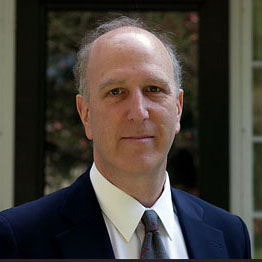
Peiser’s primary research has focused on developing an understanding of the response of real estate developers to the market place and to the institutional environment in which they operate, particularly in the areas of urban redevelopment, affordable housing, and suburban sprawl. Current research projects focus on non-performing loans, suburban redevelopment, and new towns. A planner and entrepreneur-developer, as well as an expert in real estate finance, he has also demonstrated an interest in spatial and design issues as well as in the economics of land development. He has been active in the Urban Land Institute, where he was now a Trustee, and of which he has authored numerous publications on his policy-oriented research. Peiser received a BA from Yale University, an MBA from Harvard Business School, and a PhD from the University of Cambridge.
Jerold S. Kayden
Jerold S. Kayden is the Frank Backus Williams Professor of Urban Planning and Design at the Harvard University Graduate School of Design and Founding Director of the Master in Real Estate Program. He previously served as co-chair of the Department of Urban Planning and Design and director of the Urban Planning Program. His teaching and scholarship address issues of land use and environmental law, public and private development in cities, public space, urban disasters and climate change, and design competitions. His books include Privately Owned Public Space: The New York City Experience; Urban Disaster Resilience: New Dimensions from International Practice in the Built Environment; Landmark Justice: The Influence of William J. Brennan on America’s Communities; and Zoning and the American Dream: Promises Still To Keep.
As an urban planner and lawyer, Professor Kayden has advised governments, non-governmental organizations, and private and public real estate developers in the United States and around the world. He has argued court cases, authored or co-authored amicus briefs in United States Supreme Court cases, and served as expert witness. He has drafted zoning laws for various U. S. cities on inclusionary housing and privately owned public spaces. On international work, he has consulted widely for such institutions as the World Bank, the International Finance Corporation, the United States Agency for International Development, and the United Nations Development Programme, working principally in Armenia, China, Nepal, Russia, and Ukraine on drafting and implementing land use, real estate, and housing laws. Since 1991, he has served as principal constitutional counsel to the National Trust for Historic Preservation in Washington, D.C. He leads Advocates for Privately Owned Public Space, a non-profit organization he founded based in New York City. From 2009 to 2011, he was Principal Investigator for the Harvard-Netherlands Project on Climate Change, Water, Land Development, and Adaptation, a collaborative project between Harvard, the Dutch Government, and the Deltares Institute.
Among Professor Kayden’s honors are a Guggenheim Fellowship, multiple fellowships from the National Endowment for the Arts, and awards from the Association of Collegiate Schools of Planning, the American Bar Association, the American Society of Landscape Architects, and the Environmental Design Research Association. At the Design School, he was recognized schoolwide as “Teacher of the Year.” Professor Kayden earned his undergraduate, law, and city and regional planning degrees from Harvard and subsequently was law clerk to Judge James L. Oakes of the U.S. Court of Appeals for the Second Circuit and Justice William J. Brennan, Jr. of the U.S. Supreme Court.
The Frank Backus Williams Professor of Urban Planning and Design at Harvard University was established in 1957 from a bequest from Frank Backus Williams, a prominent New York City lawyer who played a significant role in creating the 1916 New York City zoning resolution, the first comprehensive zoning law in the United States. Among many publications, he wrote The Law of City Planning and Zoning (Macmillan, 1922) and co-wrote Model Laws for Planning Cities, Counties, and States (Harvard University Press, 1935). Professor Kayden is the sixth holder of the chair. Previous holders include Martin Meyerson (1957), followed by Charles Abrams, Fernando Belaunde Terry, Brian Berry, and William Doebele.