Mariana Alegre Escorza

Mariana Alegre Escorza is Lecturer in Urban Planning and Design at the Harvard Graduate School of Design and the founder and executive director of Sistema Urbano , a Latin American urban innovation ecosystem that integrates data, participation, and collaborative action to transform cities and territories. Her work seeks to improve quality of life by advancing citizen-led urbanism to address urban inequity, spatial injustice, and climate challenges. She bridges research, policy, and practice through participatory processes, civic engagement, and cross-sector collaboration, with a focus on urban mobility, public transit and active modes, climate resilience, land use, and the co-creation of public space. Alegre believes in community care and community power as essential drivers for advancing public goods.

Alegre has founded and led multiple award-winning platforms. Lima Cómo Vamos , an independent urban observatory, has produced more than 30 surveys and reports influencing public policy and community action. Ocupa Tu Calle  has transformed over 50 public spaces, shaped national and local policy, trained mayors and public officials, and partnered with multilateral organizations to scale participatory approaches across Latin America. She also established Ciudades Cómo Vamos – Perú, a national civic observatory network; Nodal, a regional platform connecting urban changemakers across Latin America; and Clima Urbano, an initiative advancing socio-ecological responses to environmental and health crises. She has served on national and municipal advisory committees, including Peru’s Bicentenary Special Project; designed participatory frameworks for local governments; and worked with communities throughout Peru and Latin America to co-produce public goods and strengthen resilience.

Her academic work includes teaching at the Pontificia Universidad Católica del Perú in the Master’s program in Architecture, Sustainable Urbanism, and Territorial Development, as well as in the Law School and the School of Management. She is a tenured professor at the Faculty of Management Sciences. Alegre has designed and delivered courses on urbanism, citizenship, the right to the city, urban and social management, and environmental and social innovation, in addition to directing the Law Clinic on Sustainable Cities. She has advised graduate theses and authored publications on public space, citizen-led urbanism, mobility justice, inequality, and risk management. In addition to her academic and civic leadership, Alegre is a skilled communicator and public voice, with experience as a columnist and radio presenter on urban issues.

Alegre’s leadership has been recognized with the Loeb Fellowship at Harvard GSD (2024–25), inclusion in Forbes Peru’s “Most Powerful Women” list (2022), and designation as a Remarkable Woman in Transport by Women Mobilize Women & TUMI (2019). She has participated in global exchange and leadership programs with the U.S. Department of State, the French Ministry of Foreign Affairs, the International Affairs Office of Bordeaux Métropole and international universities such as MIT (MetroLab IAP), Aalto University and the Technical University of Dresden (CIPSEM).

She holds a MSc in City Design and Social Science from the London School of Economics as a Chevening Scholar, a Master’s in Human Rights, and a Law degree from the Pontificia Universidad Católica del Perú.

Li Hou

Li Hou is Lecturer in Urban Planning and Design at the Harvard University Graduate School of Design. She teaches Comparative Planning Regulations in the spring semester, and assists the chair, program director, and coordinator with the UPD administration support responsibilities.

Hou is a planning scholar, educator, and practitioner with rich experiences. Her research interest lies at the intersection of history and theory of urban and regional planning, planning regulations, and spatial politics. She has authored over 50 book chapters and articles in scholarly journals and regularly contributes to urban and planning issues in public media. Her first English book, Building for Oil: Daqing and the Formation of the Chinese Socialist State (Harvard Asia Center, 2018, reprinted in 2021) received the 2020 First Book Prize for the Most Innovative Book in Planning History, awarded by the International Planning History Society. The SDX Joint Publishing Company 三联书店 will publish the Chinese version in 2024. Other noteworthy books published in Chinese include Richard Paulick in Shanghai, 1933-1949: The Postwar Planning and Reconstruction of a Modern Chinese Metropolis (Tongji University Press, 2016), An Academic History in China’s Urban and Rural Planning Discipline (book chapters, China Science and Technology Press, 2018).

Before joining Harvard, Dr. Li Hou held the position of Professor of Urban Planning at Tongji University and served as the Ph.D. program director at the Department of Urban and Rural Planning. She has been a research affiliate at the MIT Sustainable Urbanization lab since 2023 and was a Harvard-Yenching Coordinate Research Scholar from 2014 to 2015. In practice, Hou has been a registered planner at the Tongji Urban Planning and Design Institute since 2000, an expert member of the Shanghai City Planning Commission since 2012, and the vice secretary-general for the Academic Committee of Regulatory Planning, Urban Planning Society of China, since 2018. In academic services, she is a council member of the International Planning History Society, and a Global Urban History Project board member who chairs the prize committee for emerging scholars. She has served on numerous editorial boards, including China City Planning Review, and is a guest editor for Time + Architecture.

Growing up on an oil field in North China, Hou entered Tongji University to receive her training in architecture and urban planning. She was later awarded the Frank Tsao Chinese Teachers’ Fund to study at the Harvard University Graduate School of Design. At Harvard GSD, she received a Master of Design Studies and a Doctor of Design with a concentration in urbanization and housing.

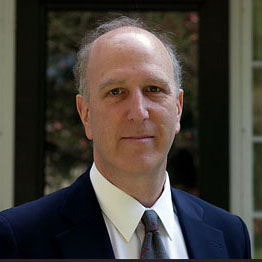
Jerold S. Kayden

Jerold S. Kayden is the Frank Backus Williams Professor of Urban Planning and Design at the Harvard University Graduate School of Design and Founding Director of the Master in Real Estate Program. He previously served as co-chair of the Department of Urban Planning and Design and director of the Urban Planning Program. His teaching and scholarship address issues of land use and environmental law, public and private development in cities, public space, urban disasters and climate change, and design competitions. His books include Privately Owned Public Space: The New York City Experience; Urban Disaster Resilience: New Dimensions from International Practice in the Built Environment; Landmark Justice: The Influence of William J. Brennan on America’s Communities; and Zoning and the American Dream: Promises Still To Keep.

As an urban planner and lawyer, Professor Kayden has advised governments, non-governmental organizations, and private and public real estate developers in the United States and around the world. He has argued court cases, authored or co-authored amicus briefs in United States Supreme Court cases, and served as expert witness. He has drafted zoning laws for various U. S. cities on inclusionary housing and privately owned public spaces. On international work, he has consulted widely for such institutions as the World Bank, the International Finance Corporation, the United States Agency for International Development, and the United Nations Development Programme, working principally in Armenia, China, Nepal, Russia, and Ukraine on drafting and implementing land use, real estate, and housing laws. Since 1991, he has served as principal constitutional counsel to the National Trust for Historic Preservation in Washington, D.C. He leads Advocates for Privately Owned Public Space, a non-profit organization he founded based in New York City. From 2009 to 2011, he was Principal Investigator for the Harvard-Netherlands Project on Climate Change, Water, Land Development, and Adaptation, a collaborative project between Harvard, the Dutch Government, and the Deltares Institute.

Among Professor Kayden’s honors are a Guggenheim Fellowship, multiple fellowships from the National Endowment for the Arts, and awards from the Association of Collegiate Schools of Planning, the American Bar Association, the American Society of Landscape Architects, and the Environmental Design Research Association. At the Design School, he was recognized schoolwide as “Teacher of the Year.” Professor Kayden earned his undergraduate, law, and city and regional planning degrees from Harvard and subsequently was law clerk to Judge James L. Oakes of the U.S. Court of Appeals for the Second Circuit and Justice William J. Brennan, Jr. of the U.S. Supreme Court.

The Frank Backus Williams Professor of Urban Planning and Design at Harvard University was established in 1957 from a bequest from Frank Backus Williams, a prominent New York City lawyer who played a significant role in creating the 1916 New York City zoning resolution, the first comprehensive zoning law in the United States. Among many publications, he wrote The Law of City Planning and Zoning (Macmillan, 1922) and co-wrote Model Laws for Planning Cities, Counties, and States (Harvard University Press, 1935). Professor Kayden is the sixth holder of the chair. Previous holders include Martin Meyerson (1957), followed by Charles Abrams, Fernando Belaunde Terry, Brian Berry, and William Doebele.