The Arsenal of Exclusion & Inclusion
Who gets to be where?
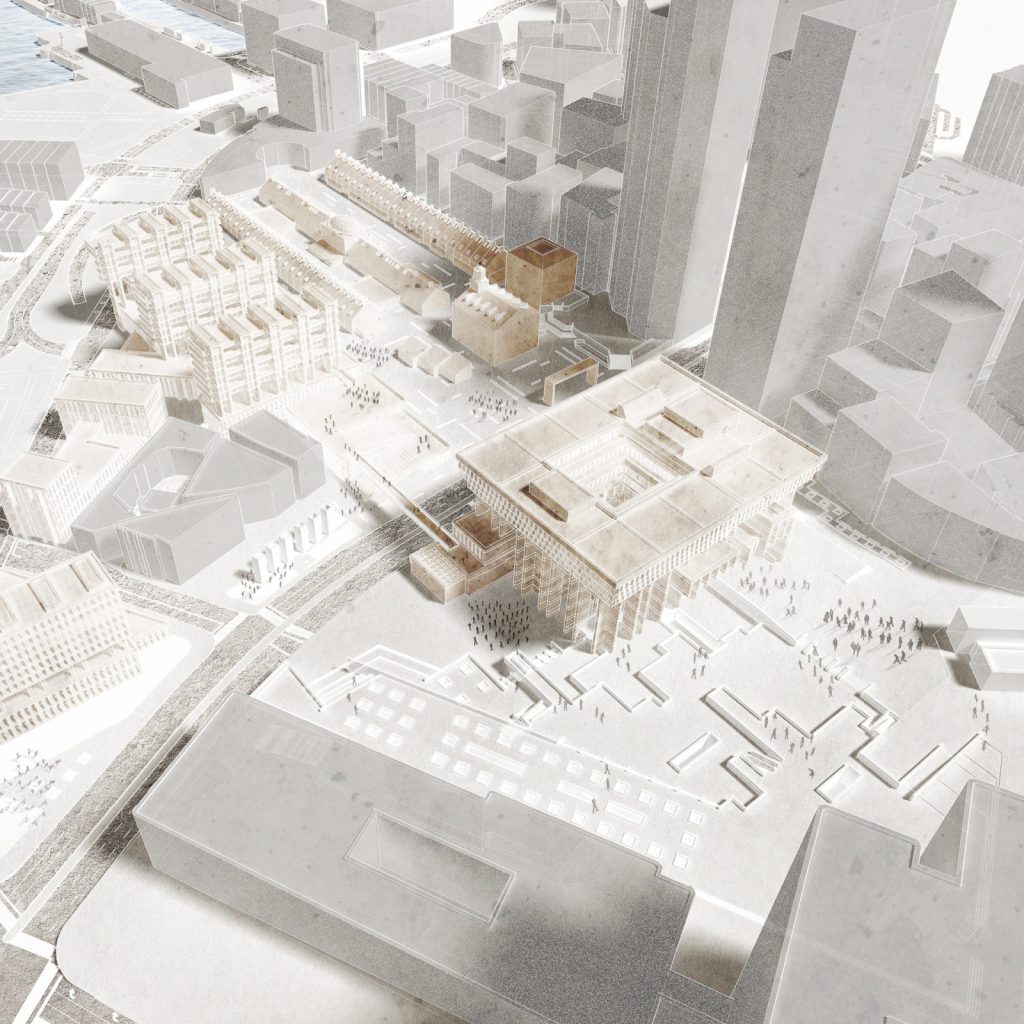
The Arsenal of Exclusion & Inclusion examines the policies, practices, and physical artifacts that have been used by planners, policy makers, developers, real estate brokers, community activists, and other urban actors in the United States to restrict or aid access to the spaces of our cities and suburbs. The Arsenal of Exclusion & Inclusion inventories these weapons of exclusion and inclusion, describes how they have been used, assesses their legacy, and speculates on how they might be used (or retired) for the sake of more open cities in which more people feel welcome in more places.
With contributions from more than fifty of the best minds in architecture, urban planning, urban history, and geography, The Arsenal of Exclusion & Inclusion offers a wide-ranging view of the policies, institutions, and social practices that shape our cities. It can be read as a historical account of the making of the modern American city, a toolbox of best practices for creating better, more just spaces, or an introduction to the process of city making in the United States.
Authors: Tobias Armborst, Daniel D’Oca, Georgeen Theodore of Interboro Partners .
Franklin Park, Urban Forest
Diana Jih (MLA I ’18)

Power and Place: Seattle
Arthur Leung (MDes ’17), Boya Guo (MDes ’17), Hao Ding (MDes ’17), Mina Kim (MUP ’17), Jacqueline Palavicino (MDes ’17)
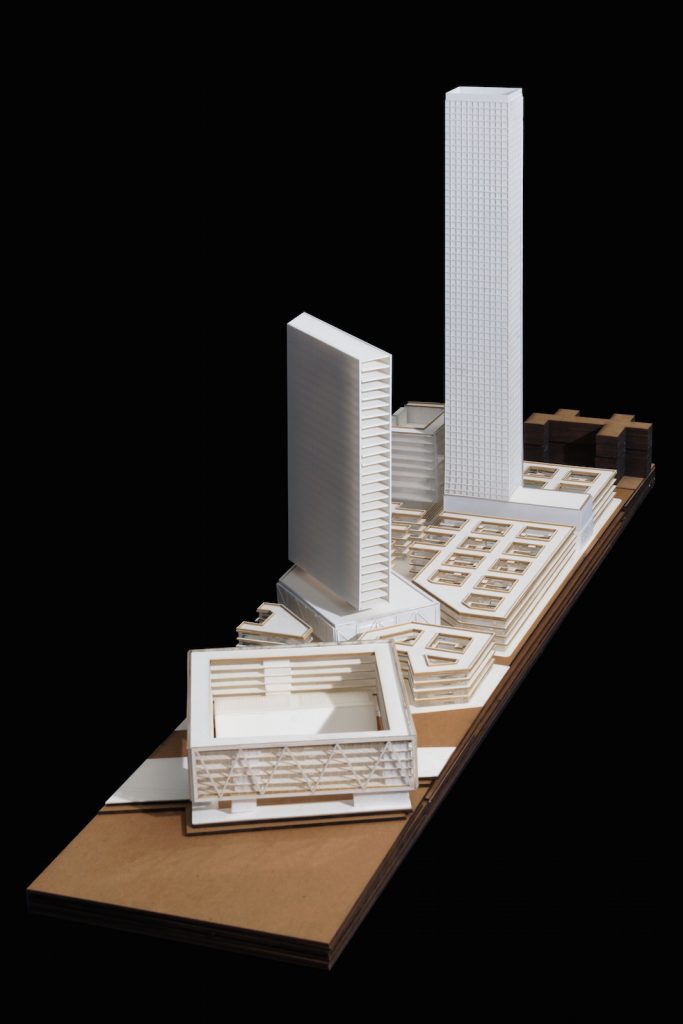
This project explores the boom and bust cycle as well as expressions of power embedded in Seattle’s urban forms.
Coupling Thermal Mass & Buoyancy for Thermoregulation and Ventilation in India
Palak Gadodia (MDes ’16)
This thesis explores how the form and mass of a building can be ‘morphed’ to control interior temperature and fresh air flow. The idea is to couple thermal mass with buoyancy ventilation.

Using the ‘thermal resonator’ design method , and by studying how termite mounds extract useful work from exterior temperature oscillations , the project shows how new buildings in hot climates can be designed resiliently to avoid the use of HVAC technology.
First, a review of traditional and contemporary uses of thermal mass and buoyancy ventilation was undertaken. It turns out that there are very few examples where the thermal mass controls the fresh air flow, on top of interior temperatures.
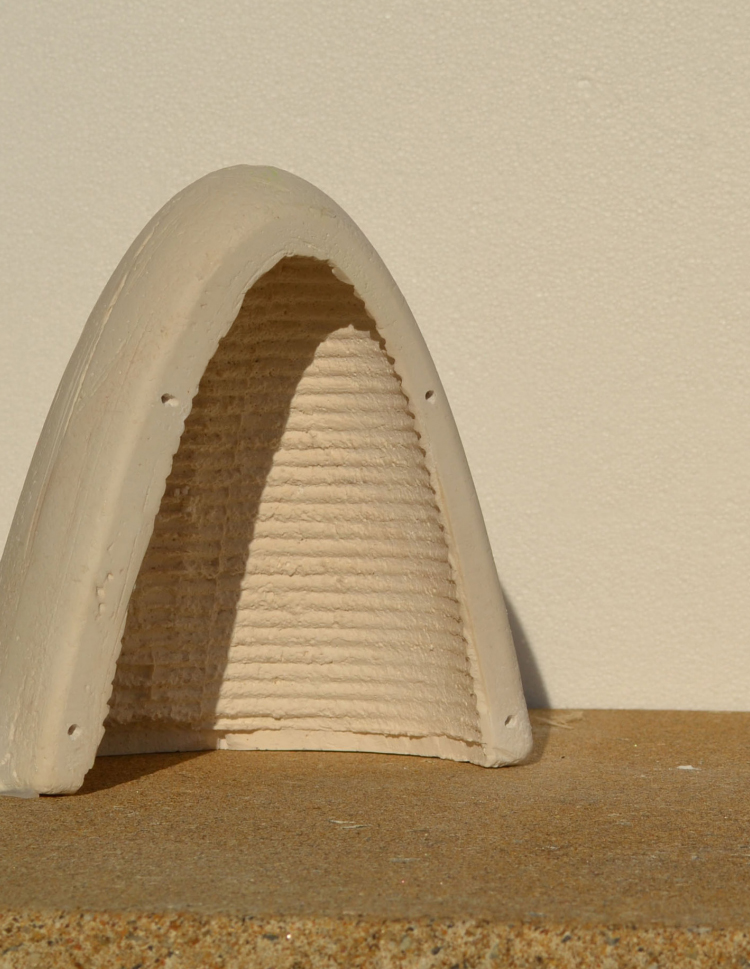
Second, a close reading of a recent study on thermoregulation in termite mounds in Bangalore was made, to understand how the geometry and materiality of the mounds regulate the interior temperature and the exhaust of stale air. General measurements of termite mounds in Bangalore, and detailed measurements of a top-cone sample taken from a dead mound was documented.

Third, the ‘thermal resonator’ design method was reviewed, and used to develop climate performance indices. A systematic analysis of climate zones in India was undertaken, with reference to key demographic data, and information on local building traditions, to understand where in India it makes most sense to design these kind of ‘mass-only’, HVAC-free buildings.
Fourth, traditional and contemporary building practices in India was evaluated, paying close attention to the use of ‘massive’ materials such as adobe, rammed earth, brick and concrete, and how these buildings might be ‘morphed’ to have the thermal mass control interior temperature and ventilation air-changes was shown.

Fifth, an experimental study was undertaken, to show how the thermal exchange capacity of massive elements, such as rammed earth walls or concrete soffits, could be increased by changing the morphology of the surface.
Finally, the project comments on the limitations of the “thermal resonator” method, and the different ways it might be applied in other areas of the world.

Proposed design – 01 to the existing bhunga. Minimal changes in the form and mass for better performance

Proposed design – 02 to the existing bhunga to create architectural elements and to create better performing environment

Form and mass scaled for two unit bhunga
Archiverse
Jacob Hamman (MDes Tech ’16)
Archiverse is a new digital design platform for architectural and artistic creation inside a collaborative virtual reality environment.
Charleston: Curating Exclusion
Javier Ors-Ausin (MDes CC ’17), Dana McKinney (MArch I/MUP ’17), Megan Mahala Echols (MUP ’16), Guan Min (MDes CC ’17), Euneika Rogers-Sipp (Loeb Fellow ’16)
This research studied representations of power in the built environment. Charleston, SC served as our case study as a “Hegemonic Identity City”, where its built environment has become a tourist destination using the lens of white identity throughout time to construct the material character of the city’s history, largely excluding African Americans and their culture as the main narrative.
Abductive Architecture
Alexander Timmer (MArch I ’16)
Inference or logical reasoning in the design, representation, and dissemination of architectural ideas has followed a trajectory aligned with the three forms of inference as described by Charles Sanders Peirce. [i] Modern, Postmodern and Nonmodern methodologies are closely aligned with deductive, inductive and abductive reasoning respectively. With each of these forms of inference emerges different forms of design: the absolute, the codified, and the immanent.
Specifically, abductive reasoning, the immanent, in architecture is the negotiation of open systems consisting of visual and nonvisual information. The designer using a feedback loop of observation and experiment produces novel artifacts that are dependent but not determined by this system. Abductive architecture represents these moments when innovation is driven by needs not only inclusive of ideology. This innovation though tends to happen slowly on a large time scale. What if we as architects could take this process and shorten it to allow for more immediate innovation?
By compressing the feedback loop that is design and construction this thesis will use open thermodynamics, and specifically, fire to demonstrate what an abductive convergence of mass around an energetic flow might look like.
[i] Fann, K. T. 1970. Peirce’s Theory of Abduction. The Hague: Martinus Nijhoff.
Thesis Advisor:
Kiel Moe
Jakarta’s Orogeny: Inhabiting Java’s Volcanic
Pedro Aparicio Llorente (MDes ULE ’16), recipient of the Gerald M. McCue Medal, and Namik Mačkić (MDes RR ‘16)
Java belongs to those regions of the Earth where geologic time is accelerated to an observable emergence. Volcanic activity has not only built the landmass of the island, with lava flows, lahars, and air-and water-borne ash, it has also spawned many of the most ingenious and resilient human cultures on the planet.
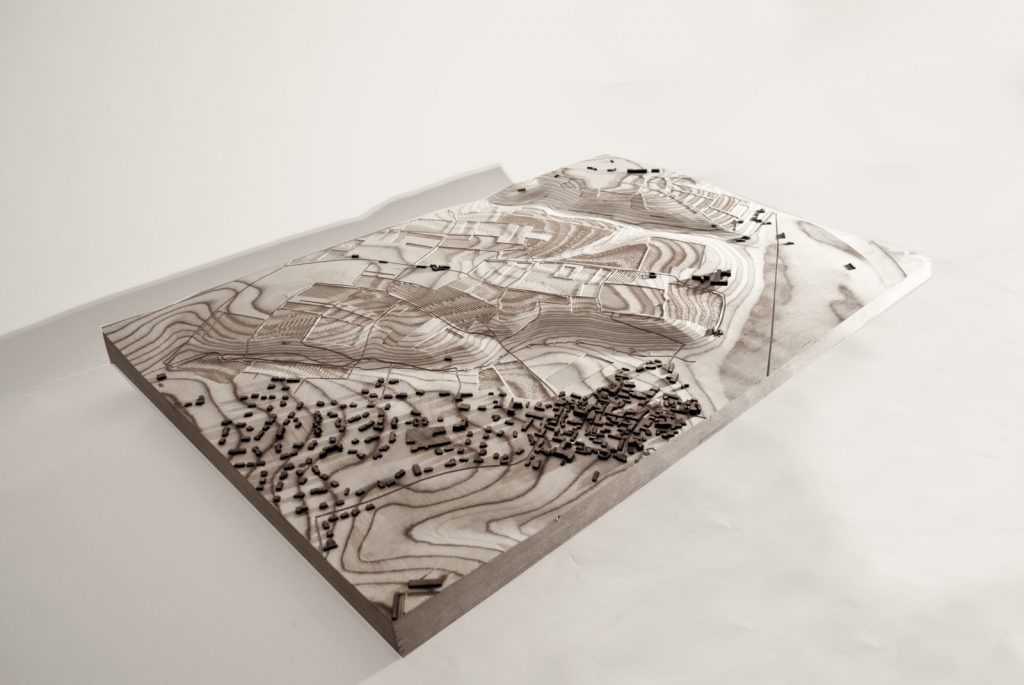
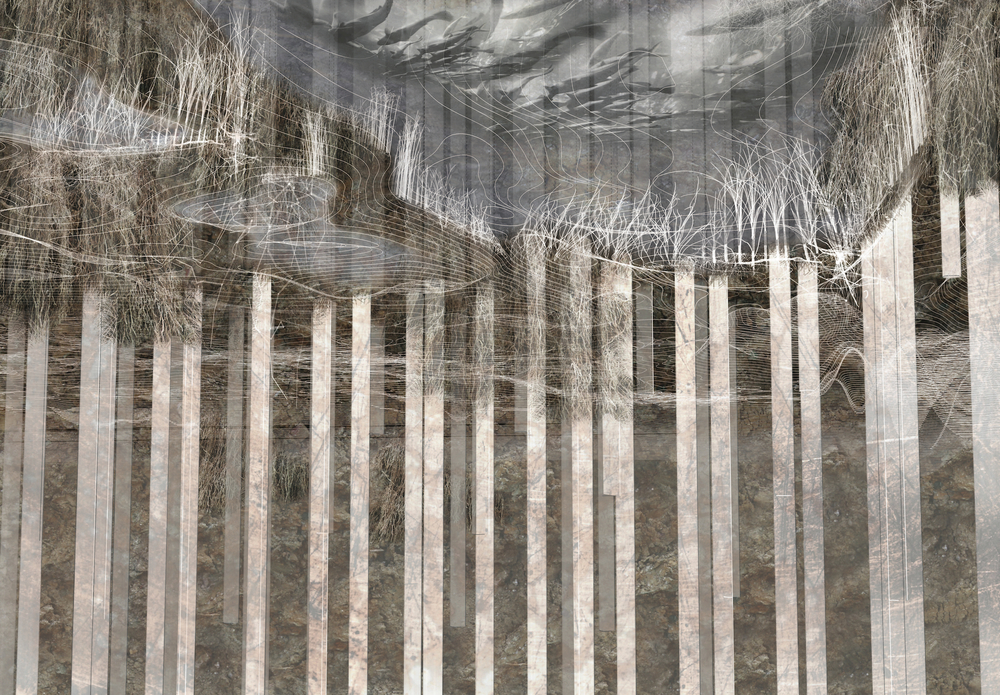
Investigating and imaging this active ground in relation to patterns of human activity, this project situates the most densely populated island on Earth as a vast geomorphic machine. The research is visualized through a longitudinal section taken from the Java Sea to the Sunda Trench to represent the role of volcanoes as urban centers, as spinal cords of socio-spatial organization.
Inhabiting Java’s Volcanic speaks of a place where geology and urbanism meet. Combining on-site audiovisual documentation with geospatial analysis, animated cartographies with graphical projections, this research places the observer within the oscillating encounters between the tectonic expression of the Ring of Fire and the climactic gradients of the Southeast Asian Monsoon.
As the planet’s material recycling patterns manifest in practices at a human scale, the distance between geologic activity and everyday life becomes increasingly shortened. Here, a geologic domestic materializes.
With the aim of opening new ways to conceive of and adapt to our planet’s accelerated environmental variations, we present Java’s volcanic slopes as an urbanistic precedent, one that harbors a logic of practice synchronized with the material agencies native to the island’s morphological flux. Within this alternative paradigm of inhabitation, knowledge is built and recalibrated to the processes and contingencies of a volcanic ground. The building capacity of the Earth, itself, is culturally absorbed and cultivated: a social production of geotechnicity. Inhabiting Java’s Volcanic tells of a regional framework with global and interdisciplinary implications: an example to seek, foster, and build upon the significant depths of the geologic and the altitudinal variations of the atmospheric in designing with environmental change.
Jakarta epitomizes and defies the definition of a megacity. The capital of South-East Asia’s largest economy and the world’s second most populated metropolitan area appears as an agglomeration of villages, stretched across the 21st century mutation of a colonial entrepot. Interconnected with the interior of the island of Java through a capillary system of social and economic relationships, these settlements with their attendant forms of mobility contain salient elements of a long-standing regional superstructure. Tracing these features, we have uncovered a mesh of patterns that stretches across a Javanese landscape that seems to emerge out of the geologic.
For four centuries, both under Dutch colonial rule (1618–1945) and sovereign Indonesian government (1945–), the alluvial plain of Jakarta has been subjected to an aggressive, imported model of landscape alteration. Within the total package of the Dutch mercantile city, consolidation of the shoreline and channelization of watercourses have accompanied fortification and grid. From early on, floods and diseases breeding in the stagnant waters of the canals would testify to the local failure of this engineering paradigm of normalization and defense. The uncontainable growth of Jakarta as the capital of the independent Indonesia has only exacerbated the environmental externalities of the colonial project. In the 21st century, it is the rhetoric of urban vulnerability that helps perpetuate it, by continuing to erect rigid barriers against environmental contingency. Currently several mega-projects are underway that purport to address the recurrent floods, severe pollution, land subsidence, and sea level rise, while reclaiming the shallow Jakarta Bay as a new waterfront for high-end developments. Evictions and displacements of kampungs-urban villages- accompany these patterns of land transformation.

Inhabiting Java’s Volcanic proposes an alternative entry point to Jakarta’s narrative as the quintessential megacity-at-risk. Looking past the rhetoric of coastal vulnerability to study the forms of living that have unfolded in Java’s highlands, the project sheds light on a volcanic landscape that seems to provide a lexicon that allows a different approach to describe, interrogate and intervene Jakarta’s spatial organization. This language reveals then that inhabiting is in closer terms to active configurations rather than informal or ephemeral occupations. For this reason, to see Jakarta as volcanic, opens a possibility for designers to work with gradients of human and nonhuman agency and release their imagination from the binaries that neutralize design’s agency in the first place. We believe that Jakarta manifests a proximity to geologic time that demands a different set of precedents in order to move beyond the “global city” aspiration.
In an inversion of the techno-managerial concept of risk, Inhabiting Java’s Volcanic establishes an alternative paradigm of material propagation and absorption of turbulence. You are looking at morphologies that, in opposition to those born of attempts to control, unfold value out of environmental contingency. Pre-mapping a territory that is yet to be recognized, this project proposes the volcanic as a dynamic set of geo-social relationships, configuring and reconfiguring points of activity and patterns of mobility, and resulting in an endemic spatiotemporal framework.
In the process of assembling an open-ended list of patterns, Inhabiting Java’s Volcanic suggests that there exist precedents to be considered for an alternative, decentralized model of adaptation – one that derives knowledge and accumulates coping capacities through controlled exposure to the environmental dynamics while providing both economic and cultural anchorage. By articulating vital links between the geologic agency and local practices, the project gestures towards a future reassembly of regional economies and systems of habitation around an endogenous material logic: that of the volcanic territory. Privileging configurations that allow for intensive socio-environmental engagements, this calls for the decolonization of our design imaginary.
Sponsored by the Harvard Asia Center, Harvard GSD Community Service Fellowship Program, Fulbright Scholarship
Allometric Sake
Amira Abdel-Rahman (MDes ’17), Gabriel Muñoz Moreno (MDes ’17), and Santiago Serna Gonzalez (MArch I/MDes ’17)
Based on a the theories developed by Holford and Woods in their paper: On the thermal buffering of naturally ventilated buildings through internal thermal mass (2007) we developed a simple framework where buildings worldwide can be retrofitted in order to create natural, buoyancy driven ventilation, powered by thermal mass. Through the simplification of the method, and with the software we designed, the input parameters are as follows: desired ventilation rate, building height, internal and external network of openings, and internal surface area. With this, we are able to analyze any building’s current conditions and propose cost effective solutions for its improvement. The result is the ability to intervene in critical locations with simple and economical strategies for the improvement of living conditions.
Amira Abdel-Rahman, Principal Researcher, Software Development
Gabriel Muñoz Moreno, Principal Researcher and Creative Design
Santiago Serna Gonzalez Principal Researcher and Engineering
Information Tool on Urban Water Systems
The Zofnass Program for Sustainable Infrastructure has developed the Information Tool on Urban Water Systems. It provides holistic information about the city’s water systems for non-expert stakeholders, such as city managers, policymakers, and the community. The outcome of research on urban water management cases across US, from East to West Coast, is a data-driven framework designed to be tailored to varying water system challenges. The first prototype was built for the City of Chelsea MA. The tool consists of two parts: the first can be summarized as “learn the system” and the second as “improve the system.” Through data visualization and system-based storytelling, the first part provides information about the urban water system, performance data, and geospatial synergies. The second part – through interactive modeling and scenario evaluation – highlights the opportunities to improve the system. The algorithm identifies the buildings, streets, and parking areas for potential green infrastructure interventions, and quantifies their impact to the reduction of runoff and imported water.

A summary of the prototype for Chelsea MA:
You can access the tool at http://zofnass.gsd.harvard.edu/water_infotool and learn more about the project at http://datasmart.ash.harvard.edu/news/article/data-driven-insights-on-urban-water-systems-844
The Zofnass Information Tool on the Urban Water System of the City of Chelsea MA is an informed and well done analysis of the opportunities to improve the City’s ability to both address stormwater regulatory and environmental needs while also providing more cost-effective service to the community.
Research team:
Spyridon Ampanavos, Sang Cho, Xiaoran Du, Lezhi Li, Jianing Liu, Yannis Orfanos, Yiying Yang
Supervised by Yannis Orfanos
The research was supported by a grant on urban water management from the Surdna Foundation.