The Master in Real Estate is a 12-month degree that teaches individuals how to acquire or sharpen traditional skills and knowledge required of every real estate professional while simultaneously understanding how well-designed real estate can advance beneficial spatial, social, and environmental outcomes in cities and metropolitan areas worldwide. Through a multidisciplinary curriculum of in-residence required and elective courses and a concluding two-month off-campus practicum within a private or public real estate organization, students learn about finance, development, asset management, design, planning, law, social and environmental considerations, project and construction management, new technologies including AI, politics, public-private partnerships, entrepreneurship, negotiation, leadership, and other skills and subjects essential to the practice of present and future real estate.
The placement of the MRE degree within Harvard’s Graduate School of Design and its Department of Urban Planning and Design reflects the reality that real estate is a physical thing designed by many hands. MRE students significantly benefit from learning within one of the largest design schools in the world, with its 200 or so faculty members and over 1,000 graduate students and international presence. The Department of Urban Planning and Design is particularly well-suited to host the MRE degree program, with leading scholars and practitioners who teach courses about real estate and related subjects such as land use and environmental law, urban design and planning, housing, transportation, international development, healthy cities, and new towns, among many other subjects.
Harvard is more than the Graduate School of Design. There are 12 additional graduate and professional schools, along with the College, that together weave a rich tapestry of relevant courses and resources. Like all Harvard students, MRE students enjoy cross-registration privileges that enable them to take eligible courses at the Harvard Business School, the Kennedy School, the Law School, the T.H. Chan School of Public Health, the John A. Paulson School of Engineering and Applied Sciences, the College, and other Harvard graduate schools. Students may also cross-register in eligible classes at MIT.
The professional schools are supplemented by centers and institutes that sponsor conferences, guest speakers, research, and fellowships. The Joint Center for Housing Studies, co-administered by the GSD and the Kennedy School, publishes the heavily cited annual “State of the Nation’s Housing” report and enjoys long-standing relationships with some of the world’s largest housing developers, owners, and managers. Working from its specially designed and constructed HouseZero building, the GSD’s own Center for Green Buildings and Cities produces research on how existing buildings can dramatically reduce their energy footprints. Other Harvard centers and initiatives such as The Salata Institute for Climate and Sustainability, the Center for the Environment (part of the Salata Institute), the Taubman Center for State and Local Government, and the Bloomberg Harvard City Leadership Initiative sponsor many public programs with particular relevance to real estate study and practice.
In the fall of 2020, Dean Sarah Whiting initiated a process to investigate the possibility of introducing a master’s degree in real estate at the Graduate School of Design. She asked Urban Planning and Design Professor Jerold Kayden, who subsequently became the degree’s Founding Director, to prepare, in consultation with Harvard faculty, students, and alumni, along with other scholars and practitioners, a proposal that would describe the degree’s mission, curriculum, faculty, student backgrounds, and other relevant features. That degree proposal was submitted to and approved by the GSD’s voting faculty in the spring of 2021, advanced to the President and Provost of Harvard during the summer, and ultimately approved by the Harvard Corporation in December of 2021. Applications to the program commenced in the fall of 2022. The inaugural class matriculated in the fall of 2023 and graduated in the summer of 2024. The program is now hosting its third cohort of students. Between alumni, current students, and incoming students, the total number is over 150.
Design necessarily engages the most urgent and complex conditions of our time, and the Master in Design Studies program empowers students to address those conditions head on.
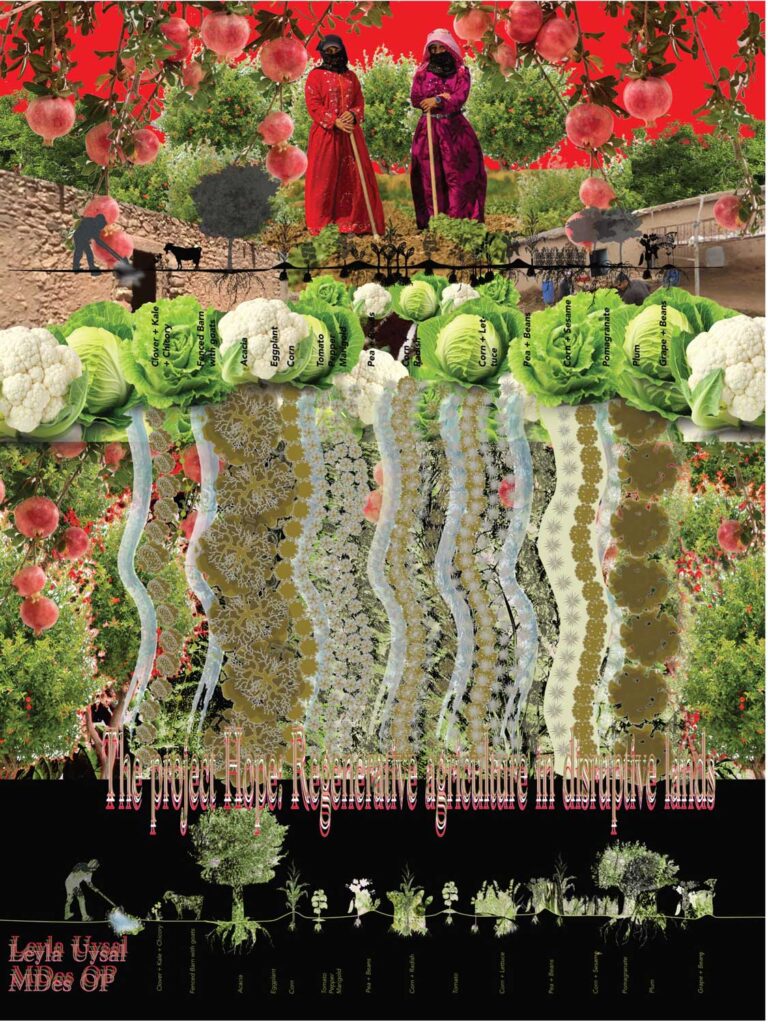
The Master in Design Studies program at Harvard’s Graduate School of Design is aimed at those who want to pair design knowledge with tools to enable careers in public service, academia, NGOs, innovative ventures, as well as developing specific expertise for advanced design practice.
The Design Studies program consists of four semesters of coursework with no studios. Applicants select one of four domains of study—Ecologies, Narratives, Publics, and Mediums—and undertake a core set of courses, including research methods and related topical courses. Following that domain foundation, each student then forges an individualized trajectory, leveraging course offerings across the GSD, as well as other schools and departments at Harvard. During their third semester, Design Studies students from all four domains come together to focus on collaborative advanced research in the form of open projects, in which their expertise finds application on a current issue.
Distinct from research in the sciences or humanities, design pedagogy involves highly interactive ways of thinking and learning that directly engage the technical, material, spatial, ecological, political, economic, and planetary dimensions of cultural life. Design Studies at the GSD challenges conventional ways of learning. The program offers an unrivaled depth, breadth and diversity of educational experience in the service of a broad range of enhanced academic, professional, and personal trajectories. From our rapidly warming environment and its mass extinctions and disfiguring social inequities, to colossal media systems and their manipulations of ideological economies, the decade of 2020 is charging ahead with multiplying planetary crises requiring novel responses and fundamentally new horizons of inquiry. The Master in Design Studies program prepares students to lead us into this new world.
The design disciplines are critical to engaging the most urgent and complex conditions of our time, and the Master in Design Studies program at the GSD prepares students to rise to the challenge, with training that is at once foundational, multitudinous, and incisive. The Master in Design Studies degree is open to applicants who possess, at minimum, an undergraduate degree. The program invites applicants with previous education or experience in the design disciplines, as well as applicants from a wide range of educational backgrounds, professional fields, and life experiences. Please explore further information about the program’s four domains, Design Studies degree requirements, and related courses and faculty. And please join us for our Open House events to learn more about each of the domains and possible trajectories through them.
Students may study for a PhD degree in Architecture, Landscape Architecture, and Urban Planning. An additional track in Architectural Technology is also available. This degree is administered jointly by the Harvard Graduate School of Design and the Harvard Kenneth C. Griffin Graduate School of Arts and Sciences. Therefore, students benefit from a dual affiliation with both schools.
The program is mainly geared towards individuals who wish to enter academic teaching and research careers. Students are afforded a high degree of flexibility in their studies, however areas of work are broadly organized into the following areas: the Theory and History of Architecture, Architectural Technology, the Theory and History of Landscape Architecture, and the Evolution of Cities and Regions.
Theory and History of Architecture:
Students interested in this area typically study buildings, architectural texts, technologies, and their political, social, and cultural contexts through the early modern, modern, and contemporary eras.
Architectural Technology:
Doctoral research in architectural technology at the GSD aims to advance current knowledge in green building, for example, and will typically involve issues related to engineering, computation, and digital simulations.
Theory and History of Landscape Architecture:
Students whose research focuses on the theory and history of landscape architecture typically investigate the ways in which the natural environment has been thought of, represented, and transformed, from the early modern to the contemporary period.
Evolution of Cities and Regions:
Students may be interested in the subject of cities from a formal standpoint and/or develop an additional emphasis on various social, economic, technological, infrastructural, and ecological dimensions of urban life.
The Doctor of Design (DDes) program at the Harvard Graduate School of Design is a leading doctoral degree program for highly creative and motivated professionals who wish to conduct rigorous, intensive design research.
The program is geared towards applied research that advances design related knowledge in a broad range of scales from product design to buildings and landscapes to urban design and regional planning. Common to the diverse range of DDes research investigations is the belief that design research makes essential contributions to understanding, analyzing and ultimately improving the built environment in our increasingly complex world.
DDes research is often multidisciplinary and encompasses a broad range and combination of theoretical, applied and technological topics that represent the cutting edge of applied design investigation. DDes research is intimately linked to ongoing investigations of the GSD’s research labs and programs that integrate many DDes students both intellectually and operationally as investigators in ongoing research projects.
Research topics are proposed during admission and are decided upon entry into the program. Student research should align with current faculty research interests, allowing for affiliations with faculty and, possibly, the research labs. Applicants are expected to clearly articulate their research topics in the application by submitting a concise and well-structured research proposal. Typical research areas include studies in urban design and theory, landscape urbanism, novel design techniques and technologies including material systems, design computation, and building technologies, planning and real estate studies, and theoretical investigations of emerging trends in digital design culture. Thesis topics investigate more specific issues within individual or combined research areas, and do not necessarily correspond to individual academic disciplines. Instead, they are often interdisciplinary in nature, involving faculty and resources from other graduate schools at Harvard and contribute to expanding the intellectual range of design research.
The DDes program is highly regarded internationally, and DDes alumni have become thought leaders in their respective fields. Their work promotes and advances improvements of the built and the natural environment worldwide. They hold prestigious positions in private practice, industry, government and academia.
We invite you to review the program details at left. Please feel free to contact us for more information.
Professor of Architectural Technology, Director of the Doctor of Design Studies Program, and Founding Director of the Harvard Center for Green Buildings and Cities