Alex Krieger on the History of Harvard’s Allston Enterprise Research Campus
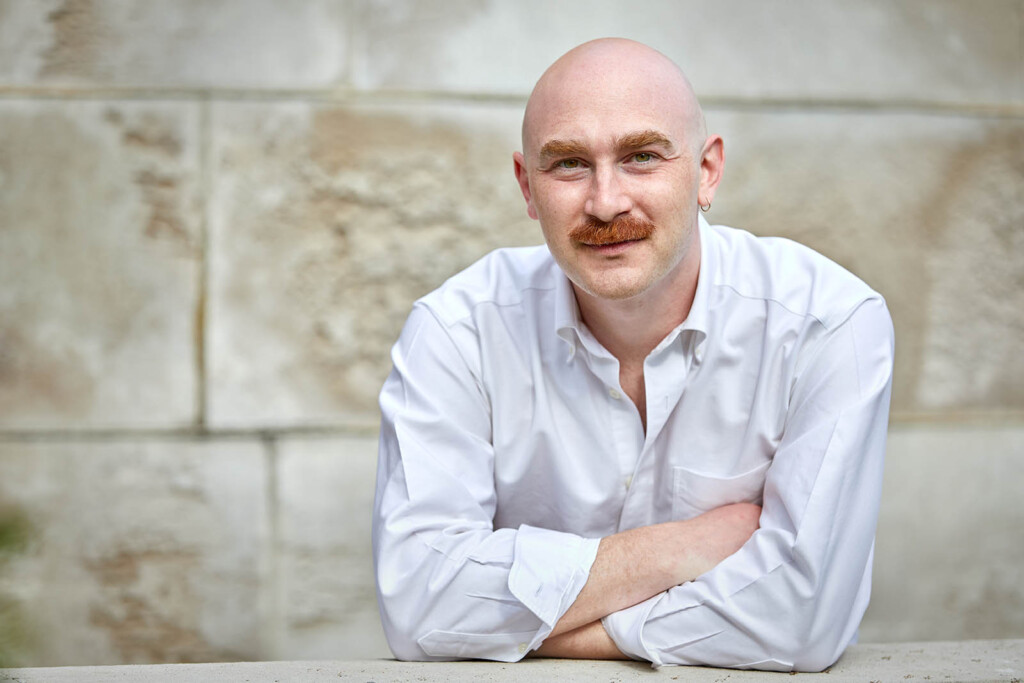
For nearly 50 years, Alex Krieger, professor in practice of urban design, emeritus, taught at the Graduate School of Design (GSD). For about half of those years, he was committed to helping Harvard in the development of the Allston campus , serving on work groups, task forces, and design review committees focused on the project. First working with Harvard President Lawrence H. Summers and his administration in the early 2000s, Krieger helped to initiate a master planning process that, through various iterations over the years, ushered in the Allston campus. The first phase of the Enterprise Research Campus is now nearing completion.
In addition to his scholarship, he’s well-known for his “iconic tour” of Boston that focuses on how the city, which was originally settled on an island, created land to accommodate its growth. He dedicated his career to the study of urbanism, with books including City on a Hill: Urban Idealism in America from the Puritans to the Present (2019), Urban Design (with William Saunders, 2009), and Mapping Boston (with David Cobb and Amy Turner, 1999).
Here, he recounts the history of the Allston campus and how he’s witnessed—and helped shape—its evolution into the landscape we see today, with the opening of the David Rubenstein Treehouse conference center , the “front door to the Enterprise Research Campus.”

How did the idea for a campus expansion originate?
Upon assuming the presidency, and with the then-recent public acknowledgment by the university that it had been acquiring land in Allston, Larry Summers announced the need for an ambitious master plan to prepare Harvard for its next decades of growth. He would reveal his own ambition that Allston would enable Harvard to establish “the Silicon Valley of the East,” given the university’s leadership in the sciences, and its researchers’ role in the mapping of the human genome that had just been completed by the International Human Genome Project. At the president’s direction, an international search for architects and planners ensued.
My first significant role was advising on the start of the overall planning process and becoming a member of the architect/planner selection committee for the master plan. I worked with Harvard Vice President for Administration Sally Zeckhauser, who directed the search process. We visited firms around the world, and in 2005, selected Cooper Robertson, Frank Gehry, and the Olin Partnership. At Sally Zeckhauser’s request, I began to serve on the design advisory committee as the master plan commenced and proceeded.
Concurrently, I was asked to develop initial programming guidelines for the future campus, which, late in 2005 was released as Programming for the Public Realm of the Harvard Allston Campus. The Cooper Robertson plan was made public in 2007. It gained much attention and publicity, even as we all knew that it would evolve significantly over the years. Several subsequent planning efforts with other planners followed.


When did construction in Allston begin?
The next significant event, in my memory, was the commissioning of the firm Behnisch Architeken, from Germany, to design what, in nine long years, would become the School of Engineering and Applied Sciences. However, it was initially planned to be a research and teaching facility for continuing stem cell, genome and life/health sciences innovation. Again, I served on the architect selection committee and on the design review committee that followed.
The “Great Recession” of 2008-10 led to a substantial decline in Harvard’s endowment, and construction had slowed during 2009 and halted in 2010. Three underground levels had been built, intended for a large garage and a district energy facility. The District Energy Facility (DEF), was later built separately, designed by Andrea Leers of Leers Weinzapfel Associates, a frequent visiting faculty at the GSD. For much of the next five years, only the roof of those underground levels was visible, with four humongous construction cranes left idle and visible from afar. This was great fodder for The Boston Globe.

I remember; it was infamous. How long did it take for construction to get back on track?
Drew Galpin Faust became Harvard’s President in 2007. Because of the national economic downturn, she became less concerned with expanding Harvard and focused on projects such as the adaptation of Holyoke Center to a student union. In Allston, President Faust focused on the reuse of some of the properties left vacant by Harvard’s earlier acquisitions, helping to attract new tenants to provide neighborhood services and amenities.
Katie Lapp who became the Executive Vice President for Administration shortly following Zekhouser’s retirement in 2009, began to encourage President Faust to restart planning for Allston. I was part of various informal conversations about what to do with the unfinished project. A science facility had in the interim been built in Cambridge and so different uses needed to be identified before construction could resume.
There were various ideas. One thought was that one of the Longwood Medical Area (LMA) hospitals, or the School of Public Health might relocate to sit on top of the “shortest building,” since there was little space for additional growth at the LMA. Some might find that idea unlikely, but, at the time Chan Krieger & Associates was planning in the LMA, and I heard such conversations there, not just in Cambridge. Ultimately, of course, the Science and Engineering Complex (SEC)
, home of the School of Engineering and Applied Sciences (SEAS), was the result.
There was also some discussion about a long-term future for Harvard’s acquisition of the Beacon Rail Yards and adjacent land under the Mass Pike, slated for eventual reconstruction. President Faust and Harvard leadership were becoming aware of just how much land was under Harvard’s control and cognizant that not all of it would be needed for Harvard’s academics.

How did the university decide they’d manage that land, and shift towards a new vision for the ERC?
These informal conversations and brainstorming sessions culminated in the formation of a new Allston planning committee, the Allston Work Team in 2010. I became one of the three co-chairs of that committee, along with Bill Purcell, former Mayor of Nashville, then at the Kennedy School, and Harvard Business School Professor Peter Tufano. The Work Team included the participation of most of Harvard’s Deans, Drew Faust herself, invited urban development experts, and of course, Katie Lapp.
Notions about a new kind of research campus, perhaps to compete with booming Kendall Square (which was beginning to be referred to as “the smartest square mile on the planet”) were already in the air. In Boston, Mayor Menino began to develop the concept of the Seaport Innovation Center. Underway were early phases of what, a decade later, would become the Cambridge Crossing innovation district, under the leadership of former Harvard planner Mark Johnson (MLAUD ’82). Harvard realized they’d better get into this game.

How did they balance community and university needs in the final design?
The Allston Work Team commenced serious discussion about what an Enterprise Research Campus (ERC) might become; supported the resumption of construction for what would become the Engineering School; initiated plans for graduate student and faculty housing, which led in 2015 to the Continuum Residences in Barry’s Corner, with Trader Joe’s at the base; explored how a needed hotel and conference center might become part of early phases; and continued exploring how to revive retail and community facilities around Barry’s Corner and along Western Avenue.
What can you tell us about the selection of Tishman Speyer
as the developer, and Jeanne Gang as the architect of the David Rubenstein Treehouse conference center
?
In 2018, Tom Glynn became the founding CEO of the Harvard Alston Land Company, and I helped Tom get up to speed on prior Allston planning efforts. We knew each other, as Chan Krieger had served Massport and earlier Partners Healthcare, both institutions he had led. We also had informal conversations about the Boston area development community, as, under his leadership, Harvard was getting closer and closer to proceeding with the selection of a development team for the ERC. I was not involved in that selection process but was quite pleased when Tishman Speyer announced that Jeanne Gang would play a major design role, including, of course, in the design of the Treehouse conference facility.
So, the Allston Work Team helped shape today’s Allston campus, with the November 2025 opening of the David Rubenstein Treehouse conference center, and the ERC now well underway
?
Yes, right now, Phase One is nearing completion, which encompasses nine acres. This first mixed-use cluster includes space for research, housing, a hotel, and the conference center. It will form “the prow” or “beacon” for future phases of the ERC, as the economy allows.
In 2010, the ERC
was just emerging as an idea, and seemed like a way to complement the future Science and Engineering Complex (SEC)
, once construction resumed. Behnisch Architekten
, the architect for the initial construction, had made the brilliant decision to maintain construction liability during those years. Without a building mass on top there was the possibility that those three unfinished levels would begin rising out of the ground due to groundwater hydrostatic pressure. So, it made sense to bring Behnisch Architekten back, though some at Harvard felt that the design was too modern and unlike Harvard. The building has acquired iconic status, and as Stefan Behnisch promised, is one of the world’s most energy efficient science facilities.
I remained on the design review committee for the project, alongside former GSD Dean Mohsen Mostavi, and later Jeanne Gang, as well.
How would you characterize Harvard’s relationship with the Allston community?
The relationship
has improved over time, beginning rather badlywhen it was first revealed that Harvard had secretly bought 52.6 acres of Allston land in the late 1980s and 1990s
. Harvard has since substantially invested in Allston especially along the Western Avenue corridor. As I mentioned, President Faust and Katie Lapp began to focus more attention on neighborhood concerns and needs, and this has continued under Presidents Bacow and Garber.
Of course, expressions of impatience on the part of the Allston community remain, citizens always asking Harvard to reveal any additional plans, plus deliver on some now-old promises. For example, mention the Greenway, and residents will say, ‘Those Harvard people, they promised that to us two decades ago.’ Indeed, a greenway was identified in the initial Cooper Robertson master plan, a continuous pedestrian park-like corridor from the Allston Public Library to the Charles River. Parts of it have been realized, but one long segment remains missing.
The ERC is adding a segment at its center; it is beautifully designed. The trouble is, this segment is separated from the portions of the Greenway that exist, by those not yet built. As the ERC fills with users and tenants, it may make this space seem like it’s proprietary to the ERC. Allston folks may not understand that it’s part of the long-promised Greenway, until Harvard builds the rest of it. I’ve been very vocal about this issue, to the point where everyone was sick of hearing it. Harvard will soon, I hope, complete the missing segments and it will all turn out okay.
Harvard deserves more credit than it sometimes gets from Allston neighbors. As far as I know, Harvard has committed something like $50 million at least three times—once for the Beacon Yards transit station
. The current ten-year Allston plan promises an additional $53 million in community benefits. Another large sum is slated towards the reconstruction of the Turnpike. Finally, less publicly so far, another $50 million-or-so has been quietly promised for the eventual realignment of a portion of Storrow Drive to enable the widening of the Esplanade along the Charles River.
How do you feel about handing off the Allston project, now that you’ve stepped back from the planning process?
Well, I still get to offer opinions, such as pressing the Business School to do something with its huge parking lot right across the street from the ERC, and cajoling Harvard to complete the Greenway. My last role was to serve on the design review committee for the A.R.T. project. This will be a truly wonderful addition to North Harvard Street and Barry’s Corner. The Allston Campus and the revitalization of the Allston neighborhood are progressing well.
GSD Faculty and Alumni Integral to the Creation of Harvard’s Enterprise Research Campus
After more than a decade of orchestration, the first phase of Harvard’s Enterprise Research Campus (ERC) —a vibrant mixed-use district in Boston’s Allston neighborhood—is nearing completion, culminating the coordinated efforts of stakeholders from Harvard University, the City of Boston, local resident groups, and design professionals. Notably, faculty and alumni of Harvard’s Graduate School of Design (GSD) have played integral roles in the ERC, from conceptualization and planning through design and construction.
Envisioned as an innovation hub to foster collaboration among academia, industry, and the surrounding community, the ERC occupies a 14-acre swath of land across the Charles River from Harvard University’s historic campus in Cambridge, Massachusetts, adjacent to the university’s Business School and the Science and Engineering Complex. GSD faculty have contributed significantly to the ERC, including Jeanne Gang of Studio Gang , which led the master plan of the neighborhood-scale project with Henning Larsen ; Tim Love of Utile , which served as master plan coordinator; and Alexis Landes (MLA ’10) of SCAPE , responsible for landscape design throughout the project.

Stewarded by Harvard Allston Land Company (HALC) and developed by Tishman Speyer , the ERC encompasses two phases. Construction on the first portion, Phase A, officially began in November 2023; its 900,000 square feet of facilities began opening this summer and will continue into early 2026. This includes:
- David Rubenstein Treehouse: a university-wide conference center offering meeting and special event space
- One Milestone East and One Milestone West: two cutting-edge laboratory buildings offering 440,000 square feet of lab and office space
- Residences at Verra: 343 residential units over two buildings, an 8-story mid-rise tower and a 17-story high-rise that feature a green roof-top terrace, ground-floor retail, and resident amenities
- The Atlas Hotel: 246-rooms in a 16-story tower with ground-floor restaurants, shops, and cafes
- Greenway and flexible outdoor space: more than 2 acres of publicly accessible green space to host events including farmer markets, musical performances, and fitness classes
ERC’s Phase B, located on a 4.8-acre parcel to the west and south of Phase A and not yet scheduled for construction, will contain an additional 720,000 square feet of lab and office space, 320,000 square feet of residential housing with a mix of ground-floor retail and community spaces, and public landscaping.
With a variety of contributions, GSD faculty and alumni have helped shape the ERC through all stages of its evolution.

Conceptualization and Overall Development
Alex Krieger (MCU ’77), professor in practice of urban design, emeritus, was deeply involved in the conceptualization and evolution of the university’s Allston strategy and properties, including the School of Engineering and Applied Sciences complex, the American Repertory Theater, and the ERC. Krieger consistently served on design advisory, review, and selection committees related to the Allston expansion. A close advisor to former Harvard president Drew Faust and executive vice presidents for administration Sally Zeckhauser and Katie Lapp, Krieger co-led Harvard’s Allston Work Team, whose 2011 recommendations established the groundwork for, among other things, what would become the Harvard Allston Land Company.
Stephen Gray (MAUD ’08), director of the Master of Architecture in Urban Design program, associate professor of urban design, co-director of the Master of Landscape Architecture in Urban Design degree program, is founder and principal of Grayscale Collaborative . Gray worked with HALC to explore detailed development scenarios prior to drafting the developer request for proposals (RFP); help select Tishman Speyer, the design team, and the master developer; lead a cross-team facilitated process across various client heads and designers, including a reimagined design review; and provide direction from the ERC equity and inclusion framework.
Mohsen Mostafavi, Alexander and Victoria Wiley Professor of Design and Harvard University distinguished service professor, served as dean of the GSD from 2008 to 2019 and took part in university-wide advisory committees on Allston’s development.
Shaun Donovan (MArch/MPA ’95) worked directly with President Faust and Harvard leadership to establish the vision and planning for Allston, as well as create the land company that is now developing that vision. This includes projects such as the ERC, American Repertory Theater, and more affordable housing.
Harvard Allston Land Company (HALC): In 2018, Thomas P. Glynn III was named founding chief executive of the HALC, a wholly owned subsidiary of Harvard University established to develop the ERC. Under Glynn, who taught at the GSD in urban planning and design as well as at the Harvard Kennedy School, HALC issued a call for developers in 2019 and selected Tishman Speyer the following year.
Following Glynn’s retirement in 2021, Carl Rodrigues, GSD lecturer in real estate, became chief executive officer of the Harvard Allston Land Company. Rodrigues has overseen securing project entitlements, construction financing and financial close on the ground leases, construction, and the opening of Phase A buildings.
Tishman Speyer : For more than five years, Rustom Cowasjee (MAUD ’82) has directed the overall development of the ERC and all aspects of the project’s design and construction for Tishman Speyer, a global corporation in real estate investment, development, and management. This includes orchestrating the distinct design and construction teams responsible for the ERC’s Phase A buildings alongside the cohesive landscaping approach that unites this new mixed-use neighborhood.
Halls Lane Studio : As a consultant to Tishman Speyer working closely with Cowasjee, Halls Lane Studio—led by Jay Berman (MArch ’98)—served as a strategic design and planning advisor, helping to select and onboard architecture and engineering teams, map design processes, frame stakeholder engagement, and guide design evolution of lab/office, residential, hotel, conference center, and overall site planning during program confirmation, concept, schematic, and design development phases of the project.

Urban Design and Landscape
Studio Gang : Led by founding partner Jeanne Gang (MArch ’93), Studio Gang took part in multiple facets of ERC including serving as co-design lead with Henning Larsen for the mixed-use district’s master plan, covering 14 acres of land adjacent to the Harvard Business School and Harvard’s Science and Engineering Complex. Other GSD alumni at Studio Gang who contributed to the ERC plan include design director Ana Flor (MArch ’10), Arthur Liu (MArch’13), and Spencer Hayden (MArch ’17).
Henning Larsen : With Studio Gang, Henning Larsen served as co-design lead for the ERC’s master plan as well as the architectural design for One Milestone East and its connector. Harvard alumni engaged in one or both aspects of the project include Bomin Park (MAUD ’20), as senior designer; Kritika Kharbanda (MDes ’23), on sustainability; Evan Shieh (MAUD ’19), as urban planner; and Ece Comert-Fisher (MArch ’18), as designer.
Utile : Utile, founded by Tim Love (MArch ’89), coordinated the master plan for the ERC. Love—GSD lecturer and senior fellow in real estate and urban planning, and assistant director of the Master in Real Estate program—is Utile’s principal-in-charge on master plan coordination; Jessy Yang (MAUD ’17), project manager; Loren Rapport (MAUD ’18), urban designer; and Andrew Nahmias (MArch ’16; now at Boston Planning Department), urban designer.
SCAPE : Established by founding principal Kate Orff (MLA ’97), SCAPE is responsible for the greenway, central plaza, open space surrounding multiple buildings and on-structure landscapes, multi-modal streetscapes incorporating stormwater management infrastructure, and a laneway connecting Western Avenue to the greenway. Gena Wirth (MLA/MUP ’09) is SCAPE’s design principal-in-charge of the ERC; Alexis Landes (MLA ’10), management principal; Brad Howe (MLA ’15), design lead; and Rose Lee (MLA ’18), designer and construction administrator. Adopting a creative palette of pavers, plantings, and other elements, SCAPE’s landscaping strategy unites One Milestone East and West, the Verra Residences, the David Rubenstein Treehouse, and the Atlas Hotel into a cohesive, vibrant mixed-use development.
Sasaki : As an urban design principal at Sasaki, Martin Zogran (MAUD ’99) has actively led planning and urban design support for Harvard University’s Planning and Design (HUPAD) Allston Initiative (AI) planning group. Alongside the leadership of Marika Reuling of HUPAD AI, Sasaki has been engaged for over five years, helping to shape Harvard’s long-term land planning and community engagement objectives for the ERC, areas within the Institutional Master Plan, Beacon Park Yards, and greater Allston. GSD alumni at Sasaki also involved with this work include Dennis Pieprz (MAUD ’85), Mary Anna Ocampo (MAUD ’10), Laura Marett(MLA ’06; now at SCAPE), Rodrigo Guerra (MAUD ’17), and Gabriel Ramos (MUP ’19).
Gamble Associates : Founded by David Gamble (MAUD ’97), Gamble Associates has been an urban design consultant for the HALC since 2018. In this capacity, the firm has consulted in the review process, conducted urban design studies, collaborated with selected architecture and landscape designers, and have been involved with design review.
Level Infrastructure : Level Infrastructure, led by founding director Byron Stigge (MDes ’08), acted as infrastructure consultant for the ERC master plan.

Architecture
Studio Gang : Led by founding partner Jeanne Gang (MArch ’93), Studio Gang designed the David Rubenstein Treehouse and One Milestone West. Managing partner Mark Schendel (MArch ’89) contributed to the David Rubenstein Treehouse. Eric Zuckerman (MArch ’18), Art Terry (MAUD ’14), and Shunfan Zheng (MAUD ’20) took part in designing One Milestone West.
Henning Larsen : Henning Larsen designed One Milestone East, the connector between One Milestone East and West, and served as co-design lead with Studio Gang on the district’s master plan. Harvard alumni engaged in one or both aspects of the project include Bomin Park(MAUD ’20), as senior designer; Kritika Kharbanda (MDes ’23), on sustainability; Evan Shieh (MAUD ’19), as urban planner; and Ece Comert-Fisher (MArch ’18), as designer.
Marlon Blackwell Architects : Led by Marlon Blackwell, former visiting faculty at the GSD, Marlon Blackwell Architects designed the Harvard ERC Hotel, formally called the Atlas Hotel.
Moody Nolan : In his current role on the Harvard ERC Hotel/Atlas Hotel with Moody Nolan, Kevin Y. Lee (MArch ’09) has applied his design expertise to the construction administration process coordinating with HALC, Tishman Speyer, and construction manager Consigli-Smoot to ensure Marlon Blackwell Architects’ design vision is faithfully executed, bridging conceptual rigor with technical precision.
MVRDV : Nathalie de Vries, former visiting faculty at the GSD and one of the founders of MVRDV, led the firm’s design team for the ERC’s residential complex, Verra.
Arrowstreet : For One Milestone West, Arrowstreet served as architect of record and sustainability consultant. Amy Korte (MArch ’01), president of Arrowstreet, worked as a consulting partner, contributing early in the project during the entitlement phase as well as supporting the coordination with HALC. Andrea Brue (MAUD ’91), senior associate, provided early-phase design support as a project architect, contributing to programmatic layout and the development of schematic designs. Architectural designer Chi-Hsuan (Vita) Wang (MArch ’19; no longer at Arrowstreet) also contributed to the project.
Acentech : Benjamin Markham, president of Acentech and formerly a lecturer on acoustics at the GSD, led the firm’s involvement as acoustic consultant for One Milestone West.

*Please contact us if you or your firm should be included in this article.
Jeanne Gang Named Kajima Professor in Practice of Architecture
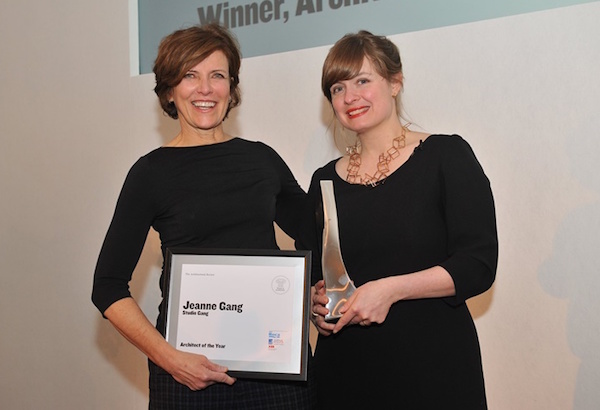
The Harvard Graduate School of Design announces that Jeanne Gang (MArch ’93) has been named the Kajima Professor in Practice of Architecture as of July 1, 2025. Established at the school in 1989 by the Kajima Corporation, the endowed professorship supports a faculty member to advance instruction and scholarship in architecture.

Gang is the founding partner of Studio Gang , an international architecture and urban design practice based in Chicago with offices in New York, San Francisco, and Paris. The firm has built a large portfolio of globally respected projects that draw insight from ecological systems to strengthen relationships among individuals, communities, and environments. Well known projects include the Aqua Tower in Chicago, IL (completed in 2010), the Arcus Center for Social Justice Leadership at Kalamazoo College in Kalamazoo, MI (completed in 2014), and Solar Carve in New York, NY (completed in 2019). Most recently, Studio Gang has received high praise for its design of the Richard Gilder Center for Science, Education, and Innovation at the American Museum of Natural History in Manhattan (2023), which provides a new entrance hall and wing for this major institution. Studio Gang has also created the campus plan for Harvard’s Enterprise Research Campus and designed notable buildings for the site, including the David Rubenstein Treehouse conference center.

Studio Gang has become known for advancing ecological and community-centered design practices, and these aspects of professional life form the backbone of Gang’s pedagogy at the GSD. To help students develop their agency as designers, her option studios focus on existing buildings, such as the New England Aquarium, with an emphasis on resiliency and reuse. These studios also have provided Gang with a forum for her own research on low-carbon techniques for adaptive reuse and addition, including her concept of “architectural grafting.” Gang has developed these themes further as a guest editor, with Lizabeth Cohen, of Harvard Design Magazine 53: “Reuse and Repair,” forthcoming Fall 2025.

Yen-Ting Cho on Transdisciplinary Practice: Interweaving the Human and the Digital

“Video installation, sculpture, ceramic, printmaking, textile—our work spans various media,” explains Yen-Ting Cho (MDes ’09) of his design studio’s creations, which range from luxury scarves to vast public artworks, the most recent for the new Terminal 3 in Taiwan’s Taoyuan International Airport. Despite the diversity in type and scale, these projects all derive from a singular underlying notion: human-computer interaction. “I always focus on combining human and computer-based thoughts,” says Cho. “For me, it’s a dialogue between the two, not an either-or question.” Cho’s blurring of boundaries integrates techniques from architecture, computer science, and other fields, exemplifying the transdisciplinary outlook he developed during his time at the Harvard Graduate School of Design (GSD).
From a young age, Cho cultivated multiple disciplinary interests. He naturally embraced technology and engineering, having been raised near Taiwan’s Hsinchu Science Park (an environment akin to California’s Silicon Valley). Simultaneously, Cho gravitated toward artistic creation; encouraged by his family and high school curriculum, he explored sketching, painting, traditional paper cutting, and calligraphy, as well as package design and music. Cho then studied architecture at National Cheng Kung University (NCKU), becoming well versed in analog and digital design tools while earning his bachelor of science degree (completed in 2005) and interning with architectural firms. “By this point,” he recalls, “I wanted to explore additional types of media, which I hoped could be more expressive and engage with a wider audience.” Thus, after completing his mandatory military service, in 2007 Cho entered the GSD’s Master of Design (MDes) program focusing on design and technology, eager to delve into alternative methods of creation.

“Crossing traditional disciplinary boundaries is never easy,” Cho declares. “Most training prepares students to fit into the so-called real world, which does not tend to favor disruption.” Fortunately, Cho found that the MDes program challenged this trend by encouraging multidisciplinary exploration. During his two years at the GSD, he took advantage of Gund Hall’s rich offerings as well as those at the Harvard Graduate School of Arts and Sciences and the neighboring Massachusetts Institute of Technology (MIT). Cho began by learning parametric design and computer programming, and then moved on to human-computer interaction courses at both the GSD and the MIT Media Lab. Within Harvard’s Department of Visual and Environmental Studies (now known as the Department of Arts, Film, and Visual Studies), Cho received fellowships to explore animation. He took photography courses, built his first robot, worked on an interactive installation for the Frank Lloyd Wright: From Within Outward exhibition (2009) at the Guggenheim Museum in New York City, and won several international awards for his experimental films.
In retrospect, Cho characterizes his time as an MDes student as truly formative. He found “Sculpting in Motion,” a course taught by then associate professor of practice Allen Sayegh, to be particularly impactful. “The tools used in the course were similar to those used for architectural design, but for different artistic expressions. I started to see the grey areas between design and art,” Cho says. By graduation, Cho had expanded his “interests from spatial design to temporal creation and had started to seriously think about, and tentatively build, creative digital tools.”
Inspired by Sayegh’s mentorship as well as a course at the MIT Media Lab called “New Paradigms for Human-Computer Interaction” (taught by Hiroshi Ishii ), Cho decided to explore creations arising from human-computer interaction. Following his graduation from the GSD, Cho enrolled in London’s Royal College of Art (RCA) to pursue a PhD in Innovation Design Engineering. This program foregrounded practice-based research, and a diverse group of advisors—a cybernetician/design theorist, a film theorist, and an aeronautical engineer/design—helped Cho integrate his assorted interests.[1]

While a doctoral student, Cho collaborated with two Taiwanese researchers to develop mov.i.see , a digital software that “uses body movement to reconstruct inputted digital data.” This software would become integral for Cho; after completing his PhD in 2009, he started YEN TING CHO , a studio that uses mov.i.see to generate unique patterns, initially for textiles. Cho also began teaching at the Institute of Creative Design at NCKU, where he is now a professor.
With offices in London and Taipei, YEN TING CHO now describes itself as a digital design studio and consultancy that produces unique artworks, public installations, and contemporary designs for fashion accessories, interiors, and exteriors. Their creations feature colorful patterns that arise from running images through mov.i.see. The resulting designs are finished by hand, playing with color, space, and form, and are ultimately digitally printed onto a given surface, such as textiles or ceramics. With his studio, Cho intentionally fosters “an open and dynamic environment for creatives interested in transdisciplinary and practice-based research.” This breadth and experimentation allow the studio to tackle projects in a unique way, as is the case for its current focus: Gateway to Taiwan: Island Tales, a public installation for the north hall of the Richard Rogers–designed Terminal 3 at Taoyuan International Airport.

Cho fashioned Gateway to highlight aspects of Taiwan beyond its technological renown. To comprise the installation, he created seven artworks, each representing a different theme within Taiwanese history and culture—for example, spiritual life, the natural world, or the cityscape. The works, which collectively total over 300 meters, “show Taiwan’s creativity, interweaving technology and culture,” Cho explains. This interweaving plays out in both the process and products of creation. Following a phase of in-depth research, Cho manipulates his human reflections with his software to generate the semi-abstract thematic patterns. The abstraction encourages travelers of all cultures—visitors and locals—to engage with the works, to develop their own interpretations of Gateway and the island of Taiwan.
When Gateway opens in late 2025, the project will showcase the potential inherent in transdisciplinarity, which Cho initially encountered during his time as an MDes student at the GSD. “Perhaps that’s the beauty of the MDes program,” Cho says. “It’s not just architecture. It’s not just landscape. It’s not just urban design. It’s everything everywhere.”
[1] Aligning with these specialties, Ranulph Glanville, Al Rees, and Neil Barron were Cho’s advisors at RCA.
Jeremy Ficca on Biogenic Materials: Where High Tech and Low Tech Meet

By the early 1900s, Pittsburgh, Pennsylvania, had emerged as an industrial powerhouse, due in large part to its prodigious steel production. More than a century later, the city has refashioned itself as a center for innovation. It is thus fitting that Jeremy Ficca (MArch II ’00), an associate professor and incoming Associate Head of Design Fundamentals in the School of Architecture at Carnegie Mellon University (CMU), has concentrated his research on biogenic building materials. Made from rapidly renewable resources such as plants and fungi, biogenic materials offer a sustainable alternative to standard materials such as steel and concrete, requiring less energy for sourcing and construction, and even assisting with carbon sequestration. This semester, as a design critic in the Department of Architecture at the Harvard Graduate School of Design (GSD), Ficca is teaching an option studio called “Material Embodiment: Logics for Post-Carbon Architectures” in which biogenic materials—and geogenic materials, which are sourced from the earth’s crust—feature prominently.
With respect to buildings, Ficca explains, we tend to think about energy and carbon in two ways. The first and more conventional outlook involves increasing energy efficiency for elements like heating, cooling, and lighting, often through technological means. The second relates to how and with what materials buildings are constructed, along with the externalities that accompany these design decisions, such as their impacts on human labor and greenhouse gas emissions. This more holistic approach underlies the “Material Embodiment” studio, in which students explore bio- and geogenic materials (such as hemp, straw, and earth) to design a hybrid workforce-training and research facility on an old river-front industrial site in Pittsburgh’s Hazelwood Green. The studio asks the students to rethink the material composition of a building as well as their designs’ broader implications on material sourcing, labor, construction technology, and maintenance.

Ficca recently spoke with Krista Sykes about bio- and geogenic materials, his own research, and the urgency for change within the architectural discipline.
How did you become interested in biogenic materials?

My teaching and design research focus on the intersections of materiality, technology, and architecture. While this initially operated within the field of computational methods of design and fabrication, material affordances were a common thread. As one who teaches courses and studios that focus on the materialization of architectural intent, I contend with the impact of building on our planet’s ecosystems through the carbon intensive and extractive nature of construction. Like many of us, I spent time during the pandemic looking inward. The writings of ecological economist Tim Jackson were an important influence on my understanding of post-growth and the imperative to transition to a more resilient economy and society. Around the same time, I was asked to reconceive a core material and construction course for graduate students in CMU’s Master of Architecture program. Doing so provided an opportunity to fundamentally rethink this content in relation to climate change and resilience. The questions that began to arise through the development of the course and subsequent discussions with students highlighted the inadequacy of simply trying to achieve greater and greater efficiency in building performance rather than exploring how the building’s material makeup can substantially reduce energy and carbon expenditures.
We are at a precarious moment. There is broad consensus that our climate crisis requires fundamental recalibration of the acts of building to address the negative externalities of the process. There is no single solution to this immense challenge. Responses will be quite different depending upon local circumstances. I am interested in how material practices can address questions of embodied carbon and energy and how these practices might open space for design imagination and architectural expression. This is a technical problem but also a deeply cultural question.

In the North American context, the most universal biogenic construction material is wood. But there is a remarkably rich range of harvested and grown materials alongside wood, including bio-resins, mycelium, and hemp, to mention but a few. Some biogenic materials belong to longstanding traditions of building, while others emerged through rigorous research and development processes. My current work focuses on industrial hemp and lime, often referred to as hempcrete. While the combination of these materials to construct walls dates back more than thirty years, it is somewhat analogous with straw and cob techniques that have much longer histories.
You mentioned that some of the biogenic materials being explored in the studio connect to longstanding building traditions. Could you say more about the materials you have in mind?

Some of the students this semester are exploring loam (earth and clay) construction. These are practices with long histories that were largely passed over because they were incompatible with industrialized building techniques. There is remarkable work underway by architects like Roger Boltshauser and Martin Rauch that seek to situate these methods within the technological circumstances of our time. This is in part a process of reconnecting with practices that were perhaps deemed to be pre-modern, inefficient, or even primitive. But this renewed interest does not result from nostalgia or a desire to return to pre-modern vernacular techniques. Rauch’s development of prefabricated insulated rammed earth blocks is a response to the challenges of scale, labor, and construction costs. As their work is demonstrating, adoption of these techniques will require automation to address their labor intensiveness. Additionally, there is research underway at the Gramazio Kohler ETH research group developing robotic deposition of clay to yield monolithic architectural elements. It is a fascinating melding of high and low tech, of high precision and lower-resolution architecture. I find these calibrations, frictions, and occasional contradictions to be both exciting and a source of opportunity, prompting questions about the cultural connections between how we conceive of our environments and the materials with which we build.
How did your research come to focus on hemp and lime?

In December 2018 the United States passed the 2018 Farm Bill, removing hemp with extremely low concentration of THC from the definition of marijuana in the Controlled Substances Act. Passage of the bill legalized the growth and processing of industrial hemp nationwide. As I researched industrial hemp, I was impressed by its remarkable attributes as a crop and its performance as a building material. Per acre, industrial hemp is one of the most effective CO2 to biomass crops.
The convergence of the farm bill and the performance capacity of hempcrete that was emerging through research in the EU pointed to opportunities for applications in the US. There is a track record of industrial hemp farming in the EU and UK with a few noteworthy examples of buildings that utilize the material. I was initially drawn to the labor-intensive nature of using hempcrete as a site-rammed material, and its potential to inform incremental, process-oriented approaches to construction within domestic architecture. I was interested in how a house might grow over time along with the harvesting and processing of material. This work, at the scale of the house, has transitioned into the design of discretized assemblies.

How does your work dovetail with the students’ pursuits throughout the semester?
The studio directs attention to one of the fundamental elements of architecture—the wall. We do so in part because many bio- and geogenic materials lend themselves to solid construction that relies upon accretion, processes of layering, compressing, and stacking. Materials like hempcrete and rammed earth require solidity and thickness to achieve thermal performance. But we also take on the topic of the architectural boundary because it reveals contemporary tendencies and desire. Principal among them is the legacy of modernism’s focus on lightness and thinness. The students are exploring spatial organizations and expressions that are informed and inspired by materials that require different processes of formation.
The students are developing proposals for a skilled workforce-training center located on a post-industrial site in Pittsburgh that was once a coke works and steel mill. It is a site with a long and complicated history of industrial growth, human labor, economic and environmental collapse, and regeneration. As I alluded to earlier, some of these materials are quite labor intensive. There are different attitudes to this topic. Some argue for greater human energy over embodied material energy and embrace the potential for the creation of new skills and jobs, while others point to automation to achieve scale and affordability. I am not advocating for one approach; rather, I’m interested in how the students’ positions on labor and technology inform their work. How might they calibrate architecture to production by humans and machines?

Very early in the semester we cast some hempcrete blocks. This experience allowed us to work directly with the material, understand the limits of its resolution, and appreciate the characteristics of a low-processed natural material. Hempcrete, like many bio- and geogenic materials, can be hard to control. It is inherently somewhat imprecise. This pushes back against the characteristics of most contemporary building materials, which tend to rely on high degrees of precision and predictability.
Another point of convergence between my research and the work undertaken in the studio this semester is the topic of durability. Most buildings are constructed to be highly durable, to withstand weather and time. And there are many good reasons for this; buildings are expensive to construct and maintain. Some of the materials we have been working with challenge that approach in that they can be understood as weak, or to require different forms of maintenance and repair. A lot of the ways in which one engages contemporary construction is to try to minimize those conditions in a building. Over the history of many cultures, there have been remarkable practices of maintenance and care, some that also have functioned as cultural acts in society. So, when we build with materials that are low in energy, low in carbon, as great as they might sound, there are certain tradeoffs, and perhaps one of the tradeoffs is the fact that they might require different forms of care and maintenance. Rather than this being perceived as a problem to be overcome, might there be an opportunity here? Might this challenge the way we think about a building’s lifespan and open new ways of considering the traces of time and the finishing of a building?
As low energy, low carbon, sustainable alternatives to conventional materials, bio- and geogenic materials offer exciting possibilities. It seems that reframing potential problems associated with these materials as disciplinary opportunities renders them even more promising.
I agree. I want to be careful not to oversimplify or generalize. Making even a small building is a complex endeavor that relies on hundreds of materials with a wide range of embodied carbon and energy. These questions need to be considered holistically to weigh tradeoffs. The material practices we’ve discussed raise fundamental questions about the status quo of construction and its impact on environmental degradation; in doing so they open space for imagination. I find this territory, coupled with the various frictions and complications, to be quite useful for students to operate within.

*All images by Jeremy Ficca, unless otherwise noted.
Peter Chermayeff on Taking Risks and Embracing Collaboration

For his first architectural commission, Peter Chermayeff landed a big fish: Boston’s New England Aquarium. It was 1962; Chermayeff was 26 years old, had earned his master of architecture degree from Harvard’s Graduate School of Design (GSD) a mere six months prior, and didn’t yet have a license to practice architecture. He and his partners had just created Cambridge Seven Associates, a multidisciplinary collaborative firm of architects and graphic designers that would soon gain international prominence for a range of work, from small exhibitions to large mixed-use complexes.
More than six decades later, speaking about his early success, Chermayeff humbly observes: “I have a certain willingness to take risks, I suppose. And I have surrounded myself with first-rate collaborators.” Of course, his continued achievement stems from more than a penchant for risk-taking and multidisciplinary collaboration. A world-renowned authority on aquariums, responsible for high-profile projects such as the National Aquarium (1981) in Baltimore and the Oceanarium (1998) in Lisbon. Yet, the self-described “ambivalent architect” nearly didn’t become an architect at all. He had settled on filmmaking when a well-timed risk and a collaborative enterprise changed his mind.

The son of Russian-born modern architect Serge Chermayeff , Peter immigrated with his family to the United States from England in 1940 at the age of four. He and his brother Ivan (four years Peter’s senior) spent the next year with family friends—Walter and Ise Gropius in Lincoln, Massachusetts—while their parents traversed the country in search of an American outpost. Over the following decade and a half, as the father assumed a series of teaching positions (including stints in California, New York, and Chicago), the sons graduated in succession from Philips Academy at Andover. In 1953, the same year that Serge assumed leadership of GSD’s first-year program, Peter entered Harvard College with his sights trained on architecture. He majored in Architectural Sciences, which allowed him to commence graduate work after only three years of collegiate studies. Thus, in the fall of 1956, Peter entered the GSD.

Chermayeff immensely enjoyed his first and fourth years of his architectural studies, taught respectively by his father (“a hell of a good teacher”) and Dean Josep Lluís Sert (“a master and superb teacher.”) “The school was filled with energy and talent,” Chermayeff recalls. “I was intrigued by the power of the community, the quality of my classmates, and the fun we had in exchanging ideas. I was learning as much from my fellow students as I was from the faculty.”
Yet, even while enjoying his time at the GSD, Chermayeff wasn’t convinced that an architectural career was right for him. He had spent a summer in New York working for his brother Ivan, who had recently launched a graphic design firm with Tom Geismar. (Over the years, Chermayeff & Geismar would craft a plethora of highly recognizable logos including those for NBC, Mobil, PBS, and Chase Bank.) Another summer, Chermayeff worked with the Italian sculptor Costantino Nivola in his studio on Long Island as the artist created a large cast-concrete bas relief for an insurance company building in Hartford. As Chermayeff neared the end of his schooling, these endeavors prompted him to think less about architecture as a career and “more so about the visual arts, filmmaking in particular.”

During his final year at the GSD, Chermayeff had achieved unexpected success with a 15-minute experimental film. Titled Orange and Blue, the unnarrated film depicts two rubber balls, one orange and one blue, as they bounce from a bucolic wooded landscape into a junkyard strewn with the detritus of modern life. Taking a liking to the production, a film distributor paired Chermayeff’s short with Ingmar Bergman’s Through a Glass Darkly as the Swedish feature toured the United States. Chermayeff found the unanticipated accolade to be “funny, ridiculous, but also wonderful.” What’s more, says Chermayeff, “I realized that, in the course of doing the film, I’d had more fun than I’d had doing anything with architecture.” So, upon graduation from the GSD, in 1962, a year when US officials were urging families to build fall-out shelters, Chermayeff set out to make another film—this time an informative documentary on the effects of nuclear weapons.
Six months later, as Chermayeff was immersed in raising funds and producing the documentary, his friend Paul Dietrich (MArch ’56) suggested they start a collaborative firm that would combine architecture, urban design, graphic design, and industrial design. Chermayeff declined; “Paul,” he explained, “I’m off in another direction. I’m making films.” Yet, the idea had been planted in Chermayeff’s mind.

The following week, Chermayeff made a bold move. He traveled to the Franklin Park Zoo in Boston’s Dorchester neighborhood and, without an appointment, approached zoo director Walter Stone. “He must have thought I was crazy. I told him that I thought his zoo was dreadful,” Chermayeff recalls, “and that it could be rethought, reimagined, replanned, and changed for the better if he would allow us.” Stone was intrigued, agreeing to attend a slide presentation in Chermayeff’s Cambridge studio on how the as-yet-unnamed firm would revitalize his zoo. Impressed by their ideas but without funding to hire them himself, Stone introduced Chermayeff to the person in charge of developing a new aquarium in Boston. After a successful meeting, the fledgling firm was included on the project’s short list of architects, and an interview followed. Ultimately, Chermayeff and colleagues were selected to design the New England Aquarium—a lynchpin in the renewal of downtown Boston’. “And that,” says Chermayeff, “is how we started Cambridge Seven.”
As the name implies, seven partners initially comprised the collaborative venture: in addition to Chermayeff, four architects—Louis Bakanowsky (MArch ’61), Alden Christie (MArch ’61), Paul Dietrich (MArch ’56), Terry Rankine—and graphic designers Ivan Chermayeff and Tom Geismar, who simultaneously maintained their New York practice. They were all relatively young (Dietrich, in his mid-30s, was the elder stateman of the group). Yet the men had secured a major project, “an adventure in itself,” recalls Chermayeff, “because it involved reimagining and reinventing a building type—an urban aquarium, a place of encountering nature.” For Chermayeff, though, the New England Aquarium commission took on additional significance: “it meant that I could in fact find my way in this field because the project called for interwoven exhibition design and graphics and would address the content of things as much as the form of the envelope or the planning of the surroundings. It became, for me, place-making with a purpose, driven by content and context.” Opened in 1969, the Boston aquarium played a key role in transforming the city’s waterfront into a vibrant public locale. It also led to more aquarium commissions around the globe.

Even before the New England Aquarium’s completion, though, Cambridge Seven acquired two noteworthy projects—”not from the aquarium particularly,” Chermayeff notes, “but from the notion of the firm as a multidisciplinary collaboration.” The first arrived in 1964 when Jack Masey, design director for the United States Information Agency, invited Cambridge Seven to spearhead the US Pavilion for Expo ’67 in Montreal . Chermayeff and the others worked with Buckminster Fuller to make a transparent bubble, a geodesic dome as a three-quarter sphere 250 feet in diameter, which Fuller’s team engineered. Cambridge Seven designed the interior, which consisted of staggered platforms, described by Bakanowsky as “lily pads,” joined by escalators and stairs. Exhibits showcased items from a NASA lunar landing module and oversized works of contemporary art to Raggedy Ann dolls and mouse traps—all products of American creativity and ingenuity. An elevated monorail further animated the pavilion, bisecting the spherical space at the equator as it transported Expo visitors throughout the fairgrounds.

The other prominent multidisciplinary project Cambridge Seven tackled in the mid-1960s involved environmental design for the Massachusetts Bay Transportation Authority (MBTA) transit system. As Chermayeff notes, “We made some basic changes that had to do with the experience of the user, the people who use the system, riding the trains or the buses, walking through the stations. We developed guidelines and standards and, above all, a system of graphics and identity that unified the different subway stations and gave clarity to where you were and where you were going.” These changes included rebranding the transit system as the “T,” an idea borrowed from Stockholm, Sweden. “We concluded that the ‘T’ would work as a symbol for a lot of very good reasons. Intuitively, if you see the letter T, you can think of transportation, travel, transit, tube. . . so many words that conjure the notion of what it’s all about,” Chermayeff says. Geismar painstakingly created the black-and-white “T” logo, still ever present throughout the Boston region.

Likewise, a version of the “T”’s minimalist spider map remains in use today, coherently depicting individual locations within a larger, unified system. As Chermayeff explains, they color coded the subway lines, providing each line with a geographically derived identity. Thus, the former Harvard–Ashmont Line was renamed the Red Line, referencing Harvard’s signature color. The track running to Boston Harbor and northeast along the sea became the Blue Line, while the Green Line branched toward Olmstead’s Emerald Necklace southwest of Boston. “And Orange . . . well, I just didn’t know what else to do,” Chermayeff confesses. “It was a fourth color, and it made sense to combine with the others!”
Above ground, the colors simplified the user experience, signaling the stations’ affiliations. “As you walk down the street, if you see green and orange, you know that this station takes you to both Green and Orange Line trains. This means that the whole city, the skeleton of the city, becomes more legible,” Chermayeff notes. “Looking back on it,” he concludes with a grin, “in terms of the impact on millions of people over time, I think what we did there was pretty terrific.” That this overarching scheme for the MBTA endures today, nearly sixty years later, suggests that Chermayeff is indeed correct.

Moving into the 1970s, Cambridge Seven continued to garner attention, completing an array of work including museums, educational buildings, and mixed-use complexes, eventually winning the American Institute of Architecture’s prestigious Firm of the Year award in 1993. Chermayeff became known internationally as the foremost aquarium architect, leading significant projects throughout North America, Europe, and Asia. He also continued to make films, including the eleven-part, non-narrated Silent Safari series for Encyclopedia Brittanica that depicts rhinoceroses, lions, and other animals in their natural East African habitats. Chermayeff left Cambridge Seven in 1998 with two younger collaborators, Peter Sollogub and Bobby Poole, and he continues to practice design with Poole.
Throughout his career, Chermayeff, the “ambivalent architect,” has approached the built environment through a multidisciplinary lens, integrating design and visual culture to make useful, inviting, inspiring places for the public at large. Thinking about the profession today, he forecasts an even greater need for collaboration. “An architect is, almost by nature now, an expression of a collective will rather than an individual will,” Chermayeff asserts. “We learn from each other, and we learn by tackling and solving problems that matter. I like to think that in the next several years, we’ll find ways to address issues like housing and the environment more broadly, where instead of individualistic statements, design occurs through more bees building their bits of the hive, reinforcing each other to make urban places that are humane and rich.”
Winter Reading 2025: Design Books by GSD Faculty and Alumni
In need of new reading for the new year? These recent books by Harvard Graduate School of Design faculty and alumni—published within the past six months and organized alphabetically by title—feature topics from Victorian architecture to geospatial mapping.

In Also Known As: Uncovering Representational Frameworks in Architecture, Art, and Digital Media (MIT Press, 2024), assistant professor of architecture Michelle Jaja Chang (MArch ’09) ponders relationships between objects and architecture. Drawing on design, media, computation, and art, this book employs texts and images to explore the social, material, and political impacts of architectural systems and design technology.
A contemporary architectural manual, The Architect’s Sourcebook: Dimensions and Files for Space Design (Birkhäuser, 2024), written by Stanley Chaillou (MArch ’19), presents a digital repository of typologies, from housing to work to leisure spaces, complete with explanatory texts, general dimensions and guidelines for 2D layouts, and downloadable CAD blocks.


Architecture.Research.Office. (DelMonico Books, 2024), edited by Stephen Cassell (MArch ’92), Kim Yao, and Adam Yarinsky, documents over thirty projects by the editors’ New York–based firm Architecture Research Office (ARO), recipient of the American Institute of Architects Firm Award in 2020. Founded in 1993, ARO is known for engaging, research-driven projects with a clean aesthetic, including the phased renewal of the Rothko Chapel and Campus (ongoing) in Houston; the Brooklyn Bridge Park Boathouse (2018); and the Congregation Beit Simchat Torah (2016) in New York City.
Autonomous Urbanism: Towards a New Transitopia (Applied Research + Design Publishing, 2024), by Evan Shieh (MAUD ’19), explores the latent and transformative impact autonomous vehicles will have on the urban and spatial future of cities. Employing representational techniques of graphic novels, the book explores our recent history of urban transportation and speculates on the typologies and policies that await us with a driverless mobility paradigm shift.


In “Modernism in Three Acts,” published in editor Léa Namer’s Chacarita Moderna: La Nécropole Brutaliste de Buenos Aires (Building Books, 2024), associate professor of architecture Ana María León (MDes ’01) draws on archival documents held at the Special Collections of Frances Loeb Library to explore the architectural context in which Argentine architect Ítala Fulvia Villa designed the monumental Sexto Panteón (Sixth Pantheon) at the Chacarita Cemetery in Buenos Aires.

Juxtaposing an essay by Mohsen Mostafavi, Alexander and Victoria Wiley Professor of Design and Harvard University Distinguished Professor, with one written decades prior by the German art historian Max Raphael (1889–1952), The Color Black: Antinomies of a Color in Architecture and Art (Mack Books, 2024) expounds on the relationship between architecture, art, and the color black. Commentary by Swiss architect Peter Märkli and American artist Theaster Gates, along with a broad range of illustrations, offer additional thoughts on contemporary architectural and artistic developments.


Henry Hobson Richardson: Drawings from the Collection of Houghton Library, Harvard University (Monacelli, 2024), by Jay Wickersham (MArch ’84), Chris Milford, and Hope Mayo, presents previously unpublished sketches, renderings, and plans of more than 50 projects by the famed nineteenth-century architect, covering building types from houses and railroad stations to churches, libraries, and civic structures. Essays by the authors as well as architectural historian James O’Gorman shed light on Richardson’s extensive oeuvre and enduring legacy.
With IDEAS–A Secret Weapon for Business: Think and Collaborate Like a Designer (Routledge, 2024), Andrew Pressman (MDes ’94) offers a sensible guide for leaders to incorporate elements of design thinking within their organizations. Relying on case studies and practical techniques for fostering creativity and critical thought, this book provides readers with a framework to encourage innovation and teamwork in all business realms.


Large, Lasting, & Inevitable (Park Books, 2025) by Jorge Silvetti, Nelson Robinson Jr. Professor of Architecture, Emeritus, illuminates foundational moments that have shaped architectural thought throughout the past six decades. Edited by Nicolás Delgado Alcega (MArch II ’20), the book features a selection of Silvetti’s seminal texts alongside discussions with figures of the next generation—including design critic in architecture Mark Lee (MArch ’95), Robert P. Hubbard Professor of Architectural History Erika Naginski, Elisa Silva (MArch ’02), Nader Tehrani (MAUD ’91), and Alfredo Thiermann.
Meet Me at the Library: A Place to Foster Social Connection and Promote Democracy (Island Press, 2024), by Shamichael Hallman (LF ’23), positions libraries as spaces that, when properly conceived and programmed, help build inclusivity communities. Drawing on extensive research and examples from throughout the United States, Hallman highlights the significant role libraries could play in healing the rifts that divide our nation.


Monumental Affairs_Living with Contested Spaces (Hatje Cantz, 2024), edited by Germane Barnes (Wheelwright Fellow, ’21), presents interviews, lectures, and other documentation from the Design Akademie Saaleck’s 2023 symposium, held at the former home of National Socialist ideologue and architect Paul Schultze-Naumberg in Saaleck, Germany. The most recent installment in the dieDASdocs series, this text features interdisciplinary explorations into discriminatory architectural and urban practices embedded within the conception, production, and endurance of monuments.
To Nos Lieux Communs (Fayard, 2024), edited by Fabrice Argounès, Michel Bussi, and Martine Drozdz, assistant professor of urban planning Magda Maaoui contributed a discussion on the Haussmannian “chambre de bonne” worker housing typology at the intersection of historic preservation, climate adaptation, thermal comfort, and health. An essay by Antoine Picon, G. Ware Travelstead Professor of the History of Architecture and Technology, addresses the complex global geographies of data centers.


In The Power of Where (Esri Press, 2024), Jack Dangermond (MLA ’69) details the history and advancements of geographic information systems (GIS), presenting mapping as a problem-solving method that allows users to perceive and understanding patterns of all kinds—from spatial to environmental to demographic. Architect and designer Richard Saul Wurman described the richly illustrated book as “a bible of the types of maps, cartography, spatial analysis, and diagrams that can bring our ideas for the future to life.”

Radical Atlas of Ferguson, USA (Belt/Arcadia Publishing, 2024), by Patty Heyda (MArch ’00), probes the planning policies that shaped the St. Louis suburb where, in 2014, racial tensions erupted following the murder of 18-year-old Michael Brown. Using more than 100 maps, Heyda examines philosophical, financial, and design-related forces that set the stage for this violence, prompting readers to consider for whom cities are built and how design impacts everyday life.


Revitalizing Japan: Architecture, Urbanization, and Degrowth (Actar Publishers, 2024) features the work of young architects in Japan who are practicing in ways that respond to the post-growth condition of the country’s shrinking population. Co-edited by Kayato Ota and Mohsen Mostafavi, Alexander and Victoria Wiley Professor of Design and Harvard University Distinguished Professor, the book contains texts by architect Toyo Ito and community designer Ryo Yamazaki and photos by Kenta Hasegawa
An Advocate for Architecture: Jhaelen Hernandez-Eli

Nearly twenty years after his graduation, Jhaelen Hernandez-Eli (MArch ’06) will return to the GSD this spring to teach a seminar titled “The Art Museum: Typological Trajectories.” Hernandez-Eli is uniquely qualified to address this topic; as vice president of capital projects at New York City’s Metropolitan Museum of Art , he oversees the institution’s $2 billion construction and renovation campaign, which includes the new Tang Wing for modern and contemporary art by Frida Escobedo (MDes ’12). Beyond his course-related expertise, Hernandez-Eli will share additional lessons about his work and the opportunities for owners to support the profession. “What I would love for students to understand is, that while I don’t practice architecture in the traditional way, the advocacy is still of utmost importance. There’s real opportunity for impact.” Rather than design buildings, Hernandez-Eli crafts processes that enable “an appropriate, robust, and rigorous architecture to emerge.”
Hernandez-Eli first arrived at the GSD in 2002, after earning a bachelor of arts in architecture from the College of Environmental Design (CED) at the University of California, Berkeley. The CED afforded him an understanding of architecture grounded in site and program, informed by environmental and social concerns. At the GSD, Hernandez-Eli encountered a different approach to architecture. In first-semester core studio, Scott Cohen (MArch ’85) assigned the “Hidden Room” exercise, a problem that mandates a covert fifth room be somehow obscured within four rooms. Hernandez-Eli found this exercise enlightening, as it exposed him “to the ideas of innovating within constraints beyond site and program and, more radically, of embracing those constraints.”
Over the next three years, a range of faculty—including Nader Tehrani (MAUD ’91), Monica Ponce de León (MAUD ’91), and Toshiko Mori—instilled in Hernandez-Eli additional foundational principles that, two decades later, continue to shape his work. These notions include an appreciation for architecture as interdisciplinary and socially embedded, not separate from the society that constructs it. Hernandez-Eli likewise developed a reverence for architecture and for the architects and craftspeople that make it. And he learned that, if properly positioned, he can design alternative processes within which architecture is produced, thereby bolstering architects, the power of architecture, and society at large.

The idea of designing processes has been instrumental in terms of Hernandez-Eli’s professional trajectory. While not practicing architecture in the traditional sense, he has constructed an impactful role for himself as an advocate for architecture. This began with his time at Diller Scofidio + Renfro, from 2008 through 2017, where he rose to an associate principal managing the studio’s operations and strategy, facilitating cultural projects such as the Museum of Modern Art expansion and the High Line. Hernandez-Eli then shifted from the service-provider to client/owner side, joining the New York City Economic Development Corporation (NYCEDC) as senior vice president, head of design and construction, where he spearheaded projects fostering social and economic equity, including public food markets and the city’s waterfront infrastructure. In 2020, after three years at NYCEDC, Hernandez-Eli moved to The Met where he oversees the design, architecture, and construction of the institution’s galleries, infrastructure, workspaces, and public areas.
At The Met, Hernandez-Eli has guided multiple projects such as the renovations of the Rockefeller Wing (by Kulapat Yantrasast of WHY Architecture) and the galleries for Ancient Near Eastern and Cypriot Art (by Tehrani of NADAAA). He also continues the larger undertaking he initiated with the NYCEDC: using his institutional role to demonstrate the opportunity owners have “to be bold, bringing in new voices and tackling the pressing issues of our time.” Most owners, he explains, approach the commissioning process in a risk-averse manner, choosing established firms with a well-stocked portfolio. Yet, Hernandez -Eli asserts, “if you know how to manage the project and build an infrastructure behind the scenes to mitigate such risks”—for example, pairing a younger architect with an experienced firm—owners can level the playing field for new voices. And while one might argue that customary design competitions offer newcomers a point of entry, Hernandez-Eli would vigorously disagree. “Competitions are terrible!” he declares. “Architects are undervalued and underpaid through that process. It also does not put the client in the best position to make the right decision.”
To illustrate how owners can design a process that supports less established architects, Hernandez-Eli references the example of Escobedo. As the New York Times noted upon her selection in 2022, “Escobedo, 42, is a surprising choice for such a major assignment given that she is relatively young, has mostly designed temporary structures, and is not a household name.” While these attributes might be deterrents for some, not for The Met. To settle on an architect for the Tang Wing, the museum adopted a workshop model, inviting a shortlist of relative newcomers to participate. Hernandez-Eli and others worked with the architects individually over the course of six months, meeting every two weeks, “getting to know them, guiding the process, helping them understand the constraints—just like the Hidden Room project.” In the end they chose Escobedo, stating in a press release that “her work draws from multiple cultural narratives, values, local resources, and addresses the urgent socioeconomic inequities and environmental crises that define our time.”

Alongside supporting newer architects, another opportunity for owners involves socioeconomic and environmental impact. For Hernandez-Eli, “design coordinates labor and materials around a set of values and manifests those values.” He continues, “engaging with architects who demonstrate a commitment to craft and artisanship, we’re looking to proactively curate the dollars [associated with our projects] into the local economy, local craftspeople, new technologies, so that we can participate in building a robust middle class.” This translates into job creation; for example, instead of importing artisans for a project, “we might fly them in to teach artisans here, who then develop new skillsets and become resilient themselves,” Hernandez-Eli explains. “It’s about keeping things hyperlocal, not shipping your granite in from Italy, but sourcing materials from within, say, a 50-mile radius,” thereby supporting regional suppliers and reducing the project’s carbon footprint. Hernandez-Eli’s larger message for owners? “Designers can’t maximize their impact alone. It is the responsibility of owners to set our designers up for success—embrace the work they’re doing and partner with them to choose how we spend those dollars.”
In a few months, Hernandez-Eli will help students explore the evolution of museum typology. Simultaneously, he will model non-conventional methods for championing architecture and architects. As Hernandez-Eli observes, “my story shows students that there are different paths to take, and there are different ways of advocating for architecture.”
Remembering Joseph Edward Brown (1947–2024)

Joseph Edward Brown (MLAUD ’72), whose unrelenting promotion of landscape architecture influenced several generations of practitioners, died on Thursday, October 31st, in San Francisco after an extended illness. I was fortunate to have witnessed the loving care his spouse, Jacinta McCann, gave him over the long years of his physical impairment—one of the truest measures of human devotion I have ever encountered.
In my lifetime, there was no stronger champion for the striving achievement of landscape architecture practices than Joe, a tireless man whose energy could not be dampened. The story of his advocacy for the field necessarily starts with the formation of EDAW in 1973, when Garrett Eckbo, Francis Dean, Don Austin, and Ed Williams reincorporated the small but powerfully innovative firm that Eckbo and Williams had originated two decades earlier. EDAW expanded steadily on a wave of emerging environmentalism, delivering new scales of environmental planning including the expansive California Urban Metropolitan Space Study of 1965 and a similar plan for the state of Hawaii in 1970. Joe joined EDAW in 1974 in California and, seeing the East Coast as an opportunity, soon opened the firm’s studio in Alexandria, Virginia, in 1976.
It was in the District of Columbia that Joe developed his full-throated voice for visibility, credibility, and influence for the discipline. Through sustained and strategic promotion, the Alexandria office became a powerhouse in Washington. EDAW’s Alexandria principals assiduously studied how design intersects with governance and public process—the only key to success for anyone working in the capital city. They conquered the art of persuading and winning with agencies including the National Capital Planning Commission, the US Commission of Fine Arts, and the National Park Service. The DC projects were significant, from the Monumental Core Master Plan, Constitution Gardens, the Dwight D. Eisenhower Memorial, and the National Museum of the American Indian, to perhaps the ultimate prize in planning the capital city: Joe’s leadership role in a mega-team for the all-important plan for the District and beyond, called Extending the Legacy, in 1997.

Meanwhile EDAW was expanding globally. In 1992, Joe took the reins of the firm as president; satellite offices thrived in Atlanta, Sydney, and London. By 1994, it was a 400-person entity banking on new global markets including Europe, China, and the Global South. By 2000, EDAW stood at 1,000 people. In 2005, EDAW joined the AECOM companies, one of the world’s largest infrastructure consulting firms. With this merger, EDAW’s landscape practice would gain hold on an unlimited market worldwide.
EDAW kept its identity within AECOM for nearly a decade, but in 2009, after its own legacy of 50 years of transformational practice, the firm was consolidated into AECOM. Many viewed this as a diminishment—it was sad to see the Eckbo Dean Austin & Williams legacy retired. But Joe saw his team of landscape architects working on the largest and most complex projects throughout the world. He led AECOM’s Planning, Design, and Development team, and became the Chief Innovation Officer, prior to his retirement in 2016. Joe had moved beyond visibility and credibility for the field; he was satisfied that landscape architects were leading and collaborating everywhere, and he continued to motivate everyone he knew. He was more than once heard saying, “Make big plans now . . . or be prepared to make little plans for a small future.”
An anecdote: In the late 1990s and into the early 2000s, Joe did some teaching at the GSD, mostly workshops in core studios and guest appearances in classes, and we spent a bit of time together, sharing studio reviews and occasional dinners. At the time, I taught the MLA II Proseminar, which aided first-semester students in the shaping of an academic platform for their two years in the program. I’d invited Joe to speak with the class about his career path and his views on practice. Joe headed to the blackboard after a short introduction. There he wrote “EDAW” and “Reed Hilderbrand” across the top. He said he wanted to talk about where this class of students wanted to work once they’d finished their MLA degrees. He explained that if you wanted to have impact, EDAW would take you places you’ve never imagined, where you can design anything. If you want to work in an atelier, then you should work for Gary’s firm; you will really learn how to design, but the impact will be smaller. A friendly hour-long debate ensued. His voice, forever a bit on the raspy side, was always intense, directive, and encouraging. Joe and I remained good friends. We both liked our respective corners of the world.

Whether he saw you as a boutique artist or a large firm collaborator, Joe always seemed to be as keen on your firm’s success as he was on his own, as a range of practitioners attest. Gerdo Aquino FASLA (MLA ’96) of SWA has noted that “Joe was an important mentor to me in my early professional years at EDAW and SWA. He was the one who talked me into attending graduate school—said I wouldn’t regret it. He was a north star for so many of us.” Cindy Sanders FASLA of OLIN said, “Joe was my most significant mentor in the business of the business. He taught me nearly everything I now know about the business of landscape architecture. I was a good student of his academy.” And James Burnett FASLA of OJB observed, “He wanted us all to make it and prosper because he understood how important it was for our firms and our profession to be strong.”
Joe received many accolades in his career, including the 2009 American Society of Landscape Architects (ASLA) Medal, the association’s top honor. That same year—the year of the full merger into AECOM—EDAW received the ASLA Firm of the Year award as well. The most significant recognition in my view, and I like to imagine possibly for him, was Joe being presented with the Landscape Architecture Foundation Medal in 2019. The ceremony in Washington, DC, was deeply affecting, a moment those in attendance will never forget. While Joe was by then barely able to speak, he was fully aware, with Jacinta at his side, that all in the room felt a great sweep of emotion and gratitude for his determined and tireless contributions to the advancement of landscape architecture.
Joe’s dedication to furthering the discipline of landscape architecture persists. Established in 2017 with Jacinta, the Joe Brown and Jacinta McCann Fund for Faculty Research provides support for both new and ongoing research projects conducted by junior faculty in the GSD’s Department of Landscape Architecture or Department of Urban Design, with a particular interest in interdisciplinary projects.
The Renovated Gund Hall: A Paradigm for the Revitalization of Mid-Twentieth-Century Architecture
Harvard Graduate School of Design students returned for the fall 2024 semester to find Gund Hall transformed. Yet the iconic building looked much the same as it had since opening a half century ago. And this was indeed the point. Over the summer, a meticulously planned renovation enhanced the facility’s energy performance, sustainability, and accessibility while conserving its original design. Led by Bruner/Cott Architects, this project has transformed Gund Hall into a paradigm for the rehabilitation and stewardship of mid-twentieth-century architecture.

Designed by Australian architect John Andrews (MArch ’58), Gund Hall opened in 1972 to house Harvard’s Graduate School of Design (GSD). Since this time, the building’s glass-enclosed five-story studio block, known as the trays, has served as the GSD’s physical and metaphorical center—where students work, interact, and exchange ideas. The trays have been quite successful as a workspace and social condenser, as Andrews envisioned, but less so in terms of environmental consciousness and user comfort. Single-pane glazing and minimally insulated exposed concrete, commonplace at the time of construction and used by Andrews in a forward-thinking fashion, ultimately made the building difficult to heat and cool. Studies preceding the renovation revealed that the trays, which account for 28 percent of Gund Hall’s floor area, were responsible for 46 percent of the building’s energy consumption.

Alongside these financial and environmental costs came a very human one: within the trays, students experienced thermal conditions that ranged from sweltering heat to hand-numbing cold, all while grappling with glare from direct and reflected sunlight and leaks from the stepped roof. Andrews’s experimental design gave rise to an impressive building marked by vulnerabilities that future generations, with access to advanced technologies, needed to address.

David Fixler, lecturer in architecture at the GSD, is chair of the Building Committee, which consists of faculty representing the school’s three core disciplines and oversees the renovation project. According to Fixler, the idea to upgrade the trays’ glazing “had been in and out of the GSD’s eye for the better part of two decades.” The past five years saw the envelope project “revived with a strong emphasis on comfort, energy efficiency, and larger sustainability goals to prove that a building like Gund Hall,” which predates contemporary energy-conservation concerns, “can be made a more environmentally friendly place.” This was a complicated proposition, however, as the renovation’s mandate was to improve Gund Hall’s energy efficiency while acknowledging the stewardship value in conserving Andrews’s original design. In addition, as Fixler noted, “Harvard is a place known for innovation and great design, and we wanted to reflect that as well.”

To develop a realistic scope for the summer renovation—itself the first phase of a multi-year renovation project—the Building Committee worked closely with Boston-based Bruner/Cott Architects, specialists in historic preservation. Project architect George Gard, associate at Bruner/Cott and GSD alumnus (MAUD ’14), noted that the design team’s focus rested on “two main pillars: conserving Gund Hall, and making its facade world-leading in performance.” Harnessing the technology to create a first-rate facade, Gard clarified, was “the easy part; the hard part was understanding the building’s conservation value and marrying the technology to it” while meeting strict dimensional parameters for the glazing members. Jason Jewhurst, Bruner/Cott principal-in-charge, offered an illustrative example, citing the design team’s decision to keep the 50-year-old facade support steel within the studio’s original glazing system. This move aligned with the building’s preservation and helped minimize carbon emissions, yet it also underscored a challenge applicable to much of the Gund Hall renovation: “how do we work with the existing fabric and elevate it with new technology?” Jewhurst asked. As Fixler observed, in the planning and design stages as well as in the field, “this project involved a lot of artistry.”

A primary achievement of the ambitious renovation, which followed a tight construction schedule initiated after commencement in May, involves the replacement of the glass encasing the trays. In total, this amounts to 1,617 glazing units equaling a glazed area of 15,475 square feet. The east curtain wall and clerestory windows employ triple-pane glass, while a custom hybrid vacuum-insulated glass (VIG) composite contributes an additional layer of insulation to the north and south curtain walls. By leveraging the insulating properties of the internal vacuum and marrying it to an additional layer of conventional insulating glass in a sandwich that is overall only a few millimeters thicker than conventional double glazing, the hybrid VIG offers unprecedented thermal resistance. These hybrid units can deliver energy performance that is two to four times better than standard insulating glass and up to ten times more efficient than single-pane glass. While this technology has developed a strong track record in Europe, the Gund Hall renovation is among the first projects in the United States to employ hybrid VIG on a grand scale.

Through choice of glass and special coatings, the reglazing project markedly enhances the balance, distribution, and quality of light within the studio, which is augmented by improvements such as the installation of motorized window shades to help mitigate glare and heat gain from direct and reflected sunlight, and upgraded under-tray lighting for better illumination. Widened exits to the terraces make these outdoor spaces wheelchair accessible for the first time in Gund Hall’s history. In addition, the construction team repaired areas of deteriorating concrete on building’s exterior.

In terms of sustainability, the renovation of Gund Hall exceeds Massachusetts’s stretch energy code for alterations, rendering the building a step above the base code in terms of energy efficiency. Calculations project that, moving forward, the renovated building will save approximately 18,000kg of CO2 emissions per year, resulting in a nine-year carbon payback for the project. Gund Hall will see a 22.2 percent reduction in energy use intensity and a 19.1 percent reduction in utility costs.

Of equal significance to these outcomes are the improvements in user friendliness that stem from the renovation. Not only will everyone be able to access the trays’ outdoor terraces, but “for the first time in over 50 years, the trays will be warm in the winter, cool in the summer, and we won’t have rain leaking onto our desks,” proclaimed Sarah M. Whiting, Dean and Josep Lluís Sert Professor of Architecture. Indeed, alongside the upgrades to the building’s efficiency and sustainability, these qualitative enhancements position Gund Hall as a model for the conservation and revitalization of mid-twentieth-century modern architecture.

“When John Andrews was originally tasked to design a new facility for the Departments of Architecture, Landscape Architecture, and Urban Planning and Design,” Whiting noted, “he surprised his clients with a unique building that was at once solid and transparent and that prioritized the student body, united within an enormous, light-filled, single space. Though much has changed since Gund Hall first opened in 1972,” she continued, “the careful rehabilitation of the structure underscores the school’s commitment to this same priority: our students.”
Project Team:
- Bruner/Cott Architects – Design and Executive Architect (Prime Consultant)
- Jason Jewhurst, FAIA (Principal-in-Charge)
- George H. Gard, AIA, Associate (Project Architect)
- Henry Moss, AIA, LEED AP (Consulting Principal for Preservation & Design)
- Mridula Swaminathan, Assoc. AIA (Project Designer)
- SGH – Building Envelope Consultant, Structural Engineer
- Redgate – Owners Project Manager
- Lam Partners – Daylighting Consultant
- Vanderweil Engineers – Sustainability, Electrical Engineer, Mechanical Engineer
- Kalin – Specifications
- Jensen Hughes – Building and Accessibility Code
- Heintges – BECx
- Shawmut Design and Construction – Construction Manager
- A&A Window Products – Glazier (Key Sub-Contractor)
- Oldcastle Building Envelope (OBE 360) – Curtain Wall and IGU Fabricator (Key Supplier)
- Vitro – VIG, Glass Substrate, and Glass Coating Supplier (Key Supplier)
GSD Building Committee Faculty Members:
- David Fixler, Lecturer in Architecture and chair of the Building Committee
- Anita Berrizbeitia, Professor of Landscape Architecture
- Gary Hilderbrand, Peter Louis Hornbeck Professor in Practice of Landscape Architecture and chair of the Department of Landscape Architecture
- Grace La, Professor of Architecture and chair of the Department of Architecture
- Mark Lee, Professor in Practice of Architecture
- Rahul Mehrotra, Professor of Urban Design and Planning and the John T. Dunlop Professor in Housing and Urbanization
- Farshid Moussavi, Professor in Practice of Architecture
- Holly Samuelson, Associate Professor of Architecture
- Ron Witte, Professor in Residence of Architecture
GSD Alumni Involvement:
- George H. Gard, AIA, Associate, Bruner/Cott Architects, MAUD ’14
- Henry Moss, AIA, Consulting Principal, Bruner/Cott Architects, MArch ’70
- LeeAnn Suen, AIA, Architect, Bruner/Cott Architects (Former), MArch ’17
- Whitney Hansley, AIA, Assistant Project Manager, Redgate (Former), MArch ’16
- Dan Weissmann, AIA, IALD, IES, Associate Principal, Lam Partners, MDes ’12
- Royce Perez, Associate, Heintges (Former), MArch ’17
- Holly Samuelson, AIA, LEED AP, GSD Building Committee Member, DDes
- Farshid Moussavi, ARB, RIBA, RA, GSD Building Committee Member, MArch II ’91
- Gary Hilderbrand, FASLA, FAAR, GSD Building Committee Member, MLA ’85
- Mark Wai Tak Lee, AIA, GSD Building Committee Member (Former), MArch ’95
- Grace La, AIA, GSD Building Committee Member, MArch ’95
- Rahul Mehrotra, GSD Building Committee Member, MAUD ’87