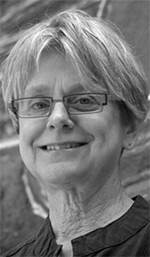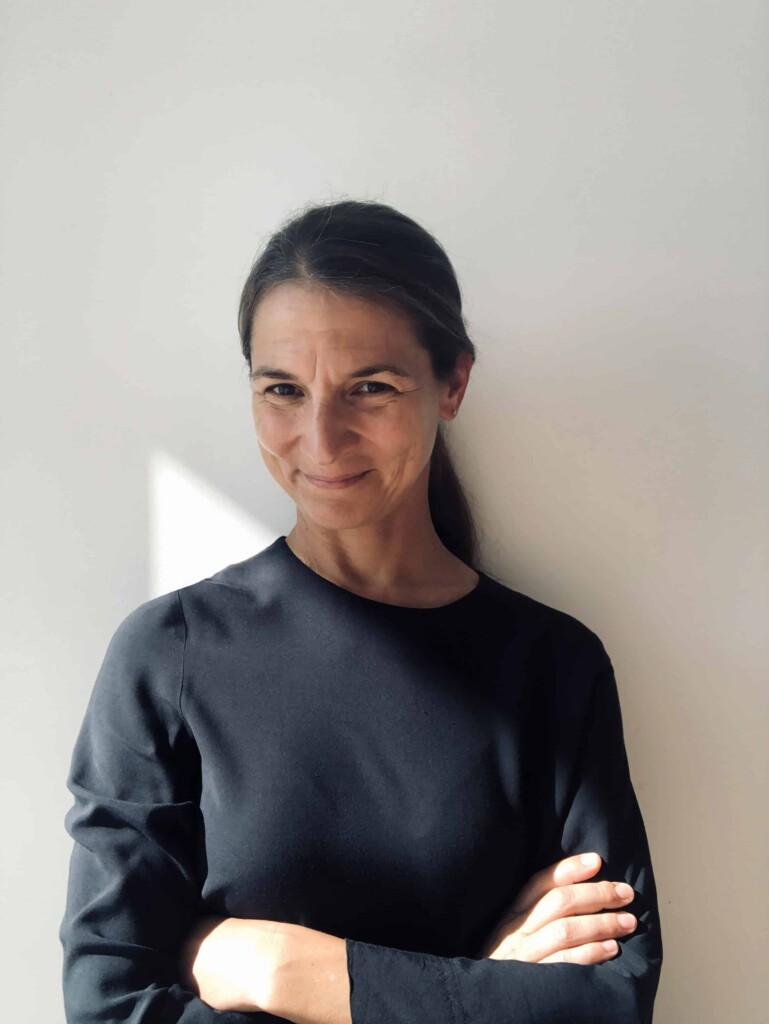
Mariana Alegre Escorza
Mariana Alegre Escorza is Lecturer in Urban Planning and Design at the Harvard Graduate School of Design and the founder and executive director of Sistema Urbano , a Latin American urban innovation ecosystem that integrates data, participation, and collaborative action to transform cities and territories. Her work seeks to improve quality of life by advancing citizen-led urbanism to address urban inequity, spatial injustice, and climate challenges. She bridges research, policy, and practice through participatory processes, civic engagement, and cross-sector collaboration, with a focus on urban mobility, public transit and active modes, climate resilience, land use, and the co-creation of public space. Alegre believes in community care and community power as essential drivers for advancing public goods.
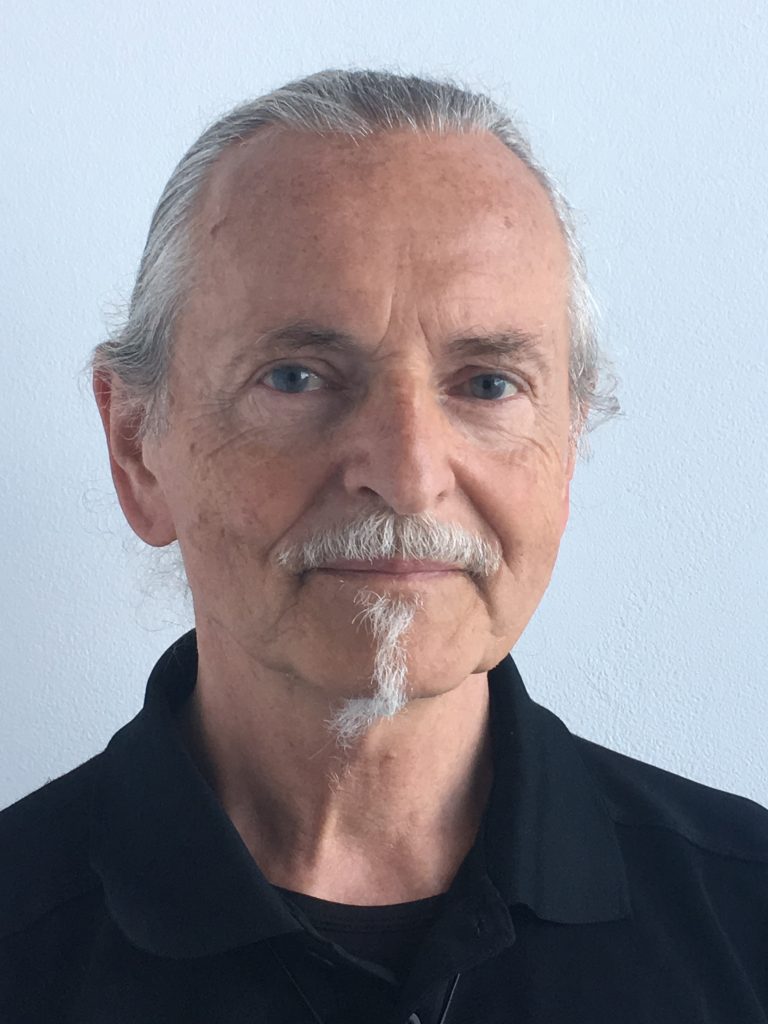
Alegre has founded and led multiple award-winning platforms. Lima Cómo Vamos , an independent urban observatory, has produced more than 30 surveys and reports influencing public policy and community action. Ocupa Tu Calle has transformed over 50 public spaces, shaped national and local policy, trained mayors and public officials, and partnered with multilateral organizations to scale participatory approaches across Latin America. She also established Ciudades Cómo Vamos – Perú, a national civic observatory network; Nodal, a regional platform connecting urban changemakers across Latin America; and Clima Urbano, an initiative advancing socio-ecological responses to environmental and health crises. She has served on national and municipal advisory committees, including Peru’s Bicentenary Special Project; designed participatory frameworks for local governments; and worked with communities throughout Peru and Latin America to co-produce public goods and strengthen resilience.
Her academic work includes teaching at the Pontificia Universidad Católica del Perú in the Master’s program in Architecture, Sustainable Urbanism, and Territorial Development, as well as in the Law School and the School of Management. She is a tenured professor at the Faculty of Management Sciences. Alegre has designed and delivered courses on urbanism, citizenship, the right to the city, urban and social management, and environmental and social innovation, in addition to directing the Law Clinic on Sustainable Cities. She has advised graduate theses and authored publications on public space, citizen-led urbanism, mobility justice, inequality, and risk management. In addition to her academic and civic leadership, Alegre is a skilled communicator and public voice, with experience as a columnist and radio presenter on urban issues.
Alegre’s leadership has been recognized with the Loeb Fellowship at Harvard GSD (2024–25), inclusion in Forbes Peru’s “Most Powerful Women” list (2022), and designation as a Remarkable Woman in Transport by Women Mobilize Women & TUMI (2019). She has participated in global exchange and leadership programs with the U.S. Department of State, the French Ministry of Foreign Affairs, the International Affairs Office of Bordeaux Métropole and international universities such as MIT (MetroLab IAP), Aalto University and the Technical University of Dresden (CIPSEM).
She holds a MSc in City Design and Social Science from the London School of Economics as a Chevening Scholar, a Master’s in Human Rights, and a Law degree from the Pontificia Universidad Católica del Perú.
Li Hou
Li Hou is Lecturer in Urban Planning and Design at the Harvard University Graduate School of Design. She teaches Comparative Planning Regulations in the spring semester, and assists the chair, program director, and coordinator with the UPD administration support responsibilities.
Hou is a planning scholar, educator, and practitioner with rich experiences. Her research interest lies at the intersection of history and theory of urban and regional planning, planning regulations, and spatial politics. She has authored over 50 book chapters and articles in scholarly journals and regularly contributes to urban and planning issues in public media. Her first English book, Building for Oil: Daqing and the Formation of the Chinese Socialist State (Harvard Asia Center, 2018, reprinted in 2021) received the 2020 First Book Prize for the Most Innovative Book in Planning History, awarded by the International Planning History Society. The SDX Joint Publishing Company 三联书店 will publish the Chinese version in 2024. Other noteworthy books published in Chinese include Richard Paulick in Shanghai, 1933-1949: The Postwar Planning and Reconstruction of a Modern Chinese Metropolis (Tongji University Press, 2016), An Academic History in China’s Urban and Rural Planning Discipline (book chapters, China Science and Technology Press, 2018).
Before joining Harvard, Dr. Li Hou held the position of Professor of Urban Planning at Tongji University and served as the Ph.D. program director at the Department of Urban and Rural Planning. She has been a research affiliate at the MIT Sustainable Urbanization lab since 2023 and was a Harvard-Yenching Coordinate Research Scholar from 2014 to 2015. In practice, Hou has been a registered planner at the Tongji Urban Planning and Design Institute since 2000, an expert member of the Shanghai City Planning Commission since 2012, and the vice secretary-general for the Academic Committee of Regulatory Planning, Urban Planning Society of China, since 2018. In academic services, she is a council member of the International Planning History Society, and a Global Urban History Project board member who chairs the prize committee for emerging scholars. She has served on numerous editorial boards, including China City Planning Review, and is a guest editor for Time + Architecture.
Growing up on an oil field in North China, Hou entered Tongji University to receive her training in architecture and urban planning. She was later awarded the Frank Tsao Chinese Teachers’ Fund to study at the Harvard University Graduate School of Design. At Harvard GSD, she received a Master of Design Studies and a Doctor of Design with a concentration in urbanization and housing.
David Rubin
David Rubin, ASLA, FAAR / Principal
David A. Rubin is the founding principal of DAVID RUBIN Land Collective, a landscape architecture and urban design studio committed to practicing with an emphasis on socially-purposeful design strategies. Educated at Connecticut College and Harvard University, he has taught and lectured at a number of institutions, including Harvard University’s Graduate School of Design, University of Pennsylvania School of Design, and Southern California Institute of Architecture. David is the 2011-2012 recipient of the Rome Prize in Landscape Architecture from the American Academy in Rome. His projects have received awards and honors from the American Institute of Architects and the American Society of Landscape Architects, among others.
David founded Land Collective to devote himself to crafting landscapes which affect positive social change through empathy-driven design. His current commissions include a 6-acre public park in downtown Westfield, Indiana, the new Cummins Distribution Headquarters in Indianapolis, Indiana, and the University of Pennsylvania’s new South Bank Innovation Campus in Philadelphia, Pennsylvania called Pennovation Works. He was recently awarded the strategic development plan for Columbus, IN. Rubin’s key built works include: the creation of a new campus and commons for Eskenazi Health Services Hospital, Indianapolis; the landscape at the California Memorial Stadium at the University of California in Berkeley, CA; the 3-star Sustainable Sites certified Canal Park, and the Potomac Park Levee on the National Mall, both in Washington, D.C.; and the design of Lenfest Plaza at The Pennsylvania Academy of the Fine Arts in Philadelphia, PA. His studio’s work includes diverse typologies in locations from Los Angeles to Rome, New York City, Washington, D.C., the Cayman Islands, Indianapolis, Saint Louis, and Philadelphia.
David Adjaye
David Adjaye OBE is recognized as a leading architect of his generation. Adjaye was born in Tanzania to Ghanaian parents. In 1994 he set up his first office, where his ingenious use of materials and his sculptural ability established him as an architect with an artist’s sensibility and vision.
In 2000, the newly formed Adjaye Associates immediately won several prestigious commissions including the Nobel Peace Centre (2005). In the United States, Adjaye designed the new home for the Museum of Contemporary Art in Denver (2007), two public libraries in Washington DC (2012), and several innovative residential projects, including a social housing scheme in New York’s Sugar Hill (2014). In 2009 a team led by Adjaye was selected to design the new $360 million Smithsonian National Museum of African American History and Culture on the National Mall in Washington DC. Adjaye Associates’ largest completed project to date is the £160 million Moscow School of Management Skolkovo (2010).
Adjaye frequently collaborates with contemporary artists on art and installation projects including The Upper Room, with paintings by Chris Ofili (2002), which is now in the permanent collection of Tate Britain.
Adjaye has taught at the Royal College of Art, where he previously studied, and at the Architectural Association School in London, and has held distinguished professorships at the universities of Pennsylvania, Yale and Princeton. He is the John C. Portman Design Critic in Architecture at Harvard. He was awarded the OBE for services to architecture in 2007, received the Design Miami/Year of the Artist title in 2011 and the Wall Street Journal Innovator Award in 2013.
Material from Adjaye’s ten-year study of the capital cities of Africa was shown in an exhibition at the Design Museum, London (2010). He is now collaborating with Haus der Kunst in Munich and the Art Institute of Chicago on a comprehensive retrospective exhibition.
Image courtesy Ed Reeve
James Stockard
James Stockard, an expert in affordable housing and community development, retired in 2014 from the role of curator of the Loeb Fellowship, which he held for 17 years. He continues to teach housing courses at the GSD. He also serves as an Academic Career Liaison for the Career Services Department, helping planning students think about their career paths and connecting them with potential employers. As a principal for over 25 years with the Cambridge-based consulting firm Stockard & Engler & Brigham, he worked with nonprofit groups and public agencies across the country on such issues as affordable housing development, property management, neighborhood revitalization, and local, state and national housing policy. Shortly before coming to the GSD, he served as the court-appointed Special Master for the Department of Public and Assisted Housing in Washington, DC. Mr. Stockard has taught courses on housing policy at MIT’s Department of Urban Studies and Planning, and Tufts University well as the GSD. He is the co-author of Managing Affordable Housing, and wrote the epilogue in New Directions in Urban Public Housing.
He was the principal investigator for the Public Housing Operating Cost Study commissioned by the US Congress. Stockard served as a commissioner of the Cambridge Housing Authority for 40 years (including 8 terms as chair) and is a founding trustee of the Cambridge Affordable Housing Trust Fund. He is a past president of the Citizens Housing and Planning Association, Massachusetts’ largest research and advocacy group for housing and community development issues. He has been a member of the Massachusetts Housing Appeals Committee, ruling on Chapter 40B cases, for the past 17 years. Stockard is an alumnus of the Loeb Fellowship Program and also earned a Master of City Planning degree from the GSD.
Krzysztof Wodiczko
Krzysztof Wodiczko is Professor in Residence of Art, Design and the Public Domain, Emeritus at the Graduate School of Design at Harvard University.
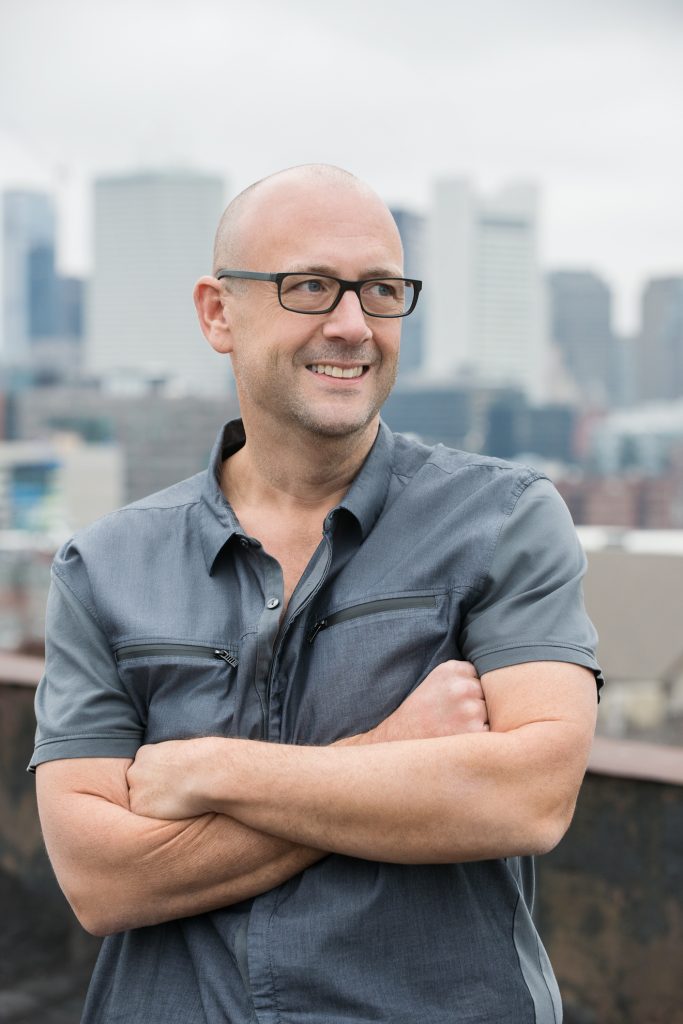
He is renowned for his large-scale slide and video projections on architectural facades and monuments. He has realized more than 90 of such public projections and installations in Australia, Austria, Belgium, Canada, England, Turkey, Germany, Holland, Northern Ireland, Israel, Italy, Japan, Mexico, Poland, Spain, Switzerland, and the United States.
Since the late 1980s, his projections have involved the active participation of marginalized and estranged city residents. Simultaneously, and also internationally (England, Finland, France, Poland, Holland, Japan, Northern Ireland, Spain, Sweden and the US) he has been designing and implementing a series of nomadic instruments and vehicles with homeless, immigrant, and war veteran operators for their survival and communication.
Wodiczko’s work has been exhibited in Documenta (twice), Paris Biennale, Sydney Biennale, Lyon Biennale, The Venice Art Biennale (Canadian and Polish Pavilions) in Magiciens de la Terre exhibition, Paris, Venice Biennale of Architecture, The Whitney Biennial, Yokohama Triennale, International Center for Photography Triennale, New York, The Montreal Biennale ( 2014), The Liverpool Biennale ( 2016) and other international art festivals and international exhibitions. In 2009, he represented Poland in the Venice Biennale. In 2017, Wodiczko has held a retrospective exhibition at the Museum of Modern and Contemporary Art in Seoul.
Since 1985, he held many major retrospectives at such institutions as the MIT List Visual Arts Center, Boston, Walker Art Center, Minneapolis; Museum Sztuki, Lodz; Fundacio Tapies, Barcelona; Wadsworth Athenaeum, Hartford CT; La Jolla Museum of Contemporary Art, San Diego; Contemporary Art Center, Warsaw; the Zacheta National Gallery of Art, Warsaw, DOX Contemporary Art Center, Prague, Muzeum Sztuki Lodz, Poland ( 2015) and in FACT Foundation for Art Culture and Technology in Liverpool (2016).
He is a recipient of the Hiroshima Art Prize in 1998 “for his contribution as an international artist to world peace”.
Wodiczko’s books include Critical Vehicles: Writings, Projects, Interviews published by MIT Press (1999), a large monograph of his works titled Krzysztof Wodiczko (2012), September 11: City of Refuge (2009), The Abolition of War(2013) by Black Dog Publishing, London, followed by expanded Polish edition under the title Obalenie Wojenby MOCAK ( 2014 ). Guests by Charta (2009), and a comprehensive collection of his writings titled Transformative Avant-Garde and Other Writings (2016) by Black Dog Publishing, London.
Krzysztof Wodiczko’s work has been presented as a part of PBS television series Art 21, Art in the Twenty-First Century: Season III.
Jose Luis Vallejo
Jose Luis Vallejo is founding member of ecosistema urbano, a Madrid based group of architects and urban designers operating within the fields of urbanism, architecture, engineering and sociology. Ecosistema urbano’s approach is defined as urban social design, by which they understand the design of environments, spaces and dynamics in order to improve the self-organization of citizens, social interaction within communities and their relationship with the environment. Ecosistema urbano has used this philosophy to design and implement projects in Norway, Denmark, Spain, Italy, France and China.
Jose Luis Vallejo has lectured and has been a visiting professor in many of the most important institutions and universities worldwide like: Harvard, Yale, UCLA, Cornell, Iberoamericana, RIBA, Copenhagen, Bergen, Munich, Paris, Milan, Shanghai, Madrid, Buenos Aires, Santiago… From 2003 he is Professor at the Architecture Department, Madrid School of Architecture.
In 2005 ecosistema urbano received the European Acknowledgement Award from the Holcim Foundation for Sustainable Construction (Geneva, 2005). In 2006, they were awarded the prize of the Architectural Association and the Environments, Ecology and Sustainability Research Cluster (London, 2006). In 2007 they have been nominated for the European Union Prize for Contemporary Architecture Mies van der Rohe Award “Emerging European Architect” and received the AR AWARD for emerging architecture in London, selected between more than 400 teams from all around the world. In 2008 ecosistema urbano received the first prize NEXT GENERATION AWARD from the Arquia Próxima Foundation and in 2009 the Silver Award Europe from the Holcim Foundation for Sustainable Construction selected between more than 500 teams, later being nominated as a worldwide finalist.
During the last four years their work has been covered by more than 100 media (national and international press, television programs, and specialized publications) from 30 countries, and their projects have been exhibited at multiple galleries, museums and institutions (The Venice Biennale of Architecture, “Le Sommer Environnement“ in Paris, Milan Spazio FMG, Seoul Design Olympics, Louisiana Museum of Modern Art in Copenhagen, Boston Society of Architects, Matadero Madrid, Círculo de Bellas Artes in Madrid, Society of Architects of Madrid and Barcelona, Design Museum in London, Deutsches Architektur Zentrum in Berlin, Oslo National Museum, Pavillon de l’Arsenal in Paris…)
Since 2007 the team is involved in research projects on the future paths of urban design called “eco-technological cities”, financed by the Spanish Ministry of Industry. In parallel, they have created a digital platform that develops social networks and manage online channels around the subject of creative urban sustainability (ecosistemaurbano.org).
At the moment, they are working on several urban proposals for different cities and their most recent projects include the new experimental education building for the Reggio Children Foundation in Reggio Emilia (Italy), the design of an interactive public space for the Shanghai World Expo, an experimental urban playground in Dordrecht (Netherland), the “Ecopolis Plaza” a waste to resources building and public space on the outskirts of Madrid and the “Dreamhamar” project to design the urban centre of Hamar in Norway through an innovative open source process to empower public participation and collective creativity.
George Thomas
Area Head, Critical Conservation MDes area group
George E. Thomas, Ph.D. is a cultural and architectural historian practicing with Susan Nigra Snyder, a registered architect in CivicVisions, based in Philadelphia. CivicVisions merges knowledge of a place’s history with the ability to see how this may be used to create a future that responds to contemporary lifestyle forces. Mr. Thomas has been a national pioneer in documentation for National Register Historic Districts and individual listings to secure historic tax credits for rehabilitation projects. For more than thirty years he has taught at the University of Pennsylvania where his courses seek to understand the interconnection between history and patterns of modern life. In 1978 he was one of the founders of Penn’s Program in Historic Preservation where he taught until 2002. In 1995 he was awarded the University’s Provost’s Award for Distinguished Teaching. Dr. Thomas has written and lectured widely on nineteenth and early twentieth century American architecture with a focus on the relationship between cultural innovation and architectural design. His research has broadened our understanding of the origins of modern design in the work of Pennsylvania architects serving industrial clients. His books include Cape May: Queen of the Seaside Resort; Drawing Toward Building: American Architectural Graphics 1732-1986; Frank Furness: The Complete Works; Building America’s First University: An Architectural and Historical Guide to the University of Pennsylvania; William L. Price: From Arts and Crafts to Modern Design; Buildings of the United States: Philadelphia and Eastern Pennsylvania and forthcoming, The Poetry of the Present: Architecture in the age of the great machines.
Lily Song
Dr. Lily Song is a Lecturer in Urban Planning and Design and Senior Research Associate with the Transforming Urban Transport-Role of Political Leadership (TUT-POL) project at the Harvard University Graduate School of Design (GSD).
Her research focuses on the relations between urban infrastructure and redevelopment initiatives, sociospatial inequality, and race, class, and gender politics in American cities and other postcolonial contexts. It takes what are often depoliticized, technically-formulated infrastructural issues such as urban transport, food markets and distribution systems, and building energy efficiency, and foregrounds social, political, and economic factors that fundamentally shape their planning and governance. Her work seeks to reveal dominant ideologies and logics of infrastructural development, formal and informal structures of decision making, and racialized, classed, and gendered dimensions of provision, access, and contestation. It further explores infrastructure-based mobilizations and experiments that center the experiences and insights of historically marginalized groups as bases for more inclusive and democratic planning, development, and value creation.
As part of the Transforming Urban Transport-Role of Political Leadership research team at the Harvard GSD, Dr. Song has investigated how and why transport investments that are intended to enhance public transit and non-motorized transport may be intensifying inequities of urban mobility and access in many cities. This entails assessing equity trade-offs in distributive and processual terms as well as interrogating the relationship between transport policies and urban redevelopment projects. It also includes exploring how public transit goals might be better integrated with alternative urban land use, housing, and economic development templates. One line of research on gender and mobility further investigates the challenges and opportunities of decarbonizing urban transport from the perspectives of women, girls, and femme-identified people in rapidly urbanizing contexts of Southeast Asia and sub-Saharan Africa.
From 2013-2015, Lily Song was a Provost Fellow with University College London’s Department of Science, Technology, Engineering, and Public Policy, where her research investigated efforts by local Indonesian governments to engage forms of urban informality in building resilient food distribution systems and decarbonizing urban transport in the wake of the Asian Financial crisis and politico-institutional decentralization. In particular, she closely studied how policies could incorporate the needs, knowledge, and practices of informal vendors and operators with “formal” planning apparatuses to enable more diffuse and responsive diagnostic and troubleshooting capacities at the local and regional scale as well as more democratic claims to urban space.
She holds a PhD (2012) in Urban and Regional Planning from MIT, where her dissertation, entitled “Race and Place: Green Collar Jobs and the Movement for Economic Democracy in Los Angeles and Cleveland,” focused on the analysis of two community-based green economic and workforce development projects aiming to build shared wealth and stabilize poor, inner city neighborhoods in the wake of the subprime mortgage and global financial crisis. Building on the history of racial stratification and environmental injustice at the heart of historic urban formations in each city-region along with then present efforts by city leadership to institutionalize urban sustainability, the research explored how the respective progressive urban coalitions put green-collar jobs, racial inclusion, and economic transformation at the center of their efforts.
Prior to entering the planning field, Lily was a community organizer with the Asian American Drug Abuse Program (AADAP) in South Los Angeles. There she helped mount community mobilizations against environmental injustices (i.e. under-access to green open spaces, recreational resources, and culturally-responsive health services, and overexposure to liquor stores and drug criminalization) through youth leadership development and cross-racial coalition building. She is a proud LA daughter and alumna of California public schools.
Susan Snyder
Area Head, Critical Conservation MDes area group
Susan Nigra Snyder is a registered architect practicing with George E. Thomas, Ph.D., a cultural and architectural historian in CivicVisions, based in Philadelphia. CivicVisions merges knowledge of a place’s history with the ability to see how this may be used to create a future that responds to contemporary lifestyle forces. CivicVisions has created a downtown Las Vegas Arts District, an economic/identity initiative for Pennsylvania’s colleges and communities, a Getty Grant exhibit about Haverford’s campus identity and projects for developers and institutions nationwide. Their “Learning from Las Vegas in the Media Age” was selected as one of the top 25 speakers at the AIA 2005 national convention. Ms. Snyder investigates how local identity is expressed, maintained and able to develop while being responsive to larger global and media forces that affect the realms of contemporary life. Her teaching for more than twenty five years at the University of Pennsylvania includes seminars and design studios that investigate the forces of consumption on urban form. Ms. Snyder’s research on contemporary systems seeks to understand the changing shape of urban retail/distribution and the relation between the automobile and contemporary community form. She has received two University of Pennsylvania Research Foundation grants to study processes of urban identity. Public service includes serving as chair of Philadelphia Redevelopment Authority’s Advisory Board of Design, a member of the Fine Arts Committee and of the Delaware Valley Smart Growth Alliance jury.