Loeb Fellowship Class of 2025 Final Presentations

Loeb Fellowship Class of 2025 Final Presentations

A black and white tile collage of headshots of the 2025 fellows.
Event Location

Piper Auditorium

Date & Time
Free and open to the public
00:00
00:00

Event Description

Join the Loeb Fellowship Class of 2025 as they reflect on their year as Loeb Fellows at the GSD and at Harvard, and as they look ahead to bringing their experiences back into their communities, and expanding their impact in the world.

The 2025 Loeb Fellows are ten innovators who work across climate justice, cultural infrastructure, post-disaster support, land ownership reform, and other fields that engage with the built environment and social outcomes.

This event is open to the public and can be watched online on the GSD and Loeb Fellowship websites via livestream. Following the presentations is an in-person reception at the GSD.

Brian D. Goldstein, “‘These Contradictory Things’: Max Bond’s Harvard”

Brian D. Goldstein, “‘These Contradictory Things’: Max Bond’s Harvard”

Postcard showing Hollis and Stoughton Halls
Event Location

Piper Auditorium

Date & Time
Free and open to the public
00:00
00:00

Please RSVP to receive reminders about the event.

Event Description

Join us for “‘These Contradictory Things’: Max Bond’s Harvard,” a lecture that Brian D. Goldstein will give on the occasion of the naming of the J. Max Bond Jr. Room in Gund Hall. Following the lecture, Dean Whiting will moderate a conversation with Goldstein and a panel that includes Bond’s peers and colleagues and generations of designers influenced by his work.

Bond—a graduate of Harvard College and the Harvard Graduate School of Design (GSD)—was characterized in his 2009 New York Times obituary as a “voice of conscience within his profession on issues of racial and economic justice.” He understood cities as instruments of justice and equality for their inhabitants. “Architecture,” he asserted, “inevitably involves all the larger issues of society.” This conviction that architecture has the capacity to produce a just society was foundational to Bond’s own extensive practice as an architect: as executive director of the Architects’ Renewal Committee in Harlem (ARCH); as a professor of architecture; as chair of the Division of Architecture at the Graduate School of Architecture, Planning and Preservation at Columbia University; and as dean of the School of Architecture and Environmental Studies at the City College of New York.

Bond graduated magna cum laude from Harvard College in 1955 and as an undergraduate was also inducted into the academic honor society Phi Beta Kappa. He graduated from the Department of Architecture at the GSD in 1958. Over the course of his career, Bond became an extraordinarily influential figure in architecture and urbanism. His success came both because of and despite his experience at Harvard. At the GSD, Bond absorbed the idealism of modernist architecture and its promise to effect social change, but his time at Harvard was also marked with racist episodes that included a cross burning outside his undergraduate dormitory in Harvard Yard. On another occasion, a GSD faculty member discouraged Bond from pursuing architecture as a course of study because that faculty member believed it to be a profession suited mainly for white men. That Bond was able to draw on his education at the GSD—its wisdom and its failures—as well as his lived experience of the University community to articulate a new vision for the field of architecture as an agent of social change is as much a testament to his perseverance as it is to his insight and talent.

Naming the largest classroom in Gund Hall the “J. Max Bond Jr. Room” celebrates the enormous influence and breadth of Bond’s career and acknowledges how unwelcoming Harvard was for him and other Black students who were subjected to similar experiences at the GSD. With this dedication, the GSD inscribes Bond’s name on the largest classroom in Gund Hall to give him a permanent home on Harvard’s campus, even if posthumously, and to keep the memory of his experience and the legacy of his achievements alive in this School.

Read more about Bond’s biography and career in architecture at the GSD’s African American Design Nexus .

Speaker

Brian D. Goldstein

Brian D. Goldstein Headshot

Brian D. Goldstein (AB ’04, AM ’09, PhD ’13) is an architectural and urban historian and an associate professor and chair of the Art History program at Swarthmore College. His research focuses on the intersection of the built environment, race and class, and social movements, especially in the United States. His writing includes the book The Roots of Urban Renaissance: Gentrification and the Struggle Over Harlem (expanded edition, Princeton University Press, 2023), which received the 2020 John Friedmann Book Award from the Association of Collegiate Schools of Planning and the 2019 Lewis Mumford Prize for the Best Book in Planning History.

Goldstein’s articles have appeared in the Journal of the Society of Architectural HistoriansJournal of American HistoryBuildings & LandscapesJournal of Urban History, and the edited volumes Radical PedagogiesAffordable Housing in New YorkReassessing Rudolph; and Summer in the City: John Lindsay, New York, and the American Dream. He has received fellowships and awards from the National Endowment for the Humanities, Center for Advanced Study in the Visual Arts, Graham Foundation for Advanced Studies in the Fine Arts, and Society of Architectural Historians. He is currently writing If Architecture Were for People: The Life and Work of J. Max Bond, Jr., under contract with Princeton University Press.

Panelists

Steven Davis Headshot, Informal

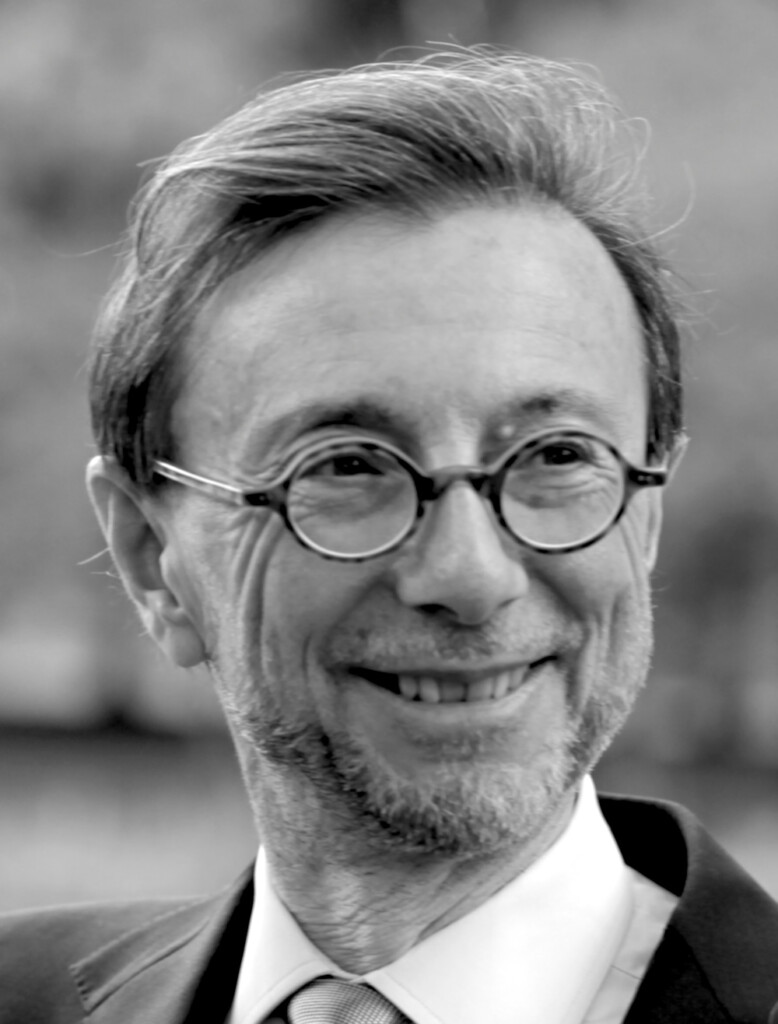
Steven Davis, FAIA, is Managing Director of the New York City office at Page, and until 2023, was a partner at Davis Brody Bond. A lifelong New Yorker, Steven has developed a focus on spaces that express the relationship between the user, the physical environment, and the surrounding community. His designs have been honored with numerous awards, including the AIA Institute Honor Award, three Business Week/Architectural Record Awards, and the Presidential Award for Design Excellence. Outside of his practice, he serves as a juror in architectural competitions and has been an invited critic at many universities.

Headshot of Maurice Feingold

Moe N. Finegold (AB ’54, MArch ’58) Licensed to practice Architecture in 1961, Moe established his office in 1964, expanded to a partnership, then a corporation, retiring in 2021 having worked with 7 of his GSD classmates during those 57 years. His firm has been recognized with more than 250 awards for design excellence in a wide range of challenging projects, including restoration and reuse of historic buildings, new structures and urban planning across the United Staes. He has focused on the creation of spaces and places for people with an eye for details that speak to time and place.

His recognition includes an Honorary Doctor of Humane Letters for his 13 years of leadership at the Boston Architectural College and was just the 6th person to receive the Edwin S Frey award for outstanding achievement in religious architecture from AIA/IFRAA. A graduate of Harvard College in 1954cl and the GSD in 1958, he is extremely pleased that 2 of his classmates, John Andrews and Max Bond are now forever an integral part of the Gund Hall legacy.

David Lee Headshot in Blue Suit

David Lee (MAUD ’71) is the president of Stull and Lee, Incorporated (S+L), an architecture, urban design, and planning firm. He is a graduate of the University of Illinois and Harvard Graduate School of Design. He has taught at the GSD, the Rhode Island School of Design, and the Massachusetts Institute of Technology. He is a Fellow of the American Institute of Architects and a past president of the Boston Society of Architects.

He has been awarded the BSA’s 2000 Award of Honor and the Norman B. Leventhal City Excellence Land Use Award. With his late business partner Donald Stull, Mr. Lee received the National Organization of Minority Architects Lifetime Achievement Award and the Harvard GSD Distinguished Alumni Award. S+L projects have won multiple awards, including the National Endowment for the Arts’ Presidential Design Award.

Shawn Rickenbacker Headshot

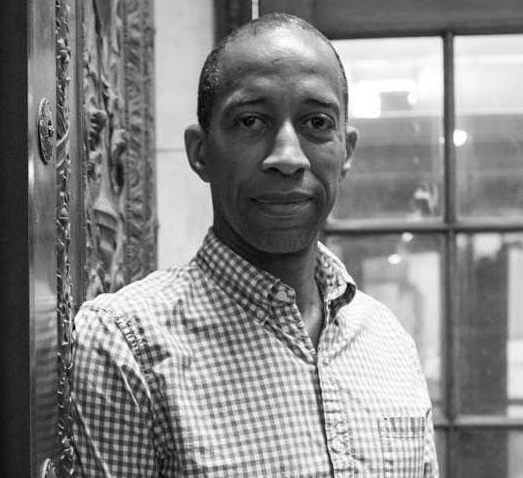
Shawn L. Rickenbacker is an architect, urbanist, and urban data researcher. He is currently the Director of the CCNY J. Max Bond Center for Urban Futures, where he directs the Center’s sponsored research and is an Associate Professor of Architecture at the CCNY Spitzer School of Architecture. His research and work confront the intersection of spatial equity and the socioeconomic impact of place-based policies, programs, and design. His projects have been supported by JP Morgan Chase, the Graham Foundation, Moxie Foundation and published by MIT Press, Actar, and University College London. Shawn holds a Master of Architecture with a Certificate in American Urbanism from the University of Virginia, where he was the Dupont Scholar, a LoC in Climate Change Leadership from Cornell University, and a BArch from Syracuse University.

Isabelle Strauss Headshot

Isabel Strauss (AB ’13, MArch ’21) is an architectural designer from Chicago. She holds an M.Arch I from the Harvard Graduate School of Design and an AB from Harvard College. For the past three years, she has worked in the curatorial department at the National Museum of African American History and Culture, assisting on projects related to Architecture & Design. Before NMAAHC she worked with Frances Loeb Library staff and members of the GSD’s African American Student Union to establish the African American Design Nexus. Strauss will be joining the faculty at Smith College this summer.


Moderator

Sarah Whiting Headshot on red chair
Stephanie Mitchell/Harvard Staff Photographer

Sarah M. Whiting, Dean and Josep Lluís Sert Professor of Architecture, joined the GSD as Dean in July 2019. She is a design principal and co-founder of WW Architecture and served as the Dean of Rice University’s School of Architecture from 2010 to 2019. Whiting has taught at Princeton University, the University of Kentucky, the Illinois Institute of Technology, and the University of Florida. She frequently lectures throughout the US and abroad and regularly serves as a critic of architecture and urban design. Prior to founding WW, Whiting worked with the Office for Metropolitan Architecture in Rotterdam, The Netherlands; Peter Eisenman in New York; and Michael Graves in Princeton, New Jersey. She is an Associate member of the American Institute of Architects. Dean Whiting received her Bachelor of Arts from Yale, her Master of Architecture from Princeton University, and her Doctor of Philosophy in the History and Theory of Architecture from MIT.


An-My Lê, Maps and Legends: Photography Between Histories and Beyond Borders

Rouse Visiting Artist Lecture

An-My Lê, Maps and Legends: Photography Between Histories and Beyond Borders

Marines on a navy ship looking out onto the ocean.
Event Location

Piper Auditorium

Date & Time
Free and open to the public
00:00
00:00

Please RSVP to receive reminders about the event.

Event Description

Internationally renowned photographer An-My Lê seeks “to photograph the landscape in such a way that it suggests a universal history, a personal history, a history of culture.” In this lecture, Lê presents two new series of recent photographs, Dark Star and Grey Wolf, continuing her exploration of the contradictory nature of the manifest and the sublime within the contemporary American landscape, and the latter as a present-day locus of technology, power and ambition. In Lê’s work, scale is both temporal and historical, encompassing themes of displacement, war, memory, and resilience. These are present in her earliest black and white pictures of Vietnam (1994-1998) in which she returned to a scarred homeland as a political refugee, to her pictures of war re-enactors in the southern U.S. (Small Wars, 1999-2002),  to staged military training exercises in the American desert (29 Palms, 2003-04), to her more recent lens on polarization in the United States through a series of historical fragments (Silent General, 2015 to today). With extraordinary consideration of history and culture, Lê’s view of her subjects often incorporates an elevated perspective to achieve its signature precision and ethical neutrality. In zooming out to look closer, her stepped-back “proscenium framing” brings into crystal clear vision her observations and stories, not unlike layers of a history painting.

Speaker

An-My Lê is an internationally renowned photographer based in New York. Her work often addresses the impact of war on culture and the environment. She is the recipient of numerous awards, including the American Academy of Arts and Letters Award in Art, the MacArthur Foundation Fellowship, the Guggenheim Fellowship, and the Louis Comfort Tiffany Foundation award. Lê’s work has been exhibited widely, including in the Whitney Biennial, Taipei Biennial, Minneapolis Institute of Art, The Metropolitan Museum of Art, and the Tate Modern. In 2020, Lê’s major exhibition at the Carnegie Museum of Art traveled to the Amon Carter Museum and the Milwaukee Art Museum, with a comprehensive catalog published by Aperture. Between Two Rivers/Giữa hai giòng sông/Entre deux rivières, a 30-year survey of her career, including her forays into film, textiles, and installation was recently shown at the Museum of Modern Art, New York. Lê is currently the Charles Franklin Kellogg and Grace E. Ramsey Kellogg Professor in the Arts at Bard College, New York.


Mayors Imagining the Just City: Volume 5

Mayors Imagining the Just City: Volume 5

Collage in black white and green of headshots of mayors from around the country and the logos of the event sponsors.
Event Location

Piper Auditorium

Date & Time
Free and open to the public
00:00
00:00

Please RSVP to receive reminders about the event.

Event Description

Kicking off the fifth annual Mayors’ Institute on City Design (MICD) Just City Mayoral Fellowship—a collaboration between MICD and Harvard GSD’s Just City Lab—speakers will discuss strategies for using planning and design interventions to address racial, social, and environmental injustice in our cities.

Speakers

Black and white headshot of Jake Day

Jake Day Secretary Jacob R. (Jake) Day leads the Maryland Department of Housing and Community Development and serves as a member of Governor Wes Moore’s Cabinet. As a member of the Governor’s Executive Council, Secretary Day is the Governor’s senior advisor on housing and place-based economic development. He is also the chief executive officer of the State’s housing finance agency, managing $2.5 Billion in annual spending, $9 Billion in assets, and more than 500 staff members. Prior to his nomination to lead the Department, Secretary Day served as the 28th Mayor of Salisbury, Maryland. Born and raised in Salisbury, he previously served as City Council President.

Black and white headshot for Tiffany Chu

Tiffany Chu Tiffany Chu is the Chief of Staff to Mayor Michelle Wu. Tiffany comes from a background in design, urban planning, and entrepreneurship. Prior to joining the City of Boston, she was the CEO & Co-founder of Remix, a collaborative software platform for transportation planning used by 500+cities around the world. Previously, Tiffany was at Code for America, Y Combinator, Zipcar, and Continuum. She’s been named in Forbes’ 30 Under 30, LinkedIn’s Next Wave of Leaders Under 35, and featured at SXSW, Helsinki Design Week, the New York Times Cities for Tomorrow Conference, and more.

Black-and-white headshot of DC Reeves

“D.C” Reeves D.C. Reeves has been mayor of Pensacola since November 2022. His focus is on public safety, economic development and maintenance of city assets. Previously, Reeves was a sports journalist, author, community builder and entrepreneur. He also served as the CEO at The Spring Entrepreneur Hub advocating for small businesses in Pensacola. In 2017, Reeves founded Perfect Plain Brewing Co., which quickly became a staple of downtown Pensacola and one of Florida’s busiest craft beer taprooms. The business expanded to four locations and had over 40 employees before. sold to New Orleans-based Urban South Brewery. D.C.’s community focus led him to serve as board chairman of Visit Pensacola, Pensacola’s tourism marketing organization, in 2021. He was named 2021 Emerging Leader of the Year by the Greater Pensacola Chamber of Commerce.

Moderator

Katie Swenson headshot

Katie Swenson A nationally recognized design leader, researcher, writer, and educator, Katie Swenson has served as a Senior Principal of MASS Design Group since 2020. Katie has over 20 years of experience in the theoretical and practical application of design thinking and is a talented global public speaker and thought leader. A prolific writer, she authored Design with Love: At Home in America, and In Bohemia: A Memoir of Love, Loss, and Kindness, and co-authored Growing Urban Habitats: Seeking a Housing Development Model. Katie was awarded the AIA Award for Excellence in Public Architecture in 2021. Prior to joining MASS, Katie was the vice president of Design & Sustainability at Enterprise Community Partners, where, as a member of the second class, she led the Enterprise Rose Fellowship. Katie lives in New York City, where she serves on the board of the Van Alen Institute and teaches at Columbia University and Parsons School of Design.

Partners

At the Just City Lab, we ask: Would we design better places if we put the values of equality, inclusion, or equity first? If a community articulated what it stood for, what it believed in, what it aspired to be — as a city, as a neighborhood — would it have a better chance of creating and sustaining a more healthy, vibrant place with positive economic, health, civic, cultural, and environmental conditions? Imagine that the issues of race, income, education, and unemployment inequality, and the resulting segregation, isolation, and fear, could be addressed by planning and designing for greater access, agency, ownership, beauty, diversity, or empowerment. Now, imagine the Just City: the cities, neighborhoods, and public spaces that thrive using a value-based approach to urban stabilization, revitalization, and transformation. Imagine a set of values that would define a community’s aspiration for the Just City. Imagine we can assign metrics to measure design’s impact on justice. Imagine we can use these findings to deploy interventions that minimize conditions of injustice.

With a belief in the power of city design to transform communities, the Mayors’ Institute on City Design (MICD) educates mayors to be the chief urban designers of their cities. Since 1986, we’ve offered collaborative learning programs and resources to mayors in order to make a purposeful, positive impact on America.

Book Release: “Thinking Through Soil”

Book Release: “Thinking Through Soil”

A black and white photograph of farmers working in an irrigated field.
Event Location

Frances Loeb Library Lobby

Date & Time
Free and open to the public
Contributors
Montserrat Bonvehi Rosich
Seth Denizen
Host
Ken Stewart
Moderator
Gary R. Hilderbrand
00:00
00:00

Please RSVP to receive reminders about the event. Ahead of the book’s official release on June 10, support your local bookstore by pre-ordering a copy. Pre-orders can also be made through Harvard University Press or Amazon . Limited copies will be available for sale at the event.

Event Description

To think through soil is to engage with some of the most critical issues of our time. In addition to its agricultural role in feeding eight billion people, soil has become the primary agent of carbon storage in global climate models, and it is crucial for biodiversity, flood control, and freshwater resources. Perhaps no other material is asked to do so much for the human environment, and yet our basic conceptual model of what soil is and how it works remains surprisingly vague.

In cities, soil occupies a blurry category whose boundaries are both empirically uncertain and politically contested. Soil functions as a nexus for environmental processes through which the planet’s most fundamental material transformations occur, but conjuring what it actually is serves as a useful exercise in reframing environmental thought, design thinking, and city and regional planning toward a healthier, more ethical, and more sustainable future.

Through a sustained analysis of the world’s largest wastewater agricultural system, located in the Mexico City–Mezquital hydrological region, Thinking Through Soil, the latest release from Harvard Design Press, imagines what a better environmental future might look like in central Mexico. More broadly, this case study offers a new image of soil that captures its shifting identity, explains its profound importance to rural and urban life, and argues for its capacity to save our planet.

Following brief remarks, Rosich and Denizen will be joined on stage by Gary Hilderbrand for a conversation.

Speakers

Montserrat Bonvehi Rosich is a licensed Spanish architect and urban designer. She was the 2017-2018 Daniel Urban Kiley Fellowship at Harvard University’s Graduate School of Design and has taught landscape architecture at the University of Virginia and the Urban Design Department at ETSAB-UPC Barcelona.

Seth Denizen, a recipient of the 2019 SOM Foundation Research Prize and a Princeton-Mellon Fellow in Architecture, Urbanism, and the Humanities, is a researcher and design practitioner trained in landscape architecture, evolutionary biology, and human geography.

Ximena Caminos, “The ReefLine”

Ximena Caminos, “The ReefLine”

Graphic of divers underwater
Event Location

Frances Loeb Library Lobby

Date & Time
Free and open to the public
00:00
00:00

Event Description

The ReefLine’s Founder and Artistic Director, Ximena Caminos, invites you to explore “marine acupuncture,” an innovative practice combining high art and deep science to target critical pressure points within our oceans.

The ReefLine will be a 7-mile underwater public sculpture park, snorkel trail, and hybrid reef off Miami Beach’s shoreline, fostering environmental awareness through art and action-driven conservation. Conceived by cultural place-maker Ximena Caminos and developed by the BlueLab Preservation Society, the ReefLine nonprofit team collaborates with architecture firm OMA as well as marine biologists, researchers, architects, and coastal engineers to design the master plan. Caminos’ lecture, followed by a conversation with Pedro Alonzo and Charles Waldheim, highlights how this pioneering approach uses human ingenuity to ignite ecological processes that help the reef regenerate. The ReefLine’s cross-disciplinary methodology offers a compelling example of how collaboration can help solve some of the most pressing environmental challenges of our time.

This event is supported by the Melissa Kaish and Jonathan Dorfman Makers Fund.

Speaker

Outdoor Portrait of Ximena Caminos

Ximena Caminos is a cultural entrepreneur and place-maker, celebrated for her unwavering commitment to public art. She is the President of BlueLab Preservation Society, CCO of HoneyLab Creative, and Founder of The ReefLine. Caminos has pioneered new ways to engage with contemporary art, emphasizing its role in community-building, urban development, climate change, and ocean conservation. She has played a pivotal role in creating large-scale cultural districts across North and South America.

Caminos served as Artistic Visionary Planner for The Underline, the largest public art project in the US, and former Chair of Faena Art. She also served as Executive Creative Director and partner in Faena Group, Chief Curator at the Faena Arts Center in Buenos Aires, and founded the Faena Prize for the Arts.

Caminos is a member of the New Museum Leadership Council, founding member of the Solomon R. Guggenheim Museum’s Latin American Circle, and Advisor to Art Basel Cities. She is an XPrize Ambassador and a recipient of the Knight Foundation’s Arts Challenge Award and the Arts Champion Award.

Portrait of Pedro Alonzo

Pedro Alonzo is an independent curator who has served as adjunct curator at Dallas Contemporary, the ICA Boston, and the Institute of Visual Arts at the University of Wisconsin. He is currently a Lecturer in Architecture at the Harvard Graduate School of Design, where he teaches a course on curating in public spaces. Alonzo specializes in exhibitions that transcend the museum walls. In 2017, he collaborated with JR on an installation at the U.S.-Mexico border and, in 2022, on Amnesia Atómica with Pedro Reyes in Times Square. He has also developed singular public art projects with Alicja Kwade, Claudia Comte, Doug Aitken, Sam Durant, Shepard Fairey, Oscar Tuazon, and Jean-Marie Appriou. In 2024, Alonzo was part of the curatorial team for the Noor Riyadh Festival in Saudi Arabia. He is currently the artistic director for the inaugural Boston Public Art Triennial, scheduled for 2025. In November 2024, he produced and curated Midnight Zone, a large-scale video installation and sculptural lighthouse lens by Julian Charrière in Los Cabos, Mexico, addressing the dangers of deep-sea mining.

Headshot of Charles Waldheim

Charles Waldheim is the John E. Irving Professor of Landscape Architecture, Director of the Office for Urbanization, and Co-Director of the Master in Design Studies program at the Harvard University Graduate School of Design. He is an American-Canadian architect and urbanist. Waldheim’s research examines the relations between landscape, ecology, and contemporary urbanism. He has authored and edited numerous books on these subjects, and his writing has been published and translated internationally. Waldheim is the recipient of the Rome Prize Fellowship from the American Academy in Rome, the Visiting Scholar Research Fellowship at the Study Centre of the Canadian Centre for Architecture, the Cullinan Chair at Rice University, and the Sanders Fellowship at the University of Michigan.

David Sheldon-Hicks, “Future Mapping”

David Sheldon-Hicks, “Future Mapping”

Image of a screen featuring futuristic digital image
Event Location

Piper Auditorium

Date & Time
Free and open to the public
00:00
00:00

Please RSVP to receive reminders about the event.

Event Description

David Sheldon-Hicks is the founder of Territory Studio, which specializes in world-building and storytelling for film and next-generation digital brand platforms. The studio has created visualizations for films such as Guardians of the Galaxy, The Martian, Ex Machina, Bladerunner 2049, and Dune. In this talk, Sheldon-Hicks explores the depiction of technology and AI in films and how these technologies can be used to inspire innovative design projects.

Speaker

Headshot of David Sheldon-Hicks

With a background in graphic design, David Sheldon-Hicks’ career began in digital media before moving into to the fast-paced world of music videos, where his passion for the craft and creativity of motion graphics led him to film, games, and commercial campaigns. As founder of Territory Studio, Sheldon-Hicks’ love of storytelling and technology has established his reputation for beautifully crafted graphic narratives across genres and media.

Today, Sheldon-Hicks’ multidisciplinary team attracts diverse briefs across entertainment, brands, installations, and emerging technologies. In recognition of the studio’s creative approach and achievements, Sheldon-Hicks was named one of Creative Review’s 2018 Creative Leaders 50. The studio has won The Motion Awards and D&AD Creative Advertising and Design Awards. In 2018, the studio’s work for Blade Runner 2049 was nominated for the annual Beazley Designs of the Year.


VIEW FROM THE EDGE! On Periphery-Center Relationships

VIEW FROM THE EDGE! On Periphery-Center Relationships

Four women stand outside of a building surrounded by greenery.
Event Location

Piper Auditorium

Date & Time
Free and open to the public
00:00
00:00

Please RSVP to receive reminders about the event.

Event Description

VIEW FROM THE EDGE! is a variety show written and directed by Tunde Wey that explores the African continent as Mother. Through performance, vignettes, interviews, monologues, and movement, this intimate production posits Africa as corporeal and corpse, shaped by catastrophe and ongoing colonial stratagems.

Content warning: This event includes content about cancer, illness, and death.

Please note that this is an in-person-only event. A recording of the show will be released at a later date on the Harvard GSD YouTube channel .

Performers

Black and white headshot of Sheena Dham

SHEENA DHAM (she/her) is a musician, composer, and songwriter living in Oakland, CA. Her songs, compositions, and performances have been featured in international art hubs including the Victoria and Albert Museum (London), de Young Museum (San Francisco), and Proyectos Públicos (Mexico City), outdoor brands that include the North Face and Arc’teryx, and documentary film featured at Cannes International Series Festival, SeriesFest, and beyond. In addition to her work as a composer, she is signed with Psychic Eye Records as an experimental multi-genre musician. Her latest album, Familiarity Heuristic, is available on Bandcamp and all streaming platforms.

Headshot of John Peterson

John Peterson, architect, educator, and activist, is the Curator of the Loeb Fellowship. Peterson is the founder of Public Architecture, a national nonprofit organization based in San Francisco. The organization’s work has been showcased at the Venice Architecture Biennale, MoMA, the Cooper-Hewitt National Design Museum, the Benaki Museum in Athens, and the International Architecture Biennale Rotterdam. Peterson’s work has appeared in several books and publications, including The Resilience Dividend: Being Strong in a World Where Things Go Wrong, The New York Times, Architectural Record, Architect, Metropolis, and the Chronicle of Philanthropy.

Headshot of Tunde Wey

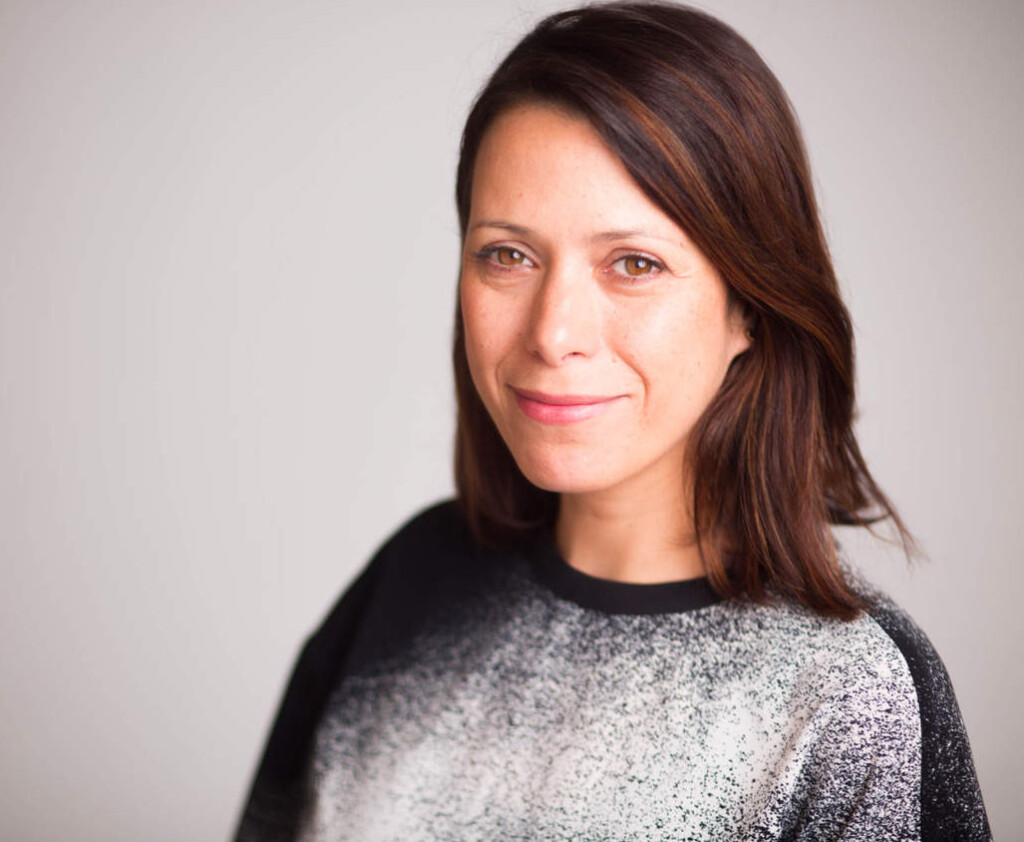
Tunde Wey is a social practice artist living between Nigeria and the United States. Working at the intersection of capital and the political economy, Wey’s work engages material hierarchies and disparities, focusing particularly on how economics and finance impact working-class Black people globally. He uses food, writing, film, performance, installation, and finance to confront these disparities and attempts interventions in the same mediums.  Wey’s work has been widely covered in national and international publications. He is a 2025 Harvard Loeb Fellow; a 2024 CANNESERIES Official Selection; a recipient of the Monroe Fellowship from Tulane University and the Ford Foundation Just Films Grant.


This event is part of ArtsThursdays , a university-wide initiative supported by Harvard University Committee on the Arts (HUCA).

Arts Thursdays logo in black and white


Kengo Kuma, “Return to Nature”

John Hejduk Soundings Lecture

Kengo Kuma, “Return to Nature”

a layered building structure beside a body of water.
Event Location

Piper Auditorium

Date & Time
Free and open to the public
00:00
00:00

Please RSVP to receive reminders about the event.

Event Description

Architecture must bridge the gap between human life and the natural environment, an ethos deeply ingrained in Kengo Kuma’s philosophy.  Kuma prioritizes harmony with surroundings, using materials like wood and stone that are not only sustainable but also evoke warmth and intimacy. This approach reconnects people with nature while redefining the boundaries of urban spaces. Throughout Kuma’s projects, such as the Japan National Stadium and V&A Dundee in Scotland, Kuma has challenged modernist trends that overemphasize industrial materials like concrete. Instead, he advocates for lightness, transparency, and adaptability—values rooted in Japanese traditions that are also universally resonant.

Kuma pursues “openness and intimacy” in his designs, promoting structures that welcome their surroundings rather than dominate them. By combining traditional craftsmanship with modern technology, architecture can evolve into spaces that respect both cultural heritage and ecological systems.

In this lecture, Kuma invites architects, designers, and students to reconsider their roles in fostering a symbiotic relationship with nature. Together, we can craft a future where urban landscapes complement their natural contexts rather than compete with them.

Speaker

Portrait of Kengo Kuma seated with elbow rested on a table

Kengo Kuma was born in 1954. He proposes architecture that opens up new relationships between nature, technology, and human beings, and established Kengo Kuma & Associates (KKAA) in 1990. The firm currently has projects underway in more than 50 countries. Kuma is a University Professor and Professor Emeritus at the University of Tokyo, after teaching at Keio University. His major publications include Kengo Kuma Onomatopoeia Architecture Grounding (X-Knowledge), Nihon no Kenchiku (Architecture of Japan, Iwanami Shoten), Zen Shigoto (Kengo Kuma,Complete Works, Daiwa Shobo), Ten Sen Men (Point Line Plane, Iwanami Shoten), Makeru Kenchiku (Architecture of Defeat, Iwanami Shoten), Shizen na Kenchiku (Natural Architecture, Iwanami Shinsho), Chii-sana Kenchiku (Small Architecture, Iwanami Shinsho), and many others.


Jorge Otero-Pailos, “Distributed Monuments”

Jorge Otero-Pailos, “Distributed Monuments”

Photograph of woman standing in gallery looking at yellow tinted images.
Event Location

Frances Loeb Library Lobby

Date & Time
Free and open to the public
00:00
00:00

Event Description

In this lecture, Jorge Otero-Pailos draws from a series of recent artworks through which he preserved material residues of buildings that won’t sit still in one place—including airborne atmospheric pollution, traces of sweat, water, smells, and building fragments—to discuss what they reveal about the contemporary human condition and environmental urgencies. Otero-Pailos will present a selection from his Ethics of Dust series—imprints of dust from world heritage sites—as well as “distributed monuments” he created: sculptures made from unwanted architectural materials and fragments of monuments he saved from the scrapyard. He’ll discuss his approach to art as a method of experimental preservation and argue for the importance of imagining a future for the built environment that’s centered on mutual care.

Speaker

Headshot of Jorge Otero-Pailos against a yellow backdrop.

Director and professor of historic preservation at Columbia University’s Graduate School of Architecture, Planning, and Preservation, Jorge Otero-Pailos is an architect, artist, and theorist specializing in experimental forms of preservation. He is the founder and editor of the journal Future Anterior, co-editor of Experimental Preservation (2016) author of Architecture’s Historical Turn (2010) as well as a contributor to scholarly journals and books including the Oxford Encyclopedia of Aesthetics and Rem Koolhaas’ Preservation Is Overtaking Us (2014). Otero-Pailos is a member of the Academy of Arts and Sciences of Puerto Rico, and has received awards from the Kress Foundation, the Graham Foundation, the Fitch Foundation, the Canadian Center for Architecture, UNESCO, and the American Institute of Architects. He studied architecture at Cornell University and earned a doctorate in architecture at M.I.T.

Otero-Pailos’s work as an artist has been commissioned by and exhibited at major heritage sites, museums, foundations, and biennials, including Artangel’s public art commission at the UK Parliament, the Venice Art Biennial, Victoria and Albert Museum, Louis Vuitton Galerie Museum, Thyssen-Bornemisza Art Contemporary, SFMoMA, Hong Kong’s Tai Kwun Centre for Heritage and Arts, Frieze London, and the Yerba Buena Center for the Arts. He is the recipient of a 2021-22 American Academy in Rome Residency in the visual arts.