Becoming the projector: an ETUDE for class PUBLIC PROJECTION

Becoming the projector: an ETUDE for class PUBLIC PROJECTION

Lins Derry (MDes Tech ’20), Delaram Rahim (MDes ADPD ’20), and Iris Xia (MDes ADPD ’20), with support from Krzysztof Wodiczko and Shining Sun

This project is a study of the body becoming a projector by movement in space. Approaching the project as research, we experimented with the improvised relationships between the code, movement, music, and the interactive relationship. The technology captured the movement of the body and left a trail of lines, shapes and shadows in the space, creating the architecture that was generated through the movement while also creating a feedback for the movement.

Public projection project (Source)
00:00
00:00

In terms of the choreographic design, the work begins with a landscape projection made by the same Particle Class connected to the motion. This landscape becomes a frame for the body as well as an information display for the audience to begin decoding. The performer moves slowly, matching the geometric forms in the landscape as well as those that her motion generates. The music starts with ambient sounds that are non-melodic that correlate with the abstract geometry that the projector creates

As the music shifts to a more rhythmical score, it energizes the body to respond to the projection more rapidly and the movements become more organic. The conversation between the projector and the body is switched in which the geometry is following the performer’s choices and movements manually. In this way, the performance becomes a trio with each element a powerful entity. The triangular shapes produced by the Particle Array abstractly trace the movement and leave a trail, like a musical echo in space.  This etude was an experimentation of this ‘trio’ becoming the projector as it projects sound, movement and space.

Sound by Pomassl – Atenna Atoll, Opto – Opt File 1.

Gradational Reciprocality

Gradational Reciprocality

Hiroki Kawashima (MAUD ’19), Qiaoqi Dai (MLA I ’19), Xinyi Zhou (MLA I ’20), and Xingyue Huang (MLA I ’21)

This is a full-scale wooden pavilion project exhibited in the backyard of the GSD on May 2019. This project investigates the potential of Reciprocal Structure system, where all the structural members are relying on / interlocking each other. With the FEM (Finite Element Model) analysis, we made use of the different depth of the structural members to express the flow of the forces. The structure design was composed of the following methods; 1. Size Optimization to understand the flow of the forces and loads, 2. Assign five different structural members according to the flow of the loads, 3. Structural Safety Assessment with the realistic interlocking joints model. The careful investigation on the coordination between the overall form and the fabrication workload resulted in all the pieces to be carved out from half-inch plywood by CNC milling machine. By managing the construction order, we were finally successful in constructing the whole structure with 2.4 m x 2.4m in plan and 2.0m high. The gradational change of the structure exhibits the sophistication and the perfection of the Reciprocal Structural system. The pavilion canopy was designed to interact with not only people but also the landscape of the GSD backyard.

INTRODUCING GIM: Geographic Information Machine

INTRODUCING GIM: Geographic Information Machine

Isabel Preciado (MLA I ’19), Annie H. Lynch (MLA I ’19), and Sarah Diamond (MLA I ’19)

The production of contemporary cartographic imagery relies on GIS software, a powerful yet at times limited tool. We propose a new, analog machine, one that re-projects analyzed data onto a three-dimensional surface and develops a new two-dimensional representation base on the proximity and, potentially, movement of light. In this first iteration, we have milled three topographic base options. By representing information through elevation, we control distance from surface to light.

The topographic models represent the following:

These topos sit within a frame suspending up to seven layers of information at a time. By etching, cutting, and sanding acrylic sheets we determine where and how much light can filter down to the topography below. The sun, or a UV light suspended above the wooden frame, shines through the filters onto a cyanotype treated sheet of fabric, draped to conform to the topographic model. The shadows creates by the filters develop an image on the fabric. After development, the sheet is removed, washed, and hung up, creating a new two-dimensional representation.

Empty House

Empty House

David Kim (MArch II ’20)

Think of visiting an empty house that you want to live in.

You would enter through the front door and probably see a living room. Maybe a kitchen is close by, followed by a series of private bedrooms and closets. In the closet, you would imagine your clothes inside. In the bedroom, a new bed frame, your existing bookshelf, and a desk. In the hallway, you would like to hang your favorite art piece, or if you had bad taste, hang a knock-off VAN GOGH with a silver IKEA frame. At the kitchen, your dining table, and in the living room maybe a new TV with your grandma’s hand-me-down “L” shaped sofa. If you are a filmmaker, where would you put your film equipment? If you are a musician, where would you put your guitar and drums? You can imagine it all as it is an empty house. Your objects are what will make this your home. The architecture is set and you can imagine yourself and your things in it.

BUT, what happens if you flip this mentality around? What if your possessions were in front of you, there were no defined spaces like “kitchen” or “bedroom” and instead you imagined the architecture? After all, are not these constructs created by someone else? What are the spaces that would come out of this thought? Now, you think, my clothes do not necessarily need to go into the closet, my bed does not need to be in the bedroom alongside a nightstand and lamp. By inverting the object and architecture relationship, not only does this liberate itself from the idea of traditional domesticity, but it also allows you to rethink the definition of any given space.

Domestic space can now be defined by the objects, not by the architecture.

Democratizing Miami’s Healthcare Economy: Anchoring Growth in Overtown

Democratizing Miami’s Healthcare Economy: Anchoring Growth in Overtown

Democratizing Miami’s Healthcare Economy

Syed Ali (MUP ’19) and Muniba Ahmad (MUP ’19)

As Miami reaches for an ever more ambitious role as a global city, its growing economy engenders yawning disparities in individual and community wealth. At the epicenter of this struggle is Overtown, the historic heart of Black Miami, whose downtown location places it at risk of gentrification, displacement, and erasure.

Miami’s growth manifests not just through the emergence of new industry, but also through the maturation of those industries which have long anchored the economy. The Health District, just across the highway interchange from Overtown, is home to the second largest concentration of medical and medical research facilities in the country. While capital does not currently flow between the neighboring areas, the cluster of public and nonprofit institutions can fulfill its responsibilities to its surrounding communities by becoming an active participant in economic empowerment. Leveraging healthcare for community wealth building can make Miami a more inclusive model for the future of the American city.

This report first describes current economic conditions in Overtown, exploring the need for inclusive economic development. Next, it introduces an alternative model for inclusive economic development: anchor-based cooperative development. With this approach, collectively owned businesses can create long term community wealth. After examining precedents from other American cities, the report concludes by proposing how such a strategy can be applied in Overtown, connecting the strengths of and opportunities for anchor institutions, government, nonprofit partners, and philanthropic conveners.

Collins Reservoir

Collins Reservoir

Study models
Study models

Kent Hipp (MLA I ’17)

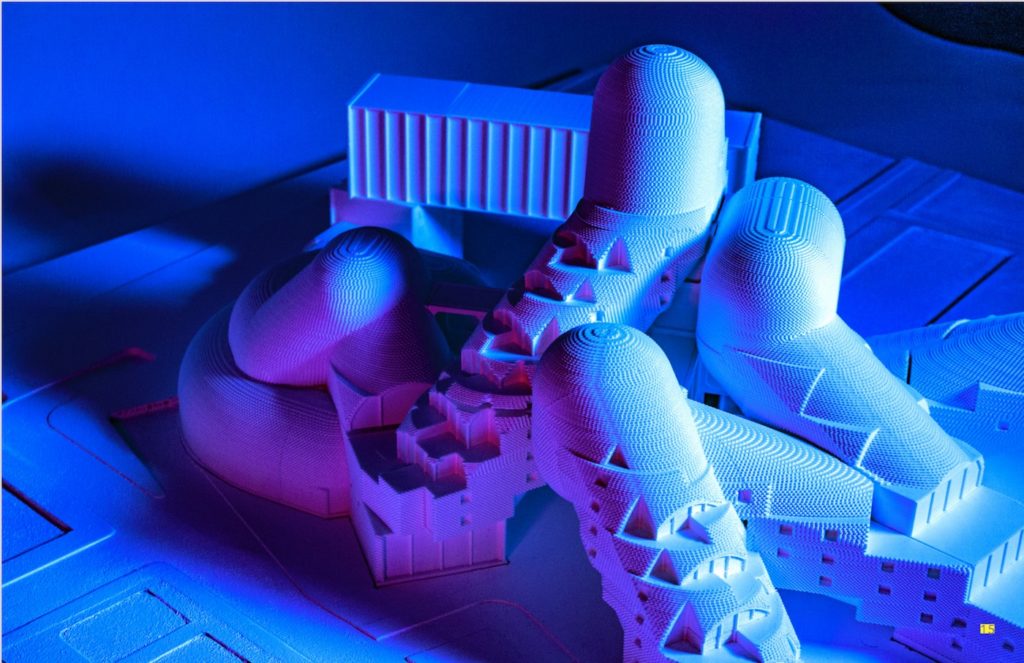
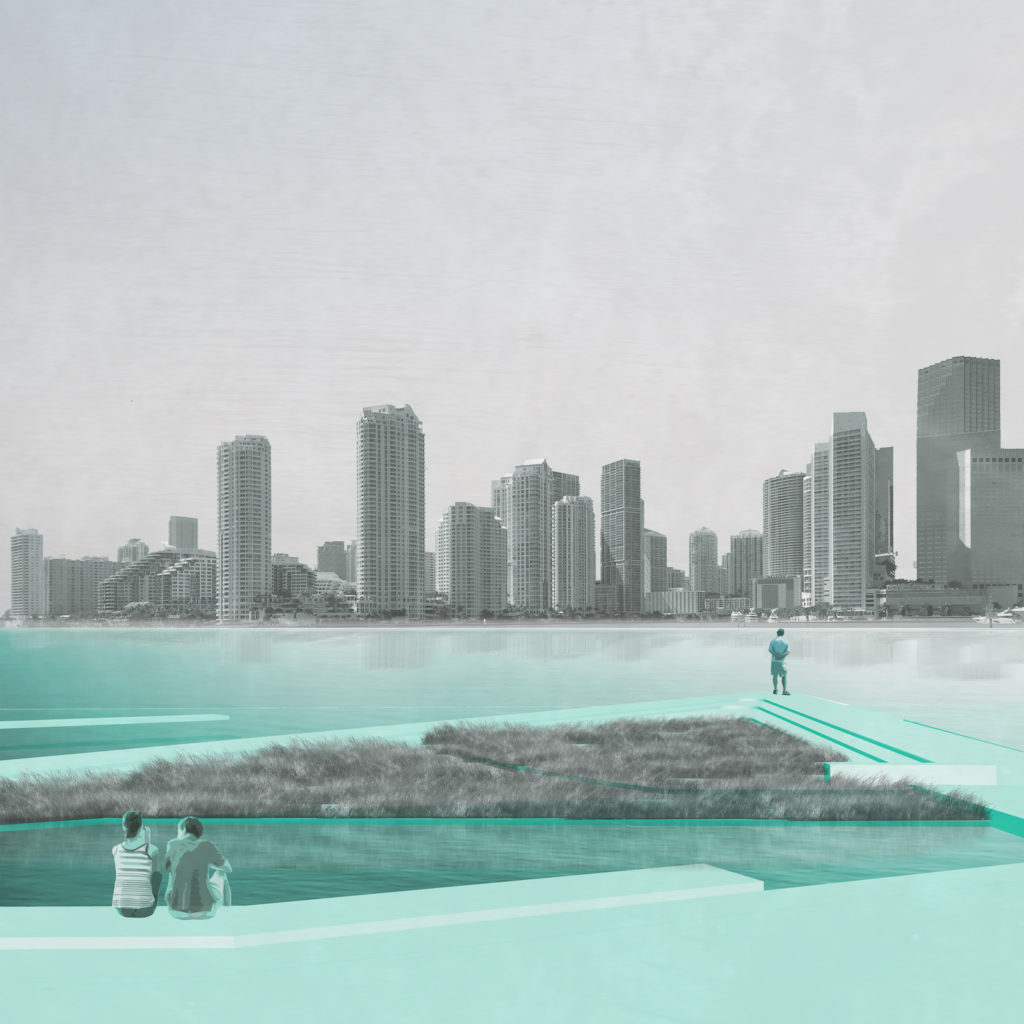
In response to climate change and rising sea levels, this project re-imagines Miami Beach’s Collins Canal as a stormwater reservoir with the capacity to alleviate flooding and generate new urban form. First cut in 1912 to move produce across the island, today the Collins Canal abuts a number of public facilities – schools, parks, gardens and memorials. The reservoir links these valuable sites, and creates a continuous public realm, which is activated by the daily and seasonal changes of the ocean. Adjustable tidal gates placed at either end of the canal are synchronized with pump stations – allowing for the adjustment of water levels within the canal. Prior to a large rain event, water could be set a low elevation to provide storage for stormwater runoff. The reservoir’s topography responds to this fluctuation, creating micro-climates for cypress and mangrove plantings, as well as interesting spaces for walking and gathering. Along this blurred water’s edge, new elevated buildings connect the city fabric to the reservoir and create an urban district which is adapted to climate uncertainty.

The 17th street bridge crossing of Collins Canal


Infrastructure Plus

Infrastructure Plus

Perspective 2
Perspective 2

Chuanying (Channing) Zheng (MLA AP ’19) and Maoran Sun (MAUD/MDes Technology ’20)

This design is reidentifying the meaning of infrastructure and envisions a new version of infrastructure towards the urban environment. This design expresses that infrastructure can not only increase the connection for city mobility but also for social living as well. Infrastructure Plus is a design that breaks segregation, creates connections and combines with different programs that together form a more sociable, sustainable and livable community.

Perspective 2
Perspective 2

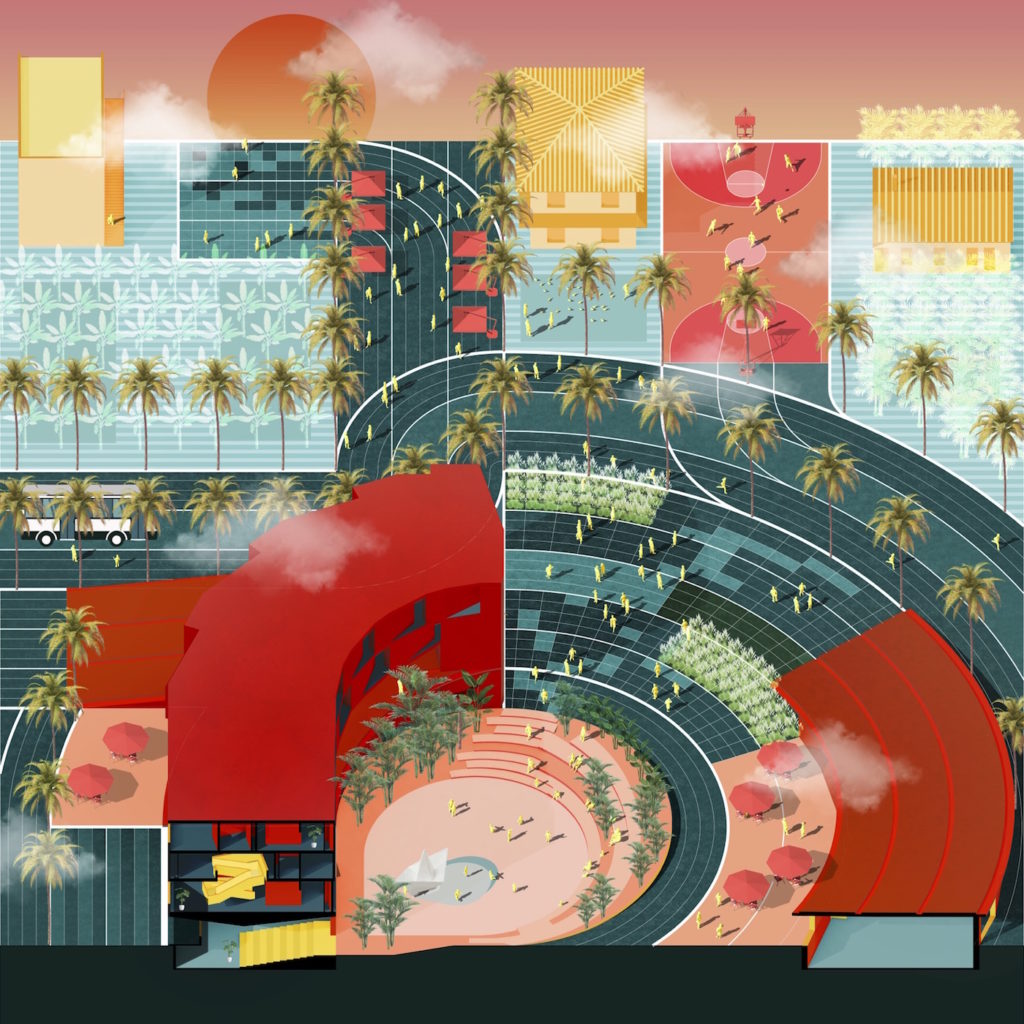
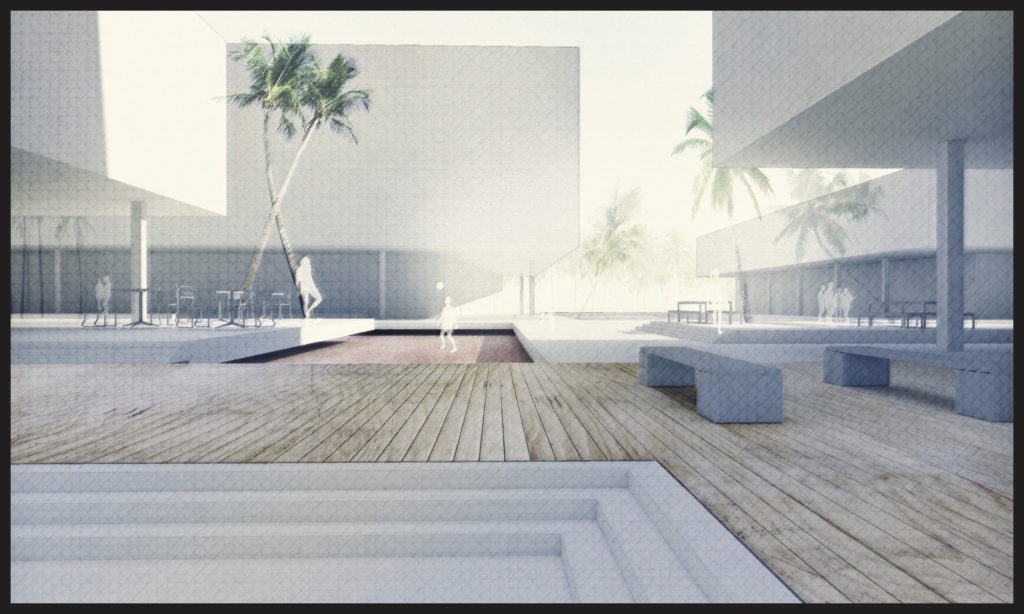
The site is located at Overtown, Miami. Overtown is divided by highway I-95 and I-395’s intersection to three parts. These internal segregation leads to public life’s fragmentation and community’s lack of identity. To bring the community together, a new type of infrastructure is introduced into Overtown. This “Infrastructure Plus” design system combines housing, recreation, retail and other public programs to create public pathways and spaces that are connecting different area as well as providing public center for the whole community. Formally, this new infrastructure breaks the segregation that made by the autonomy of highway intersection. The continuity of the shape implies the existing infrastructure as well as creating the new networks that connect to different neighborhood areas. Different entrances at local school, youth center, sports field, supermarket and as well as a beautiful water landscape inside highway intersection that make this infrastructure not only accessible to the whole community but also bind different programs together. This new infrastructure provides public space for all kinds of using functions, as well as reinforcing and increasing the public life and living quality for local people. In Conclusion, with the idea of this Infrastructure Plus, more programs and public space will be brought to the area, this new infrastructure can show our vision for a denser, more sociable and well-connected Overtown.

Miami Metro Strand

Miami Metro Strand

Revised Plan
Revised Plan

Sam Adkisson (MAUD ’19) and Hiroki Kawashima (MAUD ’19)

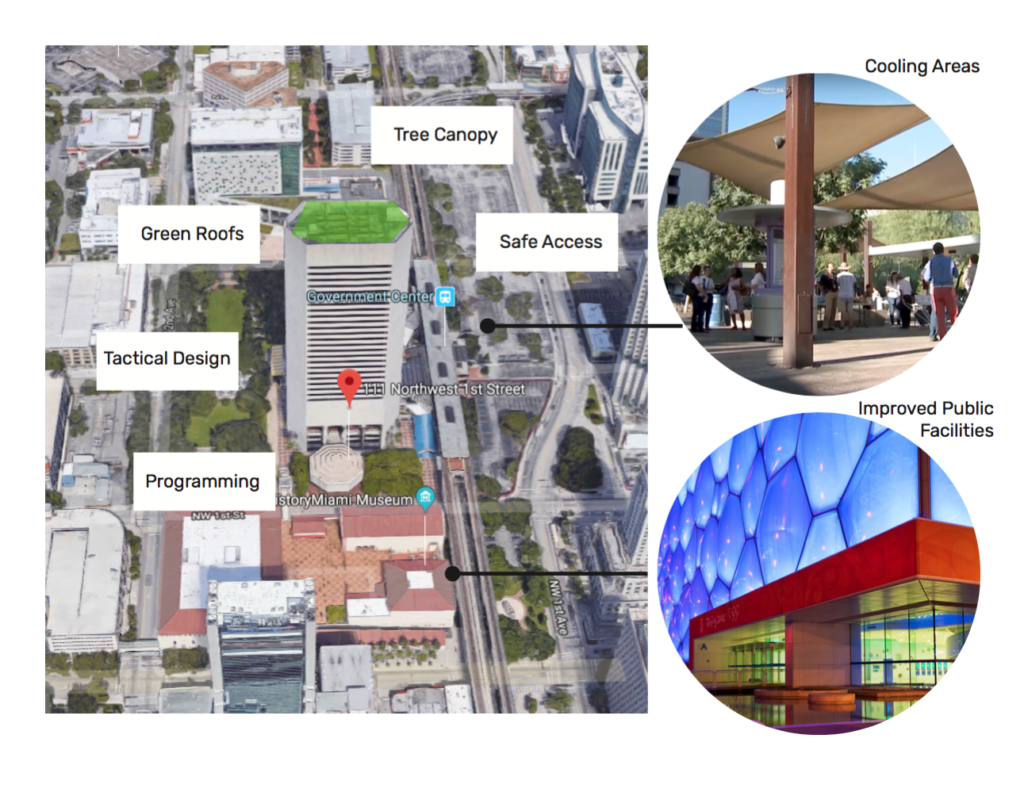
The border between Downtown Miami and Overtown negatively affects the later in a profound way and the overall prosperity of the city has failed to cross into Overtown. Activating this edge offers an opportunity to better link Overtown with the surrounding city. Giving better access to transit and a safe pedestrian path over the train tracks will create more activity in the area. Linking the two major parks in the area with a scenic and cool path through the site offers a variety of public spaces for all, a rarity in a city with few quality public spaces outside of the its beaches. Around all of these spaces are retail, restaurants and offices that support the local and up-and-coming business in smaller and more affordable space. The various gathering spaces give the Overtown community and the other future occupants places to congregate and socialize, which is difficult to do in Overtown today. Most importantly, contained within all of this is housing for all income levels, shifting away from the highly exclusive condos nearby, which displacing those that need proper housing the most. As Miami continues to urbanize, developments like the Metro Strand offer a better path forward for all residents.

Perspective 2
Perspective
Revised Perspective 2
Revised Perspective

Common Grounds: An Alternative Way of Living

Common Grounds: An Alternative Way of Living

Site Strategy Animation

Parawee Wachirabuntoon (MLA I ’19) and Charles Smith (MLAUD ’19)

This project looks to create a collective and resilient living environment in a historically segregated and underserved community. Looking at this new development from a landscape perspective first we looked into the ideals of creating social interaction and resiliency through the proximity and adjacencies of the designed elements as they work together to foster a new way to live. We then analyzed land vacancy and land banking in the Overtown neighborhood as well as did a hydrological study to see how sea level rises, salt water intrusion, and king tides affect the neighborhood. From this analysis we found that many developers are buying large parcels of land in the area, this is due to the fact that Overtown is located on some of the highest and safest land in the city as well having a deeper water table that protects it from water that is pushed up the through the porous limestone as the sea water inundates the city more and more.

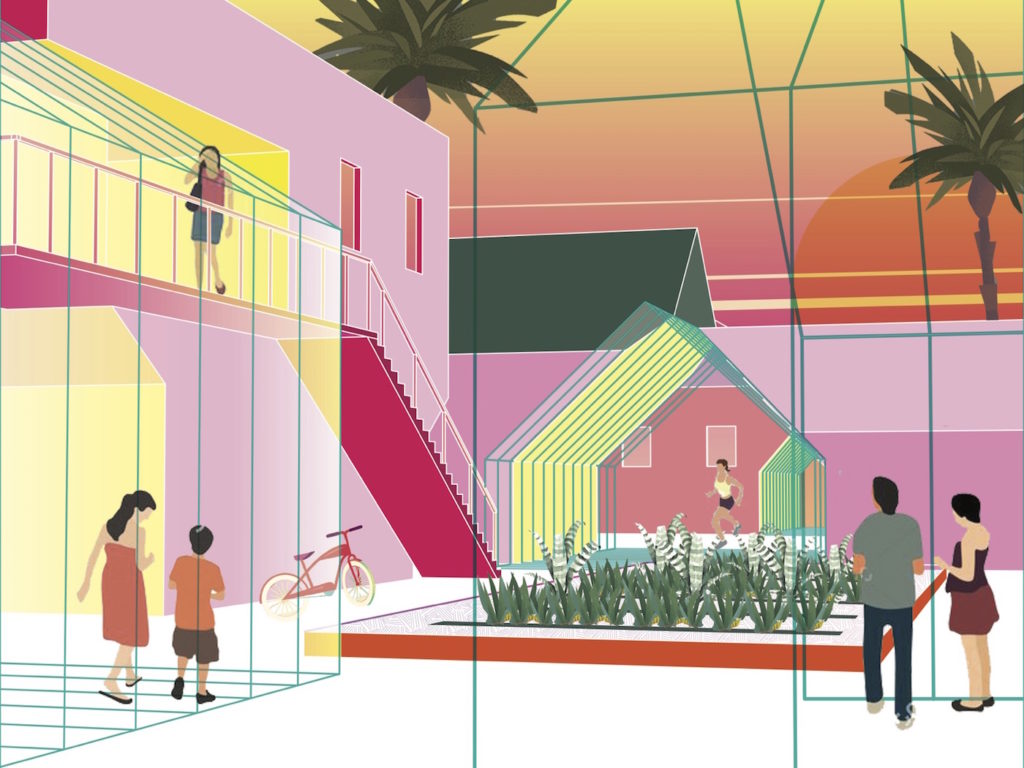
Our intervention occupies two Miami city blocks and connects to the Seybold canal that leads to the Miami River. The first design move was to excavate land closest to the Seybold canal to allow water to penetrate the site and create a wetland barrier as well as a water front park that is composed of multiple terraces that are flood tolerant and resistant. The housing in situated on a plinth of parking that slopes back to grade at the east edge of the site allowing for a smooth transition into the existing community. We utilized three different building typologies on site to allow for different domestic needs. These typologies all stem from the same desire to create a living composition that allows the residents to be more socially interactive while also feeling safe and apart of a community. This is done by placing building in such a way that smaller community clusters begin to form within the larger project, also no private balconies or courtyards are designed, it is all semi-public. The space between buildings would be able to be manipulated depending upon on how the resident wanted to use the space by adding potted plants and seating. This environment would also be interspersed with vernal pools to capture water running down the slope creating temporal spaces that change how they are occupied from a shaded seating area in dry conditions to a flood mitigation system in wet conditions. Overall the site has in all its elements the ideas of resiliency, communal life, and the public realm. This project responds to the multiple lifestyles that are encountered on a day-to-day basis.

Site Section
Site Section
Site Section - Flood
Site Section – Flood

Climate Dense[city]: Building TOD on Higher Ground in Allapattah

Climate Dense[city]: Building TOD on Higher Ground in Allapattah

KNC_04

Kenner Carmody (MDes ’19, Energy & Environments)

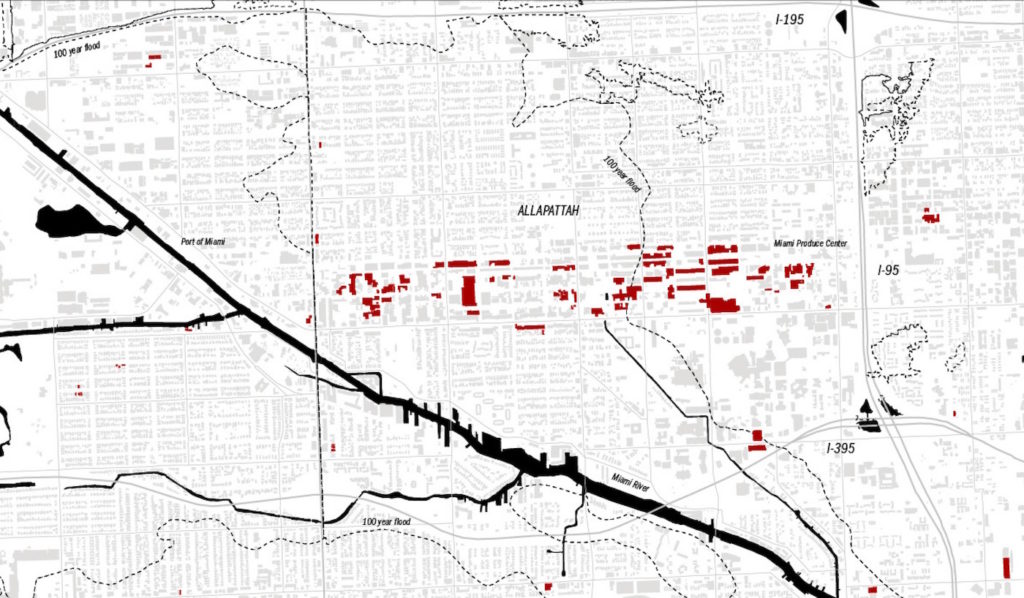
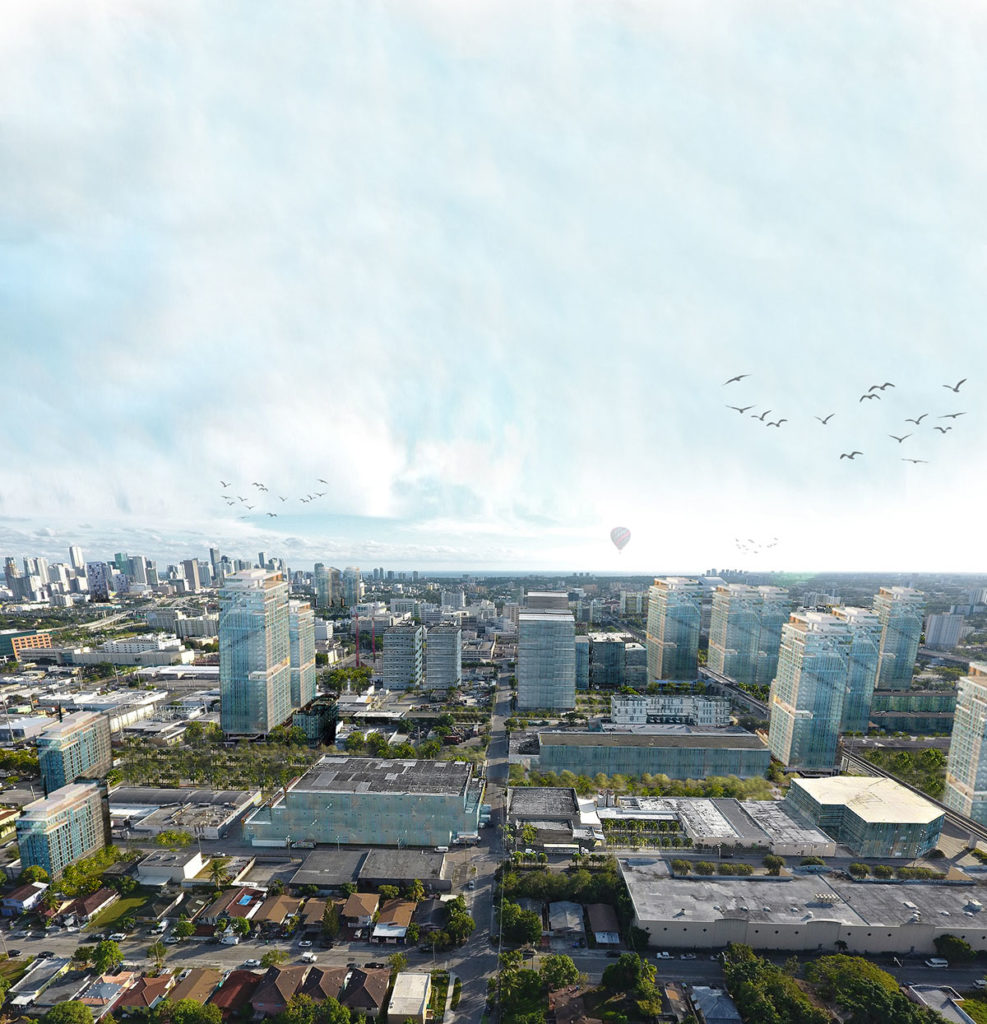
This research aims to visualize the required future housing stock necessary to accommodate displaced populations in Miami’s Allapattah neighborhood which will be affected by sea level rise and tidal inundation by the year 2100 (NOAA Office for Coastal Management). Property data, topological maps and NOAA sea-level rise projections are used in order to propose greater density in the City of Miami due to lost surface area around the Miami River. This study evaluates the existing spatial capacity and density distribution under current zoning policy, Miami 21. This study reveals that the current zoning code, overlay districts, and Neighborhood Development Zones (NDZ’s) within the population catchment area of Allapattah are maladaptive and should be completely reconsidered. Sited along Miami’s legacy metro system, a densification proposition in East Allapattah tests the hypothesis that a densified urban zone along underutilized existing transit infrastructure can accommodate new (and equitable) densities in Allapattah where housing, employment and amenities can cluster.

KNC_01
GIS census block data was used to estimate the population and housing units potentially affected by sea level rise and extreme tidal flooding (using NOAA sea level rise model of a 6′-0″ increase in seal level by 2100).
KNC_02
Inundation shown on each block with a unique object ID was divided by the block’s total surface area to estimate the total percentage of population and housing stock affected. A summary of these numbers can be seen in Fig. KNC_02
KNC_03
Relocation through transfer development rights (TDR) that allows for down-zoning of high risk geographies, the up-zoning of low-risk geographies and that incentivizes management of stormwater are key strategies in realizing an equitable, mobility oriented, and hyper-dense future for Allapattah and Miami.
KNC_05