Gareth Doherty appointed Director of Master in Landscape Architecture program

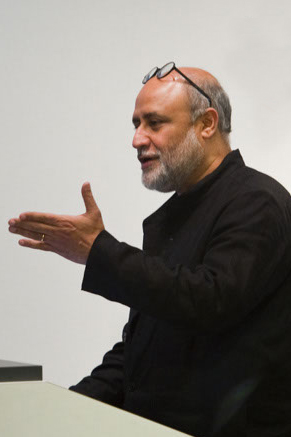
Gareth Doherty (DDes ’10), assistant professor of landscape architecture and senior research associate, has been appointed the Director of the Master in Landscape Architecture program, assuming the role as of July 1, 2017. He succeeds Bradley Cantrell (MLA ’03) in the position. The department is chaired by Anita Berrizbeitia (MLA ’87).
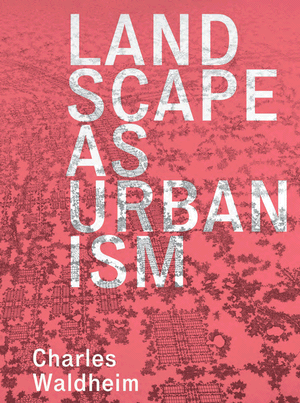
Dr. Doherty’s research and teaching focus on the intersections between landscape architecture, urbanism, and anthropology. His newest book, Paradoxes of Green: Landscapes of a City-State , was published in 2017 by the University of California Press. Previous publications include Is Landscape…? Essays on the Identity of Landscape , edited with Charles Waldheim (Routledge, 2016); and Ecological Urbanism , edited with Mohsen Mostafavi, (Lars Müller Publishers, 2010, and revised in 2016), which has been translated into Chinese, Spanish, and Portuguese, with Arabic and Persian editions in process. Doherty is a founding editor of the New Geographies journal and editor-in-chief of New Geographies 3: Urbanisms of Color .
Doherty received a Doctor of Design degree from the GSD in 2010 and received his Master of Landscape Architecture and Certificate in Urban Design from the University of Pennsylvania. He earned masters and undergraduate degrees from University College Dublin.
Doherty’s recent studios and courses include the First Semester Core Landscape Architecture Studio, Design Anthropology: Objects, Landscapes, Cities; Proseminar in Landscape Architecture, Preparation of Design Thesis Proposal for Master in Landscape Architecture, and the Ecological Urbanism Field Research Seminar. Doherty has a Certificate of Distinction in Teaching from Harvard University.
Landmark Gift Supporting Professorships and Student Fellowship
The Harvard Graduate School of Design (GSD) has received a consequential, multi-tier, multi-million dollar gift from the Robert P. Hubbard AB ’51 Trust of 1980 to endow the intellectual underpinnings of the School’s world-class faculty and to boost student access to a design education through an endowed fellowship.
Robert P. Hubbard, a long-time resident of Walpole, New Hampshire, nobly dedicated his life to teaching and philanthropy after attending Harvard College. His passion for art, culture, and the environment will live in perpetuity through his support of design thinking at the GSD with endowing two prestigious professorships. The Robert P. Hubbard Professorship in Practice of Architecture, which was generously established during Mr. Hubbard’s lifetime, will be fully endowed, and this recent gift from his trust will create a second Hubbard Professorship. Additionally, the Robert P. Hubbard AB ’51 Fellowship will provide financial aid for top design students.
“The GSD is grateful for the extraordinary generosity of Robert P. Hubbard and his recognition of the GSD as the vanguard of design education and research in addressing society’s toughest challenges,” said Mohsen Mostafavi, Dean and Alexander and Victoria Wiley Professor of Design. “Our students seek excellence in teaching and opportunities to advance their impact through design—they are driven to transform lives and places. Mr. Hubbard’s gift will support two central areas of our Grounded Visionaries Campaign—bolstering our transdisciplinary, collaborative pedagogy through endowing two world-class faculty members and enabling access for top design students through established of an endowed fellowship.

The esteemed Robert P. Hubbard Professorship in Practice of Architecture at the GSD currently supports Professor Toshiko Mori. Mori, Principal of Toshiko Mori Architect, served as Chair of the Department of Architecture from 2002 to 2008. Her recent work with students includes Eco Village, an analysis of the future of rural communities that face challenges of climate change, energy independence, and retention of youths and revitalization of its community, and a master plan for a large parcel of land in Fukuoka, Japan with urban innovation strategies. The second Robert P. Hubbard Professorship in Practice of Architecture will be awarded at a later date.
“I am grateful for the immense generosity of Robert P. Hubbard whose name I carry in my professorship, which provides me with prestige and privilege,” said Professor Mori. “In turn, I teach with awareness and responsibility for teaching the future leaders of the world who will transmit their thoughts to next generations. It is a gift of spirit that keeps giving to ensure continuity for the discipline of architecture for the future generations with the intellectual rigor that marks GSD education.”
To support talented, ambitious students, the Robert P. Hubbard AB ’51 Fellowship will provide financial aid for designers of tomorrow at the GSD, which will support four students at this time. This gift will enable them in making career choices based on their passions, rather than their financial obligations and broaden the range of diversity within the GSD.
Design is an inherently optimistic pursuit. With the $110-million-plus Grounded Visionaries Campaign, the GSD is not only imagining a better world, it is also constructing it. Launched in 2014 as part of Harvard University’s $6.5-billion capital campaign, the Grounded Visionaries Campaign is increasing impact for the strategies, structures, and students to reshape our world. With its three aspirations, the Campaign aims to: boost access to innovative learning at the GSD while offering unrivaled experiences; broaden the reach of design knowledge through transformative pedagogy, research, and discourse; and build the GSD’s future through leading-edge faculty and facilities for the next century.
University Alumni Plimpton, Poorvu Create Real Estate Prize at the GSD
Plimpton–Poorvu Design Prize to recognize students who exemplify excellence, innovation, and enhancement through their work at the GSD.
Mohsen Mostafavi is honored to announce the establishment of the Plimpton–Poorvu Design Prize at Harvard University Graduate School of Design (GSD). Established with a gift by longtime friends, business partners, and GSD advocates Samuel J. Plimpton (MBA ’77, MArch ’80) and William J. Poorvu (MBA ’58), the Prize will recognize students who exemplify excellence and innovation through their work in any degree program at the GSD.
Plimpton is delighted to create this gift with his friend and mentor William J. Poorvu, stating that “Bill wrote the book on real estate. He is responsible for many of the cases that are used to teach the subject at both the University and throughout the United States. I was lucky to study with him at HBS, and am excited for our continued work together.”
The Plimpton–Poorvu Design Prize, an award of approximately $20,000 annually, will be distributed to an individual or team who develops a commercially viable real estate project as part of the their curricular work at the GSD. A GSD faculty committee with representation from the Departments of Architecture, Landscape Architecture, and Urban Planning & Design will select a winning candidate in consultation with the Dean. The recipient(s) will be selected on the basis of the project’s feasibility in regards to design, construction, and economics, and in fulfillment of market, user, and community needs.
“This prize is intended to honor innovative thinking applied to realistic constraints,” Poorvu says. He explains that “[s]uccessful developments depend on far more than good design or a good location—the real estate game is complex. We hope to encourage collaborative work, bringing together a broad spectrum of experiences to create an informed plan.”
Poorvu is Adjunct Professor in Entrepreneurship Emeritus at HBS and was a lecturer in the Department of City and Regional Planning at the GSD in the early and mid-1970s. He is the author of many books and articles on real estate, including The Real Estate Game: The Intelligent Guide to Decision-Making and Investing (Free Press, 1999). Poorvu also has served as managing partner in a number of real estate companies and is a trustee of several major cultural institutions.
Plimpton has been an innovator since his time at Harvard, where he earned concurrent degrees in business and architecture. At The Baupost Group, L.L.C, Plimpton was Co-Head of Private Investments and a member of the Management Committee and is today Partner Emeritus and Senior Advisor. Prior to joining Baupost, he was a partner in independent real estate ventures and held a research appointment at HBS. Together with his wife, Wendy Shattuck, he has been a generous supporter of the GSD, and of a broad network of civic and cultural institutions across Boston.
Dean Mostafavi acknowledges the value of this gift. “This prize recognizes the great contributions of these real estate icons and ensures that their names live in posterity at the GSD. Our students produce a broad spectrum of superior work on an annual basis. This gift will celebrate the innovative and responsive projects that are created in the context of our inspiring curriculum.”
The School will begin the prize nomination process at the end of the 2016 spring semester. Students and teams from all GSD programs are eligible to enter.
New Office for Urbanization focuses on research projects attendant to the contemporary city
The Harvard Graduate School of Design announces the formation of the Harvard University Graduate School of Design Office for Urbanization, a trans-disciplinary initiative that will focus the intellectual and practical capabilities of the School on a range of applied design research projects attendant to the contemporary city. The Office will be led by founding director Charles Waldheim, John E. Irving Professor of Landscape Architecture.
The Office for Urbanization will build upon the GSD’s legacy of innovation in design research to address societal conditions associated with contemporary urbanization. Engaging faculty from the School’s three departments, the Office will draw upon the range of disciplinary and professional knowledge embodied in the GSD’s research advancement initiatives and design labs to extend the School’s impact on the future of cities around the world. Mohsen Mostafavi, Dean and Alexander and Victoria Wiley Professor of Design, describes the initiative as “a continuation of the GSD’s historic leadership in applied project-based design research, and an exciting new initiative reconfirming the School’s commitment to impactful societal engagement through design. The Office will work to shorten the distance between innovation in design research and impact in the world.”
The Office will provide a venue for the advancement of knowledge on the role of design research in relation to the social and environmental challenges associated with ongoing urbanization. Collaborating with the Center for Green Buildings and Design, the Joint Center for Housing Studies, and Executive Education, and engaging government agencies, non-government organizations, philanthropic institutions, and community leadership, the Office will articulate and evaluate various scenarios for urbanization through a number of agendas for design research.
Global in its purview, the Office will engage partners on a diverse array of sites and subjects domestically and internationally. Its inaugural project will focus on municipal response to sea level in partnership with the City of Miami Beach. “This foundational project of the Office for Urbanization will examine the implications of rising sea levels and increased storm events on the economy and ecology, infrastructure and identity of Miami Beach in relation to its metropolitan and regional contexts,” Waldheim says. “The study will develop design strategies and scenarios to mitigate present threats and to anticipate future potentials facing one of the world’s most recognizable and singular cultural landscapes.”
Bradley Cantrell appointed Director of Master of Landscape Architecture Program
The Harvard Graduate School of Design announces the appointment of Bradley Cantrell (MLA ‘03) as director of the Master of Landscape Architecture program, commencing immediately.
Cantrell was appointed associate professor of landscape architecture at the GSD last July. His appointment as director of the Master of Landscape Architecture program follows the appointment of Anita Berrizbeitia (MLA ‘87) as chair of the department, announced earlier this summer.
Cantrell’s work as a landscape architect and scholar focuses on the role of computation and media in environmental and ecological design. He served as the 2013–2014 recipient of the Garden Club of America Rome Prize Fellow at the American Academy in Rome, and as Director and Associate Professor at Louisiana State University Robert Reich School of Landscape Architecture. He has also taught at the Rhode Island School of Design.
Cantrell’s research and teaching focuses on digital film, simulation, and modeling techniques to represent landscape form, process, and phenomenology. His expertise in digital representation ranges from improving the workflow of digital media in the design process to providing a methodology for deconstructing landscape through compositing and film editing techniques.
Cantrell received his bachelor of science in landscape architecture from the University of Kentucky and his master of landscape architecture from the GSD.
Diane Davis appointed Chair of the Department of Urban Planning and Design
The GSD is pleased to announce the appointment of Diane Davis as chair of the Department of Urban Planning and Design as of July 1, 2015. Davis is currently the Charles Dyer Norton Professor of Regional Planning and Urbanism at the GSD.
Davis teaches courses and options studios that examine the role of politics in planning and design, relations between urbanization and development, and socio-spatial practice at the scale of the city. Her research focuses on urban transformations in the global south, particularly the urban social, spatial, and political conflicts that have emerged in response to globalization, informality, and political and economic violence. In her capacity as codirector of the Risk and Resilience track in the Master in Design Studies (MDes) program, Davis explores overlapping vulnerabilities in the built and natural environment and assesses their significance for planning theory and design practice.
Davis is a prior recipient of research fellowships from the John D. and Catherine T. MacArthur Foundation, the Heinz Foundation, the Ford Foundation, the Social Science Research Council, the United States Institute for Peace, the Andrew W. Mellon Foundation, and the Carnegie Corporation of New York. Currently, she directs a project funded by the Volvo Research and Educational Foundation titled “Transforming Urban Transport—The Role of Political Leadership.”
Davis was named the Charles Dyer Norton Professor of Regional Planning and Urbanism at the GSD in November 2014 and had served as professor of urbanism and development at the GSD since 2012.
Anita Berrizbeitia appointed Chair of the Department of Landscape Architecture
The GSD is pleased to announce the appointment of Anita Berrizbeitia (MLA ’87) as chair of the Department of Landscape Architecture as of July 1, 2015. Berrizbeitia is currently professor of landscape architecture and director of the Master in Landscape Architecture degree programs at the GSD.
Berrizbeitia is a landscape architect specializing in theory and criticism of nineteenth and twentieth-century public landscapes in the United States and Europe, with particular interests in material culture, design expression, and the productive functions and roles of landscape in processes of urbanization. Her research on Latin American cities and landscapes centers on the creative hybridization of local and foreign cultural practices as a response to a centuries-old process of global cultural exchange; the role of large-scale infrastructural projects on territorial organization; and the interface between landscape and emerging urbanization.
At the GSD, Berrizbeitia has taught design studios and theory of contemporary practices, investigating innovative approaches to the conceptualization of public space, especially on sites where urbanism, globalization, and local cultural conditions intersect. She also leads seminars that focus on significant transformations in landscape discourse over the last three decades.
Editorially, Berrizbeitia is editor of Urban Landscape—Critical Concepts in Built Environment Series (Routledge, March 2015); editor of Michael Van Valkenburgh Associates: Reconstructing Urban Landscapes (Yale University Press, 2009), which received an ASLA Honor Award; author of Roberto Burle Marx in Caracas: Parque del Este, 1956–1961 (University of Pennsylvania Press, 2004), awarded the J.B. Jackson Book Prize in 2007 from the Foundation for Landscape Studies; and co-author with Linda Pollak of Inside/Outside: Between Architecture and Landscape (Rockport, 1999), which won an ASLA Merit Award. Her essays have also been published in numerous books and journals, and she serves on the editorial board of the Journal of Landscape Architecture and on the advisory board of the South America Project. She has also served on major competition juries in Chile, Ecuador, Venezuela, and Madrid.
A native of Caracas, Venezuela, Berrizbeitia studied architecture at the Universidad Simon Bolivar before receiving a bachelor’s degree from Wellesley College and a master in landscape architecture from the GSD in 1987. Since then, she has taught in various capacities at the GSD, including as assistant professor of landscape architecture from 1993 to 1998 and as professor of landscape architecture since 2009.
New PhD track in Architectural Technology
The PhD Program in Architecture, Landscape Architecture, and Urban Planning announces an additional track in Architectural Technology. Doctoral research undertaken in this area will have the aim of advancing the state of knowledge in green building, and will typically include issues related to computation and simulation, environmental concerns, and energy performance. A background in architecture and/or engineering-related fields is required. In addition to a highly interdisciplinary curriculum that includes theoretical and empirical approaches, especially the history and philosophy of technology, the student will be associated with the Harvard Center for Green Buildings and Cities , which will provide the intellectual context for this research.
“It is with great excitement that we inaugurate a new doctoral concentration in Architectural Technology, which will allow students to take advantage of the extraordinary resources in this area at Harvard University in the context of a program based in the humanities and social sciences,” said Erika Naginski, Professor of Architectural History and Director of the PhD program.
For more information, please visit the PhD Program page.
Harvard Magazine: GSD Launches $110-Million Campaign
The Harvard Graduate School of Design (GSD) launched its $110-million-plus fundraising campaign on September 12 and 13 with a series of events highlighting the school’s “grounded visionaries”: architects, planners, and designers who are at once free to dream of inventive solutions for—and intensely concerned with the practical challenges of—building a better world. Part of the University’s $6.5-billion capital campaign , the GSD campaign will support expanded international research and studio programs; new spaces for research and teaching, including proposals for a new research building to augment Gund Hall; and financial aid for students. Campaign co-chair John K. F. Irving (AB ’83, MBA ’89), whose $10-million gift kicked off the campaign last year, announced on Saturday that the school has already raised $69.23 million, or 63 percent of its total goal.

Speeches by two of the school’s most distinguished affiliates—both recipients of the field’s top honor, the Pritzker Prize —bookended the weekend. On Friday night, Dutch architect Rem Koolhaas , professor in practice of architecture and urban design, set the tone for the events to follow with a speech in Sanders Theatre. Speaking of the challenges and opportunities that rapid urbanization and even more rapid technological advancement pose for designers, he showcased the exhibit, a reexamination of the fundamental elements of architecture and design, that he designed for this year’s Venice Biennale with the help of GSD students. The following evening in Piper Auditorium in Gund Hall, Fumihiko Maki (MArch ’54) provided retrospective reflections on his six-decade-long architectural career, offering reminiscences on his work with many of the school’s earliest leaders in the 1950s.
To read more, visit Harvard Magazine’s full length article on the campaign and design weekend.
John E. Irving Family Donation Kick-starts Harvard GSD Campaign
The Harvard University Graduate School of Design (GSD) announced today that John K. F. Irving (AB ’83, MBA ’89), GSD Campaign Chair, and Anne Irving Oxley have made a significant donation of $10 million to the School in honor of their father John E. (Jack) Irving.

This leadership gift will kick-start the Harvard Graduate School of Design’s campaign efforts with support for Dean Mohsen Mostafavi’s vision for the School by deepening and broadening the faculty’s intellectual reach, by lowering the barriers of cost to our students, and by responding to an evolving design pedagogy to bolster transdisciplinary scholarship and an ambitious research agenda. The John E. Irving family gift will enhance the School’s leadership position in 21st century design.
For the Irvings—longtime champions of the School who endowed a professorship in landscape architecture in 2008 to honor their father—the gift builds on a tradition of giving, reinforcing their commitment to the Harvard Graduate School of Design and honoring the John E. Irving family‘s dedication to both the built and natural environments.
Irving, who plays an active role in the life of both the School and the University, reflects upon the family’s intentions, “This gift is not about promoting a single program—this gift is about the future of the School, in a world facing increasingly complex challenges. We believe in the leadership of the Dean, the unmatched teaching and groundbreaking research of GSD faculty, and the capacity of the student body to make a real impact. Our gift supports this amazing place. It’s a gift to sustain the School’s preeminence.”

Carefully designed to provide both immediate impact and sustaining support, the John E. Irving family gift is spread across a broad spectrum of activities within the school, representing both endowed and current-use funds. The endowed portion includes three funds: the John E. (Jack) Irving Fellowships, bringing the very best students to the GSD with a preference for applicants from the Irving’s home country of Canada; the John E. (Jack) Irving Dean’s Innovation Fund, to build a cornerstone for the future by improving research funds for junior faculty, providing seed funding for University-wide collaborations, and supporting other new initiatives that the Dean considers to be central to the School’s mission; and the John E. (Jack) Irving Professorship in Landscape Architecture Faculty Support Fund to provide discretionary funds to support cutting-edge research on landscape architecture’s relationship with contemporary urbanism.
The current use funds committed to immediate impact are similarly distributed: the John E. (Jack) Irving Dean’s Innovation Fund, providing the Dean with immediate-use flexible funds to go directly to long-term and emerging priorities, including faculty whose work is research-driven to complement the School’s strengths in practice-based disciplines; funds to support the new undergraduate concentration in Architecture, linking the high energy and intense curiosity of undergraduates with the creative and imaginative perspectives that are the essence of design; and lastly, support for Gund Hall renovations which will help to achieve the School’s ambition to make transformative improvements to Gund Hall.
Harvard Graduate School of Design Dean Mohsen Mostafavi expresses his gratitude to John Irving and Anne Oxley for their support and commitment to the School. “This extraordinary gift honors the memory of John E. Irving, reinforcing the family’s dedication to Harvard, and the GSD. Their support of the undergraduate concentration, of our students, and of our ambitious research agenda, reflects our shared commitment to the notion of One Harvard. The John E. Irving family’s generosity toward Harvard—not just to the School of Design, but to the College and the Business School—reflects this vision of a vibrant and collaborative university community.”
The Dean is delighted to have Irving leading the GSD’s campaign efforts and helping to imagine the school of the future, “Together, we envision a School that puts design at the center of Harvard life, creating societal impact that will reverberate worldwide. With a transdisciplinary, international, and speculative ethos, the School will address head on the complex social issues impacting our built environment – from the impact of rapid urbanization and disaster planning to the power of beauty and the impact of energy efficient environments. I join the entire GSD community in extending our gratitude to John, Anne, and their family for this generous gift. We are honored by their engagement.”
At Harvard, the Architecture and Landscape Architecture programs have existed since 1893 and 1900, respectively, and its City and Regional Planning and Urban Design programs were established in 1923 and 1960—all among the first programs of their kind in the nation. The Harvard Graduate School of Design was founded as a multidisciplinary design school in 1936, bringing together architecture, landscape architecture, urban and regional planning, and eventually adding urban design, and the advanced studies programs. The School has a holistic focus on the built environment, making the GSD distinct from its peer institutions. The Harvard Graduate School of Design’s pedagogic aspirations and the diversity of its faculty also make it an American institution with a strongly international outlook. Today, the GSD has secured a leadership position in University-wide collaborations, fostering an increasingly global outlook, and engaging faculty equally committed to research, pedagogy, and practice.
John E. (Jack) Irving, along with his two brothers, managed the family businesses–focusing on Irving Oil–for over 50 years. Jack felt strongly about ecological and cultural conservation. Known as the builder in the family, Jack was an innovator who advanced efficiency in the workplace. He was inducted into the Canadian Business Hall of Fame and appointed a member of the Order of Canada, leaving a true legacy as a beloved and well-respected businessperson.

John K. F. Irving, is President of Ocean Capital Investments, a holding company for the families’ businesses in real estate, construction, energy, and others areas, based in Saint John, New Brunswick, Canada. He is currently Co-Chair of the GSD Campaign Committee while holding seats on both the University Campaign Planning Committee, and the Committee on University Resources. From 2009-2012, he sat on the Dean’s Advisory Council at the GSD. During this tenure, Irving became well-acquainted with Dean Mostafavi, building a powerful and impactful relationship anchored in a shared view of what the world needs and what the GSD can provide.
Anne Irving Oxley, who studied in the School’s summer Career Discovery Program before embarking on her design education, graduated from the University of Toronto (BA ’93) and then received her master of landscape architecture degree from the University of Guelph (Ontario) in 1998. She is a Director at Ocean Capital Investments in New Brunswick and shares her father’s passion for landscape and the environment.