(e)motion library
(e)motion library

Nashra Balagamwala (MDes ADPD ’21) and Mengfei Wang (MDes ADPD ’20)
People worldwide currently face mental health illnesses. While efforts have been made to alleviate these problems, they haven’t been entirely successful due to the stigma surrounding mental health. Seventy-five percent of Harvard students with anxiety or depression do not seek out counseling. This may be due to a variety of reasons, such as the fear of being seen in waiting rooms, being thought of as incapable, and the lack of time.
(e)motion library is a platform that allows participants to playfully, artistically, and anonymously share their mental health concerns. Users can choose one of the many styles available on the platform, going from slightly anonymous, to completely obscure. Through built-in software, ‘(e)motion library’ changes participants’ voices and faces, allowing them to anonymously share their truths. Users are also given access to resources in their area, easily allowing them to book appointments with mental health professionals, or find support groups.
(e)motion library is a virtual mental world, aimed at alleviating feelings of isolation, and destigmatizing mental illnesses.
Dynasty
Dynasty
Yaxuan Liu (MArch I ’21)
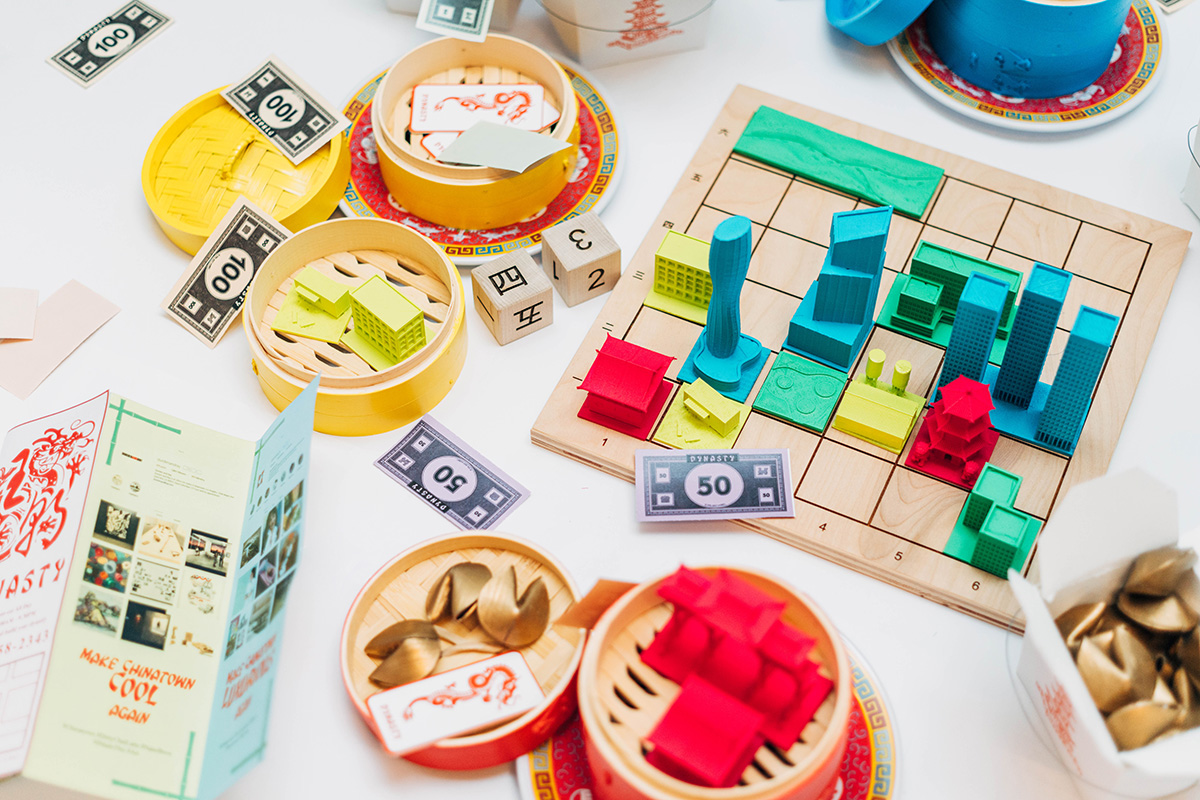
Over the past decade, the revival of downtown Los Angeles has pushed Chinatown’s longtime affordability problem into a full-blown crisis. Chinatown’s prime location has attracted many groups of people from different backgrounds with conflicting interests—developers, low-income families, artists, young professionals, and more. For these groups, battles over space are almost daily occurrences because of their various visions for Chinatown’s future. To have a chance of resolving the affordability crisis, we must understand the complex context and stakeholders in these battles. My game Dynasty does exactly that.
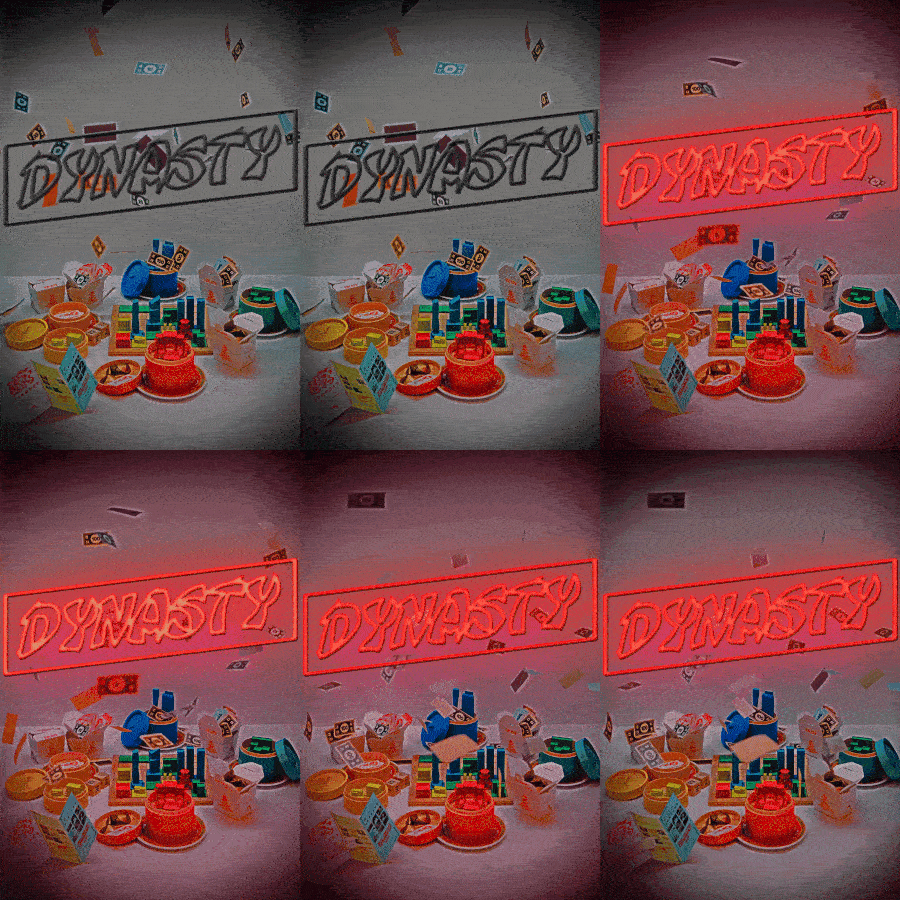
A crossover between the Chinese game Go and the American game Monopoly, Dynasty gamifies the fights over space among four different groups. Driven by fortunes and functions comprised of policies and events that help or burden each group, the game helps players understand the motivations and struggles of the groups they represent. Players buy properties and receive profits from them while attacking each other’s properties and defending their own. This process simulates the battles in Chinatown through fun and vibrant visual representations emblematic of the neighborhood. As the game comes to an end, the new dynasty of Chinatown shaped by all the players emerges.
LOW-ENERGY | HIGH-RISE
LOW-ENERGY | HIGH-RISE
David Ling (MArch I ’20)
Recipient of second prize in the SKYHIVE 2020 Skyscraper Challenge
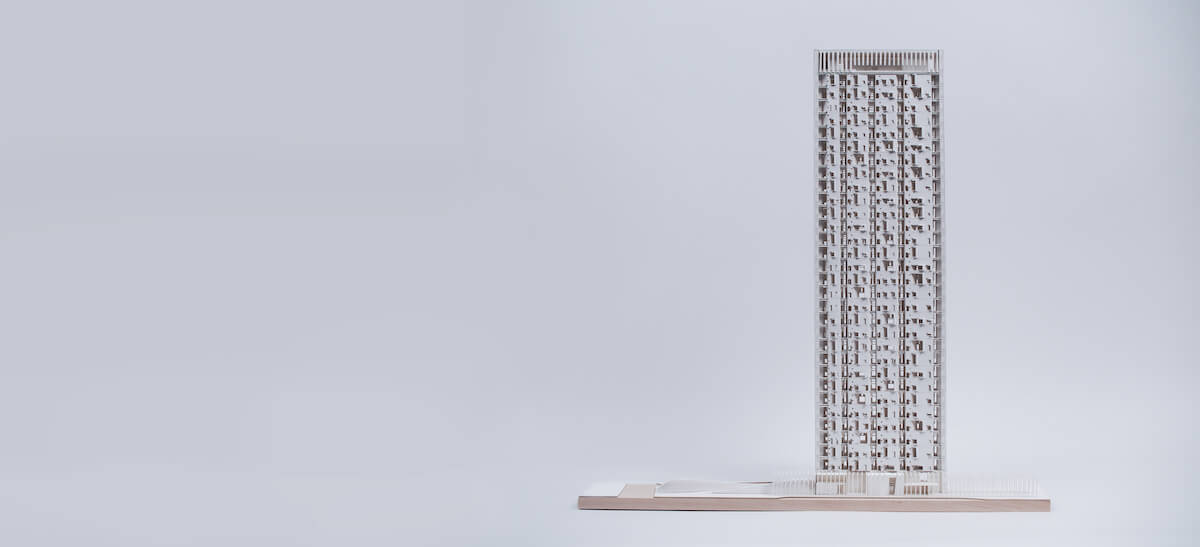
In cities with extreme climates such as Dubai, energy consumption is mostly spent on keeping spaces cool; however, this condition is reflective of a more significant problem associated with the generic all-glass developer’s condos common to the region. In Dubai, residential architecture is conceived as ‘standing capital’ instead of as site-sensitive places for dwelling. This project re-imagines the low-energy residential high rise as a holistic relationship between wind, light, shadow, and culture. It aims to expand the definition of architectural environmentalism by including place-specific aesthetic and atmospheric concerns alongside thermal regulation and energy-use.
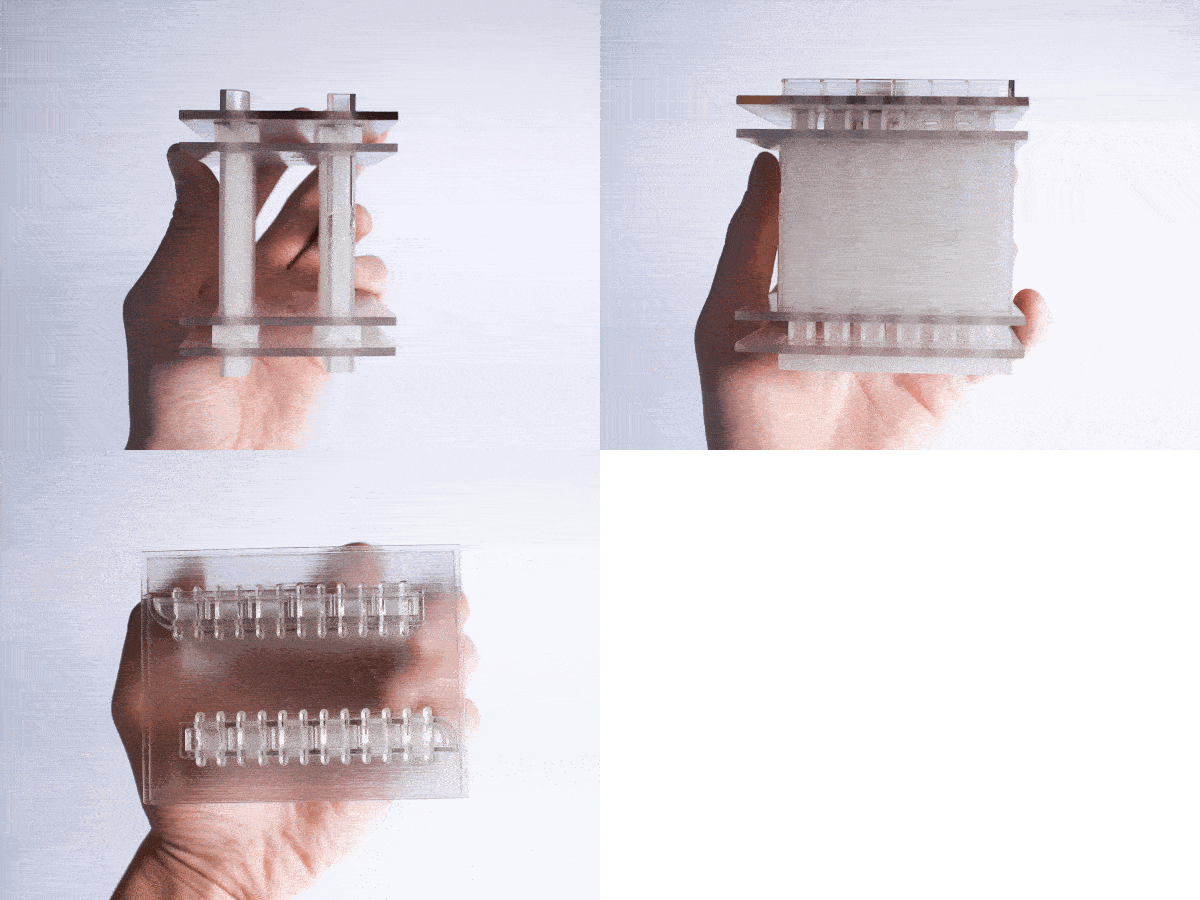
This ambition is realized through a deep relationship with light and wind. As the carrier of both heat energy and architectural atmosphere, the light of a place has long shaped the built environment of vernacular cultures. In reference to such practices, this project engrains its relationship to the site’s light and wind into its hollow concrete structure, which acts as a passively cooled thermal mass while imbuing the dwelling spaces with a sense of thickness and intimacy. Its narrow slab-like massing orients the spaces to receive optimal prevailing winds, which both passively cool the thermal mass and provide cross ventilation through each unit.
At every step, the typical developer’s condo solutions are replaced with ones appropriate to the site and with the sensibilities that emerge when residential units are treated as places for living, rather than for selling. Shadow and ambient light characterize the atmospheric expression of interior spaces, while boundaries between inside and out are softened with respect to vernacular practices of dwelling in the liminal zone. As Dubai matures from an international playground to a diverse economy with a growing middle-class, it is due time to reconsider its built environment and what it means to dwell in this unique city. This project is a proposal for a uniquely Dubai architecture.
(Slum)scapes of adaptation Weak Grounds, Risk Ecologies, Community Initiatives
(Slum)scapes of adaptation Weak Grounds, Risk Ecologies, Community Initiatives
Eduardo Pelaez (MDes ULE ’19)
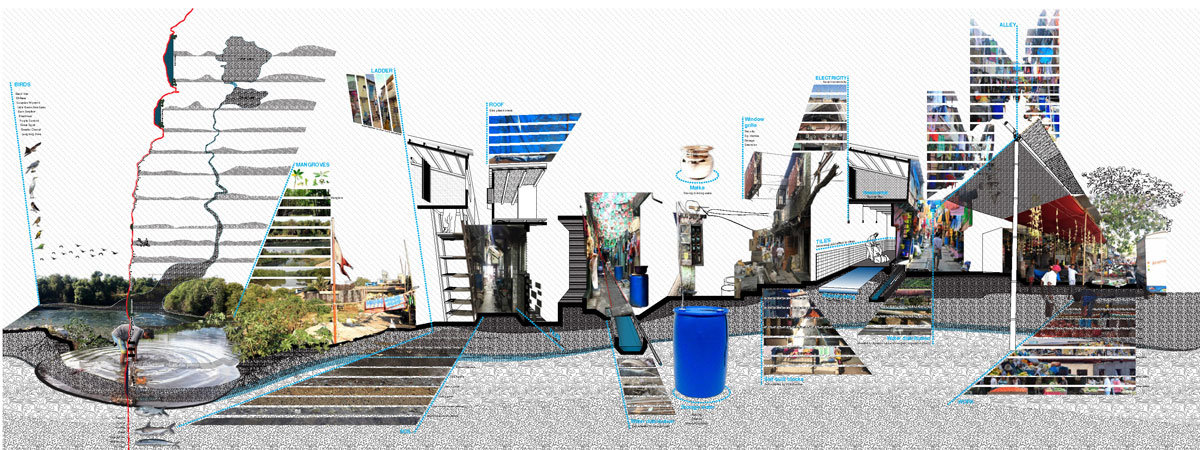
Rapid population growth, rural-urban migration, and the occupation of vulnerable territories are powerful characteristics for the increase of informal settlements. Largely, informal settlements have been defined by socio-economic standards, poverty, and lack of infrastructure. However, there is little research to comprehend the ecosystems, grounds, and implications of settling those environments. This mode of spontaneous urbanization has generally occupied the most vulnerable places of cities or territories with “bad geology,” which are usually located in areas prone to environmental hazards, such as groundwater flooding, subsidence, and landslides (Davis 2006: 121). For this reason, people who live in informal settlements have had to learn how to cohabitate with their environmental vulnerabilities, such as swamps, floodplains, and riversides, which are all wet grounds susceptible to groundwater flooding; rubbish mountains, which are waste grounds vulnerable to subsidence; and, unstable hillsides and steep slopes, categorized as steep grounds susceptible to landslides.
This thesis seeks to theorize, document, and highlight alternative adaptation strategies of inhabiting weak grounds, categorized as wet, waste, and steep grounds. I review one case study for each ground type and analyze it through archival, studio, and field works. This research thesis calls attention to new narratives in the understanding of informal settlements in the intersection among tectonic substructures, vulnerabilities of those grounds, and the adaptation responses of people in their built environments. The new knowledge produced leaves aside technical conventions of “suitable or bad geologies” and highlights unseen resourceful strategies and ecological flux systems that enable people to inhabit those environments.
Afterlives of Orbital Infrastructures: From the Earth’s High Orbits to its High Seas
Afterlives of Orbital Infrastructures: From the Earth’s High Orbits to its High Seas
Rajji Sanjay Desai (MDes ULE ’19)
“We live in an age in which extremely expensive machines are made and installed in orbit without public knowledge, only to be spectacularly blown away and become total losses before our eyes.” ¹
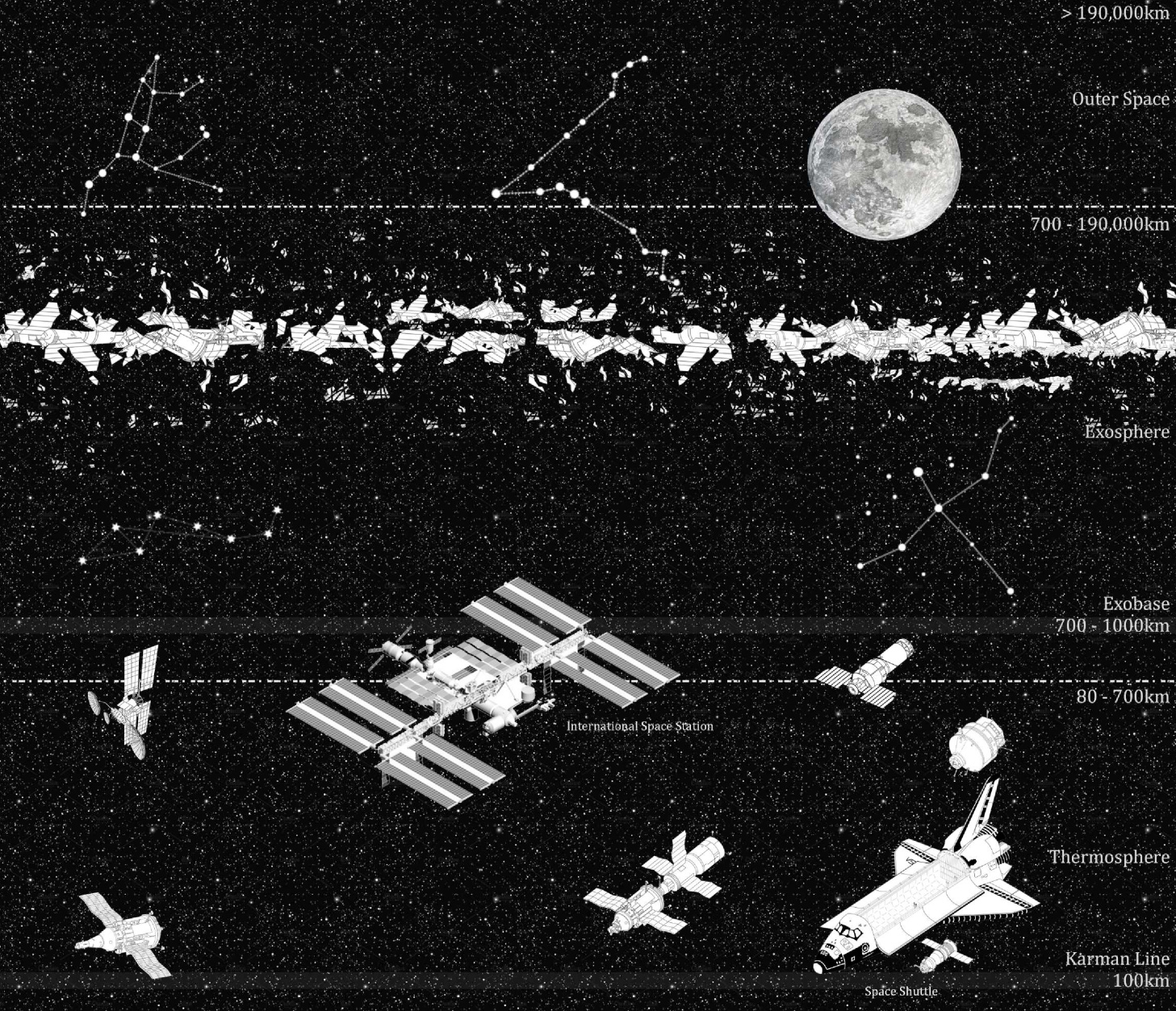
Through this thesis, I propose the concept of “false externalization.” I mobilize this within the context of the ongoing privatization of orbital space in order to characterize the present-day workings of satellite systems. I call this practice “false externalization” because, despite the seeming status of satellites as purely external to the Earth, the forms of techno-waste generated by satellite networks are in fact still subject to a material dialectic between externalization and internalization. Despite their operational lives occurring in a place more or less external to the Earth, these ostensibly externalized toxic wastes are ultimately subject to important processes of (re-)internalization back here on Earth. Significantly, these processes have dire consequences for Earth’s environments—whether built or unbuilt, human or non-human. Moreover, these so-called “externalizations” remain internal to the Earth’s life-supporting and self-sustaining systems—the ramifications of which are profoundly destructive, both socially as well as environmentally.
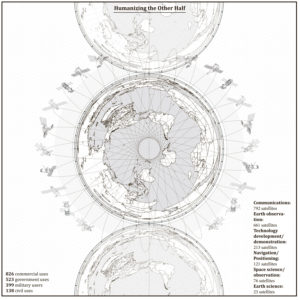
In an attempt to demonstrate the prevalence of this practice in the context of orbital development today, I pursue two lines of inquiry. First, I trace the legal landscape of orbital waste, foregrounding the inextricable link between the spatial politics of orbital waste and the indeterminacies that exist within the legal and legislative frameworks that govern the production of orbital space. Second, I undertake an analysis of the visual and aesthetic regimes that have resulted from these orbital waste processes in order to document how these legal ambiguities permit the materialization of uneven geographies of distribution characterized by widespread environmental and humanitarian injustices.
¹Parks, Lisa: Orbital ruins. In: NECSUS. European Journal of Media Studies, Jg. 2 (2013) Nr. 2, S. 419-429. DOI: https://doi.org/10.5117/NECSUS2013.2.PARK.
Inveterate Scars: Confederate Monument Removal in the New South
Inveterate Scars: Confederate Monument Removal in the New South
Ann Hunter Lynch (MLA ’19)
The removal of Confederate monuments as it is carried out by city and state governments typically consists of the relocation of the figurative element of the monument. The pedestal, that which most readily distinguishes the monument in the urban landscape, remains. This fracture has created a new spatial typology: the post-monument site.
The post-monument site contests the actual and perceived spatial extents of the monument, suggesting that the removal of its figurative elements does not change its performance in the landscape. As such, an exploration of the post-monument site reveals that monumentality is a system comprised of the entire urban surface; and its destruction is, therefore, dependent upon the strategic destruction of the city itself.
This project imagines a post-monument site on Richmond, Virginia’s Monument Avenue. Built in 1890, Monument Avenue established a memorial archetype in the post-bellum south as it merged transportation infrastructure with monument figure. The five confederate monuments along the avenue are situated at major intersections. As each occur at critical nodes of circulation, the monuments dictate the city’s movement– rhythms of transit, commerce — are thus transformed into acts of ritual consecration.
Consecration depends on its reverse, twinned process of obliteration, a relationship that is observable in Richmond’s construction of interstates 95 and 64. Built in the 1950’s, the interstates bisected many of Richmond’s historically black communities in a municipal “slum clearance” effort. The act effectively destroyed these communities as their inhabitants had once known them, and these areas were quickly populated with vacant lots.
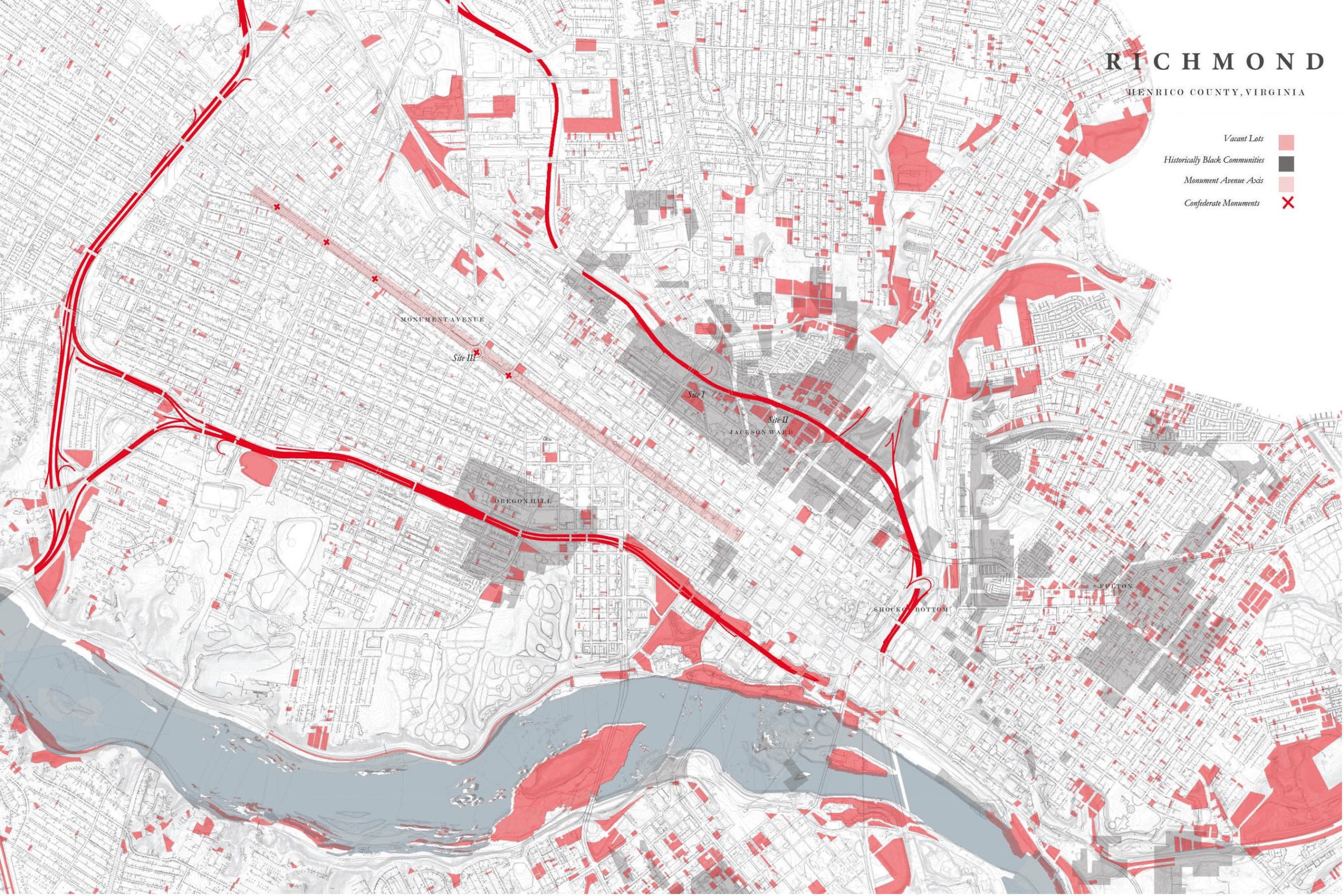
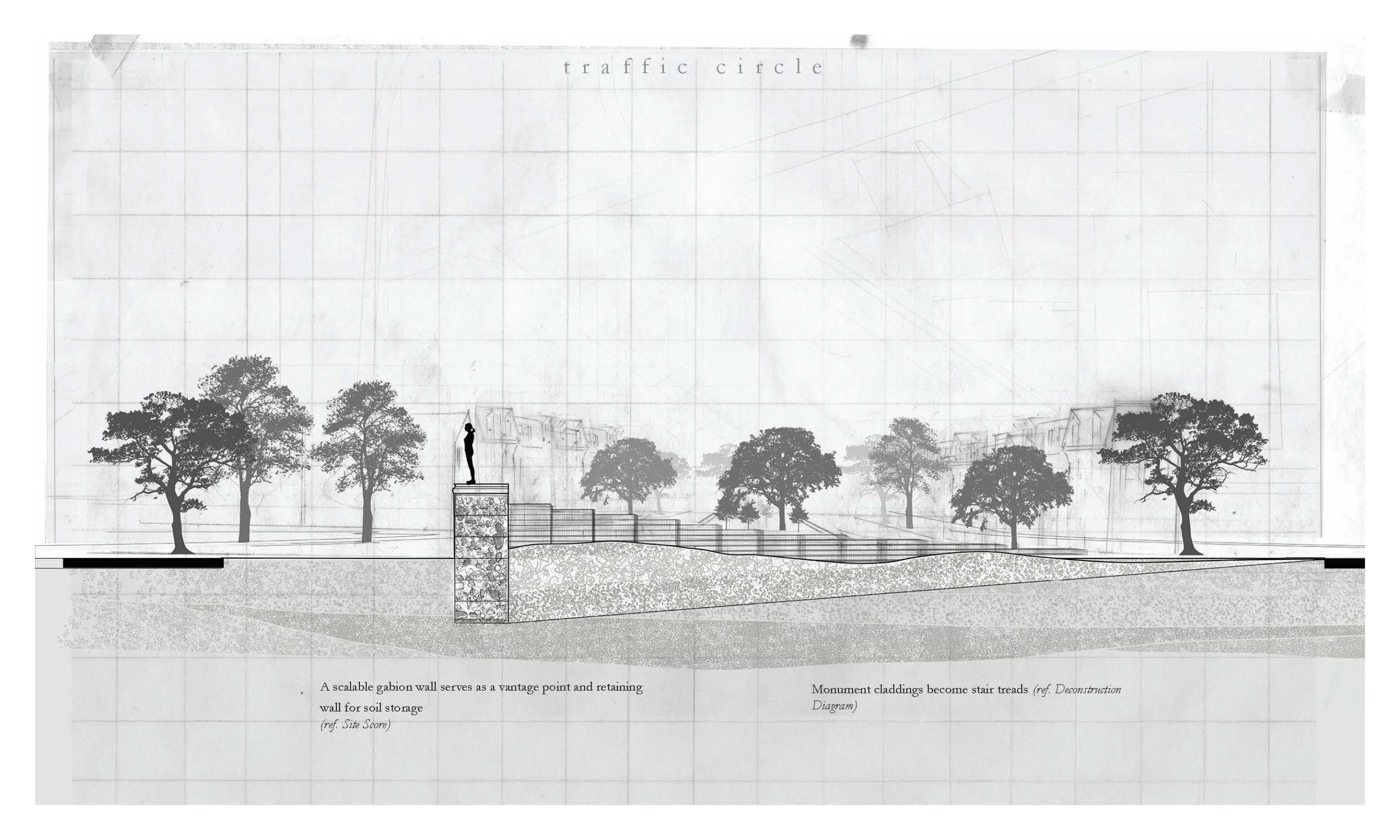
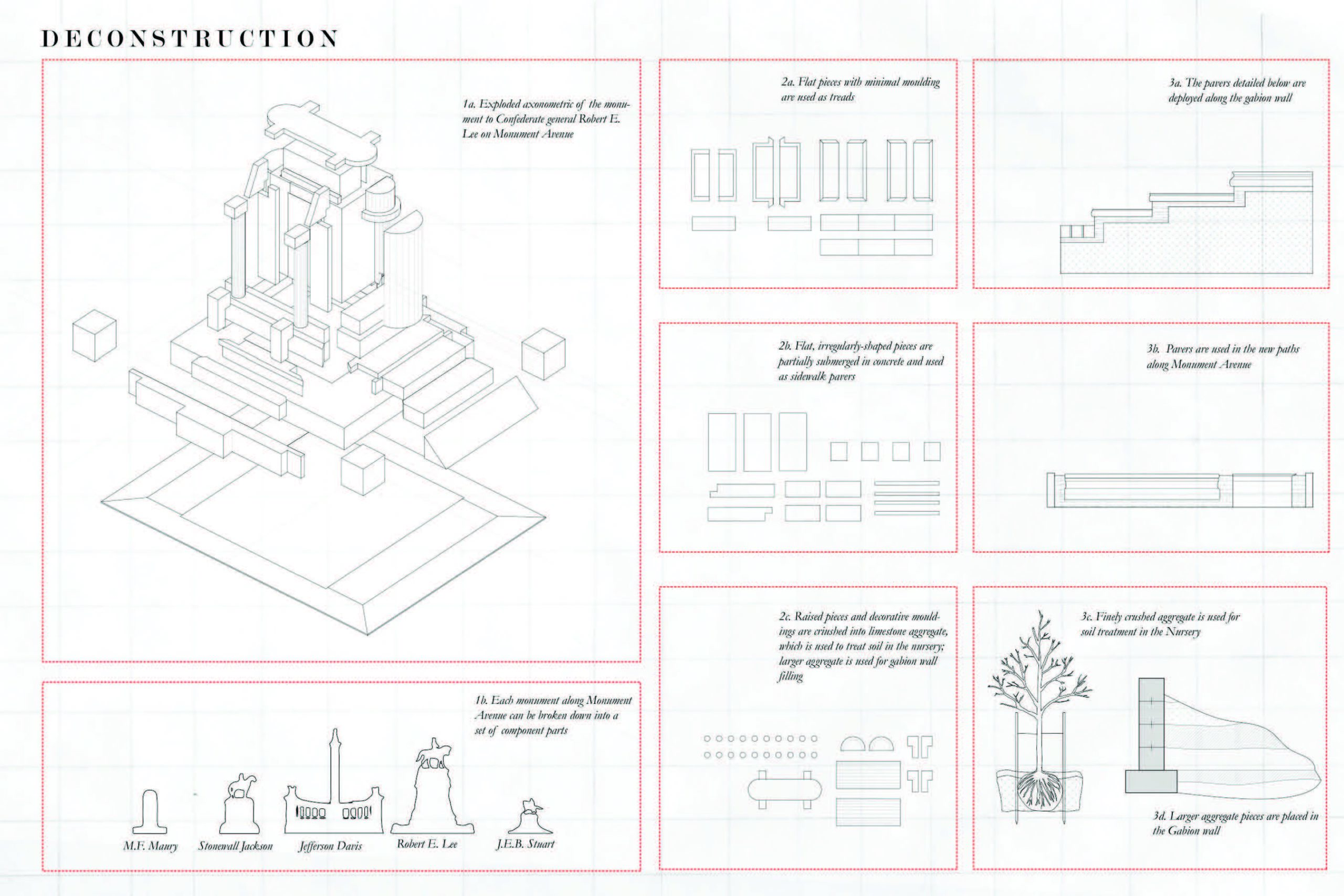
The project proposes the disruption of Monument Avenue as well as its reconstitution through a system of transfer between vacant lots and the avenue itself. Monument pedestals are dismantled and recycled as sidewalk pavers, gabion fill, and tree trench fill. The Avenue’s tree-lined medians are thinned and re-planted with nursery trees, destined for vacant lot sites.
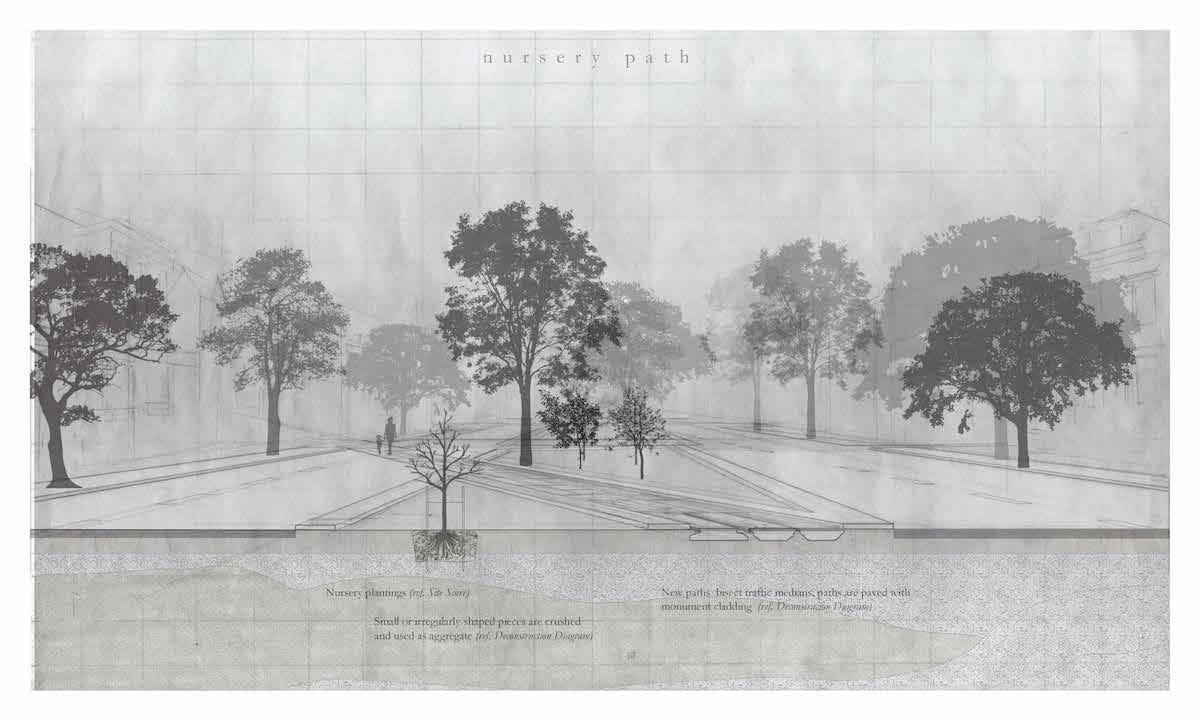
Simultaneously, vacant lots become sites of community-informed excavation. Through the material exchange between the Avenue and the excavation sites, this project proposes a means by which existing monumental infrastructure is dismantled and a new method of retrieving and experiencing history in the city is introduced.
For decades, the design discipline has been complicit in constructing the physical environment of white supremacy. The removal of Confederate Monuments, redefined as a city-wide project, calls upon designers and planners to work with Black communities to create a new memorial landscape that excavates obliterated areas and with them silenced histories.
Inveterate Scars proposes an expansive definition of monumentality and memorialization that critiques broad historical narratives, honors and amplifies local forms of memory practice, and elevates the memorial qualities of lived, every day experience.
View Inveterate Scars on Hollis .
Building Biras
Building Biras
MacKenzie Wasson (MArch I ’20)
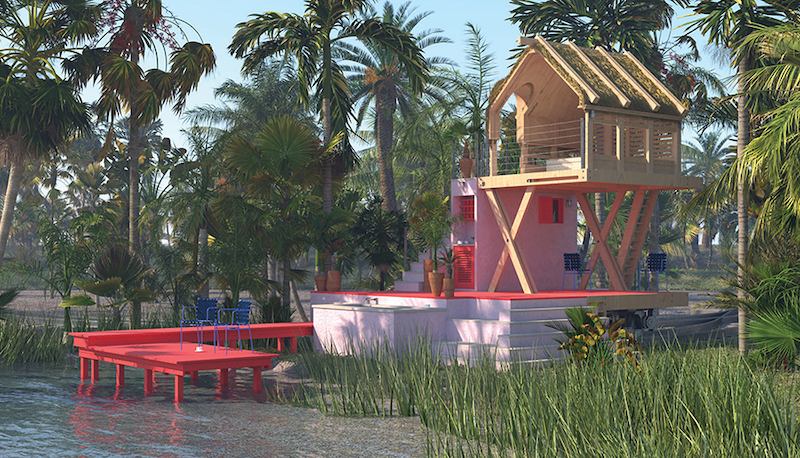
Building Biras: A Hurricane Adapted Caribbean Resort is a response to the devastation caused by frequent hurricanes in the Caribbean. Nestled in the lush landscape of the British Virgin Islands, the project establishes a new resort model that provides security to the local populace, a better guest experience and an opportunity for investors with site-specific architectural typologies rooted in the culture of the place. The development and design strategy pairs disruptive business strategies with innovative architectural design to withstand a Category 5 hurricane. Squeezed between the spines of three ridges and three bodies of water, the project formulates specific architectural responses to the four primary environmental zones of the island: aquatic, flat land, hillside, and ridge.
El Mercado Modelo de Miami
El Mercado Modelo de Miami
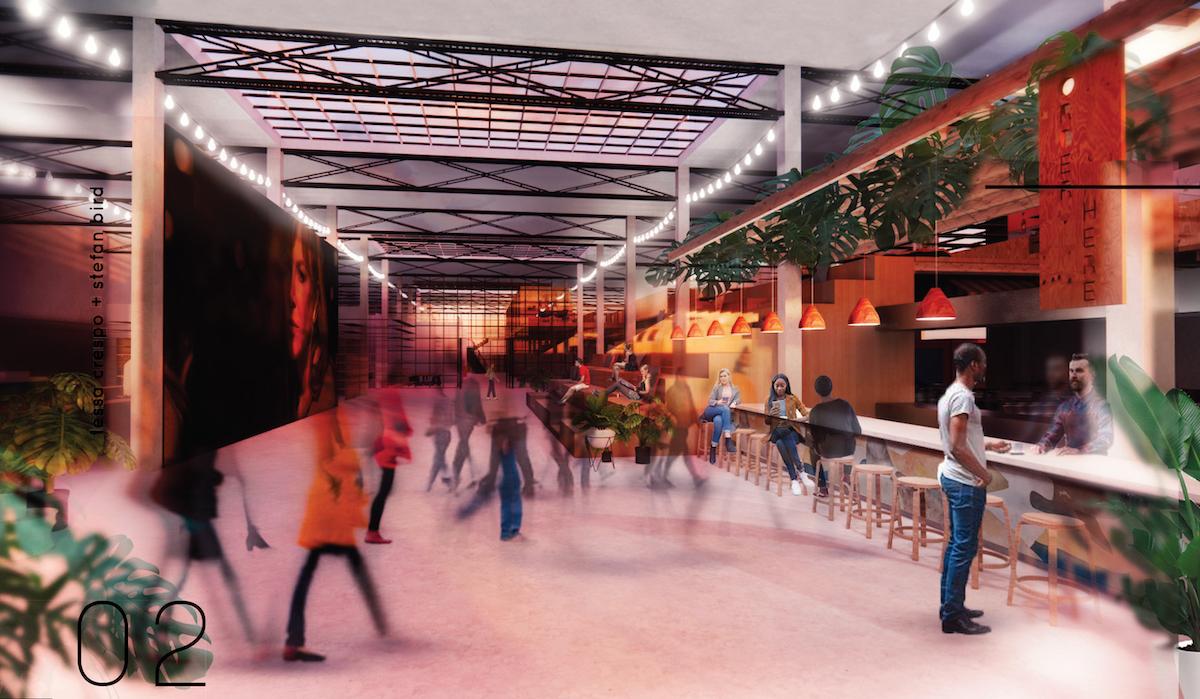
Tessa Crespo (MDes Risk & Resilience ’20) and Stefan Bird (MIT MSRED ’20)
El Mercado Modelo de Miami is a non-profit multi-stakeholder cooperative in the Allapattah neighborhood of Miami, Florida. The adaptive reuse development provides a proof of concept that cooperatives can be incubators for economic mobility and channels for displaced business owners to reinvest. The diverse program embraces the rich Dominican Republic culture of eating and artisanship grounded in an existing neighborhood of food and fabrication. The project is housed in a 22,000gsf warehouse that provides a support platform for entrepreneurs to life-cycle through their businesses. The market’s mission is to be a community asset for social and economic mobility in a city that is increasingly vulnerable to the negative externalities of climate change.
Oasi Plaza
Oasi Plaza
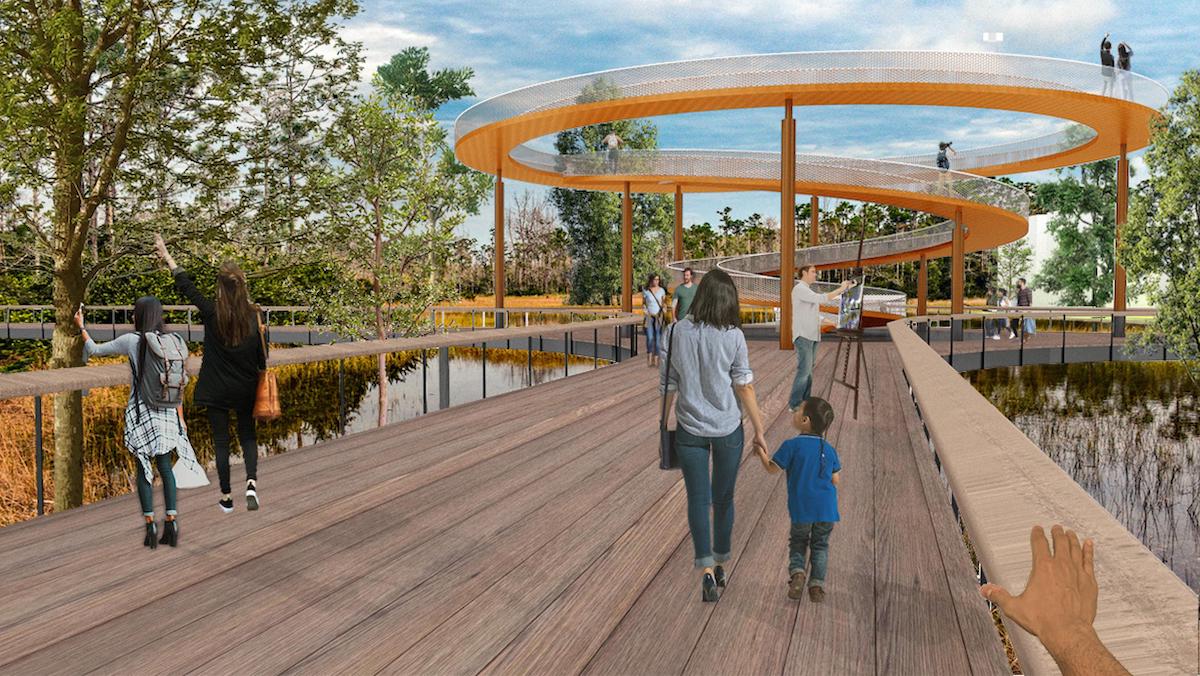
Zehui Gong (MAUD ’20), Jing Hai (MAUD ’20), Daisha Martin (MUP ’20), and Sidharth Somana (MDes REBE ’21)
Designed as a new destination district, Oasi Plaza is a 35-acre mixed-use development in Medford, MA. Situated near the MBTA Wellington Station and the Mystic River, the Master Plan envisions a 160-key hotel, 640 unit residential apartments, two Class A office buildings coalesced around a dynamic outdoor retail plaza. A marshland park with wildlife observatory deck provides walking and biking trails that link the site to the broader open space network. Enabled by a public/private partnership model, the strategy forms an urban destination out of an underutilized and auto-centric property largely severed from its surroundings. Wellington Circle Plaza is a transit-oriented plan that posits working, living, shopping and entertainment within a unique pedestrian experience as an antidote to the auto-centric and big-box retail environment it is today.
Re-fragmentation
Re-fragmentation
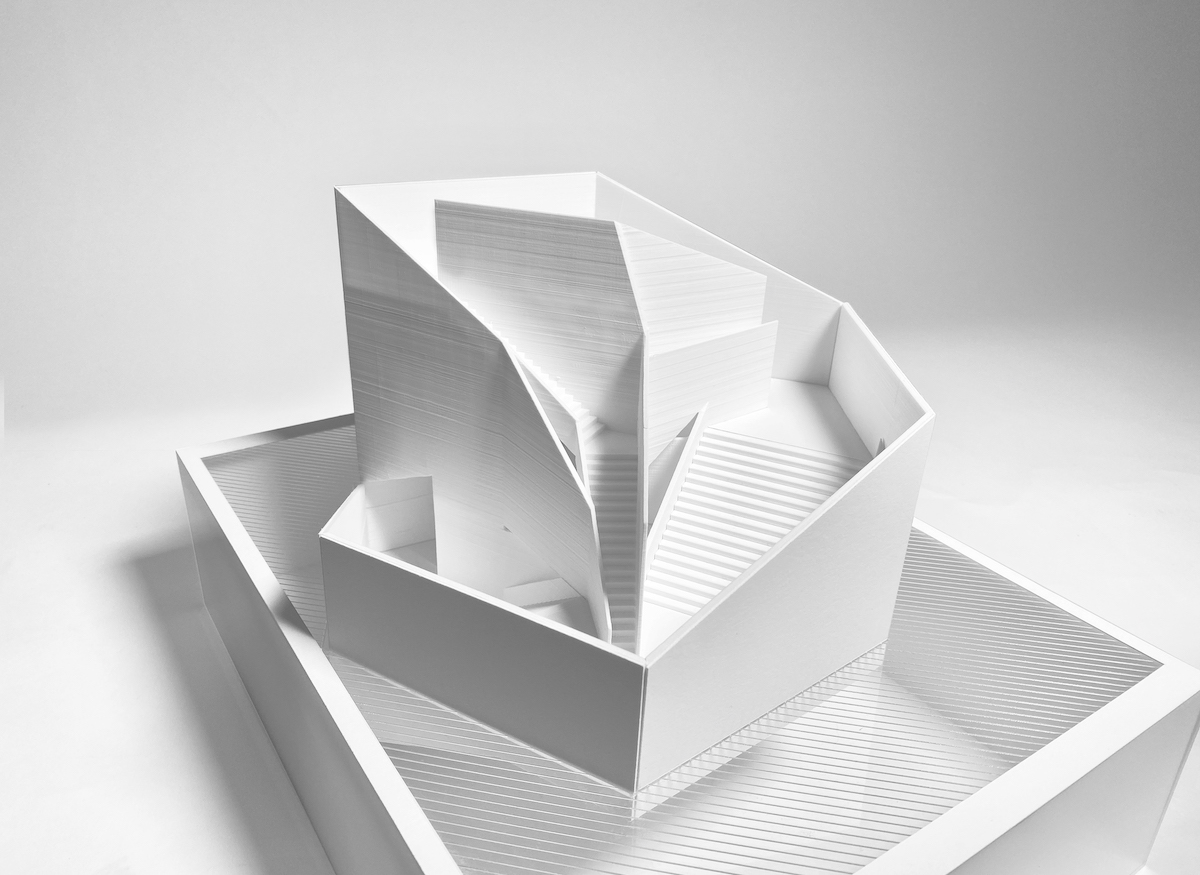
Thomas Huang (MArch I ’23)
This spatial exercise renders a perfectly centralized space as non-existent through a discrepancy between rigorous geometrical logics and fragmented viewing experiences.
Lines converging at the center of an equilateral triangle are offset and then mirrored along the edges to form a hexagon. Two small corners are then cut from each of the three rhombic volumes, with half of them naturally clustering into a smaller equilateral triangle in the center.
The conspicuous duality of two concentric triangles, with the smaller one intended as the “hidden” space, is blurred and broken down in its own architectural experience. Within a helical arrangement of rhombic rooms are egress bridges that unpredictably skip levels. Alternating between open spaces, narrow stairs and a fixed turning angle of 120 degrees, flexible spatial sequences generate multiple continuous loops while inducing a false certainty that all the bridges loop back to previously visited rooms merely as a secondary means of circulation. This system, however, connects all the passages except one: the entrance to the central room. Though furnished with the same narrow stairs, this open passage remains unvisited, not by act of concealment, but through a pre-established assumption. This paradigm is ultimately manifested through openings – identical in shape as the small corners cut from the rhombic volumes – that each overlaps precisely 1/6 of the hidden room. As one encounters them separately on their way up and down, these views are collected but cannot be mapped or pieced together. Rather, they float in one’s memory as individual fragments. There will rarely be a realization that these fragments are in fact crucial forms that relate to each other, and parts of a unified whole that constitutes a fifth room. Ironically, though, at the moment the visitor peeks through the last opening, they will have seen the entirety of this room, all without being aware of its existence.