Model As Building, Building As Model II
Model As Building, Building As Model II
Adrian Wong (MArch II ’20)
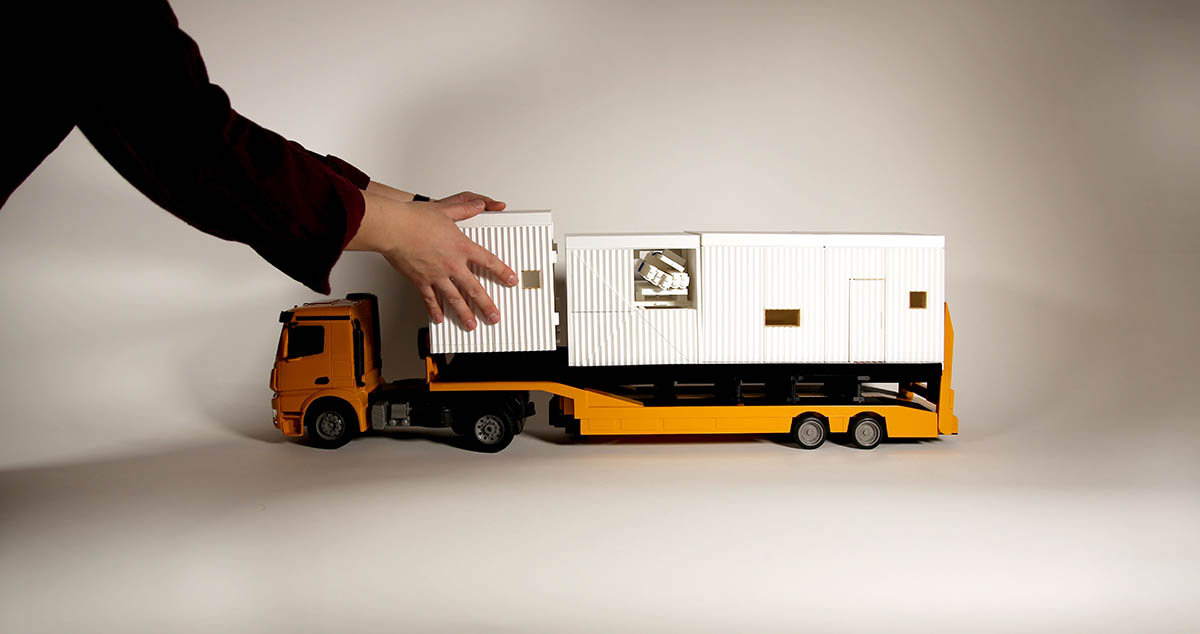
The interest of this project lies between living and packaging.
The most notable commercially packaged houses are perhaps catalogue homes produced by companies like Sears Roebuck that were popular around the 1920s. All materials for the house would be packaged into a train container and delivered to the recipient, and built by contractors hired locally by the client. The first wave of mail-order homes died down during the great depression. Some kit house companies continued after World War II, but most homebuyers flocked to the new, inexpensive suburban cookie-cutter houses. The latest attempt that resembles a catalogue house are Lowe’s Katrina Cottages, with walls designed to withstand 140 mile-per-hour winds, intended to provide temporary housing for residents who lost their homes to Hurricane Katrina. The product was unsuccessful and has since been discontinued because it was feared they would lower property values in neighborhoods.
In most OSM projects present today, modularity is often addressed as means of production rather than design. Prefab houses are typically fabricated in a linear process where parts are manufactured and then put together either on-site or in a factory and will remain the same state until demolition. This project is interested in a non-linear process of OSM, where parts are manufactured and put together the same way, but the they possess the ability to be rearranged on site. The reconfigurable parts include all dwelling and service spaces and extend to apertures and articulation as well. The flexible typologies allow for potential changes in site, program, seasons and occupants. The current catalogue consists of 5 units: utility, service and 3 different sized interiors. Firstly, the side walls can be removed from the interior units and connect to other units for expansion.
Secondly the service unit, which requires most planning because its access points are contingent to the sizes of the interior volumes it is connected to. I.e. for the 1-bedroom or studio kits, the service unit can only be accessed from a single side for the connection to remain enclosed. It is a different case for the 2-bedroom, in the configuration where the service unit is placed in the middle of a 9x9m house, where it can be accessed from all sides.
Lastly the utility unit, which can house 8 semi-gables that are reconfigurable on top of interior units to form a full gable or sawtooth. This is easier to reconfigure than interior volumes, and can be changed between summer and winter for solar gain and a greater degree of direct/indirect sunlight depending on the program.
Hea-R-Us
Hea-R-Us
Tatum Lau (MAUD ’19), Xin Wen (MAUD ’20), and Cindy Xiao (MAUD ’20)
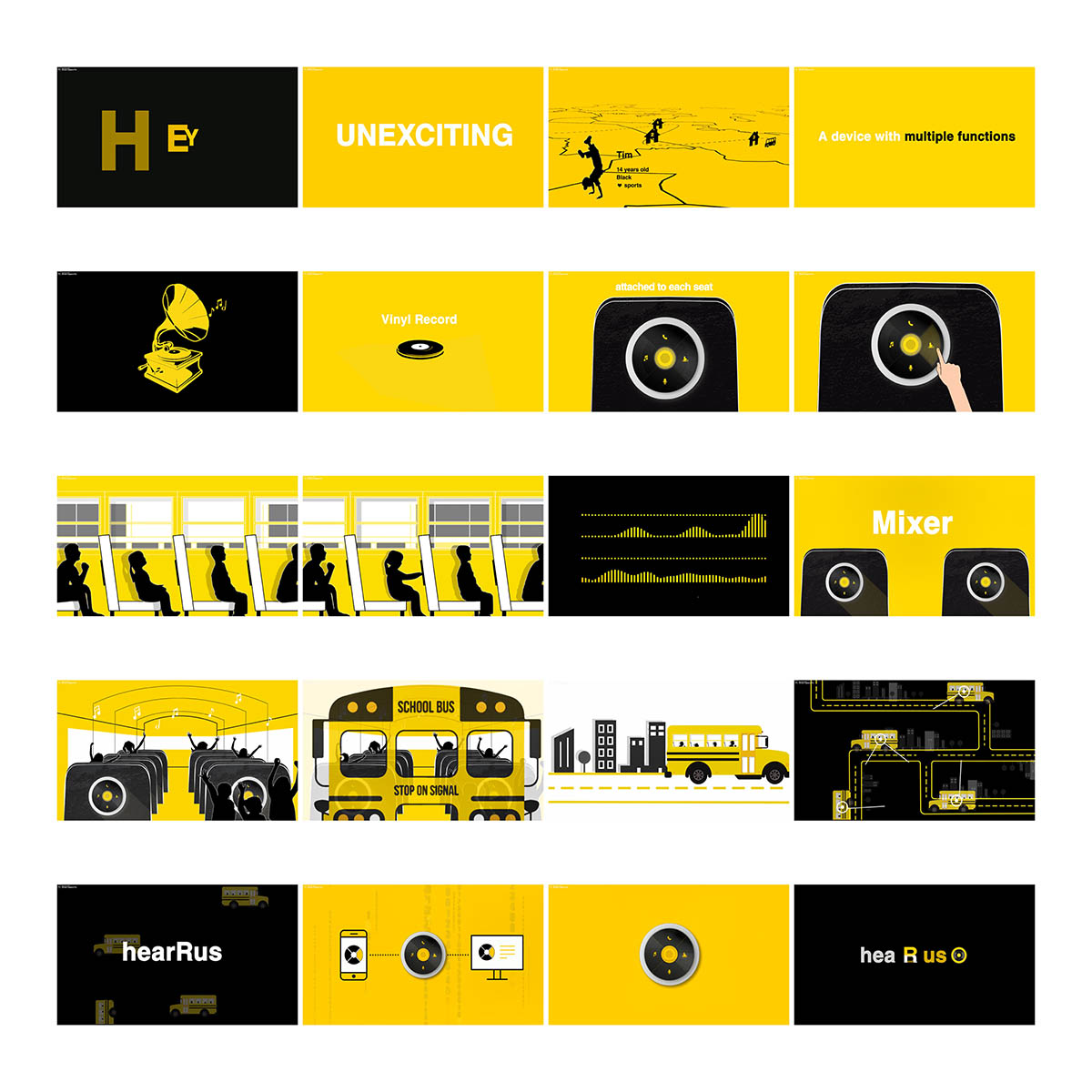
The current education system in Boston induced decades of segregation and community disputes. The occurrence of this phenomena creates unequal and uncollaborative learning spaces. To begin to address this issue, Hea-R-Us prompts introduce students to a new methodology of interaction, where they can befriend other children within their school bus or other school buses in the system.
In the school bus system, children of various schools and demographics are situated in the same vicinity due to the prearranged bus routes. Therefore, it is a platform where children from different backgrounds could interact and integrate. However, stuck in unpleasant school bus commutes, children find this time uneventful and irritating; some are even bullied. To ease the long commute time, typically 30 minutes to 3 hours a day. We would like to present a system that suggests new ways of communication, such as playing with sound to limit screen time and focusing on elementary school students to assist in prime cognitive development. Hea-R-Us is an interactive device which allows students to personally and socially benefit from a curated and engaging experience during the commute. In the future, the device will also allow the community to engage in producing new adaptable applications that could be used by the children during the bus time. This would bring awareness to what opportunities exist through cross-demographic interplay.
The Labyrinthic Block
The Labyrinthic Block
Marc Dessauvage (MArch I ’21) and Sarah Cheung (MArch I ’21)
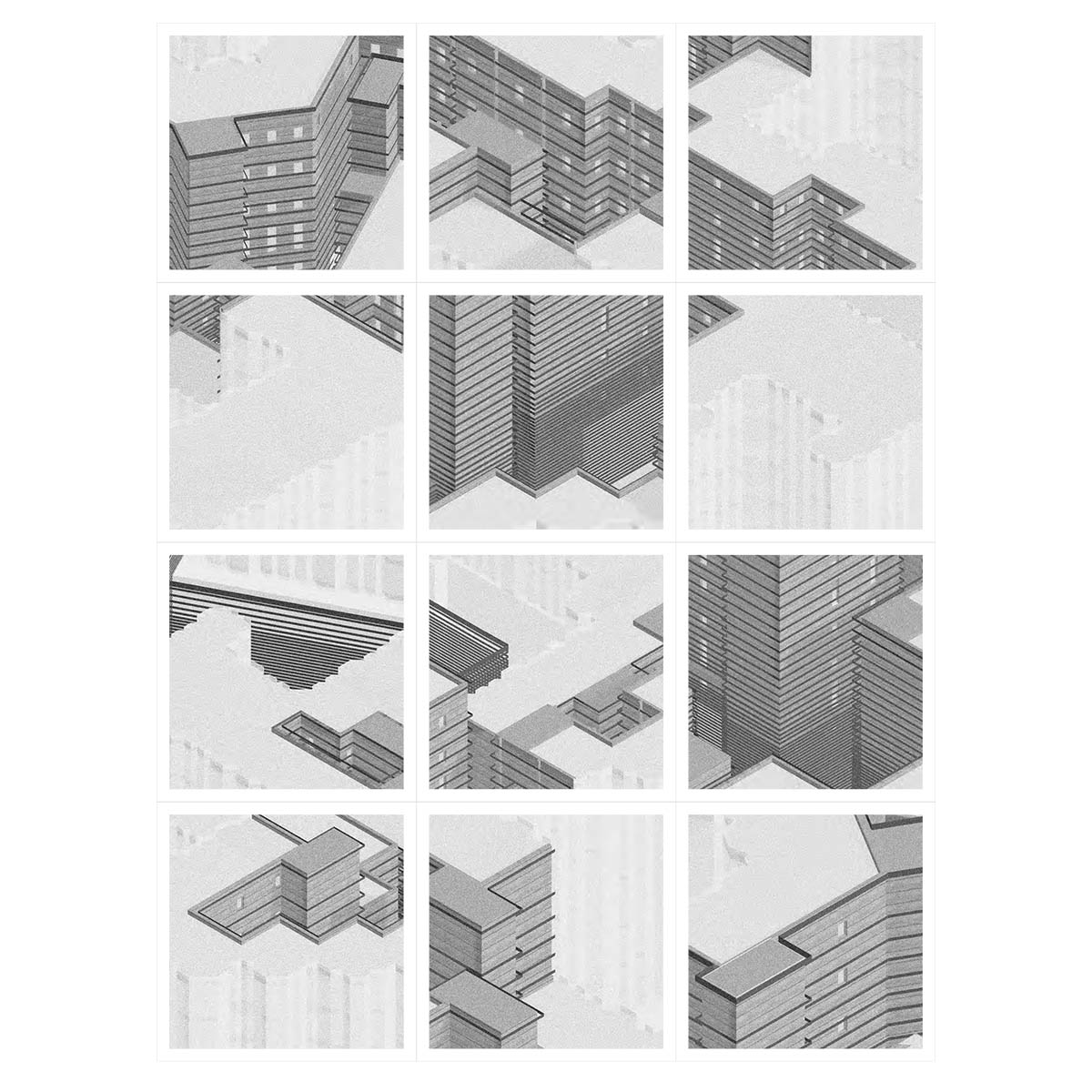
This housing project is schizophrenic in nature, reflecting at once a capitalist ideal of efficiency as well as a socialist engagement with housing and public space. Acknowledging a common architectural desire in both for a singular mechanism, this design re-examines existing housing types and their context to create one architectural system that can produce different urban relations at the scale of the façade, block and skyline.
On a small scale, the project extrudes and aggregates the prototypical Somerville bay window into a curtain wall, applying a modern regulating principle inherited from the modern skyscraper onto the vernacular. This defamiliarization of the bay window allows for novel experiences of this element within the unit. At the scale of the block, the scheme undulates and breaks to conform to existing buildings on its site, preserving an urban relation to its surroundings. Like the superblock housing projects of Red Vienna, this scheme is dictated by the negative spaces of the urban fabric, hugging courtyards at the scale of the block and leaving narrow thoroughfares at the scale of the street. The repetitive breaking of the monolithic mass, in both plan and elevation, results in a varied form that mirrors discrete silhouettes of the city skyline. The ultimate effect is a housing type that emulates the urbanism of the city.
Change the Street, Transform the City
Change the Street, Transform the City
Yuzhou ‘Andrew’ Peng (MAUD ’19), Solomon Green-Eames (MUP ’19)
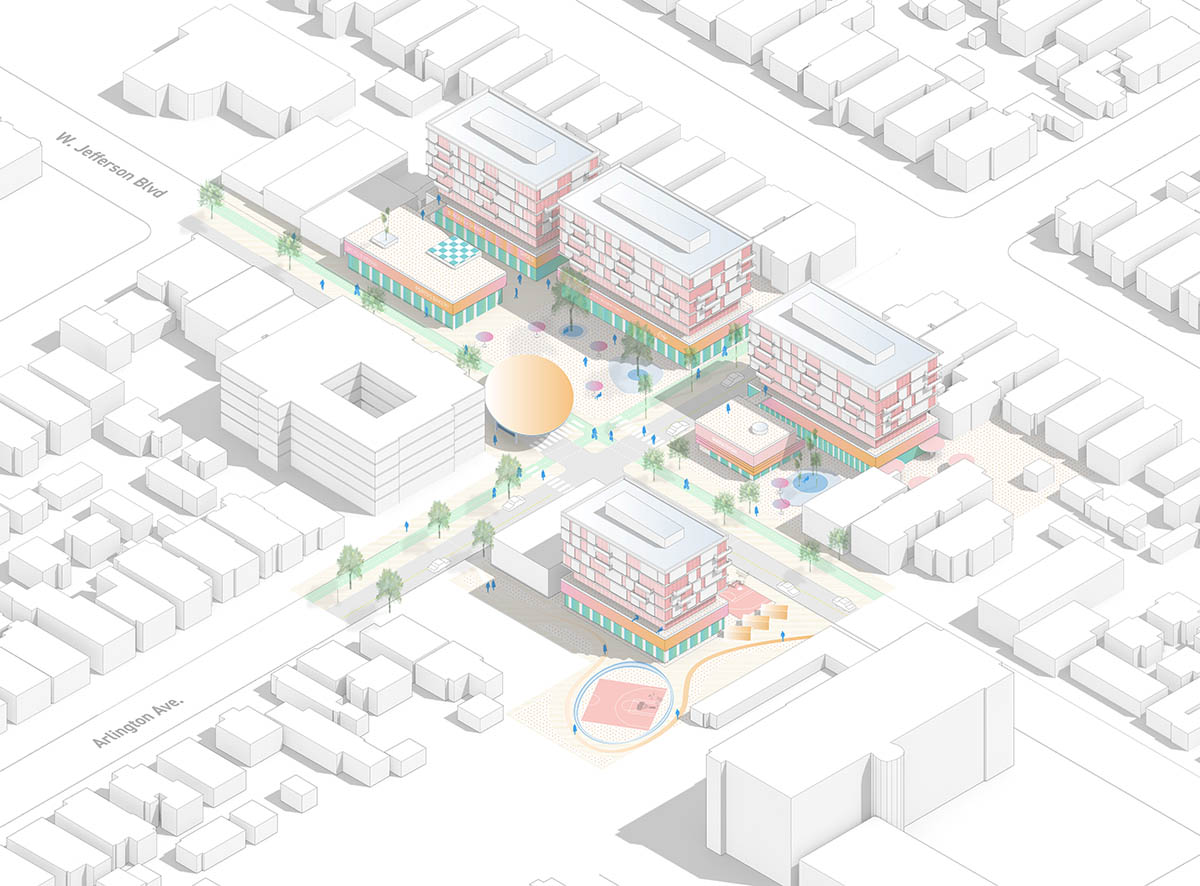
The existing model of Transit Oriented Development in Los Angeles simply places high density housing in proximity to new transit stations, which are often not aligned with existing neighbourhood centers. This means that neighbourhood amenities are not accessible on foot for residents of new TOD developments, as such, they end up being highly car dependent.
Our proposal centers around targeted quick build street improvements in existing neighborhood commercial centers as a means to enabling residents to access amenities via sustainable modes, enable a new culture of streetlife and kick start increases in affordable commercial and retail density in these existing neighborhood centers. Our interventions in neighborhood centers are supported by a proposed network of transit and bicycle boulevards that link neighborhood centers together in a cohesive network across the city.
Unlike traditional TOD which first requires decade long planning and construction process, we propose a ‘quick build and revise’ approach. This means the rapid transformation of streetscapes using paint + temporary interventions in the short term, supported by community engagement. These transformations can then be adjusted based on community feedback. Following this, the changes are concretized as funding becomes available for larger capital projects. Finally, these new streetscapes generate the possibility for affordable infill of existing autocentric land use typologies, creating higher density. Mechanism are set in place early on the ensure that all new development adjacent to street improvements does not displace existing residents.
Right to Grow: A Manifesto
Right to Grow: A Manifesto
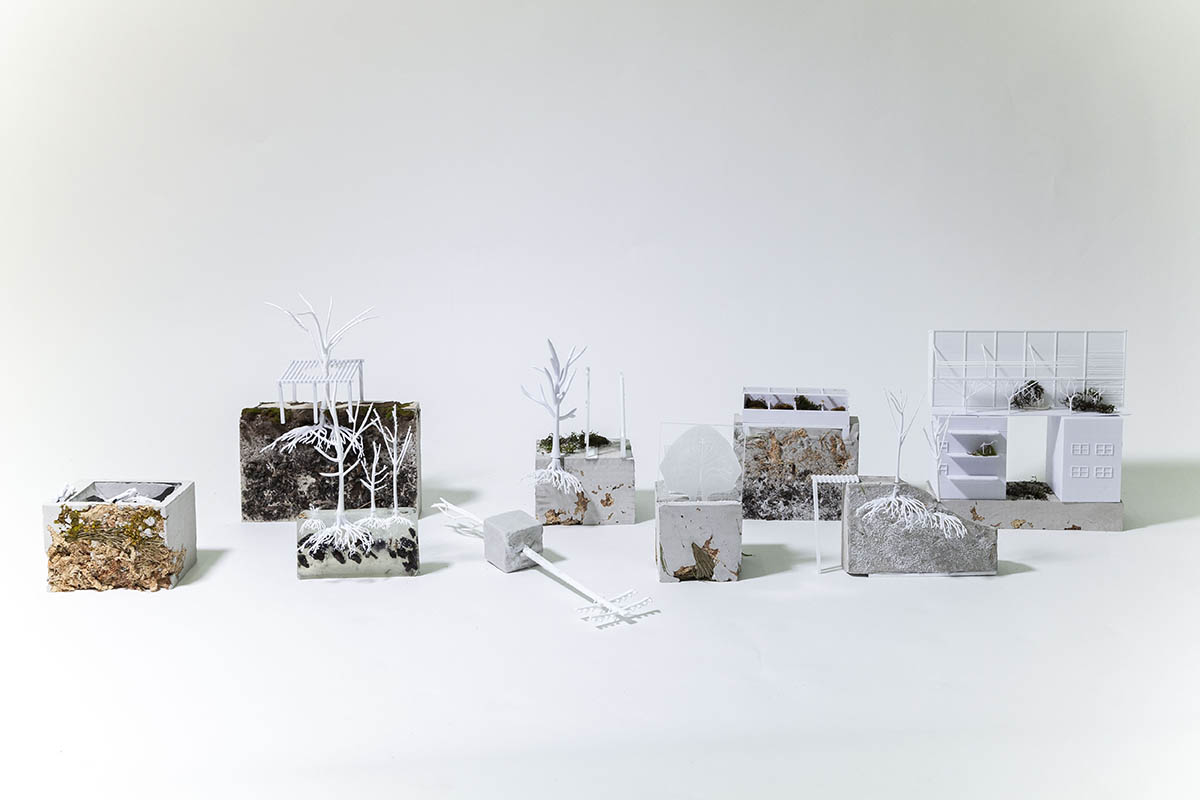
Kira Clingen (MLA I, MDes RR ’21), Carson Fisk-Vittori (MLA I ’20), Shira Grosman (MLA I AP/MDes ULE ’21)
The current rhetoric around city trees assigns monetary values to their carbon absorbed, health benefits provided, rainwater caught, and aesthetic appeal, but doesn’t prioritize their life-cycle beyond an average 7-year life expectancy. We critique the valuing of trees as resources for human benefit; we must revalue trees as intentional purposeful beings. This requires reconfiguration of the urban assemblage. This shift is catalyzed by an ordinance inserted into zoning code entitled Right to Grow. Rights prioritize trees needs in an urban environment. This ordinance reconfigures the false urban binary between people and woody plants by establishing spatial rights of way for tree communities built around their life-cycles. Establishing expanded space for plant communities challenges prevailing simplistic lists of street trees and planting conventions. Expanded typologies form empathetic spaces within cities reframing conventions of habitation between people and woody plants.
A case study in South Boston proposes three scenarios at different scales — City Corridors, Community Clusters, and Neighborhood Networks. These scenarios are inserted into the existing context of South Boston. The locations relate to their adjacency to the urban center and main transit thoroughfares, coastal edge, and upland conditions and are prototypical, but replicable across South Boston and nationally. Throughout the city, habitation intensifies. Zoning infrastructures are reconsidered as an entangled indeterminate web of relationships that shift towards infrastructure in service of plant communities. As cities extend across larger territories, this tree ordinance provides a framework for future tree communities at the national scale that moves beyond ecosystem services.
Bed Rooms
Bed Rooms
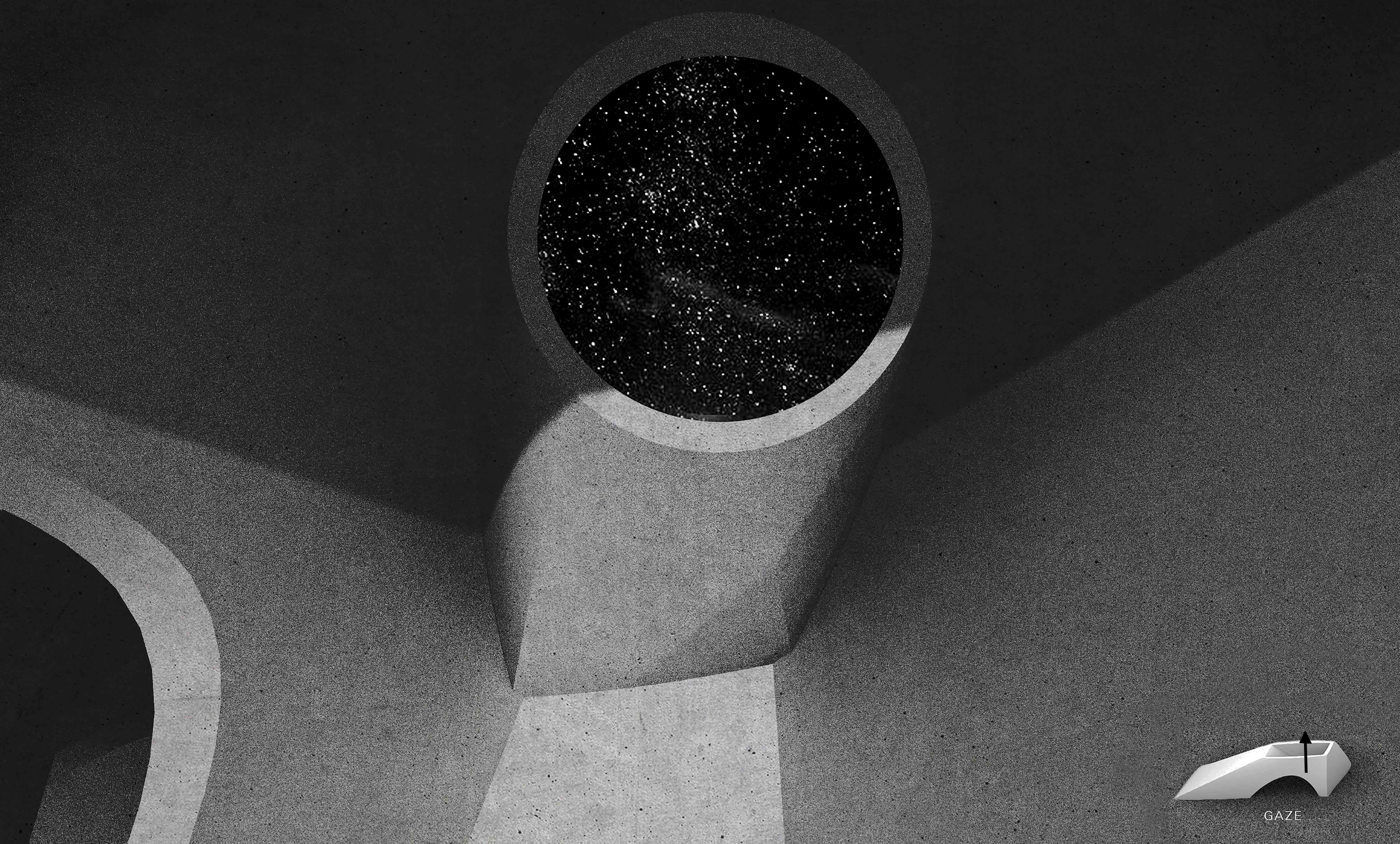
Qin Ye Chen (MArch I ’22)
In Bed Rooms, five modes of activation produce five spatial bays with formal and spatial qualities that encompasses a range of social conditions associated with the given object, “bed.” The five modes of activation are: play—a space for jumping on the bed; gaze—a space for lying on the bed to look up at the sky; rest—a space for sleeping; gather—a space for sleepovers; and meditate—a space for contemplative practices. These spatial bays work as a critique of default modes of thinking about the space of the bed, exposing misbehaviors that have interesting formal consequences.
During the design process, a key question was posed: how can the bays manage a number of spatial conditions and work with light, sound, body movement, and landscape? The result was a set of bays that follow an underlying grid framework while also exhibiting a variety of orientations, heights, opening sizes, and tilting angles, giving it an almost creaturely reading from the exterior.
Landscape is also an integral part of the project. Circulation stitches the bays together and pinching of landscape funnels in and out of the bays. Another question that was posed was how can the ground be used as part of the project to express “bedness?” Unlike other common objects, bed is large and spatial—its physical existence has an impact on how one experiences a room. The project challenges common perceptions of bedrooms; the next question would be how can a room express “bedness” without the bed being there?
Mycelium Stool
Mycelium Stool
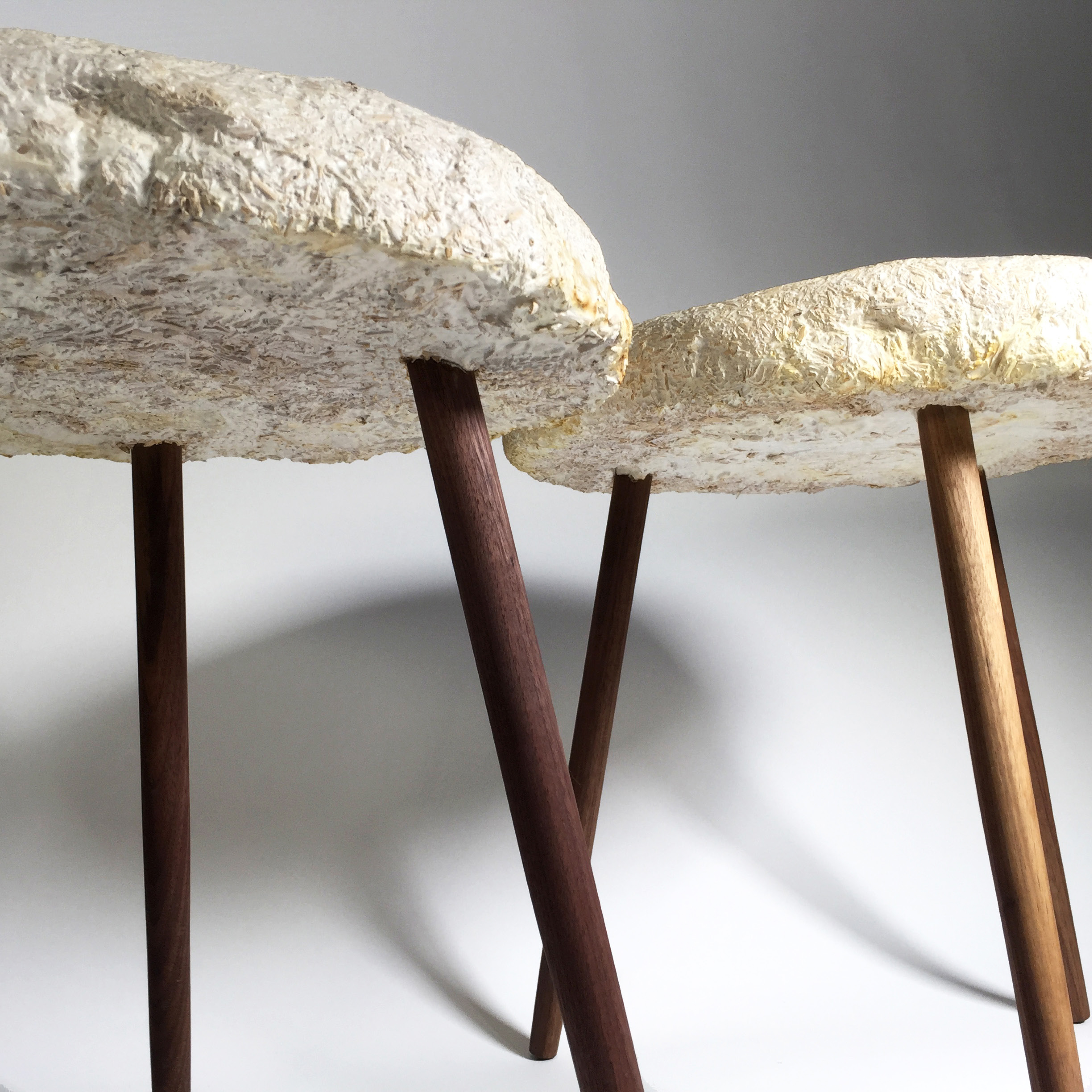
Luke Warren (MArch I ’22), Aditi Agarwal (MDes ’20), Hangsoo Jeong (MArch I ’22), Victoria Patricia Lopez Cabeza (MDes ’20)
A seat grown from mycelium, soft and spongy, rests on three slender, hand-turned walnut legs. A hidden, CNC-milled piece of plywood, punctured with holes to reduce unnecessary weight, provides both the structure that connects the legs and a lattice for the mycelium to grow. The mycelium—the vegetative root structure of fungus—is grown around the wood structure in a mix of corn and hemp byproduct. As the mycelium grows, it binds this waste material together and conceals the construction of the stool. The visual and tactile contrast between the two materials produces a series of oppositions—light/dark, soft/hard, living/ dead, grown/machined, additive/subtractive—and, more to the point, a comfortable seat on a sturdy base. The use of soil to cast the mycelium eliminates both the material cost, in terms of dollars, and the environmental cost, in terms of embodied energy, of producing a mold, and further accentuates the contrast between the precision of the legs and the loose form of the mycelium seat. The stool is entirely constructed from renewable resources, and at the end of the stool’s life, the mycelium is fully compostable and bio-degradable.
Material Innovation in Precast Concrete
Material Innovation in Precast Concrete
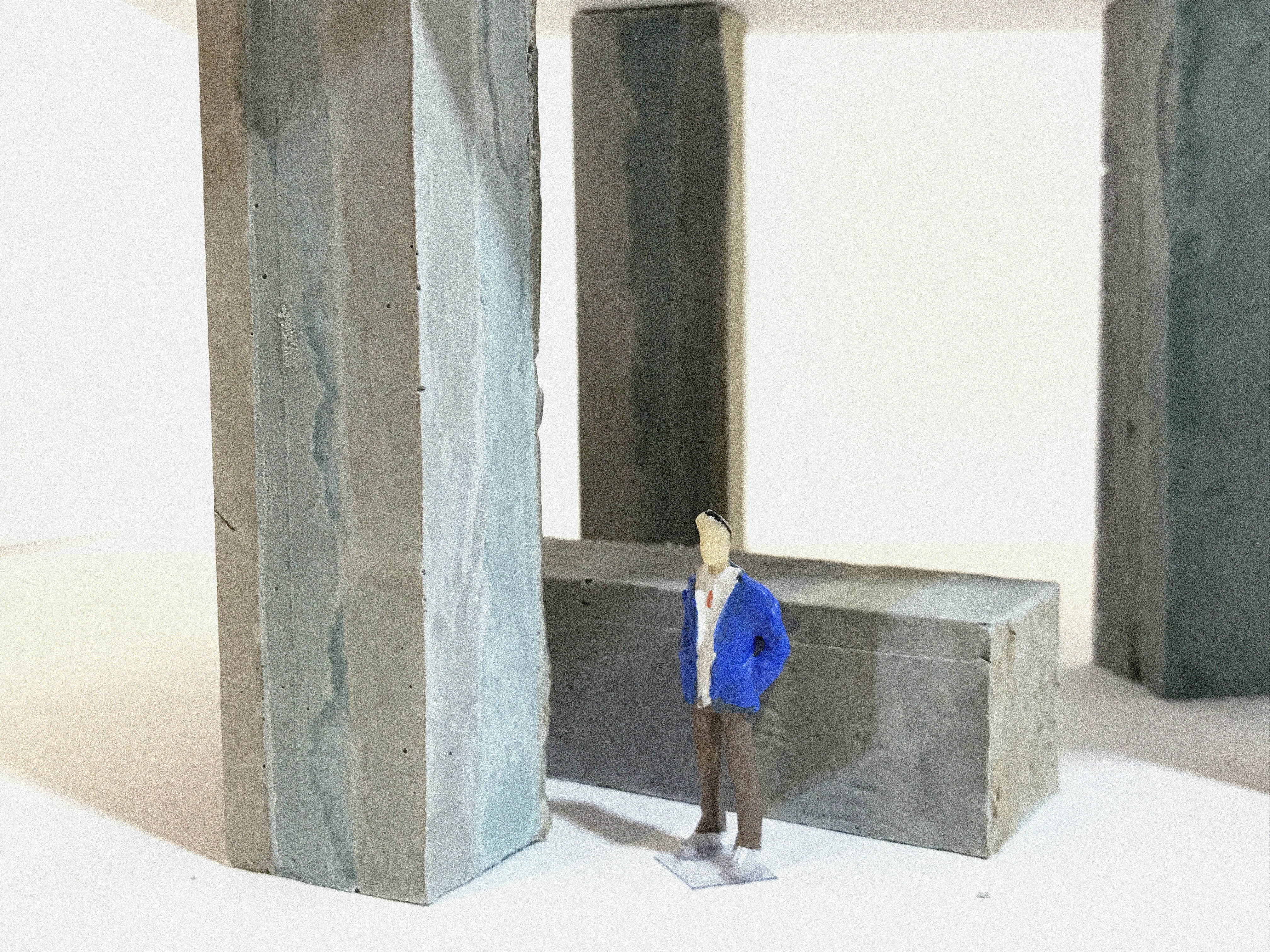
Estelle Yoon (MArch I ’20)
The project proposes a design innovation in the fabrication process of precast concrete components and an amplification of their aesthetic and atmospheric quality. It takes advantage of the high level of precision in manufacturing and ease of reproduction inherent in the pre-fabrication process as opposed to on-site casting, and suggests an alternative material effect to a more normative impression of cold and gray presence of exposed concrete.
When poured into a mold at different times, separate layers of concrete mix are registered within a single part, allowing for distinct colors or textures of mix to remain visible. This method had already been discovered and employed by many architects including Studio Gang, ESTUDIO Tatiana Bilbao. and Peter Zumthor, but solely for in-situ concrete or rammed earth, limiting the striation to be relatively large in scale and horizontal, as the pouring process depends completely upon gravity.
By displacing the process from on-site casting to prefab, the striation technique could be conducted in a highly controlled environment. The prototypes of the project are casted in several different angles with layers of distinctly pigmented mixes. When erected in their intended position, the reading of the layers of the precast components are liberated from the orientation of gravity, suggesting an unanticipated visual effect. The use of texture and color for each concrete layer could be extensively used in exposed parts of the prefab elements for both interior and exterior, ranging from columns to walls and facade.
Emptiful: Changing the paradigm in a post-oil landscape
Emptiful: Changing the paradigm in a post-oil landscape
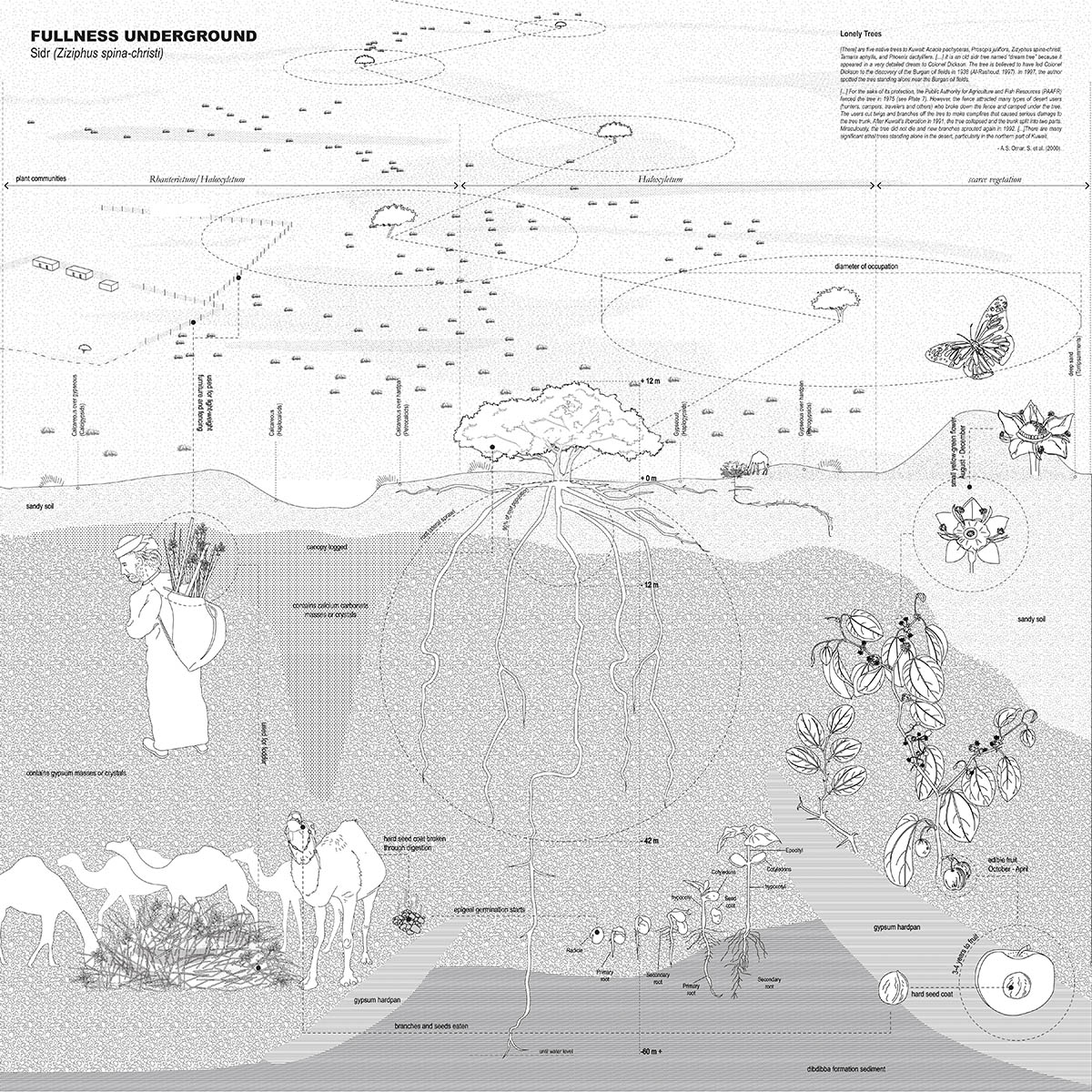
Aiysha Alsane (MLA I AP ’19)
Through common language, we describe the desert as empty space: a void without substance due to loss. Across several languages, “desert” is associated with feelings of abandonment, scarcity, and death. Characterized in this manner, the desert is rendered to a worthless and uninhabitable state. This thesis concerns itself with the desert’s fullness, from its material and ecological being to its social and cultural agency.
The static nature of conventional drawings does little to depict the desert’s transient properties and the multiplicity of ways that it supports occupation. The project redraws the arid desert of Kuwait depicting its innate qualities to redefine its perceived value. Since life in the desert relies on the precious existence of water, the selected sites are within an ephemeral watershed. These sites are of burned oil fields from the First Gulf War and their intersection with Kuwait Oil Company’s “released lands.” Those lands were a symbol of wealth due to petroleum, an inextricable part of this desert’s geology. Then, they became a symbol of destruction and loss. Today, petroleum exploration has seized and the land released for development. Using methods to capture, amplify, and extend a new fullness, the design intervention repopulates this desert in a catalytic manner. Reacting to a unique geological composition steeped in a history of emptiness and fullness, the project draws on novel ecosystems to introduce controlled plant succession and the consequent flora and fauna ensued to repopulate these barren lands. All the while, the resulting ecosystem reveals this desert’s innate fullness.
A SELF-INTERSECTED WRAP AROUND COIL
A SELF-INTERSECTED WRAP AROUND COIL

Mingxuan Qin (MAUD ’20), Jichao Sun (MAUD ’20) and Jiayi Wang (MAUD ’20)
This project is a form exploration through mathematical functions. Using periodic function, with “sin” and “cos”, we “write” a wrap around coil as prototype. This coil origins from one 2-dimensional strip, which transform into a 3-dimensional cylinder-like volume. By adjusting the vertical gap on each period and making the coil swing horizontally periodically, self-intersections appear. These intersections give the form a special structural character, which makes the coil able to support itself. Eventually, a 2D stripe becomes random stacked volumes, aesthetically. The width of the strip is set to be increasing from the bottom to the top, which makes it closer to human scale at the bottom and larger at the top to fit the visual perspective.
The structure is tested through the physical model. The “walls” are composed of museum boards on exterior and plexi in the middle, which are bolted together. Three types of joints are applied. First, at the exterior corners. An “L”-shape metal plate is inserted into the middle of the “walls” on each side and bolted together. Some of the interior cross-intersections are also joined together in the same way. Others are free standing notches that are not fixed to adapt the whole structure to the shear forces. This project explores both the aesthetic and structural character and their relationships to a certain form.