Iwan Baan
Iwan Baan

Luisa Lambri, with Mark Lee
Luisa Lambri, with Mark Lee
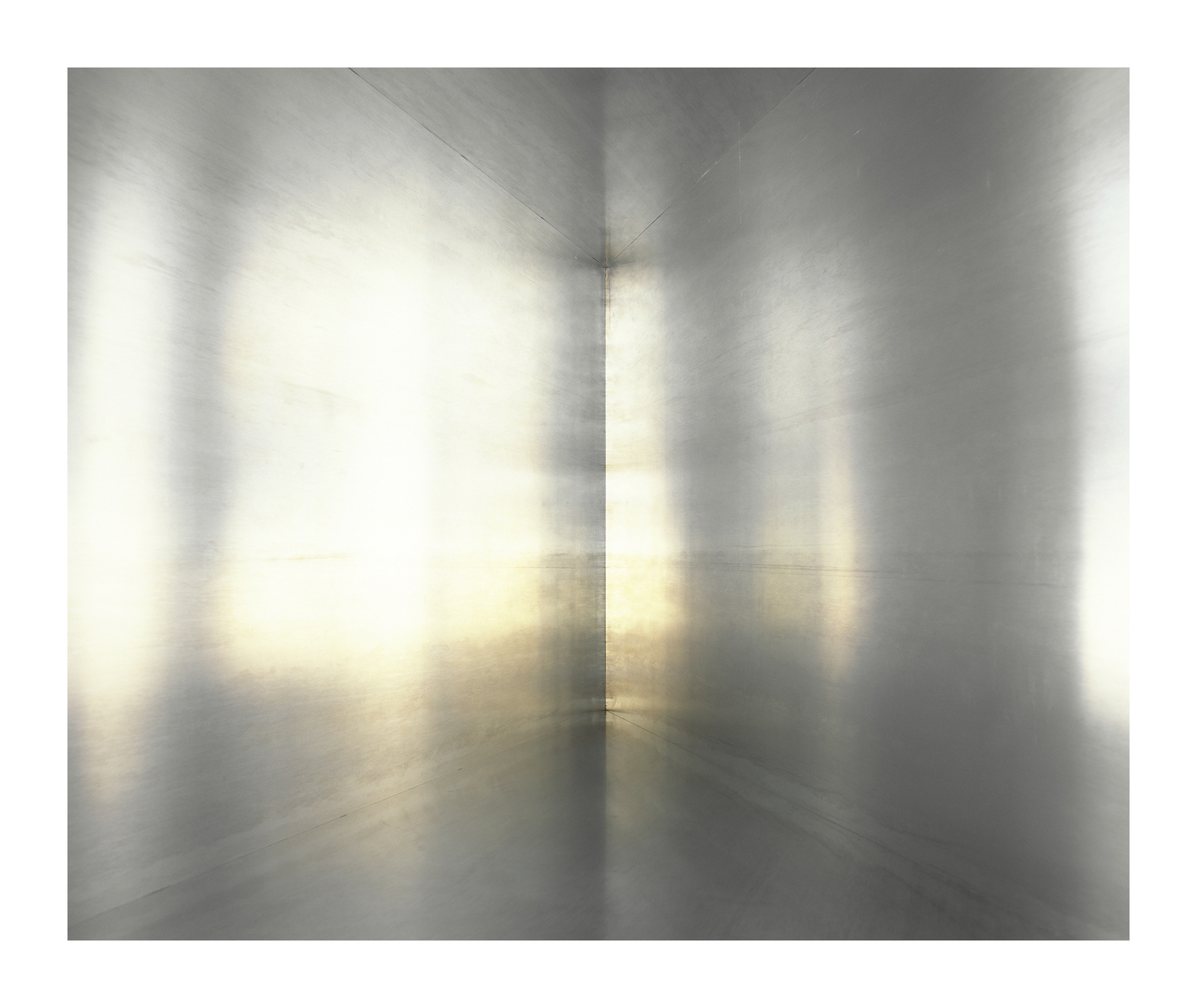
Luisa Lambri is an artist currently based in Milan.
For nearly two decades, Lambri has examined the relationship between space and the human experience through the medium of photography. Her early work expressed a desire to depict constructed spaces in non-figurative ways and to highlight architectural details that in their form suggest abstraction. As a result, many of her photographs are situated in a place between representation and abstraction and can be understood as a perpetual reconsideration of space and its effects on human life.
For many years an investigation into the history of Modernist architecture, especially private residencies, was of particular interest to the Lambri. The photographs from this early period rarely presented a building with the intent of objective representation but rather tried to subvert and deconstruct the authority of many of the 20th century’s most iconic buildings through a process of abstraction. In these photographs, Lambri focused on details such as doors, windows or staircases as conduits between the inside and the outside and as possibilities for movement. The concentration on details like ceilings, floors, windows or wall patterns resulted in abstract images that often make it impossible to say where a photograph was taken, which building the artist worked in or what architect designed it. The artist repeatedly stated that these earlier works could be understood as self-portraits devoid of her physical presence exploring female identity within spaces mostly constructed by men.
Over the last decade, Lambri’s interest in structures and spaces has broken from the confines of architecture as she started to look at other practitioners in the field of the visual arts who were similarly intrigued by space and abstraction. Her photographs of works by artists connected to Minimalism and the Light and Space movement as well as Latin American abstraction, particularly Neo-Concretism, have occupied her practice and taken the work away from only exploring architecture to a wider consideration of form, space and abstraction. While minimal and reductive in style the photographs are highly personal and interrogate, in equal parts, our physical and psychological existence as humans.
For this event, Lambri will present an overview of her work, with particular attention to her investigations of geometric and organic abstraction. Mark Lee, principal of Johnston Marklee & Associates and co-Artistic Director of the 2017 Chicago Architecture Biennial, will introduce Lambri–a participant in the Biennial–and they will engage in a conversation following Lambri’s lecture.
Luisa Lambri was born in 1969 in Como, Italy, and currently lives in Milan. Her solo exhibitions include presentations at the Metropolitan Museum of Art, New York; the Isabella Stewart Gardner Museum, Boston; the Hammer Museum, Los Angeles; the Baltimore Museum of Art, Baltimore; the Menil Collection, Houston and the Carnegie Museum of Art, Pittsburgh among many others. In 1999 she was awarded the Golden Lion at the 48th Venice Art Biennial for her presentation in the Italian Pavilion.
Mark Lee (MArch ’95) is a principal and founding partner of the Los Angeles-based architecture firm Johnston Marklee. Since its establishment in 1998, Johnston Marklee has been recognized nationally and internationally with over 30 major awards. A book on the work of the firm, entitled HOUSE IS A HOUSE IS A HOUSE IS A HOUSE IS A HOUSE, was published by Birkhauser in 2016. This followed a monograph on the firm’s work, published in 2014 by 2G. Mark has taught at the Harvard Graduate School of Design, Princeton University, the University of California, Los Angeles, the Technical University of Berlin, and ETH Zurich. He has held the Cullinan Chair at Rice University and the Frank Gehry International Chair at the University of Toronto. The firm’s work is in the permanent collections of the Museum of Modern Art in New York, the Art Institute of Chicago, the Menil Collection, the San Francisco Museum of Modern Art, the Carnegie Museum of Art, and the Architecture Museum of TU Munich. Together with partner Sharon Johnston (MArch ’95), Mark Lee is the Artistic Director of the 2017 Chicago Architecture Biennial.
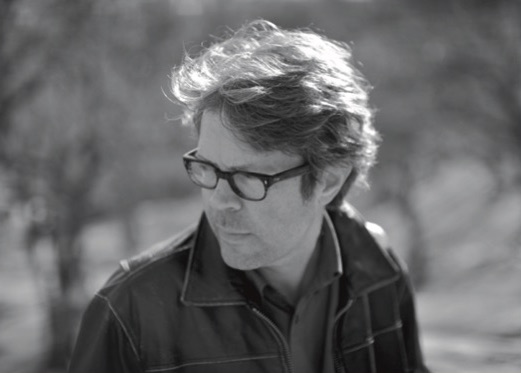
Jonathan Franzen, “So Do We Just Give Up on Nature?”
Jonathan Franzen, “So Do We Just Give Up on Nature?”
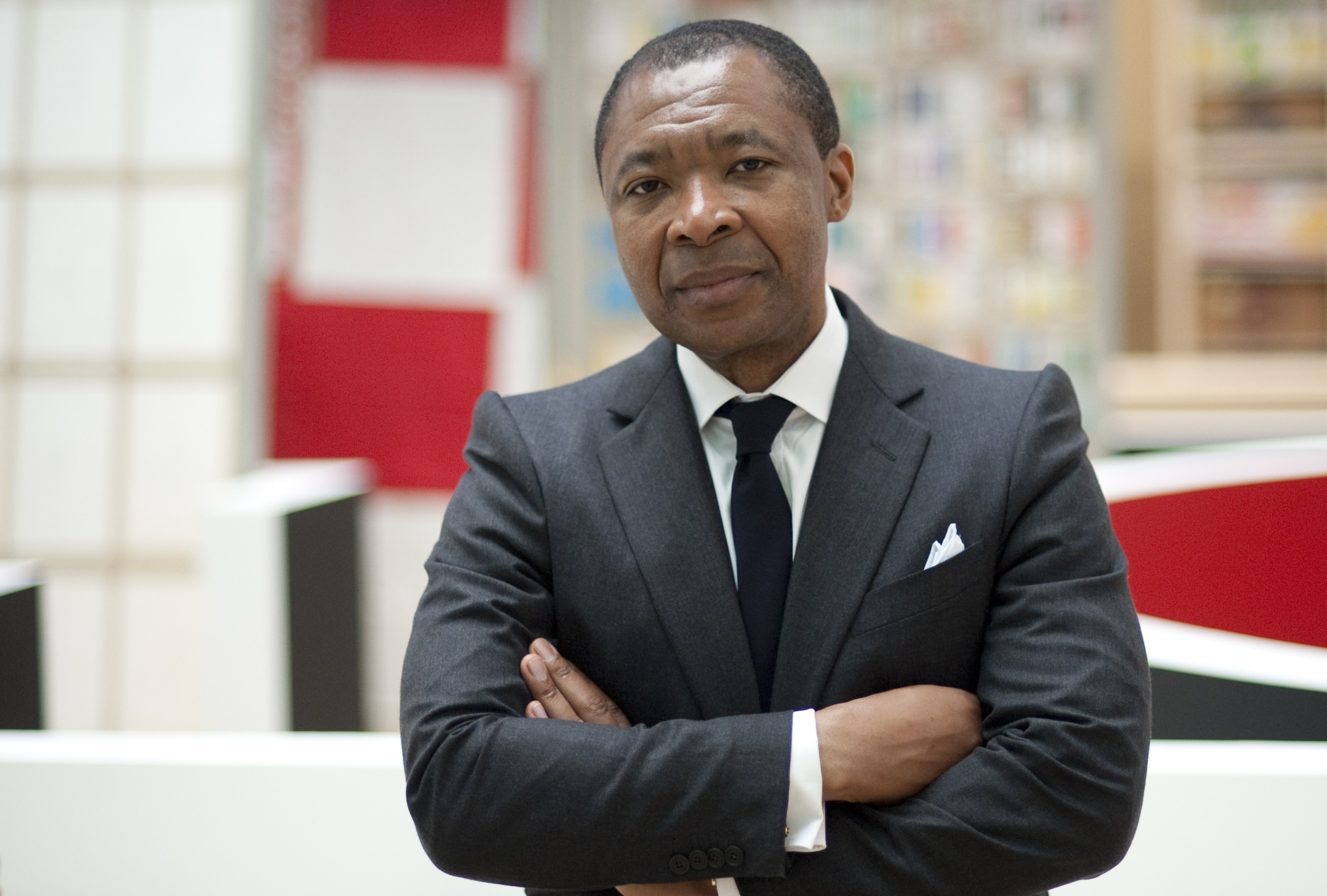
Okwui Enwezor, “All the World’s Futures: Curating in a Time of Crisis”
Okwui Enwezor, “All the World’s Futures: Curating in a Time of Crisis”
Michael Rock, “Attention Disruption Disorder”
Michael Rock, “Attention Disruption Disorder”
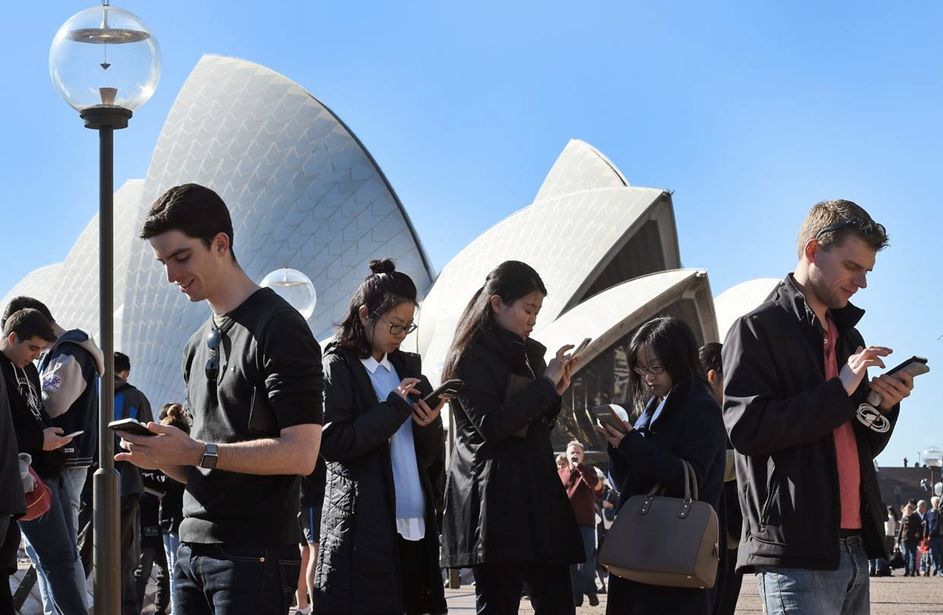
“One of the essential challenges of design is establishing spatial, commercial, conceptual, or ideological coherences in the cacophony of contemporary experience. But if each coherence requires a battle for attention, are we winning or losing? Are we making things better or aggravating the very conditions we’re trying to alleviate?” Michael Rock is a design writer and founding partner of 2×4, a multi-disciplinary design consultancy that works with cultural and commercial clients such as Prada, Nike, Apple, and OMA/AMO from its offices in New York, Madrid, and Beijing.
Jeff Koons
Jeff Koons
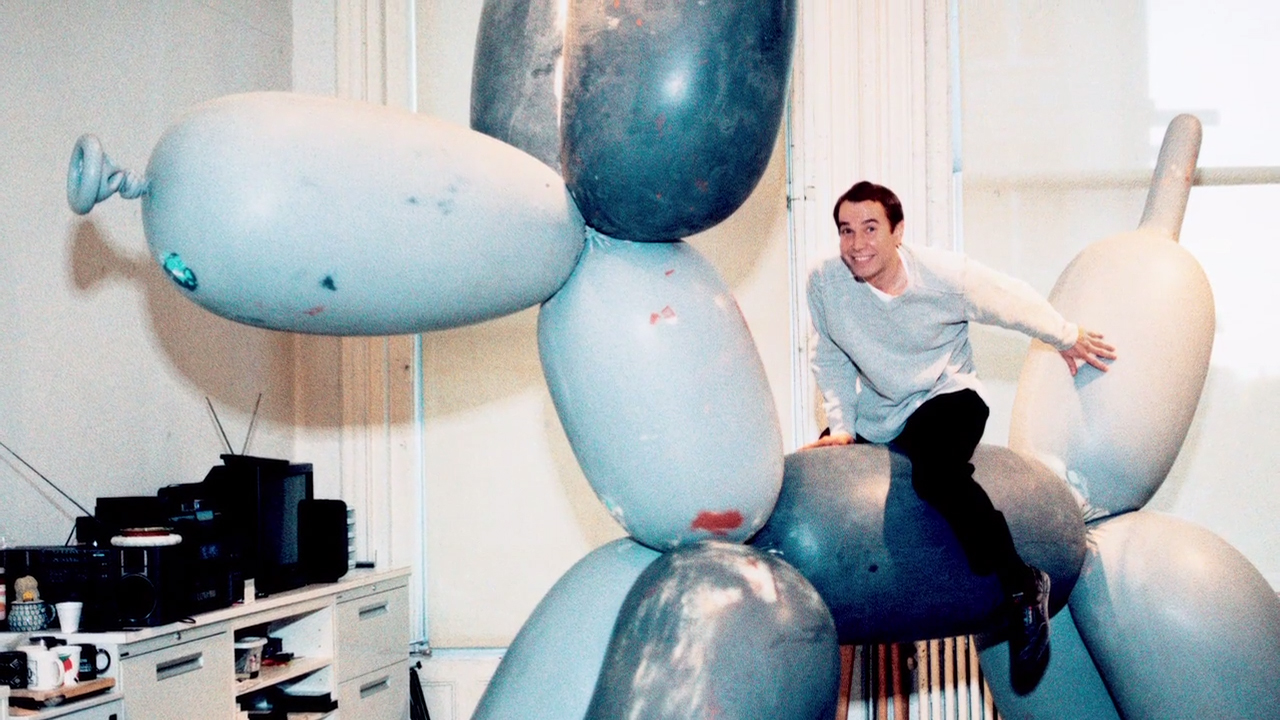
Internationally recognized artist Jeff Koons is widely known for his iconic sculptures Rabbit (1986) and Balloon Dog (1994–2000), as well as his monumental floral works Puppy (1992) and Split-Rocker (2000). His artwork, often depicting everyday objects, explores themes of self-acceptance and achieving transcendence through the senses. Since his first solo exhibition in 1980, Koons’s works have been shown in major galleries and art institutions throughout the world. Jeff Koons: A Retrospective (2014–15) was organized by the Whitney Museum of American Art and traveled to the Centre Pompidou Paris and the Guggenheim Bilbao. His most recent exhibition was at Almine Rech Gallery’s new London space (October 4, 2016—January 21, 2017). Koons lives and works in New York City.
Muji chairman Masaaki Kanai and product designer Naoto Fukasawa
Muji chairman Masaaki Kanai and product designer Naoto Fukasawa
David Netto: “Designing Interiors (The Part They Forgot to Tell You About)”
David Netto: “Designing Interiors (The Part They Forgot to Tell You About)”
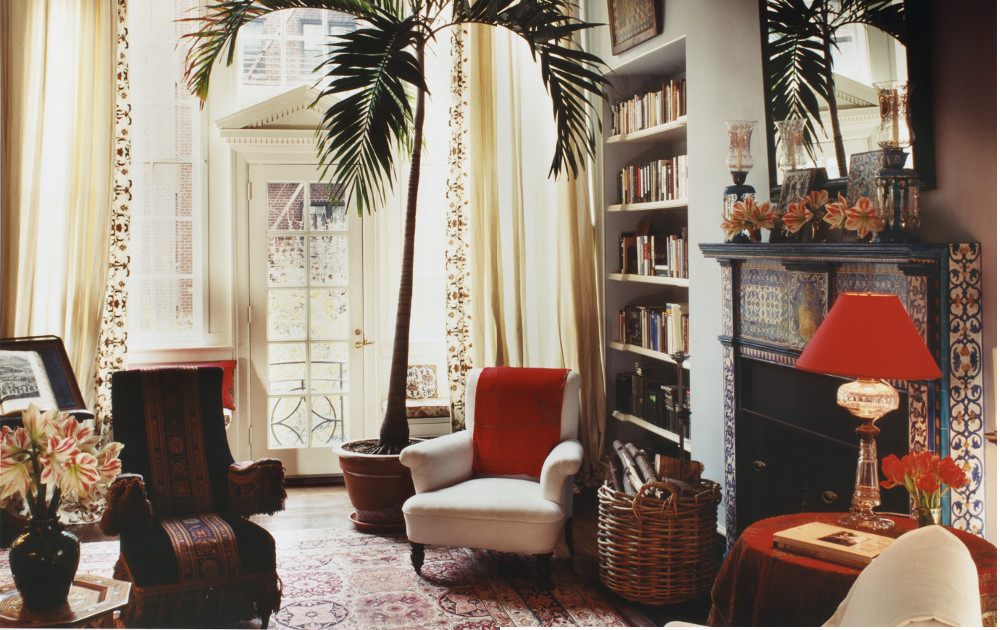
Architecture, landscape, urbanism . . . we are at the Harvard Graduate School of Design, which takes an enlightened and comprehensive view of “designed” environments and how they interrelate. But—David Netto GSD ’97 asks—how many of you have ever been taught how to make a furniture plan? How to light a room? The secrets of proportion and texture, and the breaking of rules in animating an interior? These are questions Netto has never found a satisfactory answer to in school—any school; one only learns about them from experience in the workplace. The practical truth is that how a project is perceived is key to how it is received—and essential to whether or not it gets published, written about, and given a fair trial after its transition from an abstract hypothetical to real life.
Netto has worked as an interior designer for decades and has written about architecture and design history for just as long. He professes to have learned as much from writing about the work of others as from formal education in design. His latest book is about the French designer François Catroux, who since 1968 has innovated and excelled in a career of nearly fifty years with no formal design education whatsoever (he credits Philip Johnson as a formative influence and is presently working with Diller Scofidio & Renfro on an apartment in New York). In the course of his talk, Netto will address the importance of interiors in the success of architecture and his observations on how this gets accomplished, based on what he has learned in his work as a design journalist.
Rouse Visiting Artist Program: Reiko Sudo
Rouse Visiting Artist Program: Reiko Sudo

A renowned “weaver of new ideas,” Reiko Sudo is co-founder, current CEO, and design director of Nuno Corporation of Tokyo. Nuno is widely recognized as one of the world’s most innovative textile companies, known for its use of cutting-edge technology to reinterpret the techniques, materials, and aesthetics of traditional textiles. Sudo and her design team, together with the company’s skilled weavers and dyers, have greatly broadened the parameters of contemporary design in the industry, experimenting with an eclectic array of materials, ranging from silk, cotton, and polyester to hand-made paper and aluminum, and with finishing methods that include salt-shrinking, rust-dyeing, and caustic burning. Sudo has taught at Musashino Art University and Tokyo Zokei University, where she was appointed professor in 2007. Six volumes of the Nuno Nuno Books series have been published, and Sudo’s work is in the permanent collections of several prestigious museums, including the Museum of Modern Art, in New York; the Victoria & Albert Museum, in London; and the National Museum of Modern Art Craft Gallery, in Tokyo.
Geoff Dyer
Geoff Dyer

English author Geoff Dyer takes liberties with the boundaries of conventional literary genres such as novel and travel narrative, fiction and nonfiction. Subtle, and frequently observational in its narration, his prose moves between the personal and general and often inspires his readers to take stock of their own tendencies. Dyer won the 2009 Bollinger Everyman Wodehouse Prize for Best Comic Novel for Jeff in Venice, Death in Varanasi; not long after, he was named GQ Writer of the Year. His books encompass a broad range of subjects: The Ways of Telling (1988) is a study of art critic John Berger that is an early clue to Dyer’s concerns with issues of perception; But Beautiful (1991) is a study of jazz; The Missing of the Somme (1994) dwells on memory and World War I; Out of Sheer Rage (1997) considers D. H. Lawrence; Yoga for People Who Can’t Be Bothered to Do It (2003) describes a trip to the East; The Ongoing Moment (2005) is about photography; his collection of essays and reviews titled Otherwise Known as the Human Condition (2011) won a National Book Critics Circle Award for Criticism; and then there is Another Great Day At Sea: Life Aboard the USS George H.W. Bush (2015). White Sands, a collection of travel essays and meditations on some fundamental questions of existence, was published in 2016 .
Dyer is a Fellow of the Royal Society of Literature, an Honorary Fellow of Corpus Christi College, Oxford, and was elected to the American Academy of Arts and Sciences in 2015. He currently lives in Los Angeles, where he is writer in residence at USC.