Care x Design
Care x Design
Event Description
HarvardxDesign is an annual conference launched in 2012 and led by students at the Harvard Graduate School of Design this year. We bring together creative thinkers, industry leaders, professors, and students to engage, debate, and reinterpret the design process across scales and sectors. Our goal is to share knowledge, tools, and resources that can empower creatives to become change agents through design.
Care is everything that is done to cultivate, maintain, and repair. This year, we aim to unearth the critical role of Care by Design in transforming society, organizations, and individuals — it is in and through care that we design outcomes of meaning and connectivity. Confronted by the wear and tear of diverse systems and communities, we invite creatives to explore the fruits of unsung heroes and sow seeds of care through uncharted, emergent practices in design, health, policy, education, and the environment. Join us on April 02, 2023, in reshaping our interpretations of care and be empowered to grow in gestures of humility.
Panel 1: Take Care
Edward Salonga / Senior Product Designer, Chan Zuckerberg Initiative
Kathleen Brandenburg / Co-Founder, Co-CEO at IA Collaborative
Khahlil Louisy / Senior Data Smart Fellow, Bloomberg Center for Cities
Panel 2: Share Care
Anmol Mehra / Co-Founder of Plugin House, PBC
Juhan Sonin / Creative Sandpaper, GoInvo & MIT
Michael J. Bobbitt / Executive Director, Mass Cultural Council
Panel 3: Forms of Care
Raleigh Tomlinson / Senior Product Designer, Headspace Health
Tina Grotzer / Principal Research Scientist in Education, Harvard Graduate School of Education
Tyler King / Senior UX Researcher, SAP
Care Conversation with MIT Educational Justice Institute
Lee Perlman / Ph.D., Co-Director, Educational Justice Institute at MIT
Note: Our event begins with an optional yoga session with a certified trainer included in your ticket. Yoga starts at 9:15 am and please bring your yoga clothes, yoga mat, and a change of clothing if you want to participate.
For more information, see carexdesign.org and harvardx.design .
Please email [email protected] should you have any questions or need assistance with ticket sales and details of the event.
ASLA San francisco: GSD Alumni Reception 2022
ASLA San francisco: GSD Alumni Reception 2022

GSD alumni and faculty gathered for a reception during the American Society of Landscape Architects 2022 Annual Meeting in San Francisco. Whether living locally or traveling for ASLA, attendees were welcome to connect with the GSD community and hear from the new Chair of the Department of Landscape Architecture, Gary Hilderbrand MLA ’85.
Special thanks to Rene Bihan MLA ’94 and Gerdo Aquino MLA ’96 for hosting the event at SWA Group’s San Francisco office.
Loeb Fellowship 50th Anniversary Symposium
Loeb Fellowship 50th Anniversary Symposium
Event Description
With its long history of advancing positive social outcomes in the US and around the world, the Loeb Fellowship is eager to celebrate its 50th anniversary and alumni weekend, October 6-9, 2022. In celebration of its 50th year, the Loeb Fellowship is hosting a reunion weekend for its 400+ alumni, as well as hosting a series of discussions examining the social impacts of the built and natural environments. Throughout the weekend, significant voices will convene to share reflections, wisdom, and insight with the Harvard GSD and broader community, and also engage directly with the Loeb Fellowship on this momentous occasion in its history. Loeb Alumni are invited to register for the weekend on the Loeb Fellowship website.
The celebration features two keynote events that are open to the public.
Keynote Speakers
Dr. Ayana Elizabeth Johnson with Virginia Prescott
6:30 PM, Thursday, October 6
Piper Auditorium
*Masks required for the in-person audience.
Loeb Alumna Virginia Prescott LF’02 will sit down with Dr. Ayana Elizabeth Johnson AB’02 for a wide-ranging and intimate conversation about climate joy and climate action.
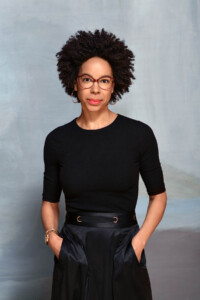
Dr. Ayana Elizabeth Johnson is a marine biologist, policy expert, writer, and Brooklyn native. She is co-founder of Urban Ocean Lab , a think tank for the future of coastal cities. She co-edited the bestselling climate anthology All We Can Save , co-founded The All We Can Save Project , and co-created the Spotify/Gimlet climate solutions podcast How to Save a Planet . Recently, she co-authored the Blue New Deal , a roadmap for including the ocean in climate policy. Previously, she was executive director of the Waitt Institute, developed policy at the EPA and NOAA, and taught as an adjunct professor at New York University.
Dr. Johnson earned a BA from Harvard University in environmental science and public policy, and a Ph.D. from Scripps Institution of Oceanography in marine biology. Her writing has been published widely, including in The New York Times, Washington Post, and Scientific American. She serves on the advisory boards of Environmental Voter Project and Scientific American , and on the board of directors for GreenWave and Patagonia. Recent recognitions include the Schneider Award for climate communication and Time’s 100 Next List . Outside magazine called her “the climate leader we need.”
Dr. Johnson’s forthcoming book has the working title What If We Get It Right?: Visions of Climate Futurism. Find her @ayanaeliza .
Virginia Prescott LF ’02 is President of School of Humans audio division, producer of the hit podcasts Hell and Gone, Astray and Sisters of the Underground for iHeart Media.
Virginia is a Edward R. Murrow and Gracie Award-winning radio and podcast Host. Her history in public media includes hosting On Second Thought and the Atlanta History Center’s Virtual Author Talks series for Georgia Public Broadcasting and Word of Mouth, Writers on A New England Stage and the Top Ten Podcasts Civics 101 and The 10-Minute Writers Workshop for New Hampshire Public Radio. Prior to joining NHPR, she was editor, producer, and director on NPR programs On Point and Here & Now, and Director of Interactive media for New York Public Radio.
Throughout her radio career, Virginia has worked to build sustainable independent radio in the developing world and has trained journalists in post-conflict zones from Sierra Leone to the Balkans. As an Audio Artist, she created sound and story installations for Project Row Houses, the Arsenal Center for the Arts, and MIT’s Center for Reflective Community Practice. She was a member of the Peabody Award-winning production team for Jazz from Lincoln Center with Ed Bradley and the recipient of a Loeb Fellowship at Harvard University.
Soyini Vinelle Guyton and Seitu Ken Jones
9:00 AM, Saturday, October 8
*This event is in-person for Loeb Alumni only. Members of the public may watch online by entering their emails in the video-streaming box at the top of this page.
Artists and partners Seitu Ken Jones LF ’02 and Soyini Vinelle Guyton will share collaborative and individual projects from their interdisciplinary practices.
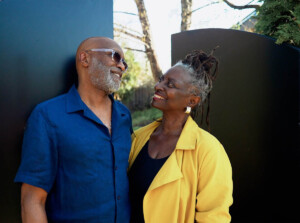
Seitu Ken Jones is a multidisciplinary artist, advocate and maker and 4th generation Minnesotan, based in St. Paul. His 30-year collaboration with his wife and fellow artist, Soyini Vinelle Guyton, and the sculptural installations they co-authored, both inspire and inform the viewer/participant. Working between the arts and public spheres, Seitu channels the spirit of radical social movements into experiences that foster critical conversations and nurture more just and vibrant communities from the soil up. He is recognized as a dynamic collaborator and a creative force for civic engagement. “My work is a testament of radical love for our Beloved Community — the local community, our ancestral community, and the community of innate humanity.”
As a poet, Soyini’s work connects with land to ground herself and to connect with her known relatives and unknown ancestors whose love of the land and whose labor on the land, forced or chosen, informs her interest in poetry that focuses on the interdependence and interaction between people and land and the surrounding environment. Growing up in rural South Dakota, Soyini developed a love for the environment and an appreciation for the healing, solace, and wonder of the capacity of the land and the environment, and the necessity of nature in our lives.
Working alone, Seitu created over 40 public artworks, across America, while Soyini’s poetry and prose have been published in collections for over 25 years. In addition, Soyini created poetry for sculptures in the Saint Paul Cultural Garden. She most recently published an artist book, entitled Shadows at the Crossroads, featuring poems from the Walker Art Center installation. Together, the duo created permanent public art works for the Nicollet Mall in Downtown Minneapolis, the Dale Street Station on the Greenline LRT that connects Minneapolis and St. Paul, Walker Art Center’s Minneapolis Sculpture Garden and Pillsbury Hall at the University of Minnesota
In collaboration with two other artists, Seitu and Soyini co-founded Frogtown Park and Farm, a 5.5-acre urban farm and 6-acre park in Saint Paul, Minnesota. Frogtown Farm epitomizes our belief that food, greenspace, nature, and trees should be accessible in all neighborhoods.
Olmsted: Bicentennial Perspectives
Olmsted: Bicentennial Perspectives
Event Description
The Harvard University Graduate School of Design, in partnership with the Arnold Arboretum , will host a two-day academic conference as part of the national Olmsted 200 celebration. While Olmsted was central to the conceptual formation of the degree program in landscape architecture at Harvard University and the design of the Arnold Arboretum, the interpretive ambitions of the conference are anything but parochial.
“The Sesquicentennial of a Great American.” Under that unambiguous heading, in 1972 the Olmsted Sesquicentennial Committee elaborated its “simple” reasons for celebrating the living legacy of Frederick Law Olmsted: “to dedicate ourselves to the idea of human survival and to identify this dedication with America’s first and greatest environmentalist.”
Fifty years into our ongoing act of survival, it is time again to reconsider the image of this representative American. America has changed, and so too have its (shared?) notions of greatness, of identity, and certainly its understanding of the varied historical sources of environmentalism. To what ideas do we remain dedicated in this, the year of Olmsted’s bicentennial? The story of Olmsted is perhaps no longer so simple; arguably it is more relevant than ever.
The conference consists of six panels composed of scholars from a variety of disciplines engaged in critical research on both new and familiar areas of Olmsted study. National parks, suburban subdivisions, world’s expositions, battlefields, dispossessed communities, family homesteads, English gardens, slave states, city parks, scenic parkways, forests, and swamps are but some of the sites and scenes that will be examined from a diversity of perspectives.
Register for Day 1 of the conference using this link or the link on the right-hand side of the page. In-person tickets for Day 2 are completely sold out. To engage with day 2, please watch the live stream.
Conference Overview
Friday, October 14
Harvard GSD, Piper Auditorium
48 Quincy St., Cambridge, MA 02138
Doors open at 9:30 am
Welcome
10:00 – 10:05Sarah Whiting, Dean and Josep Lluís Sert Professor of Architecture
Opening Remarks
10:05 am – 10:30 am
Edward Eigen
Panel 1: The (Un)making of America
10:30 am – 12:00 pm
Moderated by Thaisa Way
- Thomas J. Brown, The Shaw Memorial and the Boston Park System
- John D. Davis, Volunteering Olmsted
- Sara Zewde, Finding Frederick Law Olmsted in Cotton’s Kingdom
Panel 2: Campuses, Collectives, and Unsettlements
1:00 pm – 2:30 pm
Moderated by Annie Simpson
- Yvonne Elet, The Campus Green
- Christine Edstrom O’Hara, Still Chasing Water: Frederick Law Olmsted, Theory and Practice in the Arid West
- Alexander Manevitz, The Social Destruction of Seneca Village: Environmental Propaganda and the Creation of Central Park
Panel 3: …whithersoever thou goest
3:00 pm – 4:30 pm
Moderated by Sarah Moses
- Diana Martinez, Learning from Colonial Landscapes: Empire and the “Genius of Place”
- Desiree Valadares, Olmsted Across Oceans: Fred’s Maritime Voyages and Transoceanic Crossings in 1843–44
- Anette Freytag, The American Grand Tour – Fruitful Exchange Processes to Foster Democratic Spaces
Keynote Address
5:00 pm – 7:00 pm
Keynote Introduction by Gary Hilderbrand, Anticipating the Renewal of Olmsted’s Franklin Park
Ethan Carr, Letting It Alone at Franklin Park: The Good, the Bad, and the Ugly
Saturday, October 15
The Arnold Arboretum, Weld Hill Research Building
1300 Centre Street, Boston, MA 02131
Doors open at 10:00 am
Panel 1: A Clearing in the Woods
10:30 am – 12:00 pm
Moderated by Hugo Betting
- William (Ned) Friedman, Director of the Arnold Arboretum of Harvard University and Arnold Professor of Organismic and Evolutionary Biology, Arnold Arboretum at 150 – Looking Ahead to the Next Century
- Rosetta S. Elkin, Out of Place: Landscape Advocacy at the Arnold Arboretum
- Mary Kuhn, Approaching Olmsted’s Forests
Panel 2: Roads, Barriers, and Democratic Vistas
1:00 pm – 2:30 pm
Moderated by Fadi Masoud
- Sara Jacobs, Landscapes of Racialization: Visualizing Race, Nature, and Urban Landscapes after Olmsted
- Tim Davis, FLO in the Driver’s Seat: The Primacy of Roads in Olmsted’s Vision of Parks, Cities and Society
- Kathleen John-Alder, The Promised Land: Security, Democracy, and the National Mall
Panel 3: The Several Selves of Frederick Law Olmsted
3:00 pm – 4:30 pm
Moderated by Samantha Page
- Edward Eigen, Papering Over Olmsted
- Catherine Seavitt, Seeds, Grafts, and Offshoots: Olmsted on (and off) Staten Island, 1848–1857
- Charles Birnbaum, The Road to the Olmsted Renaissance
Reception
4:30 pm – 6:30 pm
Transportation and Access
Day 1 of the conference takes place at the GSD. The closest MBTA Red Line station is Harvard Square. Metered street parking is available but is extremely limited. We highly encourage guests to take public transportation.
Day 2 takes place at the Arnold Arboretum Weld Hill Research Building. Detailed instructions for getting to Weld Hill by public transportation or car are available on the Arboretum Website
. Free parking is available in the lot in the front of the Weld Hill building.
* The GSD will offer a free shuttle bus service from Gund Hall to the Arboretum. More information will be shared directly with conference registrants.
Accessibility questions? Visit the GSD’s Accessibility at Public Programs webpage to find information for Friday. Visit the Arboretum’s Accessibility webpage to find more information for Saturday. Still have questions? Email [email protected].
Speakers
Charles A. Birnbaum, FASLA, FAAR, is President and CEO of The Cultural Landscape Foundation (TCLF). Prior to creating TCLF, he spent fifteen years as coordinator at the National Park Service Historic Landscape Initiative and a decade in private practice in New York City with a focus on cultural landscapes and urban design. Birnbaum has authored and edited numerous publications including Modern Landscapes: Transition and Transformation (Princeton University Press), Shaping the American Landscape (University of Virginia Press, 2009), Design with Culture (University of Virginia Press, 2005), Preserving Modern Landscape Architecture (Spacemaker Press, 2006), and the forthcoming, Experiencing Olmsted (Timberpress, 2022). Birnbaum was a Loeb Fellow at Harvard’s GSD, and a Rome Prize recipient. He was awarded ASLA’s LaGasse Medal in 2008, President’s Medal in 2009 and the ASLA Medal (The Society’s highest honor) in 2018. He served as a Lecturer in Landscape Architecture at Harvard’s GSD (2020–); Visiting Professor, Columbia University’s Graduate School of Architecture (2011–16); and Glimcher Distinguished Professor, Ohio State University (2007). From 2010 to 2018, Birnbaum was a frequent contributor to The Huffington Post. In 2021, TCLF unveiled The Cornelia Hahn Oberlander International Prize in Landscape Architecture, a permanently endowed Prize with a $100,000 purse.
Thomas J. Brown received his education at Harvard University and has taught at the University of South Carolina since 1996. He addressed Olmsted’s work with the United States Sanitary Commission in Dorothea Dix, New England Reformer (Harvard University Press, 1998). His subsequent research has focused on Civil War remembrance. Brown is the author of Civil War Canon: Sites of Confederate Memory in South Carolina (University of North Carolina Press, 2015) and Civil War Monuments and the Militarization of America (University of North Carolina Press, 2019), which received the annual book prize of the Society of Civil War Historians. He is working on a book about the Shaw/54th Memorial, on which he has published essays in his co-edited Hope and Glory: Essays on the Legacy of the 54th Massachusetts Regiment (University of Massachusetts Press, 2001) and The Civil War in Art and Memory (National Gallery of Art, 2016).
Ethan Carr, PhD, FASLA, is a Professor of Landscape Architecture and the Director of the Master’s of Landscape Architecture program at the University of Massachusetts, Amherst. He is a landscape historian and preservationist specializing in public landscapes. Three of his award-winning books, Wilderness by Design (University of Nebraska Press, 1998), Mission 66: Modernism and the National Park Dilemma (University of Massachusetts Press, 2007), and The Greatest Beach: A History of Cape Cod National Seashore (University of Georgia Press, 2019), describe the twentieth-century history of planning and design in the US national park system as a context for considering its future. Carr was the lead editor for The Early Boston Years, 1882-1890, Volume 8 of the Papers of Frederick Law Olmsted (2013). Carr co-wrote Olmsted and Yosemite: Civil War, Abolition, and the National Park Idea (Library Of American Landscape History, 2022) with Rolf Diamant, tracing the origins of the American park movement. His latest book, Boston’s Franklin Park: Olmsted, Recreation, and the Modern City (2023) reconsiders the history of this landmark urban park. Carr consults with landscape architecture firms developing plans and designs for historic landscapes.
John D. Davis, PhD, is an environmental and architectural historian and Assistant Professor of Landscape Architecture at the Knowlton School, Ohio State University. His articles and essays on landscape historiography and military engineering have been published internationally. He is the co-editor of the volume Military Landscapes (Dumbarton Oaks, 2021). Current projects include editing a volume on architecture and landscape in the Greater Caribbean, and a book on engineering and landscape in the US South during Reconstruction.
Tim Davis is a historian for the US National Park Service, where he has focused on cultural landscape research, documentation, and preservation. He is the author of the award-winning volume National Park Roads: A Legacy in the American Landscape (University of Virginia Press, 2016) and co-editor of America’s National Park Roads and Parkways: Drawings from the Historic American Engineering Record (Johns Hopkins University Press, 2004). His writings have appeared in numerous journals and scholarly anthologies, including Landscape Journal, Studies in the History of Gardens and Designed Landscapes, Perspectives in Vernacular Architecture, Drawn to Landscape: The Pioneering Work of J. B. Jackson, and Places of Commemoration, Search for Identity and Landscape Design. He received his undergraduate degree in visual and environmental studies from Harvard College and PhD in American civilization from the University of Texas, Austin. Along with his NPS work, he has engaged a wide range of topics, from strip malls, satellite dishes, and trailer parks to the evolution of cultural landscape photography and the complex and often-contested relationships between vernacular and professionally designed landscapes. He is currently working on a cultural history and visual documentation of California’s John Muir Trail.
Edward Eigen is Senior Lecturer in the History of Landscape and Architecture at the Harvard University Graduate School of Design. His scholarly work focuses on intersections of the human and natural sciences with the built environment in the long nineteenth century. His book, On Accident: Episodes in Architecture and Landscape, was published by the MIT Press in 2018. Currently he is examining landscapes associated with the modern American presidency, including the “grassy knoll.” His recent essays on Olmsted examine questions of race, ornithology, piracy, drafting tools, and friction.
Yvonne Elet focuses her research on intermedial designs for art, architecture, landscape, and urbanism. Her first book was Architectural Invention in Renaissance Rome: Artists, Humanists, and the Planning of Raphael’s Villa Madama (Cambridge University Press, 2017), and she is currently completing a book on the entry zone to Rome in the interwar period, titled Urban Landscape in the Third Rome: Raphael’s Villa and Mussolini’s Forum. She is also working on a book about stucco in the art and architecture of early modern Italy, and a project on Raphael as landscape architect. Her articles appear in the Journal of the Society of Architectural Historians, Journal of Gardens and Designed Landscapes, Journal of Planning History, and I Tatti Studies in the Italian Renaissance. Her work has been supported by the ACLS, Getty, CASVA, Mellon Foundation at the Frick Collection, and the Metropolitan Museum. She has been a visiting professor at the Universities of Bologna and Urbino, and visiting scholar at the Max-Planck-Institut, Berlin. She received her PhD from the Institute of Fine Arts, New York University, and a BS from Yale. Elet also teaches and publishes on Vassar campus history , including the work of Beatrix Farrand.
Rosetta S. Elkin is the first Academic Director of the newly established program in Landscape Architecture at Pratt Institute, which aims to advance land-based research at the cutting edge of climate and public change. Prior to establishing the MLA at Pratt, Elkin taught at McGill University, the Harvard Graduate School of Design, and the Acadamie Rietveld. Elkin is the founding Principal of Practice Landscape , a collaborative studio that prioritizes planting strategies, garden-making, public exhibition, open access publishing, and horticultural research to promote a more thoughtful and accountable design agenda. At Harvard’s Arnold Arboretum , Elkin is a Research Associate, focused on elevating the role of plants in design. Elkin is the author of Plant Life: The Entangled Politics of Afforestation (University of Minnesota Press, 2022) which describes the geo-political ambitions of tree planting programs. Her first publication,Tiny Taxonomy (Actar, 2017), reflects on the scale of individual plants through a reading of three garden installations. Elkin’s forthcoming book, Landscapes of Retreat (K. Verlag, 2023), is a fieldwork-based portrait of climate adaptation around the world. Her published work is currently supported by the Graham Foundation for the Arts, and Harvard’s Climate Solutions Fund. In 2018, Elkin received the Garden Club of America Rome Prize in landscape architecture and continues to exhibit widely in venues such as the Victoria & Albert Museum, Les Jardins de Metis, the Chelsea Festival, and the Isabella Stewart Gardner Museum.
Anette Freytag is a Professor of Landscape Architecture (History, Theory and Design) at Rutgers University and an award-winning scholar, educator, and critic. She is a graduate of the University of Vienna and the ETH Zurich. Her research focuses on designed landscapes from the nineteenth century to the contemporary practice with a particular focus on topology and phenomenology. In 2019, she co-founded the Arts Integration Research Collaborative (AIR), which prioritizes creative placemaking to foster spatial justice through multidisciplinary research and curricular agendas that benefit and strengthen the local communities of their arts-integrated interventions . Her latest book The Landscapes of Dieter Kienast (gta, 2021) focuses on the Swiss landscape architect Dieter Kienast (1945–1998), a key figure in European landscape architecture. He designed spaces to make the dissolving opposition between city and countryside legible and to enable aesthetic experience to help cope with increasingly complex everyday life. Critique of urban planning, processes of participation and the significance of spontaneous urban vegetation played just as much a role in these discussions as did art, literature and architecture. Freytag’s books have been honored with the J. B. Jackson Book Prize, the European Garden Book Award, the DAM Architectural Book Award and many more.
William (Ned) Friedman is the Arnold Professor of Organismic and Evolutionary Biology at Harvard University and the eighth Director of the Arnold Arboretum of Harvard University in its nearly 150-year history. Friedman’s scholarly studies have fundamentally altered century-old views of the earliest phases of the evolution of flowering plants, Darwin’s so-called “abominable mystery.” He is also deeply interested in the history of early (pre-Darwinian) evolutionary thought and is particularly focused on the largely forgotten contributions of horticulturists and botanists. As Director of the Arnold Arboretum, Friedman has worked to expand the Arboretum’s societal impact through diverse initiatives in public programming, digital communications, enhanced dialogue between scientists and the public, the promotion of scientific scholarship within the living collections, and a reinvigoration of the long-standing relationship between the Arboretum and the biodiversity of Asia. As Friedman continues to lead the Arboretum forward to its sesquicentennial year in 2022 and the launch of the Arnold’s next century of impact, two fundamental priorities will dominate the Arboretum’s focus: doubling down on environmental justice and spatial equity and committing to do everything possible to combat climate change and extinction. The Arnold Arboretum remains one of the relatively few botanical gardens or arboreta that is free to all every day of the year. As Friedman has emphasized, access to nature, especially in an urban environment, is a human right, one with implications for health and well-being, connection to beauty and complexity, and the incredible restorative powers of a pristine Olmsted design.
Gary Hilderbrand, FASLA, FAAR, is the Peter Louis Hornbeck Professor in Practice and Chair of the Department of Landscape Architecture, Harvard Graduate School of Design. He is also principal and founder of Reed Hilderbrand Landscape Architects. Hilderbrand is a fellow and resident of the American Academy in Rome. He received the Design Medal from ASLA in 2017. His widely acclaimed publications include The Miller Garden: Icon of Modernism (Spacemaker Press, 1999) and Visible | Invisible: Landscape Works of Reed Hilderbrand (Metropolis Books, 2013).
Sara Jacobs is an Assistant Professor of Landscape Architecture at the University of British Columbia, where she is grateful to live and work on the unceded traditional territories of the Musqueam, Squamish, and Tsleil-Waututh Nations. Connecting across her training in landscape architecture, environmental history, and geography, Jacobs’s research considers how attending to interconnected histories of landscape, settler-colonialism, and racialization allows for rethinking dominant environmental relations within contested landscapes. Her design work has been recognized internationally, including from the American Society of Landscape Architects, and recent research has been supported by the Graham Foundation and the Center for Land Use Interpretation. Jacobs’s writing is published in the Journal of Landscape Architecture, Journal of the Society of Architectural Historians, Journal of Architectural Education, and SITE Magazine. Prior to joining the faculty at UBC, she was the Myles H. Thaler Visiting Assistant Professor at the University of Virginia. Jacobs has an MLA from Harvard University and PhD in History and Theory of the Built Environment from the University of Washington.
Kathleen John–Alder is Associate Professor in the Department of Landscape Architecture at Rutgers University and a Fellow of the American Society of Landscape Architects. A practicing landscape architect, with degrees from Oberlin College, Rutgers University, and the Yale School of Architecture, her scholarly research bridges disciplinary boundaries in order to explore the transformative role of ecology and environmentalism in the discourse of mid-twentieth-century landscape design and its impact upon contemporary practice. John-Alder is the author of Ian McHarg and the Search for Ideal Order (Routledge, 2019), and she has published articles in Landscape Journal, The Journal of Planning History, JoLA, Studies in the History of Gardens and Designed Landscapes, Site/Lines and Manifest. Her work has also received design and research awards from the Van Alan Institute, the National Park Service, and the American Society of Landscape Architects.
Mary Kuhn is an Assistant Professor in the English Department at the University of Virginia. She is a scholar of nineteenth-century American literature and the environmental humanities. Her first book, The Garden Politic (forthcoming from New York University Press, 2023), focuses on the literary, cultural, and political significance of plant life in nineteenth-century America. Her work has also appeared in PMLA, ELH, American Literature and Common-place. She is currently working on a second project about the cultural history of Paris Green, an arsenic-based pigment that became a popular insecticide in the late nineteenth century.
Alexander Manevitz is a scholar, public historian, educator, and consultant on the histories of freedom, race, and urban development in the United States, with a particular focus on New York City and Seneca Village. He is currently an Assistant Professor of History at Baruch College, City University of New York and has previously held visiting faculty and postdoctoral positions at the New-York Historical Society, the New School, and Trinity College since completing his PhD from New York University in 2016. His book manuscript, The Rise and Fall of Seneca Village, is under contract with Cornell University Press and you can find his work in The Journal of Urban History and The Washington Post. You can also look for him on Twitter: @historicities
Diana Martinez is Assistant Professor and Director of Architectural Studies in the Department of History of Art and Architecture at Tufts University, where she holds a secondary appointment in the Department for the Study of Race, Colonialism, and Diaspora. She is completing a book manuscript, “Concrete Colonialism: Architecture, Infrastructure, Urbanism, Racial Capitalism, and the American Colonial Project in the Philippines.” Her work is published in The Avery Review, Comparative Studies of South Asia, Africa, and the Middle East, and in the collected volume Architecture in Development with the Aggregate Architectural History Collaborative (Routledge, 2021).
Christine Edstrom O’Hara is Professor in Landscape Architecture at Cal Poly, San Luis Obispo, with research that focuses on landscape history and historic preservation. She holds degrees from Stanford University in English, a Master’s in Landscape Architecture and Preservation Planning from University of Washington, and a PhD in Landscape Architecture from University of Edinburgh. With over twenty years of research on the Olmsted firm, both her master’s thesis and dissertation analyzed the Olmsted Brothers’ Southern California practice and the firm’s ecological approach to design. O’Hara has published essays in The Journal for the Society of Architectural Historians, Landscape Journal, Pacific Horticulture, Shaping the American Landscape, and is editor of Essential Eden (Santa Monica: Angel City Press, 2023), a compendium of essays on California history through the lens of cultural landscapes. She is the former president of the California Garden & Landscape History Society and serves on the advisory council for the National Association for Olmsted Parks.
Catherine Seavitt Nordenson is a Professor and Director of the Master of Landscape Architecture program at the Spitzer School of Architecture, City College of New York. A registered architect and landscape architect, she is a graduate of the Cooper Union and Princeton University, a fellow of the American Academy in Rome and the American Society of Landscape Architects, and a recipient of a Fulbright Fellowship for research in Brazil. Her work explores adaptation to climate change in urban environments and the novel transformation of landscape restoration practices. She also examines the intersection of political power, environmental activism, and public health, particularly as seen through the design of equitable public space and policy. Seavitt’s books include Depositions: Roberto Burle Marx and Public Landscapes under Dictatorship (University of Texas Press, 2018), Structures of Coastal Resilience (Island Press, 2018), and On the Water: Palisade Bay (Hatje Cantz, 2010). She is the founding faculty editor of the City College landscape journal PLOT. Her essays have been published widely, including the journals Architectural Review, Artforum, Avery Review, Harvard Design Magazine, JoLA, LA+, Landscape Architecture Magazine, and Topos. You can find her on Twitter: @cseavitt
Desiree Valadares is an architectural historian and heritage practitioner trained in landscape architecture. She received her PhD from the University of California, Berkeley in Architecture: History, Theory and Society. She writes about territoriality, oceanic geographies and empire in Canada and the US with a focus on the aftermath of Asian migration (wartime forced relocation) and Indigenous intersections in the transpacific – Hawaiʻi, Alaska, and British Columbia. Her research is supported by the Social Science and Humanities Research Council of Canada, the Graham Foundation for the Fine Arts, the Canada Council for the Arts, UC Berkeley Regent’s fellowship and the Canadian Centre for Architecture. Valadares is an Assistant Professor at the University of British Columbia’s Geography Department and an Affiliate Faculty in Asian Canadian and Asian Migration Studies.
Sara Zewde is founding principal of Studio Zewde, a design firm in New York City practicing landscape architecture, urbanism, and public art. The studio is devoted to creating enduring places where people belong. Named to Architectural Digest’s AD100 and an Emerging Voice by the Architectural League of New York, the firm is celebrated for its design methods that sync culture, ecology, and craft. In parallel with practice, Zewde serves as Assistant Professor of Practice at Harvard University Graduate School of Design. Zewde was named the 2014 National Olmsted Scholar by the Landscape Architecture Foundation, a 2016 Artist-in-Residence at the Robert Rauschenberg Foundation, and a 2020 United States Artists Fellow. Sara holds a master’s of landscape architecture from the Harvard University Graduate School of Design, a master’s of city planning from MIT, and a BA in sociology and statistics from Boston University.
Bringing Digitalization Home: How Can Technology Address Housing Challenges?
Bringing Digitalization Home: How Can Technology Address Housing Challenges?
Event Description
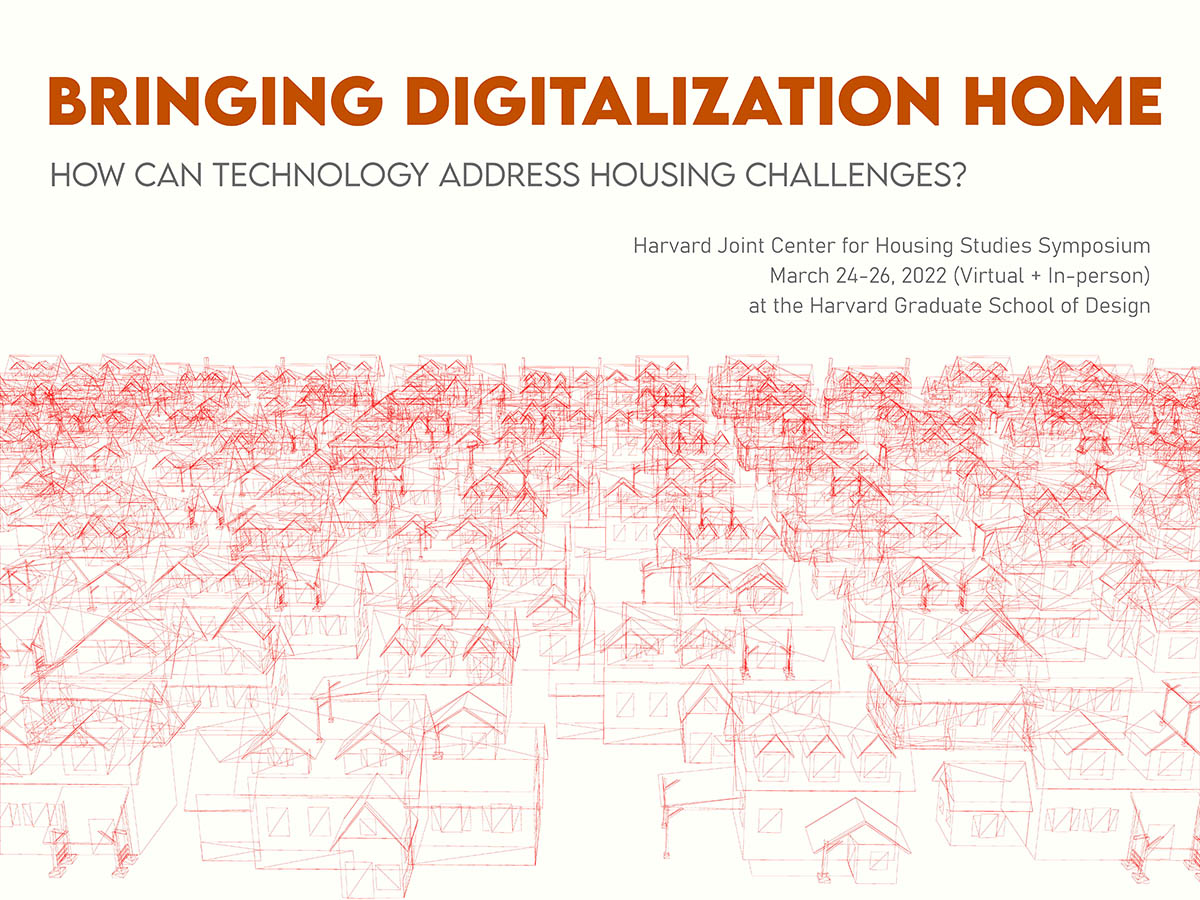
Digitalization—the use of automated digital technologies to collect, process, analyze, distribute, use, and sell information—is spurring fundamental change in the way housing is produced, marketed, sold, financed, managed, and lived in. This symposium, organized by the Harvard Joint Center for Housing Studies , will feature leading scholars and experts from academia, industry, government, and advocacy groups. Participants will examine the nature and extent of technologically-driven changes and assess whether these changes are likely to further (or hamper) efforts to address economic, social, and environmental challenges, such as housing affordability, discrimination, and climate change. Speakers will also suggest strategies that the public, private, and non-profit sectors can use to produce more equitable and environmentally sustainable housing.
For more information, visit: https://www.jchs.harvard.edu/digitalization-symposium
Keynote Address
Designing AI Ethics, in Practice and in Public
Molly Wright Steenson , Vice Provost for Faculty, K&L Gates Associate Professor of Ethics & Computational Technology, and Associate Professor, School of Design, Carnegie Mellon University. Author, Architectural Intelligence: How Designers and Architects Created the Digital Landscape (MIT Press, 2017) and co-editor Bauhaus Futures (MIT Press, 2019).
When a company makes an AI-related misstep, a familiar script unfolds. Someone inside the company brings the problem to public attention, the company produces and promotes a statement of ethics, makes internal changes (or not), and the news cycle typically blows over. But how does this practice hold companies accountable? To what extent does it impact the public’s understanding of technology and ethics? Just as the design of user experience for AI and its related technologies are vital concerns for architects and designers, so too are these questions of ethics and AI. In her keynote, Steenson will examine the role design has to play in the relationship of AI and ethics. Ultimately, is AI ethics, in practice and public about ethics — or something else?
“Landscapes of Slavery, Landscapes of Freedom: The African Diaspora and the American Built Environment”
“Landscapes of Slavery, Landscapes of Freedom: The African Diaspora and the American Built Environment”
| Registration Information |
|---|
| The GSD’s Fall 2021 Public Programs are all virtual and require registration. Click here to register for “Landscapes of Slavery, Landscapes of Freedom.” Live captioning will be provided during this event. |
Event Description
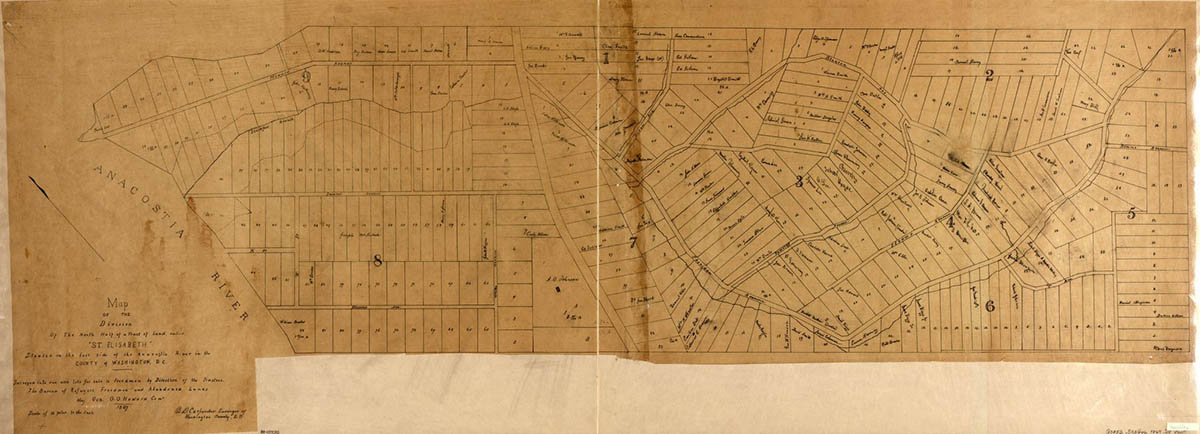
This forum brings together scholars whose research investigates the relationship between the African diaspora, Afro-descendants, and the built environment of North America and the Caribbean from a variety of lenses that are specific to the scholars’ fields of inquiry. The goal is to begin to expand the field of landscape history by taking into consideration questions that are not always deemed central to the practice of design, if design is understood as an activity that has featured—in the historical narratives—the presence of an author-designer, a client, and a variety of tools the former has used to communicate ideas about form, materials and use, to the latter.
By its very cross-disciplinary nature and topical organization, this forum questions a traditional mode of history writing that is based both on the description of linear developments and on the exclusive use of archival and written sources. Instead it argues for a relational historiography that considers what methods and what traces—written, spoken, or material, and whether found on the land’s surface or below—may allow us to tell the story of the Black North American and Caribbean landscape of enslaved people, maroons and freemen. Without arguing for the obliteration of what is already known about the landscape of plantations and the settlements of early America, essays presented at this symposium will ultimately produce a landscape history that, paraphrasing Èdouard Glissant, is latent, open, multicultural in intention, and directly in contact with everything possible.
*Download the conference program*
Schedule
Friday, November 5, 2021
6 PM
Welcome remarks by Anita Berrizbeitia, Chair of the Department of Landscape Architecture
Introduction by Raffaella Fabiani Giannetto, Conference Chair
6:10 – 7:30 PM
Keynote Address by Michael Twitty
Beyond ‘Slave Food’: Re-Organizing the Perceptions and Potential of African American Foodways
Saturday, November 6
10 – 10:20 AM
Introduction by Raffaella Fabiani Giannetto
10:20 – 11:50 AM
Panel Discussion 1, moderated by Jarvis McInnis
Hoeing, Harvesting, Healing & Hexing: The Earth and its Cultivation as Tools of Resistance to Enslavement
Anne Bouie
Forgotten Witnesses: Exploring Archaeological Sites of Labor at a Presidential Plantation
James French and Matthew Reeves
11:50 AM – 1:30 PM
Lunch Break
1:30 – 3 PM
Panel Discussion 2, moderated by Matthew Mulcahy
Nowhere and Everywhere: The Archaeological Footprint of Afro-Descendants on the Urban Landscape of 16th-Century Spanish Hispaniola
Pauline Martha Kulstad-González
The Plantation Cityscape: Slave Labor as a Circulatory System in the Urbanization of Colonial New Orleans
Nicholas Paskert
3 – 3:30 PM
Break
3:30 – 5 PM
Panel Discussion 3, moderated by Jennifer Anderson
“The Fences Have Flown”: Unsettling Enclosure in Narratives of Black Spatial Practice
Elleza Kelley
Landscape, Memory, and the History of Slavery in Mississippi
Max Grivno
Sunday, November 7, 2021
10 – 11:30 AM
Panel Discussion 4, moderated by Andrea Mosterman
Muted Place and Free Settlement Icons
Everett Fly
Working Freedom: Black Farmers and Industrious Landscapes in Maryland, 1866-1880
Melissa Blair
11:30 AM – 1 PM
Lunch Break
1 – 3 PM
Panel Discussion 5, moderated by Sara Zewde
Toward a Black Historical Ecology of the Atlantic World
Justin Dunnavant
Beneath the Surfaces of Historical Landscapes: Archaeology, African and Indigenous Diasporic Communities, and the Great Dismal Swamp of Virginia and North Carolina
Daniel Sayers
Living Freedom in the Maroon Landscape: An Ecological Way of Life
Diane Jones Allen
3 – 3:15 PM
Closing Remarks by Raffaella Fabiani Giannetto
Conference Chair
Raffaella Fabiani Giannetto is a landscape historian, critic, and part-time lecturer at the GSD. Her approach to landscape history is guided by the belief that world-wide relations across spatial and temporal scales are best discerned and studied through an accumulation of commonplaces.
Dr. Fabiani Giannetto is also an independent scholar and, when not in the classroom, she reads and writes about the productive landscape, early modern Atlantic history, and the roots of Western society’s progressive alienation from the natural world.
Keynote Speaker
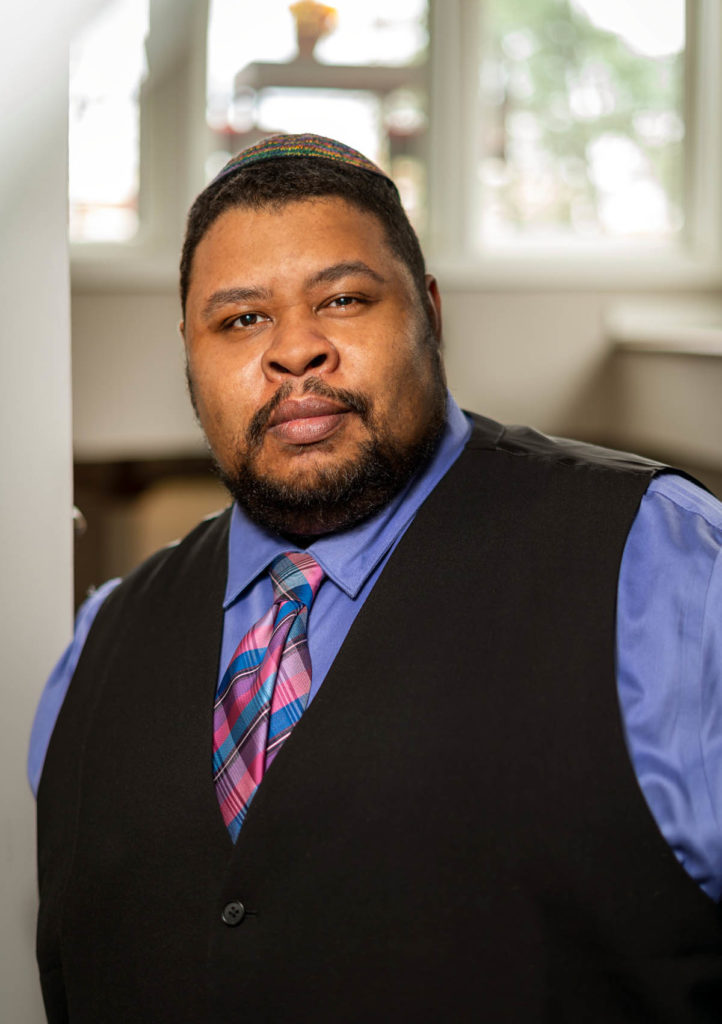
Michael W. Twitty is a living history interpreter, culinary historian, and food writer personally charged with teaching, documenting, and preserving the African American culinary traditions of the historic South and its connections with the wider African Atlantic world as well as parent traditions in Africa. He blogs at Afroculinaria.com . He’s appeared on Bizarre Foods America with Andrew Zimmern, Many Rivers to Cross with Henry Louis Gates, and most recently Taste the Nation with Top Chef‘s Padma Lakshmi and a special guest appearance in Michelle Obama’s Waffles and Mochi show on Netflix. HarperCollins released Twitty’s The Cooking Gene , in 2017, tracing his ancestry through food from West and Central Africa to America and from slavery to freedom. The Cooking Gene won the 2018 James Beard Award for best writing as well as the book of the year, making him the first Black author so awarded. His piece on visiting Ghana in Bon Appetit was included in Best Food Writing in 2019 and was nominated for a 2019 James Beard Award. Twitty’s next book, Rice with UNC press, is currently fresh off the presses. Koshersoul, about his culinary journey as a Jew of African descent, will be out in 2022 through HarperCollins. He was most recently named a National Geographic Explorer in 2021.
Panelists
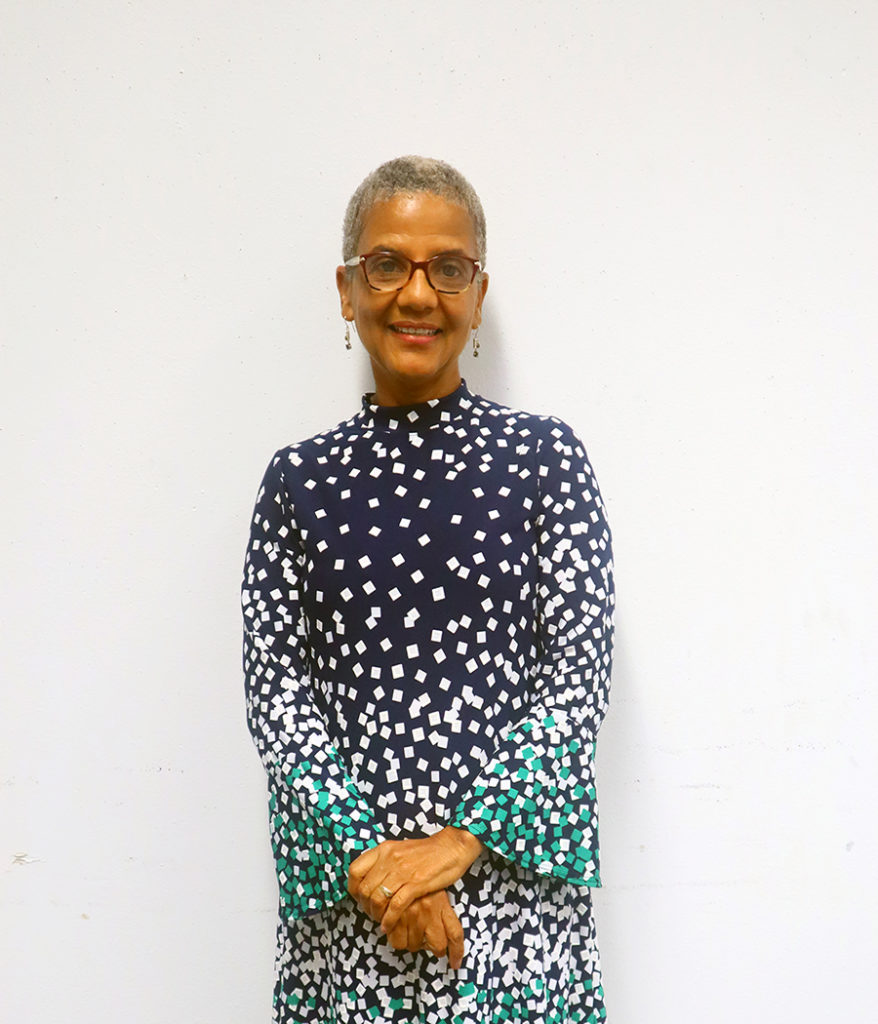
Diane Jones Allen, D. Eng., PLA, FASLA is Program Director and Professor of Landscape Architecture, University of Texas, Arlington. She is Principal Landscape Architect with DesignJones LLC which received the 2016 American Society of Landscape Architects (ASLA) Community Service Award. She participated on the 2017 ASLA Blue Ribbon Panel on Climate Change. Diane serves on the board of the Landscape Architecture Foundation (LAF) as vice president of education for the 2021 year. Diane is author of Lost in the Transit Desert: Race Transit Access and Suburban Form , Routledge Press, 2017, and co-editor of Design as Democracy: Techniques for Collective Creativity , Island Press, 2017. Diane is part of one of two cross disciplinary teams that won the 2020 SOM Foundation Research Prize focused on examining social justice in urban contexts. She alsoreceived an appointment as fellow for Garden and Landscape Studies at Dumbarton Oaks for the 2021-2022 academic year.
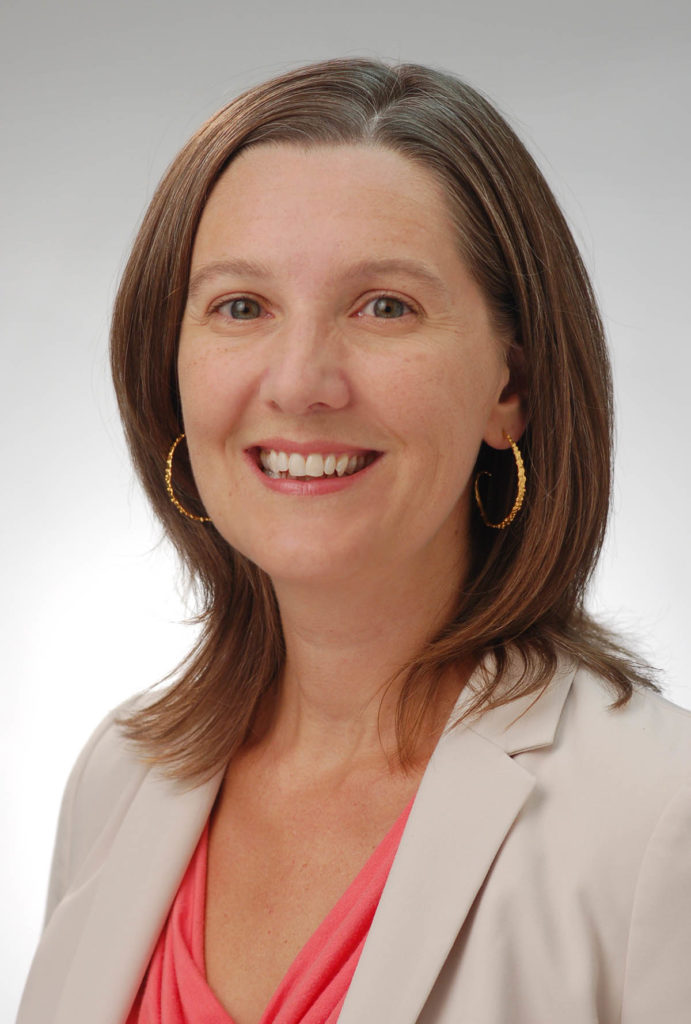
Melissa Blair is Senior Lecturer in the Department of History at the University of Maryland, Baltimore County. She is a historian of architecture, landscapes and material culture with 20 years of experience gained at public history and academic institutions. She teaches the history of eighteenth- and nineteenth-century America and historic preservation. She is co-author of Washington and Baltimore Art Deco: A Design History of Neighboring Cities (Johns Hopkins University Press, 2014). Her current research focuses on the Mid-Atlantic’s rural buildings and landscapes, the farming patterns that shaped them, and their preservation.
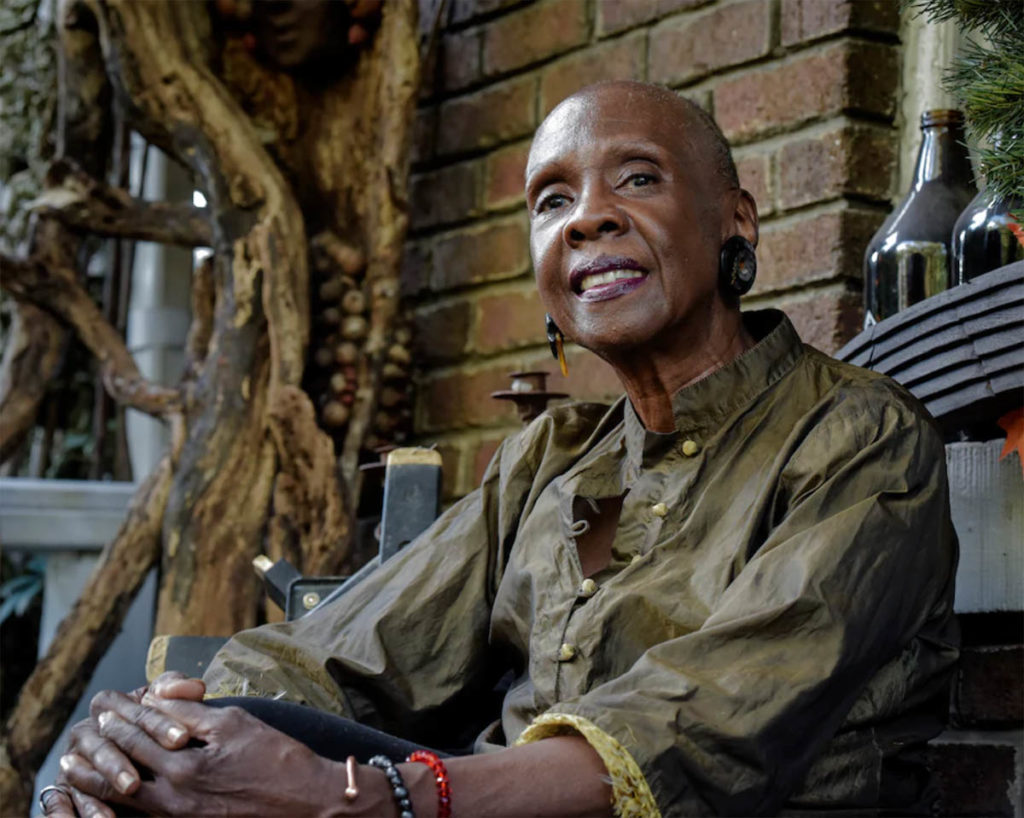
Anne Bouie was born in Birmingham, Alabama; she grew up in Atlanta, Georgia, and was deeply affected by the beauty and culture she experienced during summers on her grandparents’ farm in Florida. Her family lived in six states and she had attended seven schools by the fifth grade before settling in Riverside, California, where she grew up, and eventually graduated from the University of California there. She left southern California and moved to the Bay Area to enter the graduate School of Education at Stanford University, where she earned a Ph.D. in Administration & Policy Analysis, a Master’s degree in Secondary Education, and a Master’s degree in African-American History. As a mixed media, assemblage artist, Ms. Bouie has exhibited at the Honfluer Gallery, Galarie Myrtis, the Nevin Kelly Gallery, Millennium Salon, and the D.C. Arts Center. She has also participated in exhibits in California, Pennsylvania, Ohio, and India. She is a member of the Black Artists of D.C., the Millennium Arts Salon, Washington D.C. Friends of Brandywine, and the Women’s Caucus for the Arts, the Honfluer Gallery, the Washington Arts Project, and the Pen and Brush Gallery in New York.
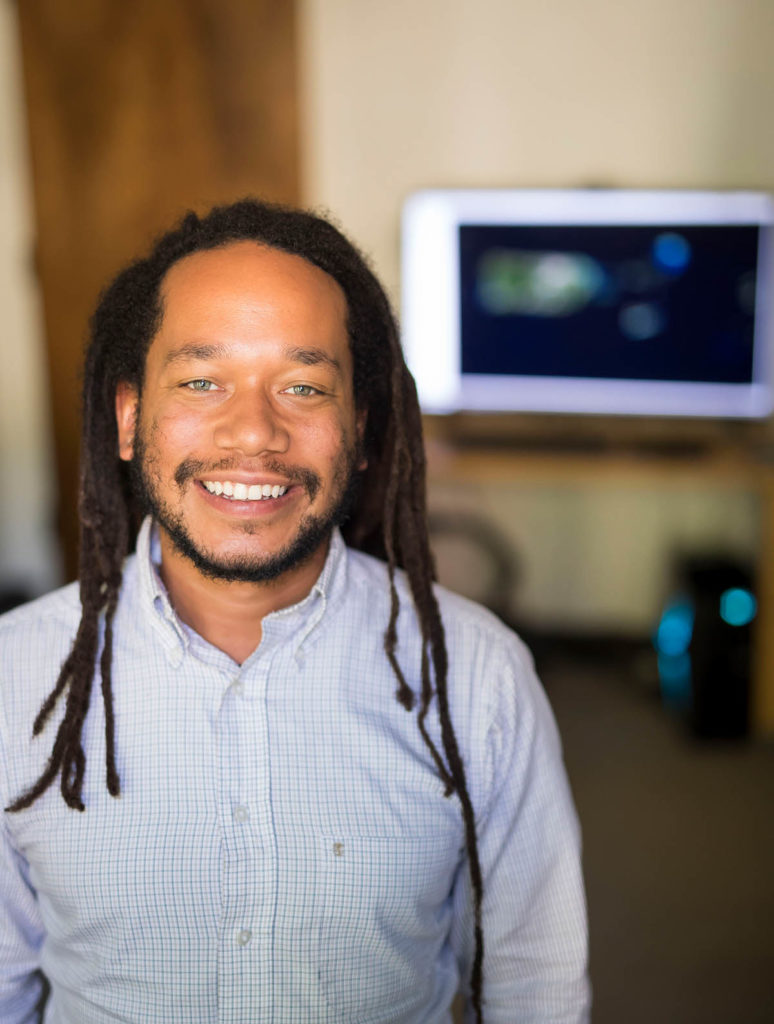
Photo by: Susan Urmy
Dr. Justin Dunnavant is an Assistant Professor in the Department of Anthropology at UCLA. His current research in the US Virgin Islands investigates the relationship between ecology and enslavement in the former Danish West Indies. In addition to his archaeological research, Justin is co-founder and President of the Society of Black Archaeologists and an AAUS Scientific SCUBA Diver. In 2021, he was named a National Geographic Emerging Explorer and inducted into The Explorers Club as one of “Fifty People Changing the World that You Need to Know About.” He is also a member of the Board of Trustees of the National Marine Sanctuary Foundation. His research has been featured on Netflix’s “Explained,” Hulu’s “Your Attention Please” and in print in American Archaeology and Science Magazine.

Everett L. Fly , MLA ’77, native of San Antonio, Texas, resides in the city with his wife Rosalinda. An honors graduate of the University of Texas at Austin School of Architecture, he is the first African American graduate of Harvard University’s Department of Landscape Architecture. He is a Fellow of the American Society of Landscape Architects. Fly’s forty-year practice as a licensed landscape architect and architect includes national multidisciplinary consultations for the National Park Service and the National Trust for Historic Preservation. He served on the State of Texas National Register Board of Review and City of San Antonio Historic and Design Review Commission. He chaired the board of Humanities Texas from 1993 to 1994. Fly served appointments by President Bill Clinton to the President’s Committee on the Arts and the Humanities from 1994 to 2001. President Barack Obama awarded him one of ten 2014 National Humanities Medals for his body of work preserving the integrity of African-American places and landmarks. Recent awards include the 2018 San Antonio Power of Preservation Foundation “Champion of Preservation Award” and the 2020 Conservation Society of San Antonio “Texas Preservation Hero Award”. He co-founded the San Antonio African American Community Archive and Museum .
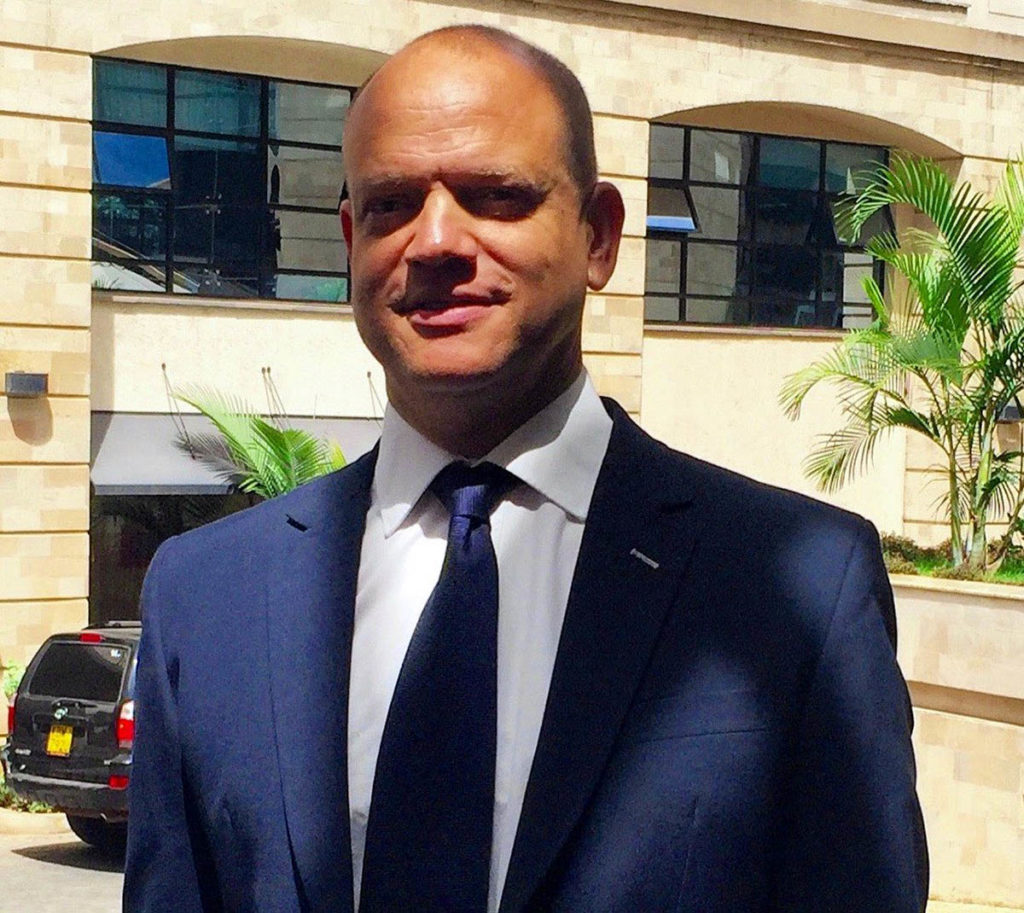
James French founded the Montpelier Descendants Committee (MDC) and joined the Board of The Montpelier Foundation (TMF) in 2019. The MDC educates the public about the social, intellectual and economic contributions to the nation’s founding of enslaved Americans across Central Virginia, including at James Madison’s plantation, Montpelier. Mr. French strenuously advocated for power sharing to a largely resistant board and led the MDC in achieving structural parity with The Montpelier Foundation by innovating a widely applicable model for resolving legacy power imbalances in organizations. The MDC is the only descendant organization to establish itself as an equal co-steward of a major historic site in America. Mr. French is a graduate of the Darden Business School at the University of Virginia and has worked in international banking, government and in entrepreneurial roles across the globe. Mr. French is launching a fintech startup focused on emerging economies in Africa and beyond.

Max Grivno is Associate Professor of History at the University of Southern Mississippi, where he teaches courses on the Old South, Slavery, and American Economic History. While completing his Ph.D. at the University of Maryland, Grivno worked for several years as a research assistant with the Freedmen and Southern Society Project. Grivno has also served as a research historian for the National Park Service and has completed the historic resources survey for Ferry Hill Plantation and the Forks of the Road Slave Market in Natchez, Mississippi. Dr. Grivno has received received research fellowships from the Gilder Lehrman, the University of North Carolina, and has been awarded the Humanities Scholar of the Year Award by the Mississippi Humanities Council for his work promoting slavery and public history. Dr. Grivno is currently working on a book on the last survivors of slavery in the United States.
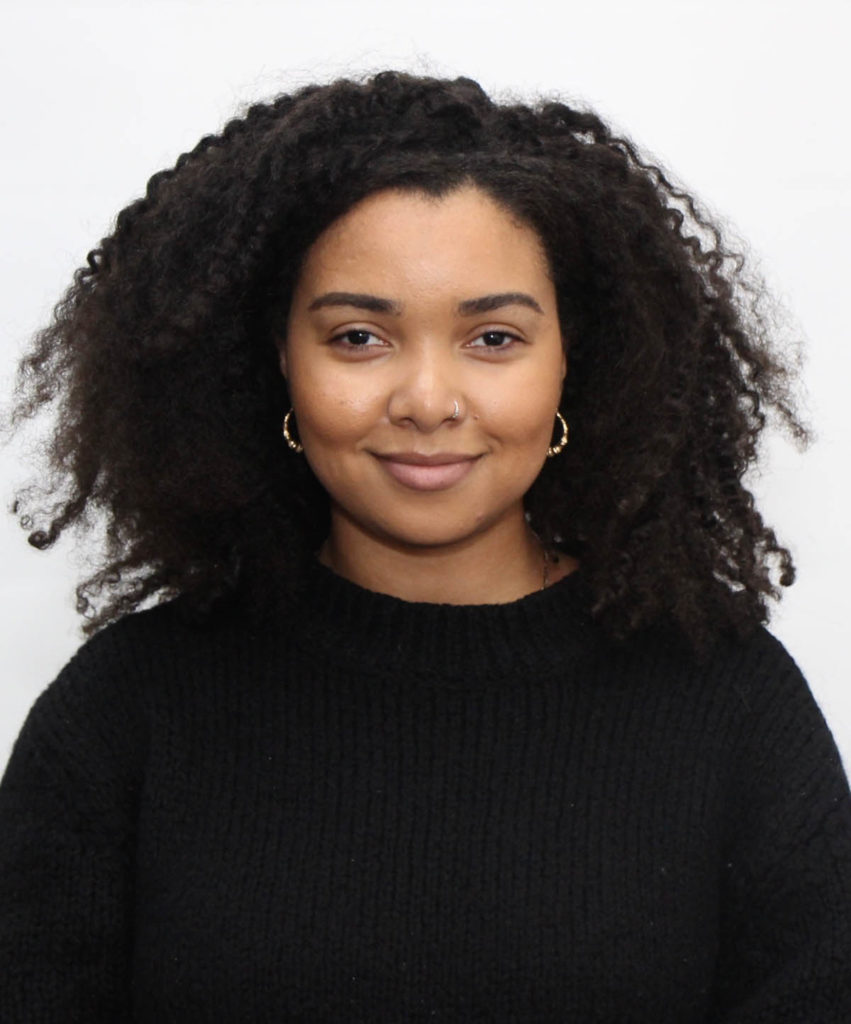
Elleza Kelley is a Postdoctoral Associate at Yale University in the departments of English and African American Studies. Her current book project explores black spatial knowledge and practice through African American literature and visual art. Kelley is a co-founder of the BSA at Columbia University’s Graduate School of Architecture, Planning and Preservation, where she acts as a senior advisor, programming symposia and producing publications related to blackness and architecture. Kelley writes and teaches on a range of subjects from black aesthetics and black geographies to historical fiction. Kelley’s writing can be found in Antipode: A Radical Journal of Geography, The New Inquiry, Cabinet Magazine, and elsewhere.
Pauline M. Kulstad González has a B.A. in Latin American Studies and Anthropology from Macalester College in Minnesota (USA); a Masters in Latin American Studies from the University of Florida (concentration Archaeology) (USA); and a PhD in Archaeology from Leiden University (The Netherlands).
Her consulting firm (PK Research and Translations ) focuses on 16th century Spanish Hispaniola research, both archival and in the field. She specializes in 16th century paleography. Her work has focused mainly on translating and interpreting (English/Spanish), providing administrative assistance, and organizing meetings with multiple stakeholders. She has worked as in-country liaison in the Dominican Republic for various international commercial and educational organizations.
Nicholas Paskert is a doctoral candidate in African American history in the Department of African and African American Studies at Harvard University. He is presently finishing a dissertation on urban slavery and the built environment in African colonial New Orleans from 1718-1852. His research has been supported by Harvard’s Graduate School of Arts and Sciences, the Charles Warren Center for American History, the Historic New Orleans Collection and Tulane University’s New Orleans Center for the Gulf South. He received a BA in Psychology from Lawrence University in 2003, two BAs in Interdisciplinary Studies and History from the University of New Orleans in 2011, and an MA in African American Studies from Harvard University in 2014. His forthcoming article “Coercing the Delta: The French Grammar of Control in the African Landscape of New Orleans, 1699-1732” is scheduled for publication in September 2021 in the journal Global Environment.
Matthew Reeves is the Director of Archaeology at James Madison’s Montpelier in Orange, Virginia. His specialty is sites of the African Diaspora including plantation and freedman period sites, and Civil War. In his 20 years at Montpelier, Reeves has developed a strong public archaeology program known for its citizen science approach to research. At the heart of this program is community-based research with a heavy focus on investing descendant communities in the research and interpretation process and governance of cultural institutions. He has also led the archaeological discipline in devising new ways to engage metal detector hobbyists and archaeological survey through his department’s work locating the living and work sites of the enslaved community across the 2700-acre Montpelier property. These new site discoveries hold the future for Montpelier continuing to tell the story of the enslaved community.

Daniel O. Sayers is Associate Professor of Anthropology at American University in Washington D.C. As a Historical Archaeologist, Sayers has analyzed and interpreted many archaeological sites across the U.S. through landscape perspectives that are informed by his political-economic approach and orientation. He is the author of many academic articles, he has made numerous media appearances, and he has worked with several museums on archaeological exhibits. Sayers is the author of the book, A Desolate Place for a Defiant People: The Archaeology of Maroons, Indigenous Americans, and Enslaved Laborers in the Great Dismal Swamp (2014, University Press of Florida) and is completing a book manuscript, “Historical Archaeology of the Homeless and the Home” (also for the University Press of Florida).
Moderators
Jennifer Anderson, Associate Professor of History at Stony Brook University (SUNY), has an MA from the Winterthur Program in Early American Culture and a PhD in Atlantic History from New York University. She is the author of Mahogany: The Costs of Luxury in Early America (Harvard Univ. Press, 2012) and headed the research team for “Traces of the Trade: A Story from the Deep North,” an Emmy-nominated documentary about the Northern slave trade. She has received many awards and fellowships, including most recently Mellon and ACLS Fellowships. As Scholar-in-Residence last year at the Joseph Lloyd Manor (owned by Preservation Long Island), she helped develop an orientation exhibition about its most famous inhabitant—Jupiter Hammon, the first published African American poet. She recently completed research on the William Floyd Estate for the National Park Service; curated an exhibition about Sylvester Manor, a 17th-century slave plantation, at New York University; and served as an Advisor for Long Island Museum’s ground-breaking exhibition, “Long Road to Freedom: Surviving Slavery on Long Island.” Deeply committed to public history, she continues to collaborate with museums and historical organizations throughout the greater New York region.
Jarvis C. McInnis is the Cordelia & William Laverack Family Assistant Professor of English at Duke University.He is an interdisciplinary scholar of African American & African Diaspora literature and culture, with teaching and research interests in the global south (primarily the US South and the Caribbean), sound studies, performance studies, visual culture, and the archive. McInnis is currently completing his first book manuscript, tentatively titled, “Afterlives of the Plantation: Aesthetics, Labor, and Diaspora in the Global Black South,” which aims to reorient the geographic contours of black transnationalism and diaspora by interrogating the hemispheric linkages between southern African American and Caribbean artists and intellectuals in the early twentieth century. His work appears in journals and venues such as Callaloo, MELUS, Mississippi Quarterly, Public Books, The Global South, American Literature, and American Literary History.
Andrea Mosterman is associate professor in Atlantic History and Joseph Tregle Professor in Early American History at the University of New Orleans. In her work, she explores the multi-faceted dimensions of slavery, slave trade, and cross-cultural contact in the Dutch Atlantic and Early America with special emphasis on Early New York. She has published in the Journal of African History and Early American Studies, and she curated the digital exhibit Slavery in New Netherland for the New Netherland Institute. In her book Spaces of Enslavement: A History of Slavery and Resistance in Dutch New York (Cornell University Press, 2021), she uses spatial analysis to examine enslavement and resistance in New York’s Dutch communities.
Matthew Mulcahy is professor of history at Loyola University Maryland. His research focuses on the history of hurricanes and other natural disasters in colonial British America. He is the author of Hurricanes and Society in the British Greater Caribbean, 1624-1783 (Johns Hopkins University Press, 2006) and Hubs of Empire: The Southeastern Lowcountry and British Caribbean (Johns Hopkins University Press, 2014). He and Stuart Schwartz have recently completed a broad survey of disasters in the early modern Caribbean that will be published in Philip Morgan, J.R. McNeill, Stuart Schwartz, and Matthew Mulcahy, Sea and Land: An Environmental History of the Caribbean to about 1850 (Oxford University Press, forthcoming).
Sara Zewde is founding principal of Studio Zewde, a design firm practicing landscape architecture, urbanism, and public art. Recent and ongoing projects of the firm include the Mander Recreation Center Campus (Philadelphia, PA), the Midtown Activation Project (Seattle, WA), and Graffiti Pier (Philadelphia, PA). Zewde’s practice and research start from her contention that the discipline of landscape architecture is tightly bound by precedents and typologies rooted in specific traditions that must be challenged. Without rigorous investigation, these cultural assumptions will silently continue to constrict the practice of design and reinforce a quiet, cultural hegemony in the built form of cities and landscapes. Her projects exemplify how sensitivities to culture, ecology, and craft can serve as creative departures for expanding design traditions. Read more
Black in Design 2021: “Black Matter”
Black in Design 2021: “Black Matter”
Event Description
The Black in Design conference, organized by the Harvard Graduate School of Design African American Student Union
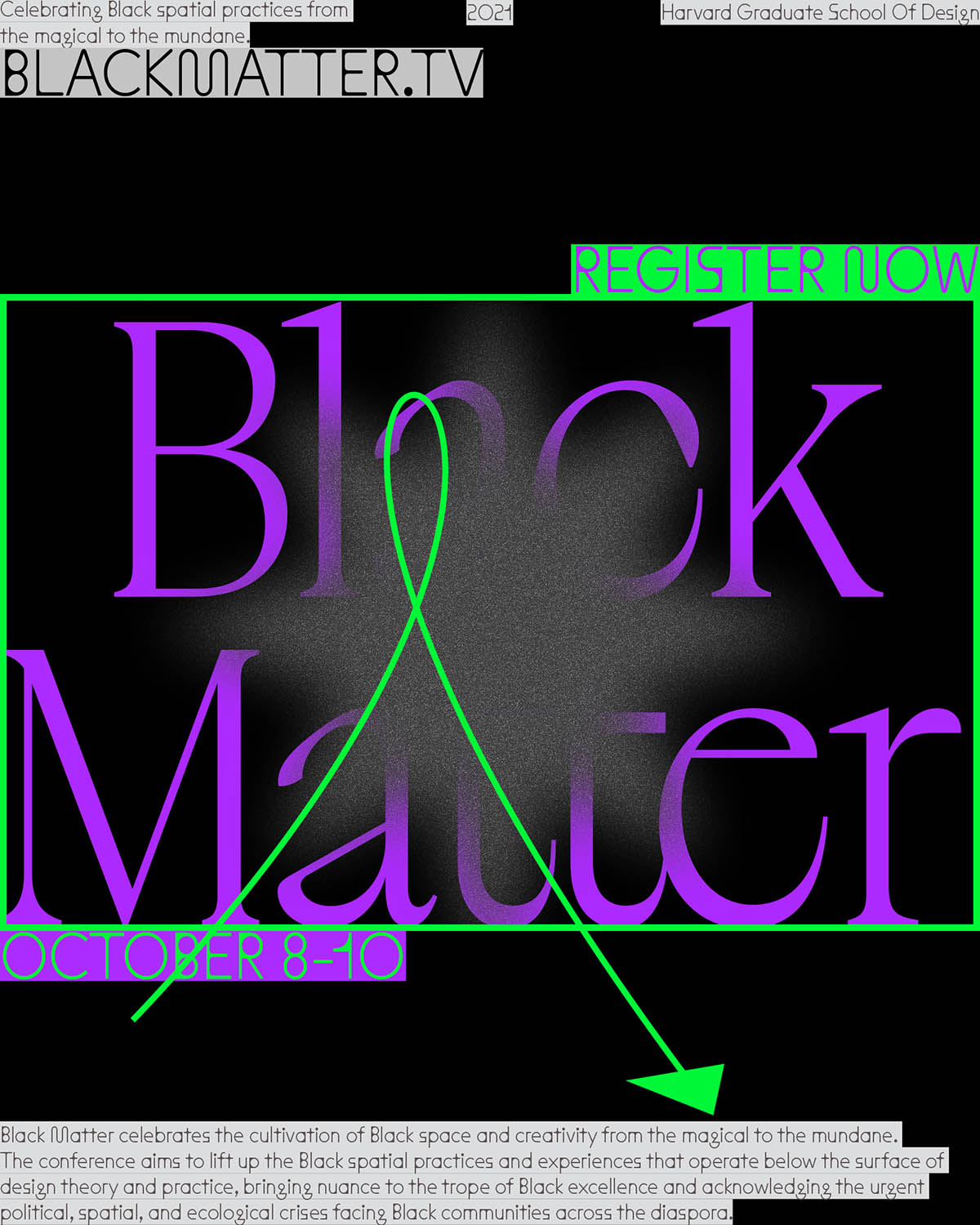
, recognizes the contributions of the African diaspora to the design fields and promotes discourse around the agency of the design professions to address and dismantle the institutional barriers faced by our communities. The fourth biannual conference, Black Matter
, will take place virtually on October 8-10, 2021.
Black Matter celebrates the cultivation of Black design and creativity from the magical to the mundane. The conference aims to lift up Black spatial practices and experiences that operate below the surface of design discourse, bringing nuance to the trope of Black excellence and acknowledging the urgent political, spatial, and ecological crises facing Black communities across the diaspora.
This year’s conference will host discussions, exhibitions, and performances at the intersections of technology, history, and design, with focus on encouraging new design practices. Black Matter offers a dynamic virtual environment where geographically distant participants are connected synchronously to share their ideas and creative work, forming a global constellation of Black consciousness. Learn more about this year’s conference at blackmatter.tv
.
Schedule
Friday, October 8, 2021
12 PM
Introduction by Caleb Negash and Tomi Laja
“Sacred Pause for the Cause” by Ashley Wilkerson
12:15 PM
Welcome remarks by Sarah Whiting, Dean and Josep Lluís Sert Professor of Architecture
12:20 – 1:20 PM
Keynote Address by Mpho Matsipa
6:30 – 8:30 PM
Virtual Beer ‘n Dogs with a DJ Set by Darien Carr
Saturday, October 9, 2021
9:00 – 10:00 AM
Movement and Breathwork with Andrea Yarbrough
10:00 – 11:00 AM
Panel Discussion 1: Everyday Portals to Black Cultural Pasts, Presents, and Futures
11:30 AM – 12:30 PM
Panel Discussion 2: Designing for Black Pleasure, Joy, and Intimacy
1:00 – 2:00 PM
The Nexus Podcast: Live (audio only)
2:00 – 2:30 PM
“Taking Up Space, Breath by Breath” by Ashley Wilkerson
3:00 – 4:00 PM
Workshop 1: Black Interior Spatial Thought with Ladi’Sasha Jones
6:00 – 8:00 PM
Virtual DJ Set by Tyler Kpakpo
Sunday, October 10, 2021
9:00 – 10:00 AM
Movement and Breathwork with Andrea Yarbrough
10:00 – 11:00 AM
Panel Discussion 3: Art, Media, and Black Urban Mobility
12:00 – 2:00 PM
Workshop 2: Dancing for the Internet with NIC Kay
12:00 – 1:00 PM
Workshop 3: The Funambulist Magazine x Black Quantum Futurism Collective
1:30 – 2:30 PM
Workshop 4: Black in Design Mentorship Initiative
Workshop 5: Design as Protest
2:45 PM
Closing Remarks by Caleb Negash and Tomi Laja
3:00 PM
“Guided Meditation For Continued Liberation” by Ashley Wilkerson
Friday, October 8
Keynote: Mpho Matsipa
Mpho Matsipa is a current Loeb Fellow at the GSD, and an educator, researcher and curator based at the School of Architecture and Planning at the University of the Witwatersrand in Johannesburg. She received her PhD in architecture from UC Berkeley. She is a researcher at the Wits Institute for Social and Economic Research and co-investigator on an Andrew Mellon research grant on Mobilities, Temporalities and African Political Futures, housed in the African Center for Society and Migration Studies.
Dr. Matsipa has written critical essays on art and architecture and curated several exhibitions and discursive platforms, including the South Africa Pavilion at the Venice Biennale in 2008, the African Mobilities 2.0 podcast series, and Studio-X Johannesburg. Her curatorial practice aims to support independent research practices across and beyond the African continent, and to democratize access by promoting discursive mobility among Black and African artists, scholars and designers.
Opening Breath
Ashley Wilkerson is a spirit-led actress, poet, trauma-informed meditation teacher, wellness practitioner, and consultant from Dallas, Texas. She currently resides in Los Angeles. She completed her Atma Yoga Training at Tree South LA and received her Mindfulness Training from Deer Park Monastery. Ashley has shared her expertise on various platforms such as All Def Digital, ATTN, and Facebook. She has presented at The California Wellness Foundation, Alliance For Safety & Justice, Revolve Impact, 72andSunny, Black Women For Wellness, Dallas Meditation Center, National Performance Network, etc. She is a principal member of Zeal Wellness and the founder of Brother Breathe, a mindfulness initiative designed for Black boys and men. Ashley has coordinated healing spaces and circles for hundreds of crime survivors and has helped bring more calm & positivity to various educational, corporate and creative sectors.
Saturday, October 9
Panel 1: Everyday Portals to Black Cultural Pasts, Presents, and Futures
Moderator Dorothy Berry currently serves as Digital Collections Program Manager at Harvard’s Houghton Library. She graduated from Indiana University with an MA from the Department of Folklore and Ethnomusicology and an MLS from the School of Informatics, Computing, and Engineering. In 2020-2021, she was honored with Library Journal’s “Movers and Shakers” Award, and the Society of American Archivists’ Mark A. Greene Emerging Leader Award. Her work has focused on the intersections of information science and African American history, ranging from newspaper database research on the earliest mentions of African American concert music performances, to inventory design for the cosmetic kit of Hollywood’s first Black woman makeup artist, to exhibit curation highlighting transatlantic art inspired by African American film. Archival materials open the door to history in visceral and unfettered ways; she is committed to a career of expanding access to those materials through creative and innovative ways focusing on digital and physical methodologies that unite stakeholder communities with their often displaced heritages.
Emanuel Admassu is a Founding Partner of AD—WO and an Assistant Professor at Columbia University GSAPP, where he teaches design studios and theory seminars in urban design and architecture. He has previously taught at RISD Architecture and Harvard GSD. Admassu’s teaching, research, and design practices examine the international constellation of Afrodiasporic spaces.
Felecia Davis is an Associate Professor at the Stuckeman Center for Design and Computation at Pennsylvania State University and director of SOFTLAB. Her work in communicating with computational textiles through architecture has been recognized for connecting art with science and was recently featured by PBS in the Women in Science Profiles series. Davis is currently working on a book that examines the role of computational materials in our lives titled Softbuilt: Networked Architectural Textiles. Davis was a contributor to The Museum of Modern Art’s group architecture exhibition “Reconstructions: Blackness and Architecture in America.” She is principal of FELECIADAVISTUDIO which has received several finalist awards for her architectural designs in open and invited architectural design competitions. She has exhibited and lectured about her work in textiles, computation, and architecture internationally, including at the Swedish School of Textiles, Microsoft Research, and the Media Lab at the MIT.
Panel 2: Designing for Black Pleasure, Joy, and Intimacy
Moderator Malcolm J. Rio is a graphic and architectural designer and thinker based in Providence, RI, where they work as an assistant professor of architecture at the Rhode Island School of Design. Rio is also currently a Ph.D. student in architecture history and theory at Columbia University, where they research on topics of sexuality, race, kinship, citizenship, urbanism, imperialism, and colonialism across the long-19th and 20th centuries. Rio holds a Master of Science in Architecture Studies from Massachusetts Institute of Technology, where they were recognized with the 2019 SMArchS Thesis Prize and the Arthur Rotch Special Prize for research on the urbanism of house-ballroom culture in New York City titled “Drag Hinge: ‘Reading’ the Scales between Architecture and Urbanism” (2019).
Additionally, Rio has earned a Master of Architecture from RISD, and both a Bachelor of Science in Philosophy and a Bachelor of Fine Art in Art + Design from Towson University. Rio’s scholarship, criticism and interviews have appeared in Thresholds, Avery Review, The New York Review of Architecture, ArchitectureMPS and Pidgin, as well as in forthcoming books like Living Room, a volume on sexuality, gender and architecture edited by Sophie Hochhäusl.
Ashon Crawley is an Associate Professor of Religious Studies and African American and African Studies at the University of Virginia. He is the author of Blackpentecostal Breath: The Aesthetics of Possibility, an investigation of aesthetics and performance as modes of collective, social imagination, as well as The Lonely Letters, an exploration of the interrelation of Blackness, mysticism, quantum mechanics and love. He is currently working on a third book, tentatively titled “Made Instrument,” about the role of the Hammond Organ in the institutional and historic Black Church, in Black sacred practice, and in Black social life more broadly. All his work is about otherwise possibility.
Adam R. is an audio/video technologist, DJ, and one of the co-founders of Papi Juice, a Brooklyn-based art collective that aims to affirm and celebrate the lives of queer and trans people of color. Adam’s music and digital art are inspired by his Caribbean and African-American heritage. His work reflects his interest in afro-futurism, afro-pessimism and the diaspora at large.
Leslie Wilson is an Assistant Professor of Art History and Museum Studies Program Liaison for Art History at Purchase College, State University of New York. Dr. Wilson’s teaching and research focuses on the global history of photography, modern and contemporary art from Africa and the African diaspora, American art post-1900, and museum studies. Her current project charts the development and popularization of color photography in South Africa, from its inception in the early twentieth century to contemporary practice. She has held curatorial internships at the Art Institute of Chicago, Contemporary Art Museum St. Louis and the St. Louis Art Museum. From 2015 to 2017, she was a 24-Month Chester Dale Predoctoral Fellow at the Center for Advanced Study in the Visual Arts at the National Gallery of Art in Washington, DC.
Aneesah Ettress is an arts professional and writer based in the Denver Metro Area. Moved by the intersections of art and religion, she seeks to center historically underrepresented narratives and the work of POC artists past and present. She recently completed the Master of Divinity program at The University of Chicago with a research interest in the prophetic imagination of contemporary Black artists. Through her curatorial practice, she hopes to communicate that art is at work to transform the soul.
Keynote: Lesley Lokko
Lesley Lokko is the founder and director of the African Futures Institute in Accra, Ghana, an independent postgraduate school of architecture and a public events platform. She was the founder and director of the Graduate School of Architecture, University of Johannesburg, from 2014 to 2019 and the Dean of Architecture at the Bernard & Anne Spitzer School of Architecture at the City College of New York from 2019 to 2020. She is the editor of White Papers, Black Marks: Race, Culture, Architecture and editor-in-chief of FOLIO: Journal of Contemporary African Architecture.
In 2004, Professor Lokko made the successful transition from academic to novelist with the publication of her first novel, Sundowners, and has since followed with twelve further bestsellers, which have been translated into fifteen languages. She is a founding member of the UN-Habitat Council on Urban Initiatives, a member of the 17th International Jury of the Venice Architecture Biennale, and a trustee of the London-based Architecture Foundation. Professor Lokko trained as an architect at the Bartlett School of Architecture and holds a PhD in Architecture from University of London.
Sunday, October 10
Panel 3: Art, Media, and Black Urban Mobility
Moderator Wandy Pascoal is an artist and architectural designer who is interested in the ways housing design and policy come together to shape global urban landscapes. This inquiry led to her current role as the Housing Innovation Design Fellow, a position co-hosted by the City of Boston’s Housing Innovation Lab and the Boston Society for Architecture. In this work she strives to center the many voices of Boston’s residents and their complex experiences in order to drive the design and implementation of the city’s current and future housing models. Wandy holds a BFA in Architecture from UMass Amherst and a Master of Architecture from MassArt where she focused on the urban and housing design of a self-sustaining eco-village in her home country of Angola. Previously, she worked as an architectural designer at Stull & Lee, Inc focused on affordable housing projects in the New England area. She has also worked with the Madison Park Development Corporation, where she first gained a deeper understanding of the complexities of local services and housing creation.
Jamila Moore Pewu, is a public and digital historian whose work explores how and why groups and individuals reimagine the spaces around them to create new urban futures. She is particularly interested in examining the concept of reimagining through the unique historical, geographic and methodological perspectives posed by African Diasporic and or Black Atlantic communities both past and present. As Assistant Professor of Digital Humanities and New Media in History at California State University, Fullerton, Dr. Moore Pewu leads the history department’s digital humanities initiatives. In addition, she teaches survey and upper division courses in U.S. History, African History, and Historical Research and Writing.
Michael Uwemedimo is a current Loeb Fellow at the GSD, cofounder and director of the Collaborative Media Advocacy Platform, and senior visiting research fellow at King’s College London. As a founding member of the filmmaking collaboration Vision Machine and a producer of the Academy Award-nominated, BAFTA-winning documentary, The Act of Killing, he has been developing innovative approaches to documentary practice as a means of enabling critical reflection on histories of political violence and challenges to official impunity. Michael is cofounder and project director of the Human City Project, a community-driven media, architecture, planning, and human rights initiative in Nigeria. There he explores design processes through which violently marginalized urban communities might gain a greater measure of control over their representation and the shaping of their cities. Michael has curated major programs at the National Film Theatre, Tate Modern, Architecture Association, and Institute for Contemporary Art, London; sat on international film festival juries; and presented his research and work internationally. Recent publications include, “A Cinema-séance of Power and Violence in Sumatra’s Plantation Belt,” in Killer Images: Documentary Film, Memory and the Performance of Violence (2012), and “Violence By Design,” in Dey Your Lane: Lagos Variations (2016).
Jordan Weber, current Loeb Fellow at the GSD, is a Des Moines-based regenerative land sculptor and environmental activist who works at the cross section of social justice and environmental racism. Most recently, Jordan was commissioned by the Walker Art Center to create an urban farm in North Minneapolis called Prototype for poetry vs. rhetoric (deep roots), which acts as a counter tactic to industrial violence upon biodiverse lands and racially diverse communities. The project was produced in collaboration with North Minneapolis community members during the height of the George Floyd protests in late May 2020. He is currently in residence at the Pulitzer Arts Foundation and Washington University’s Center for the Study of Race, Ethnicity, and Equity and Sam Fox School of Design and Visual Arts. Jordan’s two-year project residency centers on social and environmental justice, incarceration, and healing, with a specific focus on the Close the Workhouse campaign—a collaborative project that is dedicated to the closure of St. Louis’ Medium Security Institute, known locally as the Workhouse. Awards and fellowships include the Joan Mitchell Award for Sculptors, Creative Capital NYC Award, A Blade of Grass fellowship NYC, Tanne Foundation Award, and the African American Leadership Forum Award.
Passive Programming and Workshops
Workshop 1: Black Interior Spatial Thought with Ladi’Sasha Jones
Ladi’Sasha Jones is a writer and curator from Harlem, NY. She has written for Aperture, Avery Review, Arts.Black, Houston Center for Photography, Art X Lagos, Temporary Art Review, Art-Agenda, The Art Momentum, and Recess among others. Her project, Black Interior Space / Spatial Thought was commissioned by The Shed (NYC) as a part of Open Call 2021 and was the recipient of a 2021 Research and Development award from the Graham Foundation for Advanced Studies in the Fine Arts. Currently, Jones is the Artist Engagement Manager for The Laundromat Project. She held prior appointments at the Norton Museum of Art, the New Museum’s IdeasCity platform, and the Schomburg Center for Research in Black Culture. She holds a B.A. in African American Studies from Temple University and a M.A. in Arts Politics from NYU, Tisch School of the Arts.
Workshop 2: Dancing for the Internet with NIC Kay
NIC Kay (b. 1989 Bronx, NY) makes performances and organizes performative spaces. Their works have been performed nationally and internationally in spaces including Akademie der Künste, Berlin, Germany; Buddies in Bad Times Theatre, Toronto, Canada; Encuentro 19, Mexico City, Mexico; Institute of Contemporary Arts, London, United Kingdom; Portland Institute of Contemporary Art, Portland, OR; and University of Arts, Zürich, Switzerland. NIC was a Foundation for Contemporary Arts Grants to Artists Award (2020). They published their first book, Cotton Dreams, with Candor Arts in 2020. NIC is a Black queer trans non-binary person.
Workshop 3: The Funambulist Magazine x Black Quantum Futurism Collective
Caroline Honorien is a trained art historian, curator, and researcher. After graduating from Paris’ Ecole des Hautes Etudes en Sciences Sociales (EHESS), Caroline Honorien has mainly worked for editorial and curatorial projects in art institutions and collectives in France and the U.S. Her researches and writings revolve around arts in the African Diaspora, with a special focus on emerging contemporary art practices and strategies in France. Her current Ph.D. research focuses on the diasporic experience of futurity and utopia. She previously served as an editorial assistant at The Funambulist, where she now forms part of the Editorial Advisory Board.
Margarida Waco is an Angolan-born, European-raised, and Stockholm-based architect. With lived experiences from geographies spanning from Angola, D.R. Congo, Republic of the Congo, France, and Denmark, her work straddles research, publishing, design, and curating. She holds a master’s degree in architecture and is currently investigating the spatial toolboxes of Black liberation struggles in Southern Africa through her Ph.D. at the Graduate School of Architecture. In addition, she previously served as the head of strategic outreach of The Funambulist where she now forms part of the Editorial Advisory Board.
Workshop 4: Black in Design Mentorship Initiative
Rania Karamallah believes that design should be defined and inspired from and for the community. She grew up to embrace the lessons from her homeland of Nubia (modern day Sudan), where pyramids and architecture were built thousands of years ago and carried stories of human civilization and culture throughout this time. As she believes in the power of cultural representations in architecture, she also witnessed the effect of climate change in the built environment. Rania believes in design that represents the culture and portrays a human value into space, one that solves a problem and tells a story of the people. While working as an architectural designer at Perkins & Will, Rania is now also pursuing master’s degree in urban planning from the GSD. She hopes to widen her understanding of the built environment nationally and internationally and find her passion in the intersection of architecture, design, community and city planning.
Natalie Volcy is a student at Wentworth Institute of Technology and is majoring in Interior Design. She previously lived in Boston but now resides in Brookline with her two sisters. Her family has supported her in all she has undertaken and has encouraged a good work ethic and is always there to guide her in her life. Religion has been a strong foundation in her upbringing. Natalie loves to draw and paint, and enjoys poetry, and dance. She is passionate about residential and commercial design. She wants people to be comfortable in their space and “not feel embarrassed about how they live.” Natalie would like people who have experienced hardships to have a fresh start in life. This includes ensuring that people who have housing insecurity have functional spaces with the necessities required for their life. She would love to travel to other countries to not only learn about different design styles but to also ensure that when working with diverse people she has the tools to design their space according to their country’s culture, style and architecture. In 2021, Natalie participated in the Black in Design Mentorship Program and later in the GSD’s Design Discovery Virtual program.
Olivia Fox is a senior at Brookline High School, and grew up in Roxbury. She has the support of her mom, her teachers, and her new mentors acquired from the Black in Design Program. Olivia enjoys after school cheer and she loves to listen to and play music, specifically guitar because she has been playing since she was six. She also enjoys taking care of her 13 plants. What she likes about design is the ability to do it “anywhere and at any time; it’s so easy to make it your own, you can design a space, a shoe, a guitar, the list goes on and on.” Oliva participated in the inaugural launch of the Black in Design Mentorship Program, which provided her with the opportunity to join the GSD’s Design Discovery Virtual program, where she continued to meet so many great people. Through these opportunities, Olivia learned more about design and what it can be and how to look at art and architecture through different perspectives.
Erika Eitland is the Director of the Human Experience (Hx) Lab at Perkins&Will where she is focused on the public health impact of K-12 schools, affordable housing and urban resilience. She received her doctorate from the Harvard T.H. Chan School of Public Health in Environmental Health where she was the lead author of ‘Schools for Health: Foundations for Student Success’ report that examined more than 250 scientific articles on the association between building quality and student health and performance. She has presented her research internationally at the World Bank, U.S. Environmental Protection Agency, U.S. Health Resources and Services Administration, American Society of Interior Design and U.S. Green Building Council. She also holds a Masters of Public Health in Climate and Health from Columbia University.
Wanjiku Ngare is a Master of Urban Planning candidate at Harvard University’s Graduate School of Design. She is broadly interested in how planning and design can be in deeper dialogue with public imagination as we build a more just world. She sees spatial and policy interventions that center the voices and needs of marginalized communities as critical levers for increasing equity. Wanjiku has a Bachelor of Science in foreign service from Georgetown University. Post-college, her professional experiences spanned from expanding renewable energy in response to the climate crisis through project finance; to reducing key barriers for smallholder farmers in East African countries through feasibility studies and funding strategies. In her spare time, she has taken her passion for art and storytelling into building a social impact campaign for a recently premiered feature-length documentary film, Dreams of Daraa. She is also a member of the Black in Design 2021 conference organizing committee.
David Carter is an alumnus of Baltimore School for the Arts and Morgan State University, and has recently joined Hive Design Collaborative as an Architectural Designer in Kansas City, Missouri. David graduated with his bachelor’s degree in 2019 and relocated to the Midwest to pursue his first architecture opportunity at a firm in Springfield, Missouri. He gained 2 years of experience in project management for retail developments, which enhanced his ability to conduct different projects. As a new member of Hive, David is striving to help cultivate new designs by integrating his aesthetic vision into future project developments.
Workshop 5: Design as Protest
Kiki Cooper earned a B.A. in Landscape Architecture from The Pennsylvania State University and currently is studying at the Harvard Graduate School of Design for concurrent Master’s degrees in Landscape Architecture in Urban Design and Design Studies. Kiki is an active member of the ASLA Emerging Professionals Committee and is a Design as Protest Core Organizer. During their undergrad and after entering the profession, they developed a myriad of passions that shaped their core design principles rooted in food security, equitable design, community building, and design justice.
Deena Darby received her Bachelor of Architecture from Syracuse University and is an emerging professional pursuing licensure in New York. Originally from Savannah, GA, she attended a performing arts high school where her specialized focus was in contemporary and classical ballet. Initially sparked by her background in dance, her passions in architecture lie in the design of socially just and environmentally responsive cultural, civic, and public spaces, believing these spaces are the ones that have the most diverse user group and thus have the potential to have the greatest impact on those who occupy and experience them. She has been a Core Organizer with Design as Protest since June of 2020 focused on design justice through Direct Action. She has served as a guest reviewer at Ryerson University and the Urban Assembly School of Design and Construction. In 2020 she was one of 16 emerging professionals selected for the AIA TORCH Mentorship Program and is an active member of nycobaNOMA and Design Advocates. She currently works at Studio Fōr and resides in Brooklyn, NY.
Sophie Weston Chien is a designer-organizer. She focuses on solving complex social-spatial issues by building communities and spaces to promote social and ecological justice. Sophie is pursuing a Masters in Landscape Architecture at the GSD as a Dean’s Merit Scholar and is one-half of the collaboration Just Practice. She is a core member of the Design As Protest Collective, and on the Board of Directors at DESIGNXRI. She has a BFA/Bachelor of Architecture from Rhode Island School of Design with a minor in Politics and Policy and served as Student Body President, AIA Diversity Advancement Scholar, and Maharam Fellow. Sophie has worked for National Park Service in Nome, Agency Landscape + Planning in Cambridge, Oualalou + Choi in Paris, LA-Màs in Los Angeles, Biden/Harris Campaign in Charlotte, and recently served as a Teaching Fellow at RISD Architecture.
Ebony Dumas is an Urban and Regional Planner highly skilled at building consensus among multiple stakeholders for local and national projects in economic development, creative placemaking, and neighborhood planning. Interested in creative and public spaces as they contribute to economic development, Ebony has also developed presentations on equitable solutions and community building for conferences, university groups, and national cultural institutions. Ebony is an Associate Planner in Arlington County, Virginia’s Comprehensive Planning team, an Association for Community Design board member, and a DJ (aka DJ Natty Boom) who spins music that ranges from Tropical Bass, International Pop, House and Hip-Hop. She has also played at diverse venues such as The JFK Center for the Performing Arts, DC’s 9:30 Club and across the Mid-Atlantic Region, New Orleans, and Lima, Peru.
Taylor Holloway is a designer, architect, and educator who uses design-driven approaches to promote equity in the built environment. As a biracial woman, first generation college graduate, and individual who has experienced the U.S. foster care system, issues of creative voice, belonging, and healing are personal to her. Her work is focused on developing new and radical uses of public space, advancing collective capacities for social impact, and championing the preservation of shared cultural legacies. With a unique ability to see and capture different perspectives, Taylor is adept at identifying assets and utilizing resources in order to facilitate the creation of people- and community-centered design solutions. Taylor holds a Bachelor of Arts from Wellesley College, a Master of Architecture from the University of Illinois, and is honored to be a 2020 NextCity Vanguard, a 2019 Association for Community Design Fellow, an AIA Jason Pettigrew Memorial ARE Scholar, and the 2013 AIA Chicago Martin Roche Travel Fellow. Her organization, Public Design Agency, utilizes design-thinking, public art, and architecture to train future generations of designers, builders, & change-makers.
Conference Chairs
Caleb Negash, cochair of Black in Design 2021, is an MArch I candidate at the GSD. He has worked for the African American Design Nexus
as a writer, researcher, and cohost of the podcast The Nexus
, exploring the intersections of design, identity, and practice through interviews with Black artists, designers, writers, and educators. Before attending the GSD, he taught architecture studios at Ngee Ann Polytechnic, Singapore, and received a BA in Architecture from Princeton University. His research interests include uncovering and narrating Black spatial practices that have been disenfranchised, discredited, or ignored within architectural and urban history.
Tomi Laja, cochair of Black in Design 2021, is an MArch II candidate at the GSD and holds a BArch degree from Iowa State University. Currently, she is an editorial assistant at Harvard Design Magazine and a program assistant at the Graham Foundation for Advanced Studies in the Fine Arts. Before attending the GSD, her previous experiences include contributing to The Funambulist by Its Readers: Political Geographies from Chicago and Elsewhere and the Making Futures Bauhaus+ Mobile Workshop with Raumlabor for the 2019 Chicago Architecture Biennial, as well as assistant editing The Funambulist Magazine: Politics of Space and Bodies in Paris and Scapegoat: Architecture, Landscape, and Political Economy in Berlin. With professional interests in research-based architectural and exhibition design and writing, her research includes Afrofuturist and ecofeminist perspectives as they relate to agency, consciousness, and the built environment.
Michael Twitty, “Beyond ‘Slave Food’: Re-Organizing the Perceptions and Potential of African American Foodways”
Michael Twitty, “Beyond ‘Slave Food’: Re-Organizing the Perceptions and Potential of African American Foodways”
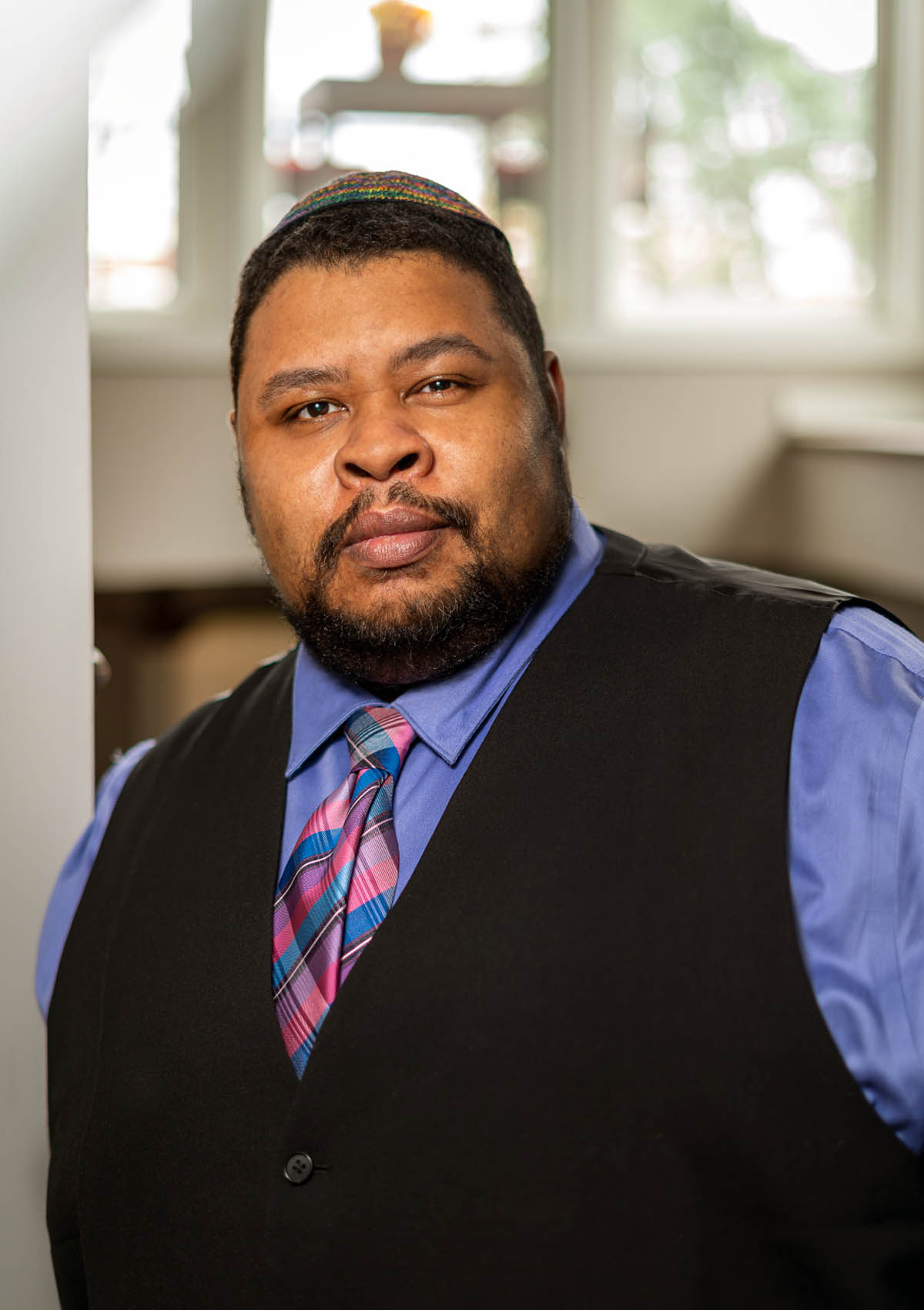
| Registration Information |
|---|
| The GSD’s Fall 2021 Public Programs are all virtual and require registration.
Click here to register for this event. Live captioning will be provided during this event.
|
Event Description
Join culinary historian Michael W. Twitty, author of the James Beard-winning book, The Cooking Gene, for a presentation and dialogue about the impact of the collective perceptions of African American foodways on how we experience a broader vision of healing. Often stigmatized as a continuation of socio-cultural trauma or defended with a mark of “authentic” racial identity, Mr. Twitty will help us explore alternative ways to see how the revitalization of ancestral foodways and culinary justice is a necessary part of our collective national experience.
Twitty’s lecture is the opening Keynote Address of the conference Landscapes of Slavery, Landscapes of Freedom: The African Diaspora and the American Built Environment taking place from November 5-7, 2021.
Speaker
Michael W. Twitty is a living history interpreter, culinary historian, and food writer personally charged with teaching, documenting, and preserving the African American culinary traditions of the historic South and its connections with the wider African Atlantic world as well as parent traditions in Africa. He blogs at Afroculinaria.com . He’s appeared on Bizarre Foods America with Andrew Zimmern, Many Rivers to Cross with Henry Louis Gates, and most recently Taste the Nation with Top Chef‘s Padma Lakshmi and a special guest appearance in Michelle Obama’s Waffles and Mochi show on Netflix. HarperCollins released Twitty’s The Cooking Gene , in 2017, tracing his ancestry through food from West and Central Africa to America and from slavery to freedom. The Cooking Gene won the 2018 James Beard Award for best writing as well as the book of the year, making him the first Black author so awarded. His piece on visiting Ghana in Bon Appetit was included in Best Food Writing in 2019 and was nominated for a 2019 James Beard Award. Twitty’s next book, Rice with UNC press is currently fresh off the presses. Koshersoul, about his culinary journey as a Jew of African descent, will be out in 2022 through HarperCollins. He was most recently named a National Geographic Explorer in 2021.
Resilience Untangled: Challenges and Opportunities in Latin America
Resilience Untangled: Challenges and Opportunities in Latin America
Event Description
Given that resilience has emerged globally as a guiding principle for development, understanding the implications of its transformative capacity becomes imperative. Engaging critically with the concept of resilience calls for the acknowledgement of its several forms, both positive and negative, across urban systems and depending on its interpretation and scope.
This conference seeks to advance the conversation on the significance and practice of resilience by sharing perspectives from academics, practitioners, students, and communities of diverse backgrounds and disciplines in Latin America and the Caribbean.
Resilience Untangled is a collaborative event jointly led by LatinX organizations at Harvard GSD, MIT DUSP, Columbia GSAPP, and UPenn Weitzman School
Conference Sessions
Session 1- Intro Panel: On the scope of resilience in LAC: 12:00 (noon) EST UPenn
Professors from all 4 institutions share their views on the features and limitations of the concept of Resilience in the regional context of Latin America and the Caribbean
Diane Davis (GSD) – Larry Vale (MIT) – Eugene Birch (UPenn) – Kate Orff (CU)
Moderated by Nora Libertun de Duren
Session 2 – Student Work and Research on resilience: 1pm EST
Students across planning and design schools present their current work and research related to all the forms resilience might take in Latin America and the Caribbean
Michelle Mueller Gámez (MIT) – Andreina Seijas (Harvard GSD) – Oscar Mayorga – (Columbia GSAPP) – Natalia Revelo – (UPenn) – Dení Lopez (MIT) – Kenismael Santiago-Pagán (Harvard GSD) – Hilary Morales (UPenn) – Alice Fang & Luis Miguel Pizano (Columbia GSAPP)
Session 3 – Resilient Communities: 2pm EST
Two community-based projects in South America elevate the conversation on strategic actions for tangible, transformative change and embracing resilience in adversity
Ama Amancaes (Peru) – Fundación Espacio (Venezuela)
Session 4 – Resilience in Practice: 3pm EST
Professionals from across the region share their experiences and how the concept of resilience shapes their daily practices across multiple scales.
Anna Dietzch – Rafael Viñoly – Natalia Mosquera – Oficina de Resiliencia Urbana
How to Join
Click here to register for this event . If you have any questions about this event, please contact [email protected].
Design Impact Series: Regeneration: Design Strategies for a New Future
Design Impact Series: Regeneration: Design Strategies for a New Future

This is the fourth installment in a broader series of virtual symposia being organized by the Harvard Graduate School of Design Alumni Council. The first three events, Transformations at the Intersection of Equity, Climate Change, and Health, Homelessness: Ethics/Policy/Action, and South Asia – Design Agency & Climate Change have attracted thousands of attendees from across the globe.
Design Impact Vol. 4: Regeneration: Design Strategies for a Resilient Future, examines alternative philosophies, initiatives and design practices within the framework of Regeneration, for a more holistic approach to ensuring a sustainable future.
The panel will explore the potential for regenerative practices to shift our cultural, economic, social and ecological drivers for new whole systems design. Regionally driven and specific to the geological, climactic, historical and cultural traditions of place, regenerative initiatives advocate low-impact, healing and high quality lifestyles, integrating modern clean and renewable technologies with indigenous wisdom. They emphasize community building, inclusiveness, and foster a relational perspective with ecosystems that is inspired by a reverence for the wisdom inherent in nature. The event is organized into two panels. The first, “Regeneration: A Paradigm Shift,” will introduce the concept of Regenerative Thinking. The second, “Regenerative Design: Systems, Technologies and Strategies” will present diverse tools for practice. Both panels will be followed by a moderated discussion and an audience question and answer session.
Event Organizers
- Ana Pinto Da Silva MDes ’05, Design Impact Chair, Designer Leader, technologist and Community Servant, based in Seattle, WA
- Jaya Kader MArch ’88, Event Curator, Architect, Sustainable Design, based in Miami, FL and Costa Rica
- Julia Smachylo DDes ’21, Moderator, Urban Planner and Designer, based in Providence RI
- Adriana Pablos MDes ’21, Moderator, Architect and Urbanist, based in Cambridge and Madrid
- Cadence Bayley MAUD ’21, Architect and Urban Designer, based in Somerville, MA
- Naksha Satish MAUD ’22, MArch ’22, Architect and Urban Practitioner, based in Balgalore, India
- Lindsey Grant LaGrasse, Assistant Director of Events and Special Projects, GSD
Session 1: Regeneration: A Paradigm Shift / 10:15 – 11:30 AM EDT
This panel will outline regenerative thinking as supported by indigenous science, present an overview of regenerative economics, and explore case studies for applying these systems-based approaches to design.

Introduction by David Moreno Mateos, Restoration Ecologist, Assistant Professor of Landscape Architecture, Harvard GSD. Moderated by Julia Smachylo DDes ’21, Urban Planner and Designer.
Panelists
- Tiokasin Ghosthorse, Indigenous Peace Activist and guest faculty member at Yale University’s School of Divinity, Ecology and Forestry
- Carol Sanford, Senior Fellow of Social Innovation, Babson College; CEO, The Regenerative Paradigm Institute
- Bill Reed, AIA LEED, Principal of Regenesis, founder of IDC
Session 2: Regenerative Design: Systems, Technologies and Strategies / 11:30 AM – 12:55 PM EDT
This panel brings together different practitioners who will share tools and applications of regenerative design, including: planning, preservation, biomimicry, indigenous activism, regenerative agriculture, and permaculture.
Moderated by Adriana Pablos MDes ’21, Architect and Urbanist.
Panelists
- Walter Meyer MLAUD ’03, Landscape Architect and Urban Designer, Educator, and Community Organizer
- Atossa Soltani, Indigenous Activist and Board President of Amazon Watch
- Tom Newmark, Founding Member of the Leadership Council of the Center for Regenerative Agriculture and Resilient
- Victoria Kindred Keziah, Biomimicry Specialist and General Manager for Client Engagement at Biomimicry 3.8
- Eva Leung MArch ’12, Architect, co-founder and CEO of non-profit Terra Cura Inc.