Adam Tanaka
Adam Tanaka is an urban planner and educator. His research, teaching and professional practice focus on the challenges and opportunities of public-private real estate development, with a particular emphasis on affordable housing in U.S. cities.
Adam is a Senior Analyst at HR&A Advisors, an industry leader in economic development, real estate and urban policy consulting. Adam’s work at HR&A has included negotiation support, financial analysis, economic and fiscal impact analysis, organizational design and economic development strategy on behalf of public and private clients, including the Battery Park City Authority, the New York City Economic Development Corporation, the Urban Redevelopment Authority of Pittsburgh and Sidewalk Labs.
Prior to joining HR&A, Adam received his Ph.D. in urban planning from Harvard University, where his research focused on the history of large-scale, middle-income housing in New York City. Adam’s doctoral work was supported by the Joint Center for Housing Studies, the Radcliffe Institute for Advanced Study and the Harvard Horizons scholarship program. While at Harvard, Adam served as a teaching fellow for courses ranging from planning theory to real estate finance and helped launch an urban innovation summer program in partnership with the City of Paris. In 2014, he received a Certificate of Distinction in Teaching for his work on the undergraduate course “Designing the American City.”
Over the course of his doctoral studies, Adam also worked for the New York City Department of City Planning and the New York City Housing Development Corporation, analyzing the City’s Transferable Development Rights programs and contributing to the underwriting of affordable housing preservation deals. He also served as a student organizer of the Boston Affordable Housing Development Competition, an annual program pairing graduate students with non-profit housing developers in the Boston area.
Adam’s writing, filmmaking, and civic art projects have been published by the Boston Globe, CityLab, Crain’s New York, the Journal of Urban History, Slate and the Van Alen Institute, among others. Originally from London, England, Adam is a Fellow of the Urban Design Forum and currently serves on the Program Committee for Open House New York, a non-profit organization that promotes public access to off-limits urban spaces.
Lectures
Private Projects, Public Ambitions: Large-Scale, Middle-Income Housing in New York City
Harvard Horizons, May 2018
Essays
Historians for Housing: Excavating the Past to Advocate for the Future
Journal of Urban History, July 2019
Co-op City: How New York Made Large-Scale Affordable Housing Work
CityLab, January 2019
Yes, There Is Room to Build More Housing in New York City (with Mathias Altwicker and Nicholas Bloom)
Crain’s New York, September 2017
Reviving the Large-Scale Approach: A Manifesto for New York City (with a response by Carl Weisbrod)
Harvard Real Estate Review, May 2017
Fiduciary Landlords: Life Insurers and Large-Scale Housing in Postwar New York City
Working Paper, Harvard Joint Center for Housing Studies, April 2017
Neighborhood Change and the Right to the City
Metropolitics, March 2016
Lily Song
Dr. Lily Song is a Lecturer in Urban Planning and Design and Senior Research Associate with the Transforming Urban Transport-Role of Political Leadership (TUT-POL) project at the Harvard University Graduate School of Design (GSD).
Her research focuses on the relations between urban infrastructure and redevelopment initiatives, sociospatial inequality, and race, class, and gender politics in American cities and other postcolonial contexts. It takes what are often depoliticized, technically-formulated infrastructural issues such as urban transport, food markets and distribution systems, and building energy efficiency, and foregrounds social, political, and economic factors that fundamentally shape their planning and governance. Her work seeks to reveal dominant ideologies and logics of infrastructural development, formal and informal structures of decision making, and racialized, classed, and gendered dimensions of provision, access, and contestation. It further explores infrastructure-based mobilizations and experiments that center the experiences and insights of historically marginalized groups as bases for more inclusive and democratic planning, development, and value creation.
As part of the Transforming Urban Transport-Role of Political Leadership research team at the Harvard GSD, Dr. Song has investigated how and why transport investments that are intended to enhance public transit and non-motorized transport may be intensifying inequities of urban mobility and access in many cities. This entails assessing equity trade-offs in distributive and processual terms as well as interrogating the relationship between transport policies and urban redevelopment projects. It also includes exploring how public transit goals might be better integrated with alternative urban land use, housing, and economic development templates. One line of research on gender and mobility further investigates the challenges and opportunities of decarbonizing urban transport from the perspectives of women, girls, and femme-identified people in rapidly urbanizing contexts of Southeast Asia and sub-Saharan Africa.
From 2013-2015, Lily Song was a Provost Fellow with University College London’s Department of Science, Technology, Engineering, and Public Policy, where her research investigated efforts by local Indonesian governments to engage forms of urban informality in building resilient food distribution systems and decarbonizing urban transport in the wake of the Asian Financial crisis and politico-institutional decentralization. In particular, she closely studied how policies could incorporate the needs, knowledge, and practices of informal vendors and operators with “formal” planning apparatuses to enable more diffuse and responsive diagnostic and troubleshooting capacities at the local and regional scale as well as more democratic claims to urban space.
She holds a PhD (2012) in Urban and Regional Planning from MIT, where her dissertation, entitled “Race and Place: Green Collar Jobs and the Movement for Economic Democracy in Los Angeles and Cleveland,” focused on the analysis of two community-based green economic and workforce development projects aiming to build shared wealth and stabilize poor, inner city neighborhoods in the wake of the subprime mortgage and global financial crisis. Building on the history of racial stratification and environmental injustice at the heart of historic urban formations in each city-region along with then present efforts by city leadership to institutionalize urban sustainability, the research explored how the respective progressive urban coalitions put green-collar jobs, racial inclusion, and economic transformation at the center of their efforts.
Prior to entering the planning field, Lily was a community organizer with the Asian American Drug Abuse Program (AADAP) in South Los Angeles. There she helped mount community mobilizations against environmental injustices (i.e. under-access to green open spaces, recreational resources, and culturally-responsive health services, and overexposure to liquor stores and drug criminalization) through youth leadership development and cross-racial coalition building. She is a proud LA daughter and alumna of California public schools.
Peter Rowe
On leave for Spring 2026
Peter Rowe is the Raymond Garbe Professor of Architecture and Urban Design and Harvard University Distinguished Service Professor. Rowe served as Dean of the Harvard University Graduate School of Design from 1992 to 2004, Chairman of the Urban Planning and Design Department from 1988 until 1992, and Director of the Urban Design Programs from 1985 until 1990. Prior to Harvard, Rowe served as the Director of the School of Architecture at Rice University from 1981 to 1985 and also directed many multi-disciplinary research projects through the Rice Center, where he was Vice President from 1978 onwards, and at the Southwest Center for Urban Research.
Rowe’s research and consulting are extensive, diverse, and international in scope, including subjects dealing with matters of cultural interpretation and design, as well as the relationship of urban form to issues of economic development, historic conservation, housing provision and resource sustainability. He has served as a principal investigator on projects sponsored by a wide range of U.S. government agencies, and has served as an advisor to a number of cities on matters of urban design and planning including Beijing, Guiyang, Guangzhou, Kunming, Shanghai, Suzhou, Wuhan and Wenzhou in China; Incheon in South Korea and Barcelona in Spain. He was also a board member of several prominent cultural and academic institutions, like the Center for Canadian Architecture and the Cities Programme of the London School of Economics, as well as on the board of several companies involved in low-cost housing provision and the use of environmentally sustainable technologies.
A recognized critic and lecturer in the field of architecture and urban design, in addition to numerous articles, Rowe is the author, co-author, or editor of thirty-one books: Principles for Local Environmental Management (1978); Urban Watershed Management: Flooding and Water Quality (1979); Design Thinking (1987); Making a Middle Landscape (1991); Modernity and Housing (1993); Civic Realism (1997); Projecting Beirut (1998); L’Asia e il Moderno (1999); Modern Urban Housing in China: 1840-2000 (2001); Architectural Encounters with Essence and Form in Modern China (2002) Shanghai: Architecture and Urbanism for Modern China (2004); East-Asia Modern: Shaping the Contemporary City (2005); Building Barcelona: The Second Renaixença (2006); A City and Its Stream: The Cheonggyecheon Restoration Project (2010); Emergent Architectural Territories in East Asian Cities (2011); Methodological Notes on the Spatial Analysis of Urban Formation (2013); Urban Intensities Contemporary Housing Types and Territories (2014); Clear Light: The Architecture of Lauretta Vinciarelli (2014); China’s Urban Communities: Concepts, Contexts and Well-Being (2016); The Mumbai Metropolitan Region and Palava City (2017); Design Thinking in the Digital Age (2017); When Urbanization Comes to Ground (2019); A City in Blue and Green: The Singapore Story (2019), Urban Blocks and Grids: A Brief History, Technical Features and Outcomes (2019); Rio Ciudad, Monterrey: Space Production, Ecology and Culture (2019); Korean Modern: The Matter of Identity (2021); An Early Modern View: Cartography and Qianlong’s Plan of Beijing (2021); Chinese Modern: Episodes Backwards and Forwards in Time (2022); Southeast Asian Modern: From Roots to Contemporary Turns (2022); Design Thinking and Storytelling in Architecture (2024); The Metabolism of Settlement Coexistences (2024); and Space, Time and Circumstances (2026).
Megan Panzano
Megan Panzano is Program Director of the Harvard Undergraduate Architecture Studies Track and Lecturer in Architecture at Harvard’s Graduate School of Design (GSD) where she coordinates and teaches design studios and representation courses in the graduate and undergraduate programs.
The design research and built work of her independent practice, studioPM, addresses architectures across a range of scales that are progressive through their interplay of images, objects, and space in the production of more inclusive, open-ended forms of subjectivity.
Panzano has taught architecture studio, concurrent with practice, for the past ten years. She is the recipient of a variety of awards for her architectural and pedagogical work including a ‘Best Parks’ honor for her design of a perceptual playground for unscripted play built on the roof of a preschool, a solo exhibition of her project ‘Architectural Artifacts’ at Boston’s pinkcomma gallery, a HILT Spark grant supporting new forms of learning through making, a pair of Harvard GSD Dean’s Junior Faculty Grants for original design research projects, and four sequential Harvard Excellence in Teaching awards. Her design work has been published in Mark Magazine, Wallpaper, Bauwelt, Architect, PLAT, Arch Daily, Domus, the Boston Globe, the Harvard Gazette, and Harvard Design Magazine and has been exhibited in numerous domestic and international academies and galleries.
As GSD faculty, Panzano has authored original core studio briefs and design courses within both the graduate and undergraduate programs. In 2018, she advised MArch II GSD Thesis Prize winner, Scarlet Ziwei Song, for her project, “Not so skin deep: vernacularism in XL.” In the spring of 2020, Megan’s original Core IV housing studio brief, “Collected Company,” supported the winning project of the Harvard 2020 Clifford Wong Prize in Housing Design, “A House is Not a Home,” by Qin Ye Chen (MArch I 2022) and Yiwen Wang (MArch I AP 2022). She has also served as an invited design critic at UCLA, USC, Columbia, Cornell, University of Pennsylvania, Yale, Rensselaer Polytechnic Institute, Wesleyan, Temple University, RISD, Northeastern University, Wellesley, Boston Architectural College, and MIT.
Prior to joining the GSD, Panzano taught studio at Northeastern University. She has practiced in Boston as a Senior Designer and Project Manager at Utile, Inc. and in Philadelphia at Venturi, Scott Brown + Associates, where she worked closely with both Denise Scott Brown and Robert Venturi. She holds a B.A. in Architecture with honors from Yale University and a Master of Architecture with distinction from the GSD, where she was the recipient of the John E. Thayer Award for outstanding academic achievement and the 2010 winner of the GSD’s James Templeton Kelley Thesis Prize for her thesis design of a new architectural type that explored the home as an inhabitable archive – an integral site of object collection and collective living.
Panzano is the mother of two boisterous boys, whose energies she and her husband, Vince, direct as often as possible to involved, collaborative renovation projects of their 1929 home in Arlington, MA, just west of Cambridge.
Farshid Moussavi
Farshid Moussavi is Professor in Practice in the Department of Architecture, Harvard University Graduate School of Design and principal of Farshid Moussavi Architecture (FMA). Moussavi’s approach is characterised by an openness to change and a commitment to the intellectual and cultural life of architecture. Alongside leading an award-winning architectural practice, she lectures regularly at arts institutions and schools of architecture worldwide and is a published author. Moussavi was appointed Officer of the Order of the British Empire (OBE) in the 2018 Queen’s Birthday Honours for services to architecture. She was elected a Royal Academician in 2015 and Professor of Architecture at the RA Schools in 2017.
Moussavi trained at Harvard GSD, the Bartlett School of Architecture University College London and Dundee University. Recognized as an outstanding and committed teacher, she has been a visiting professor at UCLA, Columbia, Princeton, and at several architecture schools in Europe; she was also the Kenzo Tange Visiting Design Critic at the GSD in Spring 2005. She taught for eight years at the Architectural Association in London and was the head of the Institute of Architecture at the Academy of Fine Arts in Vienna, where she taught from 2002 until 2005.
At FMA, Moussavi’s completed projects include the acclaimed Museum of Contemporary Art in Cleveland, USA; La Folie Divine, a residential complex in Montpellier; a multi-tenure residential complex in the La Défense district of Paris, flagship stores for Victoria Beckham in London and Hong Kong, and the Toys Department for Harrods in London. Her current projects include the Ismaili Center Houston and a primary school in Paris. Previously Moussavi was co-founder of the internationally renowned London-based Foreign Office Architects (FOA) where she co-authored many award-winning international projects including the Yokohama International Cruise Terminal and the Spanish Pavilion at the Aichi International Expo, London’s Ravensbourne College of Media and Communication and the Leicester John Lewis Department Store and Cineplex. Prior to setting up FOA, Moussavi worked with the Renzo Piano Building Workshop in Genoa and the Office for Metropolitan Architecture in Rotterdam.
A prolific writer and public speaker, Moussavi is a leading figure in contemporary architectural dialogue. Author of four books, her most recent Architecture and Micropolitics, Four Buildings 2011-2022, Farshid Moussavi Architecture (Park Books, 2022) sets out her vision for architecture as a form practice that is responsive rather than deterministic. Moussavi has pursued teaching in parallel to practice for more than 30 years, seeing it as the opportunity for developing new thinking on subjects including the design of social housing and approaches to adaptive reuse.
Moussavi has served on key design and architectural advisory panels and international design juries including for the British Council, the Mayor of London’s “Design for London” advisory group, the London Development Agency, the RIBA Gold and Presidential Medals and the Stirling Prize for Architecture.
Moussavi is deeply committed to art and culture. She has previously served as a trustee of the Whitechapel Gallery in London and the London Architecture Foundation, and a member of the Steering Committee of the Aga Khan Award for Architecture. Currently, she is a trustee of the Norman Foster Foundation London and New Architecture Writers (NAW) which focuses on black and minority ethnic emerging writers who are under-represented across design journalism and curation.
In Moussavi’s latest book, Architecture & Micropolitics , she seeks to dispel two widely held misconceptions: first, that architects are no longer central to the making of buildings and, second, that design is a linear process which begins with a fully formed architectural vision. Moussavi argues that the temporality of architecture provides day-to-day practice with the potential to generate change. She proposes that we abandon determinism and embrace chance events and the subjective factors that influence practice in order to ground buildings in the micropolitics of everyday life.
Rahul Mehrotra
Rahul Mehrotra is the founder principal of RMA Architects . He divides his time between working in Mumbai and Boston and teaching at the Graduate School of Design at Harvard University where he is Professor of Urban Design and Planning and the John T. Dunlop Professor in Housing and Urbanization.
His Mumbai-based firm, RMA Architects, was founded in 1990 and has designed and executed projects including government and private institutions, corporate workplaces, private homes, and unsolicited projects driven by the firm’s commitment to advocacy in the city of Mumbai. The firm has designed a software campus for Hewlett Packard in Bangalore, a campus for Magic Bus (an NGO that works with poor children), led the restoration of the Chowmahalla Palace in Hyderabad, and formulated a conservation master plan for the Taj Mahal with the Taj Mahal Conservation Collaborative. The firm also recently designed and built a social housing project for 100 elephants and their caretakers in Jaipur as well as a corporate office in Hyderabad. The firm has designed several single-family houses in different parts of India and one in Karachi, Pakistan. In 2015 RMA Architects completed the Lab of the Future on the Novartis Campus in Basel, Switzerland and were finalist in an international design competition for the Museum of Modern Art in Sydney. The recent projects of the firm include a Library for the School of Architecture at CEPT , the Faculty of Arts and Sciences at Ahmedabad University and a School of Public Policy at the IIM Ahmedabad. In 2018 RMA Architects were awarded the Venice Biennale juror’s ‘Special Mention ’ for ‘three projects that address issues of Intimacy and empathy, gently diffusing social boundaries and hierarchies’.
Mehrotra has written and lectured extensively on issues to do with architecture, conservation, and urban planning and design in Mumbai and India. His writings include coauthoring Bombay: The Cities Within, which covers the city’s urban history from the 1600s to 1990; Banganga: Sacred Tank; Public Places Bombay; Anchoring a City Line, A history of the city’s commuter railway; and Bombay to Mumbai: Changing Perspectives. He has also coauthored Conserving an Image Center: The Fort Precinct in Bombay. Based on this study and its recommendations, the historic Fort District in Mumbai was declared a conservation precinct in 1995 – a first such designation in India. In 2000, he edited a book for the Union of International Architects, which earmarks the end of the last century and is titled The Architecture of the 20th Century in the South Asian Region. In 2011, Mehrotra wrote Architecture in India – Since 1990, which is a reading of contemporary architecture in India which was extended through an exhibition he co-curated titled The State of Architecture: Practices and Processes in India, at the National Gallery of Modern Art in Mumbai in Jan 2016. This was followed in 2018 by a second co curated exhibition titled: The State of Housing: Realities, Aspirations and imaginaries in India which showed between Jan and March 2018 and is currently travelling in India. Since 2014 Mehrotra has been a member of the CICA – the International Committee of Architecture Critics.
Mehrotra is a member of the steering committee of the Laxmi Mittal South Asia Institute at Harvard. In 2012-2015, he led a Harvard University-wide research project with Professor Diana Eck, called The Kumbh Mela: Mapping the Ephemeral Mega City. This work was published as a book in 2014. This research was extended in 2017 in the form of a book titled Does Permanence Matter? This research was also extended into an invited exhibition at the 2016 Venice Biennale. Mehrotra co – authored a book titled Taj Mahal: Multiple Narratives which was published in Dec 2017. Mehrotra’s most recent books are titled Working in Mumbai (2020) and The Kinetic City and other essays (2021). The former a reflection on his practice evolved through its association with the city of Bombay/Mumbai. The second book presents Mehrotra’s writings over the last thirty years and illustrates his long-term engagement with and analysis of urbanism in India. This work has given rise to a new conceptualization of the city which Mehrotra calls the Kinetic City.
Dana McKinney White
Dana McKinney White is a licensed architect and urban designer, who is an outspoken advocate for social justice and equity through design. She contextualizes people and their broader communities throughout her work. Her academic and professional work integrates wellness, policy, and economics into innovative design solutions to benefit even the most vulnerable populations including system-impacted communities, persons experiencing homelessness, and aging populations.
Dana co-founded enFOLD Collective in 2021 with Megan Echols, a fellow GSD alumna. enFOLD, an interdisciplinary architecture, planning, and design practice positions community voices at the center of its projects. The collective is committed to producing work rooted in site specificity, community needs, and the histories of the people who made that place. Dana also established Studio KINN where she consults on considerations of social justice, equity, abolition, and narratives of place.
Dana graduated from Princeton University summa cum laude with a A.B. in Architecture and Certificates in Urban Studies and Spanish and completed her Master in Architecture and Master Urban Planning, both with Distinction at the Harvard Graduate School of Design. During Dana’s time at the GSD, she co-established the inaugural Black in Design Conference, Map the Gap, and the African American Design Nexus. She subsequently worked at Gehry Partners where she focused on the LA River Master Plan, Southeast Los Angeles Cultural Center, the Rio Hondo Confluence Area Project, and other river-related projects. During her time at Gehry Partners, Dana assisted in Frank Gehry’s Yale School of Architecture studio, “The Future of Prison” and served as an advocate and researcher in Impact Justice’s review of the Finish and Norwegian criminal justice system.
Prior to joining the faculty of the Harvard University Graduate School of Design, Dana served as a development manager at Adre, a purpose-driven real estate development company located in Portland, Oregon that strives to uplift the region’s Black, Indigenous, and people of color (BIPOC) through spatial equity. During her time at Adre, she helped to secure more than $8.2 million in grants to develop affordable office space at the Building United Futures Complex and the Williams & Russell project. Dana also served as a lecturer at the University of Maryland School of Architecture in their undergraduate architecture degree program.
In 2018, Dana was awarded the Norman Foster Foundation Traveling Fellowship for the “On Cities” Workshop located in Madrid, Spain, where she participated in an international design charette and symposium to develop novel urban design strategies to better integrate emerging technologies. Dana previously served on the USC Architecture Guild Board, the 2021 Monterey Design Conference Planning Committee, and Materials & Applications Programming Board.
Edward Marchant
Edward Marchant, Adjunct Lecturer in Public Policy, teaches courses on real estate development and finance and on the development, financing, and management of affordable housing. He also serves as a faculty member in Harvard’s Executive Education programs sponsored by the Kennedy School, the Graduate School of Design, and the Divinity School. As a real estate professional working at The Community Builders, Inc., and later at John M. Corcoran Co., Marchant was actively involved in the development, financing, construction, and management of mixed-income housing, offices, and R&D real estate assets for more than 20 years. An independent real estate advisor since 1990, his clients include nonprofit and for-profit developers and investors, higher-education institutions, foundations, and governmental housing agencies. Much of his consulting work focuses on the development of mixed-income housing. Marchant is a graduate of Cornell University (BA in government) and Harvard Business School (MBA).
Christopher C.M. Lee
Christopher Lee is the co-founder and principal of Serie Architects London, Mumbai and Singapore, and Design Critic in Architecture at the Harvard University Graduate School of Design. He previously served as the Arthur Rotch Design Critic in Architecture, Associate Professor in Practice of Urban Design (2013-20) and Design Critic (2011-12) at the GSD. Prior to that he was the Director of the AA Projective Cities MPhil Programme (2010-12) and AA Diploma and Intermediate Unit Master (2002-09). Lee graduated with the AA Diploma (Honours) from the AA, received the RIBA President’s Medal Commendation Award, and his Doctor of Philosophy in Architecture and Urbanism from the Berlage Institute and TU Delft. He also served as the Mayor of London’s Design Advocate.
The work of Serie is underpinned by the exploration of the problem of type and the city, with particular emphasis on the renewed relevance of typological reasoning. His research and teaching focus on the typologies of urbanization, in response to climate adaptation and a globalized discourse on architecture and urbanism.
His distinctive and contextual designs have been recognized through many prestigious awards, including the President’s Design Award Singapore 2023, The International Highrise Award 2022/23, Domus 50 Best Architecture Firms 2022, World Architecture Festival Best Mixed-use Building Award 2019, Blueprint Award 2019, BD Young Architect of the Year Award, Architectural Record Design Vanguard and the Leading European Architects Review’s 10 visionary architects for the new decade. He is currently working on a string of high-profile, civic, cultural and campus research buildings, including the Singapore Science Park Cluster 1, and two tall buildings in Earls Court, London. He has completed the new Singapore State Courts, Shrimad Rajchandra Ashram, Sentosa Sensoryscape, Net Zero Energy School of Design & Environment 4, National University of Singapore, Housing & Development Board’s Oasis Terraces, Singapore, and the Jameel Art Centre, Dubai.
Christopher Lee is the author of Common Frameworks: Rethinking the Developmental City in China, Working in Series and co-authored Typological Formations: Renewable Building Types and the City. He also co-edited Wiley Academy Architectural Design Issue Typological Urbanism: Projective Cities. Christopher Lee lectures widely and the works of Serie have been exhibited as a travelling solo exhibition at Hong Kong University Shanghai Architecture Gallery, Shanghai in 2009 and culminated in the Architectural Association School of Architecture in November 2010.
Grace La
Grace La is Professor of Architecture, Chair of the GSD’s Department of Architecture, former Chair of the Practice Platform, and former Director of the Master of Architecture Programs. She is also Principal of LA DALLMAN Architects, internationally recognized for the integration of architecture, engineering and landscape.
Cofounded with James Dallman, LA DALLMAN is engaged in catalytic projects of diverse scale and type. Noted for works that expand the architect’s agency in the civic recalibration of infrastructure, public space and challenging sites, LA DALLMAN was named as an Emerging Voice by the Architectural League of New York in 2010 and received the Rudy Bruner Award for Urban Excellence Silver Medal in 2007. In 2011, LA DALLMAN was the first practice in the United States to receive the Rice Design Alliance Prize, an international award recognizing exceptionally gifted architects in the early phase of their career. LA DALLMAN has also been awarded numerous professional honors, including architecture and engineering awards, as well as prizes in international design competitions.
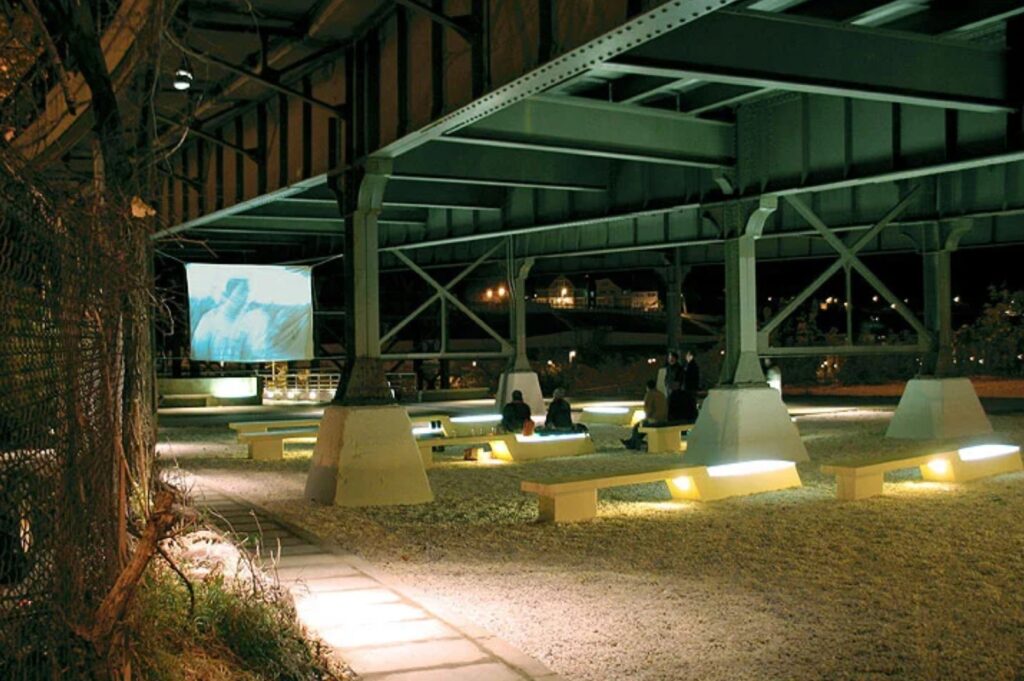
LA DALLMAN’s built work includes the Kilbourn Tower, the Miller Brewing Meeting Center (original building by Ulrich Franzen), the University of Wisconsin-Milwaukee (UWM) Hillel Student Center, the Ravine House, the Gradient House and the Great Lakes Future and City of Freshwater permanent science exhibits at Discovery World. The Crossroads Project transforms infrastructure for public use, including a 700-foot-long Marsupial Bridge, a bus shelter and a media garden. LA DALLMAN is currently commissioned to design additions to the Marcus Center for the Performing Arts (original building by Harry Weese and landscape by Dan Kiley), the 2013 Master Plan for the Menomonee Valley and the Harmony Project, a 100,000-square-foot hybrid arts building for professional dance, which includes a ballet school, a university dance program and a medical clinic. The National Endowment for the Arts awarded the Harmony Project a grant in support of the design process in 2012.

LA DALLMAN’s work has been featured in many publications including Architect, a+t, Architectural Record, Azure, Praxis and Topos, as well as in books released by Princeton Architectural Press and Routledge. Architect profiled the firm’s design culture in June, 2012. LA DALLMAN’s work has been widely exhibited, including at the Heinz Architectural Center in the Carnegie Museum of Art. La is coeditor and author of Skycar City (Actar, 2007), featuring the inaugural Marcus Prize Studio, which was exhibited at the 2008 Venice Biennale. She is also the cofounder and three-time editor of UWM’s Calibrations and a member of the editorial board of the Journal for Architectural Education.

Previously, La served as a faculty member in the School of Architecture and Urban Planning at UWM, receiving tenure in 2005. She served as the Chair of the Planning and Coordinating Committee, where she led efforts in the department’s strategic planning, curriculum reform and hiring initiatives. La also served as a Design Critic in Architecture at the GSD (2010) and a Visiting Critic at Syracuse University (2011). She has delivered lectures at prestigious universities and cultural institutions including the New Museum in New York City, the National Building Museum in Washington DC and the Museum of Fine Arts in Houston.
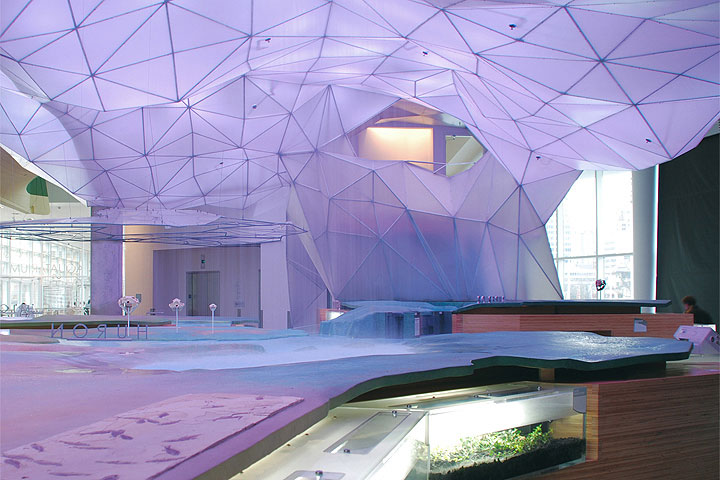
La’s teaching, research and prototype design work were funded by KI, exhibited at Discovery World, and featured in the annual Metropolis Conference at the International Contemporary Furniture Fair (2010). Demonstrating a unique ability to link the profession and the academy, the Association of Collegiate Schools of Architecture has bestowed La with four Faculty Design Awards, which honor outstanding projects that advance the reflective nature of practice and teaching. Additionally, she has received numerous teaching awards including the 2005 UWM Distinguished Undergraduate Teaching Award.
La is a member of the United States General Services Administration (GSA) National Registry of Peer Professionals (class of 2010), which is comprised of the nation’s most distinguished private sector leaders in art, design, engineering and construction. She has also served as an adjudicator for the National Endowment for the Arts, the US Artists Fellowship and several AIA Design Awards Programs.
Grace La received her professional Master of Architecture with thesis distinction from the GSD, winning the Clifford Wong Housing Prize. She graduated with an AB, magna cum laude, from Harvard College in Visual and Environmental Studies.