Community Service Fellowship Program
Information for Students
The Community Service Fellowship Program (CSFP) supports students fulfilling a professional degree at the Harvard Graduate School of Design by providing an $8,000 living allowance to students partaking in an immersive summer experience at domestic nonprofit organizations that address key issues, causes, and design in today’s changing world.
During this 10-week, full-time immersive program, students will explore the connections between their research/academic interests and community-based needs. This opportunity for learning and professional growth will offer expansive insights, valuable connections, and the skills necessary to become an informed and impactful practitioner in one’s chosen field.
Students may select an experience they find on their own, or choose a CSFP-eligible role listed on CREATE.
Eligibility
To apply, students must have secured a summer internship at a domestic non-profit, public service, or government agency/organization.
Current GSD students committed to attending classes post-fellowship who have secured an internship, at a qualifying domestic organization.
Students who are graduating, on a leave of absence, or planning to take a leave of absence in the fall after the summer experience, will not be considered.
Paid or unpaid experiences can be proposed. Priority for funding will be given to unpaid roles.
Application
Students must demonstrate and detail the reasons for pursuing this experience, what they hope to gain, and how this will impact their future endeavors.
For students who apply and propose/submit an alternative host site (not from CREATE), please plan to include a list of duties and expectations in the application.
In addition, students will need to submit a current resume, names, and contact information for two references, and a current transcript.
Within the application, students will be required to select the funding source that most closely correlates with the work they plan to do. Please check out our funding sources.
What to expect during the Community Service Fellowship Program
Students are expected to completed the following obligations during their participation in the Community Service Fellowship Program:
- Students selected are expected to be working on-site (or remotely) with their chosen organization for 10 weeks, in a full-time capacity (35-40 hours per week).
- All work must end before the first week of fall classes.
- Students agree to a chosen start and end date before the experience begins.
- Students agree to complete mid-summer and final evaluations regarding their experience.
- Students will take part in up to two meetings with the GSD Career Team (virtually).
- Students will share photos of their CSFP experiences as well as a personal headshot with the GSD Career Services Team to be used for future marketing materials on the website and social media.
- Students agree to take part in marketing the program in future semesters (in person, digital marketing) and connect with funders who underwrite the CSFP for Harvard when possible.
- Based on the organization’s needs, international students may need to apply for Curricular Practical Training (CPT). Fellows needing to complete this process should email the GSD Registrar’s Office as soon as possible.
- The Fellow and the Host Organization will be provided with a Memorandum of Understanding (MOU) and agreement with Harvard, before the start of the Fellowship. No stipends will be awarded without the MOU on file at the GSD.
Students should review the following payment processing details:
- Any payments from Harvard would be considered a living allowance to cover temporary relocation or other living expenses.
- Students will need to enroll and complete Buy2Pay paperwork before the start of the fellowship to receive their stipend.
- Stipends will be disbursed in two payments. Recipients of CSFP stipends may be subject to tax implications. In general, to the extent paid directly by Harvard, payments to U.S. citizens or legal permanent residents will result in no tax withholding or reporting by Harvard, but must be self-reported by the recipient. For tax purposes, nonresident aliens are treated differently, and the “no reporting no withholding rule” does not apply. Tax treatment will be based on the location of the activity, visa status, and if a tax treaty applies. Additional information on taxes and fellowships at Harvard can be found in the Fellowship Payments FAQ (PDF)..
STUDENT TESTIMONIALS
Information for Employers
Host organizations must be domestic non-profits, public service, or government agencies and be willing to mentor Community Service Fellows (CSF) during the summer.
- Qualified organizations interested in seeking a summer CSF should post their positions on CREATE, the GSD’s curated job portal. January is an ideal time to begin your search for a candidate.
- Internships that qualify as possible CSF hosts will be designated in CREATE as CSFP eligible.
- Once a student is hired by your organization, the student should apply for CSFP. Awards are limited. Student applicants are not guaranteed funding. Summer Fellows must be Current GSD students committed to attending classes post-fellowship. Students who are on a leave of absence, or planning to take a leave of absence in the fall after the summer experience, will not be considered.
- The host organization does not consider the work being completed as employment but will provide the Fellow opportunities for meaningful learning and professional development.
- The host organization will offer an educational, mentoring opportunity that may be project-based.
- Hosts should adhere to the labor laws of their state and federal guidelines regarding internships at a non-profit, public service, or government agency.
- The Fellow and the Host Organization will be provided with a Memorandum of Understanding (MOU) and agreement with Harvard, before the start of the Fellowship.
- Paid or unpaid experiences can be proposed. Priority for funding will be given to students in unpaid roles. It is recommended, if at all possible, to offer payment to interns, should they not be awarded monies via Harvard allowing all students, regardless of economic status to take part in meaningful summer experiences.
- Host organizations may pay these individuals directly as employees, in which case the scope of work and expectations would be different, and the student would not necessarily receive a fellowship from Harvard.
- Any payments from Harvard would be considered a living allowance to cover temporary relocation or other living expenses, and will be paid in two disbursements.
- Already have a student interested in spending ten weeks with your organization? Great! We welcome and encourage new organizations to join us! Organizations without an active job description on CREATE, should work in conjunction with the student to prepare a job description outlining the duties and outcomes of the role. Students are required to submit a job description as part of their application for funding.
- CREATE guides organizations on how to develop a successful internship description for this program. The Career Services team is happy to assist you in this process and can be reached at [email protected].
Funding Sources
Thanks to the generosity of alumni and other GSD supporters, each CSF will receive a living allowance of $8,000. Donors may vary annually. Funding sources available in the current cycle will be noted on the student application.
Carl and Lily Pforzheimer Foundation
The Pforzheimer Foundation was the first source of funding and helped to fund the CSFP program. This particular fund is designated for students interested in public service careers, who can show a prior commitment to work in this area.
Students have worked in organizations such as Boston Redevelopment Authority, Pennsylvania Horticultural Society, Processing Foundation, LivableStreets Alliance, Refugee Artisans of Worcester, Kounkuey Design Initiative, Destination Design School of Agricultural Estates, Town of Lexington MA Planning and Economic Development, GreenRoots, INC., Great Springs Project, Soul Fire Farm, World Monuments Fund, The Legal Design, Monument Lab, City of Hartford’s Office of Sustainability and Sustainable Native Communities Design Lab.
Double Community Service Fellowship
The Doebele Fellowship was conceived in 2010 on the occasion of the Loeb Fellowship’s 40th Anniversary in honor of founding curator William Doebele. This fund is dedicated to training students in community design.
Funding has been awarded to support opportunities with organizations including: The Canary Project, Louisville Metro Government, Metro Nashville Arts, Design School of Agricultural Estates, Sweet Water Foundation, Santa Fe Art Institute, QuitoLab and Destination Design School of Agricultural Estates (DDSAE).
Harvard Club of New York Foundation
Funding is available to support GSD students to work in nonprofit or public sector settings in New York that promote and have pertinence to, and impact on, people of NYC, promote operational or policy change/improvement, or; applied research with clear implications for change/improvement in NYC. Students interested in living in New York City after graduation or who have ties to the city are encouraged to apply.
In the past funding has been awarded to students working at The High Line, Open Style Lab, New York City Housing Authority, NYC Department of City Planning, NYC Department of Housing Preservation and Development, and The Center for Urban Pedagogy.
Joint Center for Housing Studies Community Service Fellowship
The Harvard Joint Center for Housing Studies (JCHS) supports full-time summer fellowships that give returning GSD students the opportunity to bring their skills to – and to learn from people at –public and nonprofit entities in the United States that are working on issues related to housing and community development.
In the past, fellows have worked for such entities as the Boston Planning and Development Agency, the California Housing Partnership, the Greater Grove Hall Main Streets Initiative, the Massachusetts Interagency Council on Housing and Homelessness, the National Housing Council, the NYC Department of Housing Preservation and Development, ReBuild Metro in Baltimore, and the Urban Institute. Students who receive this fund may be connected to staff at the JCHS during the summer for additional mentorship opportunities as well as opportunities to connect with other GSD and HKS students receiving summer funding from the Joint Center.
Lawrence and Marla Curtis Fund for Public Service
The Curtis family are advocates for equality and social justice and have dedicated their lives to the creation of affordable housing for working families, and the preservation and rehabilitation of historic buildings.
This fund supports affordable housing, historic preservation, neighborhood development, housing policy, and economic vitality in Massachusetts. In the past, funding has been awarded to support opportunities with the Lowell Waterways Vitality Initiative and Asian Community Development Corporation (ACDC).
Wendy Evans Joseph MArch '81 Community Service Fund
This fund gives preference to projects that hold the potential for enduring impact in under-served or economically disadvantaged communities.
In the past, funding has been awarded to support opportunities with organizations including: Sustainable Native Communities Design Lab/MASS Design, and Horizons for Homeless Children.
Past Fellows
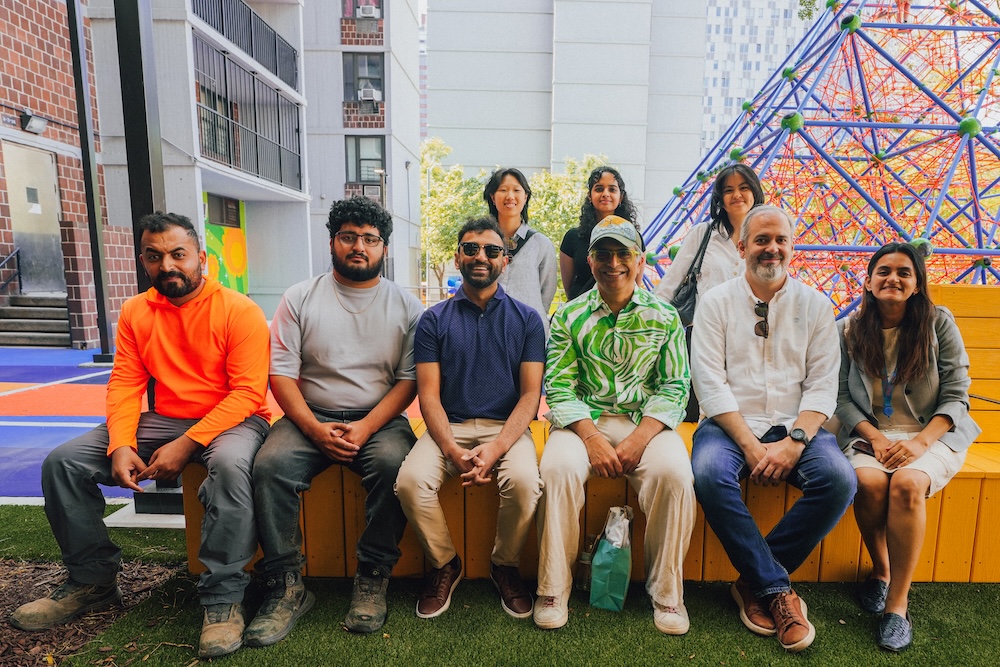
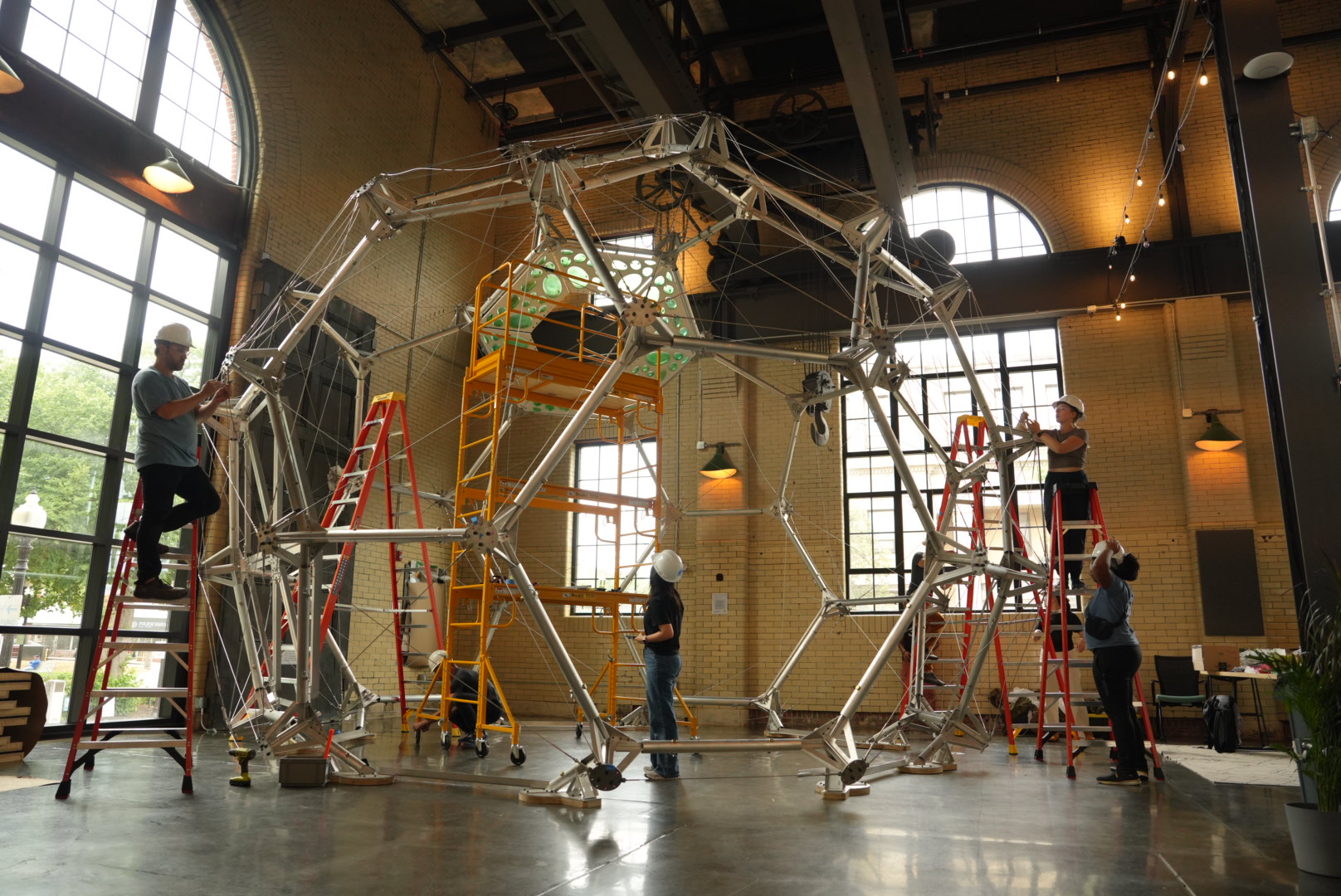
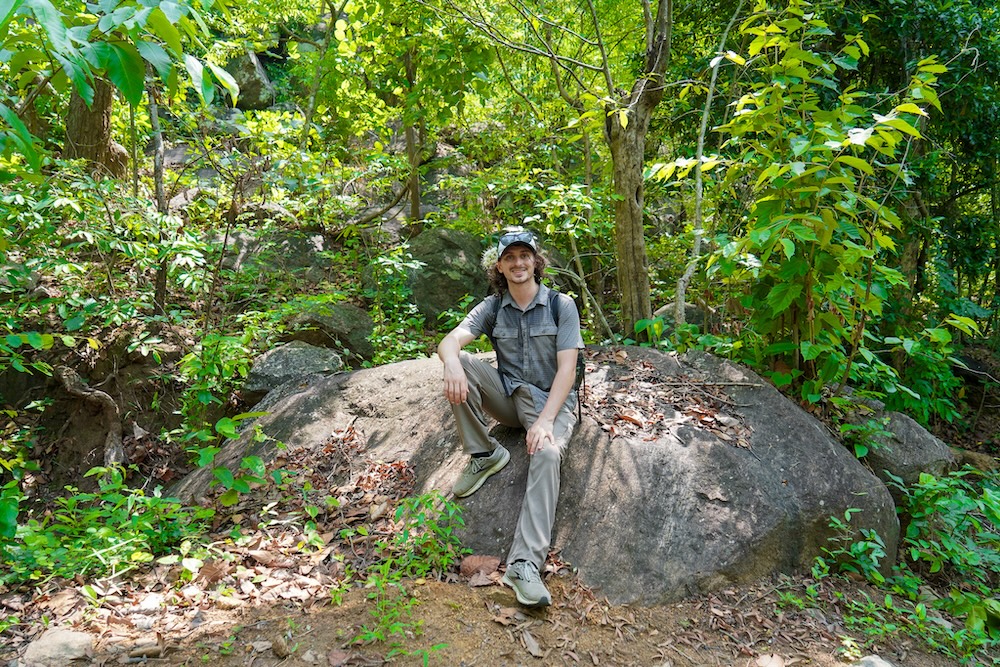
Take a look at the many organizations past Community Service Fellows have spent their summers with.
- Sofia Aguirre Espinoza – INSITE
- Diego Degenhart – City of Revere
- Eleanor Davol – The Stone Living Lab
- Emi Kim – Pratt Center for Community Development
- Emma Fairfield – Office of New York City Council Member Julie Won
- Fran Arrieta – The Rail Park
- Ishita Singh – New York City Housing Authority
- Jessica Ruetter – Restless Books
- Julia Mettler-Grove – City of Boston
- Malvika Dwivedi – City of New Haven
- Martin Gao – Boston Region Metropolitan Planning Organization
- Maya Kiernan – The New York Climate Exchange
- Natalia Garcia Minor – City of Boston
- Oli Branham-Upton – Destination Design School of Agricultural Estates
- Sara Abduljawad – Charles River Watershed Association
- Tea Kim – National Parks Service: Boston
- Valeria Matsuko Takano Reyes – Office of New York City Council Member Julie Won
- Maddie Miller – Boston Harbor Now
- Yvette Bailey Emberson – City of Boston Planning Department
- Tyler White – Black Land Ownership
- Kyujin Derradji – Pratt Center for Community Development
- Ermiyas Gebre – Greater Grove Hall Main Streets
- Sarah Ferriter – Boston Harbor Now
- Nicky Rhodes – Build Reuse
- Cameron Hull – Office of: Office
- Gabriel Garon – Prospect Park Alliance
- Nour-Lyna Boulgamh – Boston Housing Authority
- Ava Dimond – The Neighborhood Developers
- Amadeos Oyagata – San Francisco Planning Department
- Alessandra Rodriguez Mercado – Mystic Watershed Association
- Sonja Angst – Sustainable Molokai
- Hannah Jun – Boston Metropolitan Organization
- Sam Potter – Citizen’s Institute on Rural Design
- Tirzah Khan – Neighborhood Design Center
- Matt Thibodeau – Boston Housing Authority
- Omer Yousuf – Inner City Muslim Action Network
- Zachary Slonsky – Herbal Mutual Aid Network
- Ellie Lauderback – Pratt Center for Community Development
- Adin Becker – The Advocacy Project
- Angelina Zhang – Aurelia Institute
- Michael Bryan – Garrison Trotter Neighborhood Association
- Griffin Snyder – Citizens’ Institute on Rural Design
- Felix Rosen – Design Trust for Public Space
- Natalie Boverman – Boston Harbor Now
- Shivangi Varma – New York City Housing Authority
- Emily Kim – Guahan Sustainable Culture (GSC)
- Fatima Hamdani – Climate Ready Boston, City of Boston
- Kofi Bempong – Massachusetts Housing Investment Corporation
- Carlo Raimondo – Guahan Sustainable Culture (GSC)
- Michaela Gwiazda – LA Mas
- Max Bock-Aronson – YouthLink
- Aubrey Sanders – City of Boston Housing Innovation Lab
- Siddharth UR – Mass General Brigham Health Design Lab
- Rosita Palladino – St. Lawrence County Arts Council
- Zachary Tesler – U.S. Department of Housing and Urban Development
- Elizabeth Ulanova – CultureHouse
- Madeleine Farrer – The Glynwood Center for Regional Food and Farming
- Elaine Zmuda – Sweet Water Foundation
- Sanjana Shiroor – World Monument Fund
- Mike Kaneshiro Chou – New York City Housing Authority
- Holly Hodge – City of Boston, Housing Innovation Lab
- Enrique Mutis – Destination Design School of Agricultural Estates
- Chadwick Bowlin – Greater Grove Hall Main Streets
- Maggie Weese – Preservation of Affordable Housing
- Briana Villaverde – East Yard Communities for Environmental Justice
- Nur Shlapobersky – CultureHouse
- Chandani Patel – Cornell Legal Constructs Lab
- Ian Erickson – Rhizome at the New Museum
- Gabriel Barrett-Jackson – Strategic Actions for a Just Economy
- Isabel Oyuela-Bonzani – World Monuments Fund
- Michael Zajakowski Uhll – New York City Housing Authority
- Matt Khinda – Housing Assistance Council
- Aaron Smithson – NYC Department of City Planning
- Emily Hsee – NYC Department of Housing Preservation and Development
- Taylor Mayes – Center for Urban Pedagogy
- Abdul-Razak Zachariah – Association for Neighborhood and Housing Development
- Hannah Grace Levin – South Boston Neighborhood Development Corporation
- Sarah Nicita – IDEO.org
- Boya Zhou – St. Lawrence County Arts Council
- Celeste Martore – Monument Lab
- Gianina Yumul – Preservation of Affordable Housing
- Megan McGlinchey – Boston Harbor Now
- Sharon Welch – Come Dream Come Build
- Amna Pervaiz – Homeowners Rehab Inc
- Sarah Page – Broad Community Connections
- Katherine Wyatt – Office of Strategic Planning and Community Development
- Areti Kotsoni – MASS Design Group
- Austin Sun – MASS Design Group
- Aqdas Kamal – Dana Faber Cancer Institute
- Snow Xu – Open Style Lab
- Ilana Curtis – The High Line
- Arshaya Sood – Kounkuey Design Initiative
- Audrey Watkins – Boston Harbor Now
- Ava Violich Kennedy – Modern Architecture Program at World Monuments Fund (WMF)
- Bethany Gabriel – Lex Art
- Chadwick Reed – Prosperity Now
- Austin LU – Asian Community Development Corporation
- Emma Colley – NYC Department of Housing Preservation & Development
- G Laster – ReBUILD Metro
- Jocelyn Chiou – San Francisco Public Works
- Jonathan Lee – City of Cambridge, Economic Development Division
- Maggie Musante – New York City Housing Authority Capital Project Division
- Marina Defrates – Legal Design Lab
- Nicole Piepenbrink – Monument Lab
- Olani Ewunnet – Soul Fire Farm
- Olivia Howard – Mass Design Group
- Ryan Johnson – Great Springs Project
- Sara Arman – GreenRoots
- Shane Ah-Siong – Matthew Mazzotta & Metro Arts Nashville
- Shannon Slade – City Councilor Breadon’s Office
- Scarlet Rendleman – Destination Design School of Agricultural Estates
- Sumayyah Raji – Sweet Water Foundation
- Whytne Stevens – St. Phillip’s School and Community Center
- Zoe Iacovino – Greater Grove Hall Main Streets