Julie Bargmann, “Modesty”
Julie Bargmann, “Modesty”
The GSD’s Spring 2021 Public Programs are all virtual and require registration.
Click here to register for Julie Bargmann, “Modesty.”
Scroll down to find complete registration instructions and additional information about accessing the GSD’s programs.
Event Description
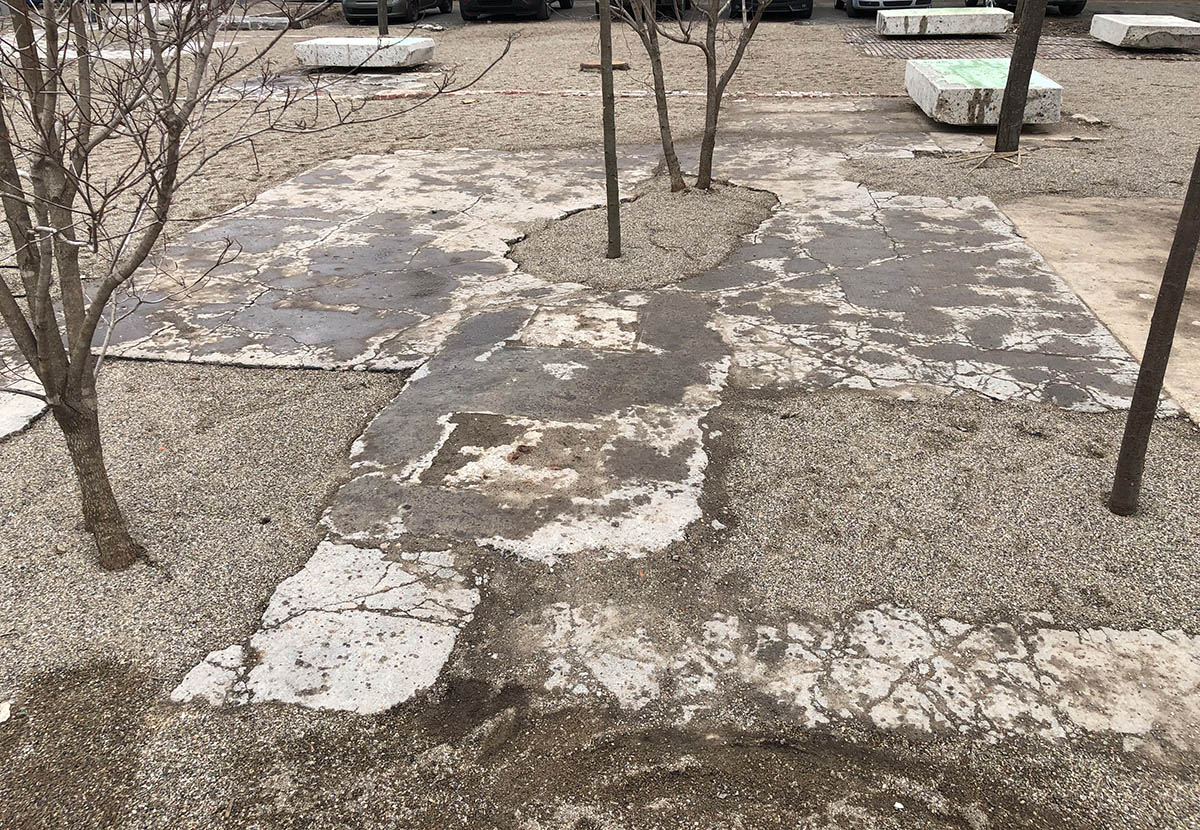
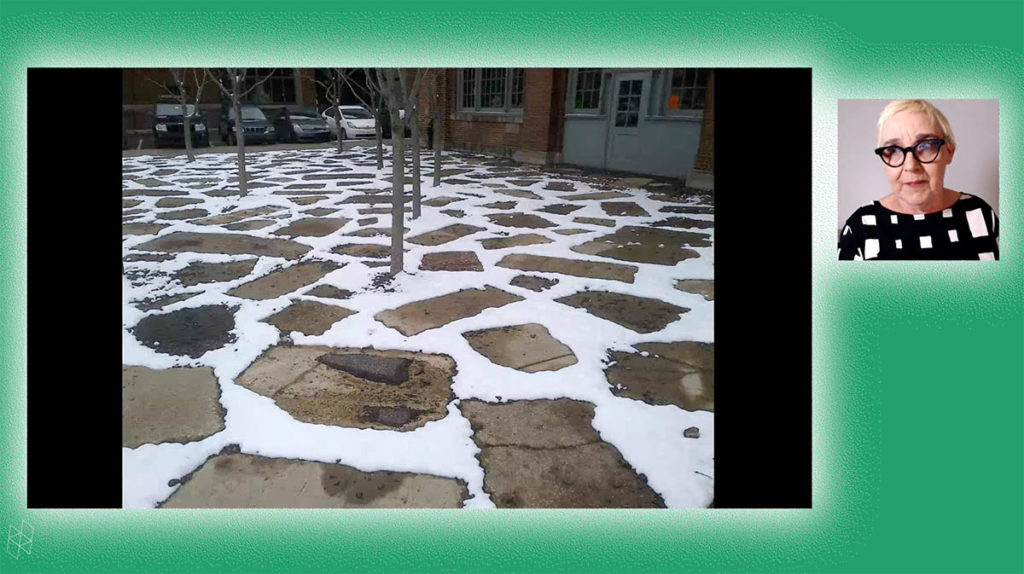
Toxic Beauty. Troubled Allure. Fallow Fairness. Not Vacant, Open. Not Abandoned, Changing.
D.I.R.T. cultivates a perverse attraction and an unapologetic approach to wrecked landscapes.
Not Restorative, Regenerative.
The work holds back. It doesn’t make everything perfectly okay. The work listens. It hears them above trying to make sense, below the ground producing heritage. The work hurts. It flips preconceptions of stuck minds. The work is messy. It’s all about finding. The work emerges.
It doesn’t descend. The work leaves. It lets you in.
Modesty is a Manifesto calling for restraint when we don’t know what’s next.
Speaker
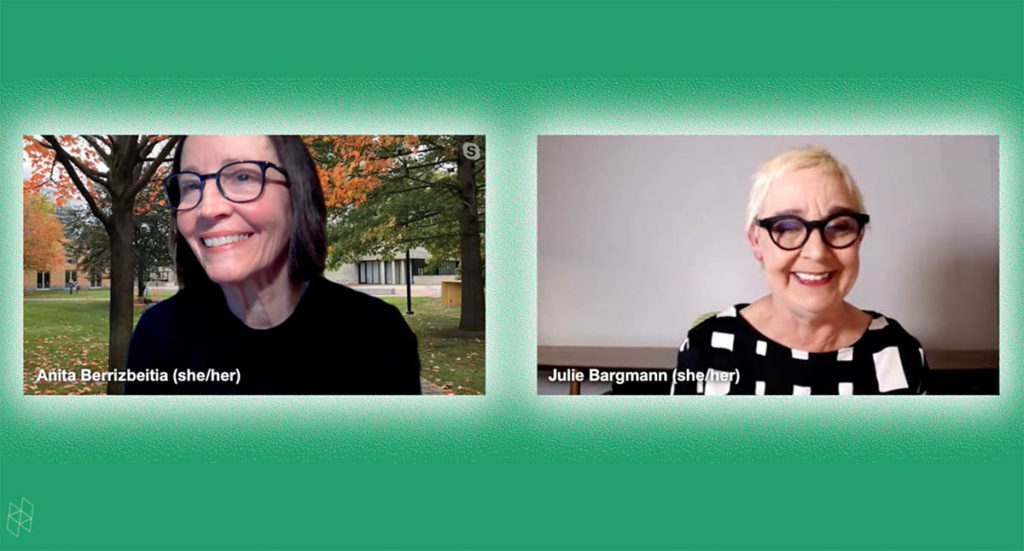
Julie Bargmann, MLA ’87, is internationally recognized as an innovative designer in building regenerative landscapes. She founded D.I.R.T. studio in 1992 to research, design and build projects with passion and rigor. Born and raised in New Jersey, where from an early age the belching factories and monumental landfills attracted her, Julie is a straight-talker, not afraid to provoke in order to tease out what matters most about places, especially the post-industrial. Her background in sculpture influences the use of simple form that emerges from sites’ existing, unearthed and unlikely material for design. Julie’s frank, hands-on design approach informs her role as Professor at the University of Virginia, where she leads investigations with students into derelict terrain, imagining renewed sites of cultural and ecological production.
Julie earned a fine arts degree from Carnegie-Mellon University and a Master of Landscape Architecture degree at the Harvard Graduate School of Design. She received the American Academy in Rome Fellowship and the Cooper Hewitt, Smithsonian Design Museum’s National Design Award. D.I.R.T. projects have gained several Honor Awards from the American Society of Landscape Architects, and Detroit’s Core City Park garnered the October 2020 cover story in Landscape Architecture.
How to Join
Register to attend the lecture here . Once you have registered, you will be provided with a link to join the lecture via Zoom. This link will also be emailed to you.
The event will also be live streamed to the GSD’s YouTube page . Only viewers who are attending the lecture via Zoom will be able to submit questions for the Q+A. If you would like to submit questions for the speakers in advance of the event, please click here .
Live captioning will be provided during this event. A transcript will be available roughly two weeks after the event, upon request.
Kate Thomas, “Lesbian Arcadia: Desire and Design in the Fin-de-Siècle Garden”
Kate Thomas, “Lesbian Arcadia: Desire and Design in the Fin-de-Siècle Garden”

The GSD’s Spring 2021 Public Programs are all virtual and require registration.
Scroll down to find complete registration instructions and additional information about accessing the GSD’s programs.
Event Description
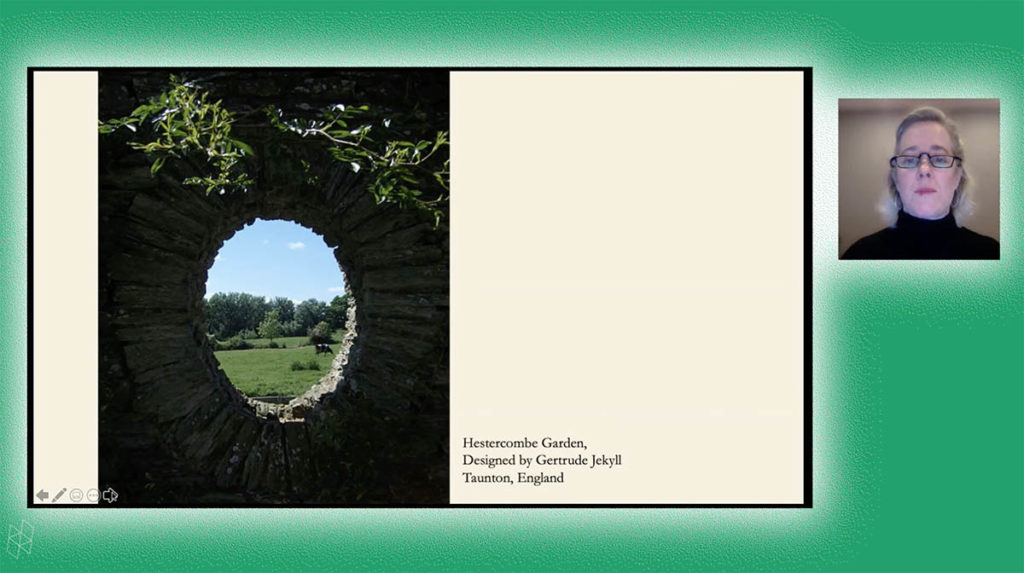
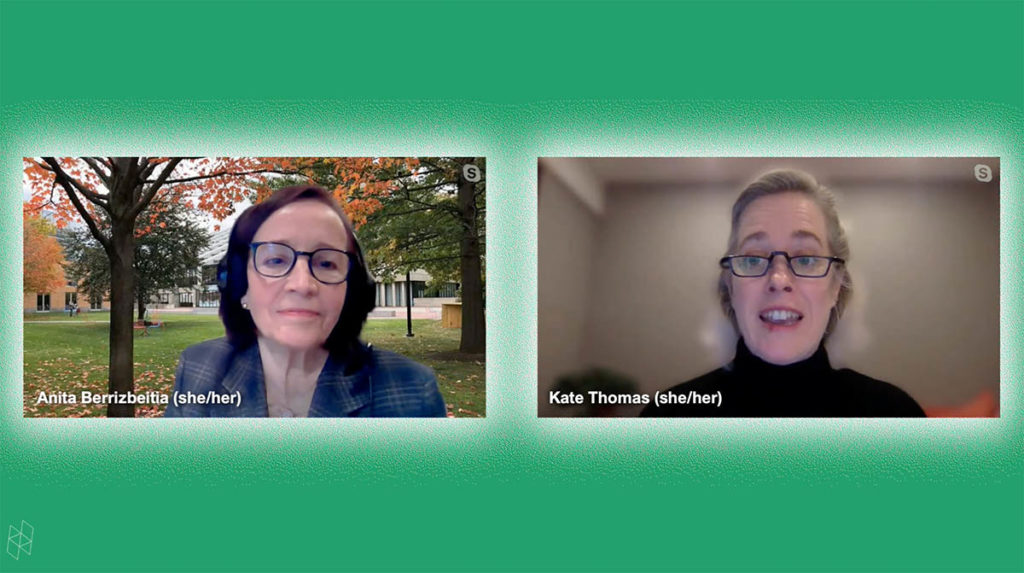
At the end of the nineteenth century, British and American lesbian artists settled around Florence, Italy, renovating neglected Renaissance estates. Contemporary accounts describe the hillside region as colonized by a “cult of women.” These women restored, refashioned and theorized gardens as places of queerly mythic erotic encounter. In this lecture Professor Thomas will explore how design features such as nymphaeums, water parterres, secret gardens, grottos and boscos provided both refuge and open-air expression for lesbian subjectivity. Remembering that the first documented use of the term “sexuality” refers to plants, Professor Thomas puts the fields of landscape architecture and queer theory into conversation, arguing that queer theory needs to build a history of lesbian desire that is animated as much by landscape as by other women. Drawing from recent theory on “vibrant matter” and “plant thinking” that sees land and plants – the non-animal generally – as mobile, sentient and desiring, this lecture will propose that ruined and replanted Italian landscapes shaped modern lesbian relationships to materiality and estate.
Speaker
Kate Thomas is the K. Laurence Stapleton Professor of Literatures in English at Bryn Mawr College. She publishes and teaches on Victorian literature and material culture, gender and sexuality studies and food studies. The author of Postal Pleasures: Sex, Scandal and Victorian Letters (Oxford UP, 2012) and the forthcoming Victorian Informatics (University of Pennsylvania Press), she has also published on queer ecology, vegetal poetics, uncanny gardens, and back-to-the-land socialist sex politics. Recipient of a 2019 Rome Prize in Landscape Architecture from the American Academy in Rome, she is currently working on a book project entitled “Lesbian Arcadia,” which examines the co-relation of literature and landscape for expatriate Anglo-American lesbians living in Italy across the fin-de-siècle.
How to Join
Register to attend the lecture here . Once you have registered, you will be provided with a link to join the lecture via Zoom. This link will also be emailed to you.
The event will also be live streamed to the GSD’s YouTube page . Only viewers who are attending the lecture via Zoom will be able to submit questions for the Q+A. If you would like to submit questions for the speakers in advance of the event, please click here .
Live captioning will be provided during this event. A transcript will be available roughly two weeks after the event, upon request.
Charles L. Davis, “Playing Against Type: Race, Space and Domesticity on Buffalo’s East Side”
Charles L. Davis, “Playing Against Type: Race, Space and Domesticity on Buffalo’s East Side”
Event Description
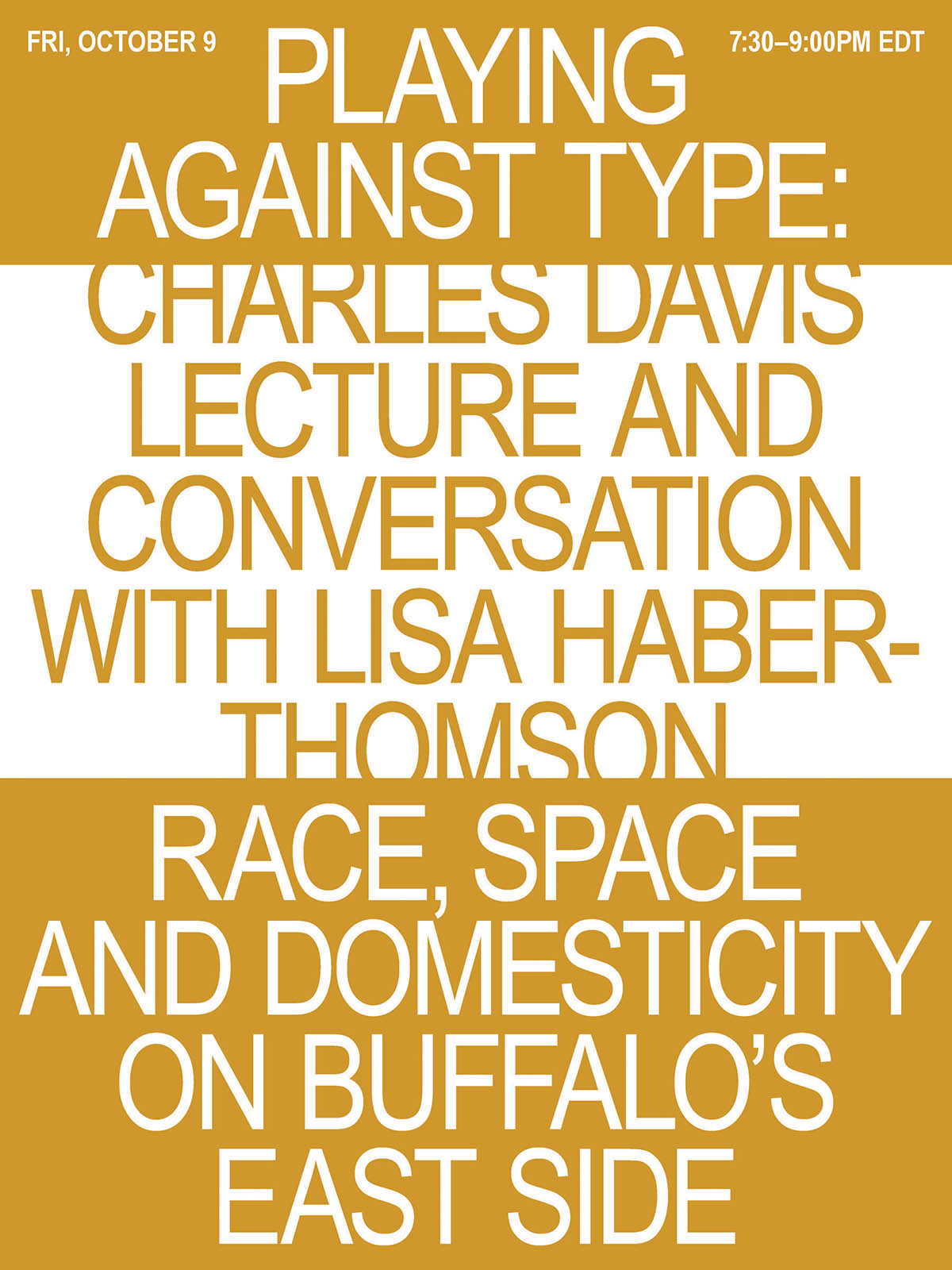
As a follow-up to last evening’s lecture “Cannon Fodder: Debating the Racial Politics of Canonicity in Modern Architectural History,” the Architecture Department will be hosting “Playing Against Type: Race, Space and Domesticity on Buffalo’s East Side.” The talk will feature a presentation by Charles L. Davis on his work, Building Character: The Racial Politics of Modern Architectural Style, followed by a conversation with GSD faculty member Lisa Haber-Thomson.
Speaker
Charles L. Davis II is an assistant professor of architectural history and criticism at the University at Buffalo, SUNY. His book manuscript, Building Character: The Racial Politics of Modern Architectural Style (University of Pittsburgh, 2019) traces the historical integrations of race and style theory in paradigms of “architectural organicism,” or movements that modeled design on the generative principles of nature. He is co-editor of Race and Modern Architecture: A Critical History from the Enlightenment (University of Pittsburgh Press). His current book project, tentatively entitled Black By Design: An Interdisciplinary History of Making in Modern America recovers the contributions of black artists in shaping the built environment from the Harlem Renaissance to Black Lives Matter. He has published articles and essays in multiple venues, including Architectural Research Quarterly, Journal of the Society of Architectural Historians, Harvard Design Magazine, Log and Aggregate. This research has been supported by grants from the Canadian Center for Architecture, the Graham Foundation, the University of Pennsylvania and the University of North Carolina.
How to Join
Register to attend the lecture here.
To request accessibility services for this event, please contact Kelly Wisnaskas at [email protected].
Dorion Sagan, “Dissipative Spacescapes and Living Buildings: Four Billion Years of Architectonic Earth”
Dorion Sagan, “Dissipative Spacescapes and Living Buildings: Four Billion Years of Architectonic Earth”
Event Description
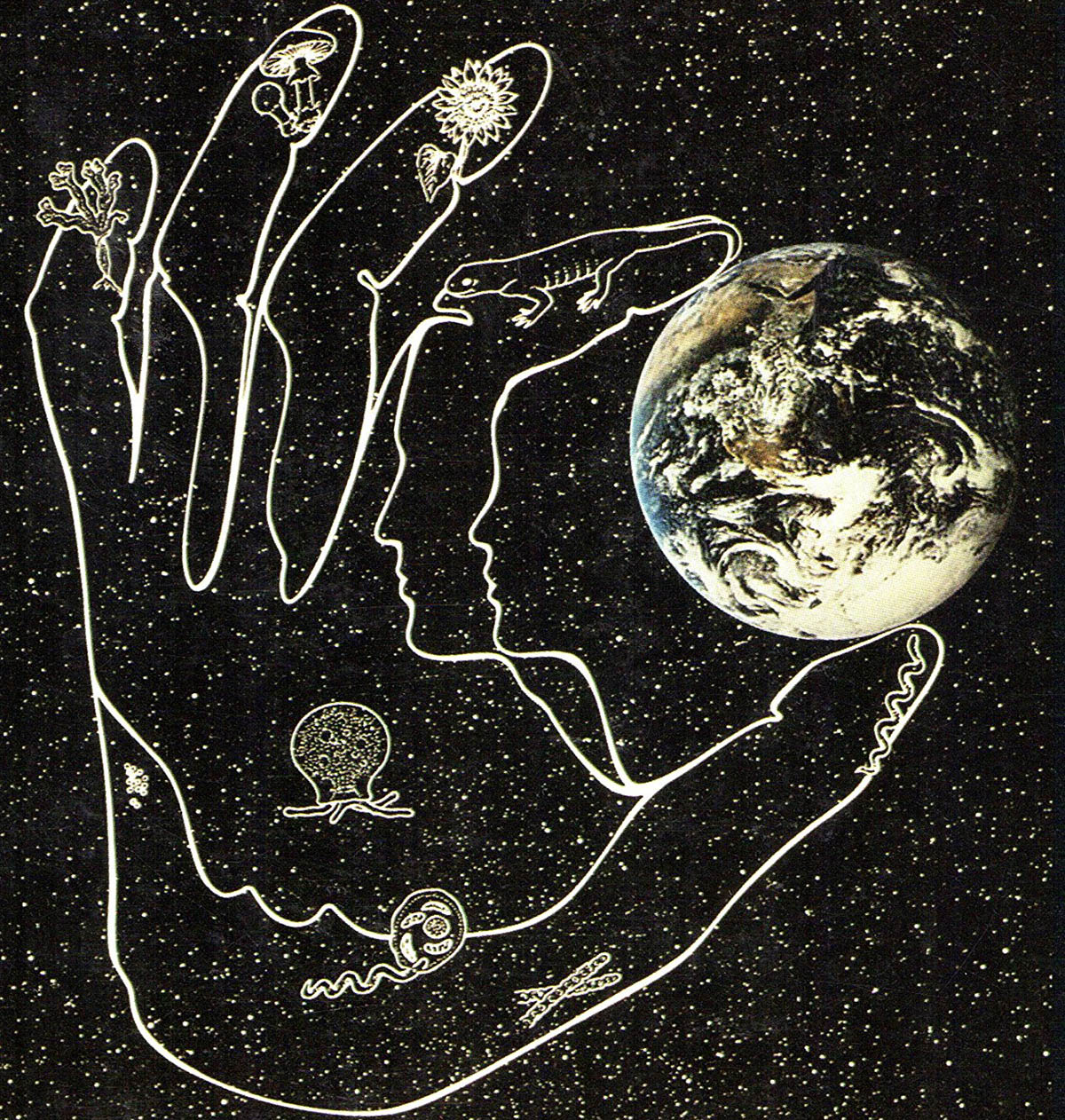
As astronauts have sublimely recognized, Earth is a place – indeed, one that disappears when, orbiting, they pass to its “dark side” and it becomes a black circle where there are no stars. Tracing the amazing more-than-human distributed architectonics of Earth, Dorion Sagan does his own fly-by of the history of this extraordinary planet, not built so much as grown, from sunloving bacterial skyscrapers known as stromatolites to the living buildings we are.
Speaker
Self-described as an artist stuck in the body of a science writer, the writer, theorist, and independent scholar, Dorion Sagan is author or coauthor of twenty-five books translated into fifteen languages, including several with biologist Lynn Margulis on planetary biology and evolution by symbiosis. He has also collaborated with Eric D. Schneider on the thermodynamics of life, and theoretical biologist Josh Mitteldorf on the evolution of aging. With his parents Carl Sagan and Lynn Margulis, he is first author of the entries for both “Life ” and “Extraterrestrial Life ” in the Encyclopædia Britannica.
How to Join
Register to attend the lecture here .
This event is organized by the Department of Landscape Architecture and DES3391 Time’s Arrow Time’s Cycle seminar led by Assistant Professor Pablo Pérez-Ramos.
If you have any questions about this event, please contact [email protected].
America, America(s): Rethinking “American” Design
America, America(s): Rethinking “American” Design
Event Description
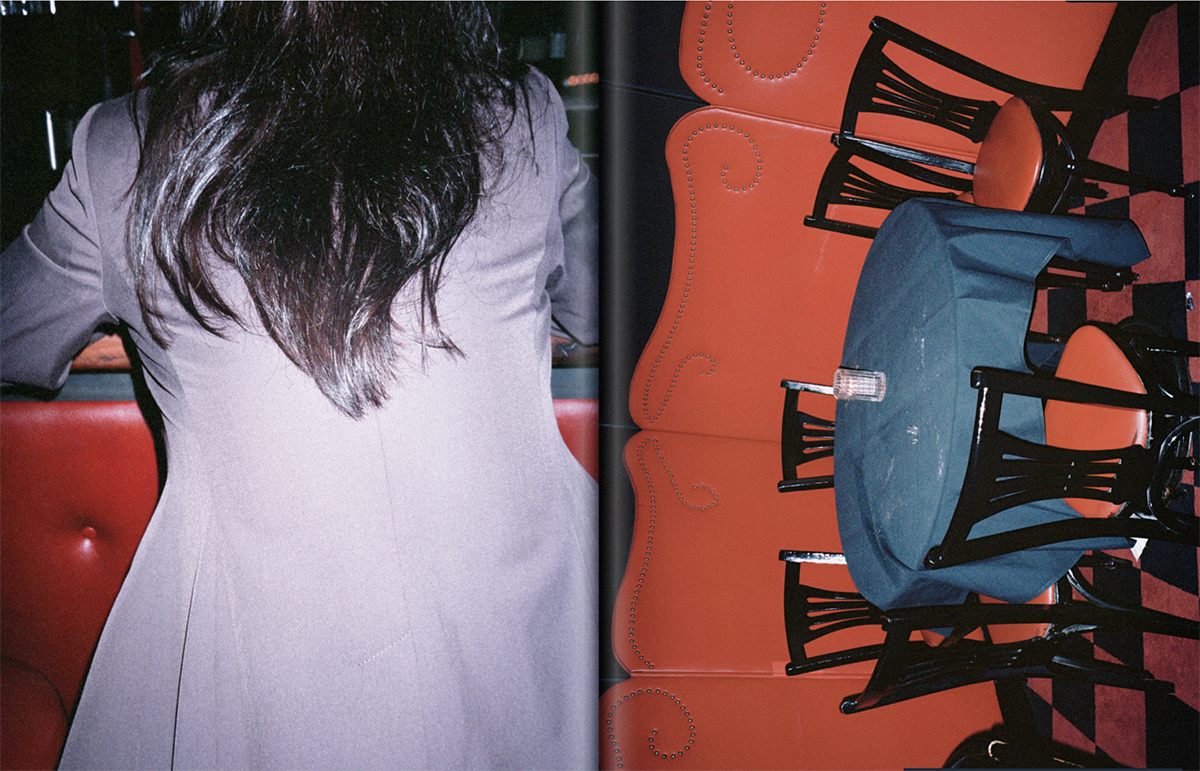
Launching both the America(s) theme of Design Miami, and the America issue of Harvard Design Magazine, this discussion will examine how new narratives and histories of design are being constructed just as notions of “America” itself are being questioned, challenged and revised.
Moderated by Aric Chen, Curatorial Director of Design Miami; Mark Lee, Chair of the Department of Architecture, Graduate School of Design, Harvard University; and Florencia Rodriguez, Guest Co-editor, Harvard Design Magazine and Editorial Director, -NESS. Other speakers to be announced.
How to Join
Visit the Design Miami/ website for more information.
Allison Grace Williams, “Architecture and Leadership”
Allison Grace Williams, “Architecture and Leadership”
Event Description
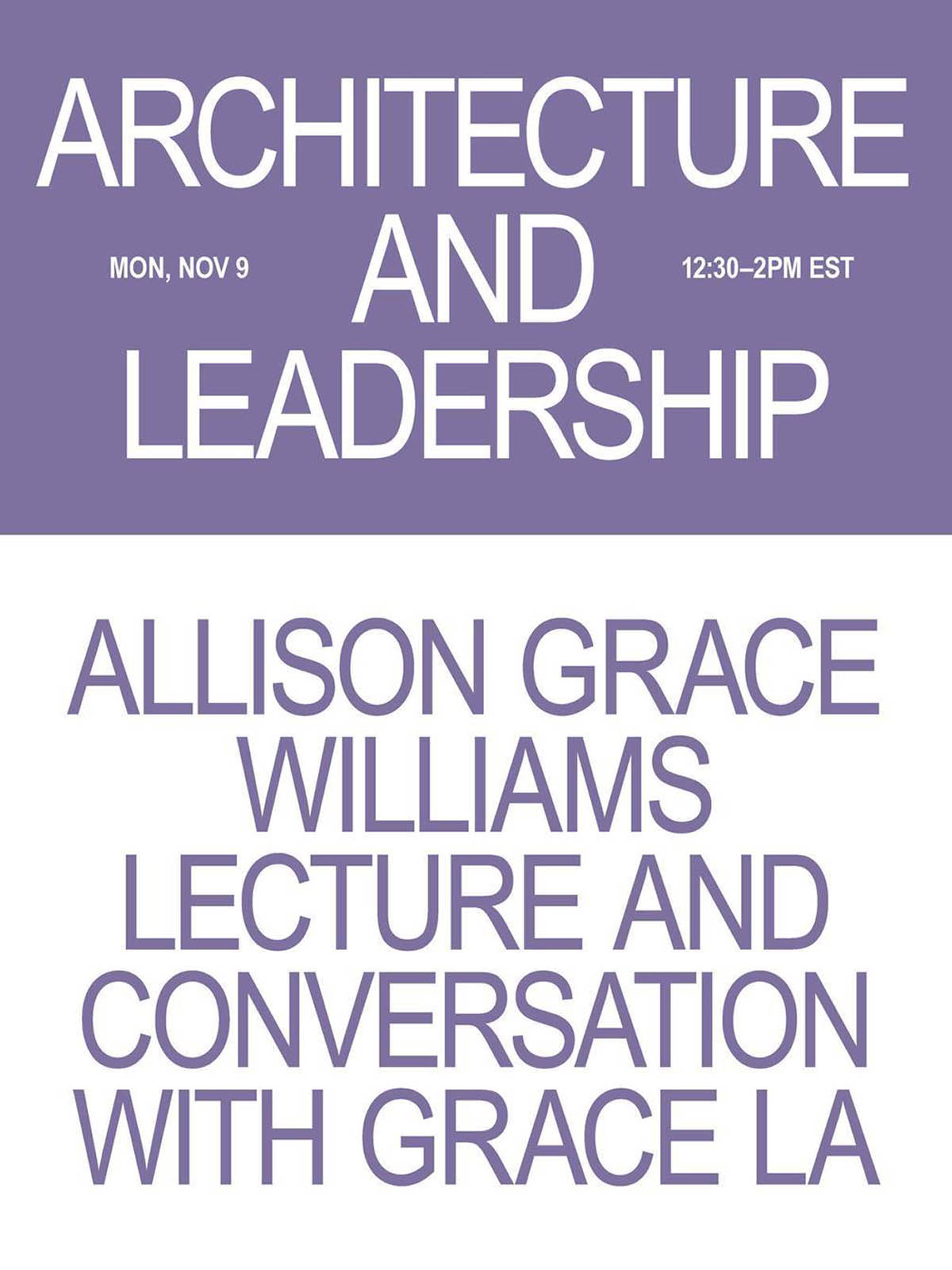
In the span of her more than 40-year career Allison Grace Williams, FAIA, has held design leadership positions at the world’s preeminent and largest firms, including Skidmore Owings & Merrill, Perkins and Will, and AECOM. Now with her own practice, AGWms_studio , Ms. Williams will reflect on her design work and the way she has mobilized complex constituencies of clients, community stakeholders, and professional designers to realize large-scale buildings that are at once ambitious and sensitive to their environmental and political contexts. Professor Grace La will join Ms. Williams as the GSD faculty respondent for a conversation with students and faculty.
How to Join
Register for this event here .
Faculty Colloquium
Faculty Colloquium
Event Description
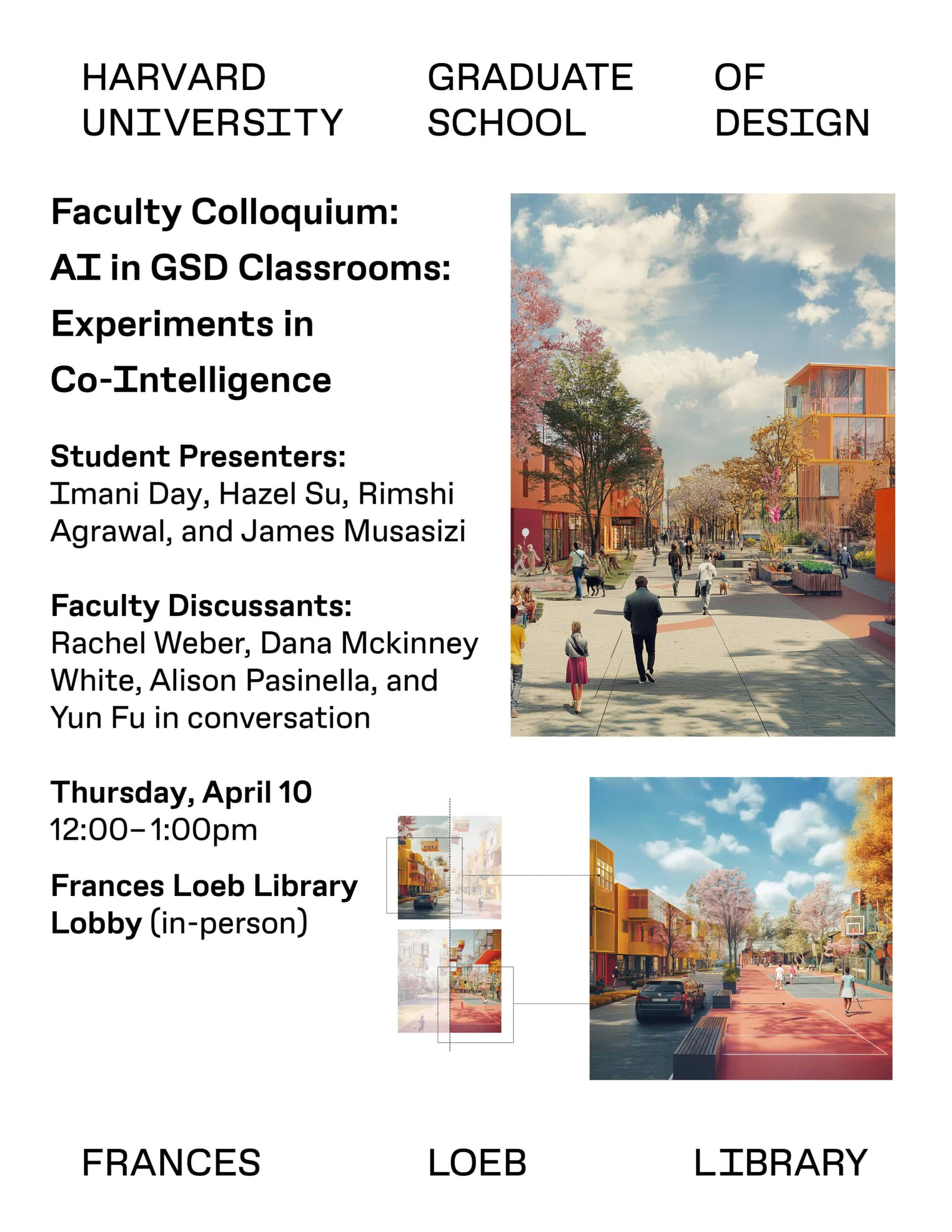
Hosted by the Frances Loeb Library at the Harvard Graduate School of Design, the Faculty Colloquium Series provides a venue for GSD faculty members to launch newly published books, discuss recent or in-process publications or research in which they are currently engaged, or present their thoughts on pedagogy and innovative approaches to teaching.
Upcoming Events
AI in GSD Classrooms: Experiments in Co-Intelligence
Rachel Weber, Dana McKinney White, Alison Pasinella, and Yun Fu in conversation
Thursday, April 10
12:00 – 1:00 p.m.
Previous Events
Henry Hobson Richardson: Drawings from the Collection of Houghton Library, Harvard University
Jay Wickersham, Jenny French, Chris Milford, and Hope Mayo in conversation
Tuesday, April 1st, 2025
The Art of Architectural Grafting
Jeanne Gang and Antoine Picon in Conversation
Thursday, March 27th, 2025
Event-Cities 5: Poetics
Bernard Tschumi and Sarah Whiting in Conversation
Monday, March 24th, 2025
Reimagining Libraries as Public Space: Design, Access, and Democracy
Shamichael Hallman with Diane Davis, Eric Howeler, and Ann Whiteside
Monday, March 10th, 2025
Panel Discussion: Reflecting on 50+ Years of iPress Publishing and Women in Architecture
Doris Cole, Mary Otis Stevens, Pelin Tan, Aliza Leventhal & Nicole Baas in Conversation Co-Sponsored by iPress
Monday, December 4th, 2024
New Design for Ancient Monuments: Bath Abbey and the Roman Baths, UK
David Fixler & Geoff Rich, RIBA AABC in Conversation
Friday, October 11th
Agonistic Assemblies (On the Spatial Politics of Horizontality)
Markus Miessen & Diane Davis in Conversation
Tuesday, October 8th, 2024
Design Thinking and Storytelling in Architecture
Peter Rowe & Michael Hays in Conversation
Tuesday, September 10th, 2024
Invisible Topographies: Exploring the Impact of the Unseen
Thursday, February 29, 2024
Thinking and Building on Shaky Ground
Yun Fu in conversation with Peter Rowe
Tuesday, February 6, 2024
One year after ChatGPT: How will generative AI shape teaching and learning?
Sebastian Schmidt Dalzon in conversation with Jose Luis García del Castillo, Stephen Gray, Curry J. Hackett, Sabrina Osmany, Carole Voulgaris, Charles Waldheim & Andrew Witt
Wednesday, November 8, 2023
Sharing Tokyo
Mohsen Mostafavi in conversation with Michelle Hauk, Seng Kuan, Ann Tanaka & Sky Araki-Russell
Tuesday, November 7, 2023
Presentation of Khōrein: Journal for Architecture and Philosophy
Dean Sarah Whiting in conversation with Petar Bojanic, Snezana Vesnic & Paul Guyer
Friday, November 3, 2023
A Discussion on Data and Why it Matters in Design
Emre Keskin in conversation with Alex Yuen & Bruce Boucek
Tuesday, October 10, 2023
Technical Lands: A Critical Primer
Jeffrey S. Nesbit & Charles Waldheim in conversation with Peter Galison, Caitlin Blanchfield, Neil
Brenner, Swarnabh Ghosh, and Rania Ghosn
September 28, 2023
An Asian Trilogy: Korean, Southeast Asian, and Chinese Modern Architecture and Urbanism
Peter Rowe in conversation with Rahul Mehrotra
March 28, 2023
Verify in Field
Eric Höweler and Meejin Yoon in conversation with Amanda Reeser Lawrence
March 21, 2023
Typologies for Big Words
Sergio Lopez-Pineiro in conversation with Neeraj Bhatia
March 1, 2023
Los Angeles: The Development, Life, and Structure of the City of Two Million in Southern California
Edward Dimendberg in conversation with Eve Blau, Mark Jarzombek, Alex Krieger
November 18, 2022
BLUE: Architecture of UN Peacekeeping Missions
Malkit Shoshan in conversation with Gizem Sucuoglu
October 20, 2022
Agricultural Modernization and Collective Memory: 50 Species-Towns
Charles Waldheim in conversation with Gary Hilderbrand, Stanislaus Fung, and Bing Wang
September 29, 2022
Second Site by James Nisbet
With Anita Berrizbeitia, introduction by Sarah Whiting
April 8, 2022
Launch Event for Inhabiting Displacement: Architecture and Authorship
Edited by Shahd Seethaler-Wari, Somayeh Chitchian (GSD), Maja Momić
April 4, 2022
Mise-en-Scène: The Lives and Afterlives of Urban Landscapes by Chris Reed and Mike Belleme
With Sara Zewde
March 9, 2022
Cyclical City: Five Stories of Urban Transformation by Jill Desimini
February 18, 2022
The Kinetic City & Other Essays by Rahul MehrotraWith Sarah Whiting
November 29, 2021
The Materiality of Architecture by Antoine Picon
With Ron Witte
November 18, 2021
Radical Normal: Propositions for the Architecture of the City by Vittorio Magnago Lampugnani
With Seng Kuan
September 23, 2021
Studio Ecologies: Designing Landscape Architectural Education for Unpredictable Futures edited by Rosalea Monacella & Bridget Keane
With Anita Berrizbeitia, Elisa Cattaneo, Fadi Masoud, Elise Shelley, Paola Vigano, and Jane Wolff
April 23, 2021
Immensity and American Matter Out of Scale
Launch Event for Manifest #3
April 13, 2021
New Towns for the Twenty-First Century edited by Richard Peiser and Ann Forsyth
March 16, 2021
Fusion: The Performance of Architecture
With Andrea Love, Kevin Sullivan, and Mark Lee
January 26, 2021
Architect: Observations by Toshiko Mori
With Andres Lepik and Nicholas Fox Weber
November 20, 2020
Working in Mumbai by Rahul Mehrotra
With Eve Blau and Mark Lee
November 13, 2020
A Glossary of Urban Voids by Sergio Lopez-Pineiro
With Jill Desimini
October 9, 2020
ChinaGSD Virtual Symposium: What Are We Talking About When We Talk About Public Space?
ChinaGSD Virtual Symposium: What Are We Talking About When We Talk About Public Space?
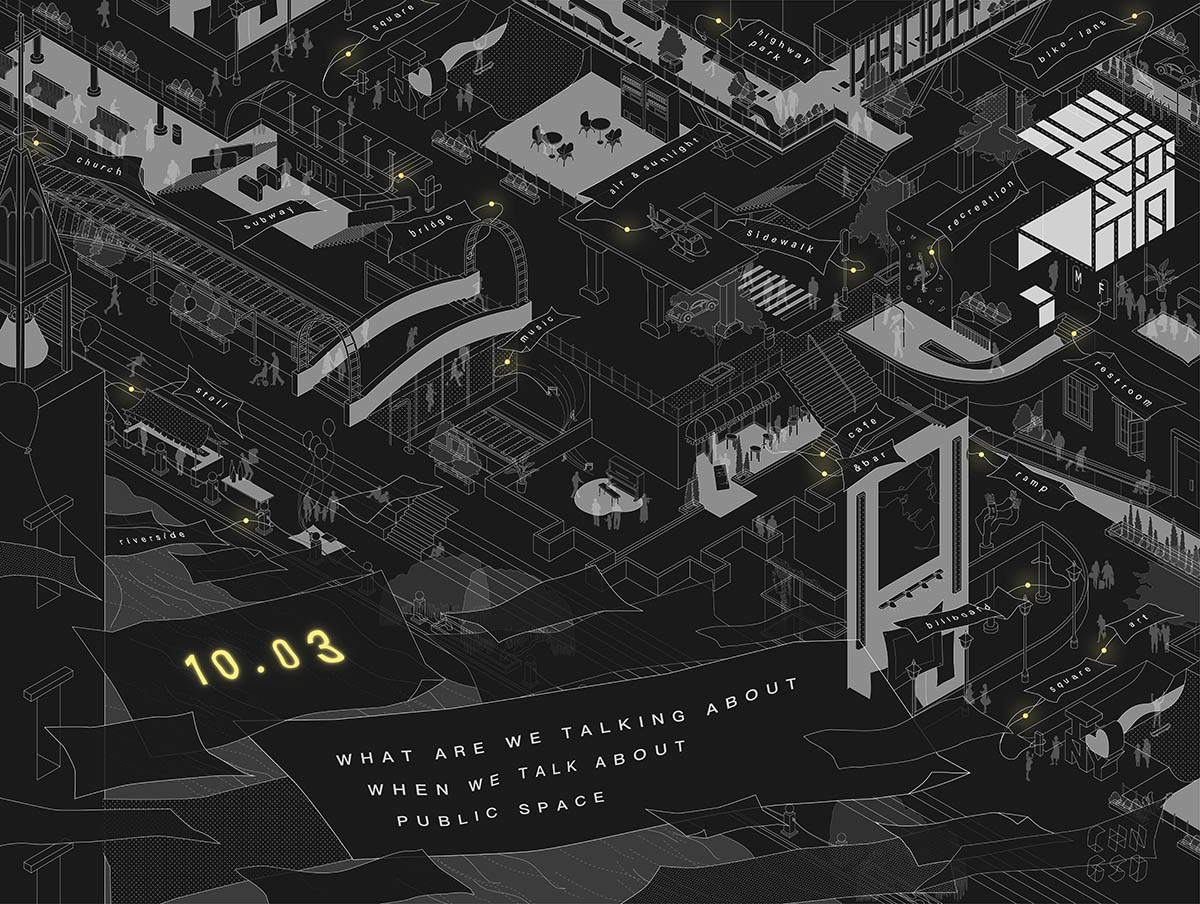
Click here to access the ChinaGSD Virtual Symposium program.
Event Description
Harvard University ChinaGSD is proud to introduce the virtual symposium “What Are We Talking About When We Talk Public Space?”. The event, featuring practitioners and professors at the forefront of the discipline, will dive into how China’s rapid development since its opening up reforms had led to a significant change in attitudes toward public space. As the advent of the decade is overturned by a global pandemic that disrupts our behavior in the public sphere, the time is ripe to reflect, recognize, and reconsider attitudes towards public space.
Ideally, public space is where people from all sectors of society communicate and interact on an equal footing, the place where they exchange ideas, and recognize themselves and each other as a valuable member to society. It is the birthplace of creativity and innovation, and the cornerstone towards an equal society. In 1958, Hannah Arendt wrote that public space that makes our “actions” possible constitutes the necessary precondition for a fulfilled human existence. With the advent of modernity, the utopia of public spaces has often been labelled as under threat. As Richard Sennett argues in the book, “The Fall of Public Man,” the formation of “a new capitalist, secular, urban culture” since the fall of the Ancien Régime has reduced our ability to relate to each other. As alienation grew, he argues, our public life has shrunk to mere formality.
In today’s China, the threat of modernity on public space is met with adjoining forces that produce further complexities worth investigating. As traditional residences, such as Lijiang or Shanghai’s Li Long, are transformed into public cultural districts that are intended to inform our so-called “collective memory”, what is the role of history and culture in the creation of public spaces? How does occupying these public spaces foster a sense of belonging and how does this change over time? As Hong Kong’s enormous shopping malls and Beijing’s planned parks dominate public life, what can we learn from Chéng Zhōng Cūn (Urban Villages) and informal spaces that have sprouted spontaneously in the fissure between our glass giants? How do we ensure public space functions as willful nodes of social centrality that become places of interaction regardless of public or private ownership? More recently, in the age of social distancing, how might our definitions change?
As these conditions overlap, we as designers must re-examine this age-old spatial typology. What are the roles of designers in the making of public spaces? How can we contribute to shaping public life? How might we guarantee this space withholds the genuine rights of its citizens? Can we balance the demands of our powerful clientele while advocating for the benefit of the public? With these questions in hand, we invite you to join us in questioning: What Are We Talking About When We Talk About Public Space?
The symposium is a part of ChinaGSD’s new online bi-monthly event and publication series “PIN-UP”, that celebrates, and facilitates the exchange between Harvard University and those tackling issues at the forefront of the design profession in China. Each issue will address a specific and pressing theme, featuring architect interviews, public lectures, symposiums, exhibitions, and student works. The publication is bilingual and will be updated on our website, Instagram, and WeChat.
Each guest will deliver a 20-minute presentation, which will be followed by a round table discussion.
Speakers
George E. Thomas, an architectural and cultural historian and Susan Nigra Snyder, a registered architect are co-directors of the Critical Conservation Program in the Graduate School of Design at Harvard University. Their practice, CivicVisions, merges knowledge of a place’s history with the ability to see how this may be used to create a future that responds to contemporary lifestyle forces. CivicVisions’ work includes extensive work in Manhattan for REBNY, community groups and developers; the Arts District and Fremont Street downtown initiative in Las Vegas; an economic/identity initiative for Pennsylvania’s colleges;, a Getty Grant exhibit about Haverford’s campus identity and projects for developers and institutions nationwide.
Jerold S. Kayden is the Frank Backus Williams Professor of Urban Planning and Design at the Harvard University Graduate School of Design, where he previously served as co-chair of the Department of Urban Planning and Design and director of the Urban Planning Program. His teaching and scholarship address issues of land use and environmental law, public and private development in cities, public space, urban disasters and climate change, and design competitions. His books include Privately Owned Public Space: The New York City Experience; Urban Disaster Resilience: New Dimensions from International Practice in the Built Environment; Landmark Justice: The Influence of William J. Brennan on America’s Communities; and Zoning and the American Dream: Promises Still To Keep.
Zhu Tao is Associate Professor and Co-director of the Center for Chinese Architecture and Urbanism at The University of Hong Kong. He received his Master of Architecture and PhD in Architecture History and Theory at Columbia University.
He writes on contemporary Chinese architecture and urbanism and practices in China. He has published essays in AA Files, AD, a+u, Bauwelt, Domus, and Time+Architecture. His writings include the book Liang Sicheng and His Times (Imaginist, 2014) and a chapter “Architecture in China in the Reform Era 1978-2010” for the book A Critical History of Contemporary Architecture 1960-2010 (Ashgate, 2014). In 2010, he received the first Architectural Critics Award from the China Architecture Media Awards organized by China’s mass media Southern Metropolis Daily in collaboration with eight major Chinese architectural magazines. His design works are mainly public projects with a wide range, including school, library, bus terminal, street, park, and reservoir. Recently he also leads his HKU team and office to collaborate with the governments of Shenzhen and Dongguan to assist in their development in public spaces through both academic research and design practice.
Doreen Heng Liu is a Chinese architect born in Guangzhou. She received her MArch from UC Berkeley in 1994 and Doctor of Design at Harvard Graduate School of Design in 2008.
In 2004, Doreen established her own design practice NODE in Nansha and Hong Kong, and relocated in Shenzhen since 2009. Her design works have been awarded and published in many international and domestic professional magazines including Architectural Record, Domus, Volume, Abitare and etc.; and exhibited in various architectural and art exhibitions internationally including Venice, Berlin, Rotterdam, Vienna, etc. In 2012, Doreen with her firm NODE was shortlisted as one of five international emerging architects for Audi Urban Future Initiative (AUFI) awards; in 2014, Doreen was nominated as Curator for Hong Kong Pavilion for the 14th International Architecture Exhibition – la Biennale di Venezia. In 2015, the Entrance Building of Shekou Fufa Glass Factory renovation won Excellent Award for Creative Design Award in China; In 2016, the built project of Shekou Dachan Flour Mill Renovation was shortlisted for International Archmarathon Awards and WA City Regeneration Award; in 2018, the Renovation of Dameisha Village, Yantian, Shenzhen (2017 UABB) was shortlisted for WA Social Equality Award and Nominating Award for Architectural Design Category of Shenzhen Global Design Award 2019.
In 2014, Doreen was nominated as Curator for the Hong Kong Pavilion at the 14th International Architecture Exhibition – la Biennale di Venezia. In 2015, she was nominated as Chief Curator for Shenzhen Hong Kong Urbanism / Architecture Bi-city Biennial. In 2008-2020, Doreen taught at the School of Architecture, the Chinese University of Hong Kong (CUHK) as Adjunct Associate Professor. In academic year 2015-16, Doreen was appointed as Guest Professor at D-ARCH, ETH in 2015-16, and as Friedman Visiting Professor of Practice at University of California – Berkeley in fall 2019; Starting in Fall 2020, Doreen is appointed as Distinguished Professor in Architecture at Shenzhen University.
How to Join
Harvard affiliates can register to attend the symposium via this link. Once you have registered, the zoom link will be emailed to you.
If you are not a Harvard affiliate, you can watch this event via livestream on YouTube . If you have any questions or concerns about this event, please contact [email protected].
Marcus Samuelsson in conversation with Thelma Golden, Toni L. Griffin and Mark Raymond
Marcus Samuelsson in conversation with Thelma Golden, Toni L. Griffin and Mark Raymond
The GSD is pleased to present a series of talks and webinars broadcast to our audiences via Zoom.
*This lecture will be ONLINE ONLY. For security reasons, virtual attendees must register. Scroll down to find complete instructions for how to register.
Event Description
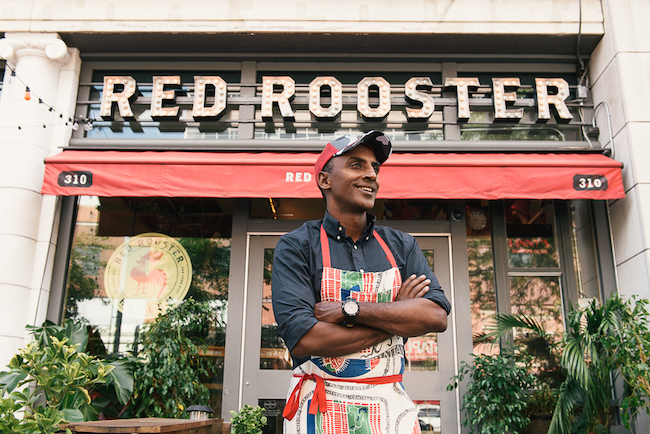
Celebrated chef Marcus Samuelsson will share reflections on race, class, place and equity in the American food landscape, drawing from his forthcoming book The Rise: Black Cooks and the Soul of American Food . He will then be joined by GSD Professor in Practice and founder of urbanAC , Toni L. Griffin; Thelma Golden, Director and Chief Curator of the Studio Museum in Harlem; and Mark Raymond, Director of the Graduate School of Architecture at the University of Johannesburg, South Africa. The group will come together for a conversation exploring the deep and intertwining relationships between memory, identity and authorship that exist for Black creatives who reference, make and keep place through their work.
Speakers
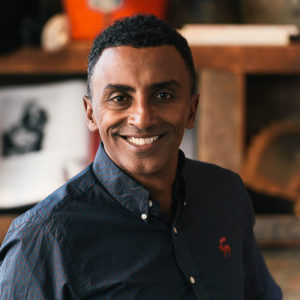
Marcus Samuelsson is the acclaimed chef behind many restaurants worldwide including Red Rooster Harlem, MARCUS Montreal, and Marcus B&P in Newark, NJ. Samuelsson was the youngest person to ever receive a three-star review from The New York Times and has won multiple James Beard Foundation Awards including Best Chef: New York City and Outstanding Personality for No Passport Required on PBS. He is the author of multiple books including The New York Times bestselling memoir Yes, Chef and his latest book– The Red Rooster Cookbook: The Story of Food and Hustle in Harlem. His podcast titled This Moment with Swedish rapper Timbuktu is out now.
Follow Samuelsson on Instagram , Facebook , and Twitter at @MarcusCooks.

Thelma Golden is Director and Chief Curator of The Studio Museum in Harlem, where she began her career in 1987 before joining the Whitney Museum of American Art in 1988. She returned to the Studio Museum in 2000 as Deputy Director for Exhibitions and Programs, and was named Director and Chief Curator in 2005. Golden was appointed to the Committee for the Preservation of the White House by President Obama in 2010, and in 2015 joined the Barack Obama Foundation’s Board of Directors. Golden was the recipient of the 2016 Audrey Irmas Award for Curatorial Excellence. In 2018, Golden was awarded a J. Paul Getty Medal. She has received honorary degrees from Bard College, the City College of New York, Columbia University, and Smith College.

Toni L. Griffin is the founder of urbanAC, based in New York, specializing in leading complex, trans-disciplinary planning and urban design projects for multi-sector clients in cities with long histories of spatial and social injustice. Recent and current clients include the cities of Detroit, Memphis, Milwaukee, Pittsburgh, St. Louis and Philadelphia.
Toni is also Professor in Practice of Urban Planning at the Harvard Graduate School of Design, and leads The Just City Lab , a research platform for developing values-based planning methodologies and tools, including the Just City Index and a framework of indicators and metrics for evaluating public life and urban justice in public plazas.
Most recently, Ms. Griffin was a Professor of Architecture and Director of the J. Max Bond Center on Design for the Just City at the Spitzer School of Architecture at the City College of New York. Toni has also held several public sector positions including, Director of Community Development for Newark, New Jersey; Vice President and Director of Design for the Anacostia Waterfront Corporation in Washington, DC; and Deputy Director for Revitalization and Neighborhood Planning for the DC Office of Planning. She began her career as an architect with Skidmore, Owings & Merrill LLP in Chicago, where she became an Associate Partner.
Ms. Griffin received a Bachelors of Architecture from the University of Notre Dame and a Loeb Fellowship from the Harvard University Graduate School of Design. In 2014, Toni was the Visiting Associate Professor and Theodore B. and Doris Shoong Lee Chair in Real Estate Law and Urban Planning, in the Department of City and Regional Planning at University of California, Berkeley. Toni has several articles on urban planning and has lectured extensively in the United States, Europe and South America and has published several articles on design, urban justice, legacy cities and Detroit. In 2016, President Barack Obama appointed Toni to the US Commission on Fine Arts.
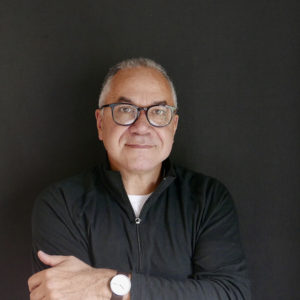
Mark Raymond is an architect and educator. He has practiced on his own account and in collaboration with others on architectural and urban planning and design projects in Trinidad and Tobago and throughout the Caribbean and has also been actively involved with architectural education, lecturing and teaching at institutions globally. After graduating from the Architectural Association in London he worked on projects in Europe with Norman Foster, Conran and Ulrike Brandi before returning to Port of Spain, Trinidad and establishing his own practice. Mark recently completed a PhD through RMIT’s invitational creative practice-based research programme and recently accepted the position of Director of the Graduate School of Architecture at the University of Johannesburg in South Africa – which he hopes to take up once the borders reopen. Current research interests address the engagement of design pedagogy and practice in processes of transformation and social justice.
How to Join
Register to attend the lecture here . Once you have registered, you will be provided with a link to join the lecture via Zoom. This link will also be emailed to you.
The event will also be live streamed to the GSD’s YouTube page . Only viewers who are attending the lecture via Zoom will be able to submit questions for the Q+A. If you would like to submit questions for the speakers in advance of the event, please click here .
Live captioning will be provided during this event. A transcript will be available roughly two weeks after the event, upon request.
Rafael Moneo with Sarah Whiting, “Learning Architecture”
Rafael Moneo with Sarah Whiting, “Learning Architecture”
The GSD is pleased to present a series of talks and webinars broadcast to our audiences via Zoom.
*This lecture will be ONLINE ONLY. For security reasons, virtual attendees must register. Scroll down to find complete instructions for how to register.
Event Description
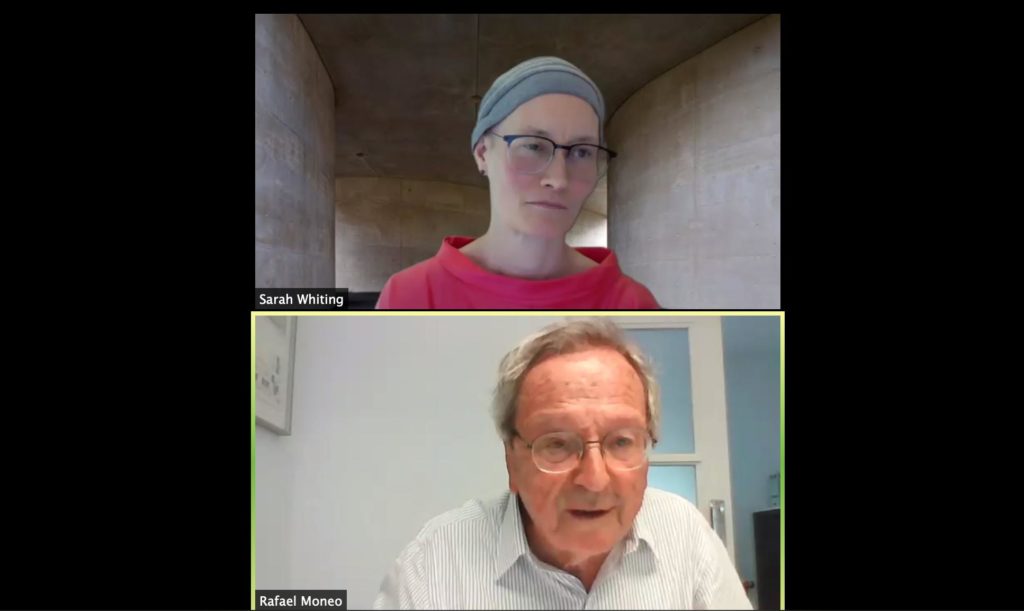
What is it, to learn architecture? In a tribute to pioneering architect and educator, John Hejduk, Dean Sarah Whiting will interview Spanish architect Rafael Moneo about architectural pedagogy past, present, and future. Together, they will take up contemporary questions, examining shifts that have taken place in architectural pedagogy’s engagement of history, theory, and technology. In attempting to answer these questions, they will explore new experiments in the relationship between practice and teaching, including examples from Moneo’s own experiences. With both traditional models and contemporary departures in mind, Moneo and Whiting will speculate on future possibilities for architectural education.
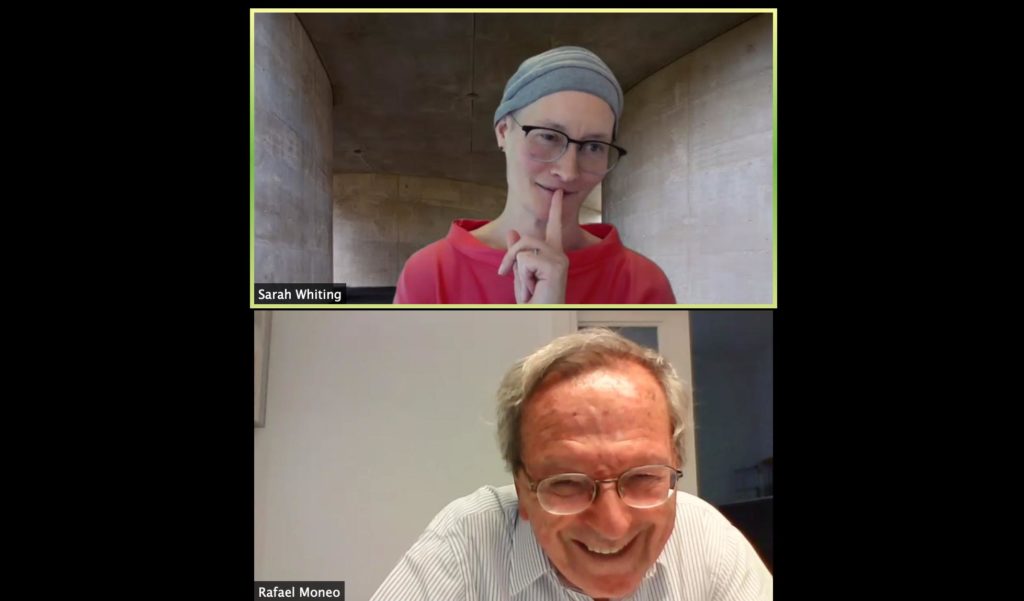
Speaker
Rafael Moneo, AM ’85, was born in Tudela, Spain, in 1937. He graduated in 1961 from the Architecture School of Madrid. He was a professor in the Architecture Schools of Barcelona and Madrid, and he was appointed Chairman of the Architecture Department of the Harvard University Graduate School of Design, where he is now Emeritus Josep Lluis Sert Professor in Architecture.
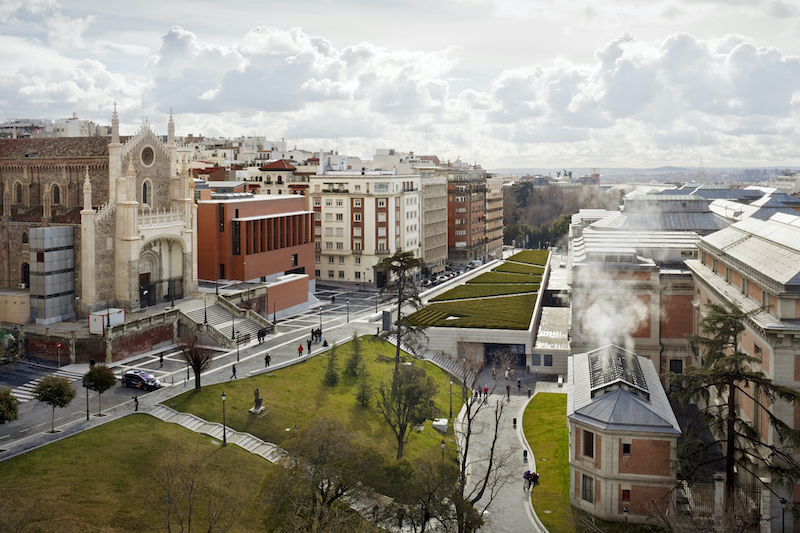
Notable among Rafael Moneo’s works are the National Museum of Roman Art in Mérida, the Kursaal Auditorium and Congress Center in San Sebastián, the Museums of Modern Art and Architecture in Stockholm, Our Lady of the Angels Cathedral in Los Angeles and the Extension to the Prado Museum in Madrid.
He combines his professional activity with that as lecturer, critic and theoretician. His book Theoretical Anxiety and Design Strategies in the Work of Eight Contemporary Architects has been translated in 8 languages.
Member of the Royal Academy of Fine Arts of Spain since 1997 and elected Honorary Member of the American Academy of Arts and Letters in 2013, he has been awarded numerous distinctions among them the Pritzker Prize for Architecture in 1996, the Royal Gold Medal of the Royal Institute of British Architects in 2003, the Prince of Asturias Prize in the Arts in 2012, the National Prize for Architecture in 2015 and the Praemium Imperiale by the Japan Art Association in 2017.
Sarah M. Whiting, Dean and Josep Lluís Sert Professor of Architecture, joined the GSD as Dean in July 2019. She is a design principal and co-founder of WW Architecture, and served as the Dean of Rice University’s School of Architecture from 2010 to 2019. [more]
How to Join
Register to attend the lecture here . Once you have registered, you will be provided with a link to join the lecture via Zoom. This link will also be emailed to you.
The event will also be live streamed to the GSD’s YouTube page . Only viewers who are attending the lecture via Zoom will be able to submit questions for the Q+A.
Live captioning will be provided during this event. After the event has ended, a transcript will be available upon request.