LA DALLMAN Architects wins 2021 Progressive Architecture Award for transformation of 1901 Wisconsin grain elevator
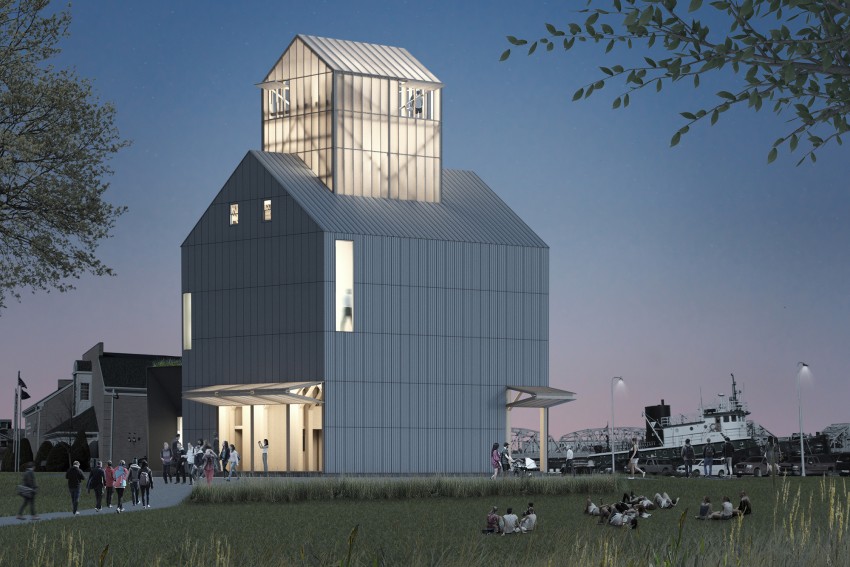
The transformative new design for the Teweles and Brandeis Grain Elevator in Sturgeon Bay, Wisconsin by LA DALLMAN Architects, the firm of Grace La (MArch I ’95) and James Dallman (MArch ’92), is one of six projects honored with a 2021 Progressive Architecture Award by Architect magazine. Now in its 68th cycle, the annual awards recognize innovative unbuilt projects, with this year’s awardees celebrating “architecture in service of the greater good.”
“This project shows how the structures that dot the landscape and are inherently recognized by us as a certain typology could be transformed for reuse, recognition, and a sense of place,” explains juror Daimian Hines, who was joined on the jury by GSD Professor in Practice of Architecture Jeanne Gang and Koray Duman.
At the GSD, La is professor of Architecture, chair of the Practice Platform, and former director of the Master of Architecture Programs. She is currently teaching the option studio “BRIDGE WHERE YOU ARE: The Anamorphic Double” and previously led an option studio with Dallman in the spring of 2019.
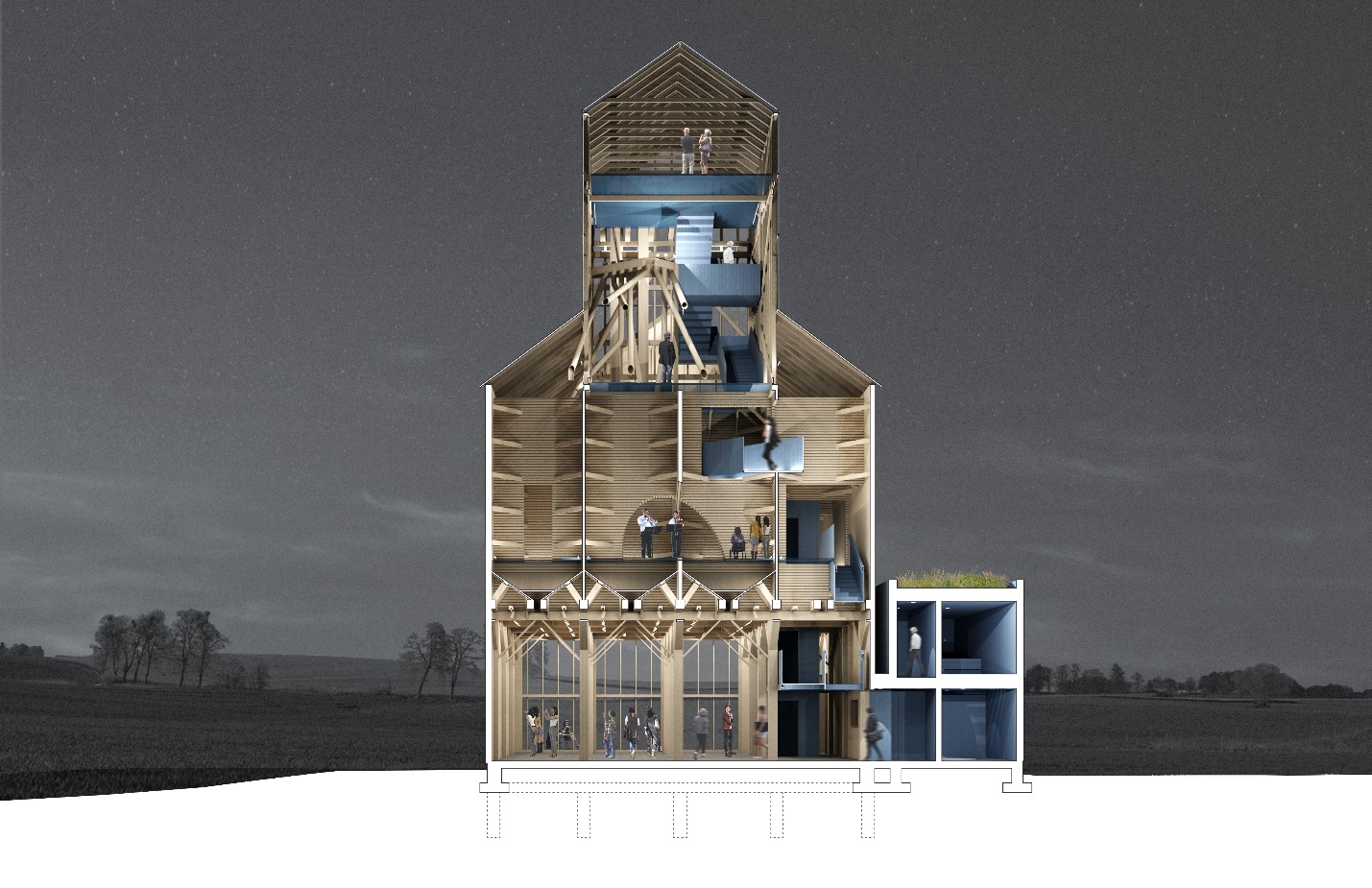
Built in 1901, the harbor-front Teweles and Brandeis Grain Elevator was decommissioned in 1960 and sat idle for the next 50 years. When it was facing demolition in 2018, a campaign to save the structure led to the involvement of LA DALLMAN Architects and its engineering team. With strategic subtractions and additions to the utilitarian structure, their adaptive reuse design reimagines the site as a new performance space and tourist destination.
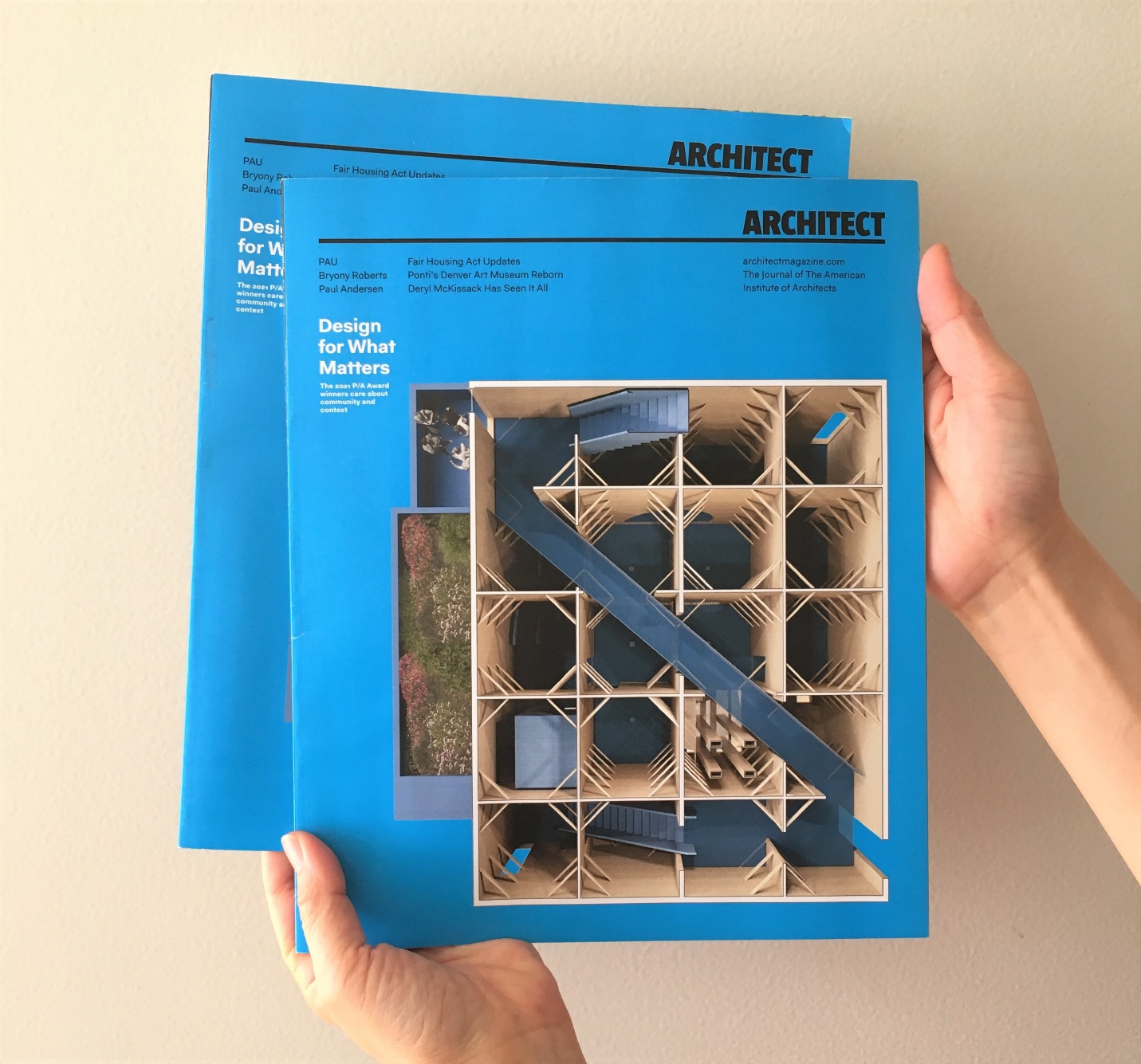
As part of the P/A Award, the Teweles and Brandeis Grain Elevator project is featured on the cover of Architect magazine’s March 2021 issue.
“Along with our client and engineering team, we are honored to receive such important recognition for this project. It epitomizes the potential of public spirit and catalytic, civic space,” says Dallman. “It is not often that a community-driven rehabilitation of an historic structure receives a PA Award, and that makes this very special for everyone involved. It suggests a more layered and transformative approach to design.” Learn more about the project.