Lars Lerup was perhaps the most provocative urban thinker of his time. With an unconventional blend of inquisitive observation and wild speculation—aided by a dual gift for clarity and hyperbole—his prolific graphic and written output shaped the way we understand the American city. A towering figure in academia, his life and work touched countless individuals across several generations. A charismatic man with a warm and expansive personality, he leaves behind many friends.
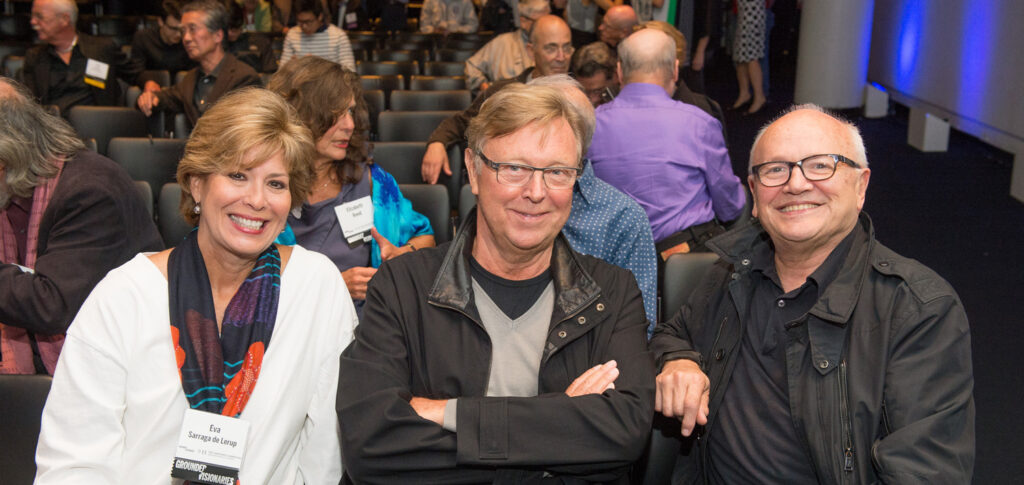
Lars was born in 1940 in Växjö, Sweden. He often recalled his childhood, in the outskirts of a small town, at the edge of the northern taiga, as marked by the dual influence of the immensity of the forest and an emotionally absent father. He left home for Stockholm at age sixteen to pursue studies in civil engineering. Soon after graduating in 1960, Lars moved to the United States, where he studied architecture, obtaining a degree from the University of California, Berkeley in 1968. He continued his studies at the Harvard Graduate School of Design (GSD), where he graduated with a MAUD in 1970.
During the 1970s and ’80s Lars was based in Berkeley, where he taught for two decades, but he remained involved in the ongoing debates on the East Coast, acting as a bridge between both centers of architectural discourse in the country. During this period, he was an active participant in Peter Eisenman’s Institute for Architecture and Urban Studies, contributed one of the seminal issues to Steven Holl’s Pamphlet Architecture, and was a regular visitor at the GSD.
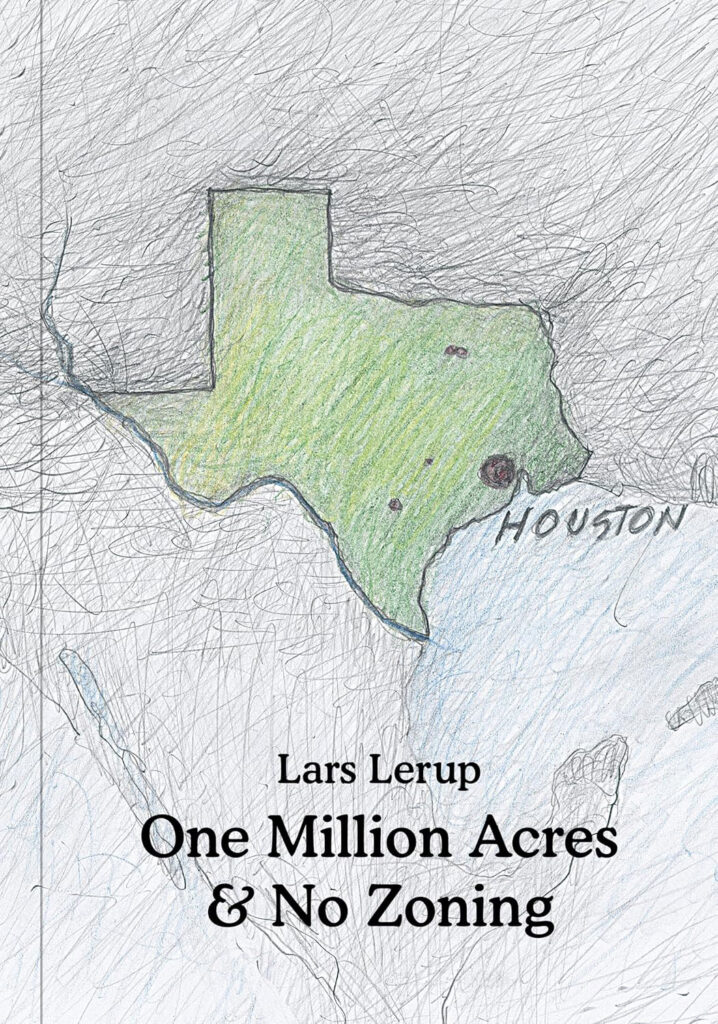
In 1993 Lars moved to Houston, Texas, to become the dean of the Rice School of Architecture. Once there, he brought a cadre of free-wheeling collaborators who, for a few years, created a buzzing atmosphere of experimentation. Living in the quintessential postwar, car-centric American city was a puzzling experience for the Swede, who gradually turned Houston into the crux of his writing on contemporary cities. Starting with his article “Stim & Dross,” published in Assemblage in 1994, Houston continued to gain centrality in Lars’s thinking, becoming the subject of several books, including After the City (2000), One Million Acres & No Zoning (2011), and The Continuous City (2018).
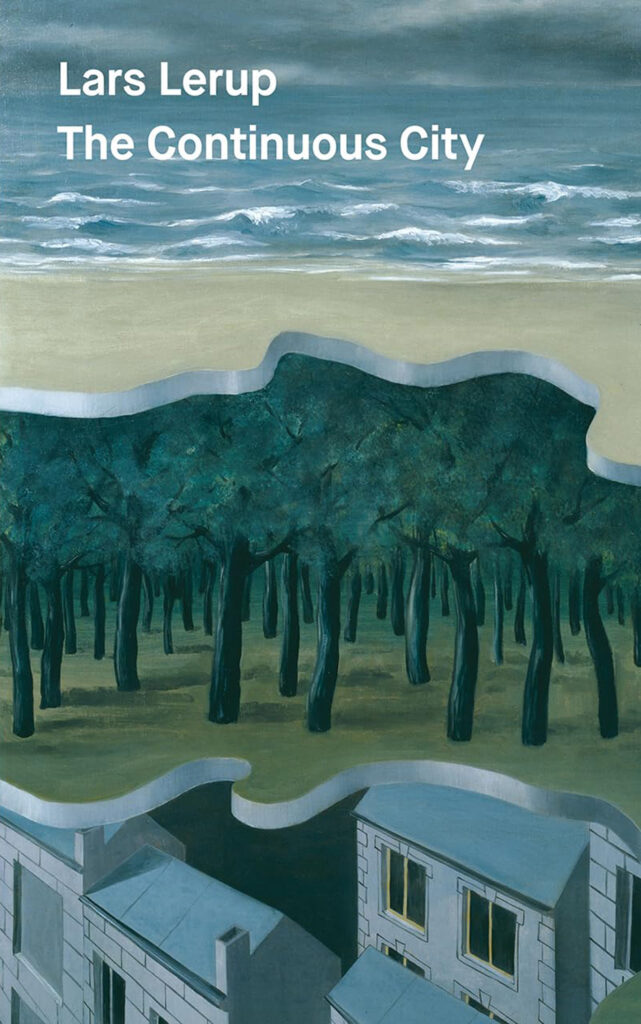
As I wrote in the introduction to that latter publication, Lars’s way of thinking and writing about the city could be described as a hunter–gatherer empiricism: it departed from observations of objects and phenomena in the real world to theorize them—first by naming them, and then by setting them into relationships with other objects or phenomena, as if building a collection of fragments that formed a system of sorts. Lars’s systems were full of gaps and fissures, and their components, even if interdependent, always retained their discreteness and autonomy.
This approach was especially useful when applied to the study of contemporary cities, vast assemblages where boundaries between things are ambiguous, often overlapped or nested within each other, and where it is hard to tell how or to what extent parts integrate into larger wholes, or even decipher the scales of the relationships at work. Lars’s refusal to overtheorize or simplify the level of complexity of urban conditions was his primary contribution, and it kept his thinking and writing sharp for decades.
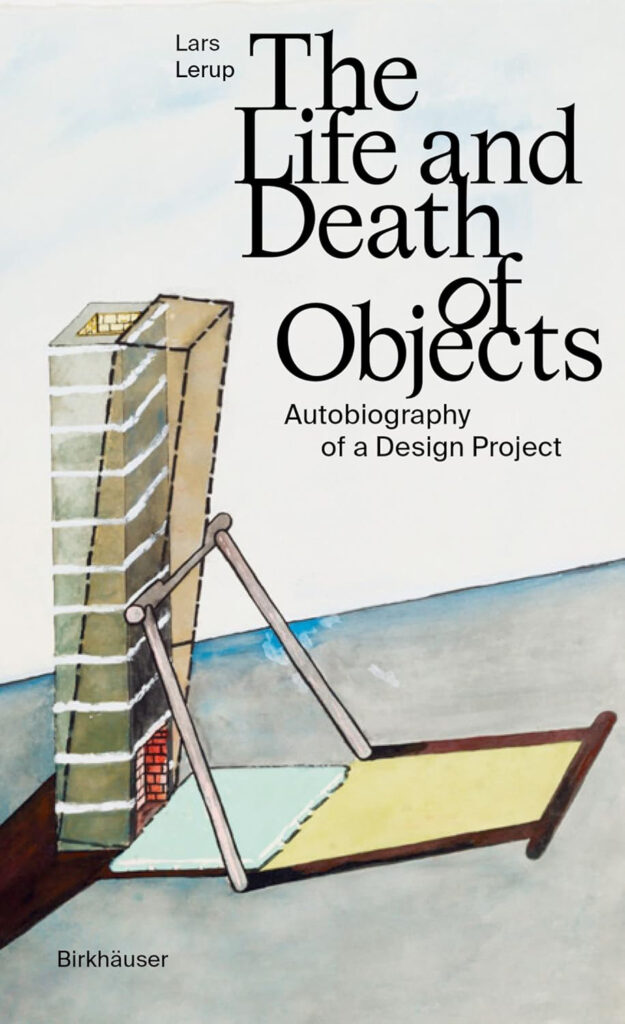
Cities where, however, not the only topic of interest for Lars, who had an eclectic list of obsessions and recurring themes, which included everything from furniture to geological formations. Often he explored these preoccupations through speculative designs and through his drawing practice, which was equal in originality and relevance to his writing.
As a man, Lars was, like many of us, full of contradictions. He was open-hearted but elusive, expansive but vulnerable, a loner but deeply devoted to family—he adored his son, Darius, and his wife, Eva. He was a workaholic but also lazy as only a hedonist can be. . . . Perhaps more than anything he was large, as in larger-than-life: he took up a lot of space in the lives of the people around him. It is unavoidable that when somebody like that departs, they leave behind a void commensurate with the impact they made in others. In the case of Lars, the gaping void we feel is mitigated by myriad memories of his wit and charming intellect, as well as by a body of work that helps us make better sense of the world in which we live.
About Jesús Vassallo:
Jesús Vassallo is a registered architect and an associate professor at Rice University.