How Three Alumni Built a Go-to Firm with Hong Kong Roots and Global Reach
The three principals of COLLECTIVE first met at the Harvard Graduate School of Design.
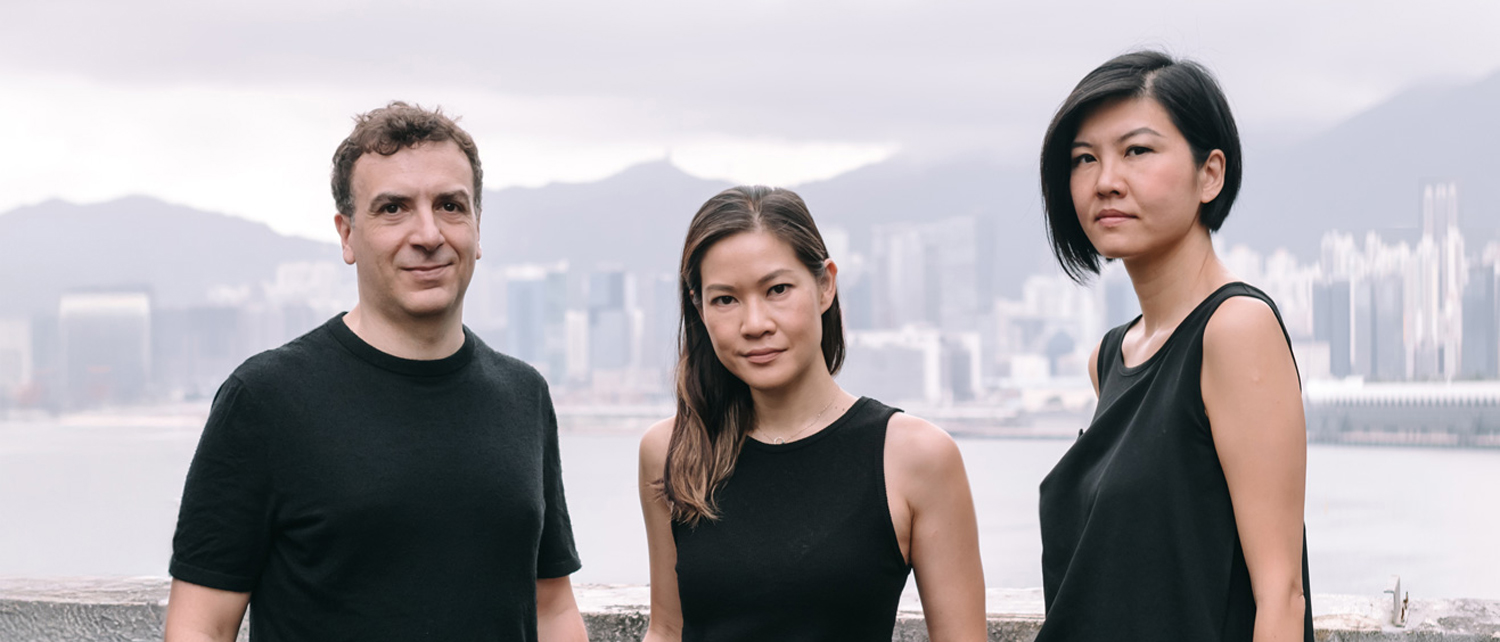
Established a little more than a decade ago, COLLECTIVE is responsible for a striking array of cultural, exhibition, and tower projects ranging in scale from a convention center in Malaysia to a home in western Massachusetts. Based in Hong Kong and working around the globe, the firm’s origins trace back to a single point of convergence: what founder Betty Ng (MArch ’09) calls “the place that brought us together in the beginning”—the Harvard University Graduate School of Design (GSD).
Ng, Juan Minguez (MArch ’09), and Chi Yan Chan (MArch ’08) arrived at the GSD from diverse national and professional backgrounds, forming part of an international cohort whose relationships extended beyond their time in Gund Hall. After graduating, they joined leading firms—including OMA, Herzog & de Meuron (HdM), and SO–IL—and worked in offices around the world before reuniting in Hong Kong and joining COLLECTIVE, a practice that reflects the collaborative ethos its name implies.
For Ng, this long arc illustrates what she describes as an “amazing mechanism” of the GSD: its ability to foster enduring connections within an international community, even as careers unfold in different parts of the world. COLLECTIVE embodies that idea—an alumni-founded practice shaped by three distinct paths and sustained by relationships first formed at the GSD.
Betty Ng
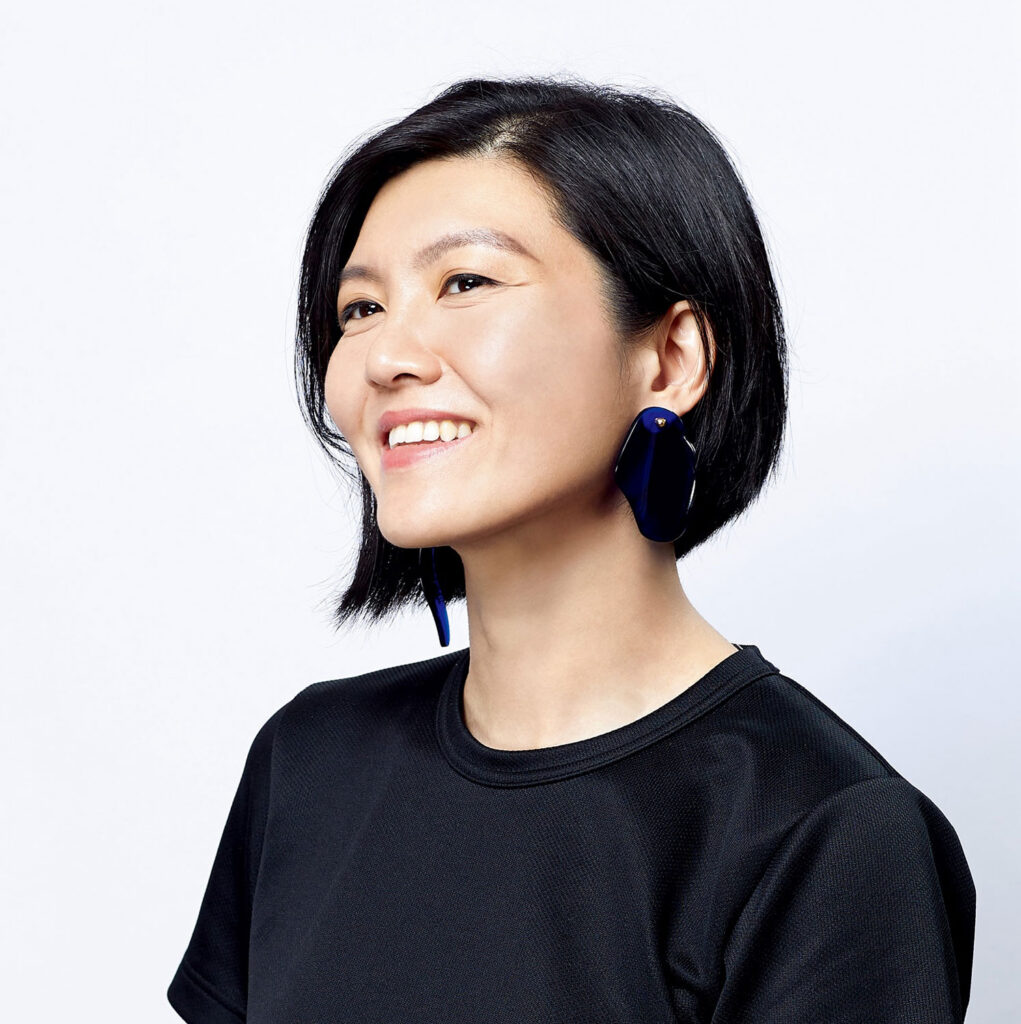
Before Ng arrived in Cambridge, she had already charted an ambitious course from Hong Kong, where she was born and raised, to Cornell University, where she earned a bachelor of architecture, and then to OMA’s Manhattan office. After a year she entered the GSD’s Master of Architecture II program, paused to work for HdM, and ultimately completed her GSD studies in 2009.
Following graduation, Ng returned to Hong Kong to help open a new branch of OMA’s office established to manage projects in the region, especially the master plan for the West Kowloon Cultural District. Within a few years she was promoted to design director and relocated to the firm’s headquarters in Rotterdam, where she led a team of 50 architects alongside Alain Fouraux. These experiences prepared Ng to strike out on her own; she returned in Hong Kong once again and established COLLECTIVE in 2015.
“That first year,” Ng recalls, “I was not quite sure what the firm name should be; I knew I was working alone and longing for colleagues, and I did not want to use a solo name. I had always liked the name COLLECTIVE.” What began as a solitary endeavor would soon evolve into the collaborative practice she had imagined—shaped by partnership, shared authorship, and the enduring bonds initially forged at the GSD.
Juan Minguez
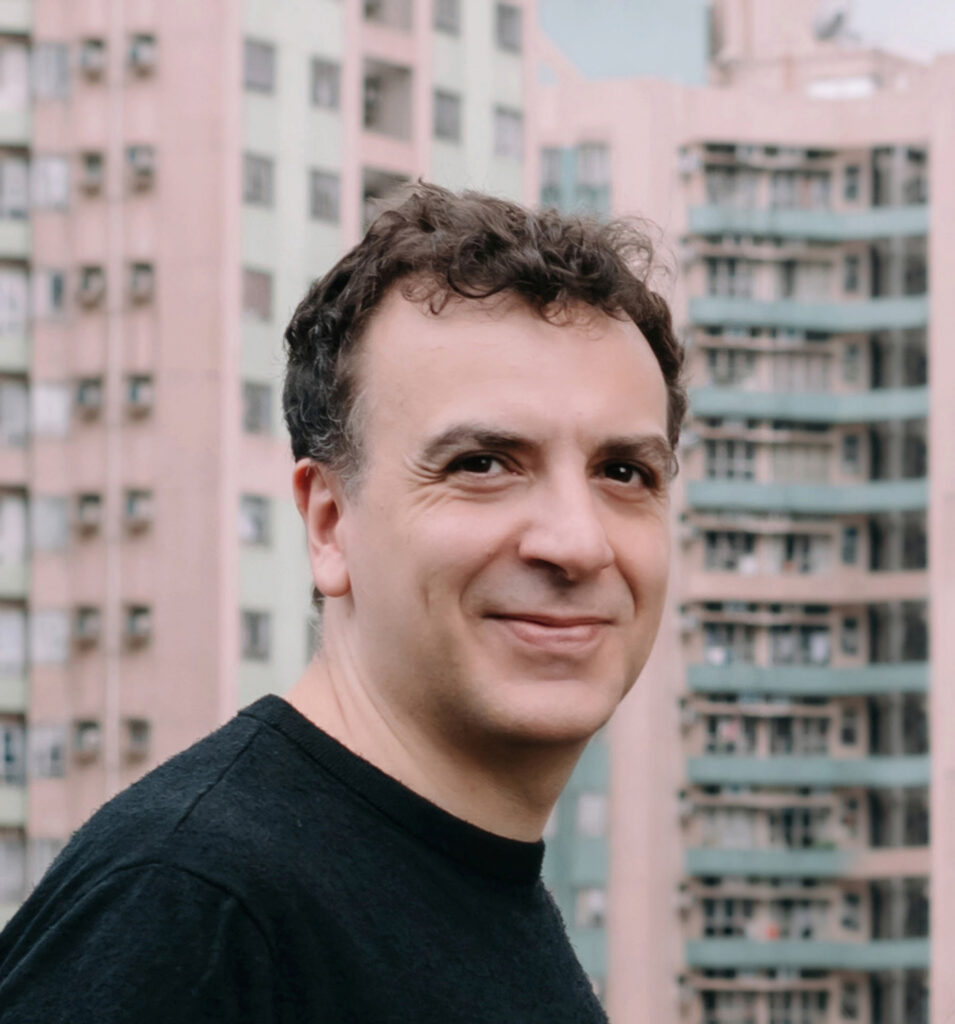
Minguez (MArch ’09) came to the GSD from Madrid, where he had already established a career at a local architectural practice. Trained and working in Spain, he began to feel that staying would narrow rather than expand his horizons. He applied to the GSD in search of what he later described as “a glimpse of the world” before recommitting fully to professional life. What he found at the GSD was less a stylistic shift than an expanded frame of reference—an international community that broadened his understanding of architecture’s cultural and geographic reach.
Graduating in 2009, Minguez faced a turbulent global economy but seized an opportunity in Hong Kong, where OMA was opening a new office. He joined the firm and spent five years contributing to its growing presence in the region, before continuing his work at SO–IL. By the time Ng invited him to join COLLECTIVE in 2016, Minguez had built a career defined by mobility and collaboration on multiple continents. Returning to Hong Kong felt less like coincidence than continuation—a natural extension of relationships originally formed in Gund Hall.
Chi Yan Chan
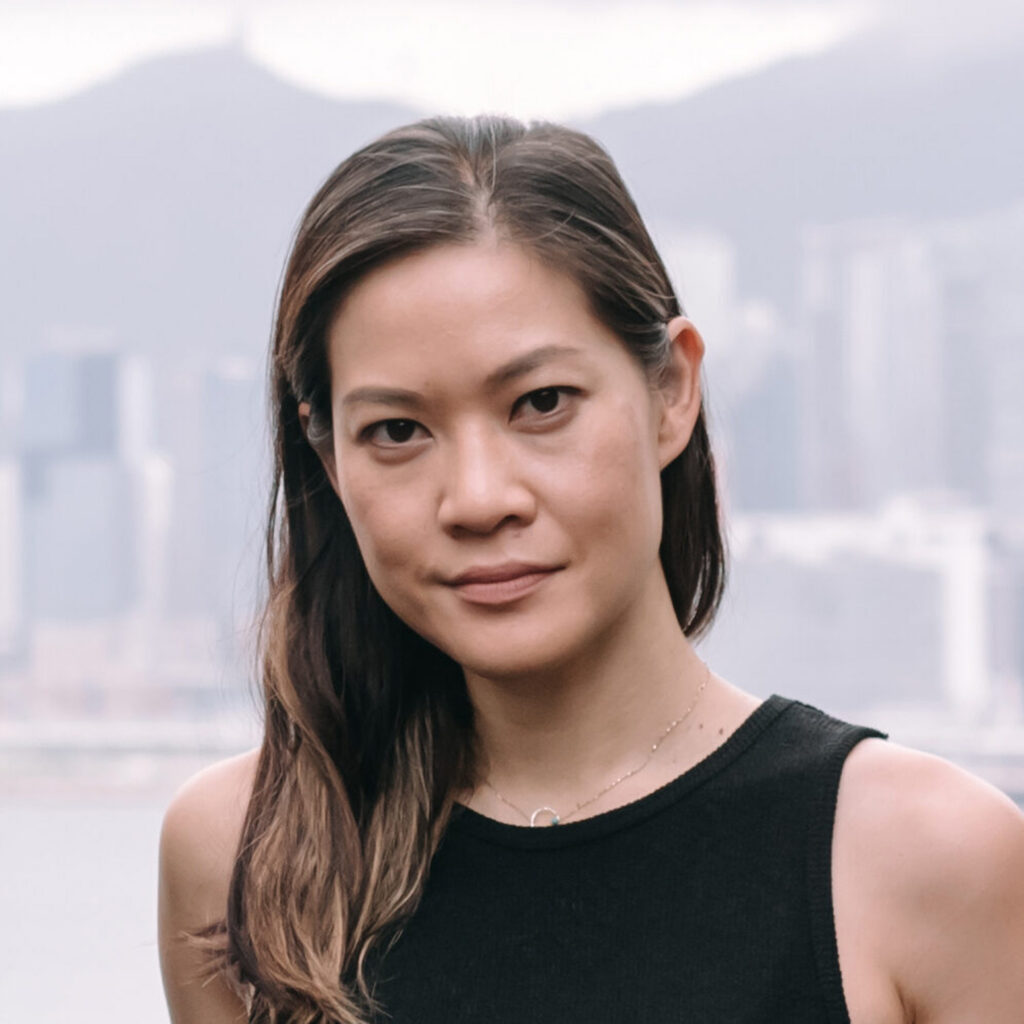
Chan (MArch ’08) landed at the GSD after an already global upbringing—born in Hong Kong, raised in Africa, and educated in the United States. At the GSD, she joined the Studio Basel thesis led by HdM, an experience that proved pivotal. A research trip to Nairobi and close engagement with the Swiss architects led directly to a position at HdM’s Basel office following graduation.
Over the next decade, Chan worked on major cultural projects from concept through construction, including the Tai Kwun Centre for Heritage and Art and later at the construction site for M+ museum, both in Hong Kong. In 2011 she relocated from Basel to Hong Kong to oversee work on Tai Kwun, reconnecting with fellow GSD alumni in the process. After a decade at HdM, she left the firm in 2019. Ng soon reached out, inviting her to join COLLECTIVE. The move brought Chan full circle: back to Hong Kong and into a practice shaped by shared histories at the GSD and complementary professional experiences.
Separate Perspectives, Shared Wavelength
At COLLECTIVE, practice is collaborative. Ng, Minguez, and Chan channel distinct design sensibilities informed by different backgrounds and experiences, especially their time at OMA and HdM. These two iconic firms represent somewhat distinct approaches to design: OMA, often highly theoretical, tends to focus on how a building reflects programmatic needs and human behaviors, while HdM leans toward the tactile, emphasizing material exploration and the building’s physical manifestation. Reflecting on their past work, Ng, Minguez, and Chan see both methodologies intertwined and evolving within their current practice.
“It is very interesting to observe ourselves like the babies from these two schools of thought, that are completely different, yet absolutely complimentary” Ng reflects. That distinction surfaces in playful shorthand during design discussions— “That’s so OMA!” or “How would HdM solve this problem?” Yet, beneath the humor lies something more substantive that has carried over from both firms: the ability to test ideas and move a project forward through sustained exchanges and experiences.
This spirit carries into the classroom: for the past five years, the three partners have co-taught a year-long master of architecture studio at the Chinese University of Hong Kong, integrating research into the design process. There they draw on their experience with cultural projects while using the academic setting to probe new questions. “In a way,” Ng explains, “it’s a two-way shift from what we know and want to share, to what we don’t know and want to learn.” For example, this year’s course focuses on urban agriculture, a topic that dovetails with a project the firm is currently designing for a winery in China’s Yunnan province in the mountainous area of Shangri-La.
As instructors, they position themselves less as auteurs than as editors, guiding students as they develop their own approaches. “We don’t exert our way,” Ng says. Minguez agrees and emphasizes the value of co-teaching with Ng and Chan. “It’s a real advantage for the students, too,” he notes. “They receive intelligence from all three of us.” Chan elaborates, noting that while their perspectives may differ, years of working together have brought them to “a certain wavelength. It works out quite well to be able to both practice and teach,” she says, “but teaching together pushes us to align even more closely.”
Collective Practice in Action
For COLLECTIVE, a project’s success depends on a broad constellation of collaborators, extending beyond the boundaries of the firm itself. “The work that we are most happy with,” Minguez says, “always involves a great team—a great client, great consultants.”
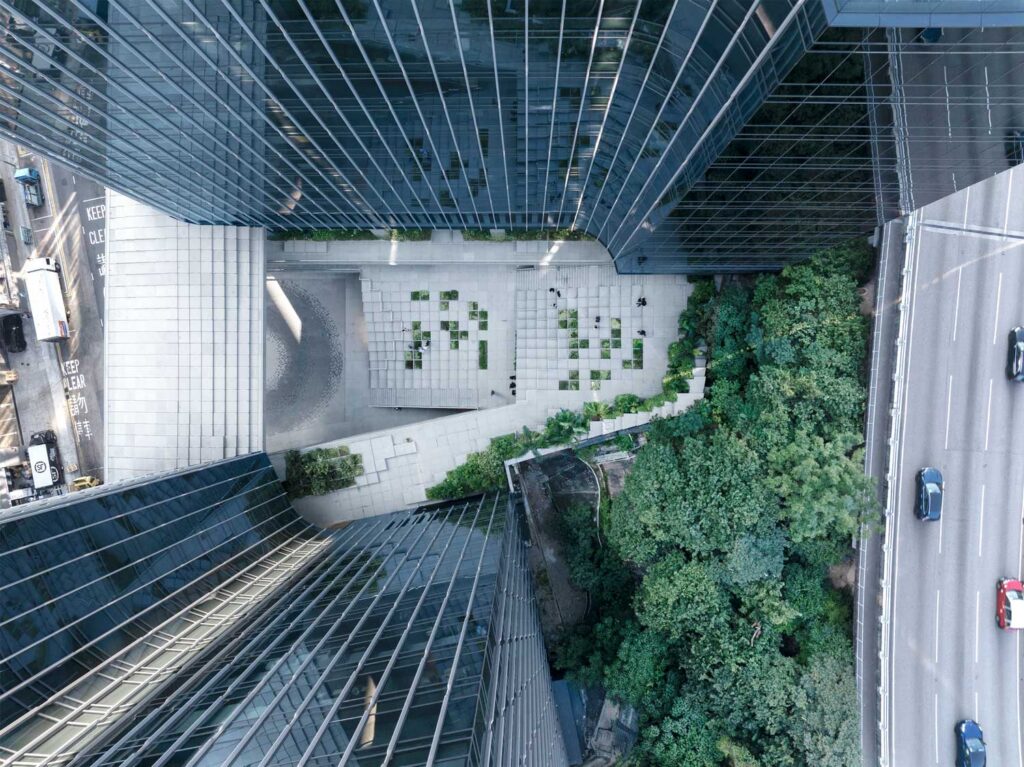
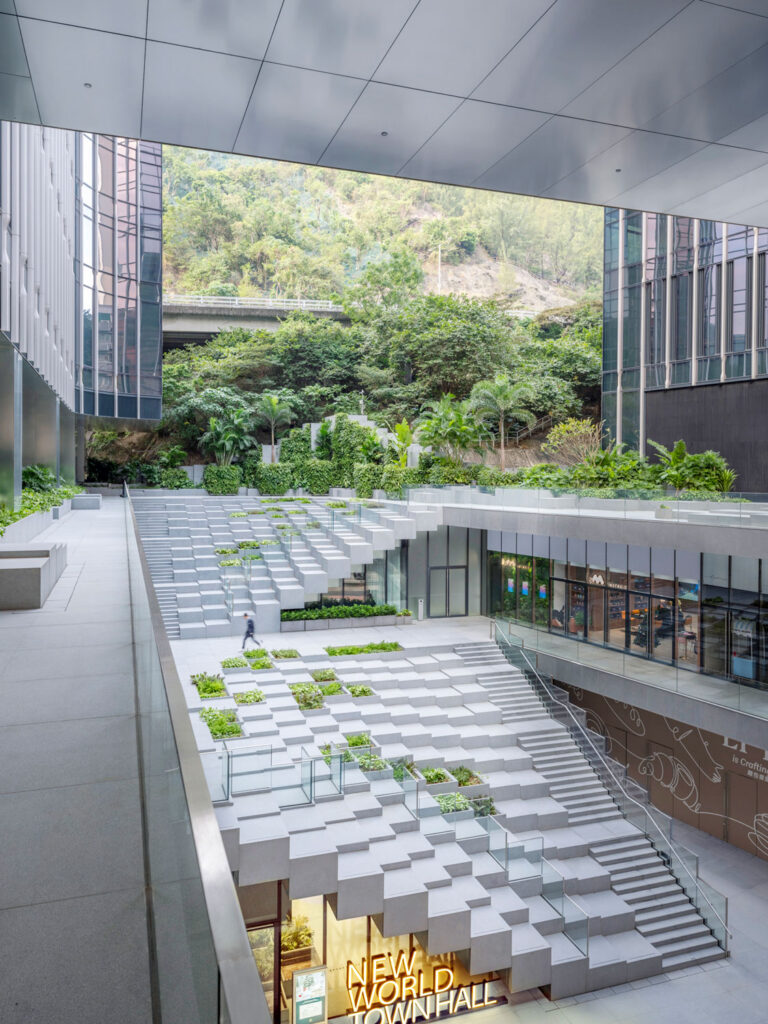
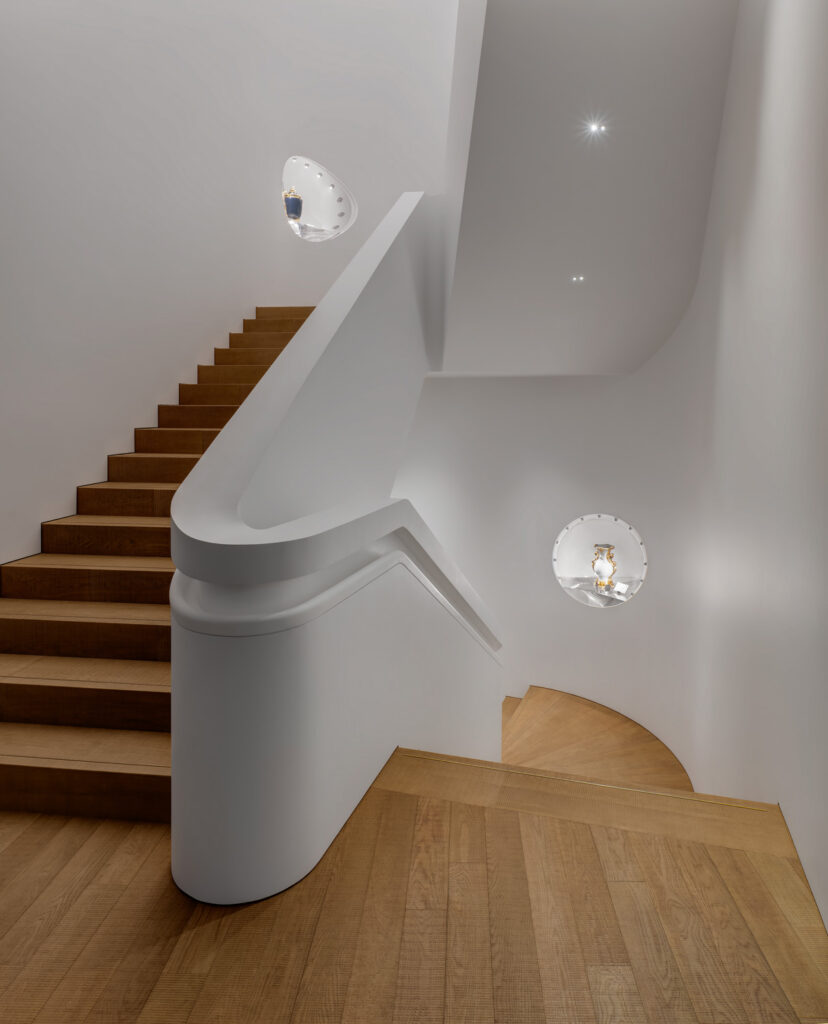
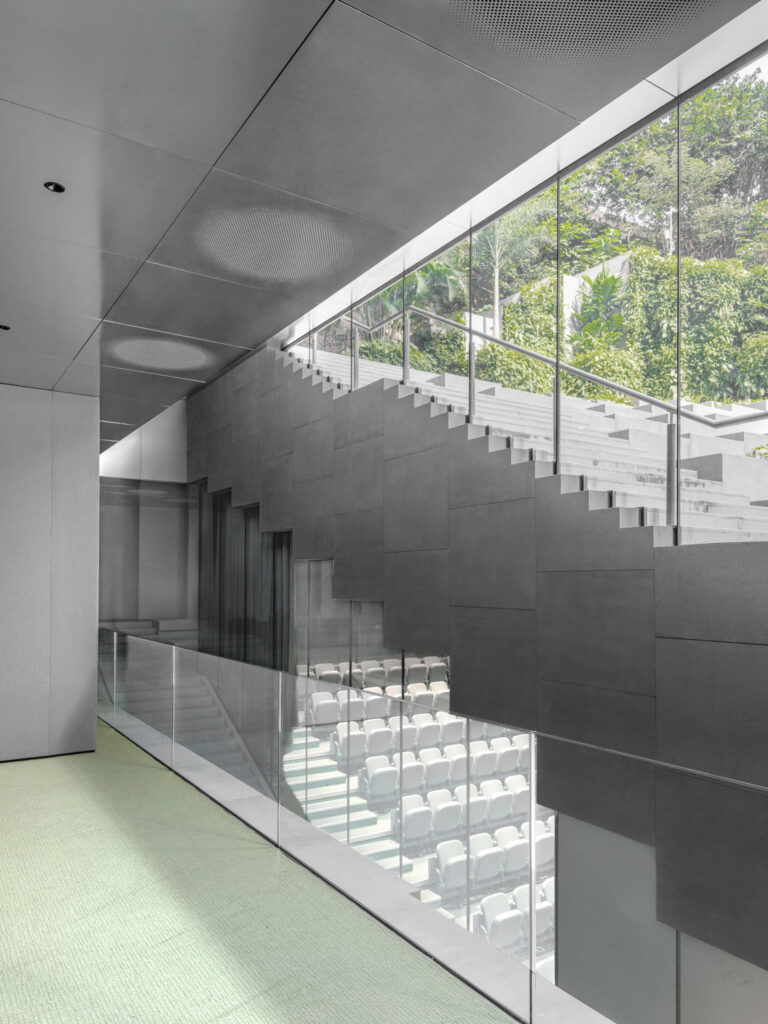
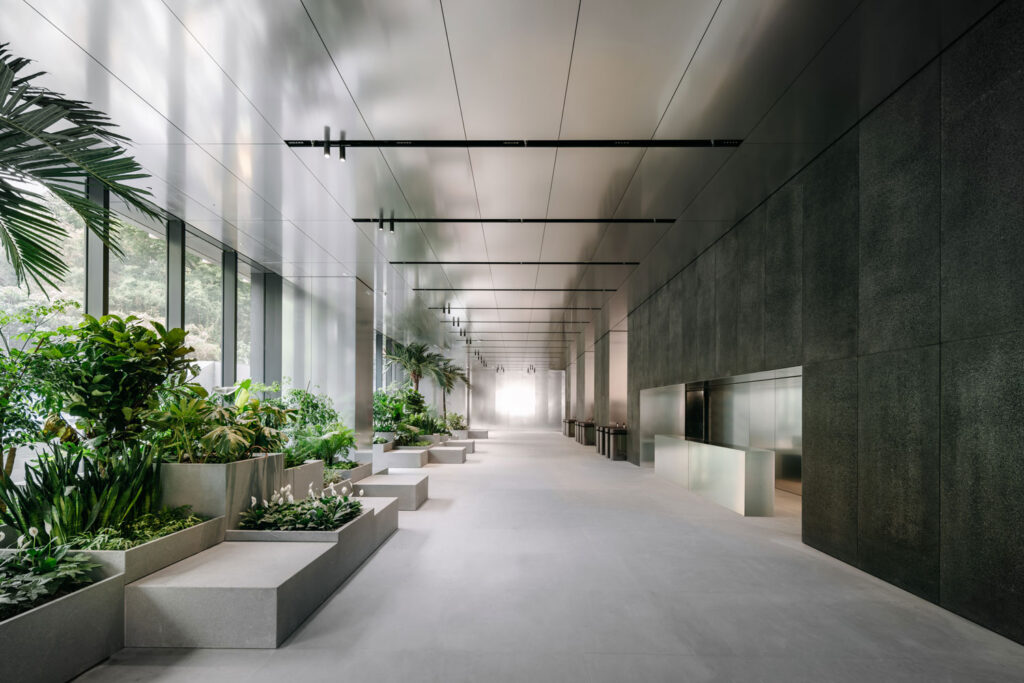
This philosophy found full expression in one of the firm’s most ambitious works: a three-dimensional podium for the twin towers at 83 King Lam Street, a mixed-use development in Hong Kong that merges commercial real estate with civic space. The podium centers on a dynamic, cascading landscape of steps that winds across levels, transforming the zone between the towers into a continuous public realm. Beneath it sits a two-tier, reconfigurable, multifunction auditorium. Commissioned as a young firm and paired with one of the city’s most established offices, COLLECTIVE developed new materials and spatial strategies, demonstrating that design rigor and financial pragmatism can coexist.
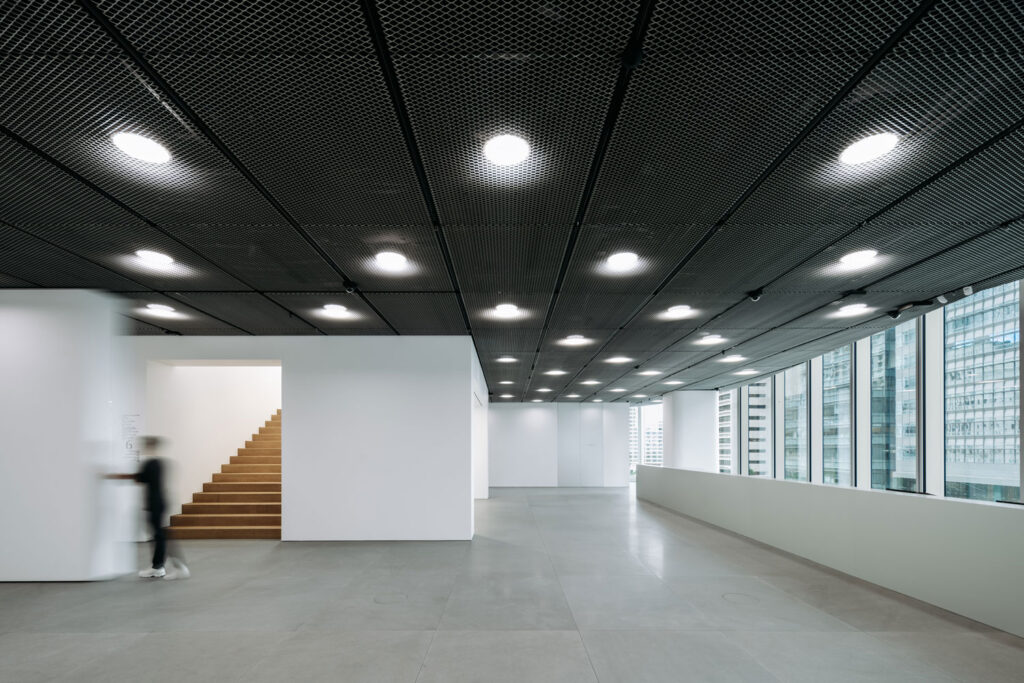
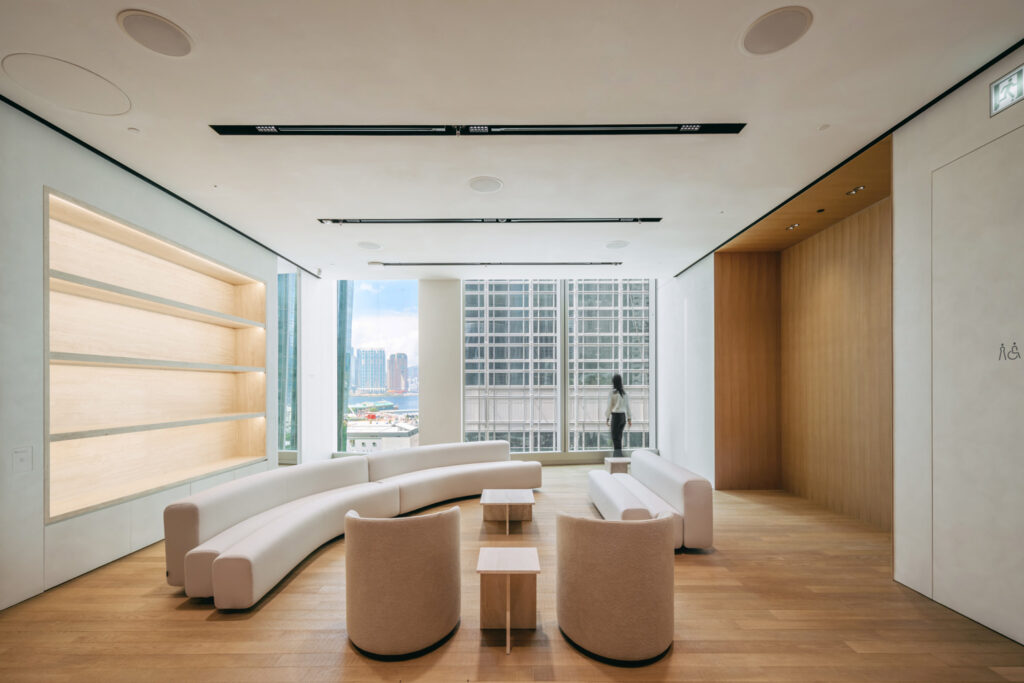
The same ethos guided their design for Christie’s Asia Pacific Headquarters in Hong Kong, located within a newly completed tower by Zaha Hadid Architects. There, COLLECTIVE devised a system of large-scale reusable, movable exhibition walls and integrated ceiling mechanisms that allow the galleries to transform, within hours, into a broadcast-ready auction space. “We are not shy to offer strange solutions that we believe in,” Ng says. “We’ll prove them with research and development.” The client’s willingness to test mock-ups and invest in experimentation reinforced the firm’s belief that architecture is, at its best, a shared enterprise.
In practice and in teaching, COLLECTIVE operates as both structure and philosophy—a model shaped by the global trajectories that began at the GSD. What unites the principals’ work is not uniformity but conversation: a belief that architecture emerges most powerfully when distinct voices converge. In that sense, the firm’s name is less a label than a method—one that continues to evolve, collectively.