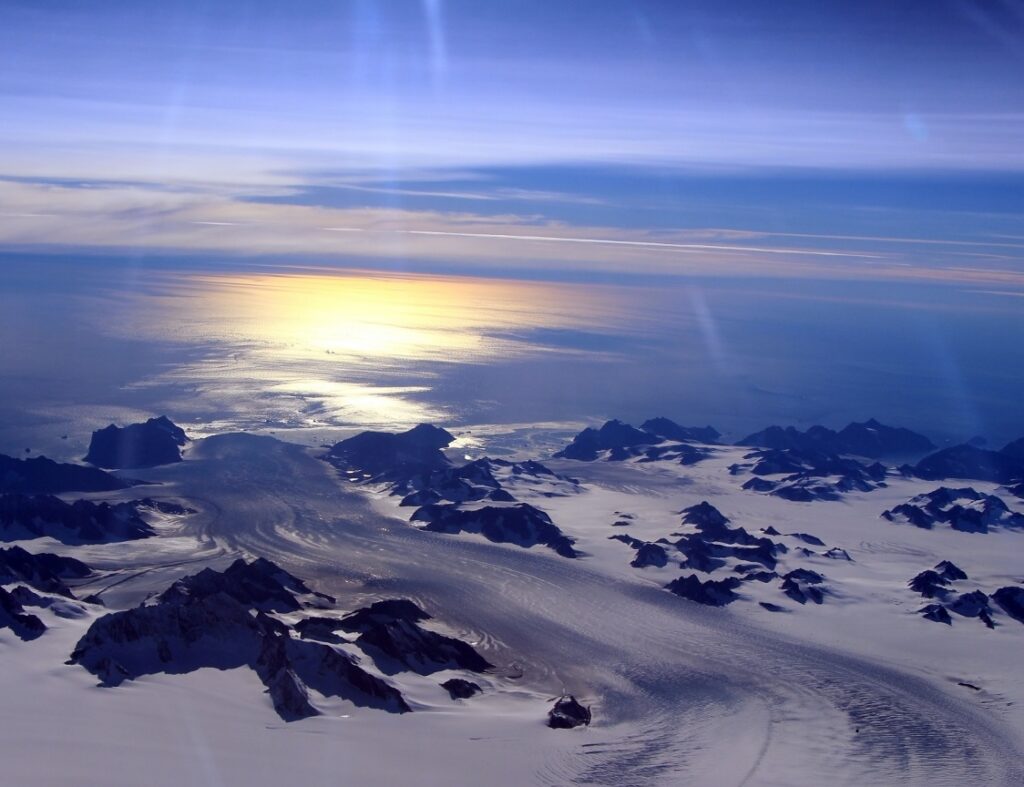
In Greenland, climate change is no abstraction. It is visible and visceral—in sediment clouding fjords, land rising as glacial weight recedes, and lakes vanishing as meltwater cuts new channels through ice and stone. The terrain is shifting in real time. In this state of flux lies both existential risk and a rare opportunity: a chance to rethink how the Arctic is built.
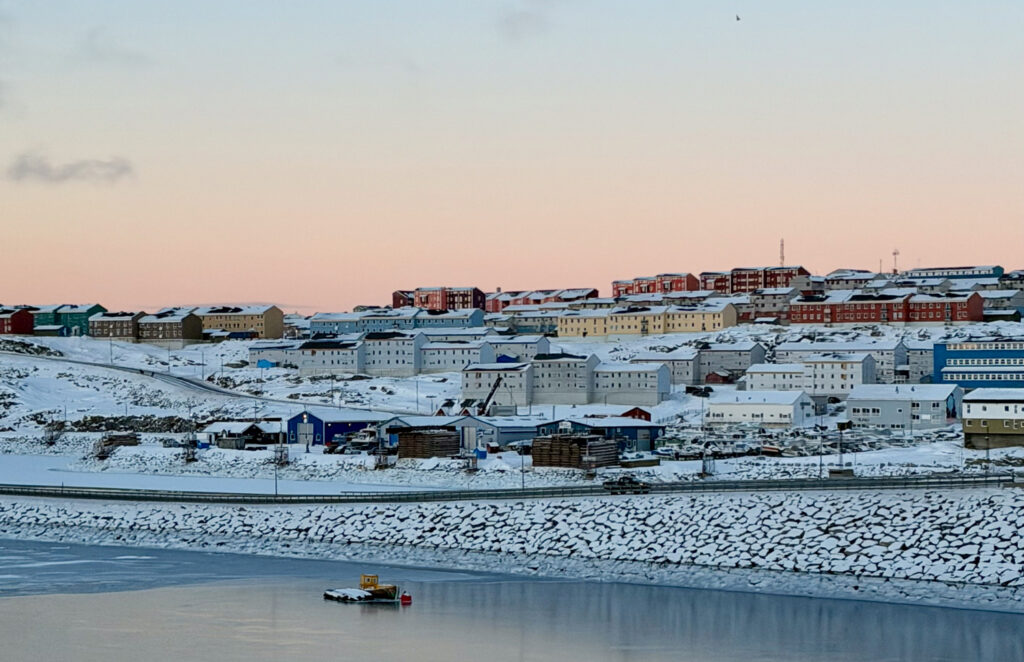
At the Harvard Graduate School of Design (GSD) this spring, that volatility has become a driver of change. Danish architect Dan Stubbergaard, professor in practice of urban design at the GSD, conceived and leads the semester-long studio “Arctic Futures: Designing Circular Systems.” In this design course, students turn to Greenland’s capital, Nuuk—where much of the country’s population and economic activity are concentrated—and ask how the city might build on existing communities, infrastructure, and ecological systems to forge a more equitable and resilient future.
Amid accelerating climate change, the push for expanded mining, and intensifying geopolitical interest in the Arctic, the studio challenges students to imagine forms of urbanization that reduce carbon emissions, curb resource exploitation, and strengthen—rather than erode—Greenland’s cultural identity. At the center of their inquiry is glacial flour, a fine sediment produced by moving ice and shaped by the same forces now reconfiguring the land.
“What’s compelling about Greenland, and the Arctic as a whole, is that we’re designing within a dynamic landscape,” Stubbergaard says. “As the ice recedes, the ground literally shifts beneath us. Climate change becomes immediate and physical—and it changes how we design.”
From Byproduct to Building Block
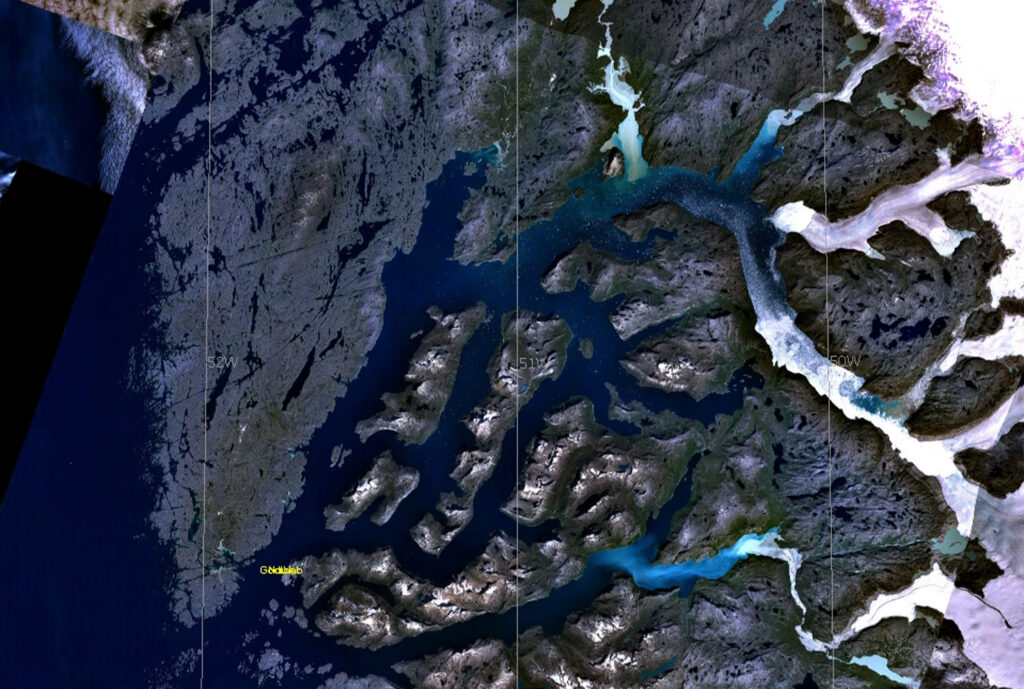
Glacial flour (gletsjermel in Danish) forms as glaciers grind bedrock into microscopic particles, which are then carried away by meltwater. Once dismissed as a byproduct of erosion, this mineral-rich, powdery silt is now drawing scientific and commercial interest. Rather than treating it as another export commodity, the studio positions the sediment as the foundation for new urban and ecological systems.
Glacial Flour: From Bedrock to Sediment
As Arctic ice retreats, growing volumes of glacial flour enter Greenland’s waterways and accumulate along its shoreline. Studies suggest that it can replenish depleted soils and increase crop yields—by as much as 30 percent in some trials—while requiring less energy and causing fewer environmental harms than synthetic fertilizers. Researchers are also exploring its potential to stimulate aquatic ecosystems, store carbon, and serve as a low-carbon alternative to cement.
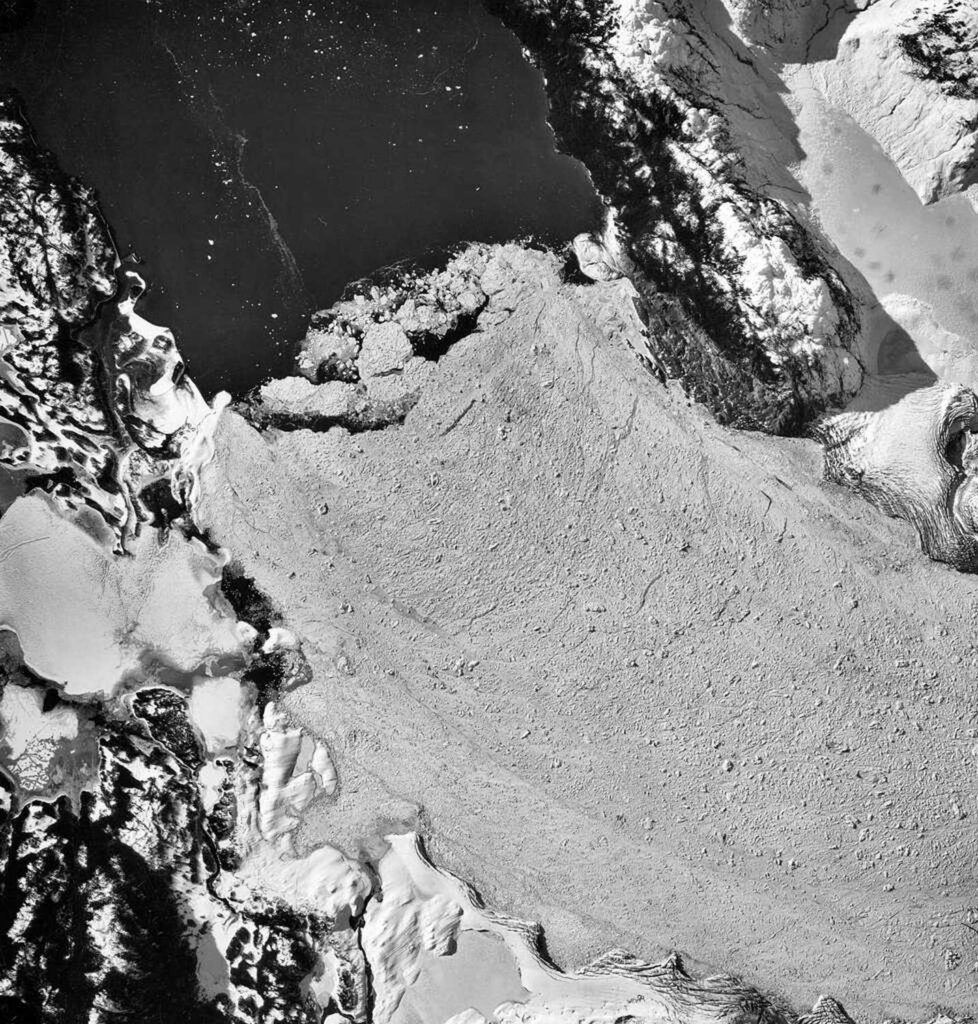
With more than one billion tons generated each year, glacial flour could become a major new revenue stream for Greenland. Currently, the country’s economy relies primarily on fishing, an industry increasingly imperiled by warming waters, acidification, and overharvesting. The island also boasts caches of iron ore and rare earth elements, but these resources remain buried underground—and on the whole, Greenlanders would like them to stay there. Fortunately, Greenland has avoided widespread extractive mining, largely due to the unforgiving Arctic climate, limited inter-island transportation networks, and the community’s desire to preserve their native landscape.
Glacial flour, however, offers an intriguing proposition. Unlike these other natural resources, which would be accessed through invasive practices, glacial flour washes out from under the ice caps as they melt, flowing into the open coastal waters and settling in shoreline deposits. At present, compact, mobile equipment is used to retrieve the fine, nutrient-dense sediment deposited in river deltas, lakes, estuaries, fjords, and meltwater channels near retreating glaciers. After collection, the substance is dried, packaged, and prepared for transport and eventual use. This harvesting model remains difficult and costly to scale. Yet, with strategically designed infrastructure, the burgeoning glacial flour industry could develop into an economic boon for Greenland that benefits the entire planet.
The critical issue, then, is not whether to capitalize on glacial flour, but how to build this nascent industry differently from the start—embedding circular practices that refuse the extractive patterns long responsible for social and environmental harm. How might the sediment be harvested without damaging fragile coastal ecosystems? Where should it be processed and stored? And what governance structures could ensure that financial returns remain in Greenlandic hands? Seen through this lens, the material becomes less a commodity than a catalyst: a means of rethinking how Nuuk might grow in relation to land, economy, and culture.
Reframing the Arctic City
Greenland’s cultural heritage has been shaped by centuries of Arctic life. Nearly 90 percent of the population is of Inuit heritage, and the country’s settlement patterns, building practices, and social traditions evolved in close response to climate and terrain. Beginning in the 18th century, outside economic and political forces—including British whaling outposts and, later, Danish colonization—began to redirect Nuuk’s trajectory. Military installations during and after the Second World War further impacted the country’s spatial order, as did Danish modernization efforts that often prioritized standardization over Inuit spatial and cultural practices. As a result, the island’s built environment has long been molded by decisions and agendas arriving from elsewhere.
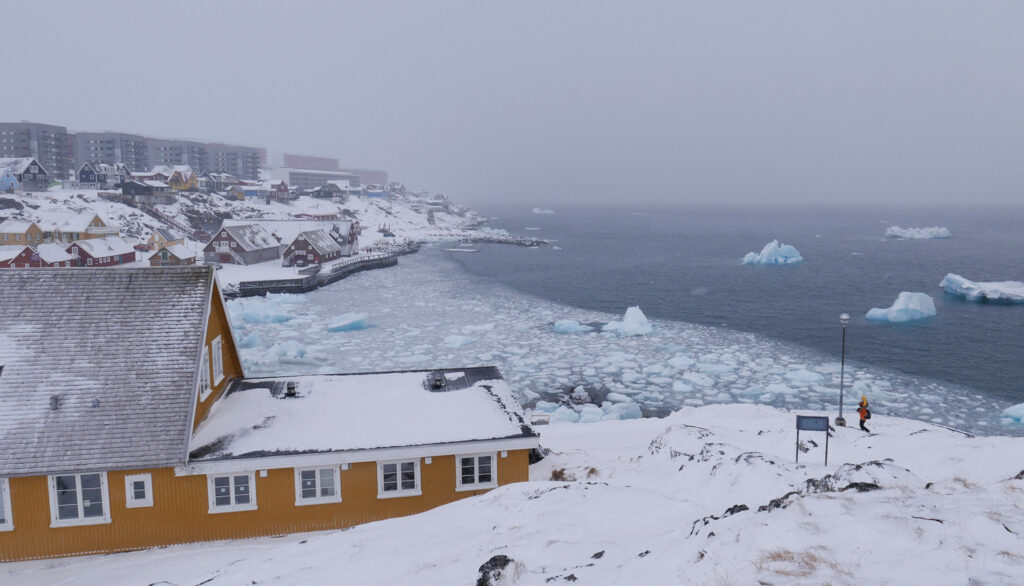
Today, Nuuk—home to approximately 20,000 people, nearly one-third of Greenland’s total population—stands at a threshold, as a new phase of expansion begins to take shape. In this context, Stubbergaard’s studio has focused on the northern district of Paradisdalen-Kuaninnguit, envisioning not a single building but an urban framework—one that weaves together coastal systems, harvesting networks, processing facilities, housing, and more to anchor the emerging glacial flour industry while ensuring its benefits remain local.
An Arctic urbanism rooted in Greenlandic and Inuit knowledge would look markedly different from one shaped by inherited Western templates. Historically, Inuit settlements were adaptive and often seasonal, constructed from snow, stone, animal skins, and peat in close alignment with shifting environmental conditions. Under Danish rule, by contrast, permanent buildings increasingly relied on imported timber and later concrete, embedding foreign material systems and spatial logics in the landscape. As Nuuk prepares to expand once again, the question of whose knowledge will guide what comes next becomes newly urgent. The growth of the glacial flour industry could transform urban life in Nuuk through the creation of new facilities, housing, jobs, and transportation systems. The studio is thinking through this potential reconfiguration from the ground up.
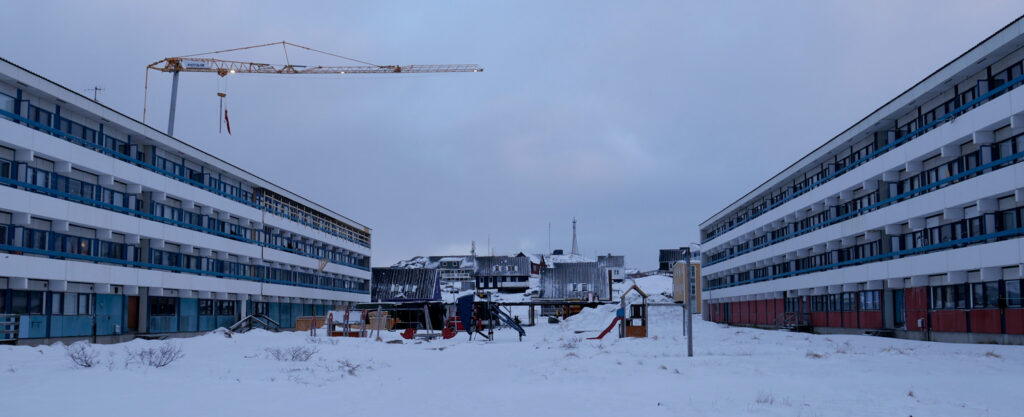
“As outsiders, we have to ask whether we can contribute to a new chapter in Nuuk with real understanding and respect for Greenlandic life and culture,” Stubbergaard says. “It can’t be a top-down exercise—we’re trying to work in a way that is genuinely contextual and cooperative.”
Climate change intensifies the stakes. As glaciers retreat, sediment becomes both evidence of warming and a means of reshaping livelihoods and economic possibilities in and around Nuuk.
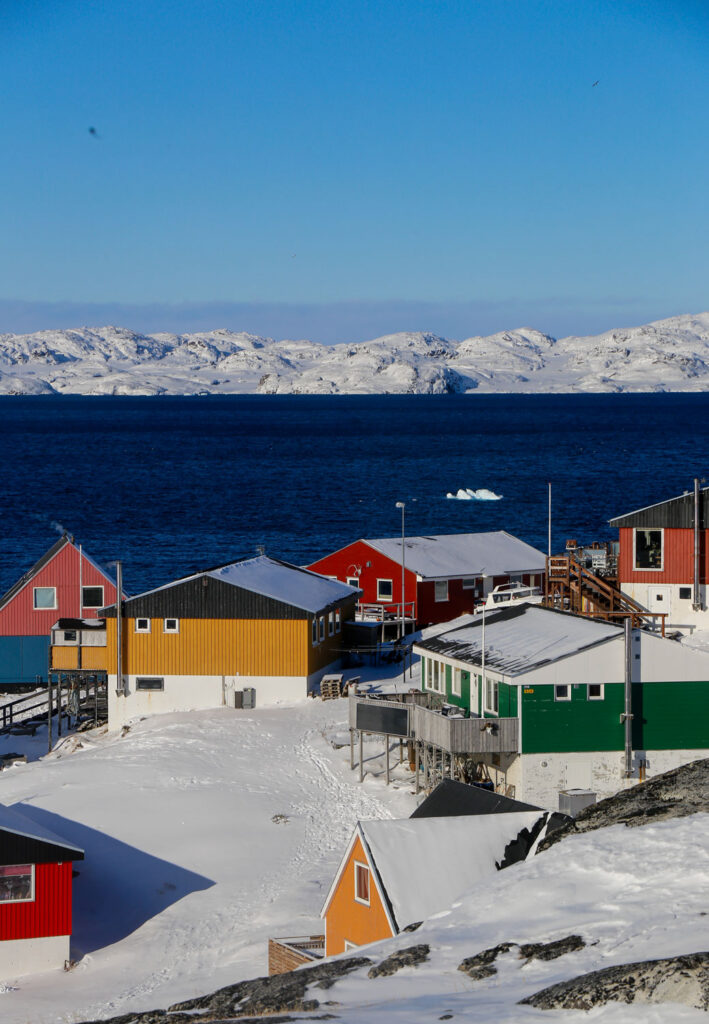
Against this backdrop, Stubbergaard has asked students to work across scales. At the regional and even planetary level, they trace sediment flows and climate systems. At the human scale, they consider daily life in Nuuk, asking how new forms of industry might reshape housing, food systems, mobility, and public space. The aim is to develop approaches that are culturally grounded and locally accountable, not imposed from afar.
“The challenge is to move from these large themes—climate change, glacial flour, Arctic urbanization—into a specific way of working in Nuuk,” Stubbergaard explains. “We’re trying to learn from the past while proposing new forms of Arctic development.”
Designing What Comes Next
To ground their proposals in local knowledge, students have engaged closely with Greenlandic experts and institutions. Geologist and climate scientist Minik Rosing has offered insight into glacial processes and Arctic warming, while Nuuk-based architects Bert De Jonghe (MDes ’21, DDes ’25) and Anne Ignatiussen, of the firm Transpolar Studio, have shared experience navigating the region’s regulatory frameworks and climatic constraints. Civic and cultural leaders, in turn, have contributed perspectives on Inuit history and contemporary life, helping to ensure that students’ design speculations remain anchored in lived experience rather than abstract projection.
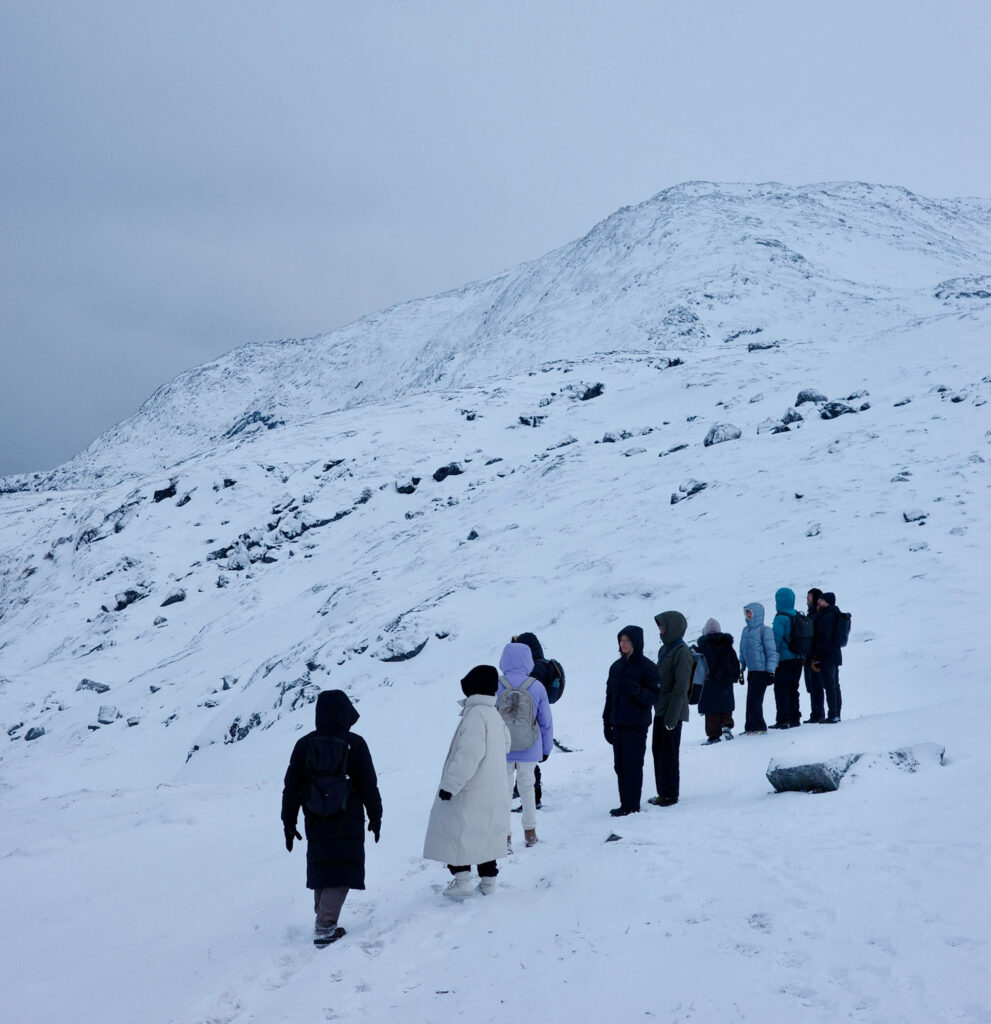
A field visit to Nuuk deepened that understanding. Walking the harbor, housing blocks, hillsides, and boardwalk, students encountered the city at street level, absorbing its scale, textures, and rhythms firsthand. At the Greenland National Museum and Archives, they studied artefacts ranging from Inuit hunting equipment to narwhal tusks as well as a reconstructed historic interior that offers glimpses of traditional domestic life. At the center of the city and in coordination with municipal officials, the students performed a detailed analysis of Nuuk Plaza, envisioning snow-based interventions to transform the underused site into an interactive public space. Later, at Paradisdalen-Kuaninnguit, adjacent to the newly expanded international airport, they traversed the terrain itself, parkas and boots shielding them from the cold. Taken together, these encounters revealed Nuuk as a landscape shaped incrementally over time, each era inscribing distinct spatial and material traces.
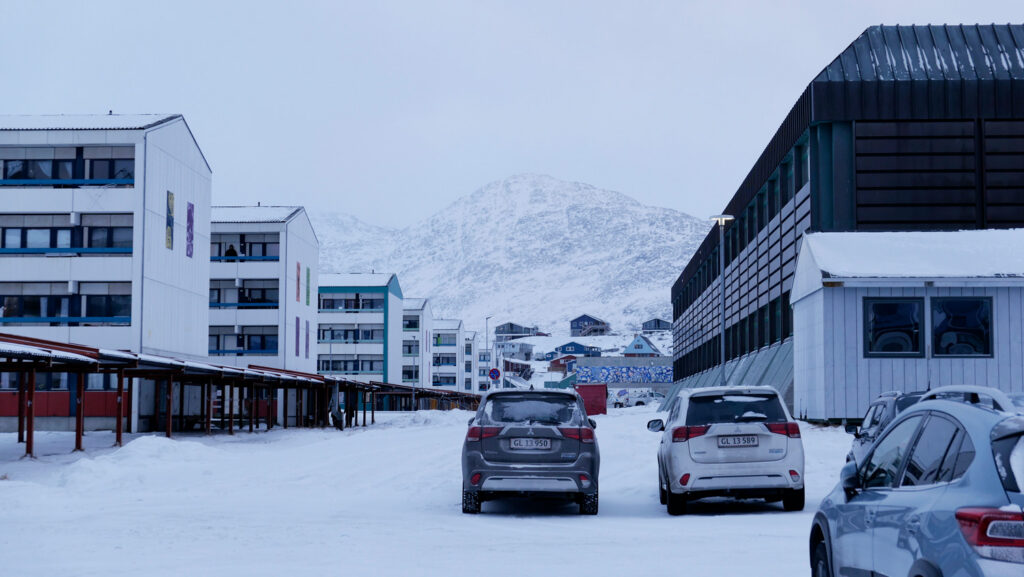
The studio’s ambition is not to impose another external vision but to work within Greenland’s complex conditions, opening space for new forms of local agency. Students’ proposals could target any number of specific issues, from rethinking worker settlement patterns to developing low-impact methods for harvesting glacial flour to devising infrastructure systems that serve both community and industry needs. While the precise forms the students’ projects will take remain to be seen, their position is already clear: glacial flour will not be treated simply as a commodity for export. Instead, it becomes a framework for reimagining how Arctic cities grow in a landscape already in motion.
Nuuk is not a remote case study. It is a proving ground for contemporary urbanism. The questions raised here—about extraction, resilience, authorship, and governance—extend far beyond the Arctic. As landscapes shift and resources are revalued worldwide, designers are being called upon not only to shape buildings but to structure the systems that sustain them.
What emerges is not a finished blueprint but a proposition: that the future Arctic city must be built deliberately, in partnership with the land and those who inhabit it. The environmental, political, and cultural stakes leave little margin for error.