Inside the Dream Factory: GSD Students Design for Opera
Elena Manferdini on using AI-forward design to engage with opera from a contemporary perspective

Elena Manferdini, founder of the California-based architecture studio Atelier Manferdini, was initially surprised when she was invited to collaborate with the Rome Opera House. A design critic in architecture at the GSD, Manferdini had little background in the art form. Yet, she was contacted by Paolo Cairoli, director of Calibano, the magazine of the Teatro dell’Opera di Roma, who had seen Manferdini’s 2024 exhibition of models, sculptures, and AI illustrations, Flora, at the Italian Cultural Institute in Los Angeles. This encounter eventually led to Atelier Manferdini creating promotional materials for twelve operas and five ballets in the Rome Opera House’s 2025–2026 season.
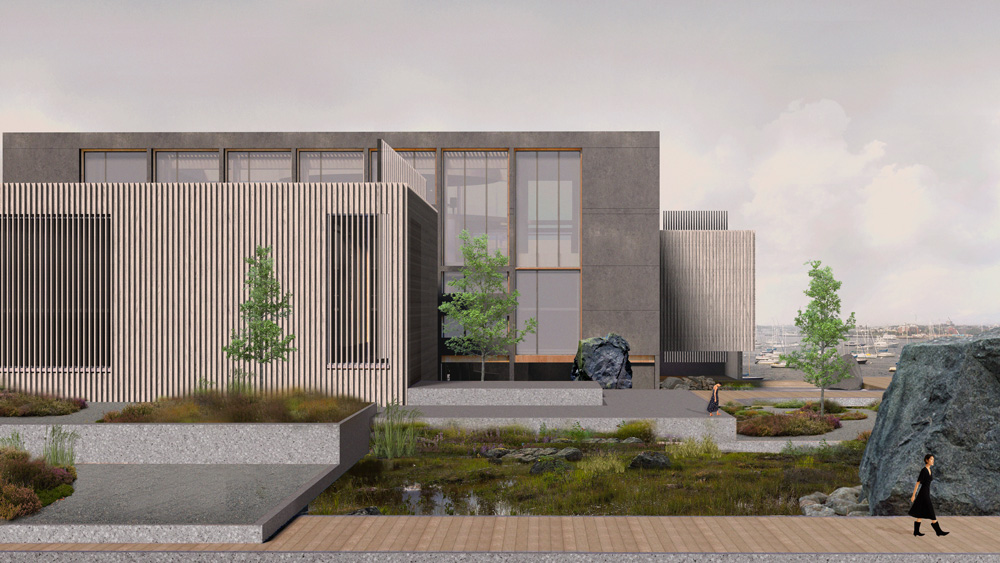
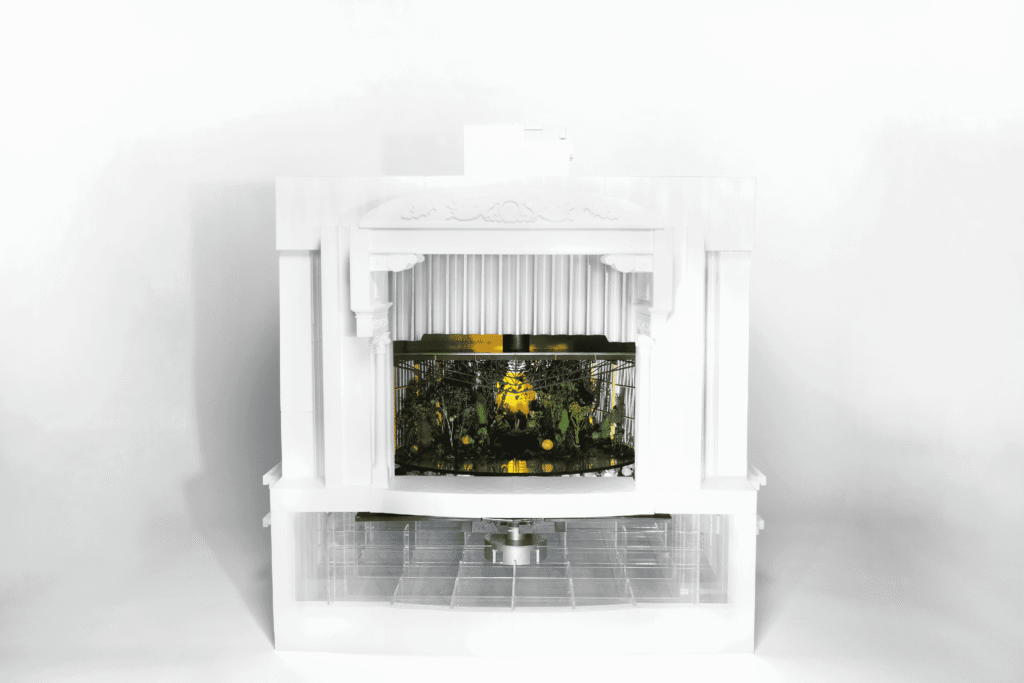
Manferdini’s experience in Rome informed her fall 2025 GSD studio, The Dream Factory. In the course, students selected an opera from the standard canon and designed two sets for a staged performance, as well as costumes for two main characters.
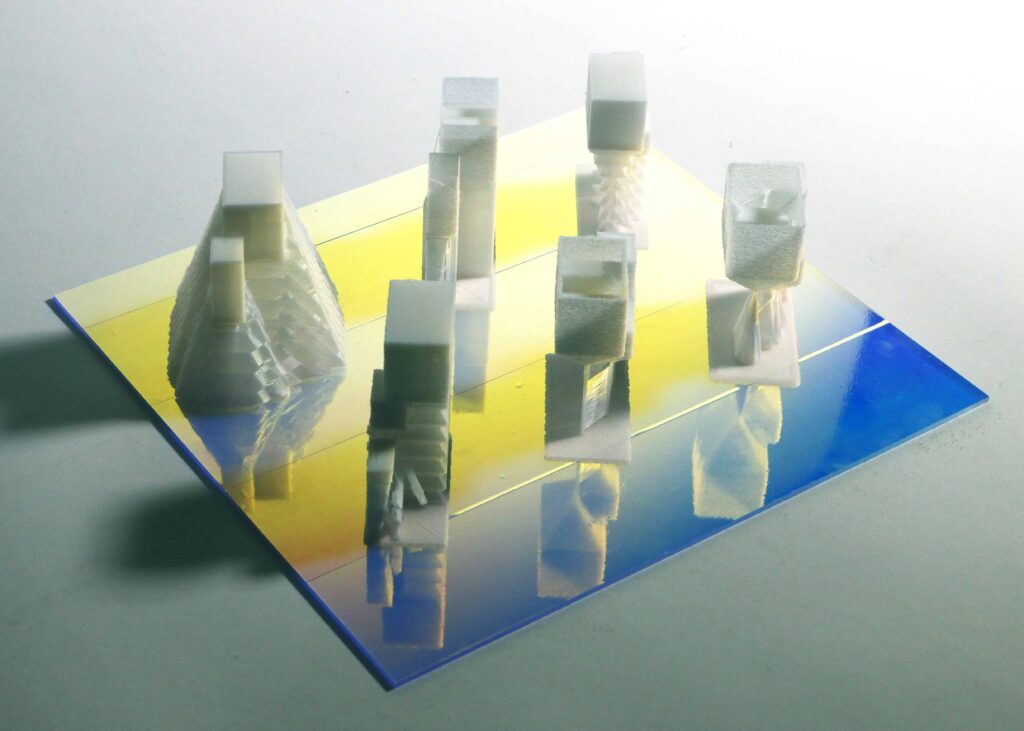
There is a rich history of architects designing opera sets: Frank Gehry and Zaha Hadid created designs for Mozart operas at the Gehry-designed Walt Disney Concert Hall in the early 2000s. Herzog & de Meuron produced work for Attila at the Metropolitan Opera; Kengo Kuma for Simon Boccanegra in Naples. However, most of the students in Manferdini’s course knew little about opera before they enrolled in the studio—much like Manferdini herself prior to her invitation to work in Rome. Early in the semester, students undertook a crash course. They watched several recordings of operas and attended a rehearsal of Verdi’s Macbeth at Boston Lyric Opera. In the early stages of their process, they used the AI image generator Midjourney to collect inspiration and design one costume for each of two main characters in their chosen opera. Later in the semester, they built physical models of the sets.
Design as transformative work
Manferdini approaches set design as a way to bring the art form of opera into the 21st century. “Opera now offers two simultaneous experiences,” she says, “a musical presentation of a classical masterpiece and a theatrical reinterpretation shaped by contemporary design perspective.” For her, this doesn’t merely mean bringing the stories into a modern setting, or incorporating more technology; it involves using design to comment on plots that are often seen as formulaic and rife with misogyny, racism, and other prejudices. Though Manferdini’s work in Rome has encompassed both familiar and new operas, she chose to focus the studio on operas that are part of the canon, such as Madama Butterfly, Carmen, and Die Zauberflöte.
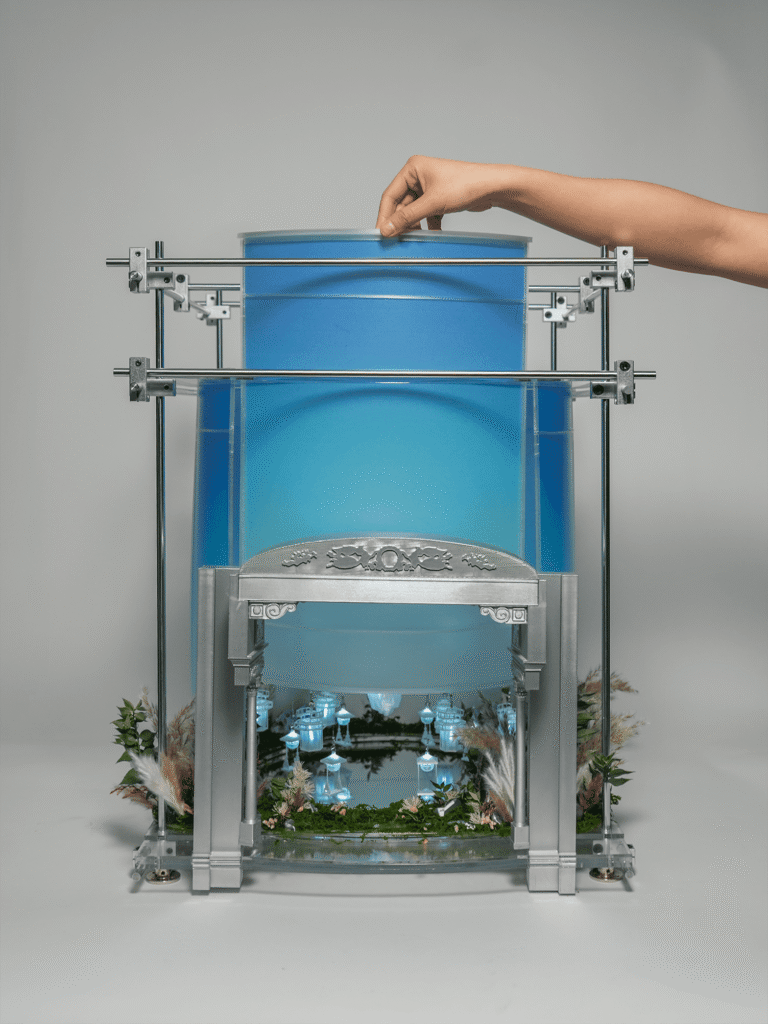
Some students chose to take critical perspectives on the operas’ themes, using set and costume design to challenge historical depictions of race, class, and gender. Chenxi Cai (MArch ’27) wanted to show that the main character in Puccini’s Madama Butterfly had more agency than the common stereotype of passive Asian femininity. Cai’s Butterfly, she said, is “more of a cautionary tale.” Both the costumes and sets evoked a surreal, exaggerated dream world to represent Butterfly’s mental state. Cai also addressed the Orientalism historically present in many productions (in addition to sets that employ exaggerated and inaccurate representations of “exotic” pan-Asian motifs, it’s common, although increasingly less so, for actors to perform in yellowface makeup) by nodding to Japanese culture in her designs. The sets were inspired by Japanese woodblock prints, and a central structure replicated a Japanese pagoda, moving in a motion to suggest a playground carousel.
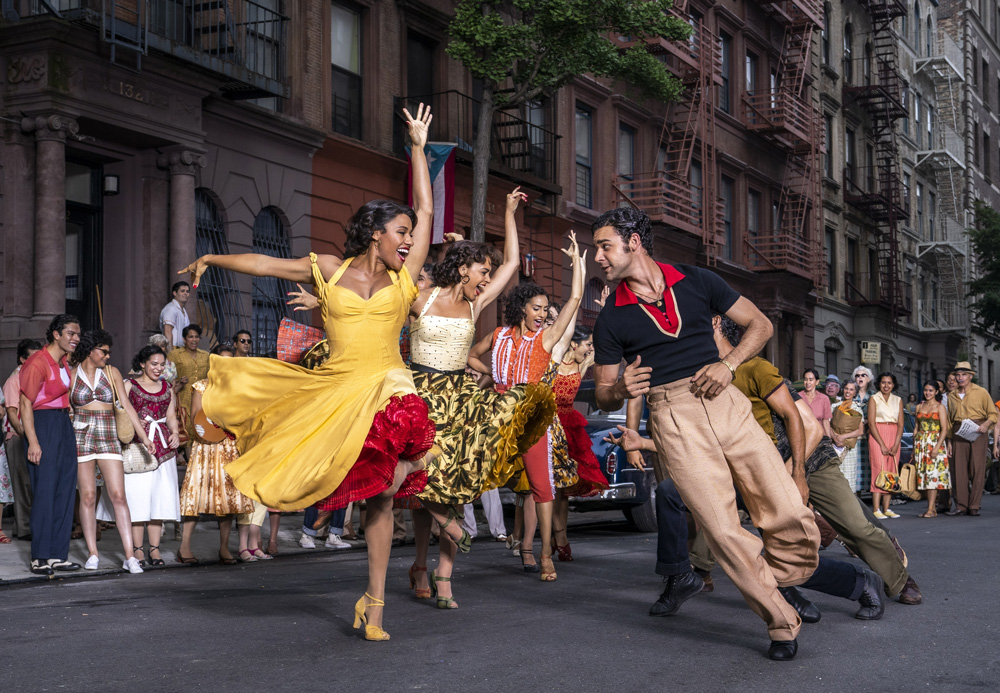
Maya Takai (MArch ’27) brought her background in ballet to the design process. When she saw Carmen, a production designed by Michael Levine that premiered at the Metropolitan Opera in 2023, she was fascinated to see an example of modern set design that contrasted with the more traditional sets prevalent in the ballet world. This production transported the opera’s setting from 19th-century Spain to a contemporary American border town; the bullfighters are now cowboys, taking selfies with their fans at the rodeo. Directed by Carrie Cracknell, it sets the story of Carmen’s murder amidst contemporary conversations about intimate partner violence, immigration enforcement, and the #MeToo movement.

Inspired by this experience, Takai not only updates the time period of Carmen, but explores the idea of feminine independence. Traditionally, she said, Carmen is known for being independent in terms of romantic love. (In another well-known excerpt, the aria “L’amour est un oiseau rebelle,” Carmen declares that “love is a rebellious bird that cannot be tamed.”). Takai wanted to change this to reflect a more modern concept of independence: a woman focused on her career. Her “office-core” costumes are influenced by Jacques Tati’s 1960 film Playtime, set in a Paris dominated by exaggerated mid-century modern design. By contrast, Don José, Carmen’s lover and eventual murderer, is dressed in loose clothing and lacks a tie. While the first act takes place in a modern office setting, the fourth act sees the stage transformed into a “surreal carousel that evokes dreamlike escape.”
Other students chose to augment the existing plot and themes with additional layers of meaning. Betty Chen (MArch ’27) reimagined Giuseppe Verdi’s Aïda in a plastic recycling factory, so that the opera’s backdrop of war between Egypt and Ethiopia also encompassed power dynamics still extant today in contemporary Africa. Systems of labor exploitation and unsustainable global consumption are embodied by the process by which developed countries send their recycling to poorer countries. Chen wanted to reframe the tragic story of an Ethiopian princess and an Egyptian commander as “an allegory of systemic repression in a globalized age, where colonizing nations, multinational corporations, and industrial powers dominate while Indigenous cultures, fragile environments, and personal identities struggle to endure.”
Using AI in the design process
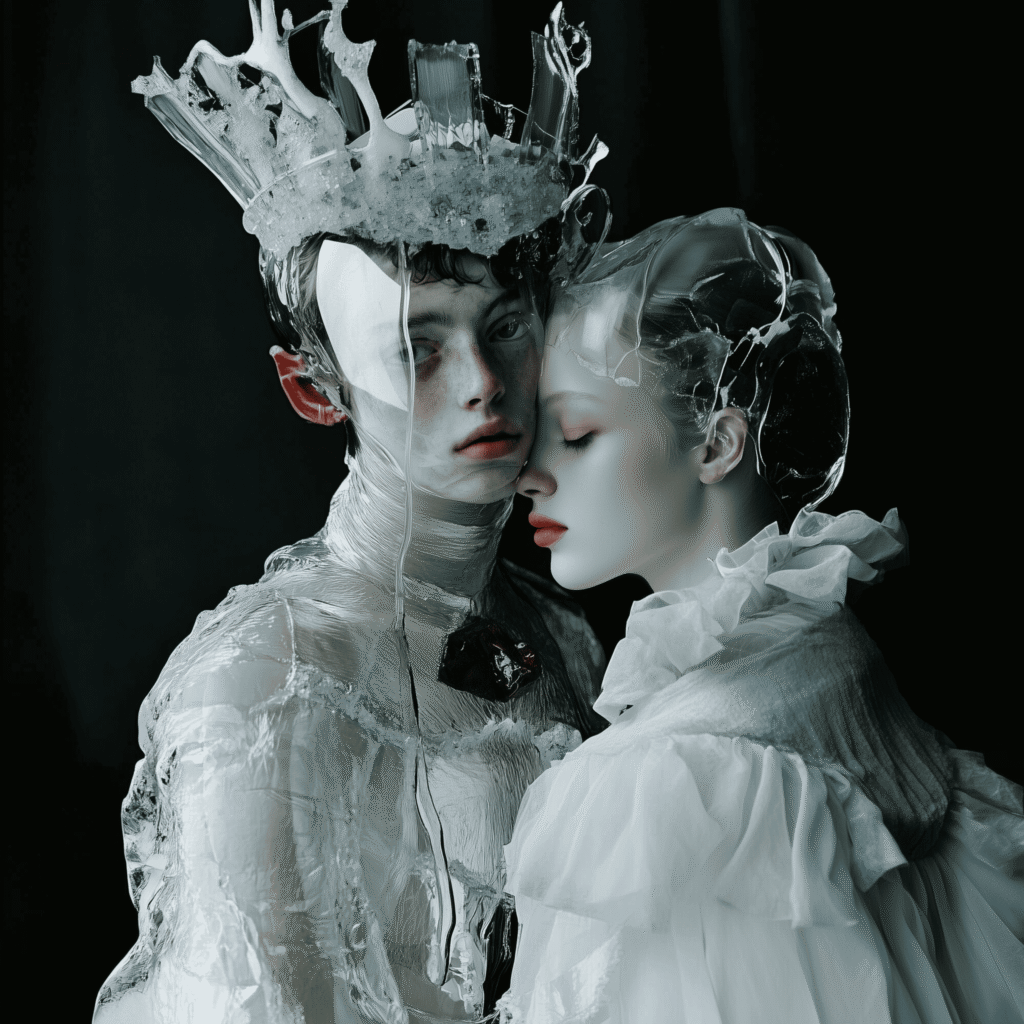
Though focusing her studio on a classical art form, Manferdini also encouraged students in The Dream Factory to experiment with new AI tools. Cai had previous experience using ChatGPT to answer questions and produce text, but one of the reasons she wanted to enroll in the studio to gain experience generating images in AI. As the course progressed, she learned how to refine her prompts to make them more effective. Chen, the student who reimagined Aïda in the recycling plant, found inspirational photos, fed them into Midjourney, asked it to describe the images, and then used the phrases as a new prompt to create and refine the output.
Takai stresses that she still considers the user as being the designer and creator, even when AI is used. She sees AI as a tool that saves time, makes things more efficient, and gives the designer more options. She emphasized that the user still needs to do extensive research and be involved in the creative process: “If you start saying that whatever the AI gives you is good enough—then it’s not good.” Using AI also indirectly helped her improve her rendering skills, in order to make the renderings look more like the AI prototypes. If she didn’t have a clear idea, AI couldn’t produce one out of thin air, but “when I had a concrete goal,” she concluded, “it was very easy for me with AI.”
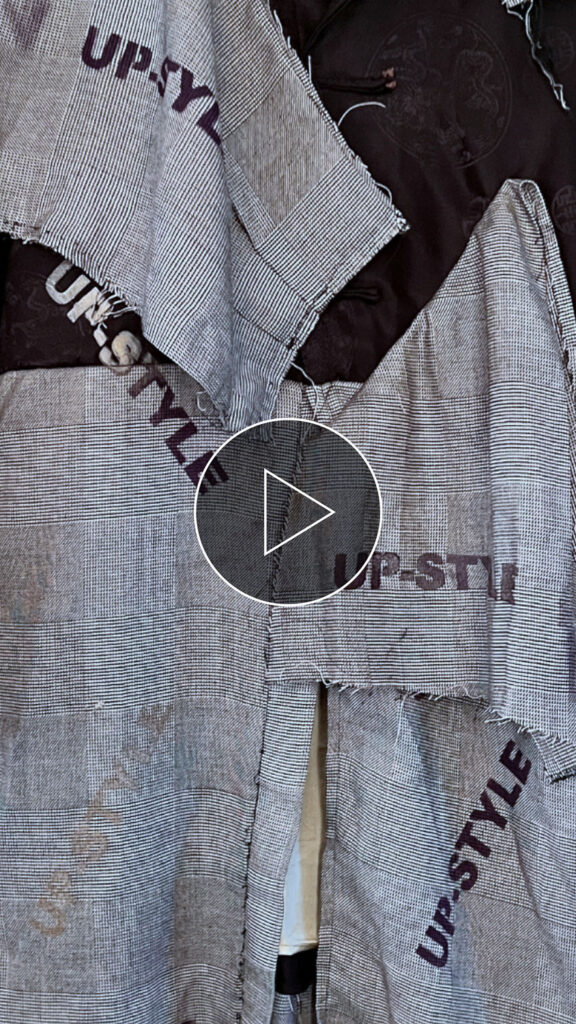
Still, the AI tools only took each student’s project so far in envisioning the multi-sensory spectacle of opera. Many of the models produced for the studio emphasized movement: sets embedded with motors and rotating elements created literal motion while sheer or translucent materials in the costumes underscored the visual effect of constant flux. Such projects explored the full potential of opera as an immersive art form, connected with other contemporary cultural expressions such as Punchdrunk’s Sleep No More or Diane Paulus’s Masquerade, a reimagined production of The Phantom of the Opera. Students also cited as inspiration visual art, films, and even television shows such as Amazon Prime’s 2020 sci-fi series Upload.
“At the heart of contemporary debates surrounding artificial intelligence and artistic creation lies a fundamental question,” says Manferdini, “does AI open up new modes of perception and representation for artists and designers, or does it instead diminish our capacity to meaningfully comprehend and portray reality?” Developments in AI’s ability to generate visual art, music, and text, “have intensified concerns about bias, creative homogenization, and a growing sense of AI fatigue,” continues Manferdini. The basis of “The Dream Factory” was exploring how AI “can genuinely expand cultural possibilities and reshape our understanding of originality in the digital age.” Even beyond design-related disciplines, Manferdini sees the challenges of AI as foregrounding fundamental questions about education in general. “If AI can generate texts, images, and design proposals in seconds,” she says, “then cultivating curiosity, conceptual depth, and the ability to frame meaningful questions remain at the center of what education must continue to provide.”