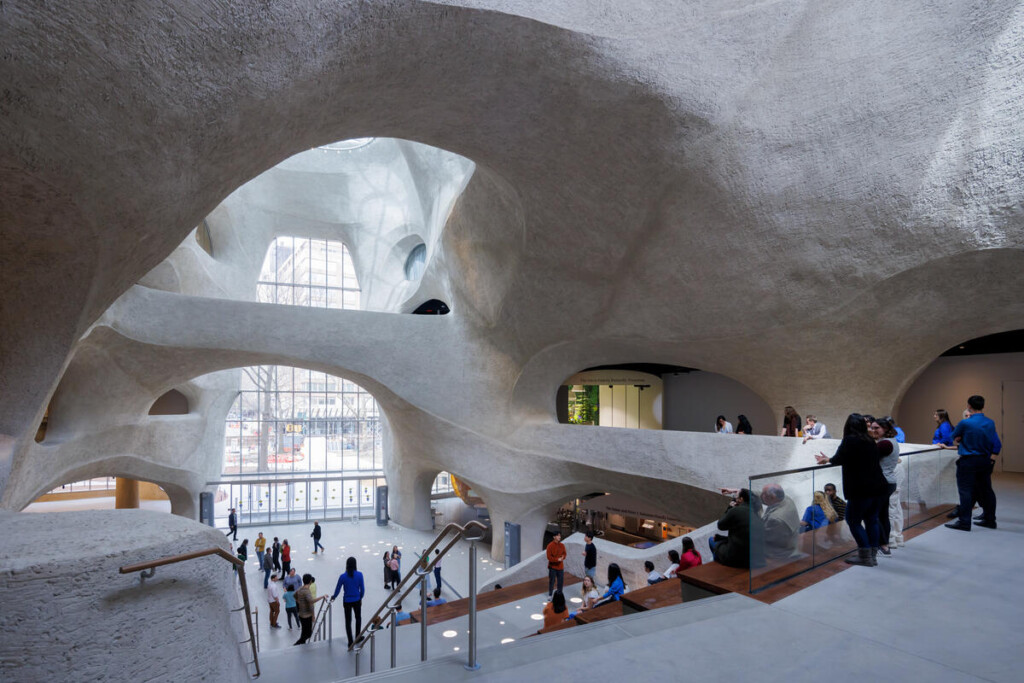
Design for the Birds: Jeanne Gang’s Longstanding Advocacy for Bird-Safe Architecture
A new Chicago exhibition highlights Studio Gang’s commitment to designing with nature and protecting wildlife.
In the United States, more than 1 billion birds per year are killed in collisions with building glass. As global bird populations are swiftly declining due to habitat loss, climate change, invasive species, feral cat predation, and pesticides, architect Jeanne Gang, Kajima Professor in Practice of Architecture at the Harvard Graduate School of Design (GSD), has long advocated for architects to address glass collisions, one of the major causes of birds’ demise.
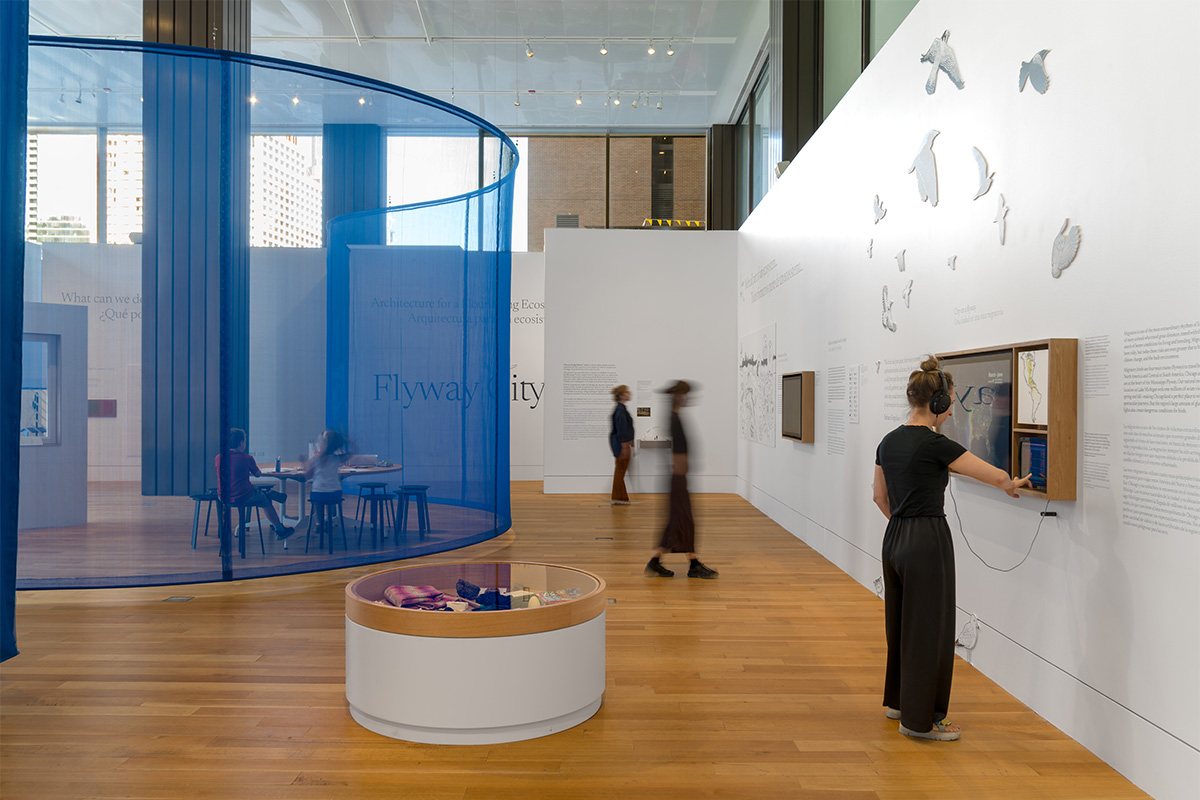
In the exhibition Flyway City: Architecture for a Flourishing Ecosystem, designed and co-curated by Studio Gang and the Chicago Architecture Center, Gang shares how people can take action to create healthier cities and save birds, with interventions from updating windows in homes and workplaces, to building new structures with bird-safe glass and design elements, and advocating for protection policies.
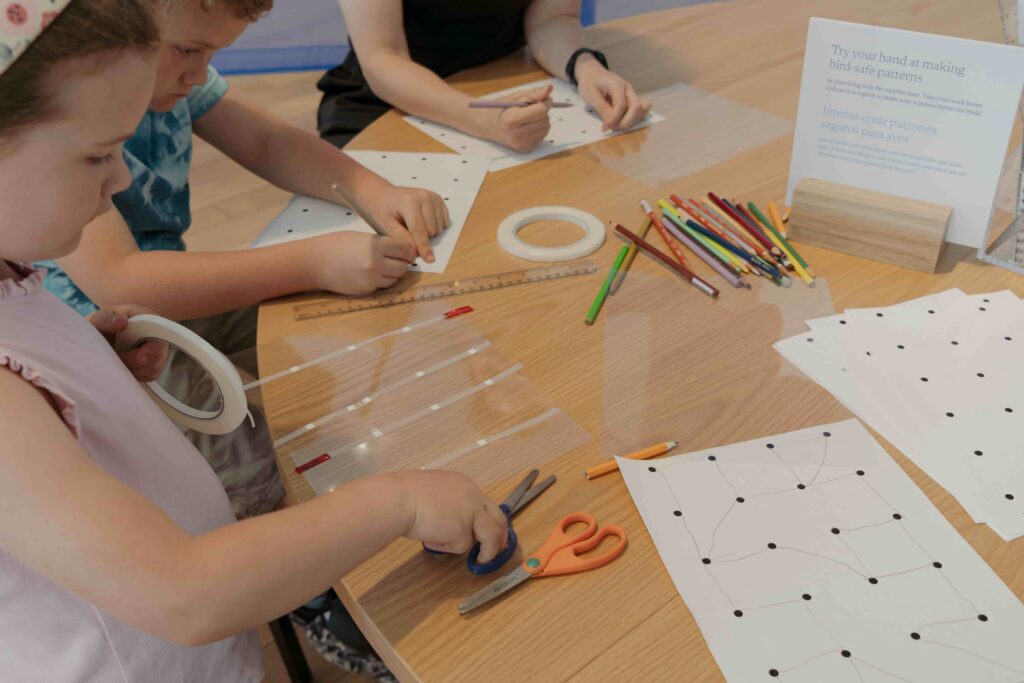
Bird-safe glass is less reflective, and marked with frit dots or stripes that disrupt the reflection of trees and sky so that birds can see the solid surface. Other bird-safe design elements include minimizing the amount of glass on a building, altering or turning off evening exterior and interior lighting so that migrating birds (who typically fly at night) are not attracted to the glass, landscaping with native plants and water elements, and constructing buildings with nest areas while eliminating dangerous passageways and other obstructions.
“Bird-safe design is a critical issue that my team and I have been working on for more than 20 years,” says Gang. “We’re delighted to collaborate with the Chicago Architecture Center on this new exhibition that’s designed to expand public awareness and spark positive action in our home city of Chicago.”
The Chicago region is a critical habitat for wild birds, who cross the city as part of the Mississippi Flyway, a migratory path from South America to Canada. Chicago’s site on the flyway, and its “prevalent use of glass as a building material,” explains Gang, presents an “opportunity to explore effective approaches to creating a bird-safe built environment that also inspires design creativity and urban development.”
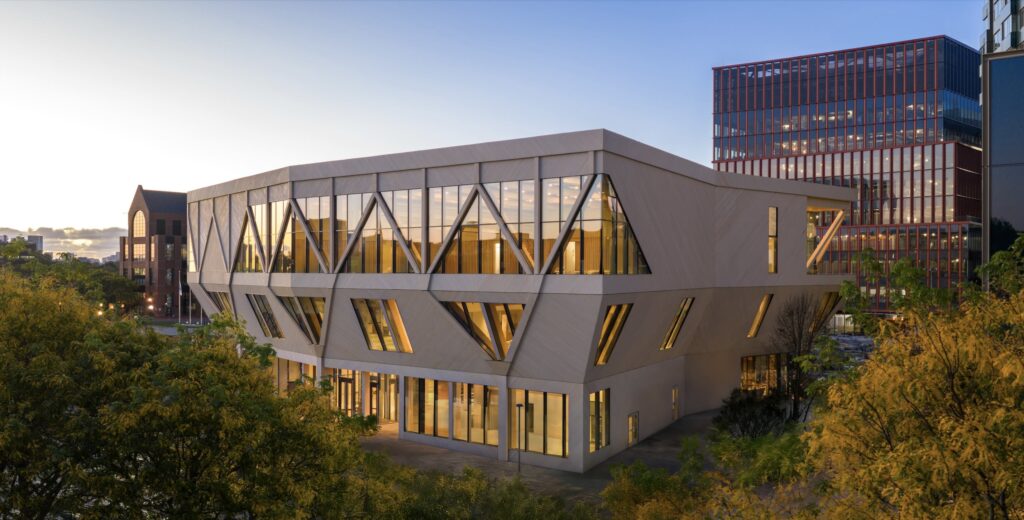
The exhibition features interactive media, architectural models and designs, photographs, and materials, highlighting some of Studio Gang’s projects, including the Aqua Tower in downtown Chicago and the recently completed David Rubenstein Treehouse at Harvard University, both of which center bird-safe design elements. The Treehouse is a mass timber building that features responsible water use, materials, a healthy interior environment, and, outside, biodiverse and native species.
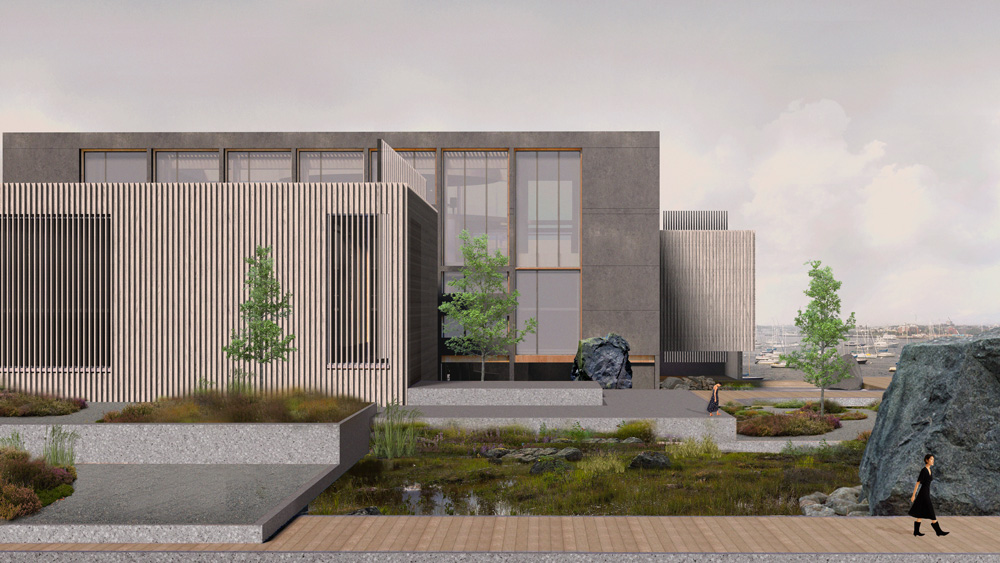
Studio Gang’s ethos in designing to “connect people to each other, to their communities, and to the environment,” has resulted in a long list of projects inspired by and integrated with nature, including, most recently, the Samuel H. Scripps Theater Center, set amidst the mountains and river for Hudson Valley Shakespeare, on a site protected for ecological restoration. Made with a timber grid shell roof, the theater remains open to the elements—just as the original Shakespeare plays were performed—with paths that wind across the landscape to lead visitors to the structure and lawn around it, seamlessly blending architecture with the site and showcasing its beauty and views.
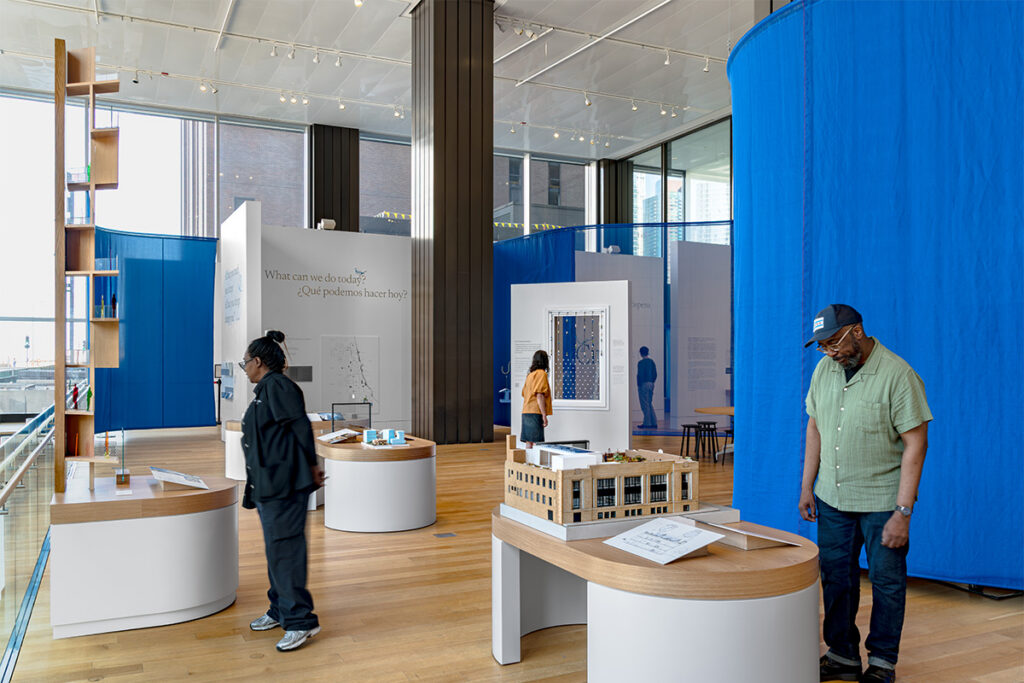
Similarly, the Chicago exhibition emphasizes the importance of cohabiting with nature, to support both human and nonhuman lives. To reach Flyway City, visitors walk through a companion exhibition, Chicago’s Living Habitat, co-curated with Openlands, which educates people about Chicago’s ecosystems that serve as bird and wildlife habitats. Gang explains that designing in support of nature can only improve our architecture and communities.
“Our location on the flyway,” says Gang, “is a wonderful opportunity to observe nature in our city, and we have a responsibility to better protect birds from colliding with buildings. I hope Flyway City inspires a new class of bird-safe design advocates and helps our city advance its legacy of innovative architecture.”