What BEST Products Can Still Teach Us About Architecture and the Public
During the 1970s and 1980s, BEST Products transformed shopping into an encounter with architecture. A spring 2026 GSD course and exhibition revisited that legacy to explore a persistent question: how does architecture reach the public?
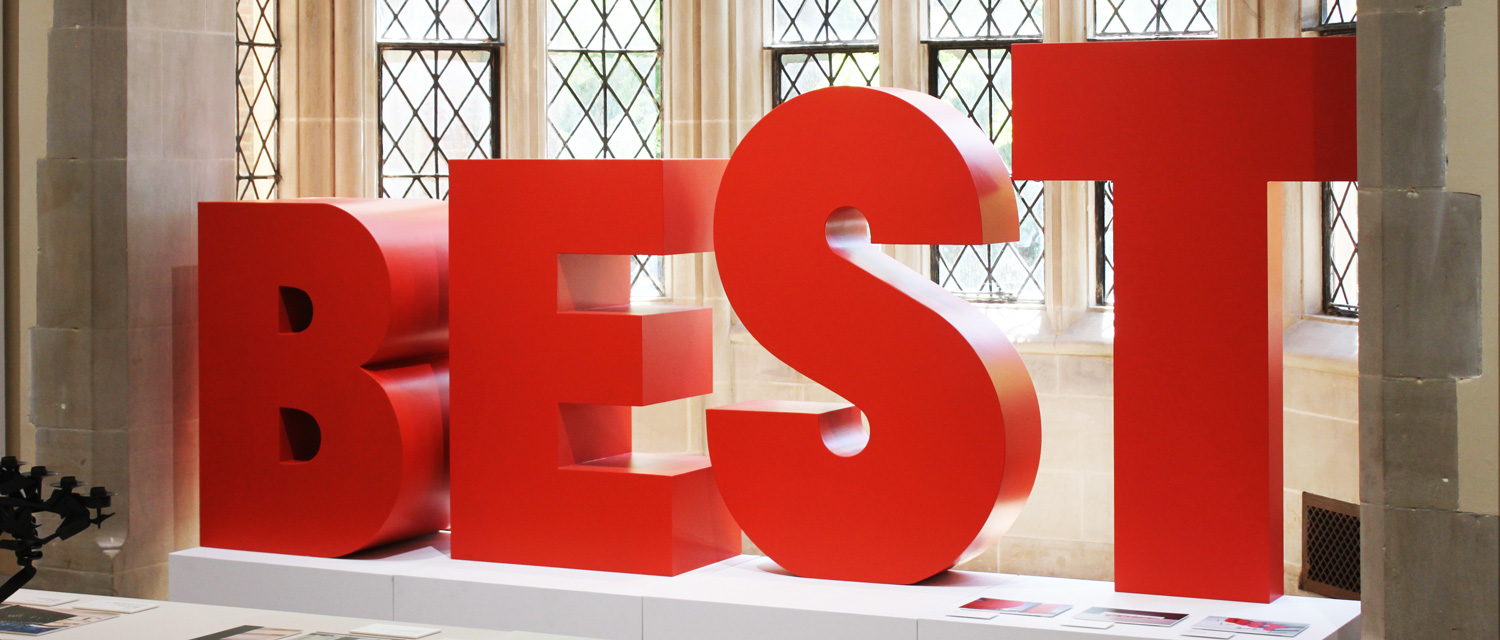
Throughout the 1970s and 1980s, BEST Products showrooms transformed the ordinary act of shopping into an encounter with architecture. These witty and often surreal buildings turned retail design into a public spectacle, making boundary-pushing architecture feel playful and accessible to all.
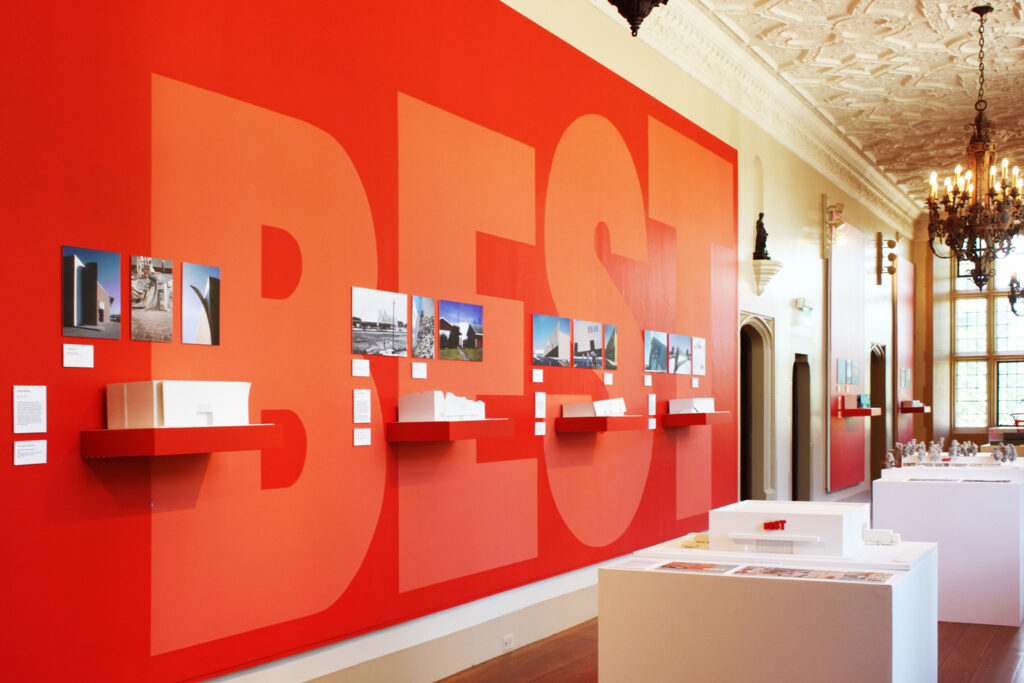
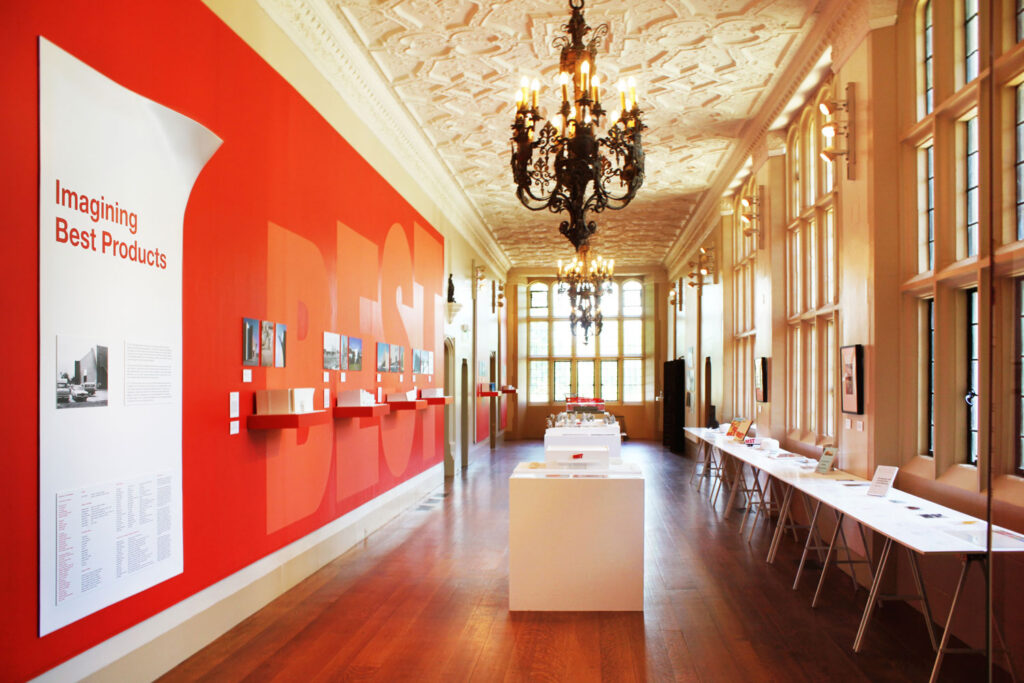
Decades later, these showrooms are now surveyed in the exhibition Imagining BEST Products, on display at the Branch Museum of Design in Richmond, Virginia. This show grew out of “Architecture’s Audience,” a project-based course at the Harvard Graduate School of Design (GSD) taught in spring 2026 by architect Don O’Keefe (MArch ’20). Bringing together archival drawings, photographs, films, and newly commissioned models, the exhibition revisits the legacy of the now-defunct company while asking what it might still teach us about engaging audiences beyond the design profession.
From the outset, the course treated BEST Products as more than a subject. It became a vehicle for exploring larger questions about architecture’s public life: how it reaches its various audiences: how exhibitions shape understanding, what role museums play in civic life, and how architectural ideas circulate beyond the discipline itself. Rather than approaching BEST Products as an historical case study, students used its story to consider what it takes to make architecture meaningful to broader publics today.
Is This Art, or Is This Retail?
Sydney and Frances Lewis founded BEST Products in the late 1950s, opening the company’s first showroom in Sydney’s hometown of Richmond, Virginia. Over the following decades, BEST expanded to more than 200 locations across the United States, becoming a household name. Yet the company’s legacy extends beyond retail success. BEST also became known for an ambitious approach to architecture and design that transformed its stores into cultural landmarks.
The architectural ambitions behind BEST Products were closely tied to the Lewises’ broader engagement with the arts. Today, they are regarded among the most influential American collectors of the second half of the 20th century. Their collection included works by major figures of Pop Art and Photorealism—including Andy Warhol, Roy Lichtenstein, and Chuck Close—as well as Art Nouveau and Art Deco creations by designers ranging from Hector Guimard to Tiffany Studios.
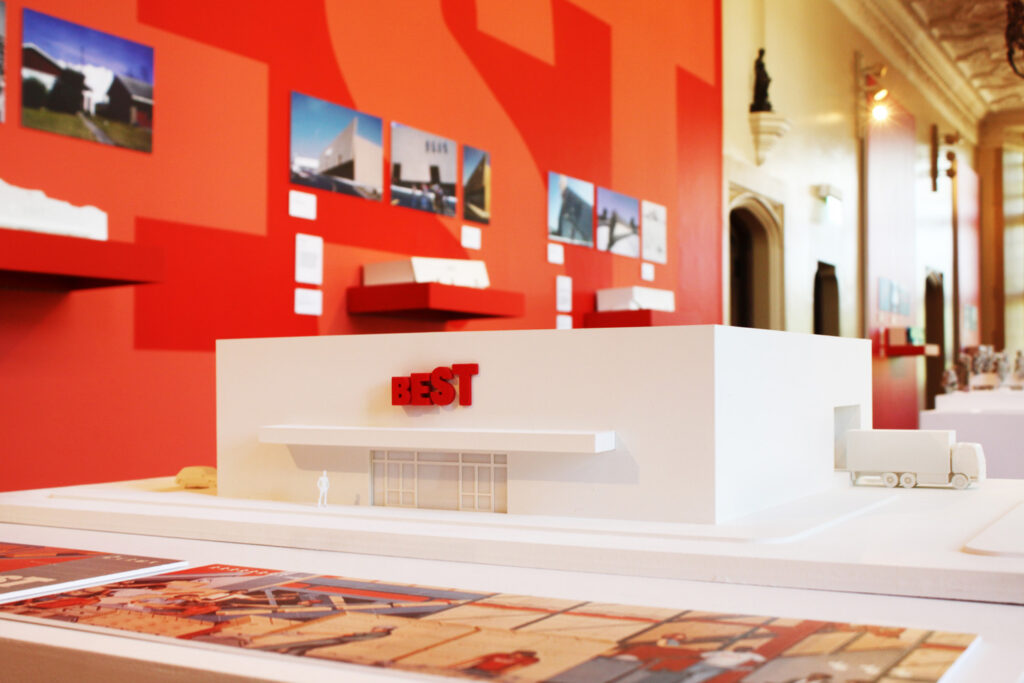
Despite the sophistication of the Lewises’ collecting activities, BEST Products showrooms initially resembled countless other big-box stores: large, blank structures distinguished primarily by signage. Inside, they operated according to the company’s standard retail model—customers browsed display models, submitted order slips at the checkout counter, and collected their purchases from a warehouse concealed behind the showroom floor.
Beginning in the 1970s, however, the Lewises sought to transform these ordinary buildings into something more creative. To realize that vision, they commissioned a series of showroom projects from the artist and architect James Wines and the New York–based firm SITE (Sculpture in the Environment). SITE’s interventions focused on the exterior, turning conventional big-box structures into provocative architectural spectacles.
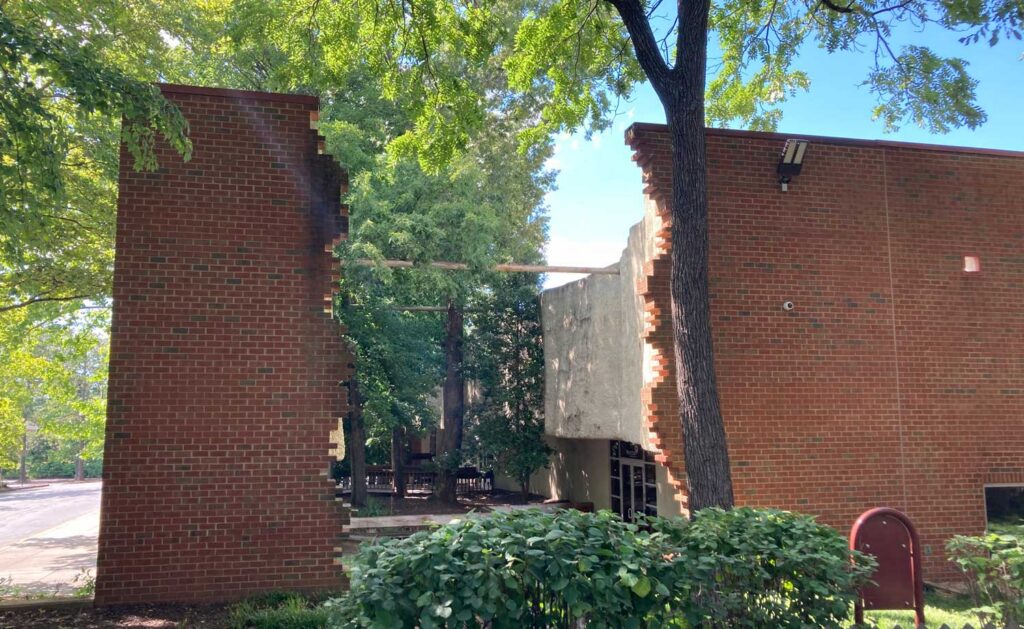
The first SITE-designed BEST Products showroom, the Peeling Building—envisioned by sculptor and SITE co-director Cynthia Eardley—opened in Richmond in 1972. Working with a standardized preexisting store, SITE added a brick facade that appeared to peel away from the building itself. Some people loved it; others hated it. Either way, they talked about it—and brought friends to see it. At a moment when architects were increasingly critiquing the big box, the Peeling Building seemed to offer a critique of its own. Was it exposing the artifice of a utilitarian building type? Mocking efforts to disguise it? Or both? The ambiguity was part of the appeal. The showroom attracted attention from both the public and the design profession, achieving precisely what the Lewises had hoped: it made architecture a topic of everyday conversation.
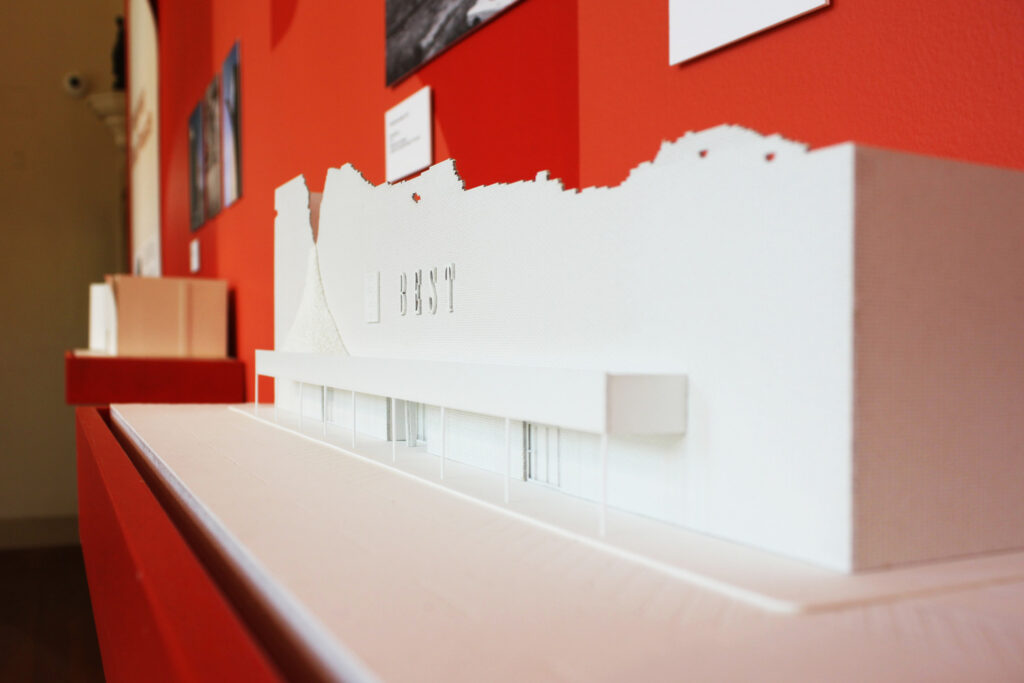
Over the next decade, SITE—including partners Wines, Alison Sky, Michelle Stone, Emilio Sousa, and others—designed a series of increasingly imaginative showrooms for BEST Products. In Houston, the Indeterminate Façade Showroom (1975) appeared to be crumbling into piles of rubble. In Sacramento, the Notch Showroom (1977) looked as though a corner of the building had cracked loose and slid away from the entrance. And in Richmond, the Forest Showroom (1980) inserted a thriving woodland between the facade and the store itself. The Lewises also commissioned projects from other prominent architects, including a flower-covered showroom by Venturi Scott Brown Associates in Langhorne, Pennsylvania (1979), and an eclectic headquarters building called BEST Plaza by Hardy Holzman Pfeiffer in Richmond (1980). Together, these commissions translated the Lewises’ interest in art and design into a highly visible architectural program.
A half century later, that legacy of architectural experimentation—and of bringing design into everyday life—have become the starting point for a new inquiry: what can BEST Products still reveal about how architecture enters public consciousness?
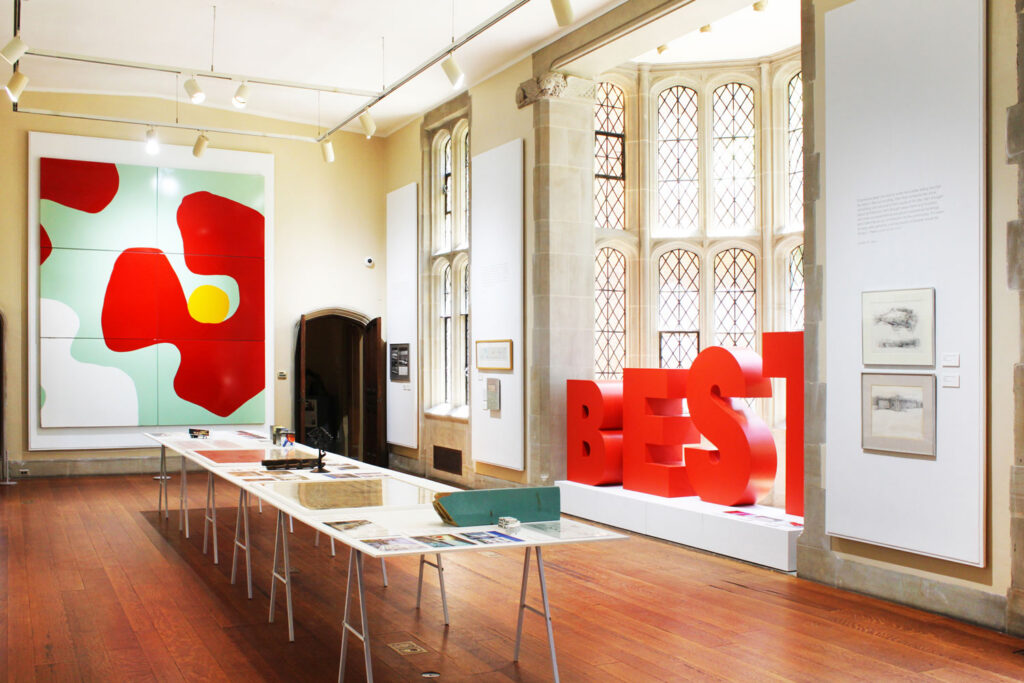
A Museum, an Exhibition, a Pedagogical Experiment
For O’Keefe, “Architecture’s Audience”—and the resulting exhibition—grew out of three converging concerns: the rich history of BEST Products, the possibilities presented by the Branch Museum of Design, and the pedagogical value of involving students directly in the making of an exhibition.
The Branch Museum opened in its current form in 2015. O’Keefe viewed the museum’s formative years as an opportunity to explore how a design institution might define its public role. The story of BEST Products provided a useful lens through which to examine that question. As O’Keefe notes, “These showrooms are entertaining and accessible, yet also internationally recognized among those who study design.”
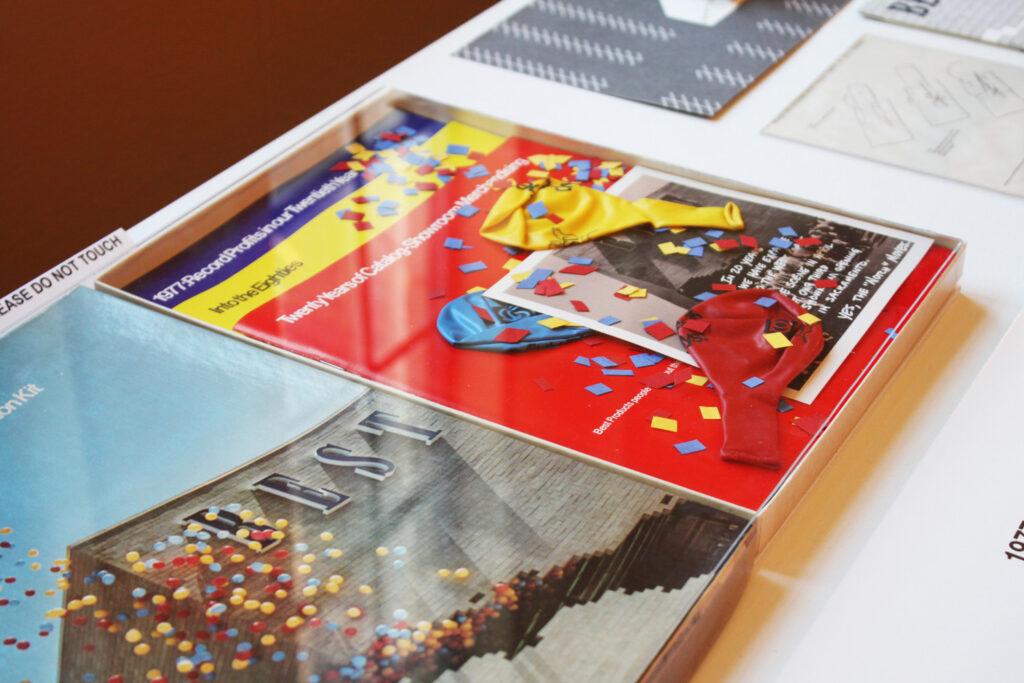
The exhibition also functioned as a pedagogical experiment. For O’Keefe, BEST Products offered a familiar point of entry for architecture students while giving them firsthand experience with the practical and collaborative work of exhibition-making. The approach also echoed aspects of BEST Products’ own history. SITE frequently engaged students through exhibitions, competitions, and educational initiatives, including a 1980 exhibition at the VMFA that involved trade students from a local vocational school.
Combined with O’Keefe’s own ties to the GSD—and historical connections between the Lewis family and Harvard—those factors made the school a natural partner for the project. Department of Architecture Chair Grace La helped shape the proposal into both a hands-on project and an exploration of how design institutions engage the public.
From Cambridge to Richmond and Beyond
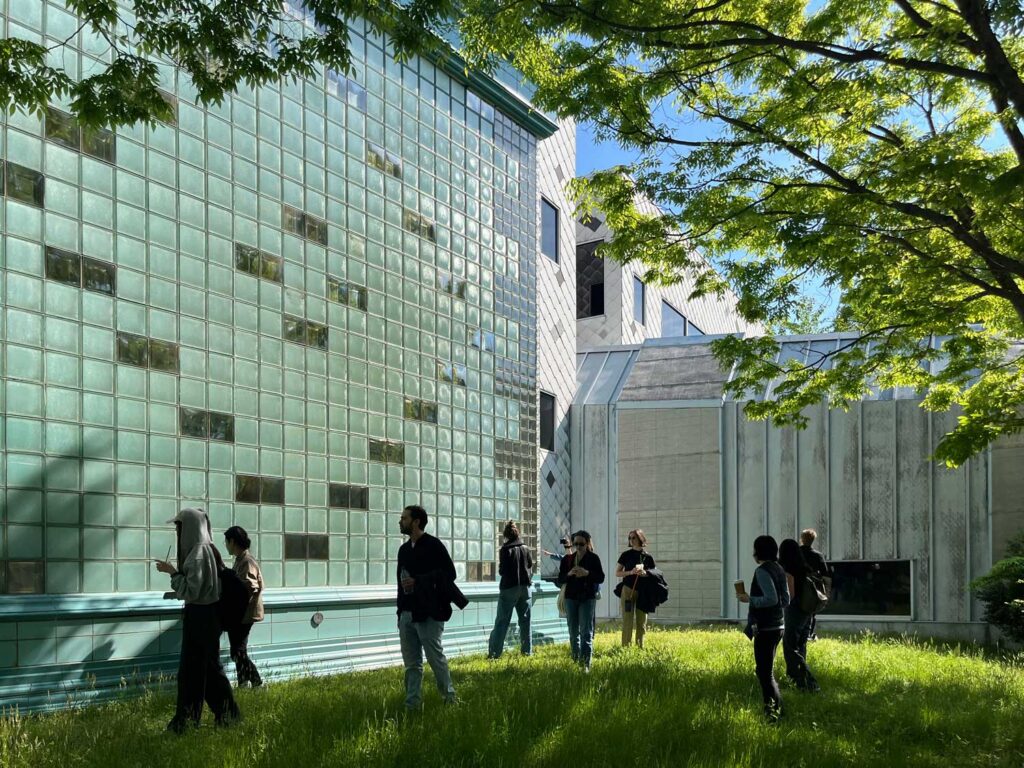
Framing the course as a collective experiment, O’Keefe encouraged students to think about the exhibition not simply as a presentation of historical material, but as a test of how architecture can be communicated to broader audiences. The class traveled to Richmond for a two-day research trip where they met with local stakeholders and visited the architecture they were studying, including a tour of BEST Plaza shortly before the building’s demolition. (The Forest Showroom, now transformed into a church, is the only existing structure.) Throughout the spring the students also spoke with curators, archivists, museum leaders, and practitioners from institutions across the United States and abroad, gaining insight into how design is exhibited, interpreted, and experienced by the public. “There’s a larger question about how design communicates with people outside the discipline,” O’Keefe says. The exhibition that emerged from the semester reflects these conversations, translating them into a public-facing curatorial project.
Imagining BEST Products bears the imprint of course’s collaborative process. O’Keefe and the students—all of whom are credited as associate curators—worked together to determine not only what material would be included, but how visitors would encounter it.
Among the students’ most significant contributions was a timeline tracing the history of BEST Products and the architects, designers, and artists who helped shape the company’s identity. Accompanied by photographs, publications, and graphic materials, the timeline became a key organizing element of the show. “Many of the proposals raised by the students made it into the final exhibit,” says O’Keefe. Students also created detailed models of iconic BEST storefronts, which feature in the show.
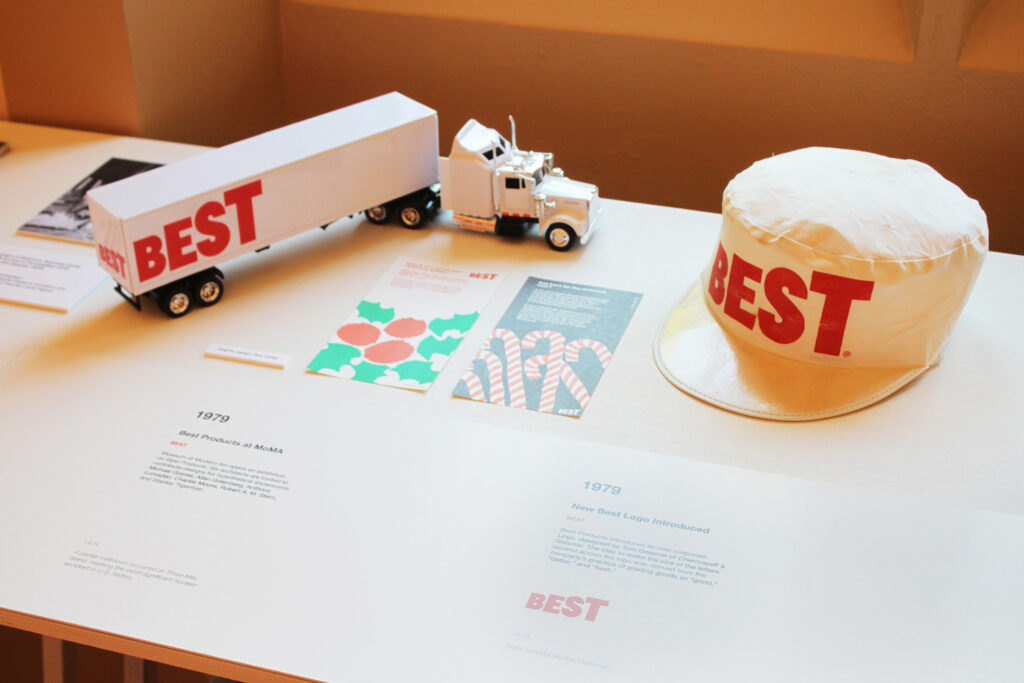
The result is an exhibition that presents BEST Products as more than a retail company. While a substantial portion focuses on the showrooms designed by SITE, it also examines the broader network of individuals and institutions that shaped the company’s identity. Displays devoted to the graphic design work of Chermayeff & Geismar sit alongside material related to the 1979 Museum of Modern Art exhibition Buildings for Best Products, which featured proposals by architects including Michael Graves, Robert A. M. Stern, and Stanley Tigerman. Together, these materials reveal how the Lewises used architecture, graphic design, exhibitions, and collecting to bring contemporary design into public life.
The exhibition ultimately returns to a question that animated the course from the outset: how does architecture reach people beyond the profession? For the students who took part in “Architecture’s Audience,” that challenge became more important than the historical material itself. Reflecting on the semester, Maya Shamir (MDes ’26) underscored the importance of asking why design is exhibited, who exhibitions serve, and how architecture enters public culture. “As a designer,” she says, “I’ll carry forward the challenge of making work relevant to an audience beyond the discipline when the building itself can’t be shown.”