José Antonio “Tony” Gómez-Ibáñez, Derek C. Bok Professor of Urban Planning and Public Policy, Emeritus, died on June 10, 2026.
For nearly five decades, Tony Gómez-Ibáñez was a defining presence in the study of cities at Harvard, and a living bridge between the Harvard Graduate School of Design (GSD) and the Harvard Kennedy School, where he held a joint appointment believed to be the first of its kind. He arrived at Harvard College as an undergraduate in 1966 and never really left. After earning his Master in Public Policy degree in 1972 and his PhD in 1975, he joined the GSD’s planning faculty. At the GSD, he chaired the Department of Urban Planning and Design (1984–1988) and directed the school’s doctoral programs (1992–1995). He was also instrumental in establishing the Master in Urban Planning program in 1994—when Harvard’s planning degree program returned to the GSD—and led it from 2001 to 2004. Until his retirement in 2021, he remained a leading voice in shaping the program’s future. Tony’s leadership extended to the other side of Harvard Yard as well. At the Kennedy School, he chaired the Master in Public Policy program (1996–1998) and the Social and Urban Policy Area (2007–2012), and for 15 years he cochaired the Infrastructure in a Market Economy executive program, training senior infrastructure officials from around the world.
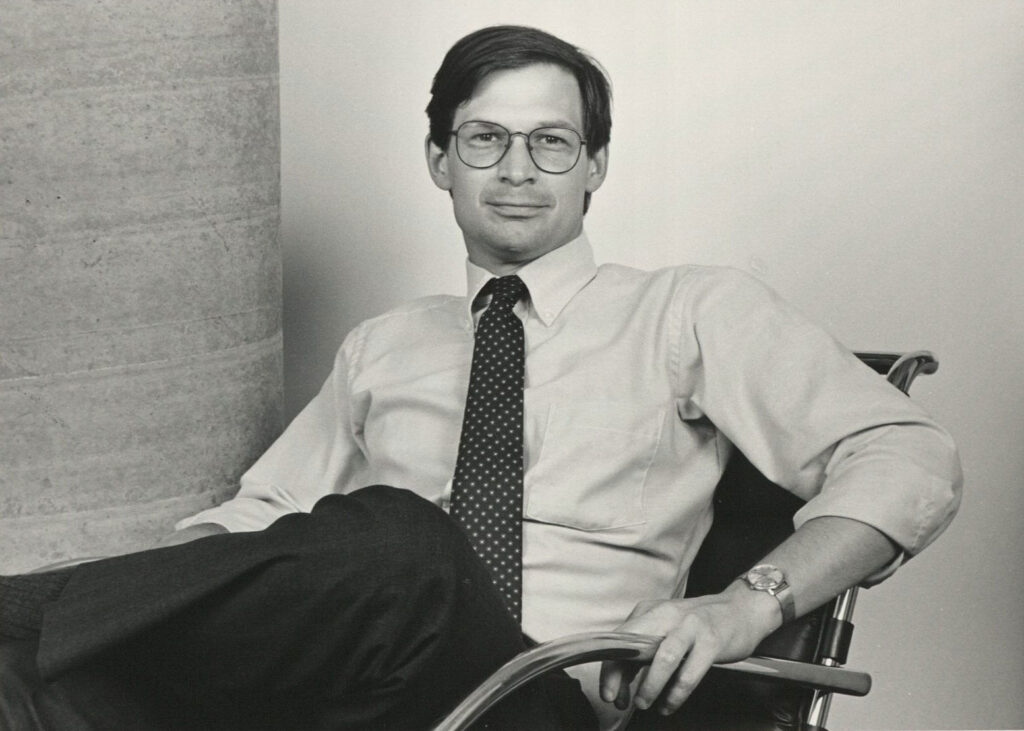
Tony was also a leading scholar of transportation and infrastructure policy whose dozens of publications include the books Regulating Infrastructure (2003) and, with John R. Meyer, Autos, Transit, and Cities (1981). His counsel was sought far beyond the academy, by governments and institutions around the world. Among them were Boston’s City Hall, where he chaired Mayor Raymond Flynn’s Transportation Advisory Committee; the World Bank, on railway privatization in Brazil and transport strategy in Sri Lanka; and the National Academies, on questions from freight pricing to whether denser neighborhoods result in less driving and lower car emissions.
As the remembrances gathered below attest, however, what colleagues and former students recall first is Tony himself: the case-method teacher who made economics legible to designers; the patient and exacting mentor; and the colleague of unfailing fairness and gentle wit.
Peter Rowe
The main thing I recall about Tony Gómez-Ibáñez at Harvard was the fairness of mind he exhibited, especially with regard to colleagues. It was always a case of a cool head and a warm heart. The second thing I recall was the excellence of his teaching, especially the way he embraced the case method, which was foreign to me until I met him when I arrived at Harvard. It both encouraged and strengthened the interest of designers in topics that were, up until that time, fairly far removed from their central interests. The third aspect was Tony’s belief in the stature of the Harvard Graduate School of Design as the place to aspire to be. Frankly, without his encouragement and example, I doubt that I would have come there. The fourth aspect was Tony’s research and professional engagement with urban infrastructure. He did much to improve service in Boston as well as in other parts of the world, where he both talked the talk and walked the walk.
Rowe is Raymond Garbe Professor of Architecture and Urban Design, Emeritus & Harvard University Distinguished Service Professor.
Rahul Mehrotra
Tony was one of the steadiest personalities I have known, and I was fortunate to have him as a professor of urban economics when I was a student at the GSD in the mid 1980s, and then as a faculty colleague starting in 2010. He always gave well-measured advice on complicated questions, and he had terrific insight on how to frame a research project—most often with a sharp seriousness, mischievous smile, and sprinklings of humor. At the GSD, he was an important bridge to the Kennedy School, and his presence at both schools was palpable.
Tony taught a course on the fundamentals of economics, but it was geared toward designers, particularly students in urban design. He managed to make financial models and their implications for building and operating infrastructure systems comprehensible to those of us at the GSD. He could easily move between various aspects of urban planning while making it all accessible. He was a true interdisciplinary thinker and will be missed.
Mehrotra is John T. Dunlop Professor in Housing and Urbanization.
Alistair T. McIntosh
I first met Tony Gómez-Ibáñez in the fall of 1985 in Gerry McCue’s garden during a faculty reception. Tony introduced himself and asked what I was going to do at the GSD. I mumbled lines from my résumé, he heard “parkway design,” we immediately discussed roads in the urban and rural landscape, and he concluded the conversation by asking me to give a lecture on this subject in his transportation class. I will remember and treasure his immediate trust and ongoing interest in what I was doing, and his desire to engage in inclusive, reasoned dialogue with me and others across the disciplines of the school. Always with a gentle sense of humor—when I once quipped that a new building on the Kennedy School campus should have a bar called the Corrupt Politician, Tony’s instant retort, delivered with a twinkling eye, was “Or a restaurant called the Pork Barrel.” I will miss him.
McIntosh is a Lecturer in Landscape Architecture.
Alex Krieger
In 1975, when I arrived at the GSD as a student, I enrolled in Professor Gómez-Ibáñez’s planning methods class. He was then a new instructor, a year removed from earning his PhD. The requirements included a two-page response to each week’s lectures and discussions. Due to a broken typewriter, I would submit these in handwritten form. I still remember how impressed I was with the respectful, insightful, and generous responses that were returned within a matter of days. I can’t say that I was always as diligent with my students. Oh, and he would compliment me on my handwriting.
That long-ago class was a reason for a shift in my interest to urban design and planning. But this had less to do with the content of the class, which I barely remember, and more with the qualities of that young instructor’s humanity. Across the decades, he continued to embody those qualities as “Tony” and I became—and remained—faculty colleagues. Tony’s intelligence and wisdom, his commitment to his discipline and to students and colleagues, his advocacy for the public good, and his generosity of spirit were not just welcome but a bit infectious. There is a Yiddish word for “human”: mensch. It is invoked sparingly, reserved only for the most exemplary, praiseworthy people. That was Professor Tony Gómez-Ibáñez.
Krieger is a Professor in Practice of Urban Design, Emeritus.
Alan Altshuler
Tony Gómez-Ibáñez was a superlative teacher, an extraordinarily wise mentor to generations of students, a marvelous scholar, and a deeply caring friend. He and I were, I believe, the only two people who have ever been appointed jointly as tenured professors by the GSD and the Kennedy School—and Tony, who was the first, both chaired the search committee and played an absolutely key role in recruiting me to be the second. For some years after my 1988 arrival, moreover, he was my closest collaborator and friend on the Harvard faculty.
During these years we wrote a book together[1] and—of far greater import—we jointly persuaded the deans and tenured faculties of both our schools that it would make sense for Harvard to move the urban planning program back to the GSD from the Kennedy School (reversing a transfer that the Harvard administration had ordered a decade earlier but that had in practice left Harvard without an active planning degree program). Tony then, far more than I, played a key role in both leading and reshaping the planning program during its early years back at the GSD.
At the Kennedy School, Tony was also renowned as a great teacher and mentor of students, and he played a vital role in building the new (as of 1988) Taubman Center for State and Local Government, which I directed in its formative years.
Tony was, finally, both a superb and highly enthusiastic international traveler, teacher, and urban transport policy advisor. And I ended up, to my surprise, as a personal beneficiary. During the winter of 2003-2004, I believe, he and Nan were visiting the new Lee Kuan Yew School of Public Policy at the National University of Singapore (pursuant to a contract with the Kennedy School), and in a long-distance call suggested that my wife and I should consider doing so as well. I expressed tentative interest, and literally five minutes after I hung up the Kennedy School’s director of this program knocked on my door. The consequence was three semester-long visits to Singapore in subsequent years that were among the highlights of my late career.
In brief, Tony was everything one could wish for in a teacher, mentor, colleague, or friend, and I miss him profoundly.
Altshuler is Ruth and Frank Stanton Professor in Urban Policy and Planning, Emeritus.
[1] Regulation for Revenue: The Political Economy of Land Use Exactions (Brookings Institution Press, 1993)
Bill McIlroy
Tony’s “Urban Infrastructure” class was one of a series of required courses in the urban design curriculum at the GSD. These courses were aimed at raising our awareness of the invisible forces that shape the city. Tony taught using the case-study method, and his teaching style was Socratic. He set a tone that made it easy to contribute, and his casual affability masked what must have been rigorous preparation for each class—printed-out case studies to be read beforehand and invitations to several guests who were able to bring their firsthand experience.
Tony’s syllabus ranged from projects featuring public transportation networks, transit-oriented housing, water management, and other environmental systems dealing with climate change, to public-private collaborations and implementation strategies.
I took these important themes as a designer back into the first-year Elements studio, where Rahul Mehrotra and I co-developed an urban design proposal to revitalize the area around Boston’s Dudley Station, now called Nubian Square. In my urban design thesis project, advised by Peter Rowe, I employed Tony’s water management case-study lessons in a flood-mitigation scheme for a quintessential “Middle Landscape” condition in Burlington, Massachusetts.
During that semester, I would occasionally encounter Tony in the school’s halls and ask him for advice on the practical underpinnings of my thesis research and design proposal. As on-the-go as he always seemed to be, he’d stop and cheerfully converse. Favoring a professorial Ivy style with sartorial flair, Tony exuded inclusiveness and collegiality—for everyone.
Although I didn’t realize the extent of it back then, his urban infrastructure course covered the topics that have become the challenges of our time: climate resilience, housing affordability, and mobility. I don’t know an architect, urban designer, or landscape architect who hasn’t, in some way, encountered these issues in practice. Tony looked into the future and saw how it would unfold.
McIlroy (MAUD ’87) is a partner at Shapero / McIlroy Design in Boston.