In an intimate exhibition space, a young child approaches a large wooden structure that arcs along the wall like a whale with a yawning, baleen-filled mouth. As he gets closer, a section of the sculpture rises, creating a small mound. Curious, he stops, reaches out to touch it, and then climbs up to sit on the wood. “Children love playing with the piece, because it’s interactive,” says Katarina Richter-Lunn (MDes ’21, DDes ’25), lecturer in architecture at the Harvard Graduate School of Design (GSD), who designed the kinetic sculpture Animated Materiality.
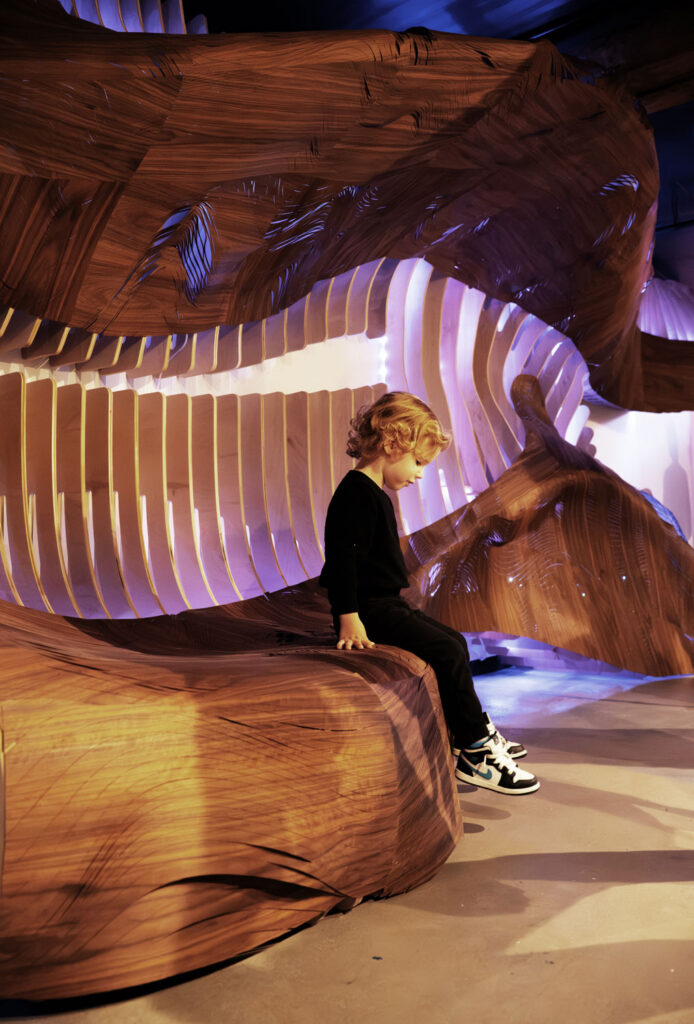
Sections of the wood-veneer installation have been cut in patterns that mimic natural forms, and sensors trigger a pneumatic device that inflates when visitors move closer. The playful work, on view at Boston’s Pinkcomma Gallery, draws upon serious research. As a doctoral student at the GSD, Richter-Lunn studied how people respond emotionally to their environments—and how environments can, in turn, respond to us.
She envisions spaces that shift and change depending on the psychophisiological responses of their inhabitants—the ways their bodies and minds respond via their autonomic nervous systems, which control our heartrate, sweat, digestion, and other unconscious systems that are impacted by our emtions and thoughts.
Richter-Lunn is one of the GSD researchers exploring the relationship between design and psychology. While her work is focused on spaces that respond to human stress responses, Juan Pablo Ugarte (MArch ’14, DDes ’23), also a lecturer in architecture, is exploring how spaces can affect our feelings and behaviors. By understanding the mechanisms by which designed environments can change the way we feel and behave, both Richter-Lunn and Ugarte explore ways to improve our lives.
Advances in neuroscience, cognitive science, and psychology—along with the development of wearable devices that can measure physiological responses—have fast-tracked research at the intersection of psychology and design. The inquiry itself is not new; it has gone by many names over the centuries. The ancient Chinese practice of feng shui was originally used to select plots for gravesites and houses, and it is still practiced today to arrange spaces within buildings. Goethe’s Theory of Colors (1810) is echoed in 1940s research on colors that induce calm, focus, and creativity—studies that inspired hundreds of American public schools to paint their classrooms soft yellow and pink. And, in the 1980s, researchers found that patients recovering from surgery with a view of nature out their windows had shorter hospital stays.
Medical settings are one are one area where Richter-Lunn sees her work potentially having an impact. Stress-reducing responsive architecture could be used at different scales in hospitals or doctors’ offices.
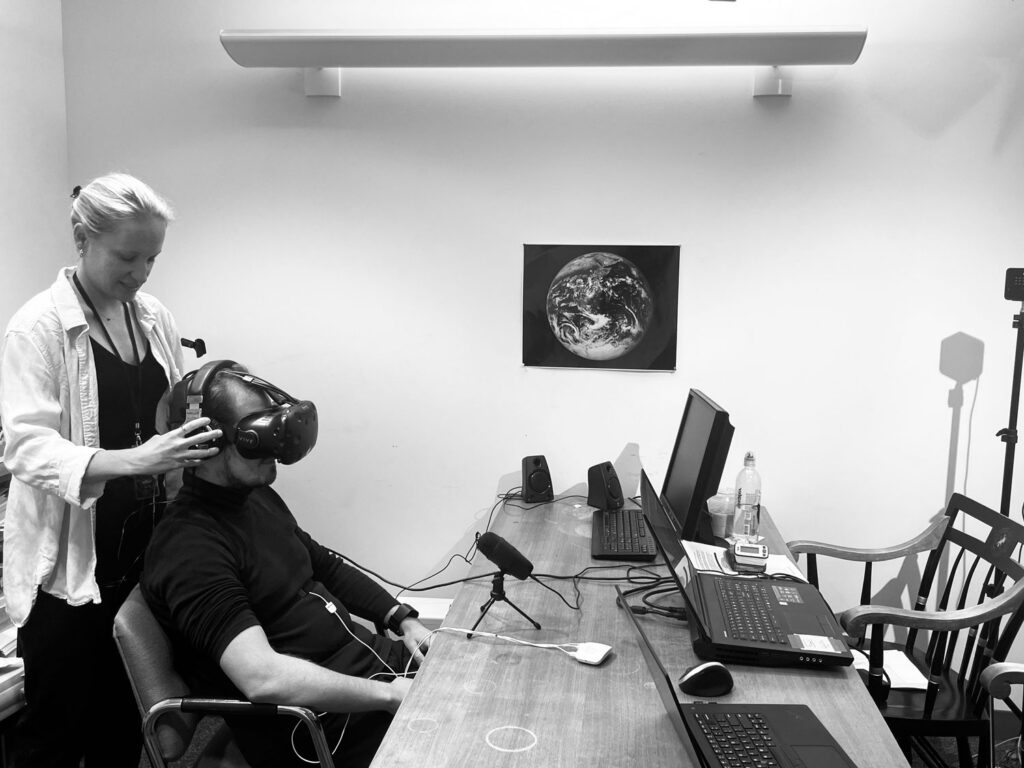
Richter-Lunn has also designed wearable devices and workspace tools that read data like the heat in our skin and then respond with vibration, pressure, or scent, to increase our energy or relax us. “When people exhibited signs of stress,” she says of the data collected in wearable devices during her research, “a material activation occurred, and then I would see which materials produced a positive effect, or reduced stress.” After testing a range of materials, she found that the pneumatic devices’ inflating and deflating actions—not unlike the way our chests rise and fall as we breathe, or waves that crest and crash—were the most calming. A bracelet she designed, therefore, is lined with pouches that inflate and deflate when the device detects signs of stress.
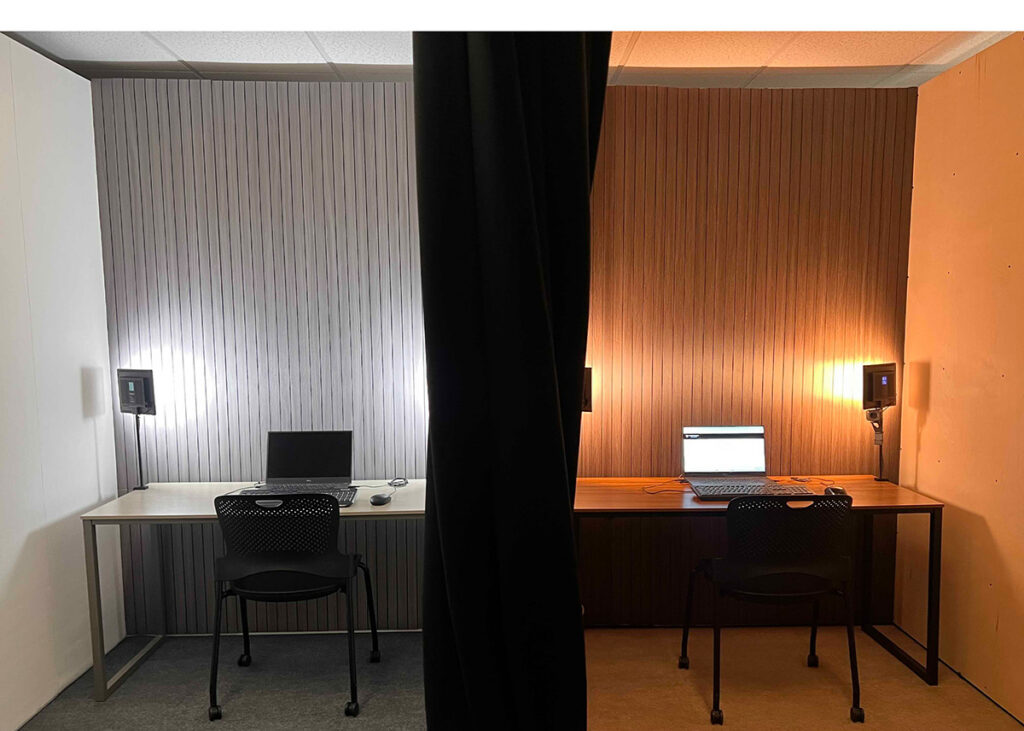
Similarly, Ugarte’s research aims to understand how materials and specific design elements might influence our emotions and behavior. As a postdoctoral Experimental Fellow last year, he drew from psychology, economics, and architecture to study how people responded to two spaces that were nearly identical in layout and material quality but differed in color palette. One room was finished in white and gray, or “cool” materials; the other in cream and yellow, or “warm” materials. The two rooms were built side by side and designed to be equally appealing.
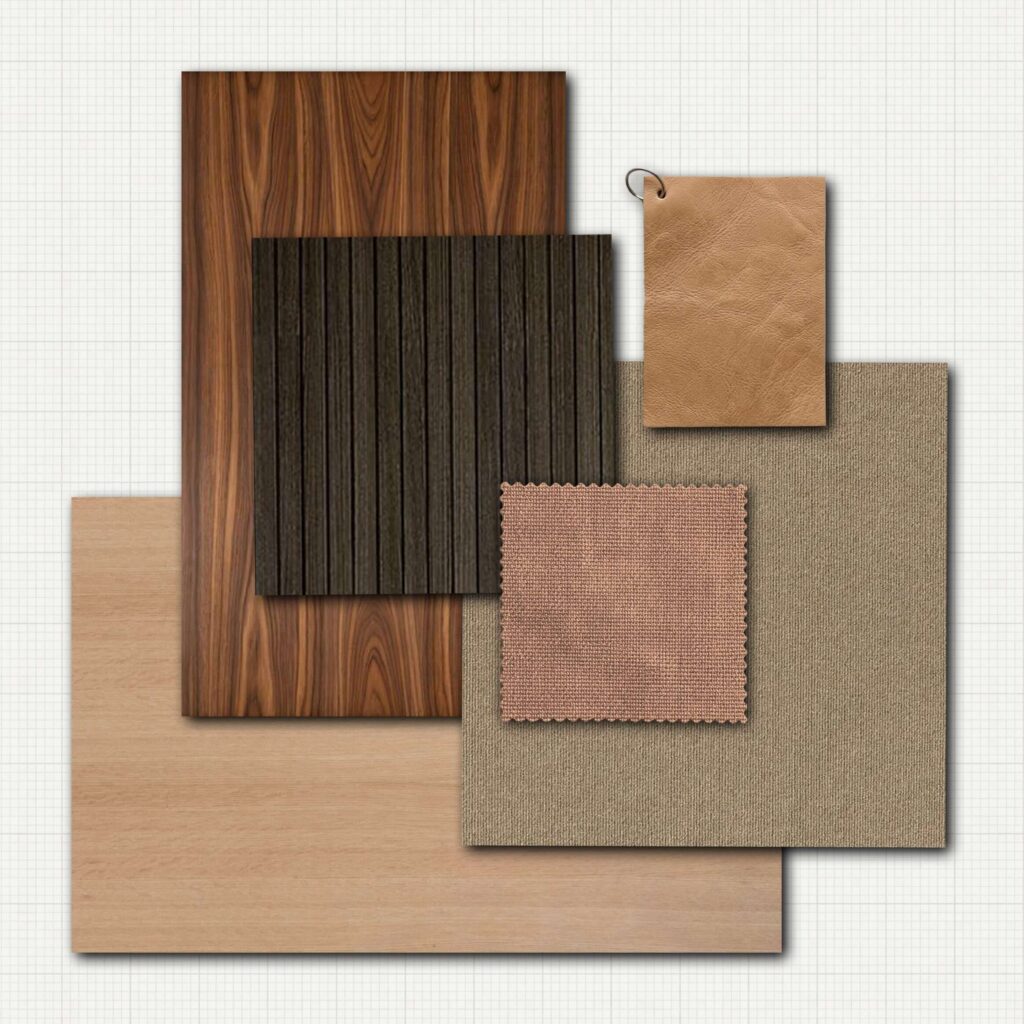
Isolating a single material for study is difficult, Ugarte explains, because the way a material is used varies from one environment to the next. Wood might be applied to a floor or a wall, to different ends. Combining it with other materials, such as brick or concrete, also changes how we perceive it. Instead, he focused on “warmth,” or “coldness,” explaining that, typically, people think of wood when they hear “warm” and concrete when they hear “cool.”
He first ran an experiment to confirm that designers and users perceived the rooms the same way: a room intended to be warm was perceived as warm. Participants then chose one of the rooms to complete a series of stress tests while wearing devices that measured thermal conduction. “We wanted to explore whether materials could affect not only the physiological response, which in turn affects our higher-level emotions, but how these variables affect behavior,” Ugarte says.
He cites a study in which judges who sat on harder seating gave out harsher punishments, while judges in softer seating were more lenient. Such unconscious behavioral outcomes are central to Ugarte’s work. “Does the way a room is designed impact how I think—whether I’m more or less generous when I make decisions? If people’s behavior can be influenced by small environmental variables such as a change in chair materials, that could have massive implications,” Ugarte says. “Can materials affect not only our physiological response but also these higher-level emotions and behaviors?”
Both Ugarte and Richter were surprised to find that we may not be fully aware of differences in our environments. Ugarte found, in a pool of 41 study participants, most people reported that they did not notice any differences between the two rooms at the end of the study, but then, when they were shown the rooms, they had strong preferences about which they preferred. “There’s a mismatch. We feel strongly about the spaces we inhabit, but we generally pay very little attention to our surroundings,” says Ugarte. “This begs the question about how—if at all—these spaces affect our emotions and behaviors.”
Richter found a similarly fascinating result in her work. “Participants experienced different environments over the course of several weeks,” Richter says of her doctoral research. “They didn’t notice a difference in the materials and spaces they were in, and yet, they had profound differences in their experiences and psychophysiological reactions.” So, while their bodies responded differently, with changes in heartrate, thermal activity, and other indicators of autonomic nervous system changes, participants didn’t register the differences in their environments.
Recent advances in neuroscience have led to a greater understanding of the mind-body connection. Technologies that track our health can measure the effects of changing physical spaces lend new insight to how we interact with our environments. Yet, as Ugarte puts it, “there’s a lot more to unpack.” Researchers continue to pursue questions about what we notice about our surroundings, and how the outside world affects our internal emotional and physiological landscape.