Druker Traveling Fellowship 40th Anniversary Presentation
We invite you to join us for the Druker Traveling Fellowship 40th Anniversary Presentation featuring the 2021–2022 Druker Fellow, Elyjana Roach (MAUD ’22).
The presentation, “Malae, Mala’e, Marae in Te Moana-nui-a-Kiwa: The Heart of the Pacific Village,” will be followed by a Q&A with Joan Busquets, Martin Bucksbaum Professor in Practice of Urban Planning and Design.
Established in 1986 by Ronald M. Druker (LF ’76) and by the Trustees of the Bertram A. Druker Charitable Foundation, the Druker Traveling Fellowship is open to all GSD master’s degree candidates who demonstrate excellence in the design of urban environments. The fellowship offers students the opportunity to travel domestically or abroad to pursue study that advances their understanding of urban design.
Te-Moana-nui-a-Kiwa, the vast blue continent of the Pacific, has given special identity to the 15.5 million people who call this sea of islands home. Though diverse, Pacific cultures are deeply connected through shared ancestry, migration, and adaptation to their oceanic environment, often shaped further by colonization and outside influences. From Aotearoa New Zealand to Samoa, Tonga, Hawai’i, Tahiti, and Fiji, these communities are bridged across thousands of miles through the Pacific concept of vā: the relational space. Vā binds people, places, and the environment, forming the essence of Pacific ways of being, knowing, and creating.
This project centers the malae, mala’e, and marae, the communal “village green,” as living expressions of vā. Through stories gathered from elders, community leaders, urban indigenous practitioners, and artists, the research reveals how these spaces anchor cultural hierarchy, ceremony, governance, reconciliation, and identity, while continually adapting to modern urban contexts. The stories uncover how the malae is both equally sacred and practical as it retains and revitalises indigenous practices. Importantly, the ancient wisdom embodied in the malae offers pathways to address contemporary challenges in housing, health, education, and the environment.
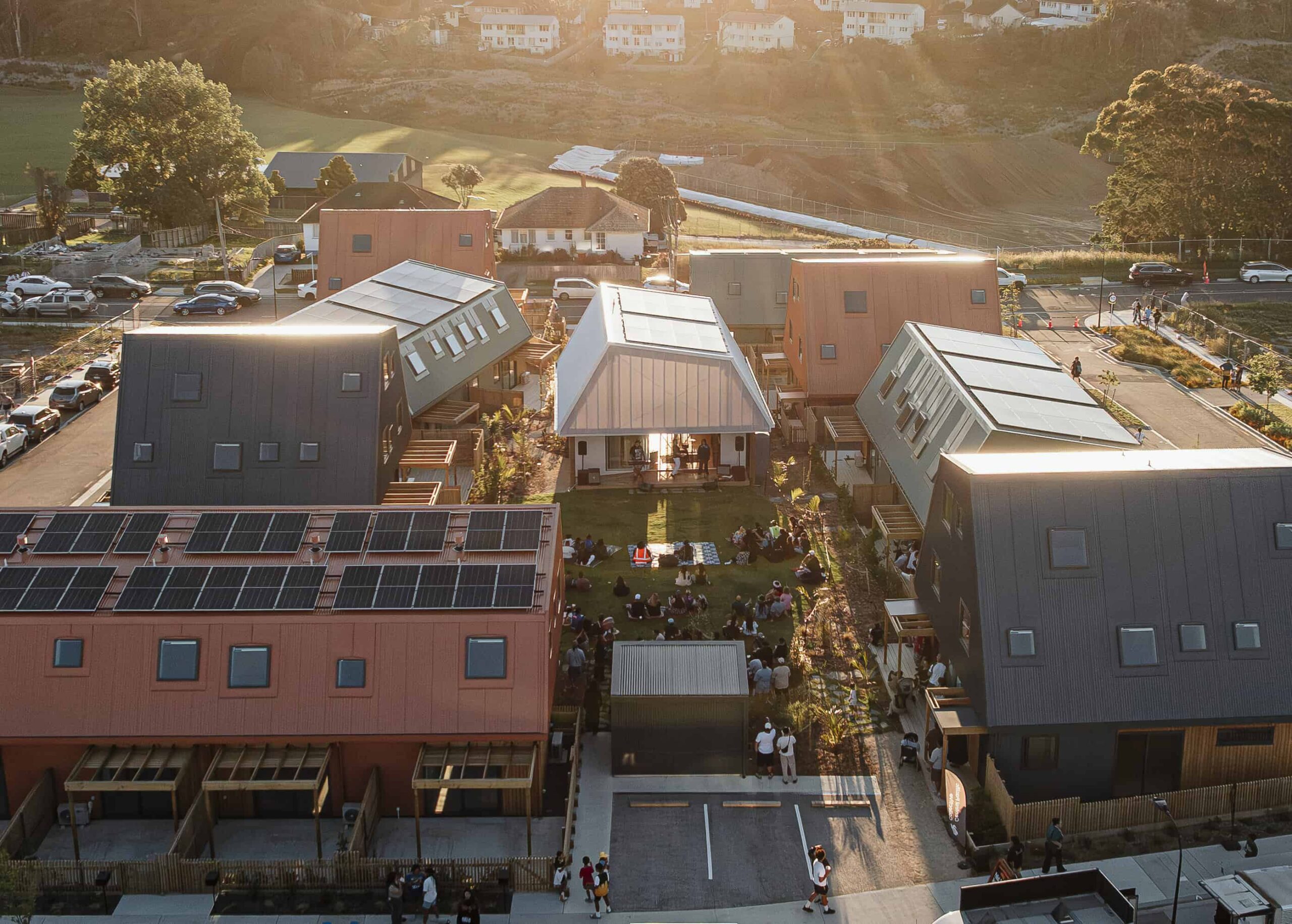
At the heart of this talk is Our Whare Our Fale, a pioneering Pacific-led housing initiative in eastern Porirua, developed by Central Pacific Collective in partnership with local iwi (tribe) Ngāti Toa Rangatira. Built on perpetual leasehold land and supported by $115 million in government funding—the largest ever investment in a Pasefika project—the development has completed the first eighteen of 300 planned affordable, multi-generational homes. Rooted in the values of vā, this project reimagines the Pacific village for 21st-century Aotearoa New Zealand. It transforms life outcomes by moving beyond profit-driven models to restore collective hope, cultural identity, and shared ownership. By placing indigenous values and community voices at its core, the project shows how traditional Pacific models of shared space can inspire new, resilient approaches to urban living and local governance.
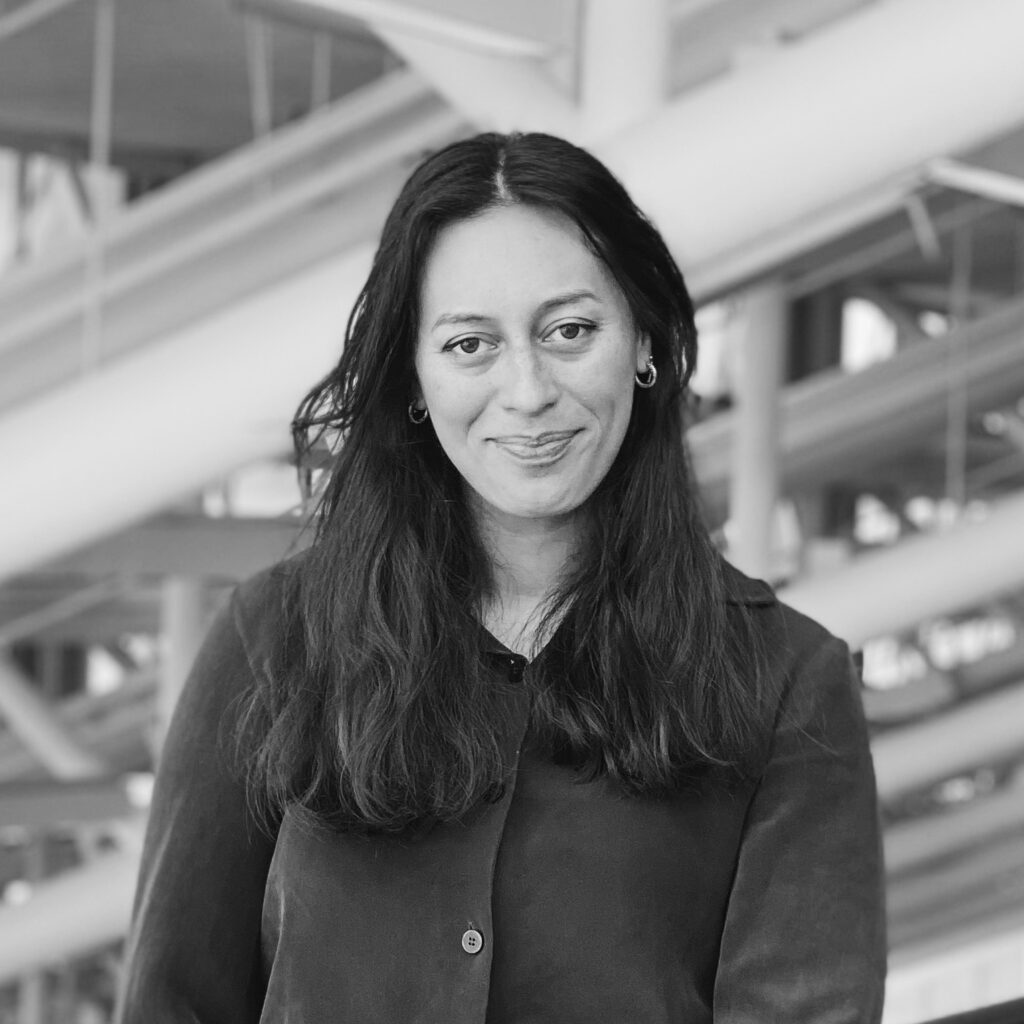
Elyjana Roach, a Samoan-Australian architect and urban designer from Porirua, is Director of Community Regeneration, Masterplanning & Design at Central Pacific Collective, a Pacific-led organization dedicated to thriving Pasefika communities. Her work centres on holistic architecture as a driver of social change, using design, policy, place-making, and Pasefika culture to strengthen community wellbeing.
As the lead designer and strategic thinker for Our Whare Our Fale over the past two and a half years, she has shaped the master plan, managed parts of the development and construction process, led the shared solar energy program, developed a Pacific Housing Guide, and is exploring how regeneration can grow community-owned assets. As a core part of the Central Pacific Collective team, she joins forces with CEO and Samoan matai, Fa’amatuainu Tino Pereira, to bring this vision to life. Together, they are shaping places where tradition and innovation meet, and where the heartbeat of the Pacific village can be felt for generations to come.
This event is organized by the GSD Office of Development and Alumni Relations and the Department of Urban Planning and Design.
Questions? Contact [email protected].