The Territorial City: Edge of the Metropolis
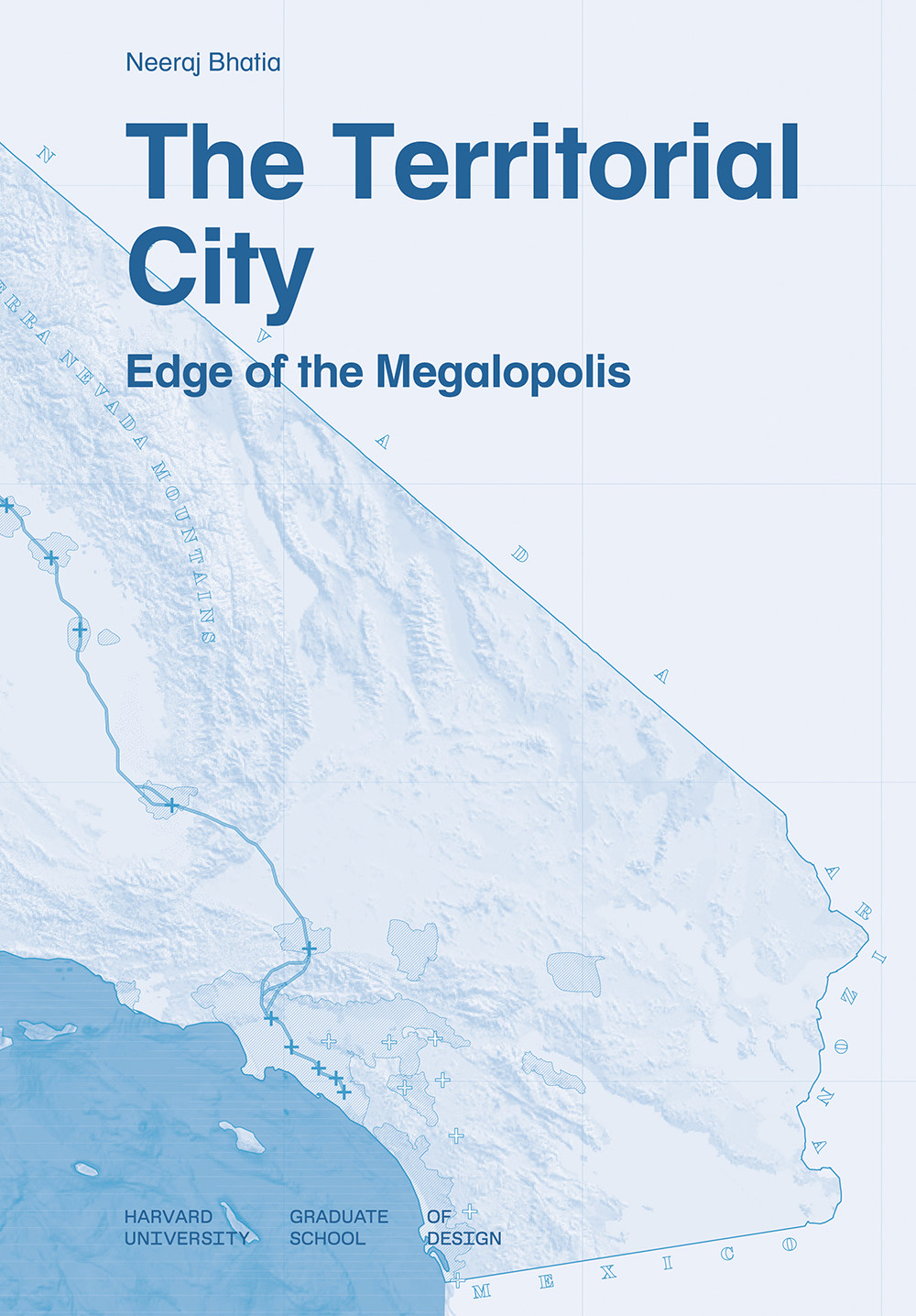
The Territorial City: Edge of the Megalopolis is a studio report containing work from a studio of the same name from the fall 2024 semester at the Harvard University Graduate School of Design, taught by Neeraj Bahtia.
Every foreground has a background. In California, the background is the Central Valley—a flat landscape that is used to harvest and extract resources to support other regions. It is no surprise that within the state, the greatest political, economic, and cultural divide manifests itself between the coastal cities and the inland valley’s hinterland regions. Coastal California adorns an image of scenic landscape, progressive environmental movements, liberal culture, and density, while inland California is characterized by resource harvesting and extraction, conservative values, and a depravity in social infrastructure. With distinctions in labor, wealth, race, climate, and education, these two regions are emblematic of the increasing divide between geographies of immaterial labor and resource consumption, and the exploitation of land and communities to extract and harvest these resources. While these “two Californias” have remained relatively distinct, the ongoing construction of the high-speed rail (HSR) infrastructure to connect San Francisco and Los Angeles will run through the Central Valley. Accordingly, this infrastructure will produce a spatial collapse between these two worlds and foster a new type of urbanism in the American context—the territorial city.
The territorial city is comprised of extreme density and diffusion; of only network and nodes; of both rural and urban. Most importantly, it is a city made up of networked building complexes that can leverage architecture’s capacity to impact territorial issues. This studio focused on collective housing complexes in the Central Valley to address the growing needs of the state and ongoing struggles with housing affordability. Specifically, the studio examined how to expand the domestic commons into a networked urban commons to produce decentralized models of care. Leveraging the network of the HSR, new forms of sharing physical and nonphysical resources, as well as engaging the benefits of scale, offer forms of support that were not previously tenable in hinterland environments like the Central Valley. Through identifying precarious subjects in the Central Valley, the studio considered how the high-speed rail can redistribute resources more equitably. Ultimately these complexes ask how architecture can foster empathy between these two Californias.
The Territorial City: Edge of the Megalopolis was made possible, in part, from support by Harvard University Joint Center for Housing Studies.
This studio report can be read in full on the GSD’s issuu site, among many others.