In a packed room in Gund Hall this fall, student fellows from the Harvard Graduate School of Design (GSD) stood one by one to deliver presentations in what’s known as a pecha kucha—a series of talks lasting precisely six minutes and 40 seconds each. Reporting on work they did this summer in collaboration with mayors and their communities through two different fellowship programs—the 2026 Just City Summer Fellowship and the GSD Student Fellowship—they shared their research and design solutions for issues ranging from restorative justice to increasing urban green spaces.
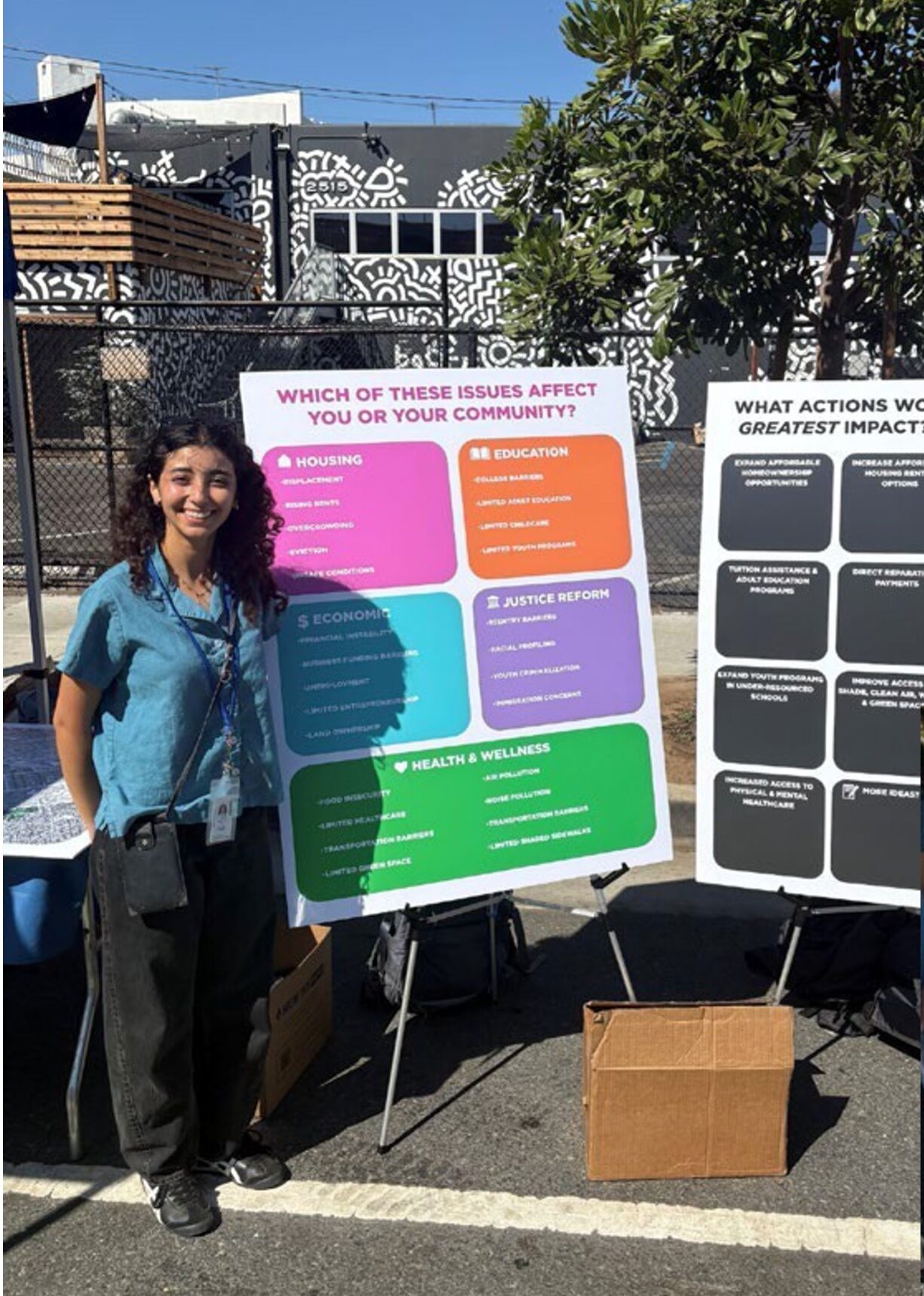
2026 Just City Summer Fellowship students were selected to work on priority projects chosen by the eight mayors who had taken part in the Just City Mayoral Fellowship, a program of the Just City Lab at the GSD and the United States Conference of Mayors in partnership with the Mayors’ Institute on City Design, made possible with support from the Bloomberg Center for Cities at Harvard University and additional support from The Kresge Foundation. The program, now in its sixth cycle, invites mayors to engage in conversations throughout the year, each addressing a single project within their city with input from Just City Lab experts on “architecture, landscape architecture, urban planning, art activism, housing, and public policy.”
The GSD Student Fellowship—supported by the ReBuild Initiative, which aims to bring innovative design, theories, and tools into applied practice by civic leaders to rebuild, repair, and transform the urban fabric of cities in the U.S. and abroad—placed a GSD student in the City of St. Louis to work on a green infrastructure and land management strategy for tornado recovery.
The pecha kucha was hosted by Toni L. Griffin, professor in practice of urban planning and founder of the Just City Lab, and Maurice Cox, Emma Bloomberg Professor in Residence of Urban Planning and Design and Faculty Co-Chair of the ReBuild Initiative.
The presentations illustrated the depth of the students’ immersion in their cities and their collaboration with the mayors and leadership teams on the design challenges each mayor’s priority project faced. One student shared a selfie that the mayor took at one of their meetings, while another talked about the challenge of sleeping through nights of full daylight in Alaska. A third student explained how surveillance complicated his design process: helicopters circled his site if he spent more than a few minutes there. All the fellows talked about how important it was for them to be on-site, in person, to walk the neighborhoods, get to know residents, and establish relationships, and, at least for a few weeks, become a part of the places they were assigned to help. Their work highlights the social impact of the design of the built environment, and the influence that cities, mayors, and municipal governments have in bringing more equitable outcomes to cities.
Six fellows from the Just City Lab, and one from the ReBuild Initiative, took part in the pecha kucha. Three additional Just City Lab Summer Fellows’ projects are also included here, as they were unable to attend the pecha kucha event.
Milena Almetica (MUP ’27), Moline, IL.
“I can’t leave, even if I want to, because my home has no value,” one of Moline’s residents reported to Almetica. Originally a factory town, Moline has felt the impact of manufacturing’s decline. Now, in a neighborhood divided by a highway, residents live in an underserved part of the city that lacks walkable streets and recreational amenities. Almetica interviewed local residents and business owners about what they need in their neighborhood and began to imagine what the city could look like if it were reconnected to the riverfront and other parts of the city. Almetica helped develop a vision for the East End neighborhood, with multifamily housing that fits local typologies, safe, walkable, and bikeable streets, and an emphasis on existing strengths such as the neighborhood’s many wildflower gardens. She conducted a walking audit with residents, talking about their neighborhood as they moved through it together, and addressed the city’s flood risk, offering ideas around reconnecting existing waterways and mitigating a vulnerable pipeline.
Matías Griffiths (MAUD ’27), Gresham, OR.
Griffiths was asked to look at an underutilized site that currently serves as a parking lot, and to redesign it as a community and cultural space. Working from the premise, as he put it, that “nature brings people together,” he designed an urban park and flexible, multi-use structure inspired by the plank houses of the Chinook people of the Pacific Northwest. A roof collects rainwater and offers shade; inside, the high ceiling and open space encourage connection in a space designed for either an open produce market or subdivided retail areas, as the community’s needs require. He increased the ecological value of the site by adding trees, and developed a plan that incorporates the stream that splits the lot into two parts, and connects it to a nearby park. “Design can help them to imagine how sites in their cities could become something else in the future.”
Montréale Jones (MArch I ’28), Broadview, IL.
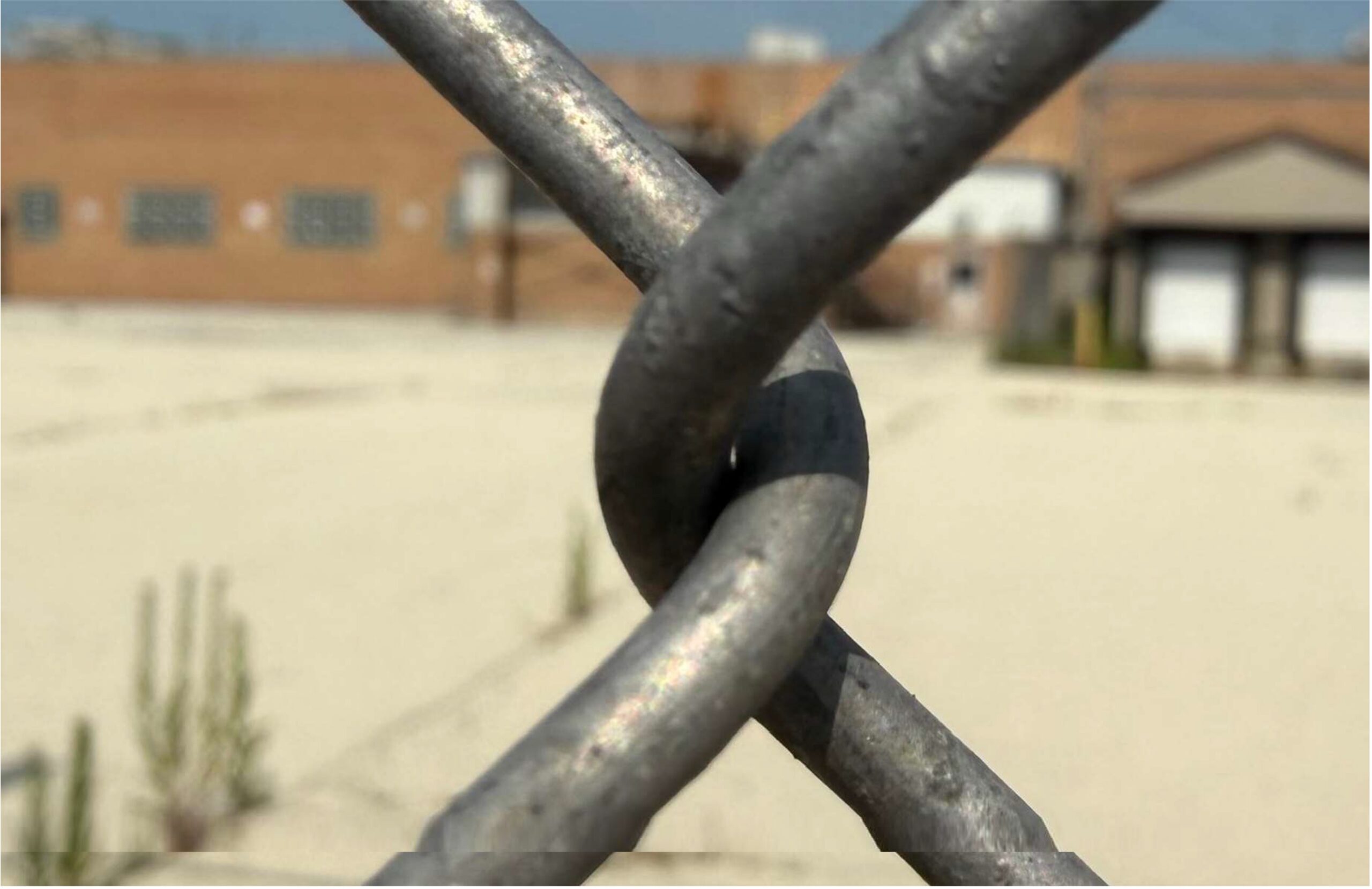
Jones was asked to help the mayor reimagine the site of the US Customs and Immigration Enforcement (ICE) facility in Broadview, which has been in use for immigration detention since 2006 and became the focus of protests in 2025 during ICE operations in Chicago. The facility is surrounded by vacant warehouses and a gravel pile, Jones explained, and is under constant surveillance. Since last year’s operations and protests, anyone who spends more than a few minutes outside draws helicopters overhead. He began to imagine how to transform a heavily surveilled site into a space for civic responsibility, considering options such as a justice corridor mixed with housing, an urban park, and a visitor center, using the building’s footprint as the starting point for his design. He offered the mayor and city leaders a set of precedents from which they could choose future building designs. He also began to explore new architectural possibilities based on the existing building. He re-imagined a single metal twist in the fence as community members’ intertwined arms—a “civic embrace.” Based on his experience in Broadview, Jones came to a definition of resilience as the “capacity to confront what’s divided us” and to build new spaces together.
Nisreen Tarbell (MAUD ’27), Santa Monica, CA.
Tarbell, who describes design as a political act, said that “we all, as designers and planners, have a responsibility to understand how our systems can cause harm.” Her project responds to a settlement between the city and the family of Black entrepreneur Silas White. In 1959, White bought land from a white resident to open a beach club for Black families; the city then seized the property by eminent domain. The land is now a public city street and part of a beach hotel. Tarbell’s focus this summer was helping to developing a trauma-informed restorative justice commission for the city. Tarbell educated community members about restorative justice practices and gathered data from other cities pursuing restorative justice. As part of a larger network, Santa Monica can draw from existing reparative justice frameworks and tools that Tarbell catalogued to define a path forward. Tarbell explained that as a designer, she was most interested in drawing connections between historical trauma and the built environment.
Shane Woolley (MUP ’27), Fairbanks, AK.
Woolley began by noting that Alaska is where humans are thought to have first entered North America, millennia ago. He described the histories of Alaska’s Indigenous communities and talked about how the legacy of colonialism continues to affect the region, with the “boom and bust” economy driven historically by gold mining and now by oil. As part of the mayor’s focus on revitalizing downtown Fairbanks, Woolley developed an interactive map that shows vacant lots and can be updated in real time from a cell phone, enabling city workers to collect data about land use. He also helped develop street design guidelines and, in collaboration with a local nonprofit, designed and built a free library as part of a “starter block” downtown activation program.
Martha Oloo (MLA ’27) St. Louis, MO. GSD Student Fellow.
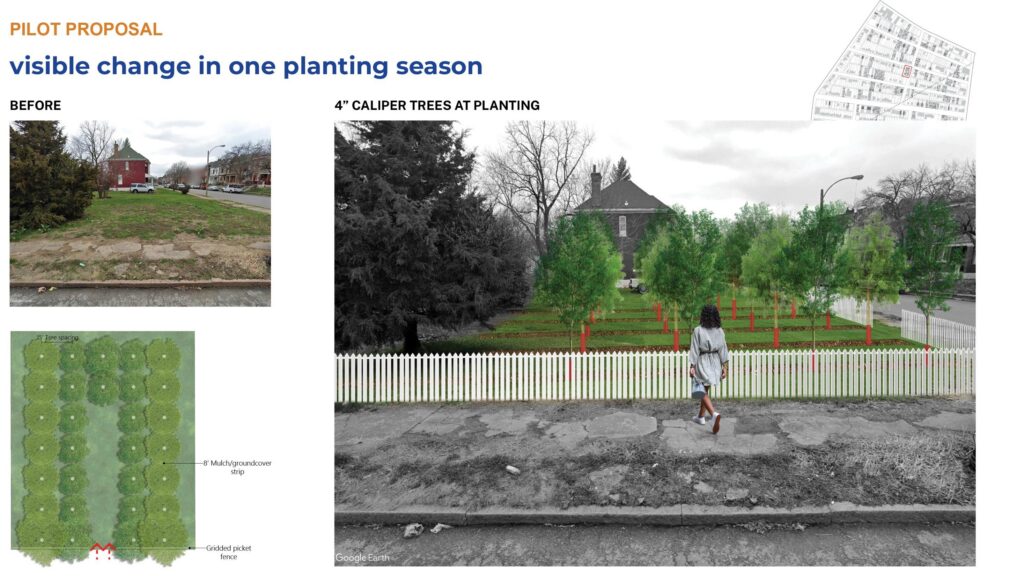
On May 16, 2025, a tornado ripped through large swaths of St. Louis, leaving behind thousands of damaged homes and community spaces. Oloo, a landscape architecture student, noted that “greening is economic development,” and set out to design plans for the vacant plots left behind by the tornado. For example, she highlighted design strategies that signal that city-owned vacant lots are being cared for. By planting slightly larger trees in the front row of the park and smaller ones in the back, and lining the park with a picket fence, the city can show residents that the plantings are intentional and that someone is tending them. In 15 years, those saplings will be large enough to provide shade for community gatherings. The plot, Oloo noted, can retain those plantings when the city is ready to develop missing-middle infill housing, 2- or 4-flats for middle-income buyers including minorities and women.
Additional Just City Summer Fellows’s Projects:
Xiluva Mbungela (MDes ’26), Durham, NC.
Mbungela’s fellowship is taking place this fall, in the neighborhood of Old East Durham, supporting the mayor’s efforts to develop a community-centered reinvestment initiative to address decades of disinvestment and displacement. She will spend time researching and developing a stakeholder ecosystem map, and co-designing a community engagement plan, in addition to doing on-site community engagement work.
Zhaoyi (Max) Wang (MDes ’27), Salem, MA.
Wang spent her summer in Salem, MA, conducting research, drafting battery energy storage zoning, and contributing to a local affordable housing proposal. She built a tracking system for the city, to alert them of people who are displaced from their homes. The system covered all nine of its census tracts, including “The Point” neighborhood, founded by settlers founded in 1626. In response to various development opportunities across Salem, the City wanted to create a structured way to model and monitor displacement risk tied to measurable thresholds, which could also help inform future community benefits agreements.
Javier Zarazua (MDes ’27), Columbia, MO.
Zarazua’s summer Fellowship was rooted in research on the Central City neighborhood. He produced a range of reports as part of an effort to balance development opportunities with community needs and the preservation of neighborhood character. Zarazua also developed a cooperative board game, “Zonopolis,” as a tool for community engagement around the city’s comprehensive plan, designing and testing every element of the game from scratch—from game mechanics and rulebooks to branding and rollout. “The gameplay,” he says, “becomes the basis for real conversations about Columbia’s (or your city’s) comprehensive plan.”