Students, faculty, and alumni honored with 2021 Boston Society of Landscape Architects Awards
Students, faculty, and alumni honored with 2021 Boston Society of Landscape Architects Awards

- Exemplary social, cultural, educational, or environmental significance.
- Outstanding quality, craftmanship, creativity, or artistry.
- Unique and innovative technologies, techniques, or concepts.
- Advancement of the public’s awareness and perception of the field of landscape architecture.
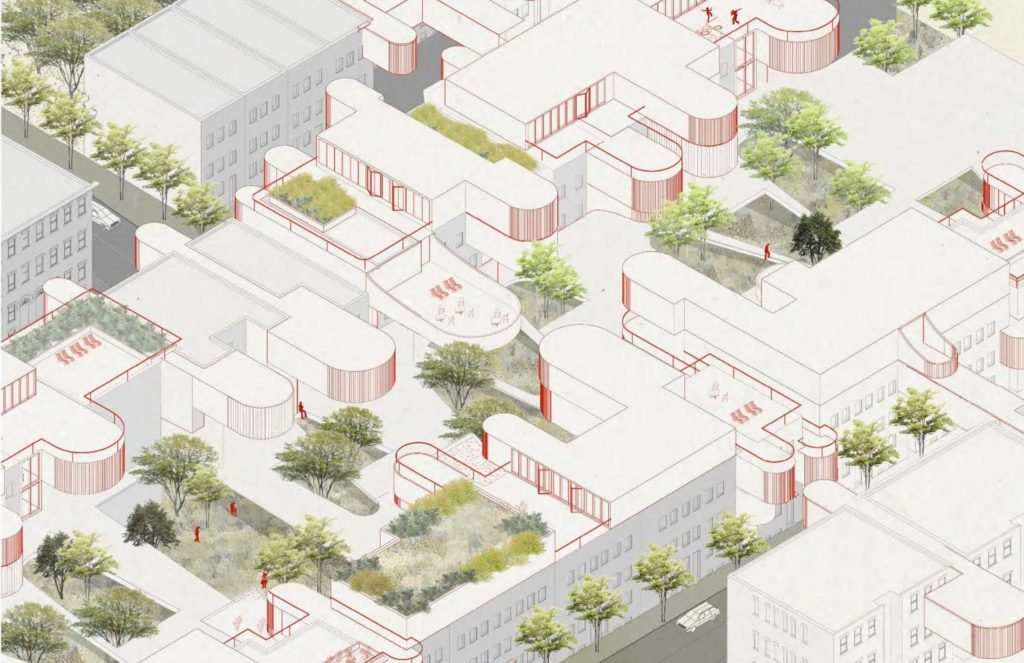
Echo Chen, Kongyun He, and Michele Chen’s “Local Forest Coalition” Boston, MA.
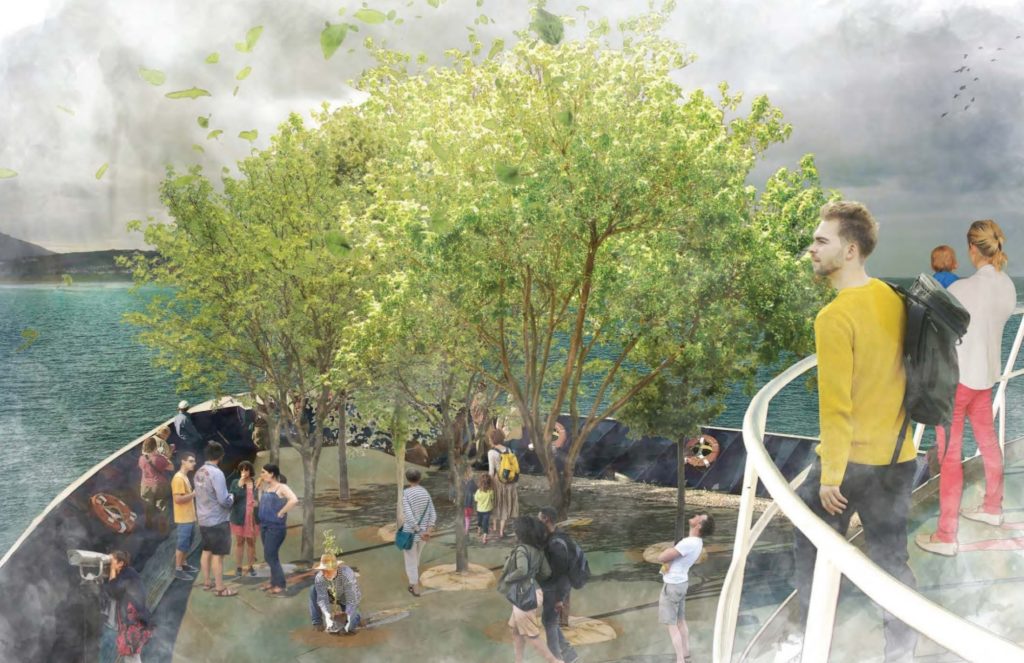
Estello Raganit and Joan Chen’s “Slowlands: Making the Inter-Loughs Wilds” Northwest City Region, Ireland & Northern Ireland
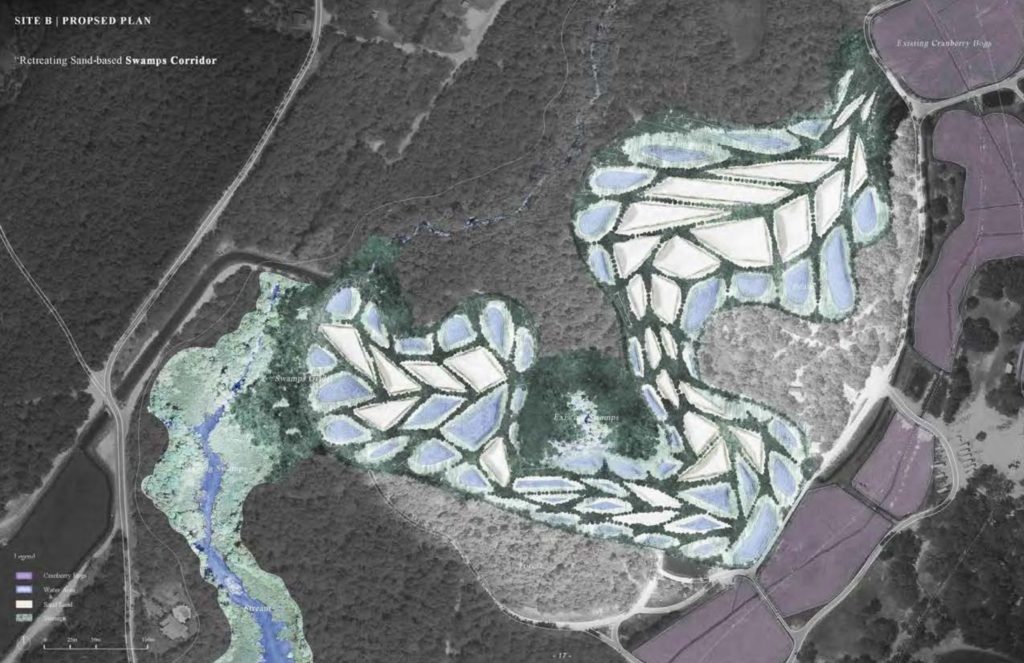
Minzhi Lin’s “Retreating Plan” Wareham, Massachusetts.
- Agency Landscape + Planning, founders Gina Ford (MLA ’03), design critic in Landscape Architecture, and Brie Hensold (MUP ’07), design critic in Urban Planning and Design
- Carolina Aragon (MLA ’04)
- Copley Wolff Design Group, Inc, president and principal Lynn Wolff (MLA ’81)
- Crowley Cottrell, LLC, principal Naomi Cotrell (MLA ’02)
- Halvorson – Tighe & Bond Studio, principal landscape architect Cynthia Smith (MLA ’85)
- IBI Placemaking, principal John N. Amodeo (MLA ’82)
- Reed Hilderbrand, co-founder Gary Hilderbrand (MLA ’85), Peter Louis Hornbeck Professor in Practice of Landscape Architecture
- SASAKI, principal James N. Miner (MUP ’01) with other GSD affiliates
- SCAPE, founder and principal Kate Orff (MLA ’97) with other GSD affiliates
- ScenesLab, founder and director Wendy Yifei Wang (MLA ’14) with other GSD affiliates
- Stoss Landscape Urbanism, founder and director Chris Reed, co-director of the Master of Landscape Architecture in Urban Design Degree Program and Professor in Practice of Landscape Architecture
- The VELA Project, co-principal Samantha Solano (MLA ’16)
Jessica Tang (MUP/MPP ’23) Awarded Rappaport Summer Public Policy Fellowship
 Jessica Tang, a joint degree candidate in Urban Planning and Public Policy at the Harvard Graduate School of Design and the Harvard Kennedy School, is working with the Massachusetts government agency MassDevelopment this summer as a Rappaport Public Policy Fellow. Now in its 21st year, the Rappaport Public Policy Fellowship gives graduate students throughout Boston the opportunity to gain hands-on experience as they work with organizations on addressing vital public policy issues. It is funded and administered by Harvard’s Rappaport Institute for Greater Boston, which “strives to improve the governance of the region by strengthening connections between scholars, students, officials, and civic leaders.”
Working with communities, nonprofits, businesses, and banks, MassDevelopment helps create “jobs, increase the number of housing units, revitalize urban environments, and address factors limiting economic growth including transportation, energy, and infrastructure deficiencies.” Tang will be supporting MassDevelopment’s Transformative Development Initiative by adapting TDI economic growth strategies for other areas in Massachusetts, analyzing the implementation of current TDI projects, and researching peer learning opportunities for organizations in the public sector.
Tang is part of a cohort of 20 graduate students representing 14 schools from seven universities. Previous GSD students that were awarded the Rappaport Public Policy Fellowship include Marcus Mello (MArch I/MUP ’18) and Lindsay Woodson (MDes RR/MUP ’17) in 2015.
Jessica Tang, a joint degree candidate in Urban Planning and Public Policy at the Harvard Graduate School of Design and the Harvard Kennedy School, is working with the Massachusetts government agency MassDevelopment this summer as a Rappaport Public Policy Fellow. Now in its 21st year, the Rappaport Public Policy Fellowship gives graduate students throughout Boston the opportunity to gain hands-on experience as they work with organizations on addressing vital public policy issues. It is funded and administered by Harvard’s Rappaport Institute for Greater Boston, which “strives to improve the governance of the region by strengthening connections between scholars, students, officials, and civic leaders.”
Working with communities, nonprofits, businesses, and banks, MassDevelopment helps create “jobs, increase the number of housing units, revitalize urban environments, and address factors limiting economic growth including transportation, energy, and infrastructure deficiencies.” Tang will be supporting MassDevelopment’s Transformative Development Initiative by adapting TDI economic growth strategies for other areas in Massachusetts, analyzing the implementation of current TDI projects, and researching peer learning opportunities for organizations in the public sector.
Tang is part of a cohort of 20 graduate students representing 14 schools from seven universities. Previous GSD students that were awarded the Rappaport Public Policy Fellowship include Marcus Mello (MArch I/MUP ’18) and Lindsay Woodson (MDes RR/MUP ’17) in 2015. Kofi Akakpo, Cynthia Deng, and De Qian Huang awarded 2021 KPF Fellowships
Each year, the Kohn Pedersen Fox Foundation sponsors a series of fellowships to support emerging designers and advance international research. Two recent Harvard Graduate School of Design graduates and one current student are recipients of 2021 fellowships. Cynthia Deng (MArch/MUP ’21) and Kofi Akakpo (MArch ’21) were awarded the Paul Katz Fellowship, an internationally recognized award that honors the life and work of former KPF principal Paul Katz, while De Qian Huang (MArch ’22) received the Kohn Pedersen Fox Traveling Fellowship , established to broaden the education of a design student in their last year of school through a summer of travel and exploration.
The Paul Katz Fellowship is awarded to international students studying issues of global urbanism and is open to students enrolled in a masters of architecture program at five East Coast universities at which Katz studied or taught: Harvard, Princeton, Yale, Columbia, and the University of Pennsylvania. KPF focuses each annual iteration of the Paul Katz Fellowship on a different global city. This year’s fellowship is tied to Cape Town; previous cities include Mexico City, Tel Aviv, Sydney, London, and Tokyo. Given the ongoing COVID-19 pandemic, KPF has announced that they will pause any travel requirements, and will distribute $15,000 of the $25,000 travel stipend as a financial award to each of the winners.
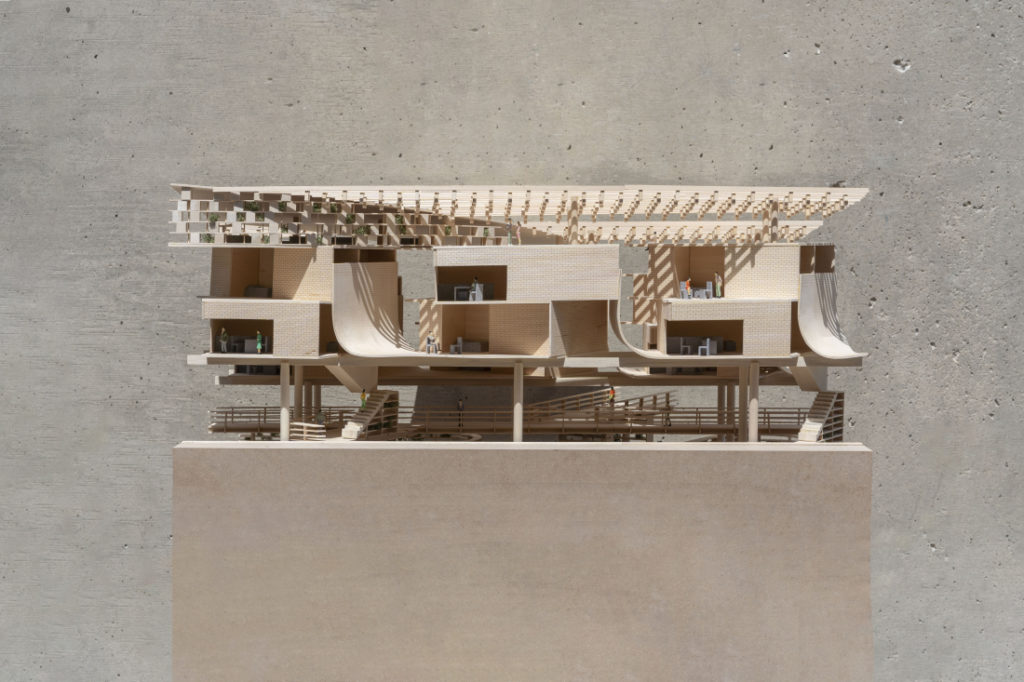
The Traveling Fellowship is given to students from one of the 27 design schools with which KPF has partnered to fund summer research on “far-reaching topics that push the boundaries of critical thinking and architectural design.” KPF has paused travel for the Traveling Fellowship also, and has awarded a scholarship to each winner to fund a “Journey of the Mind.” Huang is one of five winners of the 2021 cycle. Tiange Wang (MArch I ’22) received an Honorable Mention.
For the Paul Katz Fellowship, Deng submitted a research proposal—“Joints, Junctions, Patches, and Sutures: Spatial Repair of Past and Future”—that connects spatial reparations and adaptive reuse in the context of Cape Town’s legacies of apartheid. “The proposal was influenced by some of the research that went into by my joint thesis, ‘Care Agency: a 10-Year Choreography of Architectural Repair,’ completed with Elif Erez (MArch I/MDes HPDM ’22) and advised by Lisa Haber-Thomson and Lily Song,” says Deng. “I also spent time thinking about what Mabel Wilson has said and written about the idea of radical repair and found inspiration from the work of Euneika Rogers-Sipp (Loeb ’16), including her Digging Du Bois project journey and her thinking on reparations ecologies.”
In her proposal Deng asks, “Can the physical repair joints paired with oral histories speak to larger and more transformative repairing forward—such as repairing a Eurocentric architectural discourse in which African ingenuity is largely missing; repairing persistent segregation and lingering trauma bourne of apartheid; repairing ecological relationships ‘where clouds gather’ (the indigenous Khoe translation for the area known as Cape Town)?”
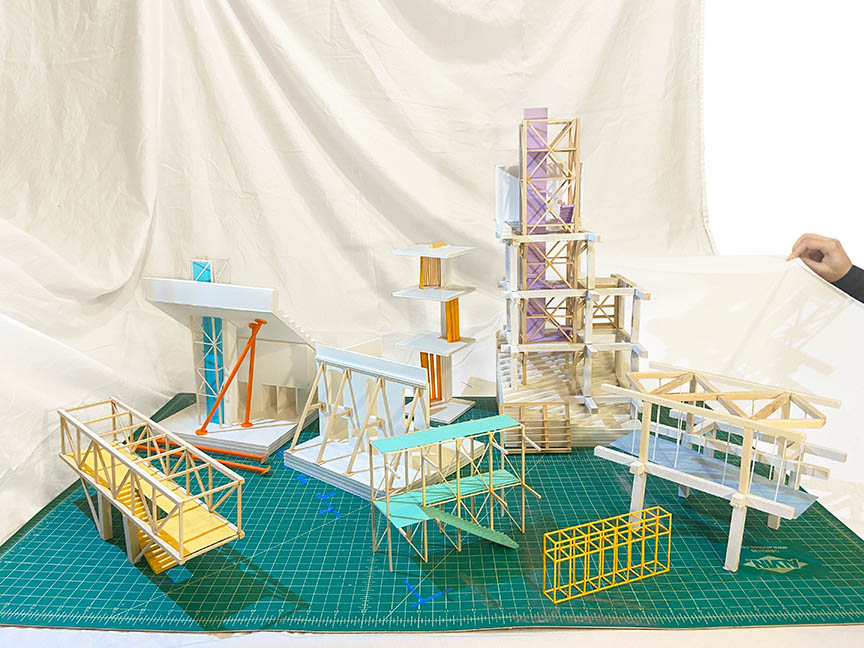
Akakpo’s research proposal, “Reclaiming Beauty in African Architecture,” addresses the need to recover and properly define an African architecture that is independent of Eurocentric standards and colonialism. “Born in Ghana, West Africa, I am intrigued by the way in which people imagine and dream beyond their means,” Akakpo writes in his project brief. “I will focus my documentation and analysis on how public and private spaces are created, how spatial territories are navigated, and how difficult spaces are humanized, personalized and made livable through design.”
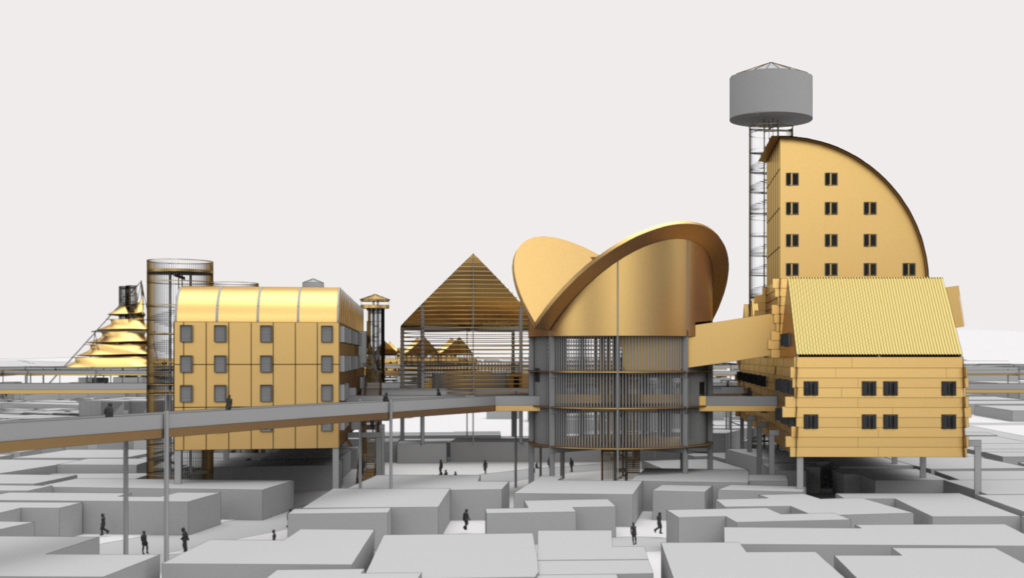
This year’s recipients follow a legacy of GSD students who have been honored with KPF fellowships, including Paul Katz Fellowship winners Yotam Ben Hur (MArch ’20) in 2020, Miriam Alexandroff (MArch ’19) and Peteris Lazovskis (MArch ’20) in 2019, and Sonny Xu (MArch/MLA ’18) in 2018, and KPF Traveling Fellowship winner Eduardo Martínez-Mediero Rubio (MArch ’19) in 2018.
Learn more about the fellowships, lectureships, and education-focused programs the KPF Foundation organizes each year.
“ResilientHub” wins third place in Solar Decathlon Design Challenge
“ResilientHub” wins third place in Solar Decathlon Design Challenge
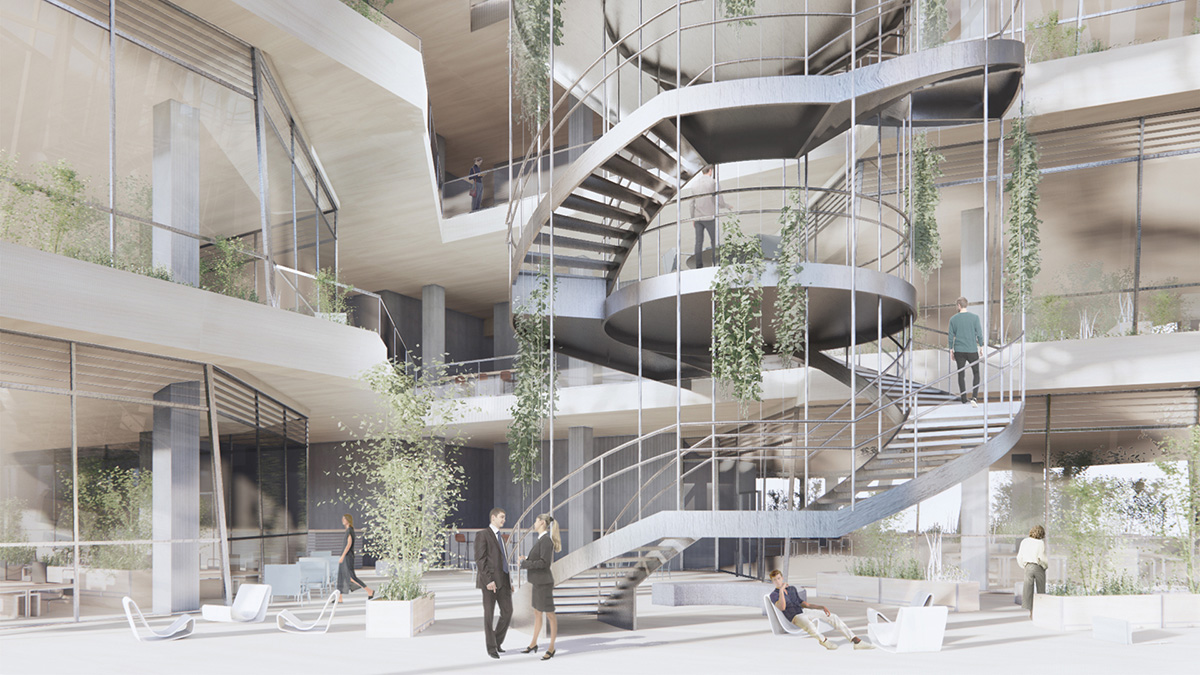
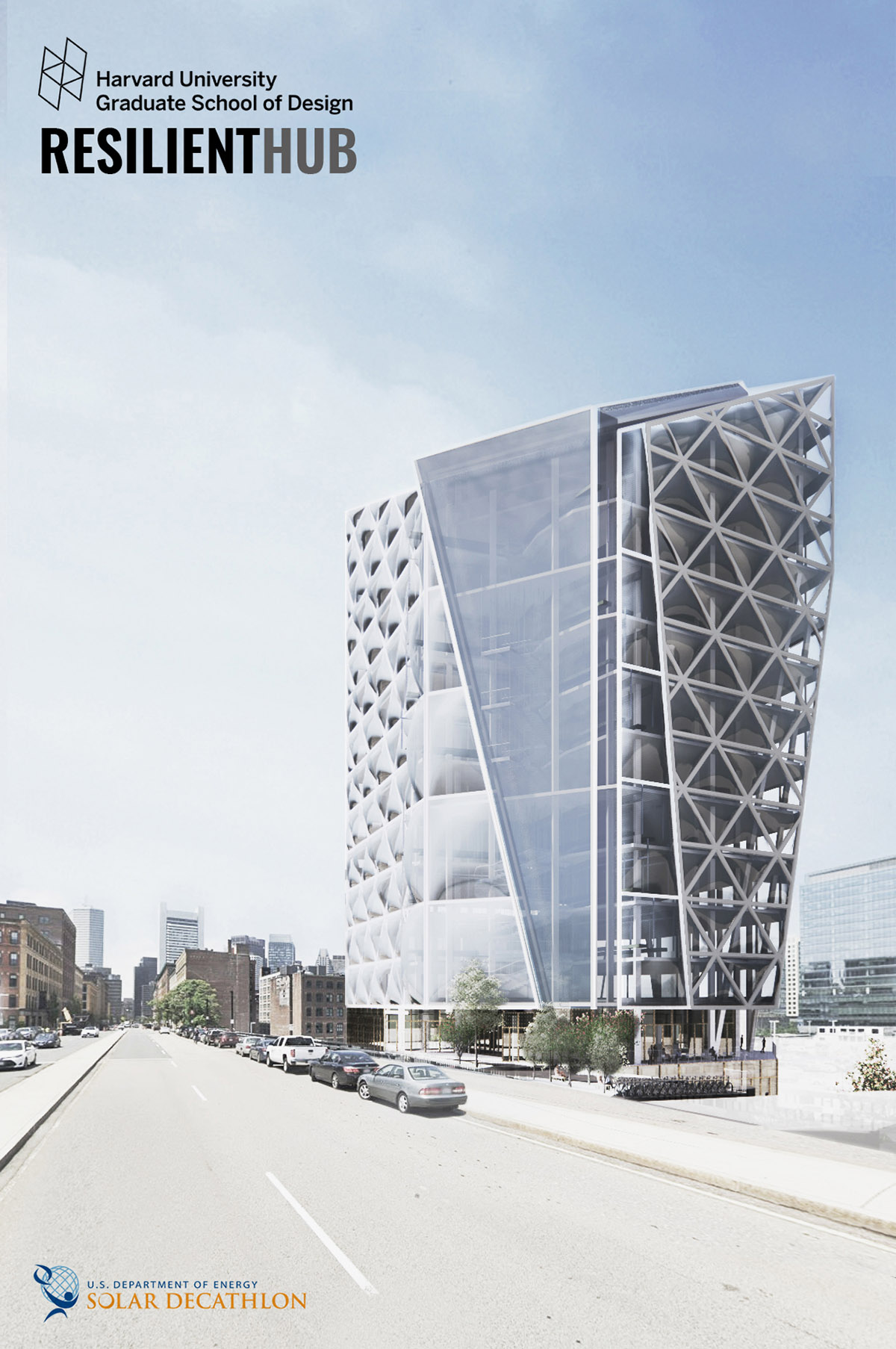 Located in Boston’s Seaport District, the design by Kuan-Ting Chen (MDes EE ’22), Sihui (Iris) Chen (MArch I ’21), Andrew Gibbs (MDes REBE ’21), Kritika Kharbanda (MDes EE ’23), and Lara Tomholt (DDes ’22) is a future-ready building that operates at maximum energy efficiency and comfort levels for its users. The building’s adaptability is responsive to increasing urban density and a changing environment due to climate change. According to the project brief, “The innovative, high-performance design solutions ResilientHub employs are directly applicable to the vast majority of the future global building stock that will be affected by the same environmental changes.”
The project was initially conceived for “Advanced Applications in Sustainable Architecture,” a new elective seminar led by Holly Samuelson, associate professor of architecture. The course seeks to “provide a deeper dive into issues of evidence-based, high-performance, sustainable building design.”
Learn more about “ResilientHub” and view the proposal’s presentation.
Located in Boston’s Seaport District, the design by Kuan-Ting Chen (MDes EE ’22), Sihui (Iris) Chen (MArch I ’21), Andrew Gibbs (MDes REBE ’21), Kritika Kharbanda (MDes EE ’23), and Lara Tomholt (DDes ’22) is a future-ready building that operates at maximum energy efficiency and comfort levels for its users. The building’s adaptability is responsive to increasing urban density and a changing environment due to climate change. According to the project brief, “The innovative, high-performance design solutions ResilientHub employs are directly applicable to the vast majority of the future global building stock that will be affected by the same environmental changes.”
The project was initially conceived for “Advanced Applications in Sustainable Architecture,” a new elective seminar led by Holly Samuelson, associate professor of architecture. The course seeks to “provide a deeper dive into issues of evidence-based, high-performance, sustainable building design.”
Learn more about “ResilientHub” and view the proposal’s presentation.
Rachel Meltzer appointed inaugural Plimpton Associate Professor of Planning and Urban Economics
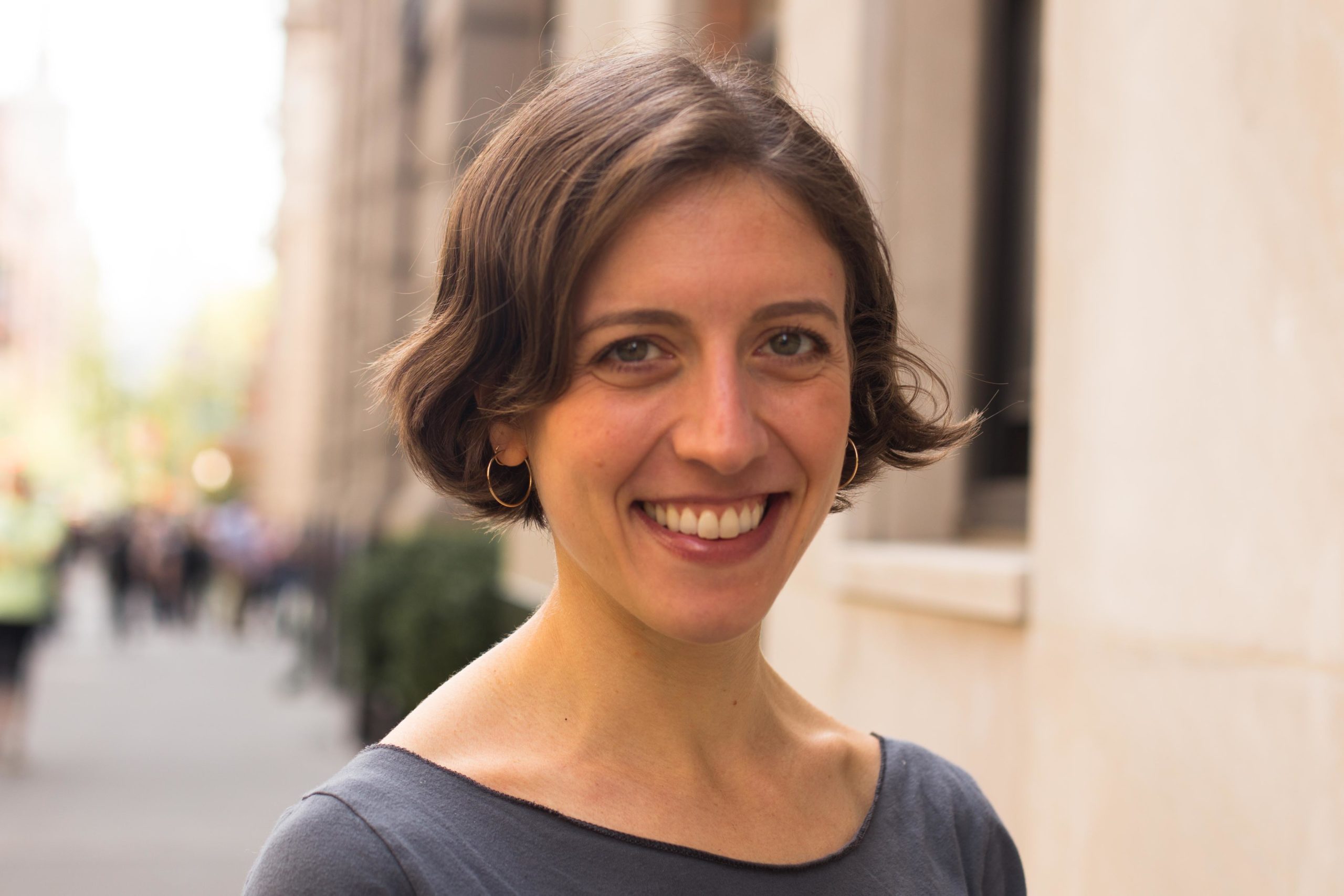 Harvard Graduate School of Design is pleased to announce the appointment of Rachel Meltzer as the inaugural Plimpton Associate Professor of Planning and Urban Economics, a role established in 2019 and made possible by a gift from Samuel Plimpton (MBA ’77, MArch ’80) and his wife, Wendy Shattuck. The position will focus and enable the study of a wide range of urban issues and data, including development, evolving land use patterns and property values, affordability, market and regulatory interactions, open space, consumer behaviors and outcomes, and climate change, and will help inform the decisions of future architects and planners.
Meltzer’s appointment is effective July 1, 2021. The Plimpton Associate Professorship of Planning and Urban Economics resides within the GSD’s Department of Urban Planning and Design.
As the Plimpton Associate Professor of Planning and Urban Economics, Meltzer will teach courses in the core areas of urban economics and quantitative methods, as well as more broadly in housing, climate change, private governance structures, and real estate. She will also be a resource for PhD and Doctor of Design (DDes) candidates working to understand how quantitative approaches can be employed as methods for their dissertations.
“Using the tools of urban economics research to evaluate and measure the societal impacts of development should inform design and planning decisions,” Plimpton observed in 2019 upon the professorship’s establishment. “As the world’s top design school, Harvard and the GSD are the best places for exploring these issues and advancing both urban economics and excellence in design.”
Currently Associate Professor of Urban Policy and Chair of the Public and Urban Policy Master of Science (MS) degree at The New School’s Milano School of Policy, Management, and Environment, Meltzer’s research is broadly concerned with urban economies and how market and policy forces can shape disparate outcomes across neighborhoods. She focuses on issues related to housing, land use, economic development and local public finance. Current projects look at how market-based, natural disaster and policy “shocks” impact retail and commercial activity in urban neighborhoods. These “shocks” range from gentrification to the introduction of broadband to Superstorm Sandy. Meltzer is also interested in the private provision of public goods, and she has explored a number of questions related to Business Improvement Districts (BIDs) and Homeowners Associations (HOAs).
Meltzer is also a Research Affiliate at the Furman Center for Real Estate and Urban Policy at New York University. She teaches in the core policy analysis curriculum at Milano and is the author of the textbook Policy Analysis as Problem Solving (Routledge, 2018), with Milano colleague, Alex Schwartz. She also teaches classes on quantitative methods, urban economic development, and public finance. Prior to her academic career, Meltzer worked as a mortgage officer and project manager for the New York City Department of Housing Preservation and Development, where she managed the financing and rehabilitation of affordable housing. She has also conducted research on inclusionary zoning, an alternative to traditional methods of providing affordable housing, including its impact on local housing markets and the political economy behind the adoption of such policies. Her work has been supported by grants from the National Science Foundation, Social Science Research Council, the Lincoln Institute of Land Policy, the U.S. Department of Housing and Urban Development and the Robert Wood Johnson Foundation.
Meltzer earned her doctorate in Public Policy and MPA from the Robert F. Wagner Graduate School of Public Service at New York University and her BA in psychology and mathematics from Dartmouth College.
For Plimpton, Partner Emeritus and Senior Advisor at the Baupost Group, L.L.C, the gift supporting the Plimpton Associate Professorship is the latest chapter in a long partnership with Harvard GSD. In December 2015, Plimpton and Professor William Poorvu (MBA ’58) established the Plimpton-Poorvu Design Prize, which honors and recognizes students whose work produced at Harvard GSD exemplifies both feasibility and excellence in design. Plimpton received his bachelor’s degree from Stanford University and worked as an independent advisor, developer, and investor in real estate ventures. He held a research appointment in real estate at Harvard Business School from 1978 to 1980, and was an early supporter and a founding member of the Harvard Real Estate Academic Initiative, a cross-faculty initiative, from 2002 to 2015.
Harvard Graduate School of Design is pleased to announce the appointment of Rachel Meltzer as the inaugural Plimpton Associate Professor of Planning and Urban Economics, a role established in 2019 and made possible by a gift from Samuel Plimpton (MBA ’77, MArch ’80) and his wife, Wendy Shattuck. The position will focus and enable the study of a wide range of urban issues and data, including development, evolving land use patterns and property values, affordability, market and regulatory interactions, open space, consumer behaviors and outcomes, and climate change, and will help inform the decisions of future architects and planners.
Meltzer’s appointment is effective July 1, 2021. The Plimpton Associate Professorship of Planning and Urban Economics resides within the GSD’s Department of Urban Planning and Design.
As the Plimpton Associate Professor of Planning and Urban Economics, Meltzer will teach courses in the core areas of urban economics and quantitative methods, as well as more broadly in housing, climate change, private governance structures, and real estate. She will also be a resource for PhD and Doctor of Design (DDes) candidates working to understand how quantitative approaches can be employed as methods for their dissertations.
“Using the tools of urban economics research to evaluate and measure the societal impacts of development should inform design and planning decisions,” Plimpton observed in 2019 upon the professorship’s establishment. “As the world’s top design school, Harvard and the GSD are the best places for exploring these issues and advancing both urban economics and excellence in design.”
Currently Associate Professor of Urban Policy and Chair of the Public and Urban Policy Master of Science (MS) degree at The New School’s Milano School of Policy, Management, and Environment, Meltzer’s research is broadly concerned with urban economies and how market and policy forces can shape disparate outcomes across neighborhoods. She focuses on issues related to housing, land use, economic development and local public finance. Current projects look at how market-based, natural disaster and policy “shocks” impact retail and commercial activity in urban neighborhoods. These “shocks” range from gentrification to the introduction of broadband to Superstorm Sandy. Meltzer is also interested in the private provision of public goods, and she has explored a number of questions related to Business Improvement Districts (BIDs) and Homeowners Associations (HOAs).
Meltzer is also a Research Affiliate at the Furman Center for Real Estate and Urban Policy at New York University. She teaches in the core policy analysis curriculum at Milano and is the author of the textbook Policy Analysis as Problem Solving (Routledge, 2018), with Milano colleague, Alex Schwartz. She also teaches classes on quantitative methods, urban economic development, and public finance. Prior to her academic career, Meltzer worked as a mortgage officer and project manager for the New York City Department of Housing Preservation and Development, where she managed the financing and rehabilitation of affordable housing. She has also conducted research on inclusionary zoning, an alternative to traditional methods of providing affordable housing, including its impact on local housing markets and the political economy behind the adoption of such policies. Her work has been supported by grants from the National Science Foundation, Social Science Research Council, the Lincoln Institute of Land Policy, the U.S. Department of Housing and Urban Development and the Robert Wood Johnson Foundation.
Meltzer earned her doctorate in Public Policy and MPA from the Robert F. Wagner Graduate School of Public Service at New York University and her BA in psychology and mathematics from Dartmouth College.
For Plimpton, Partner Emeritus and Senior Advisor at the Baupost Group, L.L.C, the gift supporting the Plimpton Associate Professorship is the latest chapter in a long partnership with Harvard GSD. In December 2015, Plimpton and Professor William Poorvu (MBA ’58) established the Plimpton-Poorvu Design Prize, which honors and recognizes students whose work produced at Harvard GSD exemplifies both feasibility and excellence in design. Plimpton received his bachelor’s degree from Stanford University and worked as an independent advisor, developer, and investor in real estate ventures. He held a research appointment in real estate at Harvard Business School from 1978 to 1980, and was an early supporter and a founding member of the Harvard Real Estate Academic Initiative, a cross-faculty initiative, from 2002 to 2015. Faculty, alumni awarded 2021 Graham Foundation grants
Faculty, alumni awarded 2021 Graham Foundation grants

The GSD awardees and their projects include:
Gareth Doherty (DDes ’10), associate professor of landscape architecture and director of the Master in Landscape Architecture Program, for the publication Landscape Fieldwork, demonstrating how people-centered fieldwork inspires landscape architectural innovations. Elisa Silva (MArch ’02), for the program titled Nothing Out of the Ordinary: a space for art, celebration, acknowledgement and sancocho in the barrio La Palomera. In partnership with Enlace Foundation, Silva will engage the community to collaborate on renovating an abandoned structure, using art, culture, and events to guide the transformation. Pablo Escudero (MDes ’18) and Pierre Bélanger (MLA ’00) for The Quino Treaty: Renewing Territorial Relations with the Cinchona Plant at the Center of the World by Decolonizing Quinine and the Global Discourse on Conservation.The book charts the 497-year global history of the cinchona plant from South America, whose bark offers a key contribution to contemporary civilization as it contains the only known cure for malaria: quinine. Peter H. Christensen (MDes ’09/PhD ’14) for Materialized: German Steel in Global Ecology. This new study provides a touchstone in a material-centered approach to the history of architecture, linking architectural history and critical ecological studies. Pedro Gadanho (Loeb Fellow ’20) for Climax Change! Architecture’s Paradigm Shift After the Ecological Crisis. The publication offers an overview of how the current environmental emergency will affect the practice of architecture, both in terms of its day-to-day design responses, and in opportunities to innovate and transform the discipline’s current aesthetic, ethical, and professional drives. Kersten Geers, design critic in architecture and co-holder of the Kenzo Tange chair with David Van Severen, in collaboration with Jelena Pancevac, Stefano Graziani, and Joris Kritis for the publication The Urban Fact: A Reference Book on Aldo Rossi, which examines Aldo Rossi’s formulation of a theory of the city. Mindy Seu (MDes ’19) for Cyberfeminism Catalog, a sourcebook of radical techno-critical activism from 1990 to 2020. The catalog gathers hackers, scholars, artists, and activists who reimagine the history of the internet and guide its future. Meredith J. Gaglio (MDes ’10) for Life Arks: Science, Spirituality, and Survival in the Work of the New Alchemy Institute, a research project that considers the ways in which members of the NAI integrated scientific innovation, mysticism, and left-libertarian values into their sustainable bioshelter designs.. Sara Jacobs (MLA ’12) for Landscapes of Racial Formation: Warren Manning in Atlanta, Georgia and Birmingham, Alabama. The research project examines how landscape architect Warren Manning’s white supremacist atlas, “A National Plan,” reified racial formation in Birmingham and Atlanta through city plans implemented by Manning for those cities in 1919 and 1922, respectively. It illuminates how racialized spatial logics are enacted through the making of urban space. Wanda Katja Liebermann (DDes ’13) for the research project Architecture’s Problem with Disability, which critically analyzes the complex relationship between architecture and disability rights in the United States. Cutting across pedagogy, policy, and practice, it seeks to understand the discipline’s narrow response to disabled access, and to explore creative alternatives. The Graham Foundation will announce grants to organizations, as well as winners of the 2021 Carter Manny Award, later this year.Loeb Fellowship announces incoming Class of 2022
Loeb Fellowship announces incoming Class of 2022
2021 Graduating Student Award Recipients
2021 Graduating Student Award Recipients
School-wide Awards
Gerald M. McCue Medal: Robert Morris Levine (MDes ADPD ’21)
The Gerald M. McCue Medal is awarded each year to the student graduating from one of the school’s post professional degree programs who has achieved the highest overall academic record.Digital Design Prize: Matthew Pugh (MArch II ’21) for “Animated Spaces, Creature-Like Objects: Animistic Interactions With Smart Buildings + IOT Objects”
Digital Design Prize: Ana Gabriela Loayza Nolasco (MArch II ’21) for “Center – Periphery: Encoding New Processes in Shenzhen’s Boundaries”
The Digital Design Prize is presented by the Graduate School of Design to the student who has demonstrated the most imaginative and creative use of computer graphics in relation to the design professions.Plimpton Poorvu Prize: Ian Grohsgal (MArch I ’21), Sarah Fayad (MLAUD ’20), and Dixi Wu (MDes REBE/ MArch I ’22) for “Building a Scalable Business in Data Centers”
The Plimpton-Poorvu Design Prize recognizes the top team or individual for a viable real estate project completed as part of the GSD curriculum that best demonstrates feasibility in design, construction, economics, and in fulfillment of market and user needs.Clifford Wong Prize in Housing Design: Isabel Dunham Strauss (MArch I ’21) for “Up from the Past: Housing as Reparations on Chicago’s South Side”
Clifford Wong Prize in Housing Design: Shaina Yang (MArch I ’21) for “Cripping Architecture”
The Clifford Wong Prize in Housing Design aims to help re-establish the essential role of architects in society to provide not only the fundamental needs of human shelter but to meet the challenge of designing creative solutions for improving living environments. The Prize is awarded for the multi-family housing design that incorporates the most interesting ideas and/or innovations that may lead to socially-oriented, improved living conditions.Peter Rice Prize: Erin Linsey Hunt (MDes Tech ’21) and Yaxuan Liu (MArch I ’21) for “NuBlock“
The Peter Rice prize honors students of exceptional promise in the school’s architecture and advanced degree programs who have proven their competence and innovation in advancing architecture and structural engineering.Sinclair Kennedy Traveling Fellowship: Brittany Alexis Giunchigliani (MLA I ’21) for study in Galicia, Spain
Sinclair Kennedy Traveling Fellowship: Sam E. Valentine (MLA II ’21) for study in Brazil and Africa
The Sinclair Kennedy Traveling Fellowships support a full academic year of research at destinations outside of the United States.Fulbright Grant: Sam E. Valentine (MLA II ’21) for study in Brazil and Africa
Fulbright Grant: Ciara Stein (MLA I/MUP ’21) for study in Kosovo
The Fulbright US Student Program is an international exchange program in the fields of education, culture, and science, offering advanced research, study, and teaching opportunities in over 140 countries.Alumni Award: Deanna Van Buren (Loeb Fellow ’13), Jack Dangermond (MLA ’69), and Everett Fly (MLA ’77)
The inaugural Alumni Award honors outstanding leadership by GSD alumni, underscoring that our students don’t stop being amazing after they graduate.Architecture Awards
American Institute of Architects Medal: Hannah Connolly Hoyt (MArch ’21)
The American Institute of Architects Medal is awarded to a professional degree student in the Master in Architecture graduating class who has achieved the highest level of excellence in overall scholarship throughout the course of their studies.Alpha Rho Chi Medal: Kofi Akakpo (MArch I ’21)
The Alpha Rho Chi Medal is awarded to the graduating student who has achieved the best general record of leadership and service to the department and who gives promise of professional merit through their character.James Templeton Kelley Prize MArch I: Shaina Yang (MArch I ’21) for “Cripping Architecture”
James Templeton Kelley Prize MArch I: Calvin Ray Boyd, II (MArch I ’21) for “Pair of Dice, Para-dice, Paradise; A Counter-Memorial to Police Brutality”
James Templeton Kelley Prize MArch II: Yuming Feng (MArch II ’21) for “American Brick and the Difficult Whole”
The James Templeton Kelley Prize recognizes the best final design project submitted by a graduating student in the architecture degree programs.Julia Amory Appleton Traveling Fellowship in Architecture: Hannah Connolly Hoyt (MArch ’20)
The Julia Amory Appleton Traveling Fellowship is given to a student in the Department of Architecture on the basis of academic achievement as well as the worthiness of the project to be undertaken.Kevin V. Kieran Prize: Arta Perezic (MArch II ’21)
The Kevin V. Kieran Prize recognizes the highest level of academic achievement among students graduating from the post-professional Master in Architecture program.Dept. of Architecture Faculty Design Award MArch I: Anna Kaertner (MArch I ’21)
Dept. of Architecture Faculty Design Award MArch I: Sarah Sum In Cheung (March I ’21)
Dept. of Architecture Faculty Design Award MArch II: Zhonghan Huang (MArch II ’21)
The Department of Architecture Faculty Design Award was established by the faculty of the Department of Architecture with the aim of recognizing significant achievement within a body of design work completed by a student at the GSD. This award is given to graduating students from each of the department’s two programs.Landscape Architecture Awards
Thesis Prize in Landscape Architecture: Gracie Villa (MLA I ’21) for “City|Forest: Reordering Plant-Human Relationships Towards Healthy Cities”
Thesis Prize in Landscape Architecture: Joanne Li (MLA I ’21) for “Ovis Versatilis: Icelandic Sheep Farm as Land Art Museum and Evolution Lab”
The Landscape Architecture Thesis Prize is given to the graduating student who has prepared the best independent thesis during the past academic year.American Society of Landscape Architects Certificate of Merit: Shira Grosman (MLA/ MDes ULE ’21)
American Society of Landscape Architects Certificate of Merit: Maxwell Smith-Holmes (MLA I ’21)
American Society of Landscape Architects Certificate of Honor: Kira Bre Clingen (MLA I/MDes RR ’21)
American Society of Landscape Architects Certificate of Honor: Koby Moreno (MLA ’21)
Each year the faculty in the Department of Landscape Architecture nominates students for the American Society of Landscape Architecture Awards2020 Landscape Architecture Foundation Olmsted Scholar: Jaline Esther-Mae McPherson (MLA I ’21)
Each year the faculty in the Department of Landscape Architecture nominates a student for the Landscape Architecture Foundation Olmsted Scholars Program. The program recognizes and supports students with exceptional leadership potential.Norman T. Newton Prize: Brittany Giunchigliani (MLA I ’21)
The Norman T. Newton Prize is given to a graduating landscape architecture student whose work best exemplifies achievement in design expression as realized in any medium.Pete Walker & Partners Fellowship for Landscape Architecture: Gena Morgis (MLA II ’21)
Pete Walker & Partners Fellowship for Landscape Architecture: Dominic Baitoo Riolo (MLA I ’21)
The Peter Walker and Partners Fellowship for Landscape Architecture is awarded to support travel and study for a graduating GSD student to advance their understanding of the body of scholarship and practices related to landscape design.Jacob Weidenmann Prize: Alysoun Irwin Wright (MLA I AP/ MUP ’21)
The Jacob Weidenmann Prize is awarded to the student of the most distinguished design achievement graduating from the Department of Landscape Architecture.The CELA Fountain Scholar Program: Jaline Esther-Mae McPherson (MLA I ’21)
The CELA Fountain Scholar Program is an endowed annual award in recognition and support of Black, Indigenous, and persons (students) of color in landscape architecture with exceptional design skills and who use their skills and ideas to influence, communicate, lead and advance design solutions for contemporary issues in a manner aligned with the original goals of Dr. Charles Fountain.Charles Eliot Traveling Fellowship in Landscape Architecture: Ciara Stein (MLA I/MUP ’21)
The Charles Eliot Traveling Fellowship is awarded annually as the highest honor by the Department of Landscape Architecture to one of its graduates.Urban Planning and Design
Academic Excellence in Urban Planning: Anna Carlsson (MUP ’21)
Academic Excellence in Urban Design: Alia Bader (MAUD ’21)
The Award for Academic Excellence in Urban Planning and Urban Design honors graduating students from each of the programs who have achieved the highest academic record.Award for Outstanding Leadership in Urban Planning: Kyle Miller (MUP ’21)
Award for Outstanding Leadership in Urban Planning: Alia Bader (MAUD ’21)
The Award for Outstanding Leadership in Urban Planning and Urban Design honors graduating students from each of the programs who have demonstrated outstanding leadership during their time at the Graduate School of Design.Urban Planning Thesis Prize: Mary Louise Chatters Taylor (MUP ’21) for “Urban Planning and Mental Wellness in Black Communities”
Urban Design Thesis Prize: Adam Mekies (MLAUD ’21) for “Aggregate, Aggregation + Geotechnical Urbanism”
The Department of Urban Planning and Design Thesis Prize is given to the graduating students in each of the programs who have prepared the best independent theses during the past academic year.The Award for Excellence in Project-Based Urban Planning: Anne Lin (MUP/MPH ’21)
The Award for Excellence in Project-Based Urban Planning is given to students who have demonstrated exceptional ability in urban planning projects including research and design studios throughout their course of study.The Award for Excellence in Urban Design: Christopher D’Amico (MAUD ’21)
The Award for Excellence in Urban Design is given to students who have demonstrated exceptional design ability throughout their course of study in the Urban Design program.American Institute of Certified Planners Outstanding Student Award: Steven Yuan Gu (MUP ’21)
The American Institute of Certified Planners Outstanding Student Award recognizes outstanding attainment in the study of planning by students graduating from accredited planning programs. The recipient of the award is chosen by a jury of planning faculty at each school.Ferdinand Colloredo-Mansfeld Prize for Superior Achievement in Real Estate Studies: Jiae Hasina Azad (MUP ’21)
Ferdinand Colloredo-Mansfeld Prize for Superior Achievement in Real Estate Studies: Julian Martin Huertas (MUP ’21)
Ferdinand Colloredo-Mansfeld Prize for Superior Achievement in Real Estate Studies: George Zhang (MArch ’21)
The Ferdinand Colloredo-Mansfeld Prize for Superior Achievement in Real Estate Studies is awarded annually to a graduating student from any program who has exhibited superior academic accomplishment and leadership in real estate studies.Druker Traveling Fellowship: Sam Naylor (MAUD ’21)
Established in 1986, The Druker Traveling Fellowship is open to all students at the GSD who demonstrate excellence in the design of urban environments. It offers students the opportunity to travel in the United States or abroad to pursue study that advances understanding of urban design.Design Studies
Dimitris Pikionis Award: Emma Lewis (MDes CC ’21)
The Dimitris Pikionis Award recognizes a student for outstanding academic performance in the Master in Design Studies degree program.The Daniel L. Schodek Award for Technology and Sustainability: Sunghwan Lim (MDes EE ’21)
The Daniel L. Schodek Award for Technology and Sustainability: Joon Haeng Lee (MDes Tech ’21)
The Daniel L. Schodek Award for Technology and Sustainability honors the memory and legacy of Professor Daniel Schodek and the standards of excellence he established during his 40 years of teaching and mentoring at the GSD. The award is given annually in recognition of the best Master in Design Studies thesis in the area of technology and sustainable design.The Design Studies Thesis Prize: Juan David Grisales (MDes ULE ’21) for “From Humboldt to Caldas: Environmental Liberations through Tropical Altitudes”
The Design Studies Thesis Prize: Proey Liao (MDes HPDM/MArch II ’21) for “An Attempt to Approach a Void: Georges Perec, Cause commune, and the Infraordinary”
The Design Studies Thesis Prize is given annually for the best thesis by a Master in Design Studies student.Outstanding Leadership in Real Estate Award: Jan Joseph Voitehovich (MDes REBE ’21)
The Outstanding Leadership in Real Estate Award offers recognition to students who exemplify academic excellence in real estate study, lead through self initiative, with generous efforts in promoting the mission of the MDes real estate program.Design Engineering
Overall Academic Performance: Sarah Christine Kovar (MDE ’21)
The Overall Academic Performance award recognizes a graduating MDE student for outstanding academic performance in the Master in Design Engineering degree program.Leadership and Community Prize: Cate Tompkins (MDE ’21)
The Leadership and Community award recognizes one or more graduating students who have displayed outstanding leadership and community building within the Design Engineering cohort and who have represented MDE values to the larger world.Outstanding Independent Design Engineering Project: Sarah Christine Kovar (MDE ’21) and Ed Bayes (MDE ’22)
The Outstanding Design Engineering Project award honors one or more graduating MDE students who have presented the Design Engineering Project that contributes, in the most compelling way, to understanding and addressing a complex societal problem.Meet the GSD Class of 2021 Commencement Marshals
Graduating students from each program at the Harvard Graduate School of Design come together to nominate and elect a classmate to serve as their commencement marshal. Being selected as a commencement marshal is one of Harvard’s most beloved traditions and is a high honor for a graduating student. After Commencement, the marshals become the alumni liaisons for their class cohorts. Meet the graduates who will represent their program at the GSD’s virtual commencement ceremony:Architecture: Brayton Gregory
 A native of Greenville, SC, Brayton studied architecture at Clemson University before enrolling at Harvard to join the Master in Architecture I program. When not working on studio projects or other coursework, Brayton could be found on the pitch with teammates from GSD Soccer. In his free time, he enjoys going for bike rides, cooking, and traveling.
Landscape Architecture: Ciara Stein
 Hailing from London, England, Ciara received her undergraduate degree from the University of Pennsylvania, focusing on urban studies. Upon graduating from Penn, she was awarded the Robert A. Fox Leadership Fellowship and worked for two nonprofits in New Orleans that focused on affordable housing and community development (Providence Community Housing and HousingNOLA). In addition to pursuing a dual degree in Landscape Architecture and Urban Planning at the GSD, Ciara was the lead organizer for Womxn in Design’s International Womxn’s Week 2021, took part in the 2019-2020 Climate Leaders Program, and was a member of Harvard Urban Planning Organization and Organizers for Radical Climate Action at the GSD. In the summer of 2020, she served as a Community Service Fellow, working with the Pennsylvania Horticultural Society. Ciara has exhibited at the Kirkland Gallery and her work was part of the Design Yard Sale.
Urban Design: Adam Mekies
 Adam is a licensed landscape architect whose work focuses on the role of computation and construction in environmental and ecological design. He is a graduate of Iowa State University and co-author, with Bradley Cantrell, of Codify: Parametric and Computational Design in Landscape Architecture. His recent work for the New York office of Sherwood Design Engineers focuses on ecological and technological infrastructure for public and private real estate. He is receiving a Master of Landscape Architecture in Urban Design from the GSD.
Urban Planning: Sarah Smyth
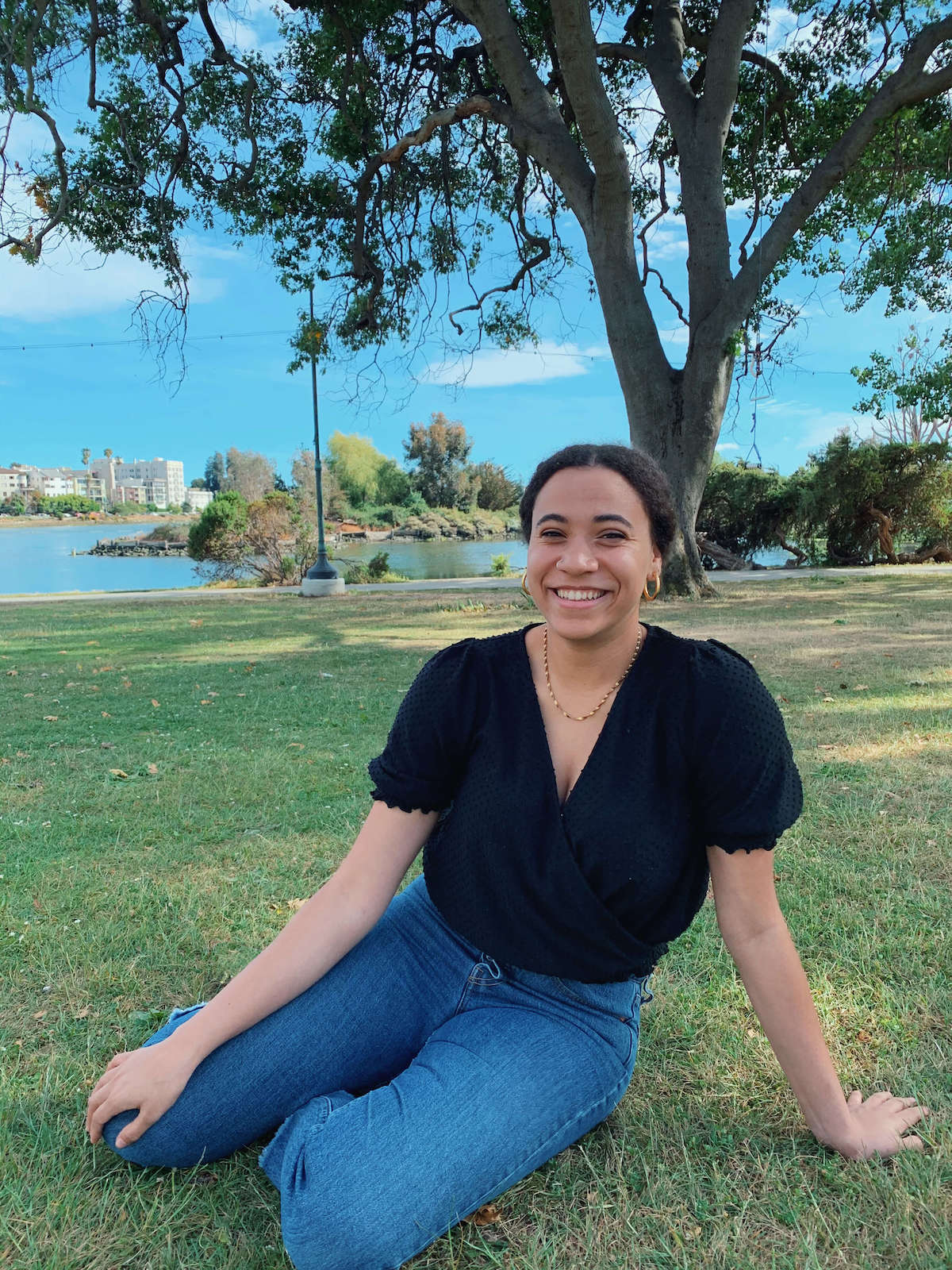 Sarah Smyth grew up in Alameda, CA, and studied political science at UCLA. Prior to graduate school, she spent a year in public affairs consulting as a Coro Fellow. Her work spanned public, private, and nonprofit clients across the topics areas of education, technology, diversity and inclusion, and environmental sustainability. Inspired by her experience growing up in the Bay Area, Sarah is interested in exploring equitable economic growth for communities of color and strategies for addressing the consequences of gentrification. At Harvard, she explored these topics through her work as co-president of the Harvard Urban Planning Organization, housing fellow for the Access to Justice Lab at Harvard Law School, and research assistant for the Just City Lab at the GSD. In her free time, she enjoys yoga, dancing, live music, and spending time in the outdoors.
Design Studies: Kevin Liu
 Kevin is a native of Sydney, Australia. After receiving a Bachelor of Design in Architecture and a Master of Architecture at the University of Sydney, he worked as a registered project architect at an award-winning residential architecture practice on the central coast. Before that, Kevin was a partner in his own practice, TYP-TOP Architecture Office, which he set up with a friend from school after being shortlisted as one of five finalists out of 144 international entrants in a competition for a new aquatic center in Sydney. Awarded the Frank Knox Memorial Fellowship, Kevin enrolled at Harvard to pursue a Master in Design Studies with a focus on History and Philosophy of Design and Media. During his time at the GSD, Kevin served on Student Forum and was co-chair of the Design Research Forum, the student organization of the MDes program. Outside of his coursework, he is an avid printmaker, working mostly with copper etching and mezzotints.
Design Engineering: Arushi Saxena
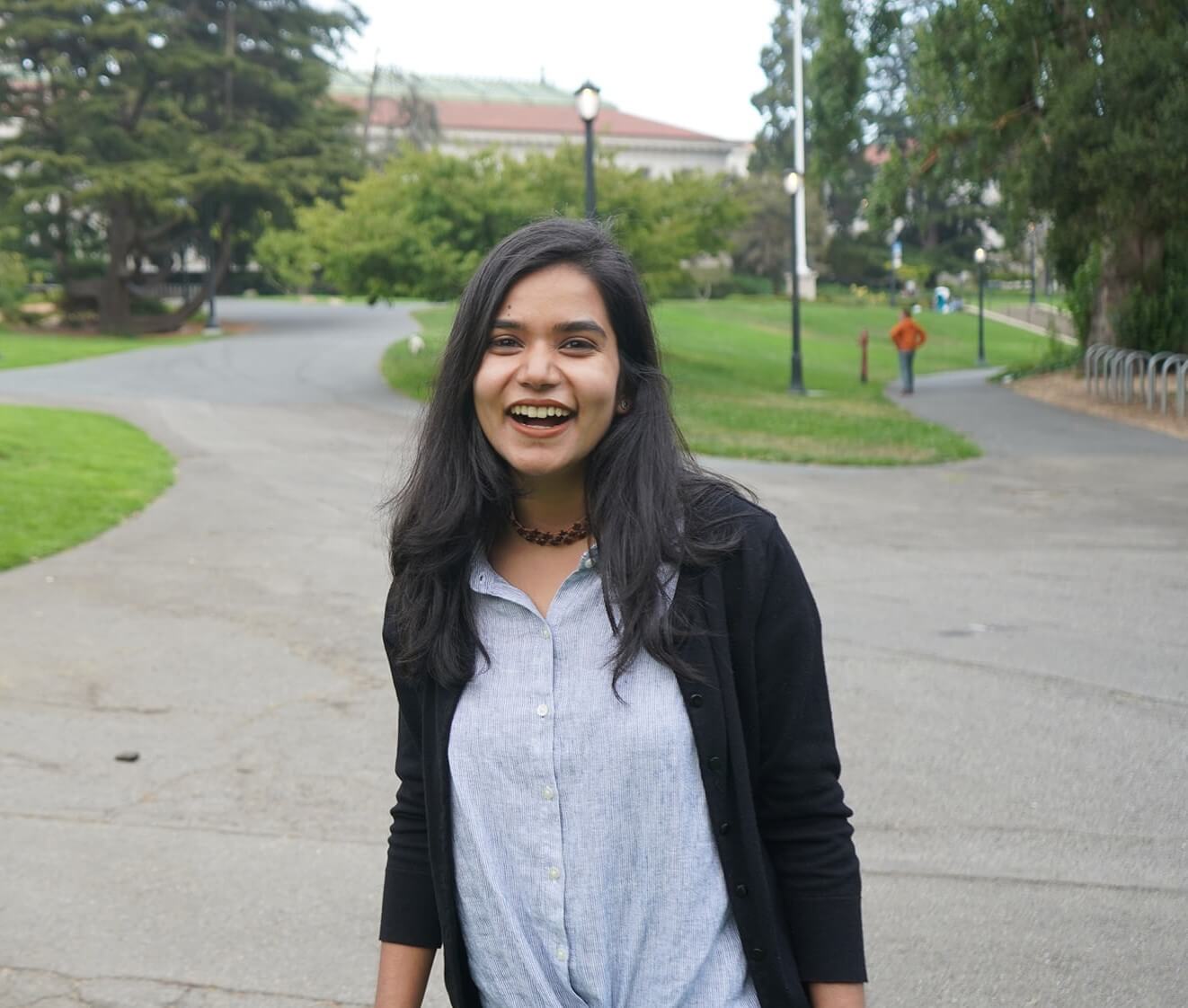 After growing up in Sacramento, CA, Arushi attended UC Berkeley’s Haas School of Business, graduating with a BS in Business Administration. She then worked as an advisor to senior leadership in the technology sector on business strategy and financial insights at companies including LinkedIn and Formation.ai. Her overall professional experience spans strategy & operations, organizational behavior, and finance. At Harvard and the GSD, she focused her research on misinformation, privacy, data ethics, and positioning the technology industry to better manage unintended consequences on society, cities, and the environment. She was actively involved with Harvard Bloomberg City Leadership Initiative, Berkman Klein Center for Internet & Society, and Harvard’s Belfer Center, and served as a teaching fellow for MDE’s Core Interdisciplinary Studio. In her free time, she enjoys cooking, exploring the outdoors, and volunteering.
Doctor of Design: Julia Smachylo
 Originally from Toronto, Canada, Julia studied at Queen’s University, University College London, and the University of Toronto before enrolling at Harvard. She then worked as an urban planner, designer, and adjunct professor before deciding to pursue her Doctor of Design. While at the GSD, Julia was involved in the Urban Theory Lab and New Geographies, and served as a DDes representative. In her free time, she enjoys running, reading, yoga, and gardening.
 Germane Barnes wins Harvard GSD’s 2021 Wheelwright Prize
Fellowship to support Barnes’s research proposal Anatomical Transformations in Classical Architecture, an examination of classical Roman and Italian architecture through contributions of the African Diaspora
Harvard University Graduate School of Design is pleased to name Germane Barnes the winner of the 2021 Wheelwright Prize, a grant to support investigative approaches to contemporary architecture, with an emphasis on globally minded research. With his winning proposal Anatomical Transformations in Classical Architecture, Barnes will examine Roman and Italian architecture through the lens of non-white constructors, studying how spaces have been transformed through the material contributions of the African Diaspora while creating new architectural possibilities that emerge within investigations of Blackness. As with past Wheelwright winners, the 100,000 USD prize is intended to fund two years of Barnes’s research and travel.
Germane Barnes, winner of the 2021 Wheelwright Prize