Deborah N. Archer “Transportation, Infrastructure, and Race in American Cities”

LIVESTREAM INFO
A live stream for this event will be available on this page at the scheduled start time. Closed captioning is available by clicking the “CC” icon at the bottom of the player window.
About this Event
Join us for a lecture with Deborah Archer, President of the American Civil Liberties Union (ACLU) and Margaret B. Hoppin Professor of Law and Faculty Director of the Community Equity Initiative at New York University School of Law. The lecture will build on her recent book, Dividing Lines: How Transportation Infrastructure Reinforces Racial Inequality, and its relevance to designers and planners.
After the lecture, Erica Blonde, Stephen Gray, Alex Krieger, and Etty Padmodipoetro will join Archer onstage for a panel discussion.
Speaker
Deborah Archer is the President of the ACLU, the first person of color to serve in that role in the organization’s history, and a nationally recognized expert on civil liberties, civil rights, and racial justice. She is also the Margaret B. Hoppin Professor of Law and Faculty Director of the Community Equity Initiative at New York University School of Law. Archer is an award-winning teacher and legal scholar whose articles have appeared in leading law reviews and national publications, and she has offered commentary for national and international media. Prior to full-time teaching, Archer worked as an attorney with the ACLU and the NAACP Legal Defense and Educational Fund, Inc., where she litigated in the areas of voting rights, employment discrimination, educational equity, and school desegregation. She previously served as Chair of the New York City Civilian Complaint Review Board, the nation’s oldest and largest police oversight agency. She has been elected to the American Academy of Arts and Sciences and the American Law Institute, and been awarded the Smith College Medal, the National NAACP William Robert Ming Advocacy Award, the Arabella Mansfield Award from the National Association of Women Lawyers, and an Honorary Doctor of Laws Degree from Seattle University. She is the author of the national best-selling book Dividing Lines: How Transportation Infrastructure Reinforces Racial Inequality.

Panelists
Erica Blonde, AICP, MUP ’15, is an associate vice president, associate fellow, and senior planner at HNTB with a decade-long career spanning resiliency, housing, and transportation. Her work centers on community-focused planning, inclusive engagement, and the translation of transportation agency priorities into practical, people-oriented strategies. Blonde has worked nationally to infuse mobility equity and principles of transportation justice into major transportation programs, leading interdisciplinary teams for agencies including the Massachusetts Department of Transportation, Massachusetts Bay Transportation Authority, and Bay Area Rapid Transit. She is an active member of APTA, MPact, TRB, and WTS-Boston, and lives in Somerville.

Stephen Gray is an associate professor of urban design and director of the Urban Design Program at the Harvard Graduate School of Design (GSD). He is an urban designer, educator, and principal of Grayscale Collaborative, a research and design firm focused on spatial justice and equitable development. Gray’s research, teaching, and practice examine how race, capital, and infrastructure intersect to shape cities—and are anchored by two core commitments: (1) foregrounding the systems and ideologies of power that have historically and continuously shaped the field of urban design; and (2) developing principles and methods for a practice that not only engages power more critically, but also envisions cities as places where more people can exercise agency over their own futures.
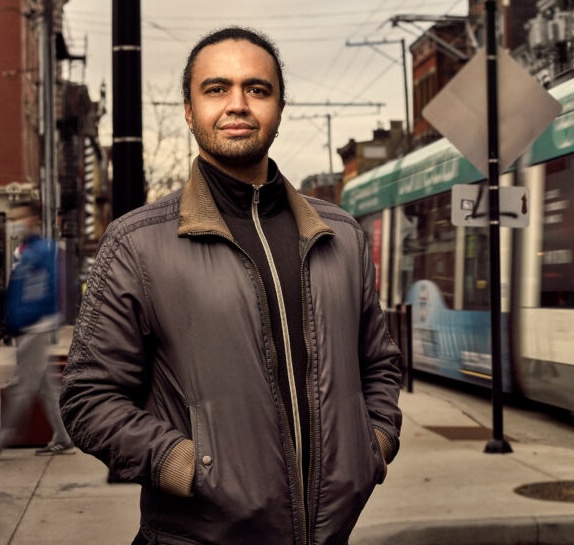
Alex Krieger, FAIA, has combined a career of teaching and practice, dedicating himself to understanding how to improve both the quality of place and life in major urban areas. Krieger is professor in practice of urban design, emeritus, at the Harvard University Graduate School of Design. He served as chair of the Department of Urban Planning and Design (1998–2004, 2006–2007), director of the Urban Design Program (1990–2001), and associate chair of the Department of Architecture (1984–1989). Krieger is also a principal at NBBJ, a global design practice. Since 1984, he has provided architecture, urban design, and urban planning services to a broad array of clients in numerous cities worldwide, focusing primarily on educational, institutional, healthcare, and public projects in complex urban settings.

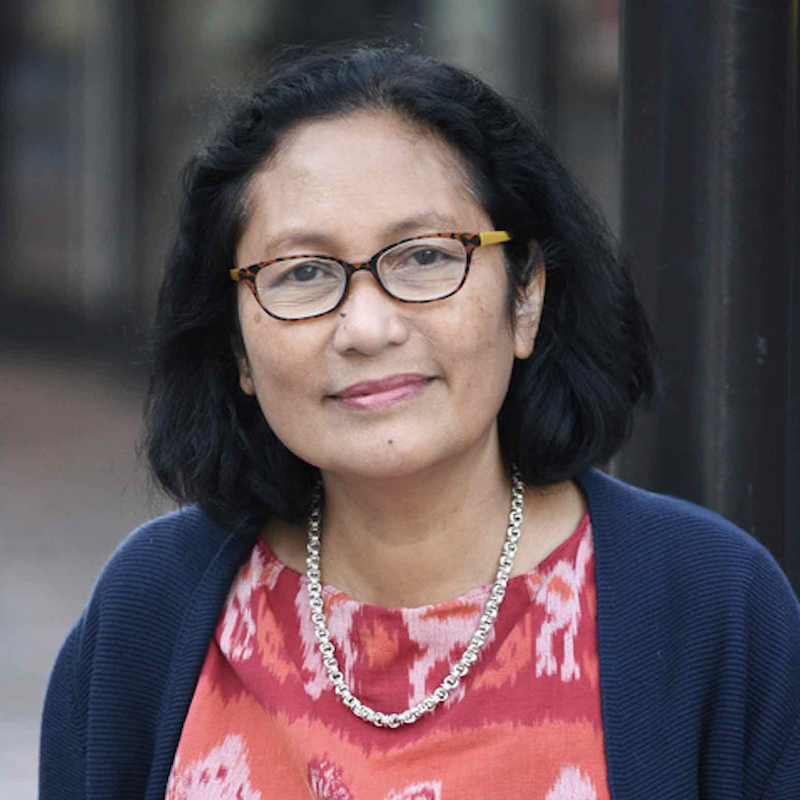
Etty Padmodipoetro, FAIA, NOMA, is the founder and principal of Urban Idea Lab, specializing in infrastructure architecture and community development projects. A critical part of her practice is balancing large-scale infrastructure projects with their surrounding neighborhoods. She believes in strong collaboration with communities and stakeholders to bring social equity through design. Padmodipoetro was a Harvard Loeb Fellow in 2006 and was elevated to AIA Fellow in 2026. She is an active member of the AIA, serving as a board member in 2024, the 2022 chair of the AIA Housing Awards, and the 2020 chair of the AIA Housing and Community Development Knowledge Community.
Harvard University welcomes individuals with disabilities to participate in its programs and activities. If you would like to request accommodations or have questions about the physical access provided, please contact the Public Programs Office at (617) 496-2414 or [email protected] in advance of your participation or visit. Requests for American Sign Language interpreters and/or CART providers should be made at least two weeks in advance. Please note that the University will make every effort to secure services, but that services are subject to availability.
#GSDEVENTS