International Womxn’s Week Keynote Address: Ananya Roy, “Undoing Property: Feminist Struggle in the Time of Abolition”
The GSD’s Spring 2021 Public Programs are all virtual and require registration.
Click here to register for the International Womxn’s Week Keynote Address: Ananya Roy .
For the full list of International Womxn’s Week activities, please visit the Womxn in Design website .
Scroll down to find complete registration instructions for this program and additional information about accessing the GSD’s programs.
Event Description
Renewed uprising against the death-making apparatus of police and prison demands that we attend to the relationship between property and personhood, specifically to how the theft of land is facilitated by the theft of life. This talk, given on the occasion of International Womxn’s Day and during the week that marks the first anniversary of Breonna Taylor’s killing, focuses on the propertization of the gendered subject in the making of whiteness. The time of abolition, Roy argues, requires the undoing of gender-property logics. What does this entail within the university? Speaking as “unbearable presence,” that which cannot be accommodated within the university’s diversity regimes, Roy foregrounds modes of refusal and rebellion inspired by Black and postcolonial feminism. In particular, she shares, and calls for, forms of abolitionist struggle that challenge the university as propertied/policed order and stage the disinheritance of whiteness. To wage feminist struggle in the time of abolition is to refuse to “fit under the lease.”
Womxn in Design ‘s fifth annual International Womxn’s Week convenes a weeklong series of events that gathers members of the Harvard GSD community and beyond to celebrate and cultivate new ways of thinking about gender and power. In March 2021, the International Womxn’s Week Keynote Address and subsequent events will explore the theme of GRASSROOTS.


Speaker

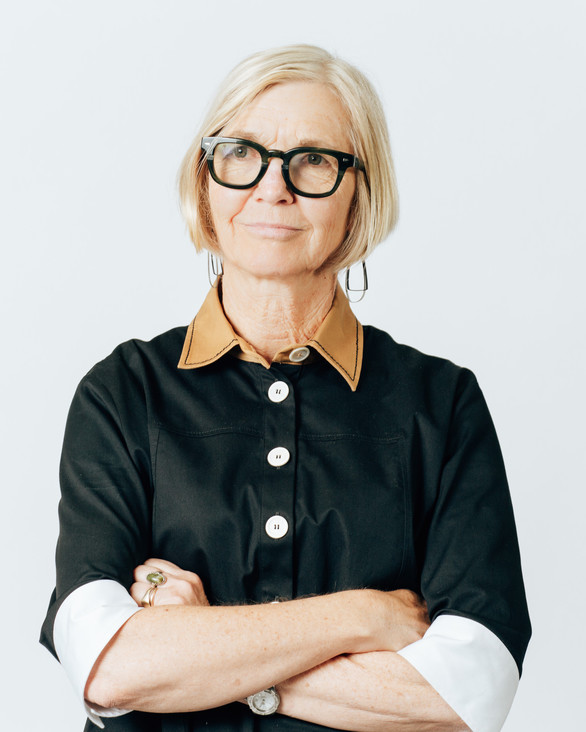
Ananya Roy is Professor of Urban Planning, Social Welfare, and Geography and The Meyer and Renee Luskin Chair in Inequality and Democracy at the University of California, Los Angeles. She is founding Director of the UCLA Luskin Institute on Inequality and Democracy , which advances scholarship concerned with displacement and dispossession in Los Angeles and elsewhere in the world. Ananya’s work has focused on urban transformations and land grabs as well as on global capital and predatory financialization. With enduring theoretical commitments to postcolonial critique, feminist thought, and the Black Radical Tradition, she refuses the whiteness of canons of knowledge, forging theory and pedagogy attentive to historical difference. Ananya’s current research is concerned with “racial banishment,” the expulsion of working-class communities of color from cities through racialized policing and other forms of state-organized violence. She leads a National Science Foundation Research Coordination Network on Housing Justice in Unequal Cities and a Mellon Foundation Sawyer Seminar on Sanctuary Spaces: Reworlding Humanism. Ananya was named a Freedom Scholar by the Marguerite Casey Foundation in 2020.
Follow Ananya Roy on Twitter at @ananyaucla , and follow the UCLA Luskin Institute on Inequality and Democracy at @challengeineq .
How to Join
Register to attend the lecture here . Once you have registered, you will be provided with a link to join the lecture via Zoom. This link will also be emailed to you.
The event will also be live streamed to the GSD’s YouTube page . Only viewers who are attending the lecture via Zoom will be able to submit questions for the Q+A. If you would like to submit questions for the speakers in advance of the event, please click here .
Live captioning will be provided during this event. A transcript will be available roughly two weeks after the event, upon request.
CANCELLED: Achille Mbembe in conversation with Joshua Comaroff and John May
The GSD’s Spring 2021 Public Programs are all virtual and require registration.
The Harvard GSD public lecture with Achille Mbembe has been postponed due to unforeseen circumstances. We hope to reschedule this lecture to Fall 2021. Please stay tuned for information about our upcoming events.
Scroll down to find complete registration instructions and additional information about accessing the GSD’s programs.
Speakers
ProfessorAchille Mbembe, born in Cameroon, obtained his Ph.D in History at the Sorbonne in Paris in 1989 and a D.E.A. in Political Science at the Institut d’Etudes Politiques (Paris). He was Assistant Professor of History at Columbia University, New York (1988-1991), a Senior Research Fellow at the Brookings Institute in Washington, D.C. (1991-1992), Associate Professor of History at the University of Pennsylvania (1992-1996), Executive Secretary of the Council for the Development of Social Science Research in Africa (CODESRIA) in Dakar, Senegal (1996-2000). He was also a Visiting Professor at the University of California, Berkeley (2001), at Yale University (2003), at the University of California at Irvine (2004-2005), at Duke University (2006-2011) and at Harvard University (2012).
He is the recipient of an Honorary Doctorate from the University of Paris VIII (France) and Universite Catholique de Louvain (Belgium). He has also held the Albert the Great Chair at the University of Koln (2019) and was an Honorary Professor at the Jakob Fugger-Zentrum, University of Augsburg (Germany). He has been awarded numerous awards including the 2015 Geswichter Scholl-Preis, the 2018 Gerda Henkel Award and the 2018 Ernst Bloch Award.
A co-founder of Les Ateliers de la pensee de Dakar and a major figure in the emergence of a new wave of French critical theory, he has written extensively on contemporary politics and philosophy, including On the Postcolony (University of California Press, 2001), Critique of Black Reason (Duke University Press, 2016), Necropolitics (Duke University Press, 2019) and Out of the Dark Night. Essays on Decolonization (Columbia University Press, 2020). Originally written in French, his books and numerous articles are translated in thirteen languages (English, German, Spanish, Portuguese, Italian, Dutch, Polish, Slovenian, Danish, Swedish, Romanian, Arabic, Chinese). He has an A1 rating from the South African National Research Foundation and is a member of the American Academy of Arts and Sciences.
Joshua Comaroff, MArch ’01, MLA ’01, is Assistant Professor in Social Sciences at Yale-NUS College in Singapore. Comaroff studied literature and creative writing at Amherst College before joining the Master of Architecture and Master of Landscape Architecture programs at Harvard University Graduate School of Design, where he worked as part of Rem Koolhaas’ Harvard Project on the City. In 2009, Comaroff completed a PhD in cultural geography at University of California Los Angeles (UCLA), writing on the subject of haunted landscapes and urban memory in Singapore. He has published writing about architecture, urbanism, and politics, with an Asian focus. His articles have been published in Public Culture, Cultural Geographies, Journal of Architectural Education, Journal of Southeast Asian Studies, CITY, and elsewhere. He is also a regular contributor to the Harvard Design Magazine.
Together with his partner, Ms Ong Ker-Shing, Comaroff oversees Lekker Architects, a multidisciplinary design practice in Singapore. Comaroff works across a broad creative spectrum, with a special emphasis on design for the arts, for children, and for seniors. He is the recipient of Singapore’s President’s Design Award, and Harvard’s Wheelwright Travelling Fellowship. Together with Ms Ong, he is the author of Horror in Architecture.
John May, MARch ’02, RAE ’10, is founding partner, with Zeina Koreitem, in MILLIØNS, an award-winning, Los Angeles-based design practice, and assistant professor of architecture at the Harvard Graduate school of design, where he served as director of the Master in Design Studies program from 2015-2020. Recently selected as the winner of an international competition to reimagine the east wing of I.M. Pei’s Everson Musum, in Syracuse, NY, MILLIØNS’ work includes completed and ongoing projects in California, New York, Germany, and in the 2020 Taipei Biennial. May is the author of Signal. Image. Architecture. (Columbia, 2019) and co-editor, with Zeynep Çelik Alexander, of Design Technics: Archaeologies of Architectural Practice (Minnesota, 2020). May previously taught at MIT, UCLA, SCI-Arc, the University of Toronto, and served as D. Kenneth Sargent Visiting Professor at Syracuse University, and National Endowment for the Humanities Visiting Professor in Architecture at Rice University.
Catherine Seavitt Nordenson, “The Miasmist: George E. Waring, Jr. and Landscapes of Public Health”
The GSD’s Spring 2021 Public Programs are all virtual and require registration.
Scroll down to find complete registration instructions and additional information about accessing the GSD’s programs.
Event Description
In 1867, nineteenth-century sanitary engineer George E. Waring, Jr. (1833–1898) published an influential manual entitled “Draining for Profit, Draining for Health,” reflecting the obsessions of his gilded age—wealth, health, and miasma. Even as the germ theory emerged, Waring supported the anti-contagionist miasma theory, positing that disease spread through the air as a poisonous vapor, emerging from damp soil. He applied his knowledge of farm drainage to an urban theory of public health, with a drainage plan for Central Park; a sewerage system for Memphis; a transformation of New York City’s Department of Street Cleaning; and a sanitation plan for Havana, Cuba. Waring’s battle against miasma was an endeavor to transform both the physical landscape and its inhabitants’ morality; his brilliant failure (in scientific terms) is worth reassessing in light of the public health and equity issues arising from today’s pandemic and climate crises.


Speaker

Catherine Seavitt Nordenson , AIA ASLA, is a professor and director of the graduate landscape architecture program at the Spitzer School of Architecture, City College of New York. A registered architect and landscape architect, she is a graduate of the Cooper Union and Princeton University, a fellow of the American Academy in Rome, and a recipient of a Fulbright Fellowship for research in Brazil. Her work explores adaptation to climate change in urban environments and the novel transformation of landscape restoration practices. She also examines the intersection of political power, environmental activism, and public health, particularly as seen through the design of equitable public space and policy. Her books include Depositions: Roberto Burle Marx and Public Landscapes under Dictatorship (University of Texas Press, 2018); Structures of Coastal Resilience (Island Press, 2018); Waterproofing New York (Urban Research Press, 2016); and On the Water: Palisade Bay (Hatje Cantz, 2010). Her essays have been published widely, including the journals Architectural Review, Artforum, Avery Review, Harvard Design Magazine, JoLA, LA+, Landscape Architecture Magazine, and Topos.
How to Join
Register to attend the lecture here . Once you have registered, you will be provided with a link to join the lecture via Zoom. This link will also be emailed to you.
The event will also be live streamed to the GSD’s YouTube page . Only viewers who are attending the lecture via Zoom will be able to submit questions for the Q+A. If you would like to submit questions for the speakers in advance of the event, please click here .
Live captioning will be provided during this event. A transcript will be available roughly two weeks after the event, upon request.
Think like a Historian, Imagine like a Designer: A Conversation on Landscape History and Design Education
The GSD’s Spring 2021 Public Programs are all virtual and require registration.
Scroll down to find complete registration instructions and additional information about accessing the GSD’s programs.
Event Description
History is a manner of thinking about the world, grounded in the places we design, construct, and inhabit. Design offers the opportunity to re-imagine the world around us, today and for the future. We might draw from history, or draw upon it; certainly, it is to be hoped that we are drawn to it, as designers and historians. The purpose of landscape history—not reducible to memory nor timelines nor styles—is to produce and share knowledge of how we have come to be who and where we are. We will gather across studios we collectively inhabit to draw attention to and lessons from the design of history. We will investigate the relationship of history as a craft and design as a mode of inquiry. As landscape historians who have chosen to teach and do their scholarship within the GSD and Harvard design community, we investigate the role of history and its methods and narratives in the understanding of place and cultural relationships to site and landscape. By thinking like a historian, designers might re-imagine both their future and our collective future.


Speakers

Thaisa Way is the Program Director for Garden & Landscape Studies at Dumbarton Oaks Research Library and Collection, a Harvard University research institution located in Washington DC. She teaches and researches history, theory, and design in the College of Built Environments, University of Washington. She was awarded the Rome Prize in Landscape Architecture at the American Academy in Rome in 2016. Dr. Way’s publications focus on questions of history, gender, and shaping the landscape. Her book, Unbounded Practices: Women, Landscape Architecture, and Early Twentieth Century Design (2009, University of Virginia Press) was awarded the J.B. Jackson Book Award. Her book From Modern Space to Urban Ecological Design: the Landscape Architecture of Richard Haag (UW Press 2015) explores post-industrial cities and the practice of landscape architecture. She co-edited a book with Ken Yocom, Ben Spencer, and Jeff Hou, Now Urbanism: The Future City is Here (Routledge 2014). River Cities/ City Rivers (Harvard Press 2018) is a collection of essays contributing to urban environmental history. Her latest book is GGN 1999-2018 (Timber Press, 2018). Dr. Way is focused on a broad effort to challenge the canon of landscape architecture to engage with the inscriptions of race, gender, and class on the profession, practice, and pedagogy of the field.

Edward A. Eigen is Senior Lecturer in the History of Landscape and Architecture at the Harvard University Graduate School of Design. A historian of the long nineteenth century, in the European and Anglo-American contexts, his research and teaching focus on relationships in and between humanistic and scholarly traditions and the natural sciences and allied practices of knowledge production. With a background in art history, a professional training in design, and a doctorate in the history and theory of architecture from MIT, he is at home with and seeks to productively defamiliarize images, texts, and topographies of intricate description. A proponent of the Montaignian essay tradition, his writings, while ultimately grounded in the uncertain terrain of “landscape,” have ranged from questions of botanical and zoological systematics, the creation and loss of great and not so great museums and libraries, the history of the weather, and acts of plagiarism in the founding documents of architecture theory. All of these studies engage in questions of historical narrative and the species of evidence upon which it depends and/or invents along the way.
Eigen was an assistant professor at the Princeton University School of Architecture, where he was an Old Dominion Faculty Fellow, and the recipient of a university-wide graduate mentoring award, and the David A. Gardner ’69 Magic Grant for his research on architectural machines. His article on the prestidigitator Robert-Houdin’s invention of the doorbell will appear as “Controlling: Comfort in the Modern Home,” in Architecture and Technics: A Theoretical Field Guide to Practice. At the GSD, Eigen co-organized the colloquium “Claiming Landscape as Architecture,” which appeared as a special issue of Studies in the History of Gardens & Designed Landscapes, of which he is an Associate Editor. His recent book, On Accident: Episodes in Architecture and Landscape (MIT Press), seeks to reclaim and provide forms of interpretability for unfamiliar incidents and artifacts that fall outside the canon. His current monograph project, Beyond the Rose Garden, examines real and emblematic landscapes and architectures associated with the administrations of Presidents Kennedy, Johnson, Nixon, and Ford, including the “grassy knoll,” the Highway Beautification Act, Watergate, and the Bicentennial Time Capsule.

Raffaella Fabiani Giannetto is a garden historian and critic. She is the editor of The Culture of Cultivation: Recovering the Roots of Landscape Architecture (2020) and of Foreign Trends in American Gardens: A History of Exchange, Adaptation, and Reception (2017). In 2010 Fabiani Giannetto received the Society of Architectural Historians’ Elisabeth Blair MacDougall Book of the Year Award for her first monograph, Medici Gardens: From Making to Design (2008). In the book she questions the origin of a design process that is often taken for granted and casts doubt on the existence of the Italian garden as a timeless and consistent type, an issue which she continues to explore in her most recent manuscript, Georgic Grounds and Gardens from the Mediterranean to the Atlantic World, which examines the transmission, translation and adaptation of agricultural, horticultural and design knowledge from early modern Veneto to colonial America.
Fabiani Giannetto’s research has been supported by two fellowships at Dumbarton Oaks, the American Philosophical Society, the Mellon Foundation and a National Endowment for the Humanities fellowship awarded by the Folger Shakespeare Library. She has served as member of the editorial board of the journal Studies in the History of Gardens and Designed Landscapes and has lectured in Switzerland, Germany, Italy, England, and the United States.
How to Join
Register to attend the panel discussion here . Once you have registered, you will be provided with a link to join the lecture via Zoom. This link will also be emailed to you.
The event will also be live streamed to the GSD’s YouTube page . Only viewers who are attending the lecture via Zoom will be able to submit questions for the Q+A. If you would like to submit questions for the speakers in advance of the event, please click here .
Live captioning will be provided during this event. A transcript will be available roughly two weeks after the event, upon request.
Cecilia Puga and Paula Velasco, “(Some) Characters in Search of an Author”
The GSD’s Spring 2021 Public Programs are all virtual and require registration.
Scroll down to find complete registration instructions and additional information about accessing the GSD’s programs.
Audience members are eligible for 1.5 AIA Continuing Education Learning Units after attending this event. Please visit the AIA website for more information.
Speaker
CECILIA PUGA – PAULA VELASCO ARQUITECTURA connects independent professionals from various disciplines and specialties. Its structure and expertise are adapted to the specific areas in which it operates, in order to provide innovative and high-standard professional services at different scales and fields. Through different international competitions, the studio has been in charge of the new headquarters of Chile’s Ministry of Cultures and Heritage, the infrastructure design project for Queulat National Park, and the masterplan and preliminary project for Punta Arenas’ International Passenger Terminal. Recently, together with architect Smiljan Radic, they obtained the first place for the design of the Chilean Pavilion for Expo Dubai 2020.
CECILIA PUGA
Director and founding partner of CECILIA PUGA – PAULA VELASCO ARQUITECTURA.
Architect, Pontificia Universidad Católica de Chile 1990. Since 1995 she has developed her professional practice independently in Santiago, where she has carried out design projects at different scales and programs, from single-family homes (most notably the House in Bahia Azul), to collective housing, educational and industrial equipment, and urban design such as the renovation of public spaces in Cerro Toro. She has developed her academic activity at Universidad Católica de Santiago, at Austin’s University of Texas (2007 and 2015), GSD Harvard (2009) and at BIAarch in Barcelona (2011) and ETH Zurich’s School of Architecture (2017-2019),
PAULA VELASCO
Director and founding partner of CECILIA PUGA – PAULA VELASCO ARQUITECTURA.
Architect, Pontificia Universidad Católica de Chile 2005. Master on Science Emergent Technologies and Design, Architectural Association UK, 2010. Undergraduate and Master’s Professor at Universidad Católica de Chile’s School of Architecture.


How to Join
Register to attend the lecture here . Once you have registered, you will be provided with a link to join the lecture via Zoom. This link will also be emailed to you.
The event will also be live streamed to the GSD’s YouTube page . Only viewers who are attending the lecture via Zoom will be able to submit questions for the Q+A. If you would like to submit questions for the speakers in advance of the event, please click here .
Live captioning will be provided during this event. A transcript will be available roughly two weeks after the event, upon request.
Marc Angélil, Charlotte Malterre-Barthes, and Nicolas Memain, “Migrant Marseille: Architectures of Social Segregation and Urban Inclusivity”
The GSD’s Spring 2021 Public Programs are all virtual and require registration.
Scroll down to find complete registration instructions and additional information about accessing the GSD’s programs.
Event Description
Marc Angélil, Charlotte Malterre-Barthes, and Nicolas Memain in conversation, discussing their newest publication Migrant Marseille: Architectures of Social Segregation and Urban Inclusivity , co-edited with Something Fantastic (Berlin: Ruby Press, 2020).
On November 5, 2018, a pair of dilapidated buildings in central Marseille collapsed, taking the lives of eight people, many of them from immigrant origin. This toll of urban decay reflects both the diversity of the district and the hardship of living in Marseille, a city marked for centuries by migration, poverty, and social inequality. Divided along ethnic and class lines, with wealthy conservatives dominating the south and an energetic but pauperized community of immigrant origins in the north, Marseille highlights the tensions stemming from discriminatory governance, lack of housing-stock maintenance, constant influx of migrants, widespread privatization of services, as well as rapid, profit-driven, and destructive post-industrial urbanization. Migrant Marseille examines this complex city through the prisms of migration and socio-spatial production – at the architectural, urban, and territorial scales. In this conversation, Charlotte Malterre-Barthes, Marc Angélil, and Nicolas Memain will discuss the role of planners and urban designers in fostering social and spatial integration.
This event is supported by the Prof. Bill Breger, MAR ’45, Fund in Honor of Professor Walter Gropius.
Speakers
Marc Angélil is a practicing architect and urban designer at agps architecture , a firm with ateliers in Los Angeles and Zurich. He holds the 2021 Kenzo Tange Visiting Professorship in Architecture and Urban Planning and Design at Harvard University and is professor emeritus from ETH Zurich, conducting research on social and spatial developments of metropolitan regions worldwide. His most recent publication Mirroring Effects: Tales of Territory , co-written with Cary Siress, explores the socio-spatial impact of development-led urbanization on local habitats in different world regions today. His installation at the 2021 Venice Architecture Biennale – in the Co-Habitat section of the exhibition How Will We Live Together? – addresses the hybrid economic and political forces at work in the production of Addis Ababa’s urban fabric, foregrounding prevalent conflicts of coexistence, while exploring alternative ways of how Addis Ababa might live together in the future.
Charlotte Malterre-Barthes is an architect, urban designer, and Assistant Professor of Urban Design at the Harvard Graduate School of Design. Malterre-Barthes’s teaching and research interests are related to how design disciplines can critically engage with issues of resources, the mainstream economy, governance, and ecological/social justice. Principal of the urban design agency OMNIBUS, she holds a PhD from ETH Zurich on the effects of the political economy of food on the built environment. As guest professor at TU Berlin (2018-2019), she investigated and challenged the predatorily modus operandi of real estate in the German capital, and as program director of the Master of Advanced Studies in Urban Design at the chair of Marc Angélil (2014-2019) focused on informal housing, migration, and inclusivity in Mediterranean cities, publishing Housing Cairo: The Informal Response
(2017) and Migrant Marseille: Architectures of Social Segregation and Urban Inclusivity
(2020). Co-curator of the 12th International Architecture Biennale of São Paulo (2019), she also co-authored Some Haunted Spaces in Singapore
(Edition Patrick Frey) and Eileen Gray: A House under the Sun
. Malterre-Barthes is a founding member of the Parity Group and Front, activist networks dedicated to improving gender equality in architecture.
Nicolas Memain is an urbanist without a diploma. He is a member of the Cercle des Marcheurs and cartographer of the GR2013®. In 2013 he received the prize of Urban Planning of the French Academy of Architecture for the creation of a metropolitan path. As a specialist in urban planning and architecture of the twentieth century, he organized architectural walks in several municipalities of the Bouches-du-Rhone area and participated in an architectural inventory for heritage and preservation. In 2020, he was elected municipal councillor of the first district of Marseille.
How to Join
Register to attend the lecture here . Once you have registered, you will be provided with a link to join the lecture via Zoom. This link will also be emailed to you.
The event will also be live streamed to the GSD’s YouTube page . Only viewers who are attending the lecture via Zoom will be able to submit questions for the Q+A. If you would like to submit questions for the speakers in advance of the event, please click here .
Live captioning will be provided during this event. A transcript will be available roughly two weeks after the event, upon request.
Walter Hood, “When Memory Is Not Enough”
The GSD’s Spring 2021 Public Programs are all virtual and require registration.
Click here to register for Walter Hood’s Senior Loeb Scholar Lecture .
Scroll down to find complete registration instructions and additional information about accessing the GSD’s programs.
Event Description
The Senior Loeb Scholars program invites prominent individuals whose expertise is outside the typical disciplines of the GSD or whose practice displays a unique focus. Scholars are welcomed for a short term residency at the School, during which they present a public lecture, workshops, and other engagements. Since its inception, the program has offered the GSD community opportunities to learn from and engage with visionary designers, scholars, and thought leaders.
Walter Hood is the Spring 2021 Senior Loeb Scholar. Hood joins a cohort of previous Senior Loeb Scholars, which include Bruno Latour (2018-2019); Kenneth Frampton and Silvia Kolbowski (2017-2018); Richard and Ruth Rogers (2016-2017); and David Harvey (2015-2016).


Speaker

Walter Hood is the Creative Director and Founder of Hood Design Studio in Oakland, California. Hood Design Studio is a cultural practice, working across art, fabrication, design, landscape, research and urbanism. He is also the David K. Woo Chair and the Professor of Landscape Architecture and Environmental Planning at the University of California, Berkeley. He lectures on and exhibits professional and theoretical projects nationally and internationally. He was recently the Spring 2020 Diana Balmori Visiting Professor at the Yale School of Architecture.
Walter creates urban spaces that resonate with and enrich the lives of current residents while also honoring communal histories. Hood melds architectural and fine arts expertise with a commitment to designing ecologically sustainable public spaces that empower marginalized communities. Over his career, he has transformed traffic islands, vacant lots, and freeway underpasses into spaces that challenge the legacy of neglect of urban neighborhoods. Through engagement with community members, he teases out the natural and social histories as well as current residents’ shared patterns and practices of use and aspirations for a place.
The Studio’s award-winning work has been featured in publications including Dwell, The Wall Street Journal, The New York Times, Fast Company, Architectural Digest, Places Journal, and Landscape Architecture Magazine. Walter Hood is also a recipient of the 2017 Academy of Arts and Letters Architecture Award, 2019 Knight Foundation Public Spaces Fellowship, 2019 MacArthur Fellowship and 2019 Dorothy and Lillian Gish Prize.
How to Join
Register to attend the lecture here . Once you have registered, you will be provided with a link to join the lecture via Zoom. This link will also be emailed to you.
The event will also be live streamed to the GSD’s YouTube page . Only viewers who are attending the lecture via Zoom will be able to submit questions for the Q+A. If you would like to submit questions for the speakers in advance of the event, please click here .
Live captioning will be provided during this event. A transcript will be available roughly two weeks after the event, upon request.
Ilze and Heinrich Wolff, “Homage and Refusal”
The GSD’s Spring 2021 Public Programs are all virtual and require registration.
Click here to register for Ilze and Heinrich Wolff, “Homage and Refusal” .
Scroll down to find complete registration instructions and additional information about accessing the GSD’s programs.
Event Description
The work of Wolff Architects is rooted in practices of refusal and homage. By reading broadly; from texts to voids, from rousing music to silent images, from material to immaterial structures, knowledge creation is pursued whilst refusing the usual taxonomies of presentation, circulation and legitimisation. The coproduction of knowledge is fundamental to the collaboration between a husband and wife team with divergent interests and a wide range of collaborators, both inside and outside the office.
The practice of homage, particularly of black lives, is pursued concurrent with an ongoing critique of anti-blackness and its spatial manifestations. Homage follows immersion, meditation and research. An expanding sense of what spatial practice can be or should be, emerges out of projects of homage.
By sharing this work, we are concerned with developing an architecture of consequence and an enduring public culture, be it through activism, publications, exhibitions, performances or buildings. The public imagination can be expanded by bringing to life what has been lost or bringing into being what is yet to be imagined.
This event is supported by the Rachel Dorothy Tanur Memorial Lectureship Fund.


Speakers
Heinrich and Ilze Wolff are architects working in Cape Town, South Africa. Their practice is developing an architecture of consequence through the mediums of design, advocacy, research, documentation and art. Informed by the colonial history of their home in Cape Town, they established their architecture practice as a vehicle for addressing social inequities as well as the erasure of indigenous landscapes and narratives. At their space in Bo-Kaap they regularly host exhibitions, lectures and talks all concerned with developing an enduring public culture around the city, space and personhood.
Their practice has won several international and South African awards for excellence in research and design, most notably for public buildings such as schools and hospitals .
Heinrich‘s work has been exhibited internationally, the most significant exhibitions being the Museum of Modern Art (2010), the Venice Biennale (2006 & 2010), the Sao Paulo Architecture Biennale (2005, 2007 & 2019), the Chicago Architecture Biennial (2015 & 2019) and the South American Architecture Biennale – Ecuador (2008).
In 2011 Heinrich was selected as the Designer of the Future by the Wouter Mikmak Foundation (Netherlands). In 2007, he won the DaimlerChrysler Award for South African Architecture. With his practice Heinrich received the Lubetkin Award in 2006 from the RIBA for the Red Location Museum of Struggle.
Heinrich has been guest professor at various institutions; IUAVenice (2013), ETH Zürich (2014-15), Washington University, St. Louis (2016) and he taught at the Goa College of Architecture (2017) as the foreign visiting Charles Correa Chair. He was an associate adjunct professor at the University of Cape Town and was an honorary research fellow at the same institution. He is currently teaching an Option Studio at the Harvard Graduate School of Design.
Ilze is the author of the award winning 2017 book ‘Unstitching Rex Trueform, the story of an African factory’ a biography of a Cape Town modernist garment factory and its entanglements with societal constructions of race, gender and space. She was shortlisted for the 2018 Architectural Review’s Moira Gemmil for emerging architects. In 2017-2019 she was a research fellow at the University of the Western Cape’s, Centre for Humanities Research researching UWCs historical spatial practices as a foundation from which to design a space for arts education for this historically black University.
She is the founder of the publication and research platform pumflet: art, architecture and stuff which focuses on black social and spatial imaginaries. pumflet has featured in various local and international platforms such as the Chicago Architecture Biennial (2019), the Centre for the less Good Idea (2018), Chimurenga, Institute for Creative Arts UCT (2019), Performa NY (2020) and Publishing Against the Grain (ongoing). In 2017 Wolff Architects designed the exhibition architecture for African Mobilities: this is not a refugee camp, TUMunich, in collaboration with the curator Dr Mpho Matsipa. It was awarded a silver design distinction award from the International Federation of Interior Design in 2019. Ilze regularly presents her research practice in talks, essays and exhibitions in various forums across the world including most recently, an essay in the Architectural Review on gardens as sites of resistance; in e-flux architecture as part of a series on confinement and home and in African Mobilities 2.0 on musical influences on design practice.
How to Join
Register to attend the lecture here . Once you have registered, you will be provided with a link to join the lecture via Zoom. This link will also be emailed to you.
The event will also be live streamed to the GSD’s YouTube page . Only viewers who are attending the lecture via Zoom will be able to submit questions for the Q+A. If you would like to submit questions for the speakers in advance of the event, please click here .
Live captioning will be provided during this event. A transcript will be available roughly two weeks after the event, upon request.
Introducing Pairs 01: Giovanna Borasi in Conversation with the Founding Editors
The GSD’s Spring 2021 Public Programs are all virtual and require registration.
Scroll down to find complete registration instructions and additional information about accessing the GSD’s programs.
Event Description
Join us to celebrate the launch of Pairs, a new student-led journal at the GSD. The founding editors will introduce the inaugural issue, which will be followed by a conversation with Giovanna Borasi, Director of the Canadian Centre for Architecture, on beginnings in curation and publishing.
Pairs is a journal dedicated to conversations about design that are down to earth and unguarded. Each issue is conceptualized by an editorial team that proposes guests and objects to be in dialogue with one another. Pairs is non-thematic, meant instead for provisional thoughts and ideas in progress. Each issue seeks to organize a diversity of threads and concerns that are perceived to be relevant to our moment.
Pairs 01 features the voices of:
Mark Bavoso, Alexandra Bell, Tatiana Bilbao, Jennifer Bonner, Michelle Chang, Nicolás Delgado Alcega, Teresa Galí-Izard, Vladimir Gintoff, Christopher Hawthorne, Kimberley Huggins, Kahlil Joseph, Linda Just, Paul Nakazawa, Hans Ulrich Obrist, Piet Oudolf, Robert Gerard Pietrusko, Jacob Reidel, Oana Stănescu, Pier Paolo Tamburelli, Günther Vogt, Thomas Weaver, Sarah M. Whiting, Kyle Winston, and Sara Zewde.
Pairs 01 Editorial Team: Mark Bavoso, Nicolás Delgado Alcega, Vladimir Gintoff, Kimberley Huggins, Linda Just, and Kyle Winston
Learn more about Pairs and preorder Pairs 01 here .


Speaker

Architect, editor, and curator, Giovanna Borasi joined the Canadian Centre for Architecture (CCA) in 2005, first as Curator, Contemporary Architecture (2005-10), then as Chief Curator (2014-19). She has been Director of the CCA since January 2020. Borasi’s work explores alternative ways of practicing and evaluating architecture, considering the impact of contemporary environmental, political, and social issues on urbanism and the built environment. She studied architecture at the Politecnico di Milano, worked as an editor of Lotus International (1998–2005) and Lotus Navigator (2000–2004), and was Deputy Editor in Chief of Abitare (2011–2013). Borasi’s latest curatorial project, Dear Architect, is a three-part documentary film series that considers changing definitions of home and homelessness as a result of urban and economic pressures.
How to Join
Register to attend the event here . Once you have registered, you will be provided with a link to join the lecture via Zoom. This link will also be emailed to you.
The event will also be live streamed to the GSD’s YouTube page. Only viewers who are attending the lecture via Zoom will be able to submit questions for the Q+A. If you would like to submit questions for the speakers in advance of the event, please click here .
Live captioning will be provided during this event. A transcript will be available roughly two weeks after the event, upon request.
H ARQUITECTES, “Where the Invisible Becomes Visible”
The GSD’s Spring 2021 Public Programs are all virtual and require registration.
Click here to register for H ARQUITECTES, “Where the Invisible Becomes Visible” .
Scroll down to find complete registration instructions and additional information about accessing the GSD’s programs.
Event Description
We are convinced that interactions with natural phenomena, in addition to optimizing resources, deeply link architecture to its surroundings.
These interactions give a real and intense meaning to the spaces, awakening the most emotional dimension of architecture, transforming inert matter into something alive. Every time architecture makes these natural phenomena evident and “the invisible” appears, the link with the natural environment is established again, providing life to the building and turning the experience into something transcendent, sensitive and deeply connected to its cycles and biorhythms.
This event is supported by the Margaret McCurry Lectureship Fund.
Audience members are eligible for 1.5 AIA Continuing Education Learning Units after attending this event. Please visit the AIA website for more information.


Speaker
H ARQUITECTES is an architecture studio founded in 2000 by David Lorente, Josep Ricart, Xavier Ros and Roger Tudó. They combine their professional activity teaching in the ETSAV-UPC, ETSAB-UPC and Harvard GSD.
Their works have received several national and international awards, including the European Award for Architectural Heritage Intervention 2019; shortlisted EU Mies Van der Rohe Award 2019, 2017; MAPEI sustainable building 2017; Brick Award 2016; Ugo Rivolta 2015; Public Prize FAD 2015; Shortlisted FAD Award in 2015, 2012, 2009; Fritz Höger Preis 2014; Sacyr Award 2012; Hise Award 2012; Enor Award 2011; SAIE Award 2011.
How to Join
Register to attend the lecture here . Once you have registered, you will be provided with a link to join the lecture via Zoom. This link will also be emailed to you.
The event will also be live streamed to the GSD’s YouTube page . Only viewers who are attending the lecture via Zoom will be able to submit questions for the Q+A. If you would like to submit questions for the speakers in advance of the event, please click here .
Live captioning will be provided during this event. A transcript will be available roughly two weeks after the event, upon request.