Three GSD Students Win First Prizes in Buildner’s Unbuilt Award 2025
Harvard Graduate School of Design (GSD) students Yuanyuan (Yuki) Cao (MRE ’26), Joe Russell (MArch ’27), and Emma Sheffer (MArch ’27) recently won a combined €50,000 in Buildner’s Unbuilt Award 2025 , the second edition of an international competition recognizing architectural ideas not yet realized.
Organized into three categories—small-, medium-, and large-scale projects—the award promotes architectural experimentation across size, program, and context, honoring speculative work that explores the future of architecture through innovation, sustainability, and social relevance. Entries were evaluated by a jury of global experts, including GSD alumni Michael Meredith (MArch ’00) and Lyndon Neri (MArch ’92), on design merit, narrative clarity, contextual responsiveness, and potential impact on the built environment.
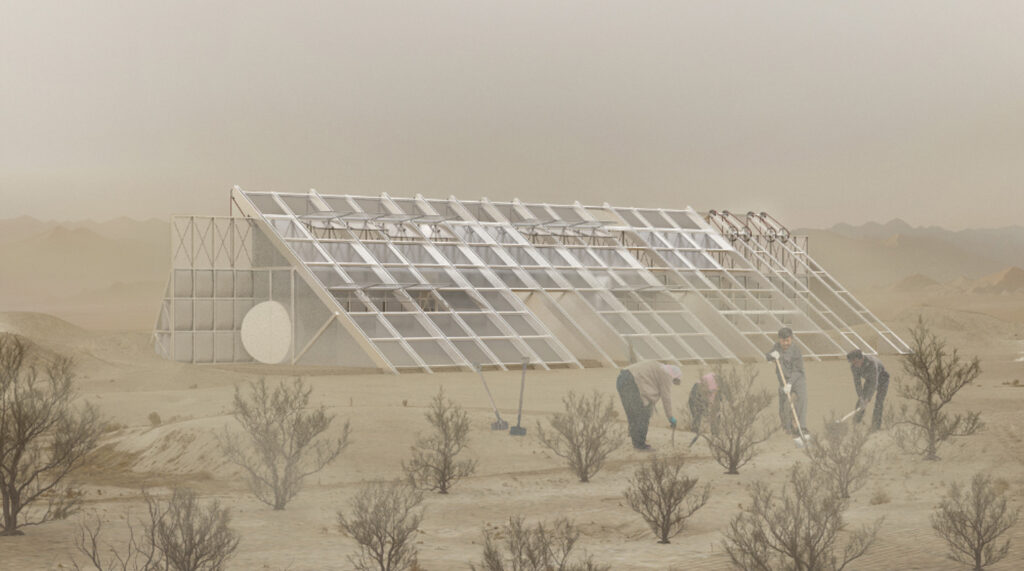
With the submission “Nomadic Permanence: Architecture as a Resilient Machine,” Cao won first prize in the small-scale category (€20,000) as well as the small-scale student prize (€5,000). “Nomadic Permanence” is a modular, self-sufficient shelter system for desert landscapes that integrates food production, water capture, and sand stabilization. Constructed with lightweight framing and locally sourced sandbags beneath a solar roof, the building reframes permanence as an evolving cycle of use and stewardship—addressing displacement, climate adaptation, and food insecurity.
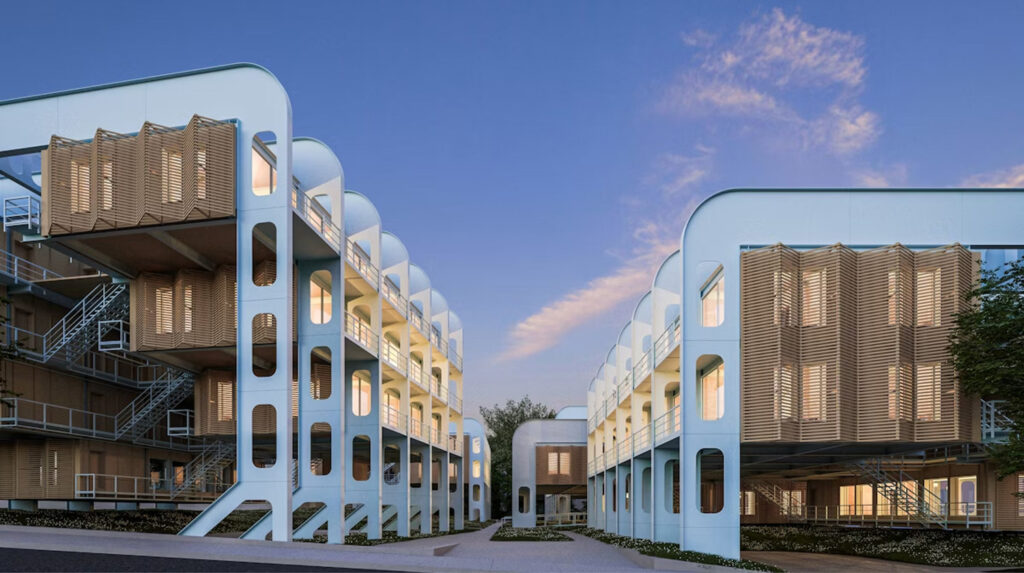
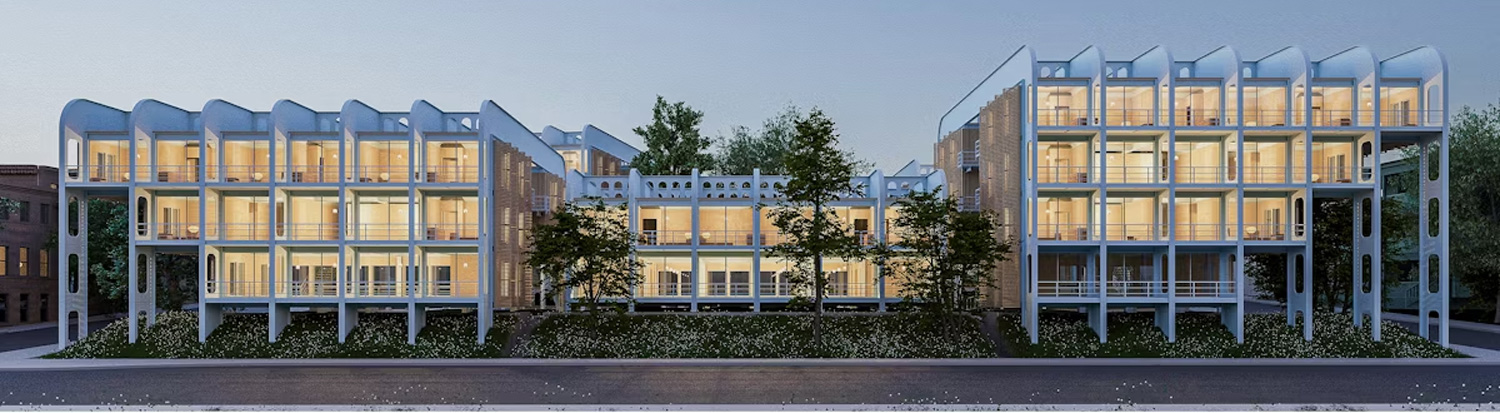
With their project “Theseus: A New Housing Typology,” Sheffer and Russell won first prize in the large-scale category (€20,000) and the large-scale student prize (€5,000). Developed as part of their Core IV studio led by Warren Techentin (MArch/MAUD ’95), “Theseus” is a 150-bed housing proposal in Chelsea, Massachusetts, that repurposes cargo holds from decommissioned bulk-carrier ships into resilient steel superstructures with floodable communal ground space. Flexible units and five buildings along Marginal Street buffer industrial noise while creating public passageways, reframing scalable port-city housing as civic infrastructure that responds to climate adaptation, material scarcity, and long-term stability. “Theseus” received the Architizer A+ Vision Award in fall 2025.