In 1561, one thousand years after the Diocletian bathhouse fell into ruin under the Roman Empire, the pope directed Michelangelo to reinvent the building as a church—an early example, says Graduate School of Design (GSD) design critic in architecture Angelo Lunati, of the power of transformation. The Santa Maria degli Angeli is the earliest example of a repurposed building to which Lunati referred students to in his fall semester course, “Transformations: Six Schools in Detroit,” in which students studied vacant school buildings, with the task of reimagining them as spaces that serve the current communities’ needs.
“We were interested in how Michelangelo embraced change and provided rebirth for a decaying structure” Lunati explained, “by simple but decisive gestures, taking advantage of existing spatiality and material. How does transformation produce contemporary architecture?”
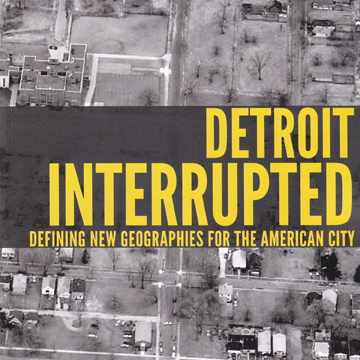
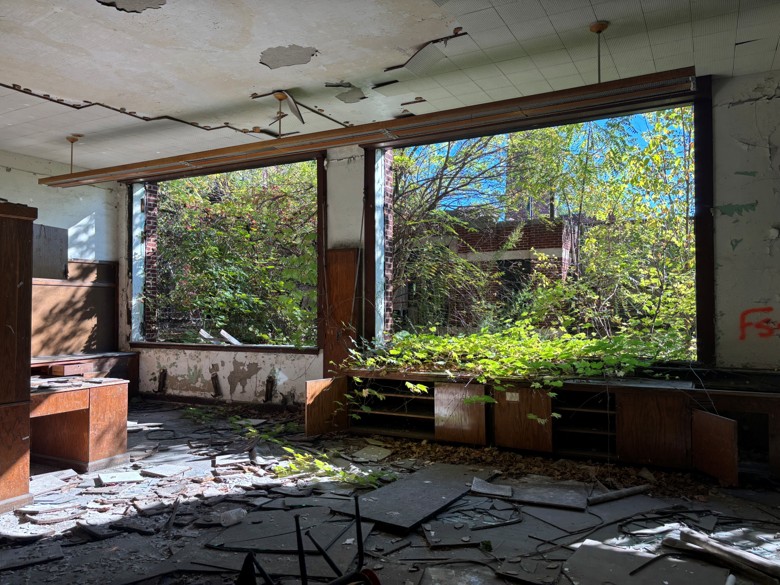
Adapting an existing structure, says Lunati, preserves the neighborhood’s history and character, and often saves energy and construction costs. Detroit owns 39 vacant school buildings, most of which were built between 1900 and 1930, with a second, smaller burst of construction during WWII. When the population began to decline in 1966, with a precipitous drop when the car manufacturers cut down on production. Since the 1960s, the Detroit schools have “lost over 250,000 students,” the city’s website reports. Lunati saw in this an opportunity to revitalize those empty buildings so that they could once again serve residents’ needs, and selected six former schools from which the students could choose.
In addition to the Santa Maria degli Angeli, Lunati referred to historic examples such as Adolf Loos’ (1870–1933) Villa Karma, a Swiss country house converted into a minimalist home, and Lina Bo Bardi’s (1914–1992) SESC Pompéia in São Paulo, a former metal barrel factory that locals began using for sports and recreation, inspiring Bo Bardi to redesign it for the neighborhood. These, among other more contemporary examples, inspired Lunati to study Detroit as a “paradigmatic case to address the issue of transformation,” he said.
The city of Detroit has already completed much of the legwork required to assess how the buildings would fare if reinvented. In 2020, Interboro Partners worked with the city to create a “designed process and toolkit,” for which the firm, led by Georgeen Theodore, FAIA (MAUD ’02), Tobias Armborst (MAUD ’02), and Daniel D’Oca (MUP ’02), GSD associate professor in practice of urban planning, was awarded an AIA New York Urban Design Award. The city published its study of the 39 vacant school properties they own, on a website that includes an interactive map, historic contexts, photographs, floor plans, condition reports, and estimated costs of redevelopment for each building. Some of the schools are on or are pending inclusion on the National Register of Historic Places. This data proved critical to Lunati’s students, whose task was to transform the buildings with, he said, “hybrid programs,” including housing with services like art studio spaces, music schools, and other community programs, and make them not just relevant and useful within their neighborhoods again but local landmarks in which residents can take pride.
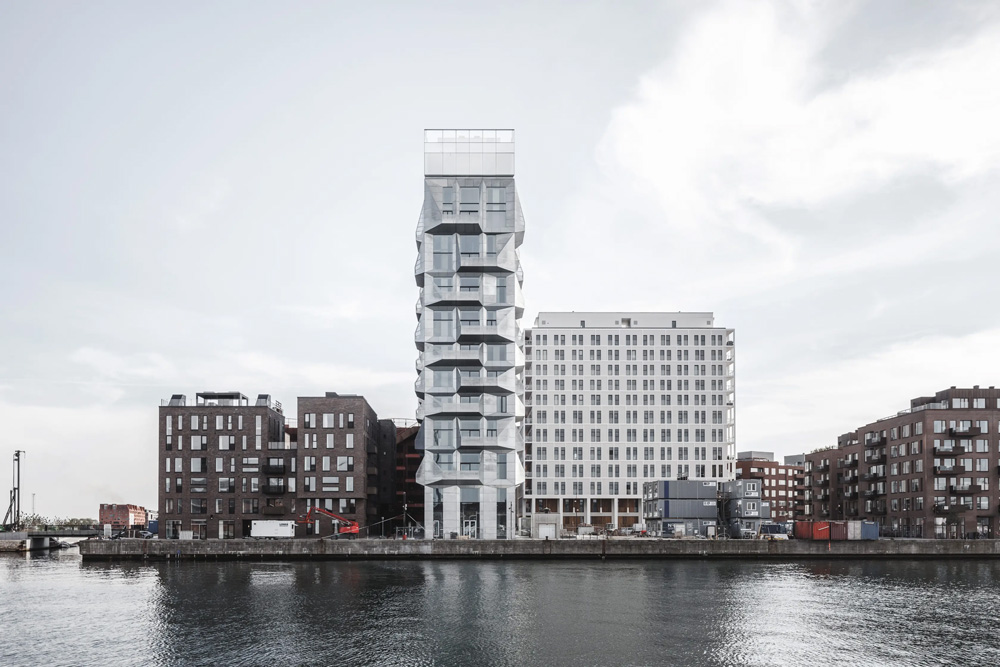
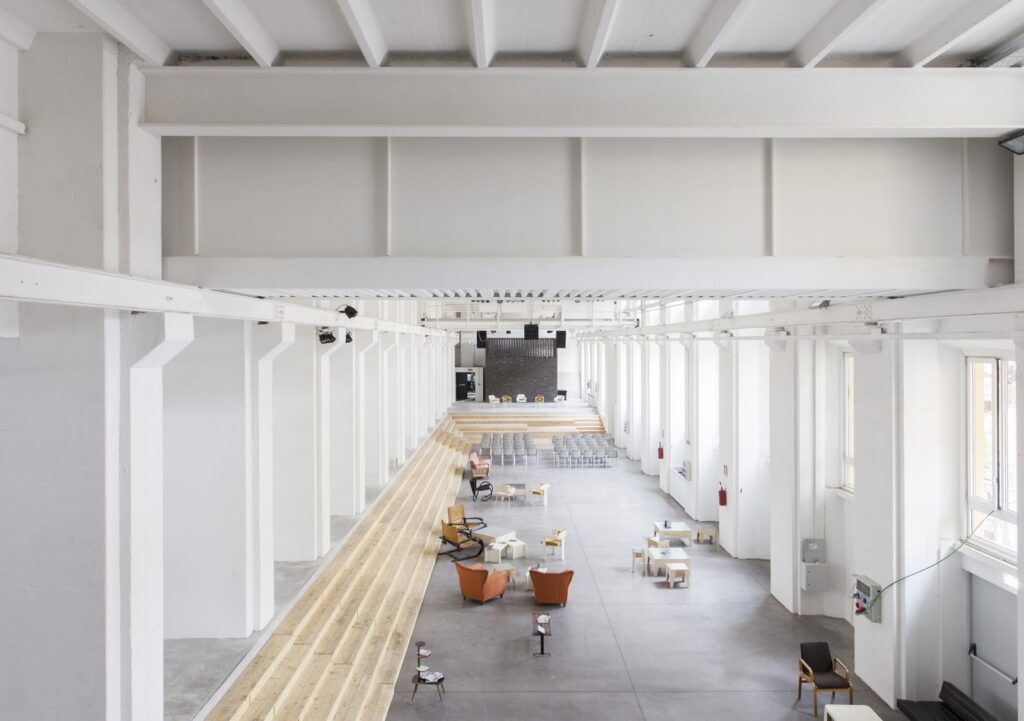
Lunati’s work with his firm, Onsitestudio, helped to inspire his perception of the opportunities in Detroit’s school buildings. Onsitestudio has developed several projects that transform existing structures into new spaces, such as the former industrial Ansaldo building that became the BASE cultural centre, and “the adaptation of the vaulted secret spaces of 17th-century Sant’Alessandro crypt into a library and performing space.” The firm is also completing two schools, both of which are new construction. In Milan, they built an urban school in a courtyard design, and in Piacenza, they intend to produce a “calm, simple facade that has a recognizable presence in the city,” resonant of the original 1950s kindergarten that once stood on the same site. The Piacenza school includes an inventive rooftop basketball court with a textile covering to protect the space.
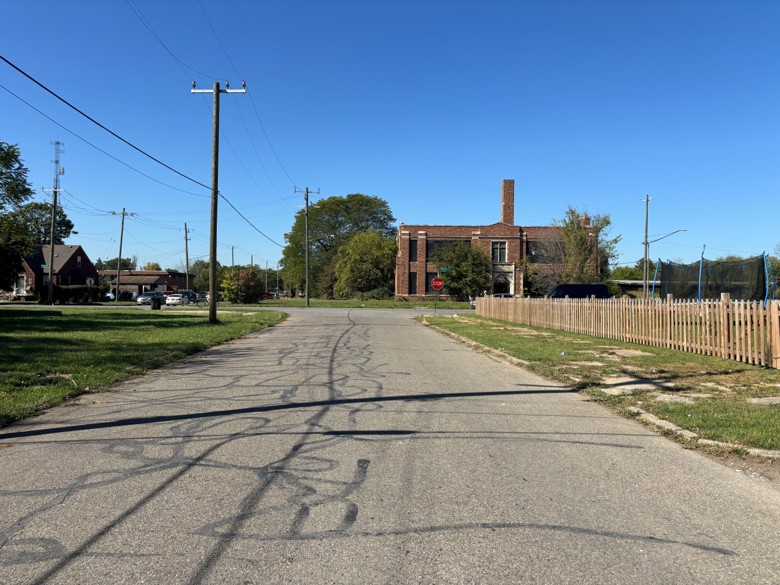
Lunati sought out local Detroit leaders and community stakeholders to guide students through their understanding of the school buildings’ significance, historic context, and the neighborhood’s current needs. Conferring with Maurice Cox, Emma Bloomberg Professor in Residence of Urban Planning and Design at the GSD and former Planning Director of the City of Detroit, as well as Jennifer Ross and Garrick Landsberg at the Historic Preservation Department, Lunati’s students studied the materials within six of the 39 abandoned schools. With Christoph Grafe, they discussed possible design perspectives in relationship to the “new-old” argument, and partnered with Atmoslab to conduct a forensic analysis of the buildings, assessing materials and their merits for reinvention. As part of this analysis, they took into consideration the current and future climate of the city, looking ahead to temperatures in 2050 to ensure that their designs would be sustainable in a changing world.
After surveying residents in each neighborhood, Lunati asked students to either expand or reduce the existing structure of the school they selected for transformation, and to design for one of those defined needs: “urban agriculture, a research and development space for Pewabic Pottery, a one hundred year old studio in need of more space, a music center and club to accommodate the local music scene, a special collections archive for the city’s public library, an artist residency and exhibition space, or a light industrial facility for timber structure fabrication.”
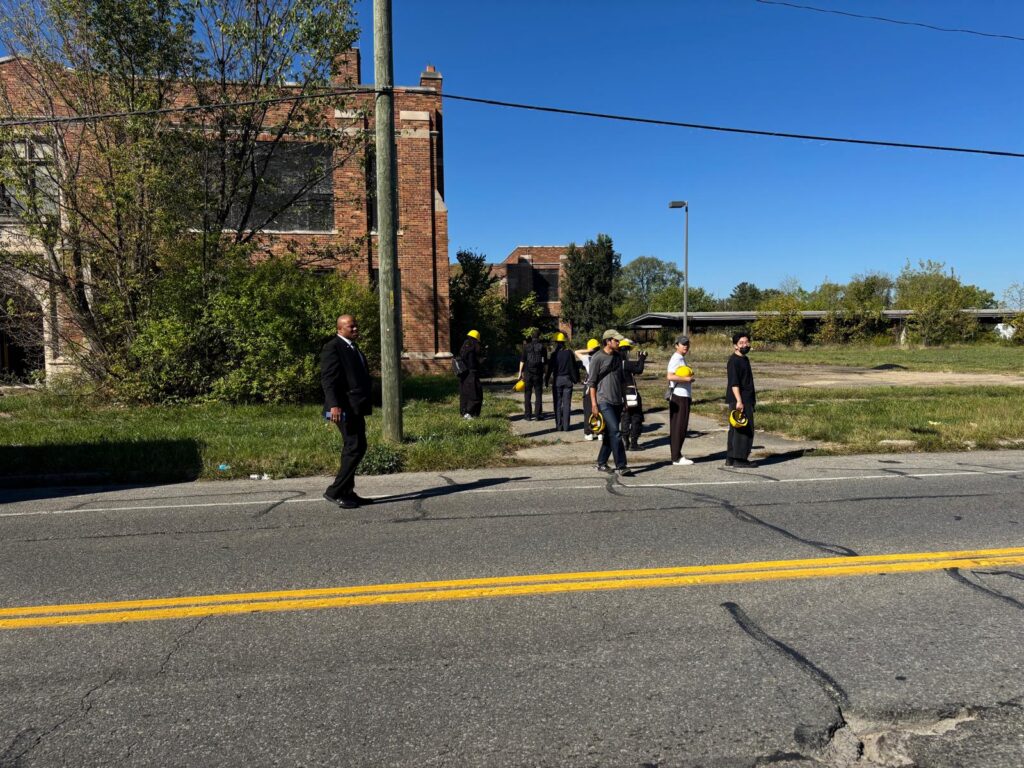
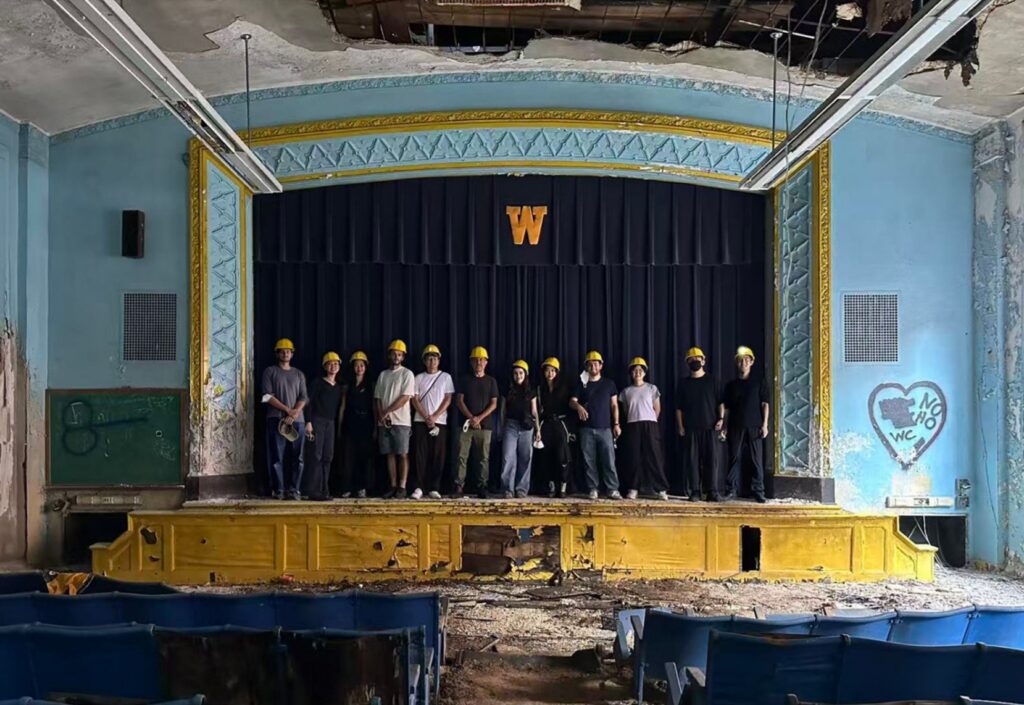
In September 2025, the class traveled to Detroit to visit the sites and learn from the local community. To understand how these buildings looked and felt—and what architectural potential they hold—Lunati felt strongly that the students needed to spend time within them in Detroit.
“It was very important for us to be able to enter and experience these spaces,” he said, “to witness their typological qualities, the robust construction and sometimes the not fully realized architectural ambitions of these buildings, in order to think about a second life of for them, reinforcing their urban presence. We had also to understand the existing energies of the neighborhood, the stakeholders, and what kind of hybrid and combined programs can be put in place to transform the space.”
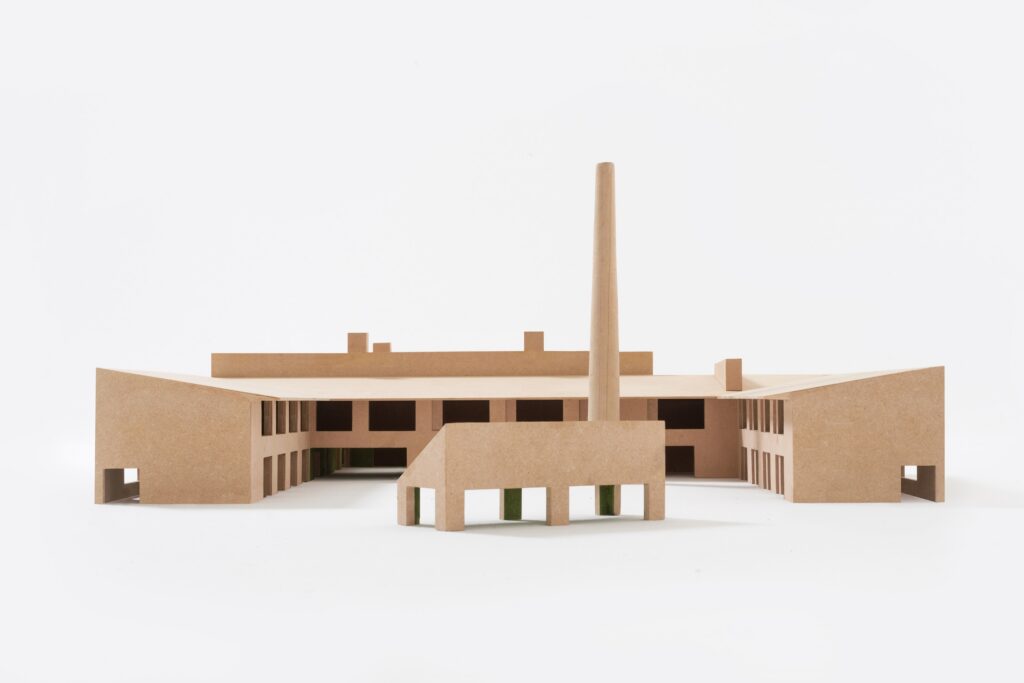
Inspired by residents’ use of vacant Detroit structures for concerts in the 1980s and 90s, Miles Cornwall’s (MArch I ’27) final project was an addition onto the Bethune School, built in 1922, to combine a music school and club together with the new Detroit Public Library archive. Emily Li (MArch I ’27) and Nancy Lu (MArch I ’27) addressed Detroit’s history of segregated public pools to reinvent the Wilkins School as a center for “learning and play,” with both indoor and outdoor pools, a track, and a basketball court. Their project highlights the neighborhoods’ needs for recreation spaces, while addressing the history of racism. In both cases, these amenities are what neighborhood residents defined as current needs.
The students’ final projects speak to the wide range of possibilities for adaptive reuse of not only the 39 schools but also other vacant buildings in Detroit, and elsewhere around the country and world, claiming the architectural potential of transformation.